Latest Sectors News
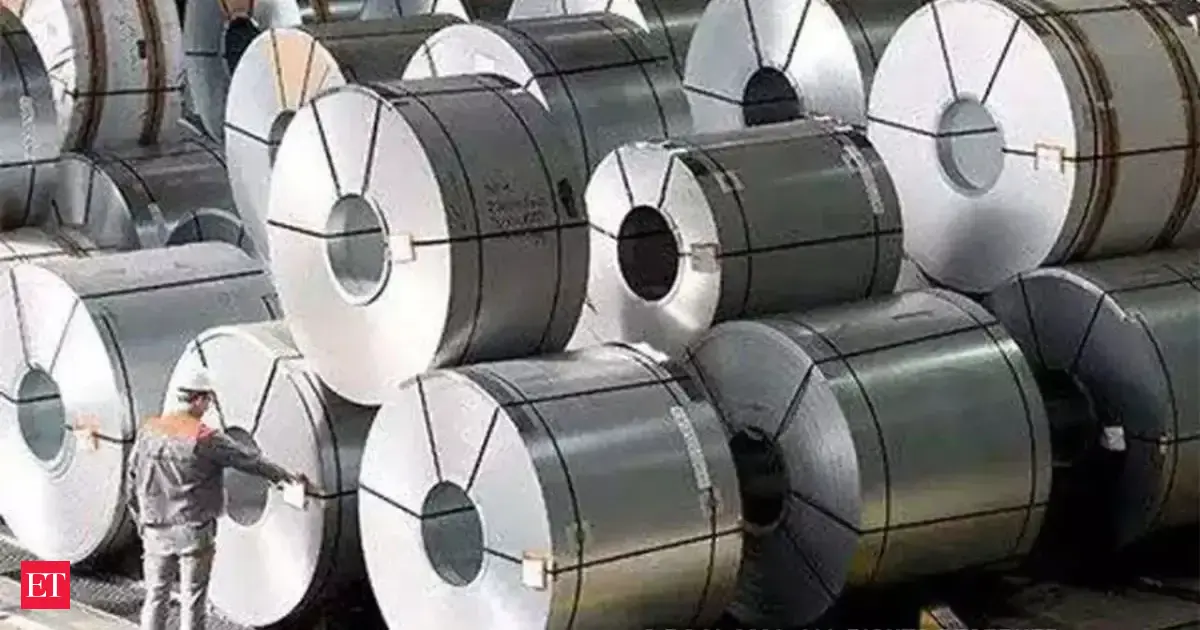
"Banks had claims attached to the personal guarantees issued by the Essar promoters which was linked to the Essar Steel resolution. AM/NS' plan had made specific provisions to pay off these liabilities too, but there were some legal issues which are now resolved, allowing banks and AM/NS to complete this deal," said a person familiar with the details. View More
MUMBAI: ArcelorMittal Nippon Steel India (AM/NS) has paid Rs 200 crore to banks to take over the personal guarantees of Essar Group promoters, Prashant and Ravi Ruia , completing the residual part of the resolution plan implemented back in 2019, multiple people aware of the details told ET. AM/NS completed the transaction, which also involved the lead creditor State Bank of India ( SBI ), earlier this month, said one of the people cited above. It took charge of the claims of banks after no other buyer came forward to place a competing bid in a Swiss challenge auction, these people said. "Banks had claims attached to the personal guarantees issued by the Essar promoters which was linked to the Essar Steel resolution. AM/NS' plan had made specific provisions to pay off these liabilities too, but there were some legal issues which are now resolved, allowing banks and AM/NS to complete this deal," said a person familiar with the details. Banks clear RBI stress test, but NPAs tick up in tough scenarios Live Events An AM/NS spokesperson did not reply to an email seeking comment. A consortium of banks led by SBI had invited bids for personal guarantees of Essar Group promoters Prashant and Ravi Ruia at a reserve price of Rs 200 crore for the Rs 13,751 crore of residual liabilities payable from the group after adjusting for the recovery from Essar Steel's resolution plan completed in 2019, ET had reported in its May 26 edition. IBBI seeks to streamline real estate insolvency regulations with focus on homebuyers The total amount of Rs 13,751 crore was calculated after taking into account the residual recoveries from Essar Steel including accumulated interest post the ArcelorMittal deal. Bankers had put these claims up for sale which also included corporate guarantees by companies like Essar Investments, Essar Steel Mauritius, Essar Steel Asia and Essar Steel Ltd along with personal guarantees from the Ruia family. An Essar spokesperson did not reply to an email seeking comment. "Banks had put these up for sale under a process for 'assignment of claims' on an 'as-is basis' without recourse. AM/NS's bid was accepted after a due process and checking the legal position. The debt has been assigned to AM/NS and money already received by banks," said a second person aware of the details. Process advisor BoB Capital Markets did not reply to an email seeking comment. AM/NS' takeover of these dues were part of the company's resolution plan for Essar Steel in 2019. Lenders led by SBI had recovered close to 90% of their more than Rs 49,000 crore dues from the company when the bankruptcy process was completed after a Supreme Court order in 2019. Banks moved to recover the residual Rs 7,000 crore to Rs 9,000 crore from guarantees which compounded to Rs 13,751 crore with interest. Personal guarantees were brought under the bankruptcy purview in December 2019, allowing lenders to initiate recoveries against promoter guarantees separately while also pursuing corporate repossessions. .Pbanner{display:flex;justify-content:space-between;align-items:center;background-color:#ec1c40;margin-top:20px;padding:5px 10px;border-radius:4px;color:#fff;line-height:10px;} .Pbannertext{display:flex;align-items:center;font-size:16px;font-weight:600;font-family:'Montserrat';} .Pbannertext img{height:20px;margin:0 6px} .Pbannerbutton a{display:flex;align-items:center;background-color:#fff;color:#ec1c40;text-decoration:none;font-weight:600;padding:4px 8px;border-radius:6px;font-size:15px;font-family:'Montserrat';} .Pbannerbutton img{height:20px;margin-right:6px} .Pbannerbutton a:hover{background-color:#f7f7f7} Add as a Reliable and Trusted News Source Add Now! (You can now subscribe to our Economic Times WhatsApp channel) (You can now subscribe to our Economic Times WhatsApp channel)

Trump's huge defense budget request and a race to replenish weapons stocks while building hypersonic missiles lead to war between U.S. states for jobs. View More
In this articleSPCXFollow your favorite stocksCREATE FREE ACCOUNT watch nowVIDEO2:5002:50Americaâs Top States for Business 2026: Defense industry sees big growthSquawk Box One of the many lessons from the wars in Iran and Ukraine is that the supply of munitions and weapons systems is finite, and difficult to replenish. That has led to a new way of doing business at the Pentagon, and a new battleground in the war between the states for jobs and economic development. "We're seeing a lot of growth coming out of the Department of War, new programs, new startups, really the SpaceX-ification, if you will, of the Pentagon," said consultant Tom Stringer of Stringer Site Selection and Incentives in New York. In fact, three alumni of Elon Musk's space technology and AI company are behind a prime example of the new model. Castelion, a three-year-old startup based in Torrance, California, is trying to apply SpaceX's business model to hypersonic missiles. "This is going to be one of the most important capabilities in the American arsenal," said co-founder and CEO Bryon Hargis on CNBC's Squawk Box in January. Hargis, a physicist by training, previously led SpaceX's national security product development. The U.S. military is well-versed in hypersonic missile technology. The trick, under the Pentagon's new approach, is being able to develop the new missiles quickly, produce them at scale, and deliver a lot of them to the battlefield. The traditional defense procurement model â at least in recent years â offered little incentive for contractors to do that. Instead, under so-called "cost-plus" contracts, they could simply bill the government for their costs â including farming out work to subcontractors â then tack on a pre-determined fee. By contrast, Castelion, which has agreements to deliver at least 500 missiles per year and potentially thousands more, is raising private capital instead of government appropriations â more than $550 million to date â to fund a massive, vertically integrated manufacturing operation.  Zoom In IconArrows pointing outwardsCastelion's prototype missile development test is launched from a mobile launcher in MojaveCastelion | Reuters Castelion has contracts with multiple service branches to deliver its first weapons system, dubbed Blackbeard. But rather than cost-plus contracts, Castelion is operating under so-called "firm-fixed-price contracts" â the government pays the same price regardless of Castelion's costs. That shifts the cost risks to the contractor from the government. That is a game changer, said Castelion co-founder and chief operating officer Sean Pitt, a former SpaceX director of commercial sales who previously served as an aide to Sen. Dick Durbin, D-Illinois, a member of the Defense Appropriations Subcommittee. "We're really applying standard commercial manufacturing strategies to a space that hasn't had them applied to it for many decades," he said. "It is not acceptable to come up with a design that we can only produce a couple dozen of. Instead, manufacturability in the thousands at a cost per missile that is measured in hundreds of thousands of dollars was our guiding light from the beginning, and that's what we're executing against today." That is where the economic development opportunities â and challenges â come in. How 'SpaceX of hypersonic missiles' landed in New MexicoDelivering on Castelion's vision, and doing so profitably, would require a huge manufacturing facility, built fast. "We're in a dead sprint to scale production," said co-founder and chief financial officer Andrew Kreitz. "Nothing we do matters until we are in high-rate production with our first weapon system," he said. Kreitz, a former Goldman Sachs investment banker who became a SpaceX senior finance manager before leaving to start Castelion, led a year-long search for a location. He said it ultimately came down to sites in Arizona, Tennessee and New Mexico. In January, the company broke ground on a 1,000-acre campus in Sandoval County, New Mexico, approximately 30 miles north of Albuquerque. "The reality is, if you draw the Venn diagram of places where you can get a lot of land, a sort of shovel-ready, able to move in quick site, and the talent base to actually staff the factory, there are very few places in America that can do that, and New Mexico stood out," Kreitz said. Castelion's Project Ranger site in Sandoval County, New Mexico, a 1,000-acre manufacturing campus designed to support high-cadence production of hypersonic missile strike systems.Scott Cohn | CNBC In addition to having the space â which quickly ruled out expanding the company's California headquarters or its facility in Texas â New Mexico has a long heritage of defense production, and a wealth of talent from Sandia and Los Alamos National Laboratories. Stringer, the site selection consultant who helped broker the deal, said New Mexico also offered seamless coordination at all levels of government, and across party lines. "There was almost no red tape. That's the best way to describe it," he said. "Everyone was at the table from day one in New Mexico." The state and Castelion estimate the $220 million project will create 300 high-paying jobs and provide $650 million in economic impact over the next ten years. "Castelion chose our state because we have the workforce, the expertise and the infrastructure they need to succeed," said Democratic Gov. Michelle Lujan Grisham in January.  "This company will be critical to catch up and pass China and Russia in hypersonic technologies," said Republican State Sen. Jay Block. "This is a race we cannot lose," he added. Stringer said there will be plenty more opportunities for states to win similar projects, especially with the Pentagon's unprecedented, $1.5 trillion budget request. "We need to build really phenomenal products that deliver and that we can scale and build and deploy quickly at cost, and that's a sea change," he said. Castelion, meanwhile, is wasting no time getting its manufacturing underway. The company says just six months after breaking ground, 15 of the 21 buildings on the New Mexico campus are already under construction, with 1.6 million cubic yards of dirt moved. In fact, Pitt noted that even before the company had settled on a site, it had already purchased the steel for construction. "Doing things like buying this steel before we had our site selected is what allows us to keep our timeline of fielding our first weapon next year," he said.  And, he said, that is just the beginning. "We're talking about already committing 300 jobs to the state of New Mexico at this facility," he said. "I expect us to significantly exceed that, and then we'll continue to look for additional sites, both in New Mexico and across the country." CNBC will reveal America's Top States for Business in 2026 â our 20th year â on July 9. watch nowVIDEO6:0106:01Castelion CEO: Hypersonics will be one of the most important capabilities in the American arsenalSquawk Box Correction: This story has been updated to reflect that Castelion has contracts with multiple service branches to deliver its first weapons system, dubbed Blackbeard. Choose CNBC as your preferred source on Google and never miss a moment from the most trusted name in business news.

The transaction stands fully completed and JFE now holds 50% of the shareholding in JSW JFE Kalinga and, JSW Steel said in an exchange filing View More

According to a new briefing from InfluenceMap, India’s largest steelmakers are engaging more constructively on climate and energy policy than their counterparts in Japan and Korea View More

Half of the import quotas have been reserved exclusively for
free ?trade agreement (FTA) ?partners, with the remaining half
available to all trading partners, including FTA partners View More
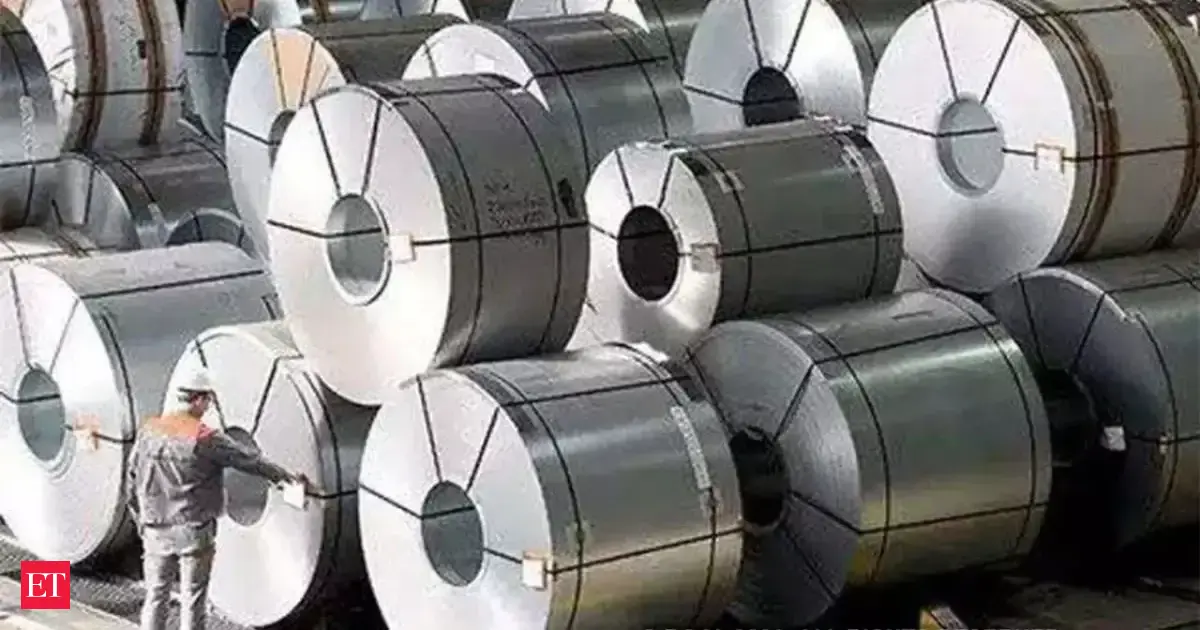
Domestic stainless steel makers are pressing the government to reinstate quality control norms from July 1, warning that a temporary QCO relaxation has fueled a flood of cheap imports. The Indian Stainless Seamlesspipes Manufacturers Association highlights that this influx, coupled with alleged anti-dumping duty circumvention, has crippled industry capacity to below 50%, jeopardizing local manufacturers. They urge immediate QCO restoration to curb substandard goods. View More
New Delhi: The domestic stainless steel industry has urged the government not to extend the temporary relaxation from the Quality Control Order (QCO) beyond June 30 and to restore the norms from July 1. The Indian Stainless Seamlesspipes Manufacturers Association ( ISSMA ) said the industry is grappling with a surge in low-priced imports , facilitated by the temporary withdrawal of the QCO and the alleged circumvention of anti-dumping duties . The relaxation expires on June 30, with the QCO set to come back into force from July 1. "The industry's capacity utilisation has fallen to below 50%, threatening the viability of domestic primary manufacturers," Prakash Tatia, spokesperson at ISSMA, told ET. He said the association had "urged the government to reinstate the QCO at the earliest to prevent the inflow of sub-standard imports". .Pbanner{display:flex;justify-content:space-between;align-items:center;background-color:#ec1c40;margin-top:20px;padding:5px 10px;border-radius:4px;color:#fff;line-height:10px;} .Pbannertext{display:flex;align-items:center;font-size:16px;font-weight:600;font-family:'Montserrat';} .Pbannertext img{height:20px;margin:0 6px} .Pbannerbutton a{display:flex;align-items:center;background-color:#fff;color:#ec1c40;text-decoration:none;font-weight:600;padding:4px 8px;border-radius:6px;font-size:15px;font-family:'Montserrat';} .Pbannerbutton img{height:20px;margin-right:6px} .Pbannerbutton a:hover{background-color:#f7f7f7} Add as a Reliable and Trusted News Source Add Now! (You can now subscribe to our Economic Times WhatsApp channel) (You can now subscribe to our Economic Times WhatsApp channel)
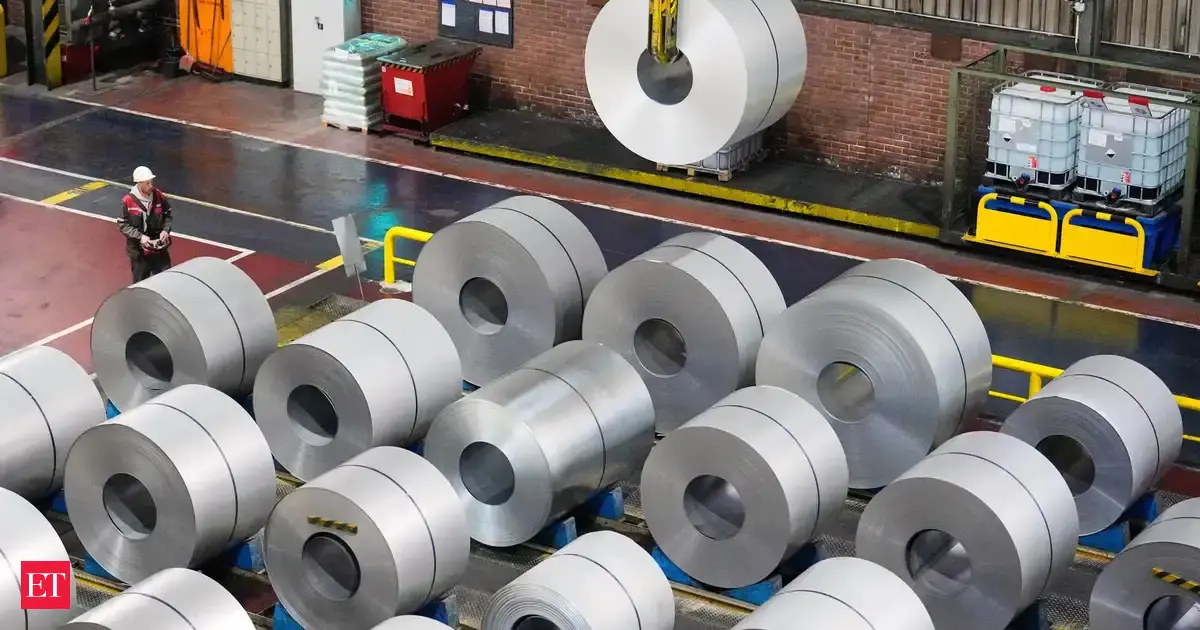
VMS TMT has announced its board has approved the merger with TMT bars maker Aditya Ultra Steel Ltd (AUSL). This strategic amalgamation aims to create a robust entity by combining manufacturing, distribution, and financial strengths. Shareholders of AUSL will receive 75 VMS TMT shares for every 100 held. The combined company anticipates a significant boost in manufacturing capacity and operational efficiencies. View More
New Delhi: Steel products manufacturer VMS TMT Ltd on Monday said its board has approved the merger of TMT bars maker Aditya Ultra Steel Ltd (AUSL) with the company. The proposed amalgamation will combine the manufacturing infrastructure, distribution network, management expertise, and financial resources of both companies, creating a stronger platform for sustainable long-term growth, VMS TMT said in a statement. "Under the approved Scheme of Amalgamation, shareholders of Aditya Ultra Steel Ltd will receive 75 equity shares of VMS TMT Ltd for every 100 equity shares held in Aditya Ultra Steel Limited," the company said. "By bringing together two highly complementary businesses, we are creating an integrated platform with enhanced manufacturing capabilities, a wider distribution footprint, and stronger financials," Varun Jain, Chairman & Managing Director, VMS TMT Limited, said. The merger will lead to a combined installed manufacturing capacity of over 300,000 tonnes per annum, creating substantial economies of scale across procurement, production, logistics, and distribution in Gujarat, it added. VMS TMT and AUSL are Gujarat-based manufacturers of TMT steel bars. PTI .Pbanner{display:flex;justify-content:space-between;align-items:center;background-color:#ec1c40;margin-top:20px;padding:5px 10px;border-radius:4px;color:#fff;line-height:10px;} .Pbannertext{display:flex;align-items:center;font-size:16px;font-weight:600;font-family:'Montserrat';} .Pbannertext img{height:20px;margin:0 6px} .Pbannerbutton a{display:flex;align-items:center;background-color:#fff;color:#ec1c40;text-decoration:none;font-weight:600;padding:4px 8px;border-radius:6px;font-size:15px;font-family:'Montserrat';} .Pbannerbutton img{height:20px;margin-right:6px} .Pbannerbutton a:hover{background-color:#f7f7f7} Add as a Reliable and Trusted News Source Add Now! (You can now subscribe to our Economic Times WhatsApp channel) (You can now subscribe to our Economic Times WhatsApp channel)
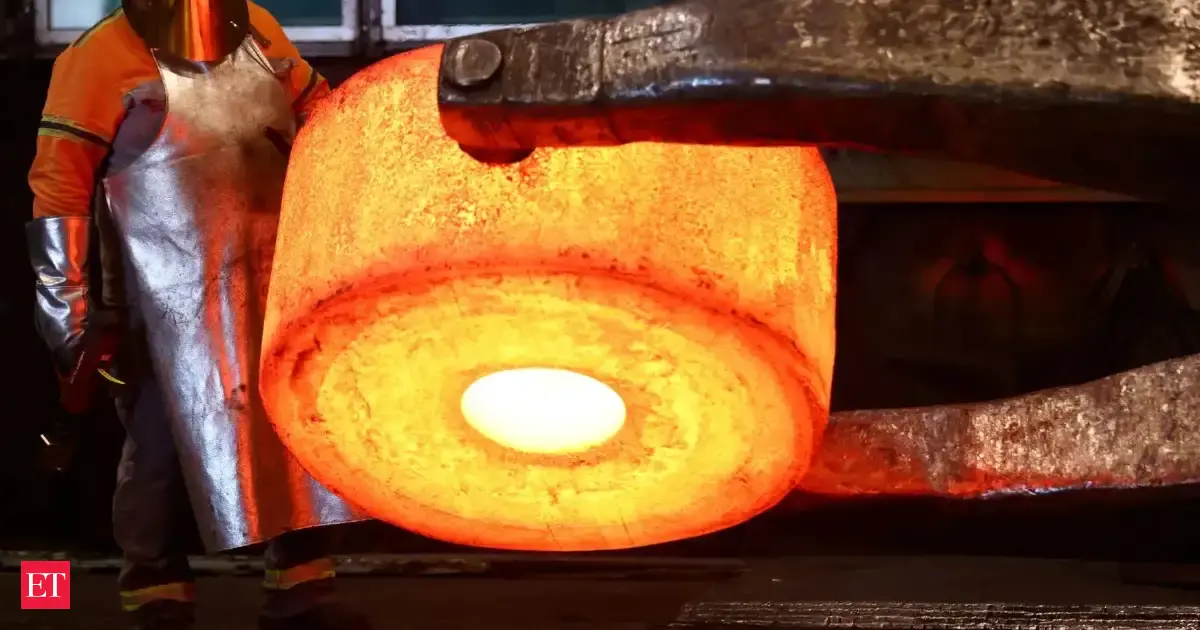
The Indian government is set to launch a Rs 5,000 crore scheme within three months to boost clean technologies in steelmaking, aiming to slash carbon emissions. Titled the National Strategy for Sustainable Secondary Steel, the initiative will benefit all steel producers, with a significant portion allocated to smaller players. This move aligns with India's net-zero commitments, addressing the steel sector's substantial contribution to greenhouse gas emissions. View More
New Delhi: The government is planning to introduce a scheme to promote the adoption of clean technologies in steelmaking processes with an outlay of Rs 5,000 crore, according to an official. The move is aimed at reducing carbon emissions from the domestic steel industry. The scheme named National Strategy for Sustainable Secondary Steel is expected to be launched in the next three months, a senior government official told PTI. "The scheme may go for approval of the union cabinet," another official in the know of the development said. The scheme will cover all steelmakers in the country. However, a major share of the funds will be earmarked for secondary players. The National Strategy for Sustainable Secondary Steel aims to promote the adoption of clean technologies and alternative materials across various steelmaking processes to reduce carbon emissions from the domestic steel industry. Live Events The move assumes significance as India is a signatory to the Paris Agreement and aims to become a net-zero country. Steel sector is among the largest carbon-emitting industries. India's steel industry accounts for 10-12 per cent of country's greenhouse gas emissions with an emission intensity of 2.55 tonnes CO2 per tonne of crude steel, higher than the global average of around 1.9 tonnes Co2 emissions, according to official data. .Pbanner{display:flex;justify-content:space-between;align-items:center;background-color:#ec1c40;margin-top:20px;padding:5px 10px;border-radius:4px;color:#fff;line-height:10px;} .Pbannertext{display:flex;align-items:center;font-size:16px;font-weight:600;font-family:'Montserrat';} .Pbannertext img{height:20px;margin:0 6px} .Pbannerbutton a{display:flex;align-items:center;background-color:#fff;color:#ec1c40;text-decoration:none;font-weight:600;padding:4px 8px;border-radius:6px;font-size:15px;font-family:'Montserrat';} .Pbannerbutton img{height:20px;margin-right:6px} .Pbannerbutton a:hover{background-color:#f7f7f7} Add as a Reliable and Trusted News Source Add Now! (You can now subscribe to our Economic Times WhatsApp channel) (You can now subscribe to our Economic Times WhatsApp channel)
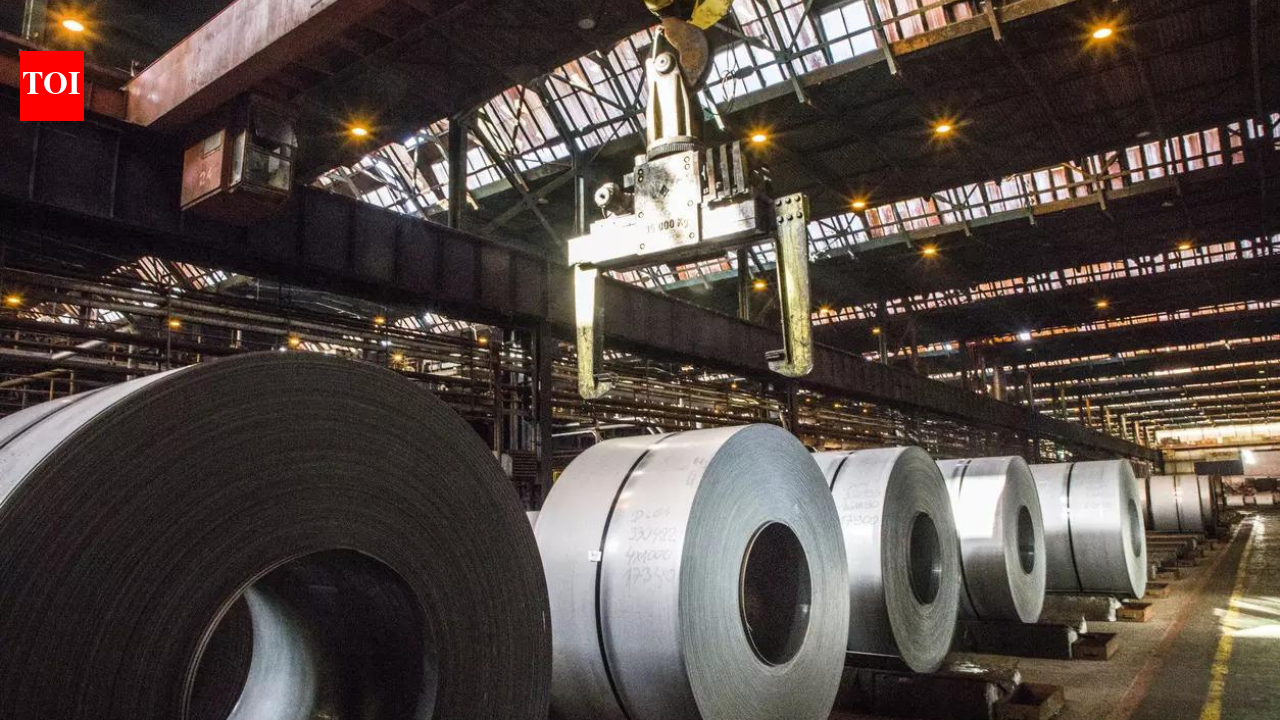
The government is set to launch a Rs 5,000 crore scheme within three months to boost cleaner technologies in India's steel sector, a major contributor to carbon emissions. This initiative, the National Strategy for Sustainable Secondary Steel, aims to reduce the industry's environmental footprint and align with India's net-zero commitments. While benefiting all steelmakers, secondary producers are expected to receive significant financial backing to adopt sustainable practices. View More
Hindustan Zinc is pivoting towards becoming a future-ready energy transition company, Chairperson Priya Agarwal Hebbar announced. The firm is significantly investing in technology like AI and automation to boost productivity and safety. Diversifying beyond zinc, the company is exploring critical minerals such as lithium and rare earth elements, essential for the growing electric vehicle market and India's industrial expansion. This strategic shift, dubbed Hindustan Zinc 2. View More
New Delhi: Vedanta group firm Hindustan Zinc Chairperson Priya Agarwal Hebbar on Monday said technology will be crucial to the company's next phase of growth, with increased investments in automation, artificial intelligence, advanced analytics, and intelligent mining systems to improve productivity, precision, and safety. "Our ambition is to become a future-ready energy transition company, building strength across multiple metals and critical minerals that support India's industrial growth and strengthen global supply chains," she said while addressing shareholders at the company's 60th Annual General Meeting (AGM). The company is positioning itself for the next phase of the global energy transition by expanding beyond zinc and foraying into critical minerals, downstream manufacturing and technology-led mining, according to the Chairperson. Also Read: Govt extends deadline for bids under Rs 7,280-crore rare earth magnet scheme Hebbar said that shifting geopolitics, artificial intelligence, evolving global supply chains and the energy transition are fundamentally reshaping the natural resources sector, increasing the strategic importance of companies that can supply critical minerals responsibly, reliably and at scale. Live Events Highlighting the growing importance of energy transition minerals, Hebbar said that an electric vehicle requires six times as many minerals as a conventional vehicle, while the global market for energy transition minerals is likely to more than double to USD 770 billion by 2040. "For India, this moment is especially significant. As our economy grows and manufacturing expands, securing critical resources is becoming a strategic priority. India has built real strength across zinc, bauxite, iron ore, aluminium and manganese. But the next frontier lithium, cobalt and rare earth elements, the building blocks of clean energy and advanced technology, is where we now need to focus," Hebbar said. Describing the company's long-term strategy as Hindustan Zinc 2.0, she said the company is evolving from being the world's leading integrated zinc producer into a broader energy transition company. "Our ambition is no longer simply to be the world's leading integrated zinc producer. Our ambition is to become a future-ready energy transition company, building strength across multiple metals and critical minerals that support India's industrial growth and strengthen global supply chains," she said. As part of this strategy, Hindustan Zinc has secured mineral blocks for tungsten, potash, rare earth elements and halite, marking the beginning of its diversification into critical minerals. The company is also progressing towards doubling its production capacity over time through phased investments while continuing to strengthen its exploration pipeline and maintain mine life well beyond 25 years. Alongside upstream expansion, Hindustan Zinc is building downstream manufacturing capabilities through its Zinc Parks initiative. In partnership with Tripura Group and CMR Green Technologies , the company aims to create India's first integrated zinc manufacturing ecosystem, bringing MSMEs into the value chain, generating employment and supporting the country's manufacturing ambitions. .Pbanner{display:flex;justify-content:space-between;align-items:center;background-color:#ec1c40;margin-top:20px;padding:5px 10px;border-radius:4px;color:#fff;line-height:10px;} .Pbannertext{display:flex;align-items:center;font-size:16px;font-weight:600;font-family:'Montserrat';} .Pbannertext img{height:20px;margin:0 6px} .Pbannerbutton a{display:flex;align-items:center;background-color:#fff;color:#ec1c40;text-decoration:none;font-weight:600;padding:4px 8px;border-radius:6px;font-size:15px;font-family:'Montserrat';} .Pbannerbutton img{height:20px;margin-right:6px} .Pbannerbutton a:hover{background-color:#f7f7f7} Add as a Reliable and Trusted News Source Add Now! (You can now subscribe to our Economic Times WhatsApp channel) (You can now subscribe to our Economic Times WhatsApp channel)