
Latest Sectors News
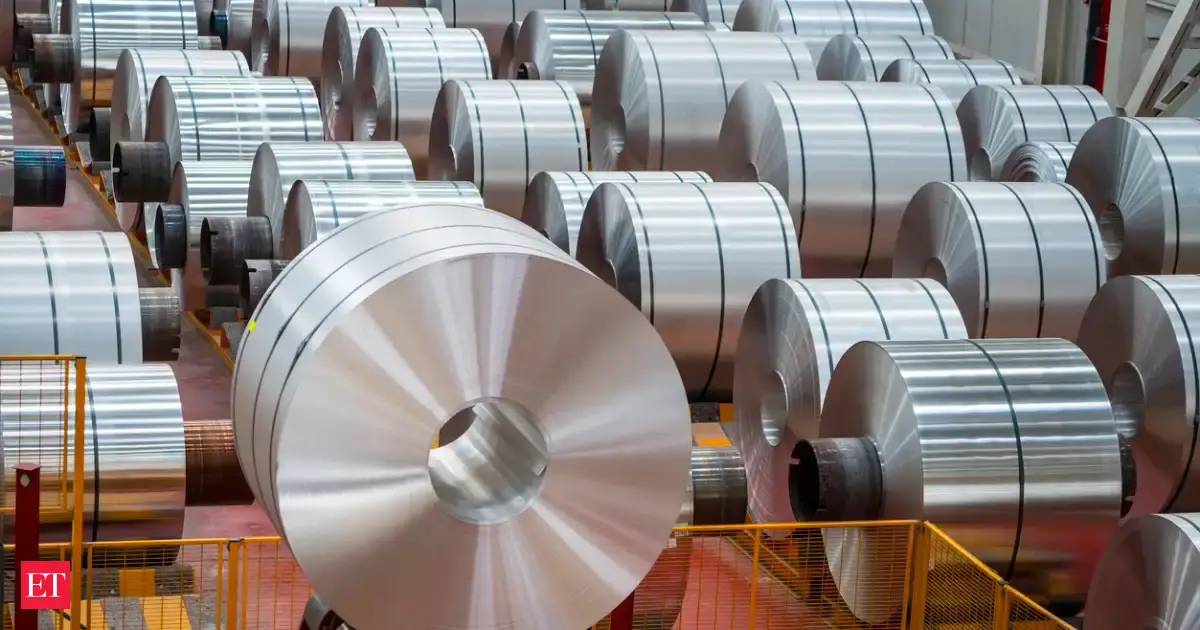
Adani Group is set to disrupt India's aluminium market with an $11.5 billion venture, challenging Hindalco and Vedanta. The project, slated to add nearly 50% to national output in five years, leverages Adani's low-cost energy advantage. This significant expansion aims to meet rising domestic demand, with a substantial portion of bauxite sourced from Odisha, creating over 53,000 jobs. View More
Bhubaneshwar: Adani Group 's diversification into aluminium production through a $11.5 billion venture with Abu Dhabi-based investment group International Holding Company (IHC) is expected to make it a pivotal contender to Aditya Birla Group's Hindalco Industries and Anil Agarwal's Vedanta Aluminium Metal in India's duopolistic aluminium market . Hindalco and Vedanta have been dominating aluminium supply to India's fast-growing automotive, electrical, and clean energy markets, together accounting for nearly 90% of domestic production. Adani Group's 2 million tonne smelting capacity, expected to come on stream in about five years, will add nearly 50% to India's current aluminium output of about 4.2 million tonnes. "Aluminium is a very energy-intensive business, and as one of the lowest-cost producers of energy, it will be one of the biggest competitive edge that we bring to the table," said Karan Adani, managing director at Adani Ports and Special Economic Zone Thursday. "As digitisation and manufacturing in the country increases, the demand for aluminium will go up, and we see that as a big long-term opportunity." Also Read | Adani, IHC plan to forge $11.5 billion aluminium unit Live Events Even as the second-largest producer of aluminium globally, India is a net importer of the base metal. Both Vedanta and Hindalco are also expanding their aluminium production capacity as domestic demand is seen rising by at least 50% from the current levels by the turn of this decade. "Even with such a large capacity, we are still importing aluminium...this is a sign there is enough demand for everybody to be in this market," said Adani. Apart from the smelter, Adani's aluminium project will also have a 4-million-tonne alumina refinery, a 4 GW captive power plant, and a 1-million-tonne downstream aluminium park. ET was the first to report about Adani and IHC's aluminium project in India in its Thursday edition. The facility will be built in two stages, with an investment of ₹66,000 crore in the first phase, and ₹44,000 crore in the second. The aluminium facility construction and operation is expected to create more than 53,000 jobs in Odisha, which houses more than half of the country's bauxite. The facility will be owned equally by group flagship Adani Enterprises and IHC subsidiary International Resources Holding (IRH). The project will be funded with 70% debt and 30% equity. FACILITIES Bauxite for the unit will be sourced from three mines - Ballada, Kutrumali, and Sasubohumali, of which the Sasubohumali mine is likely to be operated by the Odisha Mining Corp. This mine, in the Rayagada district, has the highest reserves of bauxite among the three, said senior state officials aware of the details. Bauxite is the primary raw material used in the production of aluminium. Bauxite is first converted to alumina in refineries, which is further converted to aluminium at smelters. For alumina, Adani will set up its refinery in the Rayagada region itself to take advantage of its proximity to one of the bauxite mines. The refinery will be spread across 3,200 acres. The aluminium smelter, meanwhile, will be spread across 4,100 acres in the Sundargarh region. "This 7,000 plus acres will include the township being planned and the downstream park," an official said. .Pbanner{display:flex;justify-content:space-between;align-items:center;background-color:#ec1c40;margin-top:20px;padding:5px 10px;border-radius:4px;color:#fff;line-height:10px;} .Pbannertext{display:flex;align-items:center;font-size:16px;font-weight:600;font-family:'Montserrat';} .Pbannertext img{height:20px;margin:0 6px} .Pbannerbutton a{display:flex;align-items:center;background-color:#fff;color:#ec1c40;text-decoration:none;font-weight:600;padding:4px 8px;border-radius:6px;font-size:15px;font-family:'Montserrat';} .Pbannerbutton img{height:20px;margin-right:6px} .Pbannerbutton a:hover{background-color:#f7f7f7} Add as a Reliable and Trusted News Source Add Now! (You can now subscribe to our Economic Times WhatsApp channel) (You can now subscribe to our Economic Times WhatsApp channel)
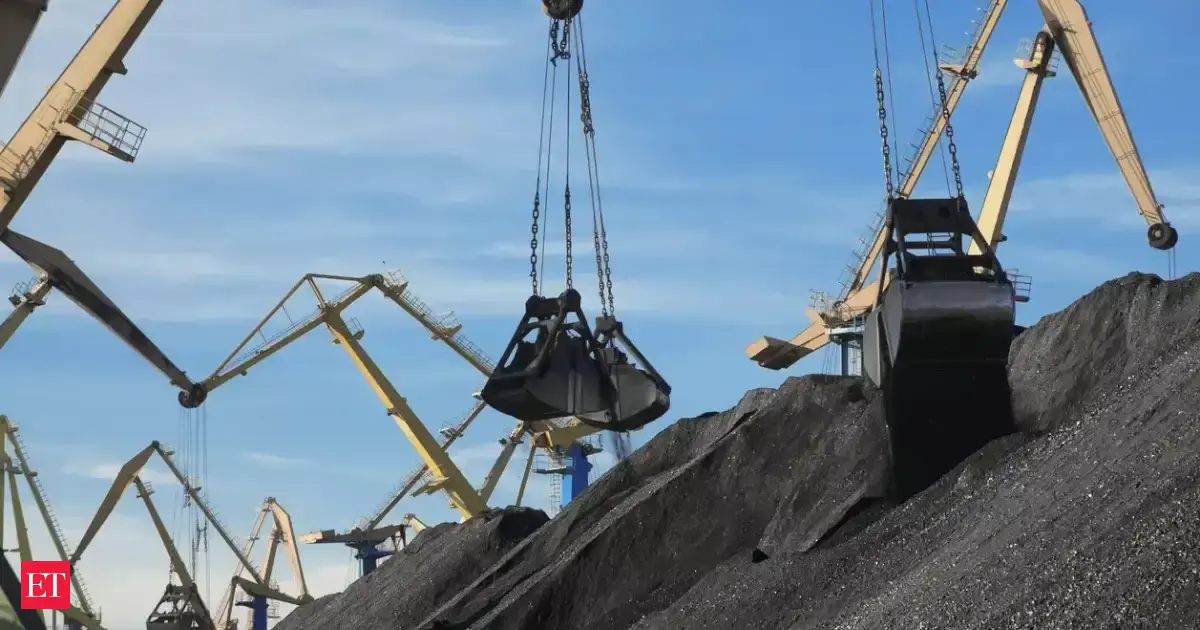
Nearly a year after awarding ?6,233 crore for coal gasification projects, none have progressed beyond planning. Despite multiple task force meetings, ground work hasn't commenced, with commissioning now pushed to FY30. Meanwhile, a new ?37,500 crore scheme has been launched, excluding first-round participants who now face disadvantages due to delays and lack of access to more generous incentives. View More
New Delhi: Nearly a year after the Centre awarded eight coal gasification projects under a ₹6,233-crore incentive scheme to demonstrate the technology, none has moved beyond the planning stage, turning what was billed as a pilot programme into little more than a paper exercise. The task force overseeing the projects has met eight times since the awards were announced, but work has yet to begin on the ground. The commissioning timeline has quietly slipped to FY30, while officials continue to describe the projects as "under implementation". The first round was intended to demonstrate the commercial viability of coal gasification before a wider national rollout. Public sector coal and energy companies formed the backbone of the bidding pool after the government offered viability gap funding of up to 20% of plant and machinery costs to de-risk investments in the technology. However, before any of the first-round projects has broken ground, the Centre has unveiled a second incentive scheme worth ₹37,500 crore to support 75 million tonnes of coal gasification capacity by 2030. The government has also clarified that projects selected under the first round will not be eligible for incentives under the new scheme. The decision has left early participants at a disadvantage, despite being the first to commit capital to an unproven technology. Live Events Land acquisition delays, unresolved coal linkage issues and financing hurdles have slowed almost every project awarded under the first round. Several are being developed by public sector undertakings that were expected to lead commercial deployment of the technology. Instead, senior officials associated with the programme told ET that even preliminary engineering studies remain incomplete at most project sites. Not a single gasifier has been commissioned or even physically installed at any site, an official said Under Category-I for public sector undertakings, the Coal India-Bhel joint venture BCGCL received Rs 1,350 crore for its Lakhanpur project in Odisha, while a Coal India-Gail joint venture received an equal amount for a synthetic natural gas project at Sonepur Bazari in West Bengal. Under Category-II, which was open to private companies, Jindal Steel and Power received ₹569.05 crore for its ₹3,793-crore direct reduced iron project at Angul. New Era Cleantech Solution received ₹ 1,000 crore for its Chandrapur project, while Greta Energy was awarded ₹414.01 crore for another project in Chandrapur. Queries sent to Jindal Steel and Power and Coal India remained unanswered. Despite being first movers, the companies have found themselves excluded from the second phase of the government's coal gasification programme. That exclusion has become the biggest concern for first-round participants. Companies that backed a nascent, capital-intensive and unproven technology now find themselves shut out of a far more generous incentive structure that offers support of up to ₹5,000 crore per project, entity-level assistance capped at ₹12,000 crore and assured coal linkages for 30 years. "These companies were waiting for more government support and incentives," A K Balyan, former MD and CEO of Petronet LNG Ltd , told ET. "Now the recent announced incentive, the government is saying that it will not provide to the current awardees. The industry is in talks with the ministry." .Pbanner{display:flex;justify-content:space-between;align-items:center;background-color:#ec1c40;margin-top:20px;padding:5px 10px;border-radius:4px;color:#fff;line-height:10px;} .Pbannertext{display:flex;align-items:center;font-size:16px;font-weight:600;font-family:'Montserrat';} .Pbannertext img{height:20px;margin:0 6px} .Pbannerbutton a{display:flex;align-items:center;background-color:#fff;color:#ec1c40;text-decoration:none;font-weight:600;padding:4px 8px;border-radius:6px;font-size:15px;font-family:'Montserrat';} .Pbannerbutton img{height:20px;margin-right:6px} .Pbannerbutton a:hover{background-color:#f7f7f7} Add as a Reliable and Trusted News Source Add Now! (You can now subscribe to our Economic Times WhatsApp channel) (You can now subscribe to our Economic Times WhatsApp channel)
Tata Steel is in talks with the Dutch government to navigate its transition project in the Netherlands, aiming to meet stringent emission norms. Facing challenges with legacy assets and stricter environmental regulations, the company is developing a long-term, financially viable, and environmentally compliant pathway. This includes strengthening energy security and planning significant CO? reductions through low-carbon steel processes, mirroring similar decarbonisation efforts in the UK. View More
Tata Steel is in discussion with the Dutch government to chalk out a plan for its transition project in the Netherlands as the company looks to meet relevant guidelines amid the challenges it faces due to tightened emission norms, the company's Chairman N Chandrasekaran said on Thursday. Tata Steel owns a steel manufacturing plant at IJmuiden in the Netherlands with an annual installed capacity of around 7 million tonne. It has adopted a transformation programme to maximise production efficiencies, lower fixed costs and optimise product mix and margins at the facility, by installing low-carbon emitting steel processes. In the Netherlands, the operating environment has become challenging with certain environmental regulations now exceeding European Union standards, Chandrasekaran said addressing the company's 119th Annual General Meeting (AGM). He said emission norms have tightened to levels where, for some of Tata Steel Nederland 's legacy assets, viable solutions are not currently feasible within regulatory accepted timelines. The company is actively engaging with the Dutch Government and relevant stakeholders to develop a pathway for Tata Steel Nederland (TSN) which is environmentally compliant, financially affordable and viable over the long term, he said. Live Events During the financial year ended March 31, TSN also acquired Vattenfall's co-generation power plants to strengthen its energy security and support transition objectives. As per the company document, the planned transformation in the Netherlands is expected to deliver reductions of approximately 5.4 million tonne per year compared to a baseline of 12.6 million tonne CO₂ at 7.23 MTPA of steel production. As part of its decarbonisation plan, Tata Steel is also setting up the UK's largest low-carbon EAF (electric arc furnace) project of 3.2 million tonne capacity at Port Talbot with 1.25 billion pounds of investment to replace its now-shut blast furnace plant. .Pbanner{display:flex;justify-content:space-between;align-items:center;background-color:#ec1c40;margin-top:20px;padding:5px 10px;border-radius:4px;color:#fff;line-height:10px;} .Pbannertext{display:flex;align-items:center;font-size:16px;font-weight:600;font-family:'Montserrat';} .Pbannertext img{height:20px;margin:0 6px} .Pbannerbutton a{display:flex;align-items:center;background-color:#fff;color:#ec1c40;text-decoration:none;font-weight:600;padding:4px 8px;border-radius:6px;font-size:15px;font-family:'Montserrat';} .Pbannerbutton img{height:20px;margin-right:6px} .Pbannerbutton a:hover{background-color:#f7f7f7} Add as a Reliable and Trusted News Source Add Now! (You can now subscribe to our Economic Times WhatsApp channel) (You can now subscribe to our Economic Times WhatsApp channel)

Tata Steel chairman N. Chandrasekaran says the UK business is expected to become Ebitda- and PAT-positive by FY29. View More

As Tata Steel navigates these hurdles, it remains focused on its long-term decarbonisation goals and expanding its operations in India, where domestic steel demand continues to surge. View More

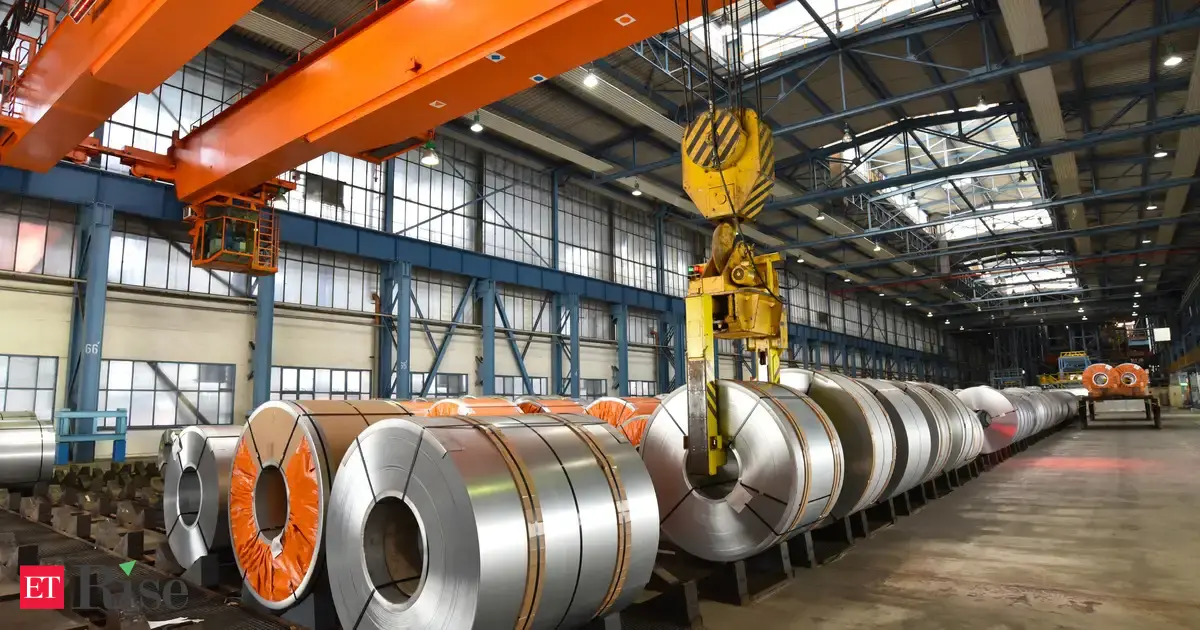
The European Union has introduced new measures to protect its steel industry and curb e-commerce imports from China, aiming to address a significant trade imbalance. View More
The European Union rolled out two measures to protect its steel industry and limit e-commerce small parcels on Wednesday as the 27-nation bloc grapples with its staggering trade imbalance with China . "Today's change is about restoring fairness for European businesses and better protecting our consumers," European Commission President Ursula von der Leyen said in an online post praising a new 3 euro (USD 3.42) customs duty on small packages. "The surge in low-value online imports has put our retailers at an unfair disadvantage. Too many of these products also fail to meet EU safety standards, putting consumers at risk." The Commission said new rules on steel imports are designed to protect EU plants and jobs from "the damaging impacts of global overcapacity" on "a strategically crucial European industry." China's subsidies for steel production have led critics in Brussels and beyond to charge that policy undercuts steel industries from Germany's Ruhr valley to Kyushu Island in Japan. The EU's trade deficit with China widened in 2025 to around 360 billion euros (USD 410 billion) - or roughly 1 billion euros a day - and is rising in 2026. Live Events China's annual global trade surplus reached a near-record USD 1.2 trillion last year even after higher tariffs introduced by the Trump administration, and despite China's dependency on Persian Gulf energy, the war in Iran has not destabilised China's export-led economy with sales of high-tech goods and vehicles abroad having jumped. Flood of small packages has destabilised main street From Wednesday, the EU will remove an customs duty exemption called "de minimis" for parcels valued at under 150 euros. Chinese firms like the e-commerce giants Temu and Shien control about 90 per cent of this type of trade, according to the Commission. The US made a similar move last year. The Commission said 5.9 billion small packages were imported into the EU in 2025, compared with about 1.4 billion in 2022. At roughly 16 million a day, that's 97 per cent of the traffic, but represents just 2 per cent of import value. A majority of the packages were said to have failed safety tests and triggered environmental concerns on overuse of plastic. "Europe finally shows teeth against flood of cheap package deals," said Bernd Lange, the head of the European Parliament's trade committee in a post online. Yet the 3 euro tax might "not affect the big picture" as it's minimal compared to the price gap between Europe and China for goods like e-commerce, according to Gary Ng, a research fellow at the Central European Institute of Asian Studies. While it may be effective in reducing small orders and impulse purchases, Ng said that customers and e-commerce platforms can still make group orders. EU steel under threat The new rules set tariff-free quotas at 18.3 million metric tons annually and imposes an out-of-quota duty of 50 per cent on 26 types of steel imports. It also requires more transparency from importers to trace where the so-called "melt and pour" stage of production takes place to ensure countries like China will not circumvent protections by shipping products to the EU via third countries. The EU had put in new steel tariffs in October to protect the bloc from a flood of steel imports diverted by new US trade policy under Trump. Europe's steel industry is in crisis, with crude steel output falling to a "historic low" in 2026, according to the European Steel Association. "Europe's steel production is shrinking while imports as a share of the EU market are rising," said the trade group's director-general Axel Eggert in March. "EU policymakers must therefore agree the new steel trade measure quickly without it being weakened otherwise Europe risks losing more industrial capacity." While China producers more than half of the world's steel, the EU imports mostly from trade partners like the UK, Ukraine, India, Taiwan, Turkey, Japan and South Korea. The new tariffs could trigger penalties in free trade agreements with nations like Japan but some exemptions have been granted to Ukraine as it battles Russia. "We will remain open to engage - call it a club, call it an alliance, call it whatever you like - but the idea that we come together with like-minded partners on this global challenge of overcapacity in the market," said a Commission official tasked with communicating policy but not authorised to be named. "In an ideal world there is fair competition and level playing fields. Unfortunately, we don't seem to live in an ideal world." Beijing will oppose the new rules even if they do not directly target China, said Alicia Garcia-Herrero, a chief economist for Asia Pacific and Middle East at the French bank Natixis. "The Chinese do not want this instrument to work. This could be a springboard for more," she said. "It opens the door to the overall overcapacity instruments to see how it works." China's Ministry of Commerce in May warned the EU against new steel import regulations and said China would firmly respond to "discriminatory measures" against its companies and products. 'Wolf pack effect' Some experts in China have raised the alarm over growing backlash to mass exports. In a recent report, the Centre for International Security and Strategy at Tsinghua University in Beijing identified "China Shock 2.0" - a massive surge of highly subsidised, advanced Chinese manufacturing exports flooding global markets - as one of the top 10 perceived security risks for China. It warned that the EU would likely impose additional tariffs on China that, together with protectionist sentiment in the US, might inspire other nations to follow suit with "steep tariff hikes and investment screening" targeting Chinese firms. "What makes this risk distinctive is that it does not originate from a single adversary. It is the 'wolf pack effect' of multiple countries acting in concert, inflicting not only direct economic losses on China but, more profoundly, degrading its strategic environment and international business reputation," the report stated. Beijing has hit back at the concept of "China Shock 2.0," defending it instead as an "opportunity" which brings the world wider shared benefits from China's tech innovations. While the EU has not been as combative with China as the Trump administration, "the direction of travel is clearly shifting in Brussels," HSBC economists Frederic Neumann and Justin Feng wrote in a research note on Tuesday. In June, leaders from the Group of Seven nations issued a joint call to develop independent supply chains for critical minerals so crucial for defence and high-tech industries. 'Status quo is not an option' "China and the EU are partners, not rivals," Guo Jiakun, a spokesperson for the Chinese Ministry of Foreign Affairs, said on Tuesday. "The root cause of the EU's problems does not lie with China." China's recent success handling Trump's escalated tariff threats last year suggests it "can withstand external pressure," according to Neumann and Feng, who said Beijing leveraged its control of rare earth supply chains to forge a truce on trade with Washington. "If China managed a US tariff ramp-up and the global energy shock during the US-Iran conflict, it may show less inclination to make concessions to the EU," the economists said. "The near-term outlook points to limited progress towards a comprehensive China-EU settlement." Garcia-Herrero said that despite the importance of the EU's common market to China - 90 per cent of battery and 60 per cent of its electrical vehicles exports go to the bloc - there is a perception in Beijing that they can successfully dissuade common action by lobbying national capitals in the EU. "China thinks Europe has no leverage," she said. "They do think they have the upper hand, by all means." China's Minister of Commerce Wang Wentao met with the EU's trade representative MaroS Šefcovic in Brussels on Monday. "The EU remains open for business but we need to defend our industrial base and keep pushing for a level playing field globally, so our industries get a fair shot at competing," Šefcovic said after the talks. "That is why today's talks - and the ones to follow - matter." He has set an October deadline for meaningful results in rebalancing trade during a visit to Beijing. .Pbanner{display:flex;justify-content:space-between;align-items:center;background-color:#ec1c40;margin-top:20px;padding:5px 10px;border-radius:4px;color:#fff;line-height:10px;} .Pbannertext{display:flex;align-items:center;font-size:16px;font-weight:600;font-family:'Montserrat';} .Pbannertext img{height:20px;margin:0 6px} .Pbannerbutton a{display:flex;align-items:center;background-color:#fff;color:#ec1c40;text-decoration:none;font-weight:600;padding:4px 8px;border-radius:6px;font-size:15px;font-family:'Montserrat';} .Pbannerbutton img{height:20px;margin-right:6px} .Pbannerbutton a:hover{background-color:#f7f7f7} Add as a Reliable and Trusted News Source Add Now!

After a significant acquisition by Premji Invest, Vedanta Iron & Steel shares surged, reaching an all-time high. Other Vedanta companies also saw gains. Analysts note the stock's upward trend. View More

Indian Stainless Steel Development Association ties up with the Global Stainless Steel Expo View More

This comes amid a high-profile corruption sentencing and an MSCI warning Indonesia could be downgraded to frontier-market status. View More
A bundle of Indonesian rupiah and US dollar banknotes arranged at a currency exchange office in Jakarta, Indonesia, on Monday, June 8, 2026. Indonesia's finance and central bank officials said over the weekend they will boost efforts to stabilize the currency and attract inflows after the nation's stocks tumbled at the fastest pace worldwide last week. Photographer: Dimas Ardian/Bloomberg via Getty ImagesBloomberg | Bloomberg | Getty Images Investors will be increasingly wary of Indonesia following a high profile corruption conviction and a warning by index provider MSCI of a potential downgrade of the country's markets, experts warn. There's already evidence: the Jakarta Composite has also lost 7.9% in the last one month and almost 35% year to date. Concern about President Prabowo Subianto's fiscal policies, index provider MSCI's concerns about stock-market governance and now a high-profile corruption case where a former minister was handed a hefty fine and a 10-year prison sentence, are weighing on the country's assets."The Prabowo administration's populist policies have raised concerns with credit ratings agencies and are viewed unfavorably by offshore investors," Jayden Vantarakis, head of Asean equity research at Macquarie Capital, wrote in a July 1 note. A Bank of America survey published in mid-June showed that Indonesia has fallen to fund managers' least-preferred market in Asia, overtaking India. Ratings company S&P Global in February warned that rising fiscal pressures, particularly higher debt-servicing costs, had increased downside risks for Indonesia's sovereign credit profile. Foreign investors have reacted, net selling $4.11 billion of Indonesian stocks in 2026.Bhima Adhinegara, executive director at the Center of Economic and Law Studies in Indonesia, said on CNBC's "Squawk Box Asia" that one example of a problematic policy is the so called "single gate" export system launched in May, where exports of palm oil, coal, and ferroalloys are funneled through a designated state-owned enterprise, PT Danantara Sumberdaya Indonesia. While Jakarta says that this is to reduce revenue leakage and enhance transparency, Adhinegara said that this gives investors the impression that the Indonesian government wants "to take over many of the natural resources and make new layers of bureaucracy very difficult."Furthermore, former education minister Nadiem Makarim was sentenced to 10 years in prison after an Indonesian court found finding him guilty in a corruption case involving the country's education digitalization program. Makarim, who is also co-founder of ride-hailing and payments giant Gojek, was fined 1 billion Indonesian rupiah ($55,870) â and ordered to pay 809.6 billion rupiah in restitution.Prosecutors allege that he and other officials steered technical specifications toward Google products, getting the education ministry to procure Chromebooks at inflated prices despite trial results indicating that the laptops were unsuitable for use in remote regions. The signal to the business community "is very clear. You need to be very, very careful when you're dealing with the government's budget, when you're dealing with the government procurement," Adhinegara said. This is making investors in the startup scene think twice if they want to be involved with companies that are close to the government, he added. The case also comes after index provider MSCI last week extended Indonesia's market review till November. It warned months ago that the country could be downgraded to "frontier market" status from its current "emerging market" classification. MSCI raised concerns about market accessibility earlier this year and froze the country's stocks from its indexes in January, citing investibility concerns.Adhinegara said that it was a "challenging situation," but pointed out Jakarta is still hesitant to open up information to the market to to make it more transparent."If we miss this opportunity to reform the stock market, Indonesia perhaps can be on the consultative or watchlist," he said, and "the next step after November will be [a] downgrade [to] the frontier market." Choose CNBC as your preferred source on Google and never miss a moment from the most trusted name in business news.