
Latest Sectors News

France said it has deployed mine countermeasures to the Middle East, including two mine-hunting ships. View More
Vessels are pictured off coast of the Khor Fakkan Container Terminal, the only natural deep-sea port in the region and one of the major container ports in Sharjah Emirate, along the Gulf of Oman on June 28, 2026. (Photo by AFP via Getty Images) / - | Afp | Getty Images Oman has agreed to work with the U.K. and France to ensure the Gulf country's territorial waters are safe for navigation, the U.K. said on Saturday, as oil shipments through the Strait of Hormuz pick up since the U.S. and Iran signed an agreement last month to reopen the crucial sea lane."The U.K. and France also stand ready to deploy the wider Multinational Military Mission to support freedom of navigation in the Strait of Hormuz," U.K. Prime Minister Keir Starmer said in a joint statement with French President Emmanuel Macron."The Strait of Hormuz is a vital artery for the global economy. Restoring safe transit for ships of all nations through the Strait is a matter of global concern," the statement read.France said it has deployed mine countermeasures to the Middle East, including two mine-hunting ships."Accompanied by two frigates and a maritime patrol aircraft, these assets are ready to contribute, alongside our partners, to the full resumption of navigation and to ensure the safety of traffic in the Strait of Hormuz," Macron said in a statement on X.The U.K., France and more than two dozen countries said in May that they would support freedom of navigation through the Strait of Hormuz under the Multinational Military Mission for the waterway.Oman's Foreign Ministry did not immediately respond to CNBC's emailed request for comment Saturday.Iran warned against the U.K. and French move."The Strait of Hormuz is not a theater for the military display of extra-regional powers," Iran's Deputy Foreign Minister Kazem Gharibabadi said in a post on X."The security of Hormuz lies with the coastal states; the crisis-makers will be held accountable for the consequences of their adventurism; this is a serious warning," Gharibabadi said. Key intermediary Situated on the southeastern coast of the Arabian Peninsula, opposite Iran across the strait, Oman has been in joint talks with Iran on a new maritime security order, amid reports that the two countries could push to establish transit fees.Oman has said that any agreement will comply with international law, although the prospect of a financial system on a waterway that typically handles around 20% of the world's oil has sparked alarm.The Gulf nation has served as a key intermediary in regional crises and remains one of the few countries trusted by both Tehran and Washington, which is keen to ensure the flow through the strait resumes after it was blocked during the war, triggering a global energy crunch.The Sultan of Oman, Haitham bin Tarik, met Starmer in London on Thursday. The two spoke about de-escalating the conflict in the Middle East and to "secure maritime navigation through the Gulf's strategic waterways", Oman's state news agency said in a post on X.The U.S. and Iran signed a memorandum of understanding on June 17 to end nearly four months of war and reopen the Strait of Hormuz, and set âup 60 days of negotiations to work out a permanent peace deal. Oil shipments have ramped up since then. Saudi Arabia has shipped about 34 million barrels of oil through Hormuz since June 17, according to data from the trade intelligence firm Kpler. Riyadh's exports over the two weeks to July 2 were more than double the 15 million barrels the kingdom shipped through the strait from March 9 through June 17.Benchmark Brent crude oil prices have fallen 39% from their highs in March. Stock Chart IconStock chart iconBrent crude oil price per barrel, year to date. The U.S. has staunchly opposed any tolls in the Strait of Hormuz.U.S. President Donald Trump's administration has previously threatened to "aggressively" impose sanctions against Oman if it was seen to help Iran establish a tolling system."All nations should reject outright any efforts by Iran to disrupt the free flow of commerce," Treasury Secretary Scott Bessent said in a post on X on May 28.Under the terms of the U.S. and Iran's memorandum of understanding, Tehran cannot impose tolls on ships during the 60 days of negotiations to find a permanent settlement. watch nowVIDEO2:5902:59Trump on U.S. blockade of Hormuz: 'Not one ship got through to Iran'Fast Money In an interview with CNBC on Thursday, Trump said that "not one ship got through to Iran," suggesting the U.S. blockade of the Strait of Hormuz during the Iran war was not penetrated."It was a wall of steel," he said.However, according to shipping industry information service Lloyd's List, the blockade was breached multiple times by an "Iranian shadow fleet."Iran's parliament speaker and chief negotiator Mohammad Bagher Ghalibaf said Tuesday that Iran has exported more than 40 million barrels of crude oil since the U.S. removed its naval blockade of Iranian ports, and is now selling oil at prices roughly 20% higher than before the war. Choose CNBC as your preferred source on Google and never miss a moment from the most trusted name in business news.
The Securities and Exchange Board of India (Sebi) has granted approval for the Initial Public Offerings of fintech unicorn Moneyview and Chandan Steel. Moneyview strives to raise Rs 1,500 crore through a combination of fresh issues and offer for sale, aiming to enhance its financial services and loan disbursement operations. This milestone showcases a vibrant uptick in India's IPO landscape, with Sebi's approval being a vital step for both entities. View More
Fintech unicorn Moneyview and Chandan Steel have secured Sebi's approval to raise funds through initial public offerings (IPOs), an update with the regulator showed on Friday. Moneyview filed preliminary IPO papers with Sebi in March, while Torrent Gas confidentially submitted draft documents with the regulator in April. The confidential filing route allows companies to submit draft offer documents to Sebi for review without immediately making commercially sensitive information public. After reviewing the draft papers submitted by the two firms, the regulator gave its 'observations' between June 29 and July 2, which, in Sebi's parlance, is equivalent to a go-ahead to float the public issue. Meanwhile, oilfield services provider Shivganga Drillers withdrew its draft papers on June 30, the update showed. Live Events The company filed preliminary papers with Sebi in December 2025 to mobilise Rs 400 crore through its IPO. The proposed maiden public offering was a completely fresh issue of shares with no offer for sale (OFS) component, according to the draft red herring prospectus (DRHP). Moneyview's IPO comprised a fresh issue of equity shares worth Rs 1,500 crore and an OFS of up to 13.6 crore equity shares by existing shareholders, according to the draft papers. The company plans to utilise the proceeds from the fresh issue to expand its financial services business . Funds will be used to support loan disbursals under Default Loss Guarantee (DLG) arrangements, investment in the company's material subsidiary, Whizdm Finance, to strengthen its capital base and general corporate purposes. Founded in 2014 by IIT Delhi graduates Puneet Agarwal and Sanjay Aggarwal, Moneyview operates a digital-first fintech platform focused on consumer lending and financial services. Its mobile application offers a range of financial products across borrowing, payments, investments and insurance, allowing users to access multiple services on a single platform. .Pbanner{display:flex;justify-content:space-between;align-items:center;background-color:#ec1c40;margin-top:20px;padding:5px 10px;border-radius:4px;color:#fff;line-height:10px;} .Pbannertext{display:flex;align-items:center;font-size:16px;font-weight:600;font-family:'Montserrat';} .Pbannertext img{height:20px;margin:0 6px} .Pbannerbutton a{display:flex;align-items:center;background-color:#fff;color:#ec1c40;text-decoration:none;font-weight:600;padding:4px 8px;border-radius:6px;font-size:15px;font-family:'Montserrat';} .Pbannerbutton img{height:20px;margin-right:6px} .Pbannerbutton a:hover{background-color:#f7f7f7} Add as a Reliable and Trusted News Source Add Now! (You can now subscribe to our ETMarkets WhatsApp channel) (You can now subscribe to our ETMarkets WhatsApp channel)

The electric arc furnace plant is part of the steelmaker's ?16,350 crore investment to expand capacity and produce lower-carbon steel. View More
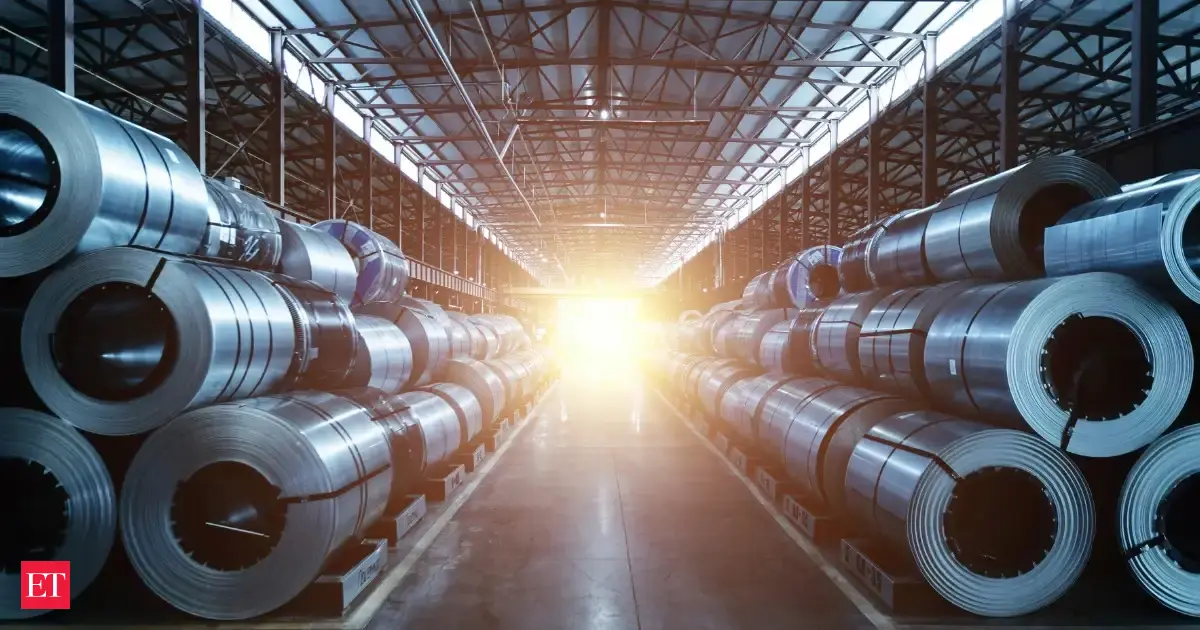
JSW Steel has initiated construction on a significant 2 million tonne steel plant in Andhra Pradesh, a project valued at over Rs 16,350 crore. This ambitious venture, to be developed in two phases by its subsidiary JSW Rayalaseema Steel Ltd, will initially focus on a 1 MTPA integrated plant for low-carbon steel. View More
New Delhi: JSW Steel on Friday said it has commenced the construction of a 2 million steel plant project in Andhra Pradesh at an investment of over Rs 16,350 crore. The project will be set up in two phases through its 100 per cent subsidiary JSW Rayalaseema Steel Ltd, JSW Steel said in a statement. Also Read: Andhra Pradesh CM Chandrababu Naidu launches JSW's Rs 16,350 crore steel plant in Kadapa JSW Steel said it has begun work on the Rayalaseema steel project in Andhra Pradesh. The first phase, with a planned investment of Rs 4,500 crore, would be a 1-MTPA integrated steel plant to manufacture low-carbon-emission steel products. Live Events The company said the second phase, with an additional planned investment of up to Rs 11,850 crore, will expand capacity to 2 MTPA, taking the total project investment up to Rs 16,350 crore. Also Read: India initiates anti-dumping investigation into steel imports from China, Japan, Russia The project will be based on Electric Arc Furnace (EAF) technology using recycled scrap and high-grade direct reduced iron (DRI) as raw material inputs, to manufacture structural steel. Part of JSW Group , JSW Steel has a combined crude steel capacity of 37.9 million tonne per annum (MTPA), including 4.5 MTPA through the JSW JFE Steel JV. .Pbanner{display:flex;justify-content:space-between;align-items:center;background-color:#ec1c40;margin-top:20px;padding:5px 10px;border-radius:4px;color:#fff;line-height:10px;} .Pbannertext{display:flex;align-items:center;font-size:16px;font-weight:600;font-family:'Montserrat';} .Pbannertext img{height:20px;margin:0 6px} .Pbannerbutton a{display:flex;align-items:center;background-color:#fff;color:#ec1c40;text-decoration:none;font-weight:600;padding:4px 8px;border-radius:6px;font-size:15px;font-family:'Montserrat';} .Pbannerbutton img{height:20px;margin-right:6px} .Pbannerbutton a:hover{background-color:#f7f7f7} Add as a Reliable and Trusted News Source Add Now! (You can now subscribe to our Economic Times WhatsApp channel) (You can now subscribe to our Economic Times WhatsApp channel)

As Japanese Prime Minister Sanae Takaichi visits India, industry sees the biggest opportunity not in tariff concessions but in supplier ecosystems, technology transfer, and MSME-to-MSME partnerships that can reshape manufacturing. View More
As India and Japan deepen economic cooperation amid rising geopolitical tensions and supply chain realignments, industry leaders say the next phase of the partnership will not be shaped by billion-dollar investment announcements alone, but by whether thousands of small manufacturers can become part of Japanese production networks. Prime Minister Narendra Modi and his Japanese counterpart Sanae Takaichi on Thursday agreed to strengthen cooperation across energy, artificial intelligence (AI), critical minerals, and resilient supply chains, as both countries seek to reduce dependence on China and build trusted manufacturing partnerships. While large Japanese companies are expected to continue driving investments, industry experts believe that the real test lies further down the value chain. They believe India’s micro, small, and medium enterprises (MSMEs), which form the backbone of the country's manufacturing ecosystem and supplier base, could emerge as the most practical bridge between strategic intent and factory-floor collaboration. According to industry experts who spoke to The Economic Times Digital, the opportunity for MSMEs extends across sectors such as precision engineering, automotive components, electronics, industrial machinery, specialty chemicals, food processing, and textiles. Notably, bilateral merchandise trade between India and Japan increased to about $27.5 billion in FY2025-26 from $25.2 billion in FY2024-25, although Japan continues to enjoy a significant trade surplus. India’s exports largely comprise petroleum products, organic chemicals, marine products, textiles, iron and steel, and engineering goods, while Japanese shipments to India are dominated by machinery, transport equipment, electrical and electronic machinery, iron and steel products, and high-value industrial equipment. Live Events MSME-to-MSME collaboration About 1,500 registered Japanese companies operate in India, as per the government, with thousands of downstream firms and vendors across automobiles, electronics, engineering, and industrial manufacturing. For India, Japan is also among India’s largest long-term investors. Between April 2000 and March 2026, cumulative Japanese foreign direct investment (FDI) into India exceeded $45 billion, spanning automobiles, electronics, industrial machinery, logistics, and infrastructure, according to the government data. The biggest untapped opportunity lies not in merely increasing Indian exports to Japan but in creating direct partnerships between small businesses in both countries, says Anil Bhardwaj, Secretary General of the Federation of Indian Micro and Small & Medium Enterprises (FISME). “The biggest untapped potential for collaboration between India and Japan lies in MSME-to-MSME cooperation. Not from the perspective of Indian MSMEs exporting to Japan, but through Japanese MSMEs entering technical collaborations with Indian MSMEs, sharing best manufacturing practices and setting up joint ventures.” According to him, such collaborations could help Indian manufacturers leapfrog productivity by adopting Japanese manufacturing techniques while giving Japanese companies access to India’s rapidly expanding domestic market and a competitive production base for global exports. The focus on MSMEs assumes significance, given the sector’s central role in India's economy. According to the Economic Survey 2025-26, India has more than 74.7 million MSMEs, employing over 328 million people. The sector contributes 31.1% to India’s gross domestic product (GDP), 35.4% to manufacturing output, and nearly 48.6% to the country’s exports, making it a critical driver of industrial growth and global supply-chain integration. Beyond buyers and sellers Industry officials believe the partnership also needs to move beyond conventional buyer-supplier relationships towards joint product development and technology-led manufacturing. Gopal Agrawal, Chief Executive Officer at speciality chemicals manufacturer Anupam Rasayan India , says the India-Japan partnership presents an opportunity to reshape global speciality chemicals supply chains as companies diversify manufacturing beyond China. “The next phase of the India-Japan partnership should move beyond traditional buyer-supplier relationships towards co-developing next-generation specialty and performance chemistries through joint R&D, technology transfer and long-term manufacturing partnerships,” Agrawal says. According to him, sectors such as specialty chemicals, electronics, semiconductors, advanced materials, and pharmaceuticals offer significant headroom for collaboration. He says stronger policy alignment, faster regulatory harmonisation, and greater industry-to-industry engagement could help both countries build globally competitive manufacturing ecosystems while strengthening supply-chain resilience. Experts highlight that Japanese manufacturers typically place equal emphasis on long-term supplier relationships, process discipline, quality consistency, and continuous improvement. They emphasise that for Indian MSMEs integrating into Japanese supply chains, therefore, require far more than competitive pricing, demanding sustained investments in quality systems, certification and manufacturing excellence. Quality, compliance remain the real challenge Even though India and Japan signed the Comprehensive Economic Partnership Agreement (CEPA) in 2011, experts highlight that tariff liberalisation has not automatically translated into stronger exports. Nisha Taneja, Senior Visiting Professor at the Indian Council for Research on International Economic Relations (ICRIER), says although the agreement eliminated tariffs on nearly 95% of tariff lines for India, many exporters continue to struggle because they fail to meet Japan’s stringent quality and compliance requirements. “Japanese and Indian MSME joint ventures can help bridge this gap by facilitating technology transfer, the adoption of Japanese management practices, and improvements in production processes while enabling Indian firms to meet Japanese quality standards and certification requirements,” Taneja says. In her view, such partnerships can also provide Indian companies with market intelligence, established distribution networks and greater credibility among Japanese buyers, while helping them better understand consumer preferences in Japan. Although collaborations have traditionally been concentrated in automobiles, she sees significant scope to expand into precision engineering, electronics, semiconductors, renewable energy equipment and even labour-intensive sectors, such as textiles and leather. “While access to finance will remain a critical bottleneck for India’s MSMEs, addressing complementary challenges, such as technology upgrading, managerial capabilities, quality compliance, market access, and a better understanding of consumer preferences, is equally essential for enabling them to compete successfully in Japan and other advanced economies,” she says. Building supplier ecosystems Seiji Ota, Partner at Deloitte India, believes that Indian MSMEs could become the most practical vehicle for translating the growing strategic partnership between India and Japan into deeper industrial collaboration. According to him, the strongest opportunities lie in automotive components, precision engineering, industrial tooling, electronics sub-assemblies, specialty chemicals, and factory automation equipment, where Japanese manufacturers depend on highly specialised supplier ecosystems. “The principal challenge is achieving the combination of cost competitiveness, near-zero defects, full traceability, process stability, and on-time delivery that Japanese manufacturers require to compete effectively while protecting the integrity of tightly integrated production systems,” Ota says. According to him, supplier development programmes backed by joint ventures or equity participation tend to deliver the best outcomes by aligning incentives and encouraging long-term technology transfers. He also says Japanese companies should increasingly look beyond established manufacturing hubs, such as Delhi-NCR, Karnataka, Tamil Nadu, and Maharashtra, and integrate capable MSMEs in Tier II and Tier III industrial clusters into Japan-linked supply chains. “Policy support should prioritise certification assistance, supplier matchmaking platforms and co-investment mechanisms to accelerate MSME integration into Japan-linked global manufacturing networks,” Ota says. Looking beyond traditional export markets Industry representatives also believe that Indian MSMEs need to rebalance their export strategy by paying greater attention to Asian markets. Vikas Singh Chauhan, Director of the Home Textile Exporters Welfare Association (HEWA), highlights that Indian exporters continue to focus heavily on traditional destinations, such as the US and Europe, even though markets like Japan, South Korea, and Thailand remain significantly underpenetrated. “Japanese consumers and businesses have a strong preference for Indian products, but our MSMEs are not adequately prepared for that market. We have traditionally focused on the US and Europe, while a much larger opportunity exists in Asia,” he says. According to Chauhan, India’s exports to markets such as Japan, South Korea, and Thailand account for less than 2%, highlighting the untapped opportunity for export-oriented MSMEs. He says the bigger constraints are not financing but inadequate market understanding, limited R&D, and weak supply-chain capabilities. Many MSMEs continue to struggle to meet Japanese quality expectations and delivery timelines, while inconsistencies in raw material quality also affect export competitiveness. “The government should facilitate study tours, buyer-seller meetings, and greater participation in trade exhibitions so that Indian and Japanese MSMEs can understand each other’s requirements. Joint ventures can also play an important role because they help Indian companies understand exactly what Japanese buyers are looking for,” Chauhan says. FISME’s Bhardwaj says for now, the biggest challenge is creating institutional mechanisms that bring enterprises from both countries together. According to him, sustained engagement through business delegations, supplier matchmaking, joint ventures and technology partnerships will be critical to converting the strategic momentum generated by the leaders' meeting into long-term industrial collaboration. “There is a huge distance between Indian and Japanese MSMEs that needs to be bridged to bring them together,” he says, advocating for identifying potential partners, developing trust and institutionalising cooperation by reducing risks to fully realise the potential of this partnership. .Pbanner{display:flex;justify-content:space-between;align-items:center;background-color:#ec1c40;margin-top:20px;padding:5px 10px;border-radius:4px;color:#fff;line-height:10px;} .Pbannertext{display:flex;align-items:center;font-size:16px;font-weight:600;font-family:'Montserrat';} .Pbannertext img{height:20px;margin:0 6px} .Pbannerbutton a{display:flex;align-items:center;background-color:#fff;color:#ec1c40;text-decoration:none;font-weight:600;padding:4px 8px;border-radius:6px;font-size:15px;font-family:'Montserrat';} .Pbannerbutton img{height:20px;margin-right:6px} .Pbannerbutton a:hover{background-color:#f7f7f7} Add as a Reliable and Trusted News Source Add Now!

US President Donald Trump has shared a 90-second AI-generated video portraying himself as Dr Trump prescribing a satirical treatment for what he calls Trump Derangement Syndrome (TDS). View More
Andhra Pradesh Chief Minister N. Chandrababu Naidu has inaugurated the construction of the JSW Rayalaseema Integrated Steel Plant in Kadapa district. This Rs 16,350 crore project, set to be a modern green steel facility, will be developed in two phases and aims for commercial production by March 2028. The initiative is expected to create numerous jobs and boost the state's industrial output. View More
Andhra Pradesh Chief Minister N. Chandrababu Naidu on Friday launched the construction of the JSW Rayalaseema Integrated Steel Plant at Sunnapurallapalli and Peddadanluru villages in Kadapa district . JSW Andhra Pradesh Steel Limited will develop the integrated steel plant in two phases across 1,100 acres with a total investment of Rs 16,350 crore, according to an official statement accessed by PTI. Read more: Govt plans Rs 5,000 crore scheme in 3 months to promote green technologies in steel sector Phase 1 of the project will involve an investment of Rs 4,500 crore, while Phase 2 will see an additional investment of Rs 11,850 crore, taking the plant's capacity to two million tonnes per annum (MTPA). The company aims to commence commercial production by March 2028. Live Events The integrated steel plant has been designed as a modern green steel facility and will use scrap-based Electric Arc Furnace (EAF) technology, significantly reducing carbon emissions. "The project was originally approved in 2019 and witnessed foundation ceremonies in 2019 and again in 2023," says the press release. It was revived after the formation of the TDP-led coalition government in 2024 and its sustained engagement with JSW. The government has also made progress on critical external infrastructure for the project. A dedicated water supply system is being developed, connectivity to National Highway 67 (NH-67) is under way, and authorities are pursuing a 12-km railway link connecting the plant to Muddanuru Railway Station through RITES under the PM Gati Shakti initiative . Read more: Tata Steel in talks with Dutch govt for Netherlands project amid tightened emission norms The project is expected to generate thousands of direct and indirect jobs, promote ancillary industries across Rayalaseema, strengthen Andhra Pradesh's industrial base and help the state emerge as one of India's leading steel-producing hubs. .Pbanner{display:flex;justify-content:space-between;align-items:center;background-color:#ec1c40;margin-top:20px;padding:5px 10px;border-radius:4px;color:#fff;line-height:10px;} .Pbannertext{display:flex;align-items:center;font-size:16px;font-weight:600;font-family:'Montserrat';} .Pbannertext img{height:20px;margin:0 6px} .Pbannerbutton a{display:flex;align-items:center;background-color:#fff;color:#ec1c40;text-decoration:none;font-weight:600;padding:4px 8px;border-radius:6px;font-size:15px;font-family:'Montserrat';} .Pbannerbutton img{height:20px;margin-right:6px} .Pbannerbutton a:hover{background-color:#f7f7f7} Add as a Reliable and Trusted News Source Add Now! (You can now subscribe to our Economic Times WhatsApp channel) (You can now subscribe to our Economic Times WhatsApp channel)
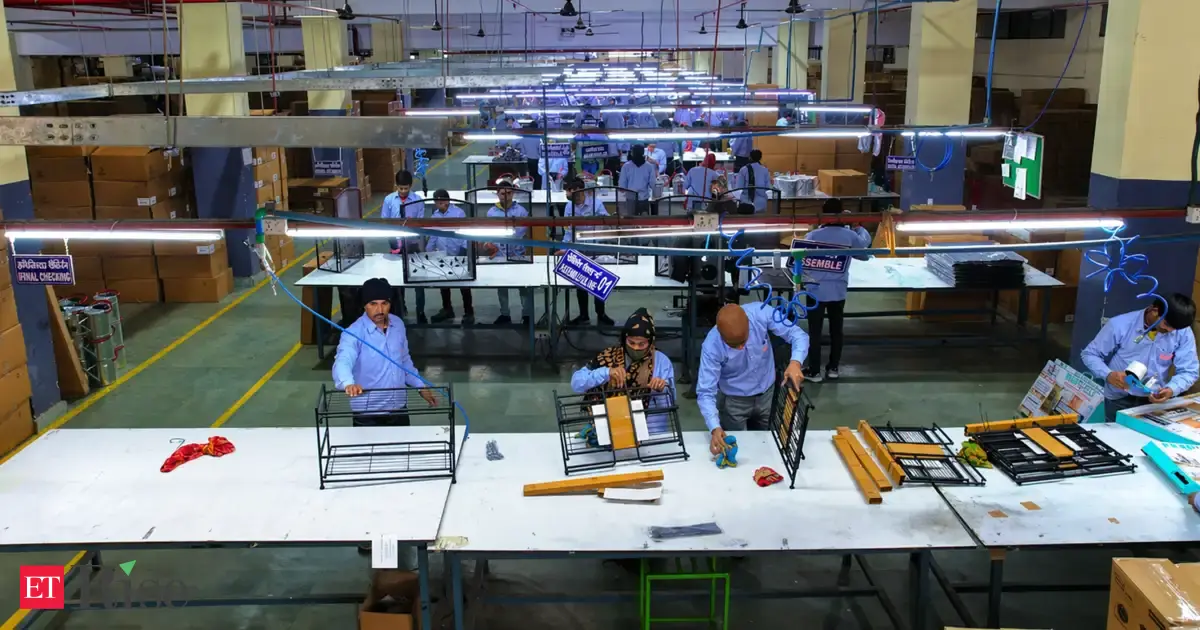
As supply chain disruptions, triggered by geopolitical tensions, impact exporters, especially MSMEs in the country, home improvement product manufacturer KSP Inc. is leveraging automation, AI, and an export-first strategy to compete with China and Vietnam. View More
As India's manufacturing sector pushes towards higher-value exports, Noida-based KSP Inc. offers a glimpse of how traditional family-run businesses are reinventing themselves through automation, integrated manufacturing and technology. Built over three generations, the company, which operates in the home improvement market, has embraced digital transformation while staying true to its legacy. Founded in 1987 by Puneet Bery as a traditional export unit, KSP Inc. has since evolved into a more system-driven manufacturing enterprise. A visit to the company's Noida manufacturing facility offers a glimpse of that strategic shift. Inside its 350,000 sq. ft vertically integrated complex, automated lines produce a wide range of export-bound home improvement goods, from fire pits and fireplace tools to garden décor and storage solutions. It reflects how India’s MSMEs are leveraging automation and integrated operations to cater to some of the largest retailers across North America and Europe. On the factory floor, it’s evident that production is organised across multiple stages, including fabrication, finishing, and assembly, with a visible push towards automation. Robotic welding, powder coating systems and digitised production planning are increasingly replacing manual processes. Live Events Scale, automation, and systems That shift is closely tied to the company’s recent growth trajectory. In FY25, KSP reported an annual turnover of Rs 128.9 crore compared to Rs 106.2 crore in FY24, Rs 153.87 crore in FY22, and Rs 104.43 in FY21, as per the company data. “We have delivered an estimated revenue CAGR of 22-25%, with export revenue growing at around a 25-28% CAGR,” says Siddhant Bery, CFA, Head of Strategy at KSP Inc. The company, which describes itself as a diversified manufacturer, marketer, and exporter of home improvement goods, claims that its container volumes have grown nearly threefold in the past five years, supported by repeat orders and deeper integration with large global buyers. Today, the company ships roughly 1,200 containers annually; the US accounts for nearly 70% of its exports, while Europe contributes 20-22%, as per data from CRISIL. Currently, KSP exports to 12-13 countries, including the US, Canada, the UK, Germany, France, and Australia, and supplies products across all categories to retailers, such as Walmart , Home Depot, Lowe’s, Tesco , and Sainsbury’s. Inside KSP Inc.'s factory, automation is taking center stage. From robotic welding and powder coating to digitised production planning, technology is steadily replacing manual processes across fabrication, finishing and assembly. The company attributes this scale-up to its early investment in automation. “As part of our long-term strategy to improve efficiency, consistency, and scalability, we have consistently invested in automation, amounting to Rs 30 lakh so far, across critical manufacturing processes,” says Bery. “As a result, our output per worker has improved by 40-50% compared to the pre-automation phase. Defect rates have come down by 25-30%, and turnaround times have improved by 20-25%, allowing us to handle higher volumes without proportional increases in manpower,” he adds. KSP manufactures a diverse range of fabricated metal products for the home improvement market. Its portfolio includes garden arches, fences, gates, trellises, plant stands, stainless-steel planters, and shepherd hooks, alongside outdoor décor items such as weathervanes, sundials, and gazing globes. . The company also produces fire pits, braziers, and torches for outdoor living spaces, as well as bird baths and bird feeders for garden enthusiasts. KSP claims around 75% of its manufacturing and finishing processes are now automated, while assembly lines remain partially automated. This hybrid approach allows for both scale and flexibility, particularly when handling customised orders for global clients, the company says. Beyond physical automation, KSP has also built an internal digital layer that is increasingly driving operational decisions. “We have built in-house systems to digitise and optimise decision-making across production, procurement and inventory,” Bery says, adding that AI-driven scheduling aligns machine loading with order priorities, while procurement systems track raw material trends to optimise buying cycles.” These systems are now beginning to show measurable results in terms of efficiency and working capital for the firm. “Inventory holding has reduced by 10-15%, and on-time delivery has improved by 8-10% through better planning cycles,” he adds, noting that tighter integration between planning and execution has improved predictability across operations. As operations scale, digital systems are becoming central to how the business runs. “ERP layers combined with AI-driven decision systems become critical once you cross a certain scale,” Bery says, pointing to a shift where execution is increasingly system-led rather than dependent on manual coordination. KSP's power press plant The focus, however, is not on full automation but on intelligent automation, says Bery. “At KSP, AI is being used to enhance efficiency, planning, and quality control, while skilled human expertise continues to play a critical role in manufacturing,” he says. So, despite automation, the company has increased its employee count. “Our workforce has grown from around 350 to 1,100 over the last five years, aligned with strong revenue expansion. Navigating markets, costs, and constraints The company’s broader strategy reflects a deliberate shift towards becoming a more reliable and predictable supplier in the global supply chain. “Global customers in the home improvement segment today are looking for consistency, scale, and reliability as much as price competitiveness,” says Khalid Masood, MD, Shalimar Group. He believes manufacturers that combine automation with strong operational systems are better positioned to benefit from supply-chain diversification away from China. India’s advantage no longer lies in low-cost labour alone but increasingly in its ability to deliver quality, compliance, and large-scale production for global markets, he says. In agreement with Masood, Bery says, “We are seeing clear supplier diversification away from China, with India benefiting structurally. Automation is helping us move closer to cost parity, while stronger ESG and traceability standards are improving our positioning with Western buyers.” However, competing globally also exposes structural constraints within India’s manufacturing ecosystem. Masood points out that logistics bottlenecks, infrastructure gaps, and regulatory delays continue to affect competitiveness and must be addressed for more Indian MSMEs to achieve similar export-led growth. “Transit delays have increased by 15-20 days in recent periods, and freight costs have gone up by 20-30% during peak disruptions,” KSP’s Bery says, adding that this has extended the company’s working capital cycle by 10-15 days due to higher in-transit inventory. Left Aayaan Bery , Puneet Bery and right Siddhant Bery Despite these challenges, the KSP is gradually working towards diversifying its geographic exposure. While the US and Europe remain its core markets, KSP is exploring expansion into Australia and the Middle East, with a medium-term goal of reducing dependence on any single geography, especially after the recent supply chain disruptions due to the geopolitical and trade tensions. Globally, the home improvement market is projected to reach $1,354.48 billion by 2034, expanding at a CAGR of 4.07% during 2026-2034, as per Fortune Business Insights, driven by an increasing focus on home organisation, outdoor living, and renovation trends. India’s home improvement market, estimated at Rs 3 lakh crore in 2025, is also growing at about 9-10% annually, according to data from global consulting firm Alvarez & Marsal. This shows the tremendous potential of this market. As global supply chains continue to realign, companies like KSP show how traditional family-run exporters are adapting to a more complex and competitive environment. In many ways, the shift is not just about scale but about building systems that can sustain that scale over time. .Pbanner{display:flex;justify-content:space-between;align-items:center;background-color:#ec1c40;margin-top:20px;padding:5px 10px;border-radius:4px;color:#fff;line-height:10px;} .Pbannertext{display:flex;align-items:center;font-size:16px;font-weight:600;font-family:'Montserrat';} .Pbannertext img{height:20px;margin:0 6px} .Pbannerbutton a{display:flex;align-items:center;background-color:#fff;color:#ec1c40;text-decoration:none;font-weight:600;padding:4px 8px;border-radius:6px;font-size:15px;font-family:'Montserrat';} .Pbannerbutton img{height:20px;margin-right:6px} .Pbannerbutton a:hover{background-color:#f7f7f7} Add as a Reliable and Trusted News Source Add Now!
