
Latest Sectors News

Federal safety agency issues final report into 2025 blast that killed 2 at Pennsylvania steel plant View More
Behari Lal Engineering Ltd has secured Rs 90.48 crore from anchor investors. The integrated iron and steel manufacturer's IPO opens for subscription on August 12. The company plans to utilize fresh issue proceeds for facility upgrades and expansion. Funds will also support solar panel installation and debt repayment. The public issue comprises a fresh issue and an offer-for-sale. View More
Behari Lal Engineering Ltd, an integrated iron and steel manufacturing company, on Tuesday said it has raised Rs 90.48 crore from anchor investors ahead of its initial public offering , which opens for subscription on August 12. The company allocated 31.75 lakh equity shares at Rs 285 apiece to anchor investors, according to a circular uploaded on BSE's website. Some of the investors participating in the anchor book included Tata AIA Life Insurance Company , PineBridge Global Funds and Amicorp Capital (Mauritius) Ltd, WhiteOak Capital and Bandhan Mutual Fund. The company's IPO will open on August 12 and close on August 14. The price band has been fixed at Rs 271-285 per equity share. The public issue comprises a fresh issue of shares aggregating up to Rs 93 crore and an Offer-for-Sale of up to 73.20 lakh equity shares. At the upper end of the price band, the IPO is valued at about Rs 302 crore. Live Events The company plans to use the proceeds from the fresh issue for purchase and installation of equipment and machinery, including computers and peripherals, and related civil work at its manufacturing facilities. Funds will also be used for installing rooftop solar panels at both facilities, repayment or pre-payment of certain borrowings and general corporate purposes. Behari Lal Engineering operates two manufacturing facilities at Mandi Gobindgarh in Punjab and has recently commenced construction of a third facility in Fatehgarh Sahib district. The company manufactures metal rolls, engineering castings, alloy steel products and forging ingots for industries including steel, power and heavy engineering. .Pbanner{display:flex;justify-content:space-between;align-items:center;background-color:#ec1c40;margin-top:20px;padding:5px 10px;border-radius:4px;color:#fff;line-height:10px;width: 100%;box-sizing: border-box} .Pbannertext{display:flex;align-items:center;font-size:16px;font-weight:600;font-family:'Montserrat';} .Pbannertext img{height:20px;margin:0 6px} .Pbannerbutton a{display:flex;align-items:center;background-color:#fff;color:#ec1c40;text-decoration:none;font-weight:600;padding:4px 8px;border-radius:6px;font-size:15px;font-family:'Montserrat';} .Pbannerbutton img{height:20px;margin-right:6px} .Pbannerbutton a:hover{background-color:#f7f7f7} Add as a Reliable and Trusted News Source Add Now! (You can now subscribe to our ETMarkets WhatsApp channel) (You can now subscribe to our ETMarkets WhatsApp channel)

The first three-plus years of the AI build-out have been funded by record amounts of equity and debt issued by leading tech companies. Nvidia has a new idea. View More
In this articleNVDAKKRAPOBLKBXBAMGSFollow your favorite stocksCREATE FREE ACCOUNT Jensen Huang, chief executive officer of Nvidia Corp., speaks to members of the media following the company's "Japan AI Ecosystem" reception in Tokyo, Japan, on Thursday, July 16, 2026. Kiyoshi Ota | Bloomberg | Getty Images The first three-plus years of the artificial intelligence build-out have been paid for through record amounts of equity and debt issued by the world's leading tech companies, some of whom are spending so much of their existing capital that they've turned cash flow negative. Nvidia CEO Jensen Huang just revealed what he expects to be the next phase of financing, backed not by corporate balance sheets, but by Wall Street's top power brokers. In an interview with CNBC on Monday, Huang called his plan a "big concept," unveiling it on camera alongside leaders from Goldman Sachs, BlackRock, Blackstone, KKR, Apollo and Brookfield. Together, those firms say they're willing to raise $500 billion, and potentially more, for the construction and build-out of new AI factories, as chipmakers and hyperscalers race to meet seemingly endless demand. Huang and his big-money partners, one by one, described what they view as a fundamental shift in the tech industry: AI infrastructure has become a new asset class."These systems are not like our PCs, not like our phones," Huang told CNBC's Becky Quick. "These are revenue-generating assets now. They're productive, they're long-lived, they're fungible, they're flexible." VIDEO34:5834:58Watch CNBC's full panel with Nvidia's Jensen Huang, BlackRock's Larry Fink, Goldman Sachs' David Solomon, and other top Wall Street executives The discussion was thin on specifics as far as the types of borrowers that will emerge, what interest rates will look like, where the facilities will be constructed and when it will all kick off. Their joint press release said the companies had signed memos of understanding, with no reference to any contracts. The details matter. Almost 11 months ago, Nvidia announced a partnership to invest up to $100 billion in OpenAI as part of a plan to build out data centers requiring a combined 10 gigawatts of power. That investment never materialized, but Nvidia contributed $30 billion to the record-breaking funding round that OpenAI closed earlier this year.Monday's announcement struck a different tone, with the companies collectively pushing the message that money won't be the problem as the AI build-out hits what McKinsey expects will be $7 trillion in global outlays by the end of the decade. 'These are real assets' So far this year, Alphabet, Amazon, Meta, Microsoft and Oracle have raised well over $150 billion combined by selling debt and equity to build data centers and fund the development of new AI models and support the explosion of AI agents. Intel just announced a $15 billion stock offering, then upsized it to $20 billion.Financial firms are now gearing up to jump into the market in a different way, as executives like Goldman Sachs CEO David Solomon and KKR's Waldemar Szlezak see AI equipment attaining familiar money-making characteristics."You're starting to see, in a sense, you know, asset-based financing against this infrastructure build-out," Solomon said on the CNBC panel. "That's not surprising because these are real assets. They have real value." Goldman Sachs CEO David Solomon speaks during an interview at the Economic Club of Washington, Oct. 30, 2025.Kevin Lamarque | Reuters Instead of seeing supercomputers as devices that customers buy and use â the argument goes â these systems, filled with Nvidia's graphics processing units that can cost $3 million per rack, look like profitable investments. Huang says the systems can be improved through his company's CUDA software, and their lifespans extended, leading to better economics. "You can think about it as a revenue stream, and you can securitize it or effectively divide that risk and sell it to investors who want to participate anywhere in that stack," said Szlezak, KKR's head of digital infrastructure. When Wall Street starts getting noticeably excited about securitizing physical assets, a natural question emerges: What could go wrong?One of the hallmarks of the financial crisis of 2007 to 2009 was the packaging of subprime mortgages into bundled securities that were then sold to investors as another way to make money from the housing boom. When mortgage defaults started going up, the whole system began to unwind. Famed short seller Michael Burry, who made a fortune betting against subprime mortgages, suggested late last year that companies including Meta, Oracle, Microsoft, Google and Amazon were overstating the useful life of their AI chips and understating depreciation. The subprime meltdown wasn't part of the conversation on Monday, but several of the financiers acknowledged a certain amount of risk in the AI trade. "There will be excesses, there will be pullbacks," said Jim Zelter, president of Apollo Global Management, adding that the number of participants in the project alleviates concentration concerns. "There'll be big companies that win," Solomon said. "There'll be big companies that turn out to be not what people expected." watch nowVIDEO8:1608:16BlackRock CEO Larry Fink: I'm very bullish on the markets over the next 12 monthsSquawk on the Street In discussing BlackRock's role in Monday's agreement, CEO Larry Fink made a direct comparison to the mortgage market, though he referenced a period decades before the housing boom and bust. "This is the very beginning, like what it was when I started in the mortgage-backed securities market in the 1970s," Fink said. "I look upon this as as a next future for financial engineering." All six of the financiers will make their own lending decisions, Huang said in the interview, noting that Nvidia will connect customers with financing partners. Nvidia said it will have the option of backstopping 25% of every loan, a structure that should result in more favorable interest rates for companies that have previously had to rely on their own credit rating. Borrowers will have to use system architectures specified by Nvidia that would allow another company to take it over and operate it "if something were to happen," Huang said. Nvidia still has plenty to iron out with its financing partners, but Monday's gathering marked a major step in showing the kind of money available to others in the ecosystem. Brookfield CEO Bruce Flatt said Huang created the necessary format for investors."Jensen's leading this to create structures," Flatt said. "Because there's hundreds of trillions of dollars of money in the world."Correction: This story has been updated to correct that the money will be raised from third parties by the Wall Street firms.WATCH: 'Fast Money' traders react to Nvidia's partnership watch nowVIDEO5:1505:15'Fast Money' traders talk Nvidia partnering with six Wall Street firms to fund AI infrastructureFast Money Choose CNBC as your preferred source on Google and never miss a moment from the most trusted name in business news.

This comes amid the BJP also sharpening its digital outreach to the young people following the recent NEET-UG paper leak controversy. View More

On August 11, the Indian stock market faced pressure with the Nifty 50 down 0.54% and Sensex declining 0.50%. Crude oil price rises and geopolitical tensions impacted sentiment, despite gains in pharma and technology stocks as mutual fund inflows weakened by 14.8% in July. View More

JSW Steel reported consolidated Crude Steel production for the month of July 2026 at 24.02 Lakh tonnes registering 3% YoY growth. View More

JSW Steel on Monday reported a three per cent rise in consolidated crude steel production to 24.02 lakh tonnes in July.
The company's crude steel output stood at 23.27 lakh tonnes (LT) in the corresponding month last year.
The production from the company's Indian operations increased by four per cent to 23.39 LT, compared to 22.55 LT in July 2025.
Meanwhile, output from JSW Steel USA's Ohio facility dropped by 13 per cent to 0.63 lakh tonnes, against 0.72 lakh tonnes a year ago.
"The capacity utilisation for Indian operations for the month was at 87 per cent. BF3 of Vijayanagar is ramping up well post re-start from 23 June 2026, and currently operating at above 80 per cent of its rated capacity," the company said in a filing to BSE.
JSW Steel is the flagship business of the USD 25-billion JSW Group. The diversified conglomerate's operations span energy, infrastructure, cement, paints, realty, mobility and defence sectors.
Over the last three decades, JSW Steel has grown from a s View More
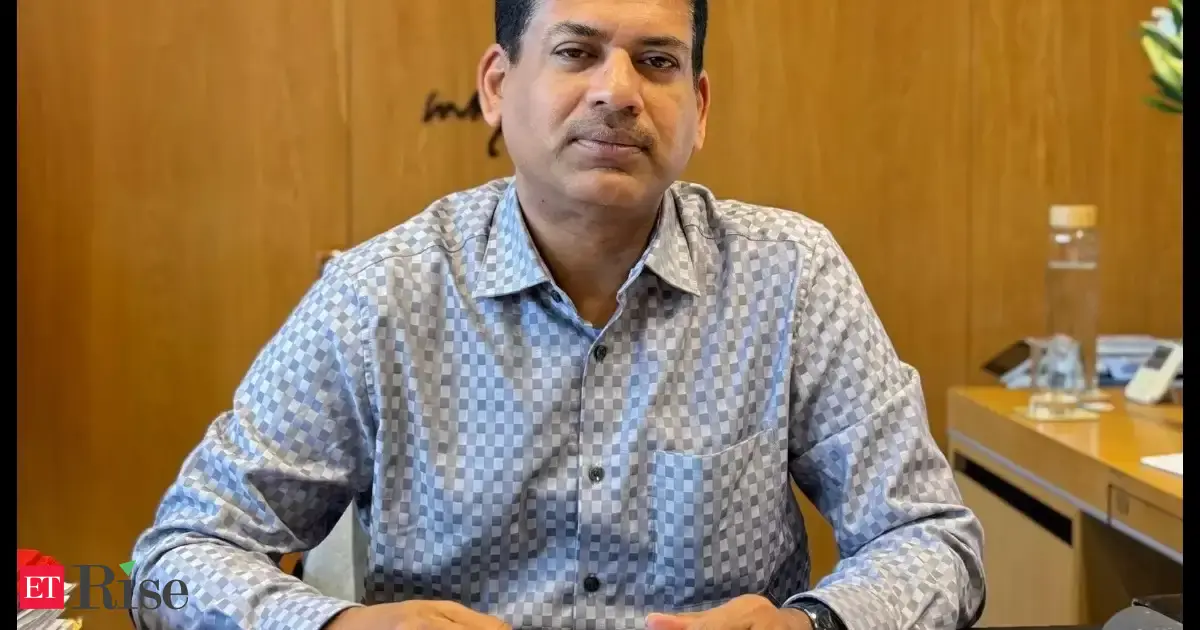
India is on a path to significantly increase its renewable energy capabilities, targeting 500 GW by 2030. With government incentives fostering polysilicon manufacturing, the nation looks to enhance its position as a top solar module producer while expanding its cell production. View More
New Delhi: The Renewable Energy Ministry is mulling an incentive scheme to boost polysilicon manufacturing in the country to reduce dependence on imports, especially from China. Speaking at the 7th CII International Energy Conference & Exhibition here in the capital, Union New and Renewable Energy Secretary Santosh Kumar Sarangi said that today, India stands as the third-largest renewable energy market in the world. India has crossed 300 GW of (non-fossil fuel-based power generation capacity) installations by the end of July (this year) and is on course to meet the target of 500 GW of non-fossil fuel energy installation by 2030, he added. "We are coming up with a support scheme for manufacturing of polysilicon in the country, and we should be able to come up with something which will support our manufacturers to dive deeper into polysilicon manufacturing," the secretary said. He noted that India is the second largest solar module manufacturer in the World, with more than 213 GW of installed capacity. Live Events In solar cells, the country has achieved 32 GW of installed capacity, he stated. "We are looking at 100 GW of solar cell manufacturing capacity to come up by another one year. We are expecting at least 80 GW of ingot wafer manufacturing capacity by June 2028," he said. In wind energy manufacturing, almost 85 per cent of manufacturing is indigenised today, he said, adding that India has 24 GW of manufacturing capacity in the country. He announced that on Thursday, SECI did an RE RTC (round-the-clock) bid with 90 per cent assured power availability in each time block. He noted that the discovered price was Rs 5.25 per unit for RE RTC. "If you look at this RTC bid, it almost matches the nuclear power. Yet, I must commend our developers who have designed their system in a way in which they have the confidence that Rs 5.25 is an inflation-proof price; they will be able to supply for the next 25 years," he added. The latest round-the-clock renewable energy bid provides for 90 per cent assured power availability in each time block, with solar accounting for only 50 per cent of supply during the daytime. Sarangi said the tariff demonstrates the growing competitiveness of renewable energy and the ability of developers to integrate solar, wind and storage technologies to provide reliable power. Turning to cross-border energy cooperation, the secretary stressed that regional energy integration requires physical infrastructure and compatible regulatory systems. "When we talk of cross-border energy trade, we are not talking merely of the hardware of putting wires, putting transformers, substations, or undersea cables; it is equally important to talk of the software relating to cross-border energy transmission," he said. He highlighted the potential of the One Sun, One World, One Grid vision to enable countries across different time zones to complement one another by sharing renewable energy. Sarangi also highlighted India's cooperation with neighbouring countries, including Bhutan, and said India remains committed to sharing its renewable energy experience across the region. He also stated that the average power procurement cost for discoms can go down from the current level of Rs 5.20 per unit to Rs 4.80 per unit, with the infusion of more renewable energy and round-the-clock RE capacity. .Pbanner{display:flex;justify-content:space-between;align-items:center;background-color:#ec1c40;margin-top:20px;padding:5px 10px;border-radius:4px;color:#fff;line-height:10px;width: 100%;box-sizing: border-box} .Pbannertext{display:flex;align-items:center;font-size:16px;font-weight:600;font-family:'Montserrat';} .Pbannertext img{height:20px;margin:0 6px} .Pbannerbutton a{display:flex;align-items:center;background-color:#fff;color:#ec1c40;text-decoration:none;font-weight:600;padding:4px 8px;border-radius:6px;font-size:15px;font-family:'Montserrat';} .Pbannerbutton img{height:20px;margin-right:6px} .Pbannerbutton a:hover{background-color:#f7f7f7} Add as a Reliable and Trusted News Source Add Now!
Jindal Stainless is identifying a site for its proposed Rs 40,000-crore stainless steel manufacturing facility. The company expects clarity on land acquisition within one or two quarters. This new plant will have a capacity of four million tonnes per annum. It will produce specialized steel grades for emerging critical sectors. The Maharashtra government will expedite necessary approvals and provide fiscal incentives. View More
New Delhi: Jindal Stainless is in the process of identifying a site for its proposed Rs 40,000-crore stainless steel manufacturing facility in Maharashtra , the company's CEO Tarun Khulbe said. "It is taking a bit of time, but...we are progressing in that direction," he said, replying to a question related to land acquisition for the said project. Also Read: Competition regulator dismisses case against Jindal Stainless over deals with Indonesian suppliers There will be clarity, maybe in another one or two quarters, and then the company comes out with its plans, Khulbe said. The company is scouting for several land options in the state, he added. Live Events According to the company, the proposed stainless steel facility will have a total capacity of 4 million tonnes per annum and will be constructed in phases, with the first phase expected to be operational in the next four years. Jindal Stainless Ltd (JSL) will also produce specialised grades of steel for critical applications in emerging sectors such as hydrogen, nuclear energy, defence, mobility, infrastructure, and process industries. Also Read: Jindal Steel to spend less, focus on utilising capacity: MD VR Sharma The government of Maharashtra will support the proposed investment by expediting the necessary permissions, registrations, approvals, clearances, and fiscal incentives from the relevant state departments, the company has said. Jindal Stainless is India's largest stainless steel manufacturing player, having a combined capacity of 3 million tonnes per annum (MTPA) at its two plants in Hisar (Haryana) and Jajpur (Odisha). Once operational, the Maharashtra facility will take the company's overall manufacturing capacity to 7 MTPA in India. .Pbanner{display:flex;justify-content:space-between;align-items:center;background-color:#ec1c40;margin-top:20px;padding:5px 10px;border-radius:4px;color:#fff;line-height:10px;width: 100%;box-sizing: border-box} .Pbannertext{display:flex;align-items:center;font-size:16px;font-weight:600;font-family:'Montserrat';} .Pbannertext img{height:20px;margin:0 6px} .Pbannerbutton a{display:flex;align-items:center;background-color:#fff;color:#ec1c40;text-decoration:none;font-weight:600;padding:4px 8px;border-radius:6px;font-size:15px;font-family:'Montserrat';} .Pbannerbutton img{height:20px;margin-right:6px} .Pbannerbutton a:hover{background-color:#f7f7f7} Add as a Reliable and Trusted News Source Add Now! (You can now subscribe to our Economic Times WhatsApp channel) (You can now subscribe to our Economic Times WhatsApp channel)