
Latest Sectors News

Bharat Heavy Electricals Limited has paid a final dividend of Rs 283.56 crore to the government. This payment represents the equity held by the Government of India in the company. The dividend for fiscal year 2025-26 is significantly higher than the previous year's payout. BHEL's total dividend to all shareholders for fiscal year 2025-26 reached Rs 487.49 crore. View More
New Delhi: State-owned engineering firm Bharat Heavy Electricals Ltd (BHEL) on Tuesday said it has paid a final dividend of Rs 283.56 crore for 2025-26 to the government. To this effect, a cheque towards the final dividend on the equity (58.17 per cent) held by the Government of India was presented to H D Kumaraswamy , Union Minister of Heavy Industries and Steel by K Sadashiv Murthy, Chairman and Managing Director, BHEL, a release said. The dividend amount of Rs 283.56 crore for the FY 2025-26 is more than two and a half times of that for FY 2024-25. The total dividend paid to the company's shareholders for FY 2025-26 amounts to Rs 487.49 crore. .Pbanner{display:flex;justify-content:space-between;align-items:center;background-color:#ec1c40;margin-top:20px;padding:5px 10px;border-radius:4px;color:#fff;line-height:10px;width: 100%;box-sizing: border-box} .Pbannertext{display:flex;align-items:center;font-size:16px;font-weight:600;font-family:'Montserrat';} .Pbannertext img{height:20px;margin:0 6px} .Pbannerbutton a{display:flex;align-items:center;background-color:#fff;color:#ec1c40;text-decoration:none;font-weight:600;padding:4px 8px;border-radius:6px;font-size:15px;font-family:'Montserrat';} .Pbannerbutton img{height:20px;margin-right:6px} .Pbannerbutton a:hover{background-color:#f7f7f7} Add as a Reliable and Trusted News Source Add Now! (You can now subscribe to our Economic Times WhatsApp channel) (You can now subscribe to our Economic Times WhatsApp channel)

Partnership will study the use of mining byproduct containing silica, iron oxides and other nutrients in crops such as paddy, wheat and vegetables View More

Whatnot and TikTok are tapping into its potential livestream shopping in the U.S. after a decade of massive success in China. View More
watch nowVIDEO13:2913:29How TikTok and Whatnot are making live shopping mainstreamConsumer & Retail Digital Original Video From a warehouse just north of Chicago, Sarah Potempa â celebrity hairstylist and CEO of the viral Beachwaver hair curling iron â keeps thousands of viewers hooked for hours selling products on TikTok live.This kind of livestream shopping, which has boomed in China over the past decade, is building momentum in the U.S. thanks to social media giant TikTok and live commerce platform Whatnot, which just reached a $20 billion valuation. Beachwaver did about $8,000 in sales during the first four hours of a TikTok livestream in late July, which CNBC sat in for. She auctioned off limited-edition curling irons as her teenage son DJed behind her; demoed hair care products; and promised viewers she would shave her brother-in-law's head live on camera if they sold 500 orders. It was one of hundreds of livestreamed shows that Beachwaver does each year. About a quarter of its $1 million in TikTok Shop sales so far in 2026 originated from livestreams, where the company hosts its own selling shows and works with affiliate creators on the popular social media app. Beachwaver CEO Sarah Potempa hosts livestreams from the company's warehouse in Gurnee, Illinois.CNBC Reminiscent of the QVC craze of the past few decades, livestream shopping puts consumers in front of hosts who sell products in real time.Now, QVC is live on TikTok for more than 200 hours per week across seven channels, according to the company, as it prioritizes digital after recently emerging from bankruptcy."QVC is a great example of a large established retailer that might have been seen as a competitor to TikTok shop ⦠but in fact they have turned out to be a really successful merchant," said Patrick Nommensen, president of strategic initiatives for TikTok Shop in the Americas.Beachwaver got its start on QVC. TikTok and Whatnot have reinvented the wheel. "Nobody is saying, OK, you have 10 minutes at 7 p.m. and get ready and here's your 10 minutes and you're done," said Potempa. "You definitely need to be on longer on a digital platform, but you really are more in control of the revenue." Beachwaver CEO Sarah Potempa uses the company's namesake product, a patented rotating curling iron.CNBC Following in China's footsteps The U.S. live shopping industry is forecast to reach nearly $20 billion in sales in 2026, about 35% higher year over year, according to eMarketer industry estimates. Still, it's a far cry from the rapid growth that live shopping experienced in China.Alibaba introduced Taobao Live in China in 2016. Within five years, the market crossed $50 billion, and it's projected to top $1.1 trillion in 2026, according to eMarketer. (function(){function e(){window.addEventListener(`message`,function(e){if(e.data[`datawrapper-height`]!==void 0){var t=document.querySelectorAll(`iframe`);for(var n in e.data[`datawrapper-height`])for(var r=0,i;i=t[r];r++)if(i.contentWindow===e.source){var a=e.data[`datawrapper-height`][n]+`px`;i.style.height=a}}})}e()})(); Live shopping has been increasingly integrated into Chinese "super apps," which are utilized by millions of users and combine features like social media and messaging in the case of WeChat or artificial intelligence assistance, food delivery and travel booking on Alibaba's Qwen."[Chinese consumers] still like stores, but they use the livestream part of the digital experience as the entertainment, the engagement, the inspiration," said Globaldata managing director Neil Saunders. "In the U.S., we've tended to rely traditionally more on stores to fulfill that role."Saunders said that's changing now as younger consumers lean more into live commerce to discover products. U.S. live shopping winners TikTok Shop launched in 2023. The company shared exclusively with CNBC that live shopping sales more than doubled in the first half of 2026 compared with the same time frame in 2025.The number of live shopping sessions increased by more than 60% during the same period, TikTok said, and total live hours grew by more than 80%.Founded in 2019, Whatnot built its audience on novelties and collectibles. It's grown rapidly over the past year, doubling its valuation since October. Whatnot ranked No. 8 on this year's CNBC Disruptor 50 list, which identifies the most promising venture-backed companies.Whatnot says it's the largest live shopping platform in the U.S. but declined to share its domestic sales figures. The company told CNBC that a majority of the $8 billion in global sales it reported for 2025 were in the U.S."You can have [5,000], 10,000 people on Whatnot or TikTok watching your show at one time," said Eric Pagan, who sells for brands on both platforms, during an interview in mid-August. "I did a show on TikTok this weekend that was well into six figures ⦠I think what brands are not aware of yet is that that exists."Whatnot's core focus is auctions, where viewers can bid on products in real time. TikTok rolled out live auctions in January. "It feels like things are really, really clicking and live shopping is becoming a bit more mainstream," said Whatnot's chief revenue officer, Armand Wilson. "In year one, it was largely all collectibles. ⦠Now pretty much anyone can download Whatnot and find something for them." Whatnot sellers showcasing Funko Pops on the platform.Source: Whatnot Inc. Legacy online marketplaces like Amazon, Walmart and eBay also have native platforms for sellers to host live shopping streams, though those platforms aren't as inherently video-first as social media sites. Amazon and Walmart declined to comment about their live shopping businesses, while a representative for eBay Live described the offering as making shopping "more human." All three companies declined to share livestream sales figures with CNBC.Mark Yuan, a former business development lead for eBay's live shopping division and now the owner of e-commerce consulting company And Luxe, said legacy marketplaces benefit from the consumer trust that comes with how long they have been around."Those are the things you can't buy with money, but unfortunately, what gives them the advantage also might be their barriers as well," he said. "Structurally it's very hard to transform themselves into a discovery-first or content-first [platform]." The future of shopping? Where newer entrants are succeeding is in creating forums for like-minded consumers. Whatnot, which is especially popular for collectibles, says it prioritizes community and has seen success in areas like Funko Pop figurines, Pokemon cards, sneakers and fashion. "Going into a community, really deeply understanding their problems and building a product around them has been the ethos that I think has gotten us to where we are today and what really differentiates us" said Wilson.Pagan, the livestream host, said without the trust of your viewers, "there is no point in even being live." "Those people are my friends," he added. "I believe that they know things about me that a normal person on the street wouldn't know. And we had those conversations on a livestream." TikTok Shop logo on a smartphone.Costfoto | Nurphoto | Getty Images Marshal Cohen, chief retail analyst at Circana, said livestream shopping helps to bridge the gap between e-commerce and traditional retail. "You can't touch and feel the product, but you can hear from others what they think about it," said Cohen. "[Live shopping] bridges that shortfall of the inability to touch and feel. And that's always been online's biggest challenge."But the platforms have their own set of challenges. Whatnot and TikTok have had to contend with issues of counterfeit and stolen goods. For the sellers, leveraging a large platform comes at a cost: Whatnot takes a commission fee of between 4% and 8% of sales depending on the product, and TikTok takes 6% â plus additional payment processing fees. And, the growing popularity of live shopping has made it harder to compete for eyeballs."The biggest challenge really is visibility," said Globaldata's Saunders. "You have to make sure that your feed is aligned with the algorithm and that it's putting you in front of the right people." Choose CNBC as your preferred source on Google and never miss a moment from the most trusted name in business news.

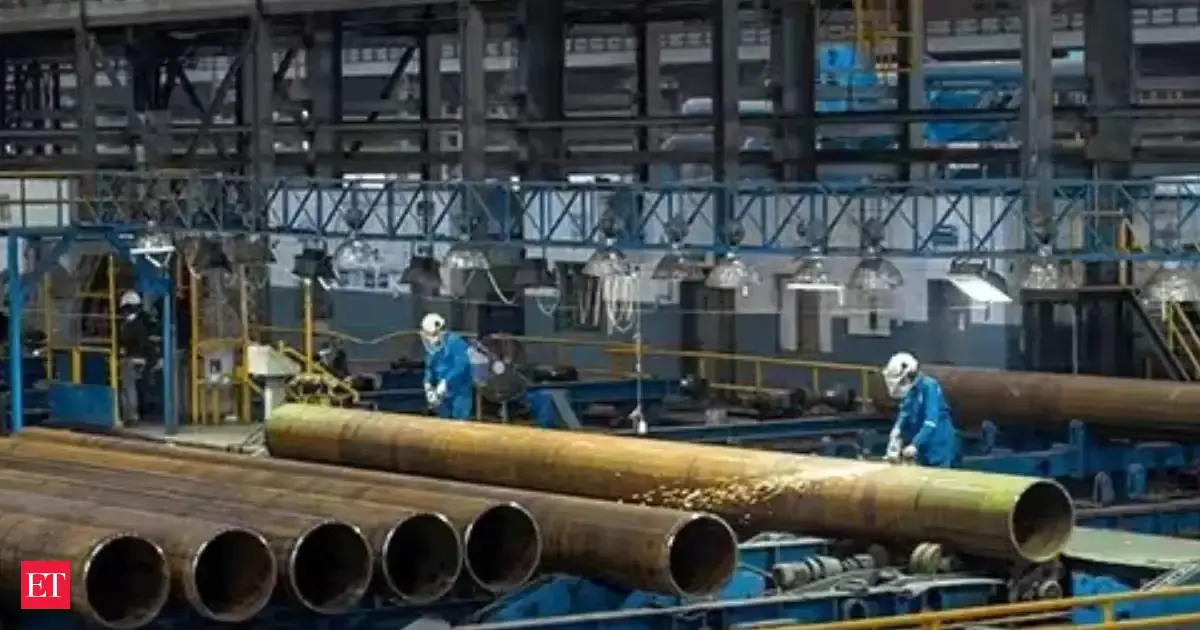
DDEL is the leading industrial pipe fabrication player in India and among the top five globally. It welds steel, stainless steel and other alloy pipes of different diameters for applications across multiple sectors. View More
Bangkok: DEE Development Engineers plans to enter the high-potential nuclear power segment in India, and is eyeing a joint venture partner for piping fabrication solutions for the sector. The BSE-listed entity plans to support the government's vision to set up 100 GW of nuclear capacity by 2047, by providing piping fabrication solutions for upcoming nuclear projects in the country, the company's Chairman and Managing Director (CMD) K L Bansal said in an interaction with PTI. The company is in initial talks with a global entity to explore the possibility of forming a Joint Venture (JV) which would work on developing the much-required technological and other regulatory aspects of setting up a nuclear piping fabrication project, he said. The company said the JV is expected to be finalised by the year end. When asked about investments, Bansal said such projects would require an initial capex of over Rs 100 crore. Live Events Also read | HDFC hunts for new boss amid whispers of Tata to Khara's chances "The project will help reduce India's 100 per cent dependence on imports for nuclear piping fabrication, one of the most critical aspects of nuclear power plant construction and maintenance," the CMD said, adding that DDEL recently forayed into fast-emerging data centre segment by securing its first order for core piping from a private entity. As part of the government's Make in India initiative, DEE Development Engineers Ltd (DDEL) has also commissioned India's first heavy-wall seamless pipe manufacturing facility at Anjar in Gujarat with an annual capacity of 7,000 tonnes. Set up with an investment of over Rs 100 crore, the facility can meet India's 100 per cent requirement for high-strength specialised pipes used in mega power projects, Bansal noted. With its new business initiatives, the company aims to achieve a topline of over Rs 2,500 crore by 2030, up from Rs 1,200 crore in FY26. DDEL is the leading industrial pipe fabrication player in India and among the top five globally. It welds steel, stainless steel and other alloy pipes of different diameters for applications across multiple sectors. Also read | NCLT hits a pause on Subhash Chandra's big haircut The company also owns and operates a piping fabrication facility in Bang Pakong, around 70 km from Bangkok in Thailand. The CMD said DDEL currently has an order book of Rs 2,500 crore, of which 60 per cent orders are from power sector players and 35 per cent from oil and gas majors. These orders are scheduled to be executed over the next 12-18 months. Around 50 per cent of the orders come from overseas customers, while the remaining are from the domestic market, he said, adding that the company caters to customers in the US, Africa, Southeast Asia and other regions. .Pbanner{display:flex;justify-content:space-between;align-items:center;background-color:#ec1c40;margin-top:20px;padding:5px 10px;border-radius:4px;color:#fff;line-height:10px;width: 100%;box-sizing: border-box} .Pbannertext{display:flex;align-items:center;font-size:16px;font-weight:600;font-family:'Montserrat';} .Pbannertext img{height:20px;margin:0 6px} .Pbannerbutton a{display:flex;align-items:center;background-color:#fff;color:#ec1c40;text-decoration:none;font-weight:600;padding:4px 8px;border-radius:6px;font-size:15px;font-family:'Montserrat';} .Pbannerbutton img{height:20px;margin-right:6px} .Pbannerbutton a:hover{background-color:#f7f7f7} Add as a Reliable and Trusted News Source Add Now! (You can now subscribe to our Economic Times WhatsApp channel) (You can now subscribe to our Economic Times WhatsApp channel)

Mortgage rates aren't expected to get much cheaper for homebuyers in 2027, especially if inflation stays high. View More
If you've been waiting for the housing market to get more affordable before buying a home, 2027 may not bring much relief.The latest forecasts suggest 30-year fixed mortgage rates could remain closer to 7% next year, keeping borrowing costs high for prospective buyers. The average 30-year fixed rate is currently 6.81%, according to Mortgage News Daily. Fannie Mae now expects rates to average 6.7% in 2027, a notable jump from the 6.3% it forecast just a month ago. The Mortgage Bankers Association's August forecast also expects rates to average 6.7% next year, up from 6.5% in its June forecast.In other words, forecasters who had expected mortgage rates to ease now expect them to remain roughly where they are today."Most of the recent affordability challenges have come from increased mortgage rates. Home prices have actually been falling on a year-over-year basis throughout 2026 at the national level," says Joel Berner, senior economist at Realtor.com. "Behind the scenes though, inflation is the real culprit." When inflation remains high, investors typically demand higher yields on Treasury bonds, which can keep mortgage rates higher, too. High inflation can also leave buyers with less spending power and make homes more expensive to build.Realtor.com's own forecast expected mortgage rates around 6.3% for the rest of 2026, an outlook the company has since said "may prove too optimistic" as inflation and the war in Iran put renewed upward pressure on rates.For would-be buyers, that means waiting until 2027 may not make buying a home much cheaper. Why homebuying affordability may remain strained in 2027 Mortgage rates tend to track the yield on the 10-year Treasury note, which is influenced by expectations for inflation and economic growth. When inflation is expected to remain high, Treasury yields and mortgage rates can rise with it."Economic reality has forced even the most optimistic interest rate forecasters to project a higher rate environment than anticipated earlier this year," says Marty Green, a residential mortgage lending attorney at Polunsky Beitel Green.The Fed's preferred measure of inflation rose 3.7% in July from a year earlier, according to the Bureau of Economic Analysis, well above the central bank's 2% annual target. Green points to renewed tariffs and the war in Iran as factors that could keep inflation high and make lower mortgage rates harder to forecast.Inflation is also eating into homebuyers' purchasing power. Average hourly earnings declined at a 1.66% annualized rate after adjusting for inflation during the first half of 2026, according to an analysis of federal data by the Hamilton Project at the Brookings Institution.At the same time, buyers are still facing home prices roughly 59% higher than in 2020, and they're expected to keep climbing. Fannie Mae's latest survey of more than 100 housing experts projects national home prices will increase 2.2% in 2027. In markets where home prices are rising alongside mortgage rates, Berner calls it an affordability "double-whammy."Building more homes could help ease pressure on prices, but it's becoming more expensive to build them, too.Tariffs are raising the price of materials used throughout a home, including lumber, plywood, steel, aluminum, copper and cement, according to the National Association of Home Builders. Builders are also dealing with persistent shortages of skilled workers.The war in Iran is adding to the expense, too. Higher oil prices have pushed up gas and diesel prices, making building materials more expensive to produce and transport, according to the NAHB."What this leads to is less (in quantity) and less affordable inventory being delivered to the housing market," Berner says. Take control of your money with CNBC Select CNBC Select is editorially independent and may earn a commission from affiliate partners on links.47% say they donât think theyâll ever be able to fully retire. This tool could be a solution for guaranteed incomeAmericans are carrying more credit card debt than banks report. Here are 3 things you can do todayThe best tools to build an emergency fund when you live paycheck to paycheckOnly one in four Americans has a will. Making one is easier than you thinkNew student loan rules are giving scammers a new opening. Hereâs how to protect yourself VIDEO9:3609:36I quit my $250K/year tech jobânow I make $33K/year selling matchaMillennial Money

The supply situation has remained tight with most steel companies taking annual maintenance shutdowns in anticipation of weak demand during monsoon View More

When the U.S.-Canada trade war erupted, the market repriced metals and materials stocks and ETFs, but longer-term investors should be wary. View More
In this articleSLXSTLD.SPXXLBFollow your favorite stocksCREATE FREE ACCOUNT Trucks traverse the Ambassador Bridge, a main trade route linking Canada and the United States in Windsor, Ontario, Canada July 5, 2020.Carlos Osorio | Reuters As the U.S. and Canada stare down tens of billions of dollars in dueling tariff regimes as a result of President Trump's new trade war against the nation's second-biggest trading partner, companies, economists, and investors are back in the game of attempting to forecast the level of volatility to expect on corporate balance sheets and in stock prices. The U.S. government's 50% tariffs on a wide range of Canadian goods were met with Canada's $20 billion in retaliatory tariffs slated to go into effect on Sept. 8. They encompass more than 700 U.S. goods, meant to mirror the size of Trump's import taxes on Canadian wine, cement, hockey sticks and more. The counter-tariffs, which range from 15% to 50%, target a wide array of U.S. imports into Canada, including dairy, seafood, appliances, wood and paper products, and clothes.There were some real-time market winners as the new trade war dominated headlines last Monday. Consider the reaction in steel and materials stocks, including Nucor, Steel Dynamics, Cleveland-Cliffs and Century Aluminum, which all shot up on Monday after the U.S.-Canada trade talks broke down, and after many had fallen the week before on bets a new U.S-Canada deal would lower tariffs on steel and aluminum. The VanEck Steel ETF (SLX) rose 1.6% on Monday alone, while the State Street Materials Select Sector SPDR (XLB) hit an intraday all-time high â surpassing its previous all-time record price reached in February â as the metals stocks and other producers rallied.But the new trade war rally didn't last. XLB ended the five-day trading week in negative territory and SLX was close to flat. To be sure, these funds have already booked some hefty gains in 2026. Year-to-date, both ETFs are beating the S&P 500, with SLX up over 28% and XLB up over 18%, according to Morningstar data as of Aug. 28. Atsi Sheth, chief credit officer at Moody's Ratings, said uncertainty is the watchword now. "Expect much more of this uncertainty for some time to come," Sheth said.Which businesses win in a trade war and which lose depends on an increasingly complex supply chain. One of the most complicated is the auto sector, where parts cross back and forth over the border multiple times in the production of a vehicle."For the auto sector, our view is that the sector is so integrated that the tariffs just don't impact the country you are tariffing but your own country," Sheth said of the U.S.-Canada automobile manufacturing ecosystem.U.S. steel companies are more likely to benefit, she said, because the U.S. market is larger."The auto sector, there are no winners. Steel ... U.S. has a little edge," Sheth said. Stock Chart IconStock chart iconPerformance of the State Street Select Sector Materials ETF over the past month. "The new tariffs create a meaningful but manageable headwind," said Angelo Kourkafas, senior global investment strategist at Edward Jones, a headwind that cuts both ways, as higher steel and aluminum costs also start working through U.S. manufacturers, autos, and construction on this side of the border.Kyle Mohrbach, senior executive for North America automotive at o9 Solutions, a supply chain technology and consulting firm, said the greatest exposure sits in components and materials that are Canadian-sourced, single-sourced, hard to substitute, or required to keep an assembly line moving. In the automotive sector, that includes everything from steel, stampings, and powertrain components to braking systems, electronics and specialized subassemblies.Why short-term winners in trade wars are hard to trustScott Beaulier, dean of the College of Business and professor of economics at the University of Wyoming, draws a distinction between stocks that benefit and businesses that benefit. "A tariff can create an immediate scarcity premium for domestic steel and aluminum producers. But the durable winners will be firms that have three things: domestic capacity they can bring online, relatively secure energy and raw-material inputs, and customers unable to easily substitute away from them," Beaulier said. That's a much smaller group than "American metals companies," he said.Aluminum is a good example, according to Beaulier."The United States remains heavily import-dependent, and Canada has supplied an extraordinary share of U.S. primary aluminum. You can't tariff our dependence away overnight," Beaulier said, adding that smelters are enormously capital- and energy-intensive, and new capacity takes years rather than months to build."In the meantime, the tariff can raise the price received by U.S. producers while simultaneously raising input costs for American manufacturers using aluminum. I'd be cautious about treating an initial pop in metals stocks as evidence of a durable economy-wide gain," Beaulier said. ETF Strategist full coverage:Here's a look at other stories offering insight on ETFs for investors.Investors made easy money on oil bets during Iran war. The trade is getting trickierFor Gen X investors nearing retirement, the dotcom bubble looms largeJamie Dimon made a bearish treasuries call. Investors were all over itHow to prepare a tech-heavy portfolio with record gains for an inevitable downturnTrump Accounts are good start, but shouldn't be a child's only investment Companies are already scrambling to manage the volatile situation, said Melissa Irmen, director of advocacy for the National Association of Foreign-Trade Zones, which represents over 1,300 companies and over 500,000 employees. "We have already been seeing some supply chain shifts and sourcing decisions adjusted," Irmen said.A foreign-trade zone lets companies bring imported materials into the U.S. without paying tariffs right away, and if those goods are re-exported or reworked into a different product, the company can defer, reduce, or sometimes avoid the duty entirely.Irmen said corporate adjustments to the latest rules of origin for trade â which dictate whether supply chain relocations can result in tariff avoidance â saw a lot of warehousing move to Canada over the past few years. But now, companies may just permanently alter their supply chains to avoid the uncertainty."All of the tariff uncertainty will permanently change the landscape. Companies are not able to make the fast decisions required for the tariff changes. Supply chains don't work that way," Irmen said. "We tell our members things will not go back to the way they were pre-2025. Try to look as long term as you can," she added.The difference between a supply chain and border mattersMeanwhile, only time will tell how the market handles these shocks, and experts say one shouldn't be immediately seduced by any quick positive reaction, such as in steel."The stock pop is a headline reflex, honestly â mills reprice to replacement cost the second a 50% wall goes up, so of course Nucor and Cleveland-Cliffs jumped," said Dan Luttner, managing partner at NEOS by Argon & Company, a supply chain consulting firm. "But that's not the interesting question. The interesting question is who controls their feedstock inside the wall versus who's still exposed to it?"Luttner said the SLX and XLB moves illustrated a market repricing instantly to a 50% tariff wall, but the action said little about which companies inside those funds actually control their own fates in a trade war. He said Nucor and Cleveland-Cliffs run electric arc furnaces and integrated capacity that never touches Canadian ore or slab, so they keep the price umbrella structurally. Still, there is no single trade on that structural element to the business: Nucor's shares are up close to 50% this year, while Cleveland-Cliffs is in negative territory in 2026 due to ongoing balance sheet stress. Century Aluminum is tricky for another reason, according to Luttner. Because U.S. primary aluminum capacity is thin, a lot of what feeds it still crosses the border as alumina or semi-finished product."So the upside is real, but it's not immune to the same friction it's supposed to be protected from," Luttner said. Then there are metals plays like Freeport-McMoRan, the third-largest holding in XLB at 6.5% of the ETF, which doesn't really belong in this basket at all, because it's a copper and critical-minerals policy story, an entirely different trade story that is also benefitting from the AI boom. Stock Chart IconStock chart iconCentury Aluminum stock performance year-to-date. Luttner said the border itself is a supply chain, not a line on a map. North American steel and aluminum have run on an integrated, multi-crossing system for three decades."Canadian primary aluminum into U.S. extruders, U.S.-melted steel going north for finishing, coming back south inside finished autos and appliances. A tariff doesn't tax that shipment once. It compounds every time the metal re-crosses," Luttner said. That is what corporate planning teams are up against right now: pulling apart bills of materials line by line to find where a part physically crosses the border more than once. "That's where this actually bites," Luttner added.That makes the new trade war between the U.S. and Canada very different from another recent trade chokepoint for the economy, the Strait of Hormuz."Hormuz is geography, the oil has nowhere else to go. This is policy â the volume can reroute, reshore, or get absorbed into price, it just takes 12 to 24 months of capital and requalification to do it," Luttner said. "It's a slow-motion reallocation. So the real story isn't which stock popped, it's which manufacturers had already de-risked their supply chain before this week, and which ones are only now finding out how many times their product crosses that border," Luttner said.Moody's Sheth said the rating agency will be watching closely the performance within heavy manufacturing, steel and aluminum. Ultimately, the larger companies can usually withstand shocks better but the uncertainty of the situation can cause the most damage as companies reconfigure their long term options and supply chains. "Companies won't sit on their hands and wait," Sheth said.âCNBC's Kevin Breuninger contributed to this report. watch nowVIDEO7:4507:45Fmr. Canadian Deputy PM: Canadians are prepared to take the pain because our sovereignty is worth itSquawk Box Choose CNBC as your preferred source on Google and never miss a moment from the most trusted name in business news.
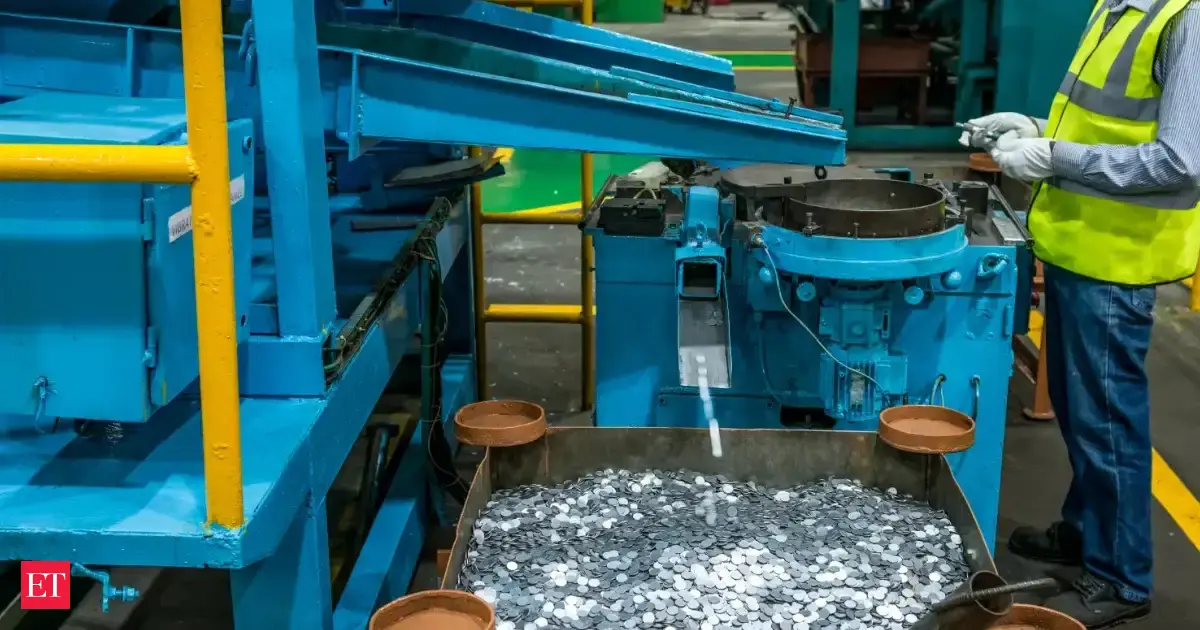
Jindal Stainless is set to boost its annual coin blank production by twenty percent, responding to the escalating worldwide demand for non-paper currency options. The company caters to both Indian and international mints, firmly establishing its presence. Additionally, Jindal Stainless leads in the global razor blade sector with impressive yearly outputs. Environmental sustainability remains a focus at the Hisar facility, employing water recovery techniques and green energy innovations. View More
Hisar: Jindal Stainless is enhancing its annual capacity of coin blanks by 20 per cent to 12,000 tonnes as the company anticipates growth in demand for non-paper based currency across various geographies, a senior company official said. "Many would not know that we manufacture coins blanks for Indian Mint as well as various international mints," Vijay Bindlish, the Unit Head of Jindal Stainless Hisar facility said in a joint management interaction. Coin blanks are produced at the country's largest stainless steel maker's Special Products Division (SPD) in Hisar under high security arrangements, along with other high-end finished products such as razor blades and precision strips, the official told PTI. Also read: Jindal Stainless scouting Maharashtra site for Rs 40,000 crore plant Sharing details of the business, Bindlish said the company supplies unstamped coins to Indian, French, Finnish, Polish, Dutch, UK's Royal Mint, Malaysian and Slovak mints. Live Events Production is customised according to exact specifications provided by the mints, including size, diameter, thickness, shape, and alloy composition. On growth plans for this business, Bindlish said, "We are aiming for more such orders from across the world as we see demand rising due to the lower carbon footprint aspect of stainless steel manufacturing . We are expecting work orders of the denominations which we are not manufacturing for them currently. Being a major player in this field, we are also looking to enter new markets." For this, the company is increasing coin blank making capacity to 12,000 tonne from the current 10,000 tonne, he said. Saurabh Kumar, head of the SPD, added that the division dominates the global market with a 60-70 per cent share, producing 19,500 tonnes of razor blades annually after a recent increase from 13,200 tonnes. These blades are supplied to countries such as India, Poland, Vietnam, China, and South Korea, and the company intends to maintain its market leadership. The 0.8 million tonne (MT) Hisar facility of Jindal Stainless is one of the oldest industrial setups in Haryana, which started carbon steel production in 1970 and shifted to stainless steel making in 1978 to curb import dependence. Sushil Jain, head of the cold rolling division, explained that the facility operates a zero liquid discharge system where processed water and acids are recovered, treated, and reused internally with zero industrial effluent. Furthermore, the plant is increasing its green energy usage to 80 per cent this year, up from 70 per cent, supported by two captive hydrogen projects and a floating solar project, he said. .Pbanner{display:flex;justify-content:space-between;align-items:center;background-color:#ec1c40;margin-top:20px;padding:5px 10px;border-radius:4px;color:#fff;line-height:10px;width: 100%;box-sizing: border-box} .Pbannertext{display:flex;align-items:center;font-size:16px;font-weight:600;font-family:'Montserrat';} .Pbannertext img{height:20px;margin:0 6px} .Pbannerbutton a{display:flex;align-items:center;background-color:#fff;color:#ec1c40;text-decoration:none;font-weight:600;padding:4px 8px;border-radius:6px;font-size:15px;font-family:'Montserrat';} .Pbannerbutton img{height:20px;margin-right:6px} .Pbannerbutton a:hover{background-color:#f7f7f7} Add as a Reliable and Trusted News Source Add Now! (You can now subscribe to our Economic Times WhatsApp channel) (You can now subscribe to our Economic Times WhatsApp channel)
