Latest Sectors News

India's strong economic growth has surprised every quarter for the last year, but the performance of its key stock benchmarks has been deeply disappointing. View More
In this articleDIXON-INAMBER-IN.NSEI@LCO27GFollow your favorite stocksCREATE FREE ACCOUNT Hello, this is Priyanka Salve, writing to you from Singapore. Welcome to the latest edition of "Inside India" â your one-stop destination for stories and developments from the world's fastest-growing large economy.India's quarterly economic growth has exceeded expectations several times over the past year, defying a bleak global trade environment, high energy prices and geopolitical uncertainties. But this has failed to boost the country's key stock benchmarks, which have been among the worst-performing major indexes globally.I spoke with experts to understand what's behind that disconnect. Any thoughts on today's newsletter? Share them with the team. The big story India is beating growth expectations even as major economies such as the U.S., China and Japan are seeing a slowdown. But the country's key stock benchmarks are struggling to reflect that strength, hinting at a festering disconnect between markets and the economy.On Monday, the Indian economy surprised with a 7.8% growth in the June quarter, leading global brokerages to upgrade their economic forecasts for the country. Analysts also underscored that all cylinders of the Indian economy were firing, with high-frequency indicators showing that consumption and investment in the country were holding up. Global brokerages Morgan Stanley and Citi raised their economic growth forecasts for India to 7.3% for the year ending in March 2027 from 6.7% and 6.9%, respectively, estimated earlier. Celebrating the economic outperformance, Indian Prime Minister Narendra Modi said on Monday that "Doomsayers were doomed, and India bloomed ⦠yet again."But when the markets opened on Tuesday, the Nifty 50 bled red, seeming like the biggest skeptic of the country's robust economic growth outlook. KOLKATA, WEST BENGAL, INDIA - 2026/08/29: A worker is seen welding the joints of a giant utensil at an iron utensil manufacturing unit in Kolkata. Sopa Images | Lightrocket | Getty Images The index, which has dropped 8% since the start of the year, clocked another weak session, closing slightly lower. Since January, India's benchmark indexes have been among the worst-performing across major global equity markets.Experts told CNBC that large-cap stock indexes such as the Nifty 50 are heavily concentrated on stocks of financial services and IT companies, which do not capture heightened economic activity in emerging sectors such as manufacturing, fintech and consumer tech. "The headline indices have been held back by weakness in some large-cap names, while small- and mid-cap stocks have performed much better," Dhiraj Relli, managing director and chief executive of HDFC Securities, told CNBC.Large banks in India are taking fewer lending risks, while non-banking financial companies, which are underrepresented in the Nifty 50, are extending loans to unserved segments such as micro-enterprises, rural consumers, and used-vehicle buyers, several experts said.IT service companies, meanwhile, are facing revenue and margin pressure amid global AI adoption, they said. IT and financial services firms together make up about 45% of the Nifty 50's weightage. Since the start of the year, the Nifty Bank index has declined more than 4% so far this year, while the Nifty IT index is down nearly 18%.The story of India's economic performance is moving outside of the large-cap benchmarks and more into mid- and small-caps, Garima Kapoor, deputy head of research and economist at Elara Capital, told CNBC's "Inside India." There has been a disruption in the way India consumes and banks, which has increased the opportunity size for small- and mid-cap companies, Kapoor said, adding that profit pools are "materially" shifting from large-caps to mid-caps. Underlying shiftIndia's recent success in electronic manufacturing has also not been captured by top indexes. Earlier this year, India became the world's second largest mobile manufacturer, with more than 300 production units as compared to just two in 2014. Electronic manufacturing companies such as Dixon Technologies and Amber Enterprises, whose stocks are up 20% and 16% since the start of the year, are not part of the benchmark stock indexes. Mid-cap and some small-cap stocks "have greater exposure to manufacturing, fintech, consumer technology, and other emerging sectors that are capturing a growing share of economic activity," Mohammad Hassan, head of APAC equities dividend forecasting at S&P Global Market Intelligence, told CNBC.The average earnings growth of Nifty 50 companies was 11% in the June quarter, while mid-caps reported 31% growth from a year ago, according to data shared with CNBC by Indian broking firm Ambit Capital. In the financial year ending March, profits of Nifty 50 companies rose by an average of 12%, while those for Nifty Midcap 150 grew by 44%. Mid-cap companies are also investing more in building new capacity, Nitin Bhasin, head of institutional equities at Ambit Capital, told CNBC.The capex of listed Indian companies has more than doubled to 14.5 trillion rupees ($152.6 billion) over the last six years ending in March 2026, Ambit Capital said in a report in August. The share of mid-cap companies in that has increased to 20% from 14% while that of 100 large-cap companies has fallen from 78% to 72%, the report showed.As a result of these shifts, in the last year, while the Nifty 50 has declined by more than 2%, the Nifty Midcap 150 index is up 10%, as per LSEG data.Midcap and small cap indexes are "more direct proxies for domestic economic acceleration," and a growing number of these firms are crossing major market cap milestones of $1 billion, Relli of HDFC said, adding that "A large part of India's economic activity comes from sectors and businesses that are either unlisted or have limited representation in the major equity indices." Need to knowModi asks Putin to end Ukraine war amid U.S. tariff threat on Russian oil purchasesIndian Prime Minister Narendra Modi has urged Russia to end the Ukraine war and for a cessation of hostilities during his meeting with Russian President Vladimir Putin on the sidelines of the Shanghai Cooperation Organization summit on MondayIndia's largest private sector lender HDFC Bank's CEO makes a surprise exitHDFC Bank's Chief Executive Sashidhar Jagdishan has made a surprise announcement about exiting the bank after the end of his term in October. Analysts believe that the successor's profile could offer the bank re-rating potential, especially as the stock has been battered since the start of the year.OpenAI rolls out ads on select ChatGPT plans in India to boost monetization, support wider accessOpenAI has rolled out ads on ChatGPT for select plans in India, one of its largest and most active markets, as the artificial intelligence company looks to maximize its revenue ahead of its planned listing next year. Advertising would support "broader access to ChatGPT through free and lower-cost tiers," a spokesperson for OpenAI told CNBC in an email. Coming up Sept. 2-4: Belgium Prime Minister Bart De Wever in India Sept. 3: India HSBC composite PMI final for August Choose CNBC as your preferred source on Google and never miss a moment from the most trusted name in business news.
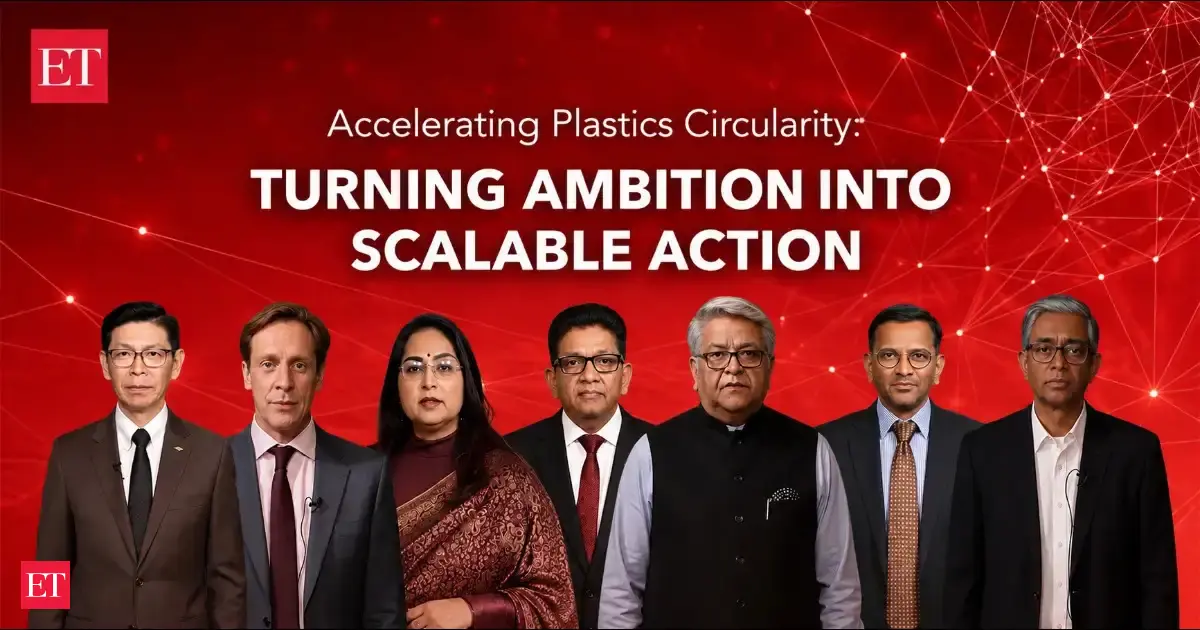
Industry experts convened to emphasize the need for advancing plastics circularity throughout India and the Asia Pacific region. They identified barriers related to collection, sorting, and the development of recycling infrastructure. Effective policy execution and collaboration among stakeholders are essential to expand these efforts. Furthermore, innovations in material design and progressive recycling technologies present significant potential. View More
Moderator Welcome to this crucial conversation on accelerating plastics circularity in India and across the Asia Pacific region. Bambang Candra To really transforming 200,000 tons of plastic waste into a circular product by 2030. In India, our partners is also able to really making possible getting the collection in 30 cities and villages. And around 12,000 tons of virgin plastic are able to get collected and recycled. Justin Wood We have a target for our India program where we have partnered with five cities at tier two and three metros, each of which we have increased the collection and recycling of plastic waste by between 100,000 and 200,000 tons a year. Live Events Accelerating Plastics Circularity: Turning Ambition into Scalable Action | Industry RoundtableGlobally, less than 10% of plastic waste is recycled.* As per-capita plastics consumption in India rises, how can industry, policymakers, academia and recyclers work together to turn circularity ambitions into scalable action? In this executive roundtable, industry leaders and sustainability experts from Dow, PepsiCo India, IIT Delhi, the Alliance to End Plastic Waste, and Sustain Mantra explore the practical steps needed to accelerate plastics circularity in India. From designing packaging for recyclability and strengthening collection systems to scaling recycling technologies and supporting the informal waste sector, the discussion highlights the collaboration needed to keep materials in circulation and out of the environment. * Reference: OECD Global Plastics Outlook 2022: https://www.oecd.org/en/publications/2022/02/global-plastics-outlook_a653d1c9.html Dr. Anup Ghosh With the industry to come together, they have to come together. It has to be joined together, and then I think the proper technology will come. Yashika Singh So PepsiCo in India, we became the first in the carbonated beverage segment to have a 100% recycled bottle for Pepsi Black. We were the first. We went in there first. We did not wait. We were the first mover. And that's because all of these things were made. Vipul Babu So this is the right moment for a country like India to set these standards and set the recycling infrastructure. Because the day we reach global average, it will be too difficult to manage the scale that we are looking at. Milind Chavan So the main pillar is we have a good policy guideline. But the second phase is that we just started, but we lack in implementation. We probably need a lot of improvement in terms of implementation. And then connecting the dots. Shailendra Singh Where I think we are missing the most is to have a real discussion around how do you get this ecosystem going for a circular economy. Let's not forget that we are coming out of 150, 200 years of a linear economy way of thinking. And so you just can't get a circular economy overnight. Moderator Good evening, and welcome to this crucial conversation on accelerating plastics circularity in India and across the Asia-Pacific region. We gather at a pivotal moment. Plastics are integral to modern life, protecting our food, enabling healthcare, and supporting countless industries. Yet with less than 10% of plastic waste being recycled globally, we face an urgent imperative to reimagine how we design, use, and recover these materials. Today's discussion isn't about whether circularity is necessary. It's about how we make it happen at a scale. How do we move from ambitious commitments to tangible infrastructure? How do we align innovation with economics and policy with practicality? We've assembled a distinguished panel that represents the full value chain. A quick round of introductions for us, beginning with you, Bang Bai. Bambang Candra Hi, I'm Pat Bang Chandra, commercial vice president Asia-Pacific, packaging, and especially the plastic of town. Yashika Singh Welcome. Thank you. Yashika. Hi, I'm Yashika Singh. I'm the chief corporate affairs officer and head of sustainability for PepsiCo in India. Welcome, Yashika. Vipul Babu I am Vipul Babu, sales director, India's subcontinent for packaging and specialty plastic business for Dow. Been in the industry for 35 years and been with Dow for 27 years. Moderator Looking forward to having a great discussion with you. What about you, Milind? Milind Chavan Yeah, hi everyone. Milind Chauhan, I lead sustainability and circularity for packaging and specialty plastic business for India, and in this field for sustainability for more than 80 years. Moderator All right, Mr. Anoop Ghosh. Dr. Anup Ghosh Yeah, I'm Professor A.K. Ghosh, material science and engineering department at IIT Delhi. I have been engaged for more than 35 years in education, research, and innovation, especially for materials development, polymer development, and currently I'm engaged with Indian Institute of Packaging also. So the sustainability is very, very important. Moderator Welcome, sir. What about you, Justin? Justin Wood So yes, I'm Justin Woods. I'm with the Alliance to End Plastic Waste. The Alliance is a global nonprofit. Our mission is to end plastic pollution and build a circular economy for plastic. And I'm excited to be here because India is one of our priority countries. Moderator Great, and what about you, Shailendra? Shailendra Singh Namaste, Deepika. My name is Shailendra. I'm founder, CEO of Sustain Mantra. I've had about 40 years in corporate life, spanning chemicals, plastics, and packaging. And now I focus my time on sustainability, especially focusing on companies within India. And I've been associated with plastics and circularity for the last 10 years. Moderator Great, we're looking forward to having a great discussion with all of you. Over the next hour, we'll explore scaling circular systems, unlocking reciting technologies, designing for circularity, building partnerships, and emerging innovations that can redefine what's possible. Bambang Candra When we look at the challenge holistically, from design to all the way through the end of the market, it is clear that this region is full of innovation and also the momentum. But there are still several structural gaps that prevent circularity from scaling and the speed and the consistency that what we want. So let me start with the design. Across Asia Pacific, there are too many packaging, especially in the flexible one, which is not designed based on the recyclability in mind. Complex multi-material and consistent design standard makes sorting and recycling even extremely difficult. Second, there are major barrier in collection and sorting. This is one of the biggest challenge across Asia Pacific, especially in the rural regions, like in India and Southeast Asia, where collection system are fragmented and informal. In many places, when collection rate is low, mean plastic waste will mean leaking into the river, in the environment, before entering into recycling system. Even in the urban area, across the well-sorted high-quality waste remain unlimited, and recyclers simply cannot get consistent feedstock taining. The third, even when waste is collected, the region face significant recycling infrastructures limitation. Mechanical and advanced recycling capacity is not yet where it need to be. That's why partnership matters. The fourth, we cannot overlook the role of policy and regulation. Across Asia Pacific, policy differ greatly, country to country, especially extended producer responsibility scheme. In practice, this laid uncertainty for industry and slow investment in recycling capacity. We hear this consistently from partners and our customers. The fifth, even when recycled material are available, the end-market demand is still also developing. Brand increasingly want circular solution, but talents persist, ranging from cost, performance perception, lack of standardization of the PCR requirement. Virgin material that it is the talents today, even cheaper, even make it hard for recycler to scale commercially. The last barrier is the perhaps is also the most important, is ecosystem coordination. No single company or stakeholders can solve circularity. What we learn from India, Thailand, Indonesia, across Southeast Asia, that localized multi-stakeholder partnership is that what really work, but it's also take time. So to sum up, the structure barrier span every part of the value chain, from design, collection, recycling capacity, policy, market demand, and also the ecosystem alignment. While the talents are there, significant, but the solution are also emerging across the region. With the right combination of science, policy, investment, and partnership, we are believing that Asia Pacific and India can really make it scalable. Moderator Thank you so much for your opening remarks. My first question to all of you will be, what are the most significant barriers preventing plastics circularity from scaling? Let me start with you, Yashika, from the implementation side, and then I'd love to hear from others. Yashika Singh Well, it's very difficult to follow that very detailed explanation, which covers the entire theme, but let me see what I can add to what's already been said. I think the way we look at it, when we say the word hurdles, the hurdles is only because this is a continuum. This is a continuum of a journey. There's a lot of progress already been made, and when the journey was started, there were certain regulatory changes done that enabled us to move forward. A lot of the low-hanging fruits have been harvested. So where we are today, the hurdles are really appearing because we have done all that we could have done within the given system of regulations. So I think everybody around this table would agree, plastic is not the problem. It's what happens to plastic after consumption, and then it drops out of the value chain. That's when it becomes a issue, as long as it stays within the value chain, we find ways of keeping it within the value chain and returning it, then recyclability is possible. So when we talk about hurdles, it's these hurdles that need to be plugged, let's say. As you said, from a design stage perspective, materials are being designed for circularity, but it seems to be only in theory and not getting into practice. And that's because clear harmonized guidelines, which actually elevates the use of single monomer structures. If those guidelines come forth, then actually we'll see a much more practical use of, design for circularity. And also, we have longstanding challenges in flexible food packaging. If those get resolved, we'll see some of those hurdles going. Collection stage, you've already sort of spoken about it, that the at-source segregation, and also uneven infrastructure. So although a long distance has been traveled already under EPR, and a lot of great work is happening, but it tends to be uneven in parts. And what that means is that the feedstock available for recycling, the quality and the volume, both tend to get impacted. So I would think that's an hurdle which needs to be planned. And finally, from a recycling stage, the last bit of this. You know, as I said, this is a continuum. So there are conventional mechanical recycling methods available. But now, we'll find that the materials itself are getting more complex. Reflexible materials are getting more complex. They're made monomer structures. So the mechanical recycling is no longer suitable or good enough to deal with where we are going with the materials. So if you're gonna be starting at the design stage, creating materials which are meant for circularity, but at the end stage, not having the technology that is able to deal with that to get it back, we are going to lose out. And that's when the material will tend to drop out. And that's a hurdle, and that's a gap that needs to be planned. I have a sense, and this is me personally, not so much in my company, but I have a sense that when these three things get sorted out, the demand factor for this will tend to solve for itself. You need not necessarily solve for this. You solve this, and then it'll automatically get solved. Yeah, that's my sense of where the hurdles are and how we could resolve it. Moderator And what about all of you? A quick review of the situation. Vipul Babu Yeah, I think when you look at India, we are at a stage where we are far below the global per capita consumption. We are barely reaching double digits per capita consumption of plastic. So this is the right moment for a country like India to set these standards and set the recycling infrastructure because the day we reach global average, it will be too difficult to manage the scale that we are looking at. So informal recycling in India is not new. India has always been capturing value from the waste for so many years. Now the challenge remains more around the flexibles where the value for the rack pickers or the collector is so low, it makes it very hard. The second thing which makes typically in India is the food contamination. The kind of packaging we, or the kind of product we pack has a lot of contamination, you see when end of life of the plastic waste. Now that makes very difficult for a recycler to access a clean waste, which is essential to provide a PCR or circular solution to get into the primary packaging. I think if we can address the collection infrastructure, drive a lot of advocacy around segregation of waste and simplify packaging. I think these are elements which will provide access to the clean waste and in turn increase the higher end or the upcycling of plastic waste into the mainstream and thereby achieving the overall circularity. Moderator Thank you. What's your take on it, Mr. Mishra? Milind Chavan So I believe we started good in India. The main pillar is we have a good policy guideline, but the second phase is that we really, we just started, but we lack in implementation. We probably need a lot of improvement in terms of implementation. And then connecting the dots. So we might have a regulation to incorporate 10% recycled content in flexible packaging, 30 in rigid packaging, but when it comes to food packaging, industry might have a solution, but then the government still has to come up with the guideline for use of like an FSSA guideline. It's only available for PET, but there are majority of the other like HDPs and LDP. So it's kind of a connecting the dots from a government side. From an industry perspective, I believe we started well. So we are leading in terms of flexible packaging, recycling innovations, because that's the most critical recycling segment. As what people mentioned, informal sector is very dominant in recycling, but that's all in the rigid and a very good plastic, versus the flexible is really chilling. So we started, we're leading in terms of flexible PCR. And third, as I said, the flexible mechanical recycling would be limited to certain applications, because it comes with a lot of contamination. And when it comes to food packaging, we definitely need what we call advanced recycling or chemical recycling. So the mechanical recycling, the advanced recycling, this all will coexist and all this connecting the dots, the FSSA approvals, the implementation. I believe in the next few years, we are in the journey to at least effectively use the resources, make more recycle content and help and collaborate with each other to take that to the reality. Moderator Professor, I'd obviously be talking to you about recycling technologies, but before that, you please give us your thoughts on the same. Dr. Anup Ghosh Yeah, I think sitting in the middle, in the panel, I'm actually balancing what is coming from the regulation that Meen said that implementation is a very important thing to do. And I see there's a lot of scope for innovation and lot of scope for developments that is needed for scaling up and remove the hurdles that can be done. We have a very, very good understanding of material, we can tell you that. But are we utilizing when we are regenerating the material, we're recycling the material, reusing the material. So, we have to utilize that in a much more deeper sense and we can do that. But in a simplest form what we can do, I think we need to very simple way to categorize. There are materials which is easily recyclable, the circularity can be maintained and why don't we identify and make it clear and I think it has been already coming in the worldwide to do that. The difficult one, we can categorize as a difficult one, difficult two, difficult three, but that can be also considering, you can design in such a way. So, the standardization of material design for packaging is very important. I think that can be brought together. So, this is what I think is very much needed and all that because when you are designing, you not only design for circularity, you cannot forget that the functionality of the packaging functionality for which the product has to be developed has to be maintained also. So, how do we do that? We don't mix match the polymer. So, there is enough scope. Now, coming to the EPR regulation, which we are involved, I have been involved and I think it can be implemented, it actually needed, we'll do that. Now, when you're bringing back recycled material, the quality and quantity both are important because we have to develop a recycled material now, which is almost equal to the virgin. Otherwise, we are not maintaining sustainability. So, we do not want to use a virgin material. We want to replace virgin material with a recycled material. Is there any standard? Is there any proper testing that we have protocol we are following and all that? The standard for quantification of the recycled material is yet to come. We are making some effort. So, I can say that from an academic point of view, there's a lot of scope. I'm excited about it, innovation, and we can contribute a lot to bring it to the circularity. Moderator Thank you for your insights. Shailendra, can we have your thoughts on this? Shailendra Singh Yeah, so let me just go 35,000 feet up in the air. I think if I were to look at a couple of things that are absolutely essential, given that we are now about 10, 15 years of working with plastic and we've got great companies like Dow who are actually implementing models on the ground and have got technology. So, I think technology, entrepreneurial spirit is in abundance in India. Where I think we are missing the bus is to have a real discussion around how do you get this ecosystem going for a circular economy? Let's not forget that we are coming out of 150, 200 years of a linear economy way of thinking. And so, you just can't get a circular economy overnight. If I were to put my finger and say, what's that one thing that will help overcome some of these hurdles? I clearly think you've got to get an ecosystem of all stakeholders, not just the material providers, the consumers, the government, brand owners, recyclers. And that's where we are as a country. We're just about, we have gone two steps ahead and we have taken one step back. But over the last 10 years, we seem to have made progress and now we are seemingly hit a wall, which is, I believe, because how do you collaborate in a circular economy framework where so many players are involved and each one's got to play a role, that's missing. And I think it will eventually evolve. I always tell my clients that the key word in circular economy, it's not circular, it's actually economy, because you're building a whole ecosystem. And if you don't have that platform for collaboration and second, if there's no perceptible economic value add, things get difficult. Investments get difficult, reasoning for investing in infrastructure gets difficult and you've got to justify, return on investments and so on. So that clear line of visibility of where is the economic value add is equally important. The great thing is that India has great examples where when there was an economic value add equation which was crystal clear, everything was sorted out like Yashika mentioned. They didn't solve for these, they solved for their economic value add. And we have examples now of systems that are flourishing in India. And not now, this 20, 25 years ago. And I would say not even in plastics, where people say, oh, this is plastics. There are great examples in paper, equally great examples. So from my standpoint as a sustainability strategist and having worked in the ecosystem, I see those missing gaps between stakeholders. I don't think it's lack of technology or lack of knowledge about materials and India's building and entrepreneurship. But it's really if everybody got onto a table and said, this is my part, this is what we will do to turn this into a circular economy, suddenly you'll find all these hurdles disappearing. I'll rest for now, otherwise I can go on for another day. Moderator Thank you so much for your insights. Now I'd move on to Justin. Justin, you work globally across the value chain, right? So what are the two, three make or break factors that determine whether circular initiatives will scale up or versus staying stuck in the pilot mode? Justin Wood Thank you. I think having heard all of my fellow panelists outline their views, between them they've covered pretty much all of the key issues that I think stand in the way of building a circular economy for plastic. We agree, for example, that design is critical. We need to improve the design of materials. We agree that infrastructure is a critical missing element. We need to have the ability to collect waste and particularly to sort waste into different fractions because recycling doesn't work unless you've got clear, pure streams of waste material. And particularly in many, many countries where we work, that sorting infrastructure is one of the missing elements. Some of the panelists talked about economics and that is critical. If you want a circular economy to take hold, it has to be economically viable. It has to be able to pay for itself. And right now that's really hard because the price of virgin material is incredibly cheap globally. This is a phenomenon. And so it's very hard for recycled materials to compete against virgin materials when the price is so low. It's hard even in good times, but it's especially hard right now. We heard about policy and policy is a critical element. And right now there are many places, India is a good example where policy is quite good, but the implementation is a bit mixed. And so we need consistent and diligent implementation of policy, not just good policy to be written. We also talked about alignment. And given that we had a lot of people here from Dow, I thought I'd share a quote from Jim Fittling, who's the CEO of Dow. He was talking about circular economy and sustainability. And he says, if you wanna go fast, go alone. If you wanna go far, go together. Circularity is a team sport. You need all the industries working together. And I think that's a critical component that we need more of when we think about this. Maybe I can just end by talking about the work we're doing here in India. We had a very large program trying to develop a circular economy here. And we're focused on three things which we think are critical. The first one is infrastructure, particularly in tier two and tier three cities where it's not quite so well developed. And as I mentioned a little bit earlier, the sorting part of that infrastructure is where we're really focusing our attention. How can we build material recovery facilities that create the streams of feedstock that enable recycling to take hold? So first one is on infrastructure. Second one is on flexibles, because we know flexibles are very hard material to recycle. And just to give you a quick example, if you look at PET, in India, recycling rates for PET are well above 80%, but recycling rates for flexible plastic is only about 5% because it's hard. You can do it, but it needs a lot of attention and effort. And then the third area for us is the informal sector, because we know here in India, the waste pickers, they're really the backbone of the waste management economy. There's at least one and a half million waste pickers. Some estimates are many times bigger than that. But they're very inefficient and unproductive because they don't have access to capital. They can't invest into new tools and better ways of doing it. So if we can partner with the informal sector to improve their productivity, that could be quite game-changing for the waste management system here. Moderator All right, following up on Justin's point, what does effective policy look like from a ground-level perspective with the context of EPR, extended producer responsibility? What's working in India's EPR framework and what needs to change? Shailendra Singh So let's look at what's working. I think the rules were written, rules, I mean, a lot of people said that the rules are well-written. Clearly, implementation is a big gap. And that needs to be addressed because what are rules without implementing it on the ground? And frankly, our country doesn't have a great track record on that. So that's one area that absolutely needs attention. What has worked so far is that the incentive of EPR has got many recyclers who were otherwise not wanting to come in in front of a government, so to say, or be recognized, are now listed. So they see that the incremental revenue on the account of EPR adds to their profits. It gets them a table, seated at the table to discuss and talk to brand owners. Which brand owner talked to a recycler 10 years ago? So they see that part of it. So we have now got a good database through the tracking of waste generated and waste recycled. We are, for the first time, beginning to quantify how much waste is really there, how much is getting collected, and how much is being recycled and incinerated for energy and so on. So that's working. Where I think it does not work so well is that you have to realize that India, as a plastic processing country, 90% plus processors are in the MSME segment. They are small, medium companies. And you know, the procedure of registering on the CPCB portal was very complex. They had to, they didn't know what was needed. The portal itself did not work very well for a number of months. I think even now it has some issues. So, and then there were, in the early days, there were many, what should I say, orders given out and many clarifying notices. So whilst we say that the rules were nicely written, that may be true, but it did not cover every aspect of the plastic value chain. And in discussions with some of them in the bureaucracy, you know, I was told that, yeah, I know we are building a bicycle and trying to ride it at the same time, but we can't wait for a perfect system to evolve. So we'll implement a few rules, see how the industry reacts, and make corrections. So I think that period is over now, 10 years of, you know, back and forth. And we are now, like I said earlier, we are at a point, at a fork. You know, what we do from here on, I think will ultimately decide the pace. The plastic processor aren't very happy with this. They started with every producer has to register. Now they said small and medium producers have to register, but they don't have EPR liability. That liability would transfer to manufacturers of resins, but there's no way to track how that liability would be transferred back. Personally, I feel EPR is a good tool. The government certainly loves it because they've got now e-waste, battery waste, tires, used oils, and there are more materials that will come under the EPR banner. But without doing a higher level circular economy, what should I say, assessment, you know, regulations, it's like the tail trying to wag the dog. We don't have a circular economy guideline or a vision for India. There are states who have that. So Maharashtra has recently published, Goa has recently published, and a couple more, but there's not one for the country. And I think that's where we need to put a little bit more focus. Indian entrepreneurs, recyclers in particular, will learn the rules. They learn to adapt to the rules and comply and so on. So I think just the EPR as a single, is a panacea of all problems, I think is the wrong way of looking at it. Moderator All right, thank you so much for throwing light on this aspect. Now coming to Dr. Anup Ghosh, given India's specific waste streams, which recycling technologies, mechanical and advanced, are most promising but underutilized? Dr. Anup Ghosh I will say we are doing very well so far with mechanical recycling, but one has to see along the supply chain how the technology is being used. As it comes to the processability of the recycled material, we are fine. It's a very well-developed technology is there. And quality maintenance is not a problem. But when it going to the early stage for proper separation and cleaning, we need super cleaning technology. Otherwise we cannot, we have to go to a very high-grade recycled material. That's what I was trying to emphasize in my first point when I was trying to say that. So all these places, the technology has to be incorporated. The technology is there also in these cases, but in a very limited places. People are using high-end technology, infrared technology, but these are usually very limited, very advanced industries, not like small scale industries, what Shailendra Singh was trying to say. So then we have to take care of that. Now, talking about mechanical recycling, there's another question. Is it sustainable? Are we not using energy or are we using, should we use alternate energy? What about the water or other resources that is needed? Today for super cleaning technology, you cannot do most probably without CO2-based technology. Are we being able to, we know the technology. Has anybody in India is already being implemented that? Okay. So those are the things. Now, when you go from process to process and from the early stage to the finally for the recycle material, we need to assess the carbon footprint also. What is the greenhouse gas emission? That's what I brought that energy concept. I brought that water utilization concept and you can calculate it through the life cycle analysis. The need for using life cycle analysis as a tool to evaluate all this technology today, whether it's a mechanical recycling technology, physical recycling technology, or chemical recycling technology. We should be able to analyze and then we can optimize it and then we can say this is the real technology that should be used. My other point is, cause we are doing sorting, sorting is a very important process, but we are not being utilized that way. When we are trying to use recycle material for food, shall it be food to food? The mixing up that is happening, okay? How do you control in such an unregulated, unorganized sector and saying that I am utilizing high technology for recycling, but my resource is already mixed up? It's simple mixed up because when you are doing recycling, the first thing comes as a degradation, okay? I'm not going to the chemistry of that's contamination, okay? When we do recycling, what we need to do, technologically process-wise stabilization. So, can I add an invariance prior in the designing, developing a material that when I'll be recycling, it actually will not allow to degradate, it will be actually stabilizing the material. That's the main situation. So, we have to think, can we bring a combination of material to match between them? I can give a, you know, I call it a compatibilizer. It's like, you know, I can match two people to compatibilize also. I can match plastics maybe to compatibilize if that technology can, so while designing, so there are lots of, there's a lot of scope to do that. And if that is being implemented, so collectively, I think the way we are sitting together, all stakeholders has to come together. I find this is a huge opportunity for Academy to actually do this scope with the industry to come together, they have to come together. There has to be a joint hand together and then I think the proper technology will come too. Moderator And what's needed to take them from the lab stage to the industrial scale? Dr. Anup Ghosh That's what I'm saying, that the, yeah. That needs more of talking between industry and at the get. You know, under Indian Chemical Council and the co-coordinator for that, we have developed what is called industry-academy bonding. Even that format has already gone to ministry. But you know, still I find that there is a reservation in the industry doesn't know industry is not being able to come. So, that is very much needed, that that awareness or supporting that and know about this technology, okay? Because this is the biggest challenge. The gap is there between the scale up from the lab scale to scale up, okay? So, what we call it now, because Government of India, Department of Science and Technology, for all and especially for disciples, you know, what we call it is a translational research. So, we already started taking that. So, but you know, sometimes we need a pilot scale because you cannot go from lab scale to the scale of commercial scale so easily. So, you have to have some pilot scales set up. That academic institution cannot do it by itself because it needs a space, it needs a funding. If industry-academy can come together and if there are few opportunities like that, possibly to be set up maybe centrally somewhere, pan India somewhere, then it can be done, yeah. Moderator All right, thank you, thank you for your inputs. Now coming to you, Bang Bang, you oversee packaging and specialty plastics across Asia Pacific region. So, when you look at Asia Pacific, what are the key differences between markets making progress and markets that are struggling? Bambang Candra Maybe it is part of the thing that I'm trying to bring in as I mean, we just not talk about the India, but also all around Asia Pacific. We are seeing that the market that really more successful on doing that is the market that really taking the responsibility rather than avoiding it. And if when we take that mindset, then we start seeing that many things that came up, the innovation, the technology, the models that also can come into much more smoother way because of that mindset change. I'm giving example here in China. I mentioned earlier about the Laubry is very, very innovative recycling company. They're really combining between involving the society and the technology, digitalizations, and also creating it in a scale that's gonna be economical. Maybe just to put the perspective, this company is coming from a digital company and they're using this technology on developing what kind of like an ATM machine, which is this kind of a block is being used to really getting recycled, get collected. And what they're collecting is every single recycle, not just plastic, you know, pattern, paper, whatever that is, as long as it is so-called not wet, not wet, so it's not dry, because they're gonna putting it into this box and they're involving the community, putting it there with all the AI today, they can really identifying what it is, weighting it, putting the point. The one that making this collection, getting the point into their mobile phone and that point can, you know, casting in. And then from that, they start moving further into where all this collection coming from, how they're gonna be collecting it, make it most efficient possible. And that's what we are start working with them. Today, understanding China, already more than 29 big city that they've been working on. 18,000 ton of recycle collected every day. And now they are able to so-called, after several years of operation, they're also seeing it economically is making money. I think that is part of the idea that has been coming up and it's being implemented. The thought and the thinking I have in mind is maybe some of the good example or implementation in one country can also gonna get the leveraging it across so can like copy paste in a way. But then they start creating a start. I think everybody is giving all of this good mind about it. But the idea and then the encouragement that I'm gonna putting in is, let's start in a one step at a time. Every single thing that we do, how can we collaborate together, making things that moving, progressing, and then tackling every single challenges that we have along the way. Believing that this can be done. Moderator Yeah. Now moving on to this point of material innovation, I'd like to ask you, Mr. Vipul, we all know it's critical to circularity, right? What innovations are you most excited about? Vipul Babu So when you look at the incorporation of recycle content in primary packaging or the plastic which is going today in various applications, recycle product brings certain level of performance drop because it's going through thermal cycles. So if you look at company like Dow, we have been able to bring in much more stronger polymers which delivers far more performance for the value that it gives. And uplifting the performance of packaging to a level which is acceptable as they are today. So it facilitates incorporation of the recycle content more than ever. So I can give you example of say sealant, which is the primary product going into the laminate which makes sure that product is sealed, reaches consumer in the intact condition. We have come up with tough sealants. A tough sealant means it does the job of sealing, but it provides additional mechanical strength to the package. That means you can incorporate more recycle content in the same pack without compromising on the performance which is needed. So that has been our focus. We've been bringing also product which, for example, improves modulus. So when you, for a common man, what is modulus does to the pack? So when you see a pack which has got a thickness of 40 micron versus a pack which is 30 micron with a new innovation that we put in, both if I give to consumer, he will feel both are 40 micron. So it allows you down gauging, saving materials. So these are the innovation, I think, which will facilitate the recycle content increase in the packaging. And we are not stopping here. So we have pipeline of products which are going to come in and will keep enabling the recycle content incorporation in the packaging in future. Moderator Great. My next question is to you, Milind. What would it take to unlock advanced recycling at scale? Is it investment, infrastructure, policy, or market demand? Milind Chavan So I'll say it's a combination of everything what you referred. So do we have technology? I believe technology is there because it's a chemical recycling, advanced recycling. It's basic technologies, pyrolysis, and it's been there for a long. Some technologies differ with the other, but not a majority difference. So as a technology available, if you say demand, I will say we have a good policy. Only connecting the dots, maybe the FSSI approval, acceptance from the brand, all that is still in the place. But to scale this up, definitely, because all of the most of the pyrolysis technologies available in India and majority across the world, they are kind of a startup level. There are only few who are at a high scale and been operating for 10 plus years. But the rest of them may be operating for 10 years, but they're very small scale and they are startup and they definitely need an investment to support that. And also the technology gap bridging because technology of pyrolysis is available, but does that pyrolysis oil is suitable for the applications for polymer cracking? It definitely needs hands on it. And so we are now evaluating all of the technologies available in the industry across the globe, including India. So we almost, most of the pyrolysis technologies in India are players. We evaluated, we know what and where it works and at a proper appropriate time, we are also planning to give them a boost, not only limiting themselves in India, but having that technology being used across the world. Because the pyrolysis plant, again, the criticality and important is that it may be operated in India. But we as a DAO, if we have the capacity to produce the polymer is available in Europe or Saudi or in the Southeast Asia, we probably need that pyrolysis technology available closer to us. So the goal, what we are trying to see that if there is a good technology in India, can we take, can we promote, can we invest and get that to the location where we need it. Moderator All right, to Dr. Ghosh Dao, professor, any quick thoughts on digital traceability or bio-based materials as game-changers for India? Dr. Anup Ghosh I just wrote it down because that you said track and trace. Okay, traceability is very, very important. There are, because it is not only tracing where the source is, what kind of material is coming for recycle, because as I said, it should not be mixed with food to food. That's not my initial guess is, but can we separate that way? Okay, it's an absolute strict way of doing it that we should do that, but then the recycle material will be very good for using the food packaging application. But once a material has been recycled and for packaging being a short term, short life product, it will within three months, six months, eight months, it will come back for the second recycling. So how many recycling it has gone through. And when we are using EPR-based 30% recycle material into the system, and that recycle material will have first generation, second generation, third generation. Maybe we'll be reaching some point, even with the strongest suggested sealant or any other method, it may not even work because the material itself is losing its performance. So we are developing a technology based on AI, and we have connected with some kind of a big companies also, as well as some startup companies which are coming with a unique platform, which is a cloud-based platform and is very much needed. So you can track, and say that's why the technology is called a marker technology, watermark technology, and it's already working, but needs to be scaled up, and that can be used for following up that at what stage this material is, and I call it as a kind of recycle material passport. Every time it passes through user, brand owner, user, and recyclers, and come back to regeneration of the virgin material, we can say that where it has gone through and how many immigration posts it must have passed through that, okay. Just to add on to that, I admire, I mean, thank you for such a program, but I had kind of innovation work that goes into DAO, some of the ideas, I have long association with DAO, and Mellin, especially a lot of interaction. Why can't we bring more academics and scientists to bring in, I mean, we are actually both sides waiting for each other to come. So I'm just like offering, if you bring in, keeping your technology safeguarded, but utilize them to use your infrastructure. Infrastructure is one of the best thing also, otherwise you cannot meet the gap. So you allow them, those scientists, to come and work. I think they will give you some better, some fruitful innovation. You may click on one or two of them, and even DAO or any other company will make a huge market out of it, possible. I mean, two out of 10 even is a big success, if you can do that, okay. Moderator Coming to you, Yashika, PepsiCo has made significant circularity commitments. Take us through journey from target setting to actually meeting the ground reality. How hard is it like, you know, to achieve the ground reality? Yashika Singh Yeah, you know, a couple of things before, that sort of define the way that journey happens, right? One, at PepsiCo India, we have this idea of partnership of progress, is what we call it. And really what that means is that we need to partner within the ecosystem. It sort of sits right underneath our logo. We say it again and again. It's a bit of a mantra within the company, because the belief is we can't do this on our own. You know, it's very clear. And the other thing is just to reflect on something that was said that, you know, consumer centricity will drive us as well, right? So when brand owners are looking to move forward, they need to be sure that what the consumer gets when it's recycled content and packaging, it's safe, it's sustained, you know, it is not tearing in the journey back to the consumer. Those things will be extremely important for us as well as brand owners. So for example, we moved 70% of our films. We moved to a polyolefin based monomaterial by Laminates. We did that. We did that very much with our partners. We developed it together. We ensured that, you know, the performance was validated and we did it with our partner. That journey took us a long time, but that journey also needed to be cost effective. So sometimes, you know, when we're all... Moderator Yeah, we're all... There's tension between sustainability goals and cost pressures. No, not at all. I want to know how Peps... Yashika Singh So as far as we are concerned... How to navigate these trade-offs. So there is no trade-off where we are concerned. Both need to happen, okay? We are not going to be trading off one for the other. We are going to deliver on both. But in order to do that, we will need to have a more ecosystem. We need predictability. We need to see that regulation is becoming more forward-looking. So today we have moved our films to a monomaterial, a polyolefin based monomaterial, which is not just tinkered with the material. It's made... It's a movement towards circularity. So we need further predictability that now that that's been done, incorporating recycled material within that, there is the technology available. There is the approval available. There's a broader understanding at a industry level of what this does, right? I think that's what we'd like to see more and more of. And that's the journey. Like, okay, sort of do you... You know, we also support a lot of, you know, work that's been happening, which are pilots being run, right? Pilots are often, you know... This is not a criticism, but they are run under a given set of circumstances. And when those pilots are sort of broad-based, as companies, as brand owners, we need to account for all of those unknowns. And sometimes there is a lot of benefit to being a first mover, and sometimes, you know, you want regulatory confirmation before you can move down that path. I mean, that's the navigation that we call, as brand owners, that we need to do. But I'd like to just say that we would never sort of choose between the two. And last, you know, as an example, when the EPR law, or the PWM, when the EPR law happened in the country, what happened a couple of things combined at the early stage, right? The law, there was predictability. It was, you know, the industry had gotten ready. It had had some time, and it was also possible. On-ground implementation became possible. So PepsiCo in India, we became the first in the carbonated beverage segment to have a 100% recycled bottle for Pepsi Black. We were the first, we went in there first. We did not wait, we were the first mover. And that because all of these things were met. Regulatory, there was, you know, predictability, industry was ready, and on-ground implementation was possible. So I think that's the mix that we tend to look for. Moderator Yes, I agree. Now, moving to the next question, Mr. Millen, circularity begins at design, not recycling. How strong is the feedback loop between what's actually being recycled and what's on the upstream design decision? Milind Chavan Yes, so rightly mentioned. So, and again, we as a material science company starts with design for recyclability, and I'll start with the classic example we all the time give. So Tata Salt, they were having the packaging which was not recyclable. We extensively worked for almost two years with Tata Salt to Tata consumers, their customers, their suppliers, OEM. And at the end of that, we made a point that we should convert that to the recyclable packaging. But even after converting that to the recyclable packaging, the question from the Tata and for us also, how will it get collected? And that's what it, again, we said, okay, let's think differently, let's do it. And that's what the professor was also mentioning about lab to pilot. So it was actually material science expertises moved from design for recyclability pack. We worked with a company called Recycle. They said, let's create an awareness. Let's collect the Tata Salt. So milk pouches are getting collected because the speakers, the aggregator, everyone know it is recyclable, it's a monomaterial, it has got high economic value. But the Tata Salt pack, it may not be because people are not knowing. So we created that pilot and that through pilot and then it's again journey taken by the Tata Salt. So this is what the journey we need to have when it designed for recyclability to actual recycling what we should do. And we continue to do that. So now we moved from a pilot phase as I said, okay, these are some of the pilots. We understood, okay, this was one of the hurdle, other could be mixed plastic. What is that level of contamination? And then we moved to the commercial scale. So now we operate as an external manufacturing site at one of the recyclers to get the really post-consumer plastic recycle material for the industry and the operating at large scale. And we're trying to also expand it to the next level. Moderator All right, let's talk about the elephant in the room. That is economics and profits. So when we talk about circular systems, there's more cost involved in comparison to linear ones. How do we bridge the gap? I'd like to ask all of you this. Shailendra Singh So again, let me go 35,000 feet up. So I think there is a, and this is purely my opinion, there is a fallacy in this statement that circular products cost more. And that fallacy arises from the fact that if you look at 120 years of linear economy, what has happened is it's not just the production systems, it's also the financial systems that have developed to keep track with linear economy principles. Circular economy principles call for a different, I would say adjusted accounting mechanism. So if you were to take a circular product and cost it through a linear economy principle of accounting, 99 out of 100 times that product will appear to be more expensive. So I think this is something that mankind created this and there are institutions like IFRS that are trying to address this. The context of certain companies going in for BCOP sort of certification, where they are saying we'll account in our P&L for environment cost and social impact. So I think that certainly needs to evolve that will I think change the way products are costed and compared. Having said that, and a couple of other points I wanted to make, I just have to make these. I believe in Asia and in many countries, I would say even globally, we're using the word circular economy or circular in a slightly wrong way. What I mean by that is that not only design is important but you go one step before design which is on material extraction. So if you don't have a drop in material extraction matching your circular initiatives, you're not truly circular. So I think as a global world, we've got that distance to traverse and that's got to happen at some point of time. I say this because this is even more relevant for India because we are not a hydrocarbon rich country. A lot of the products we make here actually comes in from imported crude oil. So there is some value to that. And there are examples like I said earlier about paper and so on. India wasn't rich on virgin pulp paper production either which got a spate of paper recycling companies. So one is that. Second, whilst there are challenges where when every one of them have been listed, sorting, collection, segregation, so on and so forth, what is needed now? And these were the things that have been talked about last 20 years. If you talk to most people, they say these are the challenges going forward. And so therefore as a strategist, I think is there a creative way of overcoming these? Number one. Number two, what if source segregation were not to happen? And God knows we have tried globally for 30 years to get it segregated hasn't happened. Can technology be adapted to treat some of these ways? And there are technologies that can take mixed waste and do a number of things with it. So it's not outside the realm of possibilities. These are technologies that exist that can be deployed pretty easily. I would end by saying that waste, you asked earlier about what are the hurdles. I've mentored several startups and I can tell you there's no dearth of technology. What happens is when they look for investment and funding, they run into a wall because the whole waste management as a space is a new space. There are no precedents. And unlike a cement or a steel, you go and share your financial plan and the banks know, hey, this is simple. So that's evolving as well. And so funding becomes a critical issue because banks, private equity investors don't understand waste and what it means to operate in this sort of environment. I think that will evolve. Companies like Dow and Alliance to End Plastic Waste, apart from all the models that they are running, are also providing a big flip to that investment, the initial kick in the investment needed to get the industry going. So whilst there are several challenges, I still remain hopeful. I think we will take time. It will be a classic case of two, three steps ahead and a couple of steps back. And I don't say this for India, I say this globally. And there are the examples of what's happening in Europe right now. The UN Plastic Treaty could not come to an agreement. 180 countries could not agree. And there are some realizations that even an organization like UN is now coming to, that there are some pockets that they should have addressed which have not been addressed. So collectively, we are making progress. We only wish it's a bit faster. And I would underpin it by saying that unless you get all stakeholders with a shared vision on circular economy, it's gonna take much longer than we think it would. Moderator Share one example where multi-stakeholder collaboration actually delivered results. Shailendra Singh God, I wish I had an example and I could share it proudly. Maybe there are examples that the other panelists can. But the only thing I wanna say there is, when I say stakeholders, it's not just the material recycler and somebody referred to consumers. They're a stakeholder. Government is a stakeholder, right? Society at large or communities are a stakeholder. So you can either do this at a national level which seems impossible or do it at a county or a district or a state level. Some part of it is beginning to happen, but it's very, very early days. I can't think of a parallel in any other industry where they've successfully come together and everything's working fine. But almost every other sector is facing the same issue. So as someone who looks at plastics, textile, paper, and other industries, I see this as a running theme. And to me, it's very evident. I guess over a period of time, it will become evident to others. At one forum I had said, I'll just quickly end. One forum I had said, we ought to have a ministry of circular economy. Where is the ministry of circular economy? Where does recycling industry fit in under which ministry it is? Who's the parent ministry? So there are basic things like that. And unless we have a ministry of circular economy, I think that would be a revolutionary step. I wish India could take and set an example for the rest of the world. Moderator Justin, what are some of the building blocks to enable recycling in India, please? Justin Wood So I think you were talking about the economics and the economic viability of a circular economy. And I think today it is challenging for recycled secondary materials to compete against virgin materials. But I think in large part, that's because we're still really quite early in this journey. And as we go forward, I think the economics are going to continue to improve. And we need to keep working on lowering costs and improving efficiency on one side. And then we have to work on improving the demand on the other side. And I think on the cost side, you can see there's new ideas emerging all the time about how to reduce the cost of collecting, sorting and recycling material. Just to give you one quick example, if you look at recycling today, a world scale recycling plant has a capacity of about 50,000 tons. A world scale petrochemical refinery has a capacity of say 2 million tons. So if you're looking at the scale, how can a 50,000 ton a year compete with a 2 million ton a year? But recycling plants will get bigger, the scale will rise. And so the competitiveness of recycling technologies is going to continue to improve. So I think on the cost side, we'll continue to see improvements in efficiency and reducing the cost. And then on demand side, I think you can see with policies, I think policy is gonna be one of the most important levers where you have EPR legislation with mandatory PCR incorporation targets. You can see that in Europe, you can see that here in India. You're driving up end market demand, you are putting it into policy and regulations. So I think as these things gradually start to play out, costs will come down, demand will go up and we will see circular economy become much more competitive over time. Moderator All right, happy to know that. So to all the panelists now, the Indian government has set ambitious recycled content targets, 10% for flexible plastics and 30% for rigid plastics. What key steps should both industry and government take to realistically achieve these targets and ensure long-term circularity in India's plastic ecosystem? I would like to know everyone's thoughts on this. Milind Chavan So as I said, this is a good demand. Start point is really good. We started well. There are multiple challenges, which again, so there is an MSME sector what Shailendra mentioned about and most of our existing recycling comes under that MSME segment. We as a material science company has a bigger role to make that MSME grow, help that get the PCR quality to reach to a packaging application. And that's what we do. So I believe, so right now if you look at it, the framework policies, we got a PWPs, you got what we call producers, which is converter, you got a brand owner. There is a missing link about that, the material science company, which can play a vital bigger role to help MSME grow because it's not, we as a DAO is going to, we are maybe a material science company will put up a recycling plant because it's a different ecosystem. It needs collection, it needs sorting, washing, sanitizing and it's different. That still remains in a decentralized manner with the MSME and government can provide an incentive to probably MSMEs, but the role that we want to play has to be there in that system from the government side. That okay, here's the material science company which comes into the play to help MSME to grow but get the good quality PCR for packaging application. Moderator What about you, Yashika, what are your inputs? Yashika Singh Yeah, I think just like often when we are in sort of these forums, we often say that companies have moved from a place where they were making commitments to showcasing action. So we have sort of walked that path as companies where 10 years back we were making commitments and that was sufficient, today we need to show action. I think the same principle applies to the EPR law. So a lot of commitments got made, the 10% recycling content. Like I said, we moved to a polyolefin-based monomaterial structure. If we need to have recycled content in that, we would need the law to become more futuristic looking. As it sits today, it may not enable this for us because we made this change to enable circularity, not just recyclability, but circularity. So we need those, we need to ensure that the technologies need to be in place that allow for that recycling to happen. The approvals which sort of give food grade approvals, those need to be in place. The material itself that is currently deemed approved by the government to enable recycled content, that also needs to change, right? And that will really allow us to get there. We are ready to go, we are ready to go. We want our consumer to know. And I'll reflect on the bit that you were asking about the economics of it, right? And I shall end with saying there are multiple, there is the industry, there is the consumer, and there's the government, right? The industry is driven by commitments that have been made globally. We have no way of walking away from them, right? There's a clear understanding of our responsibility. The government is writing, but I'm not sure where the consumer is. I'm not sure if the consumer is still willing to put their money, you know? I mean, I'm sure as a society, we all agree on swachhta, we all agree on sort of the handling post-consumption waste. I'm not sure if the consumer is yet ready to pay for it. And that's the issue that we as brand owners need to solve, apart from a more forward, futuristic looking. Moderator No? All right, thank you. Now there's gonna be a rapid round to all. It's 2030, and we've succeeded. What does a functioning circular plastics economy in India and Asia Pacific look like? What's the one measurable outcome you'd like to point to? Justin. Justin Wood Well, let me just first start with maybe a dash of realism. We're not going to have a perfectly functioning circular economy by 2030. We will over time, but 2030 is a very short timeframe, so it's gonna take longer than that. But we're on a journey, and we do hope that we can see material progress by 2030. So just speaking from my organization, the Alliance to End Plastic Waste, we have a target for our India program where we have partnered with five cities, at tier two and three metros, each of which we have increased the collection and recycling of plastic waste by between 100 and 200,000 tons a year. So we've set clear targets for ourselves. Now that's still a long way short from a perfect circular economy, but it's moving us in the right direction. It's setting examples that others can learn from and replicate and creating cities that can be the example that everyone can learn from. Moderator All right. What about you, Mr. Anup? What would you like to say on this? Dr. Anup Ghosh You know, I will just say two, three words on the, you know, it's a knowledge, awareness in technology, categorization. And if we continue to do that and give the technology innovation to the industry to do that, I think it is possible. We are doing 100% PET recycling. How we are doing that? There is no knowledge. People are doing 30% from moldable products and packaging to do 30% is not a problem. They don't know which grade they are using. They have no knowledge. So that's why they are not seeing. It will come. And I think there's tremendous progress that can be done. Flexible, we have to understand more. That's what I said, categorization. If you give them that these are the possible, it can be done. The one which is not possible to do, and I put a tremendous amount of energy, tremendous amount of effort, and I say cost is increasing and all that, that will not. But I think it's coming. There's a lot of knowledge. Moderator Your closing remarks, Bang Bang. Bambang Candra This is a very good discussion of, and I think this is all the good idea that we see and hearing about. I think all the intention that we want to have is all positive. We want to have this to happen. Your point about by 2030, can we achieve that? Yes, I think it's big step to really putting in. But at least what I'm seeing on all discussion here is really everybody have the intention. And with this conversation, I would also like putting in, let's, again, I mentioned it earlier, let's put one step ahead at a time. Tackle when there is issue, and then we need to go work hand in hand to really making that happen. I think everybody talking about, this is gonna be an ideal ecosystem if everything can gonna get set it up. But the reality, it's not there yet. So my recommendation is then let's get it hand in hand. I think it's good recommendation, we can bring technology in the brand owners. Also the many that we are trying to create the infrastructures, the entrepreneurship on making this to happen, the know-how of the material science that we have. I think within this table, we can make things to happen. .Pbanner{display:flex;justify-content:space-between;align-items:center;background-color:#ec1c40;margin-top:20px;padding:5px 10px;border-radius:4px;color:#fff;line-height:10px;width: 100%;box-sizing: border-box} .Pbannertext{display:flex;align-items:center;font-size:16px;font-weight:600;font-family:'Montserrat';} .Pbannertext img{height:20px;margin:0 6px} .Pbannerbutton a{display:flex;align-items:center;background-color:#fff;color:#ec1c40;text-decoration:none;font-weight:600;padding:4px 8px;border-radius:6px;font-size:15px;font-family:'Montserrat';} .Pbannerbutton img{height:20px;margin-right:6px} .Pbannerbutton a:hover{background-color:#f7f7f7} Add as a Reliable and Trusted News Source Add Now! (You can now subscribe to our Economic Times WhatsApp channel) (You can now subscribe to our Economic Times WhatsApp channel)
Mahanadi Coalfields has filed its DRHP for an IPO comprising an OFS of up to 66.18 crore shares by promoter Coal India. The proposed listing will give investors direct exposure to one of India’s largest non-coking coal producers, backed by substantial reserves and established mining infrastructure. View More
Mahanadi Coalfields Limited (MCL), one of India’s largest coal producers and a wholly owned subsidiary of Coal India Limited , has filed its Draft Red Herring Prospectus (DRHP) with the Securities and Exchange Board of India (SEBI), paving the way for its proposed initial public offering (IPO). The proposed IPO comprises an offer for sale (OFS) of up to 661,836,300 equity shares, each with a face value of Rs 2, by promoter Coal India Limited. Since the issue is entirely an OFS, the proceeds from the share sale will accrue to the selling shareholder rather than the company. The issue will be conducted through the book-building route. Not more than 50% of the net offer will be available for qualified institutional buyers, while non-institutional investors and retail individual investors will be allocated not more than 15% and 35%, respectively. Incorporated in 1992, Odisha-based Mahanadi Coalfields has emerged as the largest coal-producing subsidiary of Coal India. In FY2026, the company produced 218.31 million tonnes (MT) of coal, accounting for around 22.40% of India’s total non-coking coal production and 28.3% of Coal India’s overall coal production, according to the CRISIL Report cited in the DRHP. MCL’s coal production increased 5.92% from 206.10 MT in FY2024 to 218.31 MT in FY2026. Live Events The company’s principal product is non-coking coal, including washed and beneficiated coal. Its customer base spans power utilities, captive power plants, independent power producers and non-power industries such as cement and sponge iron manufacturers. MCL’s operations are anchored by the Talcher and Ib Valley coalfields in Odisha, which together had an estimated coal resource of approximately 106.76 billion tonnes as of April 1, 2026, according to the CRISIL Report. The company’s audited coal reserves stood at 9,840.31 MT as of the same date. At its current production rate, these reserves could support mining operations for around 45 years. The company could potentially extend its operational life by approximately another 100 years if additional resources are converted into reserves and production continues at broadly current levels, according to the CRISIL Report. As of June 30, 2026, MCL operated 17 mines — 14 opencast and three underground. Opencast operations accounted for more than 99% of its coal production during the three months ended June 30, 2026, as well as in each of the previous three fiscal years. The company has also built a significant coal evacuation infrastructure comprising coal handling plants, rapid loading systems, silos, rail connectivity and road networks. MCL is connected to three railway zones — South Eastern Railway, South East Central Railway and East Coast Railway — helping it move coal to markets across India. Its coal can also be transported through five ports: Paradip, Dhamra and Gopalpur in Odisha, and Vizag and Gangavaram in Andhra Pradesh. Railways have become increasingly important to MCL’s evacuation strategy. In FY2026, railways accounted for 96.86% of first-mile-connectivity-based dispatches and 65.28% of total coal dispatches, compared with 91.27% and 58.70%, respectively, in FY2024. MCL has also invested heavily in mechanised mining. As of June 30, 2026, the company had approximately 70 surface miners, including owned and contracted machines. As of March 31, 2026, MCL owned 22 surface miners, the largest fleet among Coal India’s subsidiaries, out of Coal India’s total fleet of 47 surface miners, according to the CRISIL Report. The company holds approximately 33,508.79 hectares (335.09 square kilometres) of land, including acquired and leased land. Of this, 167.37 square kilometres is located in the Talcher coalfield and 165.96 square kilometres in the Ib Valley coalfield. As of June 30, 2026, MCL held mining and surface rights over 30,192.14 hectares across the two coalfields under the Coal Bearing Areas (Acquisition and Development) Act, 1957. MCL reported revenue from operations of Rs 8,033.7 crore for the quarter ended June 30, 2026, up from Rs 7,548.3 crore in the corresponding period a year earlier. However, its net profit declined marginally to Rs 2,398.7 crore, compared with Rs 2,448.3 crore in the June 2025 quarter. MCL was incorporated on April 3, 1992, after being carved out of South Eastern Coalfields Limited to accelerate coal production from Odisha’s Talcher and Ib Valley coalfields and meet the country’s growing energy requirements. MCL was granted Miniratna Category I status in December 2019. Alongside expanding production, MCL says it has implemented measures aimed at reducing its environmental footprint and strengthening sustainability across its mining operations. The proposed IPO is expected to give public-market investors an opportunity to participate directly in one of India’s largest non-coking coal producers, backed by substantial reserves, established mining infrastructure and strong linkages to the power sector. SBI Capital Markets, Axis Capital , BOB Capital Markets, IDBI Capital Markets & Securities and IIFL Capital Services have been appointed as the book-running lead managers for the issue, while KFin Technologies will act as the registrar. The equity shares are proposed to be listed on the National Stock Exchange of India (NSE) and BSE . With Coal India looking to monetise part of its holding through the OFS, MCL’s proposed listing could become one of the more closely watched public-market offerings from India’s coal and mining sector. (Disclaimer: Recommendations, suggestions, views and opinions given by the experts are their own. These do not represent the views of The Economic Times.) .Pbanner{display:flex;justify-content:space-between;align-items:center;background-color:#ec1c40;margin-top:20px;padding:5px 10px;border-radius:4px;color:#fff;line-height:10px;width: 100%;box-sizing: border-box} .Pbannertext{display:flex;align-items:center;font-size:16px;font-weight:600;font-family:'Montserrat';} .Pbannertext img{height:20px;margin:0 6px} .Pbannerbutton a{display:flex;align-items:center;background-color:#fff;color:#ec1c40;text-decoration:none;font-weight:600;padding:4px 8px;border-radius:6px;font-size:15px;font-family:'Montserrat';} .Pbannerbutton img{height:20px;margin-right:6px} .Pbannerbutton a:hover{background-color:#f7f7f7} Add as a Reliable and Trusted News Source Add Now! (You can now subscribe to our ETMarkets WhatsApp channel) (You can now subscribe to our ETMarkets WhatsApp channel)
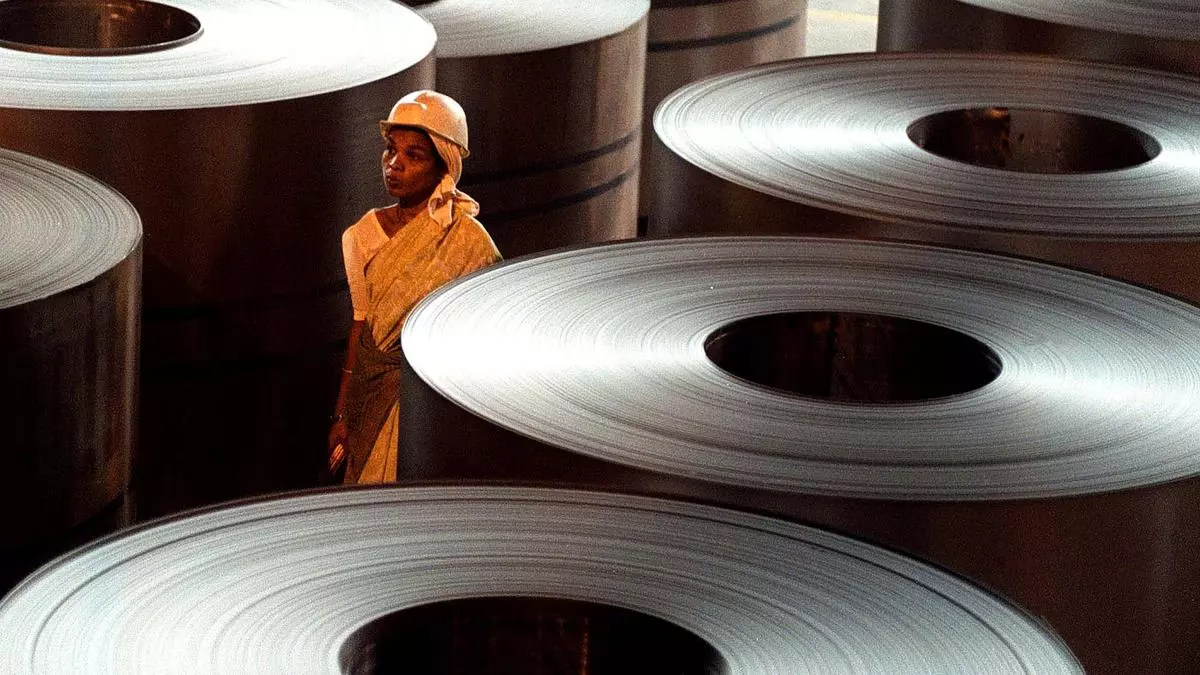
Bharat Heavy Electricals Limited has paid a final dividend of Rs 283.56 crore to the government. This payment represents the equity held by the Government of India in the company. The dividend for fiscal year 2025-26 is significantly higher than the previous year's payout. BHEL's total dividend to all shareholders for fiscal year 2025-26 reached Rs 487.49 crore. View More
New Delhi: State-owned engineering firm Bharat Heavy Electricals Ltd (BHEL) on Tuesday said it has paid a final dividend of Rs 283.56 crore for 2025-26 to the government. To this effect, a cheque towards the final dividend on the equity (58.17 per cent) held by the Government of India was presented to H D Kumaraswamy , Union Minister of Heavy Industries and Steel by K Sadashiv Murthy, Chairman and Managing Director, BHEL, a release said. The dividend amount of Rs 283.56 crore for the FY 2025-26 is more than two and a half times of that for FY 2024-25. The total dividend paid to the company's shareholders for FY 2025-26 amounts to Rs 487.49 crore. .Pbanner{display:flex;justify-content:space-between;align-items:center;background-color:#ec1c40;margin-top:20px;padding:5px 10px;border-radius:4px;color:#fff;line-height:10px;width: 100%;box-sizing: border-box} .Pbannertext{display:flex;align-items:center;font-size:16px;font-weight:600;font-family:'Montserrat';} .Pbannertext img{height:20px;margin:0 6px} .Pbannerbutton a{display:flex;align-items:center;background-color:#fff;color:#ec1c40;text-decoration:none;font-weight:600;padding:4px 8px;border-radius:6px;font-size:15px;font-family:'Montserrat';} .Pbannerbutton img{height:20px;margin-right:6px} .Pbannerbutton a:hover{background-color:#f7f7f7} Add as a Reliable and Trusted News Source Add Now! (You can now subscribe to our Economic Times WhatsApp channel) (You can now subscribe to our Economic Times WhatsApp channel)

Partnership will study the use of mining byproduct containing silica, iron oxides and other nutrients in crops such as paddy, wheat and vegetables View More

Whatnot and TikTok are tapping into its potential livestream shopping in the U.S. after a decade of massive success in China. View More
watch nowVIDEO13:2913:29How TikTok and Whatnot are making live shopping mainstreamConsumer & Retail Digital Original Video From a warehouse just north of Chicago, Sarah Potempa â celebrity hairstylist and CEO of the viral Beachwaver hair curling iron â keeps thousands of viewers hooked for hours selling products on TikTok live.This kind of livestream shopping, which has boomed in China over the past decade, is building momentum in the U.S. thanks to social media giant TikTok and live commerce platform Whatnot, which just reached a $20 billion valuation. Beachwaver did about $8,000 in sales during the first four hours of a TikTok livestream in late July, which CNBC sat in for. She auctioned off limited-edition curling irons as her teenage son DJed behind her; demoed hair care products; and promised viewers she would shave her brother-in-law's head live on camera if they sold 500 orders. It was one of hundreds of livestreamed shows that Beachwaver does each year. About a quarter of its $1 million in TikTok Shop sales so far in 2026 originated from livestreams, where the company hosts its own selling shows and works with affiliate creators on the popular social media app. Beachwaver CEO Sarah Potempa hosts livestreams from the company's warehouse in Gurnee, Illinois.CNBC Reminiscent of the QVC craze of the past few decades, livestream shopping puts consumers in front of hosts who sell products in real time.Now, QVC is live on TikTok for more than 200 hours per week across seven channels, according to the company, as it prioritizes digital after recently emerging from bankruptcy."QVC is a great example of a large established retailer that might have been seen as a competitor to TikTok shop ⦠but in fact they have turned out to be a really successful merchant," said Patrick Nommensen, president of strategic initiatives for TikTok Shop in the Americas.Beachwaver got its start on QVC. TikTok and Whatnot have reinvented the wheel. "Nobody is saying, OK, you have 10 minutes at 7 p.m. and get ready and here's your 10 minutes and you're done," said Potempa. "You definitely need to be on longer on a digital platform, but you really are more in control of the revenue." Beachwaver CEO Sarah Potempa uses the company's namesake product, a patented rotating curling iron.CNBC Following in China's footsteps The U.S. live shopping industry is forecast to reach nearly $20 billion in sales in 2026, about 35% higher year over year, according to eMarketer industry estimates. Still, it's a far cry from the rapid growth that live shopping experienced in China.Alibaba introduced Taobao Live in China in 2016. Within five years, the market crossed $50 billion, and it's projected to top $1.1 trillion in 2026, according to eMarketer. (function(){function e(){window.addEventListener(`message`,function(e){if(e.data[`datawrapper-height`]!==void 0){var t=document.querySelectorAll(`iframe`);for(var n in e.data[`datawrapper-height`])for(var r=0,i;i=t[r];r++)if(i.contentWindow===e.source){var a=e.data[`datawrapper-height`][n]+`px`;i.style.height=a}}})}e()})(); Live shopping has been increasingly integrated into Chinese "super apps," which are utilized by millions of users and combine features like social media and messaging in the case of WeChat or artificial intelligence assistance, food delivery and travel booking on Alibaba's Qwen."[Chinese consumers] still like stores, but they use the livestream part of the digital experience as the entertainment, the engagement, the inspiration," said Globaldata managing director Neil Saunders. "In the U.S., we've tended to rely traditionally more on stores to fulfill that role."Saunders said that's changing now as younger consumers lean more into live commerce to discover products. U.S. live shopping winners TikTok Shop launched in 2023. The company shared exclusively with CNBC that live shopping sales more than doubled in the first half of 2026 compared with the same time frame in 2025.The number of live shopping sessions increased by more than 60% during the same period, TikTok said, and total live hours grew by more than 80%.Founded in 2019, Whatnot built its audience on novelties and collectibles. It's grown rapidly over the past year, doubling its valuation since October. Whatnot ranked No. 8 on this year's CNBC Disruptor 50 list, which identifies the most promising venture-backed companies.Whatnot says it's the largest live shopping platform in the U.S. but declined to share its domestic sales figures. The company told CNBC that a majority of the $8 billion in global sales it reported for 2025 were in the U.S."You can have [5,000], 10,000 people on Whatnot or TikTok watching your show at one time," said Eric Pagan, who sells for brands on both platforms, during an interview in mid-August. "I did a show on TikTok this weekend that was well into six figures ⦠I think what brands are not aware of yet is that that exists."Whatnot's core focus is auctions, where viewers can bid on products in real time. TikTok rolled out live auctions in January. "It feels like things are really, really clicking and live shopping is becoming a bit more mainstream," said Whatnot's chief revenue officer, Armand Wilson. "In year one, it was largely all collectibles. ⦠Now pretty much anyone can download Whatnot and find something for them." Whatnot sellers showcasing Funko Pops on the platform.Source: Whatnot Inc. Legacy online marketplaces like Amazon, Walmart and eBay also have native platforms for sellers to host live shopping streams, though those platforms aren't as inherently video-first as social media sites. Amazon and Walmart declined to comment about their live shopping businesses, while a representative for eBay Live described the offering as making shopping "more human." All three companies declined to share livestream sales figures with CNBC.Mark Yuan, a former business development lead for eBay's live shopping division and now the owner of e-commerce consulting company And Luxe, said legacy marketplaces benefit from the consumer trust that comes with how long they have been around."Those are the things you can't buy with money, but unfortunately, what gives them the advantage also might be their barriers as well," he said. "Structurally it's very hard to transform themselves into a discovery-first or content-first [platform]." The future of shopping? Where newer entrants are succeeding is in creating forums for like-minded consumers. Whatnot, which is especially popular for collectibles, says it prioritizes community and has seen success in areas like Funko Pop figurines, Pokemon cards, sneakers and fashion. "Going into a community, really deeply understanding their problems and building a product around them has been the ethos that I think has gotten us to where we are today and what really differentiates us" said Wilson.Pagan, the livestream host, said without the trust of your viewers, "there is no point in even being live." "Those people are my friends," he added. "I believe that they know things about me that a normal person on the street wouldn't know. And we had those conversations on a livestream." TikTok Shop logo on a smartphone.Costfoto | Nurphoto | Getty Images Marshal Cohen, chief retail analyst at Circana, said livestream shopping helps to bridge the gap between e-commerce and traditional retail. "You can't touch and feel the product, but you can hear from others what they think about it," said Cohen. "[Live shopping] bridges that shortfall of the inability to touch and feel. And that's always been online's biggest challenge."But the platforms have their own set of challenges. Whatnot and TikTok have had to contend with issues of counterfeit and stolen goods. For the sellers, leveraging a large platform comes at a cost: Whatnot takes a commission fee of between 4% and 8% of sales depending on the product, and TikTok takes 6% â plus additional payment processing fees. And, the growing popularity of live shopping has made it harder to compete for eyeballs."The biggest challenge really is visibility," said Globaldata's Saunders. "You have to make sure that your feed is aligned with the algorithm and that it's putting you in front of the right people." Choose CNBC as your preferred source on Google and never miss a moment from the most trusted name in business news.

DDEL is the leading industrial pipe fabrication player in India and among the top five globally. It welds steel, stainless steel and other alloy pipes of different diameters for applications across multiple sectors. View More
Bangkok: DEE Development Engineers plans to enter the high-potential nuclear power segment in India, and is eyeing a joint venture partner for piping fabrication solutions for the sector. The BSE-listed entity plans to support the government's vision to set up 100 GW of nuclear capacity by 2047, by providing piping fabrication solutions for upcoming nuclear projects in the country, the company's Chairman and Managing Director (CMD) K L Bansal said in an interaction with PTI. The company is in initial talks with a global entity to explore the possibility of forming a Joint Venture (JV) which would work on developing the much-required technological and other regulatory aspects of setting up a nuclear piping fabrication project, he said. The company said the JV is expected to be finalised by the year end. When asked about investments, Bansal said such projects would require an initial capex of over Rs 100 crore. Live Events Also read | HDFC hunts for new boss amid whispers of Tata to Khara's chances "The project will help reduce India's 100 per cent dependence on imports for nuclear piping fabrication, one of the most critical aspects of nuclear power plant construction and maintenance," the CMD said, adding that DDEL recently forayed into fast-emerging data centre segment by securing its first order for core piping from a private entity. As part of the government's Make in India initiative, DEE Development Engineers Ltd (DDEL) has also commissioned India's first heavy-wall seamless pipe manufacturing facility at Anjar in Gujarat with an annual capacity of 7,000 tonnes. Set up with an investment of over Rs 100 crore, the facility can meet India's 100 per cent requirement for high-strength specialised pipes used in mega power projects, Bansal noted. With its new business initiatives, the company aims to achieve a topline of over Rs 2,500 crore by 2030, up from Rs 1,200 crore in FY26. DDEL is the leading industrial pipe fabrication player in India and among the top five globally. It welds steel, stainless steel and other alloy pipes of different diameters for applications across multiple sectors. Also read | NCLT hits a pause on Subhash Chandra's big haircut The company also owns and operates a piping fabrication facility in Bang Pakong, around 70 km from Bangkok in Thailand. The CMD said DDEL currently has an order book of Rs 2,500 crore, of which 60 per cent orders are from power sector players and 35 per cent from oil and gas majors. These orders are scheduled to be executed over the next 12-18 months. Around 50 per cent of the orders come from overseas customers, while the remaining are from the domestic market, he said, adding that the company caters to customers in the US, Africa, Southeast Asia and other regions. .Pbanner{display:flex;justify-content:space-between;align-items:center;background-color:#ec1c40;margin-top:20px;padding:5px 10px;border-radius:4px;color:#fff;line-height:10px;width: 100%;box-sizing: border-box} .Pbannertext{display:flex;align-items:center;font-size:16px;font-weight:600;font-family:'Montserrat';} .Pbannertext img{height:20px;margin:0 6px} .Pbannerbutton a{display:flex;align-items:center;background-color:#fff;color:#ec1c40;text-decoration:none;font-weight:600;padding:4px 8px;border-radius:6px;font-size:15px;font-family:'Montserrat';} .Pbannerbutton img{height:20px;margin-right:6px} .Pbannerbutton a:hover{background-color:#f7f7f7} Add as a Reliable and Trusted News Source Add Now! (You can now subscribe to our Economic Times WhatsApp channel) (You can now subscribe to our Economic Times WhatsApp channel)

Mortgage rates aren't expected to get much cheaper for homebuyers in 2027, especially if inflation stays high. View More
If you've been waiting for the housing market to get more affordable before buying a home, 2027 may not bring much relief.The latest forecasts suggest 30-year fixed mortgage rates could remain closer to 7% next year, keeping borrowing costs high for prospective buyers. The average 30-year fixed rate is currently 6.81%, according to Mortgage News Daily. Fannie Mae now expects rates to average 6.7% in 2027, a notable jump from the 6.3% it forecast just a month ago. The Mortgage Bankers Association's August forecast also expects rates to average 6.7% next year, up from 6.5% in its June forecast.In other words, forecasters who had expected mortgage rates to ease now expect them to remain roughly where they are today."Most of the recent affordability challenges have come from increased mortgage rates. Home prices have actually been falling on a year-over-year basis throughout 2026 at the national level," says Joel Berner, senior economist at Realtor.com. "Behind the scenes though, inflation is the real culprit." When inflation remains high, investors typically demand higher yields on Treasury bonds, which can keep mortgage rates higher, too. High inflation can also leave buyers with less spending power and make homes more expensive to build.Realtor.com's own forecast expected mortgage rates around 6.3% for the rest of 2026, an outlook the company has since said "may prove too optimistic" as inflation and the war in Iran put renewed upward pressure on rates.For would-be buyers, that means waiting until 2027 may not make buying a home much cheaper. Why homebuying affordability may remain strained in 2027 Mortgage rates tend to track the yield on the 10-year Treasury note, which is influenced by expectations for inflation and economic growth. When inflation is expected to remain high, Treasury yields and mortgage rates can rise with it."Economic reality has forced even the most optimistic interest rate forecasters to project a higher rate environment than anticipated earlier this year," says Marty Green, a residential mortgage lending attorney at Polunsky Beitel Green.The Fed's preferred measure of inflation rose 3.7% in July from a year earlier, according to the Bureau of Economic Analysis, well above the central bank's 2% annual target. Green points to renewed tariffs and the war in Iran as factors that could keep inflation high and make lower mortgage rates harder to forecast.Inflation is also eating into homebuyers' purchasing power. Average hourly earnings declined at a 1.66% annualized rate after adjusting for inflation during the first half of 2026, according to an analysis of federal data by the Hamilton Project at the Brookings Institution.At the same time, buyers are still facing home prices roughly 59% higher than in 2020, and they're expected to keep climbing. Fannie Mae's latest survey of more than 100 housing experts projects national home prices will increase 2.2% in 2027. In markets where home prices are rising alongside mortgage rates, Berner calls it an affordability "double-whammy."Building more homes could help ease pressure on prices, but it's becoming more expensive to build them, too.Tariffs are raising the price of materials used throughout a home, including lumber, plywood, steel, aluminum, copper and cement, according to the National Association of Home Builders. Builders are also dealing with persistent shortages of skilled workers.The war in Iran is adding to the expense, too. Higher oil prices have pushed up gas and diesel prices, making building materials more expensive to produce and transport, according to the NAHB."What this leads to is less (in quantity) and less affordable inventory being delivered to the housing market," Berner says. Take control of your money with CNBC Select CNBC Select is editorially independent and may earn a commission from affiliate partners on links.47% say they donât think theyâll ever be able to fully retire. This tool could be a solution for guaranteed incomeAmericans are carrying more credit card debt than banks report. Here are 3 things you can do todayThe best tools to build an emergency fund when you live paycheck to paycheckOnly one in four Americans has a will. Making one is easier than you thinkNew student loan rules are giving scammers a new opening. Hereâs how to protect yourself VIDEO9:3609:36I quit my $250K/year tech jobânow I make $33K/year selling matchaMillennial Money