
Latest Sectors News

In a letter to Ford CEO Jim Farley, U.S. DOT Secretary Sean Duffy questioned the automaker's strategic trajectory involving Chinese companies. View More
In this articleFFollow your favorite stocksCREATE FREE ACCOUNT U.S. President Donald Trump and CEO of Ford Jim Farley clap, as President Trump visits a Ford production center, in Dearborn, Michigan, U.S., January 13, 2026. Evelyn Hockstein | ReutersThe Trump administration expressed "profound concern" Tuesday about Ford Motor's ties to Chinese companies that it believes could be detrimental to the Detroit carmaker and U.S. automotive industry.In a letter addressed to Ford CEO Jim Farley, Transportation Secretary Sean Duffy questioned the automaker's strategic trajectory with Chinese companies "as it pertains to American national automotive manufacturing integrity, supply chain exposure, and reliance on technologies of foreign adversaries."Ford, which regularly touts its position as the top-producing automaker in the U.S., called the letter a "wrongheaded attempt to capture headlines." It also defended its stance as America's top-producing carmaker and said it employs more hourly workers in the country than any other automaker, while calling out "factual errors" in the letter. Ford said those errors included Duffy's comments about Farley proposing a joint-venture framework for Chinese automakers to enter the U.S.The letter is the latest incident in a series of contentious discussions between the U.S. automotive industry and the Trump administration, which has caused uncertainty with its changes to trade and federal rules and regulations.In the letter, Duffy took issue with Ford's ties to Chinese companies such as battery provider CATL and a framework Farley proposed during an auto show earlier this year in Detroit "to facilitate Chinese joint ventures on United States soil."Ford has a licensing agreement to utilize battery technologies, including the production of lithium iron phosphate batteries, from Contemporary Amperex Technology Co., or CATL.Ford's deal with CATL was originally announced in 2023 but has drawn renewed attention amid tensions between the U.S. and China as well as Ford's plan to use the battery technologies for energy storage systems. "While DOT recognizes the intense competitive pressures of the global market, the Company's recent strategic decisions paint a troubling picture of a foundational American brand actively intertwining its future with Chinese state-backed enterprises," Duffy's letter read. Ford CEO Jim Farley at a battery lab for the automaker in suburban Detroit, announcing a new $3.5 billion electric vehicle battery plant in the state to produce lithium iron phosphate batteries, Feb. 13, 2023.Michael Wayland/CNBC Duffy urged Farley, who has been complimentary of Chinese competitors as well as the Trump administration's attempt to promote U.S. manufacturing, to "reflect on these concerns and national necessities and adopt reasonable strategies that prioritize American workers, utilize allied supply chains, and promote the self-reliance and integrity of the domestic automotive industry."Ford urged Duffy to more openly communicate with the company. "Ford supports the Trump administration's vision for advancing American innovation and manufacturing," the company said. "Had Secretary Duffy reached out before issuing his letter to the press, we would have been happy to share more details about Ford's U.S. commitment."â CNBC's Meghan Reeder and Phil LeBeau contributed to this report. Choose CNBC as your preferred source on Google and never miss a moment from the most trusted name in business news.

The backlash against artificial intelligence data centers could prove a tailwind for real estate investment trusts in the sector. View More
In this articleAMZNAAPLORCLDLREQIXIRMFollow your favorite stocksCREATE FREE ACCOUNT Inside one of Equinix's internal operations at Equinix Data Center in Ashburn, Virginia, on May 9, 2024.Amanda Andrade-Rhoades | The Washington Post | Getty ImagesThe backlash against artificial intelligence data centers could prove a tailwind for real estate investment trusts in the sector. Protests have sprung up nationally as hyperscalers look to build data centers to train and run their AI models. Not only do the data centers take up large amounts of land, they consume enormous amounts of electricity and water and are noisy.The debate is only expected to heat up heading into the midterm elections. A recent NBC News poll found that 69% of respondents oppose the construction of AI center centers in their area. There are already more than 4,700 data centers across the country â a number expected to grow exponentially. PwC projects that annual data center spending will rise to $1.8 trillion in 2050 from roughly $800 billion in 2026. Some states are stepping up with legislation to restrict or ban construction, and a moratorium is already in place in New York.Using REITs to play AI While the hyperscalers are getting all the attention, another way to play the AI data center race is through real estate investment trusts. They are essentially landlords that build, own and then lease space to multiple tenants, including Amazon, Apple and Oracle, according to National Association of Real Estate Investment Trusts, an industry group."Amid political and community push-back, while new projects could see delay, it could be a positive for existing projects/DC [data center] REITs which have pricing power driven by continuously expanding compute demand," Mizuho analyst Vikram Malhotra said in a Sept. 1 note.Data center REITs make up 13% of the total U.S. REIT market capitalization of $1.5 trillion, Nareit said. The public REITs own about 275 data centers in the United States â less than 10% of the owner/operated and leased data centers in the country, the group said. There are three data center stocks in the FTSE Nareit Equity REITs Index: Digital Realty Trust, Equinix and Iron Mountain. Data center REITsTicker Company Div yield YTD performance DLRDigital Realty Trust2.59%23.3%EQIXEquinix1.99%36.9%IRMIron Mountain2.96%42.0%Source: FactSetEquinix, which recently signed a deal with Nvidia, is the largest, with a market value of roughly $102 billion. It has a 1.99% dividend yield and has climbed about 37% year to date. Its second-quarter adjusted funds from operations (AFFO) topped expectations when Equinix reported results and raised its full-year guidance in July.Digital Realty Trust, with a market cap of $71 billion, yields 2.59% and is up more than 23% in 2026. In July, it reported adjusted FFO above analyst estimates and raised full-year guidance. Iron Mountain has a 2.96% dividend yield, has soared 42% this year and sports a $34.7 billion market cap. Second-quarter AFFO beat expectations and Iron Mountain raised full-year guidance.Tailwind for REITsThe data center resistance could act as a tailwind for REITS, although the story is nuanced, said Wells Fargo Investment Institute analyst Amanda Martinez. On one hand, the supply/demand factor favors the REITS because limiting new supply could raise the value of existing capacity, she said. If new capacity becomes harder to develop, those with sizable pipelines of development sites that are permitted with secured power will see a relative advantage, she added."On the other hand, permitting restrictions and moratoriums could weigh on future growth by slowing development timelines and pushing up costs," Martinez said. David Guarino, an analyst with real estate analytics firm Green Street, is bullish on Equinix and Digital Realty."Their size allows them to be nimble," he said. "So if there is restriction or pushback in a certain market, they've got big land banks and big development pipelines, where they can pivot to other markets, and thus far, it has not slowed down their growth story in any way."Plus, their decades of experience means they have relationships with local municipalities, he said. "They have an advantage given their track record, their ability to execute, where people want to do business with them," he said. "That helps them to be able to maybe have an advantage over a newer entrant that might not have that skill set."Guarino prefers Equinix over Digital Realty, although both companies are doing "incredibly well.""As AI inference begins to accelerate â that's more of the lower latency, real-life use cases from AI â that would start to benefit companies that are more focused on smaller tenant leasing, that are closer to where the population centers are," he explained. "That's a lot more of Equinix's business than Digital Realty's business."Alex Pettee, president and director of research and ETFs at Hoya Capital Real Estate, is also bullish on supply and demand for data center REITs. Both Equinix and Digital Realty are in Hoya's model portfolios. "Obviously, a moratorium can be bad if it stops one of your projects," he said. "But zoom out, and if zoning gets tougher, power gets harder to secure, and communities don't want new facilities, the data centers that are already there become more valuable."While the stocks aren't cheap compared to other REITS, they look attractive compared to the rest of the AI trade, he said."You're getting double-digit earnings growth, tangible real estate and infrastructure, recurring contractual revenue, and a roughly 2%-3% dividend yield," Pettee said. Choose CNBC as your preferred source on Google and never miss a moment from the most trusted name in business news.
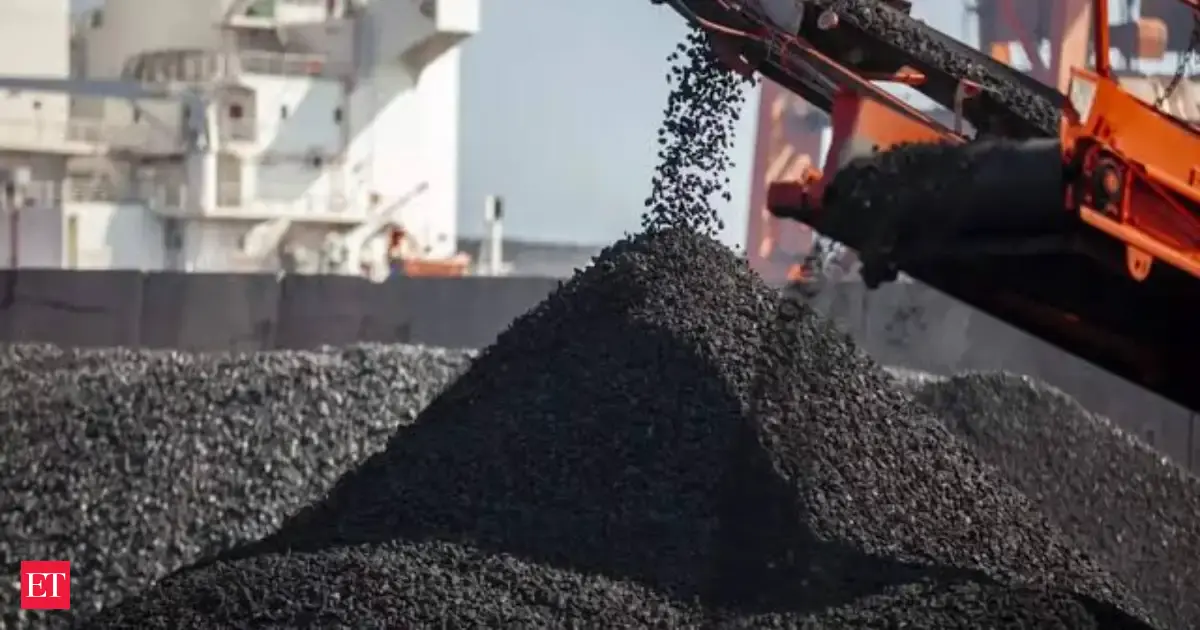
The government has initiated the second application phase for its coal gasification scheme. Seven projects applied in the first round, seeking support for various industrial products. This initiative aims to boost domestic production and reduce import dependency significantly. The scheme offers financial aid for establishing new coal gasification facilities. India currently holds sufficient coal stocks for its power generation needs. View More
New Delhi: The government on Tuesday started the second round of application process under the coal gasification scheme and said it received applications for seven projects in the first round, from Adani Enterprises , NTPC , Talcher Fertilisers , Gallantt Ispat and Shyam Sel & Power. "We expect more companies to apply" in the new round, coal minister G Kishan Reddy said on the sidelines of an event here. Adani Enterprises submitted three separate proposals for urea production in the first round, application window for which closed on Monday. Talcher Fertilisers also sought support for a urea project. Gallantt Ispat has proposed a project for direct reduced iron and syngas, while NTPC and Shyam Sel & Power have applied for synthetic natural gas projects . The scheme, approved by the cabinet in May with a ₹37,500-crore outlay, offers financial support for setting up coal gasification projects, with the aim to scale up production of industrial feedstocks and fuels from domestic coal and cut import dependence for LNG, urea, ammonia and methanol. Together, they accounted for around ₹2.77 lakh crore in imports in FY25. Live Events Coal stock situation Reddy said India had sufficient coal stock for power plants with overall stock at 123.7 million tonnes. This is sufficient for about 51 days at the current consumption rate of 2.4 mt per day. There is around 100 mt in transit besides 23.7 mt at thermal power plants. During April-August, coal supply to power plants increased 4.5% year-on-year to 346.72 mt from 331.70 mt during the same five months in 2025. .Pbanner{display:flex;justify-content:space-between;align-items:center;background-color:#ec1c40;margin-top:20px;padding:5px 10px;border-radius:4px;color:#fff;line-height:10px;width: 100%;box-sizing: border-box} .Pbannertext{display:flex;align-items:center;font-size:16px;font-weight:600;font-family:'Montserrat';} .Pbannertext img{height:20px;margin:0 6px} .Pbannerbutton a{display:flex;align-items:center;background-color:#fff;color:#ec1c40;text-decoration:none;font-weight:600;padding:4px 8px;border-radius:6px;font-size:15px;font-family:'Montserrat';} .Pbannerbutton img{height:20px;margin-right:6px} .Pbannerbutton a:hover{background-color:#f7f7f7} Add as a Reliable and Trusted News Source Add Now! (You can now subscribe to our Economic Times WhatsApp channel) (You can now subscribe to our Economic Times WhatsApp channel)

Duties on Canadian imports of U.S. steel and aluminum products have doubled to 50% as a trade war between Washington and Ottawa intensifies. View More
A truck crosses into the United States on the Gordie Howe International Bridge, connecting Windsor, Ontario, and Detroit, Michigan, on September 6, 2025.Jeff Kowalsky | Afp | Getty ImagesCanada's retaliatory tariffs on a wide array of U.S. goods took effect Tuesday, further escalating a feud between Washington and Ottawa that had already boiled over after trade talks collapsed last month.The duties range from 15% to 50% across hundreds of U.S. products worth a total CA$27.6 billion, including dairy, agricultural equipment, paper, household appliances and electronics. Canadian tariffs on U.S. steel, aluminum and iron products doubled to 50%, while furniture, motorbikes, clothing and some beauty products were among the goods hit with the highest rate.Ottawa called the move a "dollar for dollar" response to the U.S. slapping new 50% tariffs on about $20 billion worth of Canadian wine, hockey sticks and other key goods on Aug. 22.Those U.S. levies, brought under a Depression-era law that has rarely been cited, were imposed hours after the longtime allies failed to strike a trade deal that would have averted them. Officials on both sides have repeatedly accused each other of making untenable last-minute changes to a deal that was nearly complete.Canada's Department of Finance said it would protect its workers, producers and manufacturers by allowing them to better compete with U.S. products sold in the domestic market. What new tariff walls in U.S.-Canada trade war mean for the economy's critical metalsExisting Canadian counter-tariffs against the U.S., including 25% on the politically sensitive autos sector, remain in place.President Donald Trump had already ratcheted up tensions with Canada on Monday by calling for a boycott of Canadian airplane manufacturer Bombardier. "NO MORE SELLING BOMBARDIER IN THE UNITED STATES!" Trump wrote in a Truth Social post. "If they want our Market, they must build here, and stop treating America like a 'piggybank.'"Bombardier pushed back, telling CNBC in a statement later Monday that it employs workers in more than 20 states and builds its products with many U.S.-made components."Bombardier values its great partnership with American companies and its U.S. employees," it said.Trump's broadside also spurred rebuttals from some of his Republican allies from states where Bombardier maintains a presence, including both senators from Kansas.Sen. Jerry Moran, R-Kan., said in a statement that Bombardier's Wichita operation "supports a local workforce of more than a thousand employees, who contribute their talent and expertise to our nation's defense and aerospace capabilities."Moran added that he reached out to the Trump administration "to make certain the President is aware of the significant contributions of Bombardier to Kansas."Sen. Roger Marshall, R-Kan., wrote in an X post Tuesday morning, "I'm going to fight to keep Bombardier's over 1,200 Kansas jobs. I've already taken that concern inside the Oval Office."In 2025, the U.S. exported $333.6 billion worth of goods to Canada and imported $381.9 billion from its northern neighbor, according to the U.S. Trade Representative's office. The pair share trade in many of the same sectors, including energy, vehicles, heavy machinery, aircraft, pharmaceuticals, gems and jewelry, furniture, clothing and a host of foods and drinks. Carney claps back at Lutnick, says Canada will resume trade talks 'when the Americans are ready'Economists say that while the impacted goods are a relatively small portion of overall trade, small- to medium-sized businesses and those in the most-impacted sectors face a severe blow. Ottawa announced a CA$7.5 billion support package for businesses and workers last month, extending an existing CA$25 billion it provided in response to the U.S. global tariff offensive, which began in April 2025.Clarification: This story has been updated to clarify that Canada imposed tariffs on U.S. goods worth $27.6 billion in Canadian dollars. Choose CNBC as your preferred source on Google and never miss a moment from the most trusted name in business news.

Gestamp India is betting on rising demand for safer, lighter vehicle structures as Bharat NCAP and five-star crash ratings push advanced structural technologies deeper into mass-market cars. View More

Canada had condemned Iran’s "destabilizing actions" in the Middle East, saying that it would work with partners to maintain significant pressure on Iran. View More
A flag adorns the ArcelorMittal Dofasco steel plant as trade tensions escalate over U.S. tariffs and retaliatory measures by Canada in Hamilton, Ontario, Canada, Aug. 24, 2026. Carlos Osorio | ReutersIran hit out at Canada for supporting U.S. actions in the Strait of Hormuz, calling Ottawa's moves "a display of strategic confusion and submission to intimidation." In a post on X, Tehran's Foreign Ministry spokesperson, Esmaeil Baghaei, said Canada chose to "appease" the U.S. "on the very day the U.S. president, in blatant contempt for Canada's sovereignty and independence, portrayed the entire country as part of the United States."Baghaei was referring to a post by U.S. President Donald Trump on Monday stateside, which showed the U.S.' territory covering Canada, Greenland and Iceland. In his second term, Trump has repeatedly made comments about making Canada the 51st state of the U.S. and annexing Greenland, which is a semi-autonomous territory of Denmark. Baghaei's comments came after Canada condemned Iranâs "destabilizing actions" in the Middle East, saying that it would work with partners to maintain significant pressure on Iran, including via sanctions and support for efforts to reopen the Strait of Hormuz that were led by the U.S., France and the U.K."Canada cannot credibly present itself as a champion of 'peace and security,' 'freedom of navigation,' and 'international law' while simultaneously backing U.S. military aggression and Washington's illegal, interventionist actions in our region," Baghaei said.Iranian Foreign Ministry spokesperson Esmaeil Baghaei attends a press briefing in Tehran, Iran, June 27, 2026. Shadati | Xinhua News Agency | Getty Images"This is neither 'diplomacy' nor 'responsible statecraft'. It is ... a choice that will not even shield Canada itself from American bullying and aggression," Baghaei said. He questioned why Ottawa would choose to support Washington after experiencing what he called "American bad faith and knowing that U.S. signatures are 'written in pencil.'" Trade talks between Ottawa and Washington collapsed last month, with Prime Minister Mark Carney saying that the U.S. demands had gone too far. "They asked too much and offered too little," he said.This triggered tariffs on about $20 billion of Canadian goods, with Canada also imposing "dollar-for-dollar" retaliatory tariffs that will take effect at 12.01 a.m. ET Tuesday.Read more CNBC politics and policy coverageTrump-touted Freedom Fuel expands to Detroit amid suit over supplier's unpaid fuelVance says Fed should lower interest rates: 'Would be nice to have some help'Canada PM Carney swipes at Trump Commerce Sec. Lutnick over trade, tariff rowIran has also taken aim at other U.S. allies, such as South Korea. Baghaei on Monday warned Seoul against potential military involvement and support for U.S. "aggression," posting on X in Korean.South Korea's Foreign Ministry reportedly said over the weekend that it was in "close communication with relevant countries to help restore peace and stability in the Middle East as soon as possible." Last week, Seoul said it was reviewing options, including military measures to support freedom of navigation in the Strait of Hormuz, according to Reuters."Any other country maintaining a military presence or participating in [U.S.] operations in the Persian Gulf and the Strait of Hormuz can only be regarded as directly supporting the perpetrators of the aggression, and it will lead to serious consequences," Baghaei posted. U.S. criticisms Late Monday, U.S. Rep. Jason Crow, D-Colo., an Army veteran and member of the Permanent Select Committee on Intelligence and House Armed Services Committee, called the war "an absolute quagmire."In a post on X, Crow said the conflict was "all predictable & preventable," and called for the end of "forever wars" in the Middle East. U.S. Defense Secretary Pete Hegseth said early on in the conflict that this would not be a "forever war" for Washington. His sentiments were echoed by Sen. Mark Warner, D-Va., the vice chair of the Select Committee on Intelligence, who criticized Trump in a video message on X. "The Iran war of choice that Donald Trump started cost Americans $100 billion," he said, adding that "every two minutes, it goes up by another $1 million." The administration was "nowhere" in terms of goals in this war, he said, adding that "this is what happens when you start a war of choice with no plan, no strategy, no allies, and no way to get out." Choose CNBC as your preferred source on Google and never miss a moment from the most trusted name in business news.

Steel prices in India hit a four-year high, driven by strong demand and supply constraints. View More

Higher prices could help mills recover margins squeezed by surging ?coking coal costs, but infrastructure, construction and auto companies face higher input costs just as demand picks up. View More
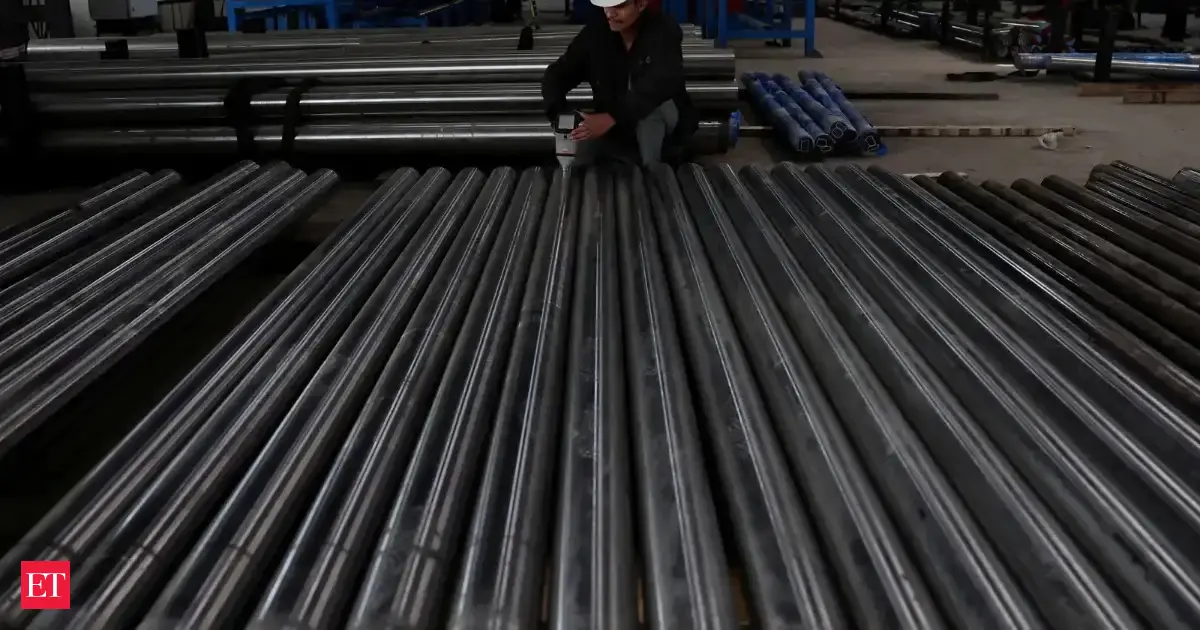
Indian steel prices are expected to increase in the coming weeks. Post-monsoon demand from infrastructure and automotive sectors will tighten the market. Higher coking coal costs are lifting production expenses for steel mills. Rising imports, particularly from China, may limit significant price hikes. This situation presents higher input costs for construction and auto companies. View More
NEW DELHI: Indian steel prices are expected to rise further in the coming weeks as a post-monsoon pickup in infrastructure and automotive demand tightens the market while higher coking coal costs lift production costs of mills, executives and analysts said. Higher prices could help mills recover margins squeezed by surging coking coal costs, but infrastructure, construction and auto companies face higher input costs just as demand picks up. Mills in India, the world's second-biggest crude steel producer after China, marginally cut prices of products such as hot-rolled coil (HRC) by 280 rupees ($2.96) per metric ton between June and July, government data showed. But HRC prices rose by 4,000 rupees per metric ton between August and early September to a four-year high, according to commodities consultancy BigMint. "We expect steel prices to increase by around 3,500 rupees per ton in the coming weeks," said Vedant Goel, director at Enlight Metals. Live Events Since coking coal accounts for a significant share of production costs, mills have been passing on the cost increase, said Shankhadeep Mukherjee, principal analyst for steel at London-based consultancy CRU. The sharp price recovery has been supported by planned maintenance shutdowns at major mills, tighter spot availability and lean distributor inventories, BigMint said. Further price increases are likely in the near term, supported by maintenance shutdowns, post-monsoon restocking, festive demand, project demand and higher coking coal costs, said an executive at a large steel mill who was not authorised to speak to the media. PRESSURE FROM IMPORTS A significant increase in steel prices in the coming months is unlikely, however, as rising imports, especially from China, could limit mills' pricing power, the executives said. India imposed a safeguard duty on some steel imports last year to curb a surge in overseas shipments. It also launched an anti-dumping investigation in June into HRC imports from China, Japan and Russia. Despite the trade measures, imports have picked up. India was a net importer of finished steel between April and July, while finished steel imports rose 36.6% from a year earlier, government data showed. China accounted for 31% of India's imports, making it the largest supplier. Higher imports remain the key risk to margins, if competitive pressure resurges, Fitch Ratings had said in a report on September 1. .Pbanner{display:flex;justify-content:space-between;align-items:center;background-color:#ec1c40;margin-top:20px;padding:5px 10px;border-radius:4px;color:#fff;line-height:10px;width: 100%;box-sizing: border-box} .Pbannertext{display:flex;align-items:center;font-size:16px;font-weight:600;font-family:'Montserrat';} .Pbannertext img{height:20px;margin:0 6px} .Pbannerbutton a{display:flex;align-items:center;background-color:#fff;color:#ec1c40;text-decoration:none;font-weight:600;padding:4px 8px;border-radius:6px;font-size:15px;font-family:'Montserrat';} .Pbannerbutton img{height:20px;margin-right:6px} .Pbannerbutton a:hover{background-color:#f7f7f7} Add as a Reliable and Trusted News Source Add Now! (You can now subscribe to our Economic Times WhatsApp channel) (You can now subscribe to our Economic Times WhatsApp channel)
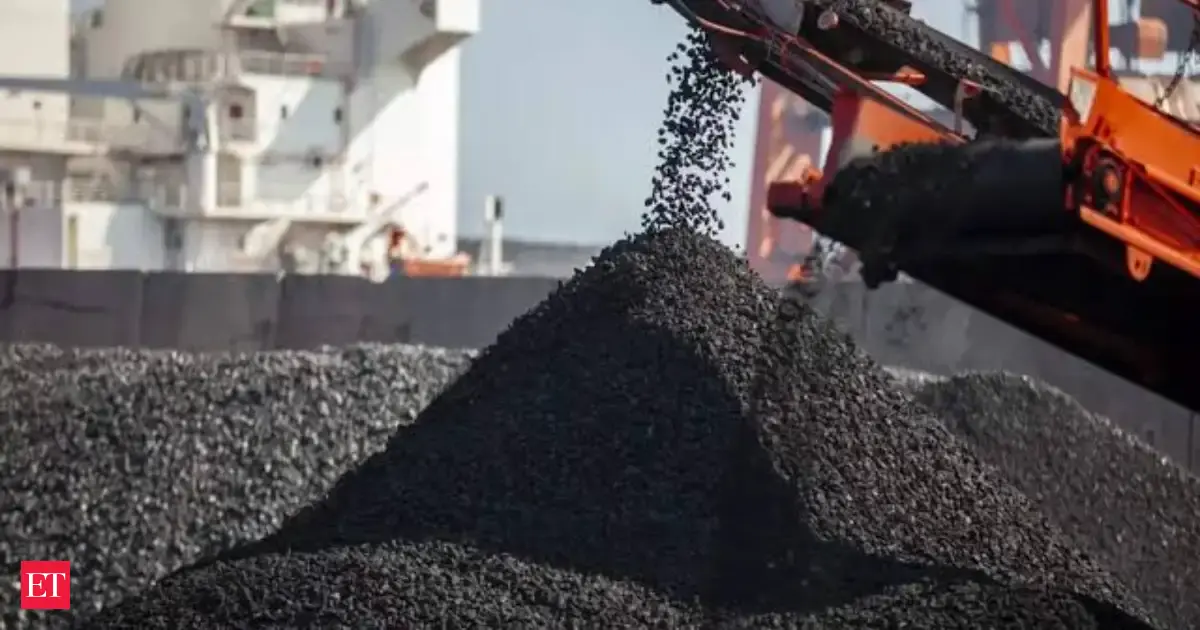
Seven applications were received for India's coal gasification scheme's first round. Adani Enterprises submitted three proposals for urea production, while others applied for different projects. The scheme aims to reduce import dependence and boost domestic coal utilization significantly. It supports achieving 100 million tonnes of coal gasification capacity by 2030. View More
India’s coal gasification scheme has got seven applications in its first round, including three proposals from Adani Enterprises , apart from NTPC , Talcher Fertilisers , Gallantt Ispat and Shyam Sel & Power. The scheme was approved by the Cabinet in May with a Rs 37,500 crore financial outlay with the aim to scale up coal gasification to produce industrial feedstocks and fuels from domestic coal and cut import dependence. Adani Enterprises has submitted three separate applications for urea production. Gallantt Ispat, on the other hand, has proposed a project for direct reduced iron and syngas, while NTPC has applied for a synthetic natural gas project . Also read: Coal supply rises as rains recede, stocks recover at critical plants Shyam Sel & Power has also proposed syngas production while Talcher Fertilisers has sought support for a urea project. Live Events The coal ministry had opened the application process in July and the first round of applications closed on September 7. The scheme intends to cut India's dependence on imports of LNG, urea, ammonia and methanol, which accounted for around Rs 2.77 lakh crore in imports in FY25. It also supports the objective of achieving 100 million tonnes of coal gasification capacity by 2030, including the development of 75 million tonnes of capacity under the scheme. The scheme could catalyse investments estimated at Rs 2.5-3 lakh crore. The scheme builds on the National Coal Gasification Mission and the Rs 8,500 crore scheme approved in January 2024, under which eight projects are currently under implementation. Also read: NMDC to start commercial coal production next quarter; eyes 1 MT dry fuel sale in FY27: Chairman The coal and lignite gasification projects are large-scale, capital-intensive investments that require extensive preparatory work, including pre-feasibility studies, technology assessments, environmental considerations and detailed financial planning. .Pbanner{display:flex;justify-content:space-between;align-items:center;background-color:#ec1c40;margin-top:20px;padding:5px 10px;border-radius:4px;color:#fff;line-height:10px;width: 100%;box-sizing: border-box} .Pbannertext{display:flex;align-items:center;font-size:16px;font-weight:600;font-family:'Montserrat';} .Pbannertext img{height:20px;margin:0 6px} .Pbannerbutton a{display:flex;align-items:center;background-color:#fff;color:#ec1c40;text-decoration:none;font-weight:600;padding:4px 8px;border-radius:6px;font-size:15px;font-family:'Montserrat';} .Pbannerbutton img{height:20px;margin-right:6px} .Pbannerbutton a:hover{background-color:#f7f7f7} Add as a Reliable and Trusted News Source Add Now! (You can now subscribe to our Economic Times WhatsApp channel) (You can now subscribe to our Economic Times WhatsApp channel)