
Latest Sectors News

Fetterman, of Pennsylvania, vowed to "work with President Trump to fight and defend the steel way of life right here in the Steel Valley." View More
US Senator John Fetterman, Democrat from Pennsylvania, is displayed on a screen as he delivers a video message during the Republican National Midterm Convention at the American Airlines Center in Dallas, Texas on Sept. 9, 2026. Kent Nishimura | AFP | Getty ImagesDemocratic Sen. John Fetterman on Wednesday night made a surprise appearance at the Republican midterm convention, an astonishing move that is bound to invite even more scrutiny about his party loyalty."Yes, I'm a Democrat," Fetterman, the first-term senator from Pennsylvania, said in a video played on the first night of the event nicknamed "Trumpapalooza" for its focus on President Donald Trump."Why am I here talking to you today? Because, well, I'm a common sense Democrat," Fetterman said in the video recorded outside U.S. Steel's Edgar Thomson plant in Braddock, Pennsylvania. "I'm always going to stand with America. I'm always going to reject the extremes and socialism and that anti-American way of life," he said.Fetterman's video introduced Pennsylvania's other U.S. senator, Republican Dave McCormick, by praising him as "the kind of senator that gets the job done, and he's going to fight for Pennsylvania."Fetterman also vowed to "work with President Trump to fight and defend the steel way of life right here in the Steel Valley."Read more CNBC politics and policy coverageTrump's energy holdings have surged as the Iran war moved oil marketsBessent's political turn in GOP speech tests his bond-market credibilityTrump says oil and gas prices won't fall until 'right after' midterm electionSince taking office in 2023, Fetterman has become a frequent critic of his own party and a regular guest on Fox News. At the same time, polls show his approval ratings among Democrats have plummeted while his standing in the GOP has grown.While he has repeatedly denied that he plans to switch parties before he faces reelection in 2028, multiple news outlets have reported on his increasing estrangement from other Democrats and his growing closeness with Republicans such as McCormick.Less than a week earlier, the Wall Street Journal reported that Fetterman, who suffered a stroke on the campaign trail in 2022, faces frequent staff turnover and often shows more interest in cultivating conservative media figures than performing the work of a U.S. senator.Fetterman dismissed the report as "lies, half-truths, innuendos, smears and anonymous." Choose CNBC as your preferred source on Google and never miss a moment from the most trusted name in business news.

Republicans hope to build momentum as they sag in the polls ahead of November's midterm election, but some vulnerable candidates skip the event. View More
A sign is posted in front of the American Airlines Center ahead of the 2026Â Republican National Committee (RNC) Midterm Convention on Sept. 8, 2026 in Dallas, Texas. Justin Sullivan | Getty ImagesThe Republican midterm convention kicked off Wednesday, with fewer than half of the candidates in the most competitive congressional races due to speak at the event that's intended to give the party's candidates a boost ahead of the November election.A CNBC analysis of the 45 most competitive House and Senate races this year found 19 of the candidates are slated for speaking spots at the two-day convention in Dallas.Among those who are due to precede President Donald Trump's keynotes both nights are GOP Senate candidates Michael Whatley from North Carolina and Ken Paxton from Texas, Sen. John Husted from Ohio and Rep. Mike Collins from Georgia are scheduled to speak Wednesday. All four candidates are either locked in tight races or trailing their Democratic opponents in the polls. Texas Republican Senate candidate, Texas Attorney General Ken Paxton attends the first day of the 2026 Republican National Convention at the American Airlines Center on Sept. 9, 2026 in Dallas, Texas. Kevin Dietsch | Getty ImagesOn Thursday, the lineup includes incumbent Reps. Ryan Mackenzie, of Pennsylvania, and Mike Lawler, of New York, and Derek Merrin and Eric Flores, challengers to Democratic incumbents in Ohio and Texas, respectively. The Cook Political Report with Amy Walter ranks each of those races "toss up." Rep. Mike Rogers, the Republican candidate for Senate in Michigan â one of those most competitive Senate contests in the country â is also on the agenda.A large number of vulnerable Republicans are also opting to skip the convention altogether, according to MS NOW. The event is running up against a glut of logistical and planning issues, including the first games of the 2026 National Football League season taking place the same two days.A midterm convention is unusual outside of a presidential election year, when candidates are formally nominated. The GOP has sagged in polls for months ahead of the contest, which will determine control of Congress for the remainder of Trump's term. Top Republican congressional leadership figures are also scheduled to speak Wednesday, including House Majority Leader Steve Scalise, R-La., House Majority Whip Tom Emmer, R-Minn., and Senate Majority Whip John Barrasso, R-Wyo. Read more CNBC politics and policy coverageTrump's energy holdings have surged as the Iran war moved oil marketsBessent's political turn in GOP speech tests his bond-market credibilityTrump says oil and gas prices won't fall until 'right after' midterm electionA handful of rank-and-file House members who are up for reelection will also speak at the event, such as Reps. Anna Paulina Luna, R-Fla., Brandon Gill, R-Texas, and Rob Bresnahan, R-Pa., and Derrick Van Orden, R-Wis. Rep. Byron Donalds, the Republican candidate for governor of Florida, will also deliver an address. Sen. Dave McCormick, R-Pa., who is not up for reelection this year, will appear alongside "Members of Pennsylvania's Steel and Manufacturing Industries."A parade of Trump officials will also appear at the event, including Housing and Urban Development Secretary Scott Turner, Treasury Secretary Scott Bessent, Attorney General Todd Blanche, Agriculture Secretary Brooke Rollins and Health and Human Services Secretary Robert F. Kennedy, Jr.Blanche's appearance at a political event is likely to raise eyebrows, especially after the president's former personal attorney's fierce confirmation battle centered on his political activities. Choose CNBC as your preferred source on Google and never miss a moment from the most trusted name in business news.

The domestic box office posted a record-breaking summer movie season, which was bolstered by an extra week of ticket sales and higher-priced premium screenings. View More
In this articleWBDCNKDISIMAXFollow your favorite stocksCREATE FREE ACCOUNT "Spider-Man: Brand New Day" and "The Odyssey."Sony (L) | Universal (R)Hollywood has a new summer record. The domestic box office tallied $4.76 billion in ticket sales during the period between May 1 and Sept. 7, the highest haul in cinematic history. The key moviegoing season, which starts the first weekend in May and runs through Labor Day weekend, is a pivotal piece of the theatrical calendar, typically responsible for 40% of the total annual domestic box office.The previous summer record was cemented in 2013 when films including Disney and Marvel's "Iron Man 3," Illumination's "Despicable Me 2," Warner Bros.' "Man of Steel," Pixar's "Monsters University" and Universal's "Fast & Furious 6" led the period to $4.75 billion. The 2026 season was boosted by Sony's "Spider-Man: Brand New Day" and Universal's "The Odyssey," which together contributed more than $1.5 billion to the summer tally, or more than 30%. It was also helped by an extra week of ticket sales. In 2013, the summer began on May 3 and ended Sept. 2, a period that was seven days shorter."This should be a blueprint for future summers," said Paul Dergarabedian, head of marketplace trends at Rentrak. "One movie should not have to carry an entire season. You need the event pictures, the family films, the breakout surprises, and the independent films working together to keep people coming back. This summer showed what that combination can deliver."The summer 2026 box office ended nearly 10% ahead of 2019, according to data from Rentrak, the year before Covid shutdowns hamstrung ticket sales and before streaming took a bite out of moviegoing in earnest. This strong showing has positioned the 2026 year-to-date haul to be just 7.5%, or $595 million, behind that pre-pandemic marker and reaffirmed box office analysts' predictions that the full-year box office can top $10 billion for the first time in seven years.Heading into the summer movie season, 2026 lagged behind 2019 by 24%, or about $830 million in sales, according to Rentrak.While this year's box office is making gains, the figures don't tell the full story. The shifting movie landscapeCinema operators, studios and analysts are celebrating the strong summer, citing a return to pre-pandemic normalcy, but industry dynamics have shifted. The post-pandemic era in the theatrical space has been defined by fewer screens, fewer moviegoers and fewer movies.Theaters may still appear crowded, but there are fewer auditoriums, meaning attendance remains down from 2019 levels by almost a quarter of a billion admissions, according to data from S&P Global Market Intelligence.And, there are fewer films to see on the big screen. So far in 2026, only 68 films have garnered wide releases â meaning they opened in or eventually played in more than 2,000 theaters â according to data from Rentrak. That's a 14% drop from the same period in 2019, when 79 films had wide releases.These declines have been masked by higher movie ticket prices, particularly from premium large-format, or PLF, experiences, which are particularly popular with Gen Z and millennials. watch nowVIDEO4:3504:35Gen Z is fueling the box office comebackCNBC Digital Original VideoIn 2019, the average movie ticket cost $9.16, according to exhibition trade organization Cinema United. In 2026, a ticket costs an average of $12.75, according to market research from EntTelligence. And that's just for a standard screening. PLF tickets average around $18.26, according to data from EntTelligence, with Imax skewing that figure with its $20.57 average ticket price.Audiences are increasingly opting for these more expensive PLF screenings and have yet to be deterred by the price tag. Tickets are consistently selling out for specialty screenings like Imax's 70 mm showings of "The Odyssey" and the upcoming "Dune: Part Three."There's such demand for premium screenings that studios are getting creative when marketing their films. Disney, for example, will be shut out of Imax screens when "Avengers: Doomsday" is released on the same day as the third "Dune" in December. In response, the company has created a certification for PLF theaters that it's calling "Infinity Vision." Essentially, Disney is promoting cinemas that have big screens, "bright images and outstanding sound." "When you see the Infinity Vision badge, you know you are in for an incredible theatrical experience," the company touts on a dedicated website for the certification.Already the film has snared more than $50 million in presales, Disney said Wednesday during the Goldman Sachs' Communcacopia + Technology conference. The company noted that more than 70% of sales are for Infinity Vision tickets.What are moviegoers watching?At the same time that audiences are embracing big blockbusters on the biggest screens, the theatrical industry has also seen a return of moviegoers for smaller-budget and genre films.Notably, this summer movie season didn't kick off with a big-budget action film or superhero team-up. Instead, the first major hit of the season came with the release of Disney's "The Devil Wears Prada 2." That was followed by Universal's "Obsession" and A24's "Backrooms," two low-budget horror films from YouTube creators-turned-filmmakers. It was further fueled by residual ticket sales of Lionsgate's "Michael," the Michael Jackson biopic, which debuted in April. Then "Toy Story 5" arrived in mid-June. Those five films combined generated more than $1.4 billion toward the summer haul."This summer demonstrated the importance of a consistent flow of compelling content that appeals to a wide variety of moviegoers, coupled with the unique draw of the larger-than-life, immersive environment our movie theaters provide," Justin McDaniel, senior vice president of global content at Cinemark, wrote in a statement last week after the cinema chain surpassed its previous summer box office record ahead of Labor Day weekend.Marcus Theatres, the fourth-largest theater circuit in North America, also posted a record summer period. The company noted that not only did summer revenue hit an all-time high, but so did its concession, merchandise and food and beverage sales. It also marked the highest summer attendance since 2019 and the highest premium large-format screen attendance for any summer, Marcus said. "The tremendous turnouts for a wide range of diverse films created unique memory-making moments for all audiences â from the tears to the laughter to the thrills and chills â that cannot be replicated at home," Jeff Tomachek, president of Marcus Theatres, wrote in a statement Tuesday. "As we look ahead to the rest of the year, several new and highly anticipated films await, giving moviegoers even more reason to enjoy a great time at the movies with friends and family."In addition to the dual release of "Dune: Part Three" and "Avengers: Doomsday," dubbed "Dunesday," the final four months of the 2026 slate include a slew of horror films â "Resident Evil," "Clayface" and "Other Mommy" â as well as smaller-budget genre films like "Practical Magic 2," "Digger," "Wicker" and "Verity" alongside bigger-budget movies like "The Hunger Games: Sunrise on the Reaping," "Hexed" and "Jumanji: Open World." Choose CNBC as your preferred source on Google and never miss a moment from the most trusted name in business news.

Import bans on motorbikes, alcohol and dairy products are due to come into effect on Sept. 29 as the rift between the countries deepens. View More
Cans of Canadian-made Molson beer on a shelf at the Liquor Control Board of Ontario (LCBO) Queen's Quay store in Toronto, Ontario, Canada, on Tuesday, March 4, 2025. Bloomberg | Bloomberg | Getty ImagesThe White House said it would ban imports of Canadian motorbikes and a slew of other products starting later this month as diplomatic and trade relations with Ottawa continue to fray. U.S. President Donald Trump on Tuesday signed executive orders to announce bans on Canadian whey products and molasses, nonalcoholic beer and a slew of alcoholic drinks including malt beer, wines, cider, whiskies, vodka and other spirits. Larger-capacity motorcycles and mopeds will also be banned. The import restrictions, which largely replace tariffs of 50%, are due to take effect on Sept. 29, 2026. watch nowVIDEO3:0803:08Kelly Ann Shaw: This is a trade row rather than a full blown trade warMorning CallThe U.S. also announced that tariffs on other Canadian products would be modified and extended from Sept. 15, including the addition of all-terrain vehicles and animal hides, and the removal of rock salt and cement. U.S. Trade Representative Jamieson Greer said the moves were a "natural consequence of Canada's continued discriminatory treatment of crucial American exports." It was announced on the same day that Canadian tariffs on 27.6 billion Canadian dollars ($20 billion) of U.S. imports came into effect, targeting more than 700 goods across steel, dairy, farm equipment, pulp and paper, electronics, and more.Those "dollar for dollar" tariffs were issued in retaliation for the 50% duties the U.S. slapped on Canadian hockey sticks, wine and a range of other goods over Ottawa's alleged trade discrimination. The U.S. tariffs took effect Aug. 22, hours after trade talks between the two countries fell apart.watch nowVIDEO7:4507:45Fmr. Canadian Deputy PM: Canadians are prepared to take the pain because our sovereignty is worth itSquawk BoxThe two sides have continued to blame one another for the failure to reach a deal, and accused the other of unfair practices that harm their domestic workers. Trump has accused Canada of disadvantaging U.S. exports through its policies in the auto, alcohol and dairy sectors, highlighting the U.S.' trade deficit in goods, and threatening to hit cars, trucks and auto parts with a 50% tariff from Jan. 1, 2027.Canadian Prime Minister Mark Carney said in an August address that the "narrow merchandise trade deficit only exists because the U.S. buys so much of its energy from us," and flagged that Canada is the biggest consumer for U.S. cars and steel. On Tuesday, Carney said Canada's tariffs would "come with a cost" but were necessary to protect businesses, workers and communities.The existing tariffs apply to a relatively small portion of the $715.5 billion trade in goods between the countries, but economists have warned of an immediate blow to small- and medium-sized businesses and of the risks to growth from further escalation. "Companies on both sides of the border will need to wait to see if these tariffs hold, more measures are enacted, or each country decides to de-escalate. In the meantime, those businesses will realize both tariff-, compliance-, and uncertainty-related costs," said Justin Angotti, associate in the international trade and national security group at law firm Reed Smith.Ottawa is meanwhile eyeing closer trade and security ties with the European Union as its relationship with Washington deteriorates, Bloomberg reported Tuesday.watch nowVIDEO6:2806:28Former U.S. Ambassador to Canada on U.S.-Canada trade war: I do think there's a path to a resolutionSquawk BoxAlcohol warsBeer and spirits sales have emerged as a political flashpoint as relations between the U.S. and Canada have deteriorated.Stores in several Canadian provinces have removed U.S. alcohol from their shelves, public campaigns have called for boycotts and Saskatchewan Premier Scott Moe in August announced a 50% tariff on American âimports.Moe's team told CNBC this week that the alcohol levy was a "reciprocal measure" intended to support local businesses and encourage progress toward a fair and balanced trade resolution.U.S. spirits exports to Canada fell more than 70% year on year from the start of the retaliatory ban in March 2025 through December 2025, according to the Distilled Spirits Council of the United States.Chris Swonger, president and CEO of the trade association, said American distillers had "shouldered the brunt of this trade dispute.""We appreciate President Trump's recognition of the significant harm these sales bans have caused U.S. distillers and urge leaders on both sides of the border to reach a negotiated solution that restores U.S. spirits to retail shelves throughout Canada and returns the spirits sector to a permanent zero-for-zero tariff framework," Swonger said. â CNBC's Brandon Gomez contributed to this story. Correction: U.S. President Donald Trump on Tuesday signed executive orders to announce bans on certain Canadian products. An earlier version misstated the day. Choose CNBC as your preferred source on Google and never miss a moment from the most trusted name in business news.

The agreement aims to provide long-term access to consistent-grade iron ore fines – ores with 61-63% Fe – for its integrated steel manufacturing needs View More
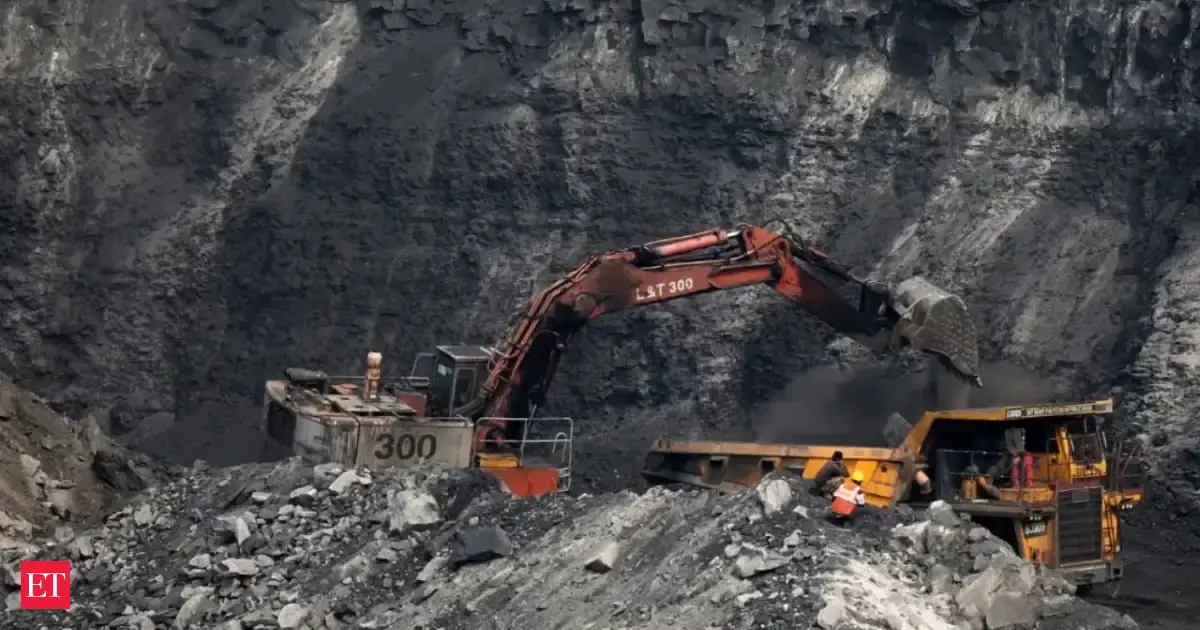
State-owned NMDC has raised its high-grade iron ore price by Rs 150 per tonne. The company fixed the lump ore price at Rs 5,400 per tonne, effective immediately. No changes were made to the rate of iron ore fines by NMDC. Monsoon disruptions have reduced India's iron ore production and availability. This tightening supply and improving steel sentiment supported the price increase. View More
New Delhi: State-owned NMDC on Wednesday increased the price of high-grade iron ore by Rs 150 per tonne to Rs 5400 per tonne. NMDC is India's single largest producer of iron ore, which is an important raw material required for manufacturing of steel. In an exchange filing, the company said it has fixed the price of lump ore (ore with 65.5 per cent iron content) at Rs 5,400 per tonne. The prices are effective immediately, NMDC said. The company did not make any changes in the rate of fines (ore with 64 per cent and less iron content). Live Events In the last price revision announced August 8, NMDC had fixed the rates of lump ore at Rs 5,250 per tonne and that of fines at Rs 4,500 per tonne. An analyst at markets research firm BigMint said, India's iron ore production has declined amid monsoon-related disruptions, while Odisha, a key producer of the mineral, has witnessed a notable drop in iron ore dispatches during June-July. "The resulting tightening in ore availability, coupled with improving steel market sentiment, has supported a rise in NMDC," the analyst said. Under the ministry of steel, Hyderabad-based NMDC alone caters to the country's 20 per cent need of iron ore. NMDC operates four major highly mechanised iron ore mining complexes in India spread across Chhattisgarh (Bailadila sector) and Karnataka (Donimalai sector). .Pbanner{display:flex;justify-content:space-between;align-items:center;background-color:#ec1c40;margin-top:20px;padding:5px 10px;border-radius:4px;color:#fff;line-height:10px;width: 100%;box-sizing: border-box} .Pbannertext{display:flex;align-items:center;font-size:16px;font-weight:600;font-family:'Montserrat';} .Pbannertext img{height:20px;margin:0 6px} .Pbannerbutton a{display:flex;align-items:center;background-color:#fff;color:#ec1c40;text-decoration:none;font-weight:600;padding:4px 8px;border-radius:6px;font-size:15px;font-family:'Montserrat';} .Pbannerbutton img{height:20px;margin-right:6px} .Pbannerbutton a:hover{background-color:#f7f7f7} Add as a Reliable and Trusted News Source Add Now! (You can now subscribe to our Economic Times WhatsApp channel) (You can now subscribe to our Economic Times WhatsApp channel)

The new product is designed to offer reliable corrosion protection, consistent quality and long service life across a range of applications View More

As Chinese electric car sales slow and share prices tumble, several of the automakers are ramping up humanoid robotics development. View More
In this articleXPEV04Q-FF1211-HK1211-HK1810-HKNIOFollow your favorite stocksCREATE FREE ACCOUNT XPeng's humanoid robot IRON is on display during the 2026 Guangdong-Hong Kong-Macao Greater Bay Area International Auto Show on May 31, 2026 in Shenzhen, Guangdong province of China. Vcg | Visual China Group | Getty ImagesChinese companies rushed into electric cars a decade ago, and now they are expanding into humanoid robots as the EV market sees a slowdown amid intense competition.While the commercial viability of humanoids has come under scrutiny, it hasn't dissuaded companies such as Xpeng from announcing robot production plans, at a time when China's EV sales are headed for their worst year since 2021.It's part of a bid to reshape "capital valuation narratives," said Kevin Li, associate director at Counterpoint Research. He added that the automakers are also looking to boost the perception that they are tech companies, and establish a second growth curve.Xpeng shares have tumbled more than 45% this year, making them the worst performer among major EV players. Shares of EV giant BYD are down more than 13% as sales have slumped.Chinese automakers accounted for more than half of the nearly 20 car companies globally that have entered the humanoid robotics sector through in-house development, investment or incubation as of August, according to Counterpoint.watch nowVIDEO5:4005:40Chinese autos could enter U.S. market anytime now: Dunne InsightsSquawk Box AsiaThe venture arm of EV company Nio has also invested in several humanoid robotics startups such as LimX Dynamics and Acorn Robot, according to PitchBook data. The business diversification comes as slowing growth and weakening profitability put pressure on China's EV makers. The average profit margin in China's vehicle manufacturing sector stood at 1.5% in the first half of 2026, according to China Association of Automobile Manufacturers data cited by Counterpoint. Xiaomi, Li Auto and Geely are also among EV makers making moves into the robotics sector, although their strategies differ. "Given the slowing growth and weakening profitability in the EV marketâparticularly domesticallyâit is a natural strategic move for EV companies to diversify into new applications such as robotics," said Jing Yang, director of Asia-Pacific corporate ratings at Fitch Ratings. "This allows them to pursue alternative growth drivers, achieve economies of scale for shared advanced technologies, and potentially improve profitability over the medium term," she said.Investors aren't buying the story yet. Xpeng shares fell after it raised $900 million for its robotics business last month, the largest single round in China's "embodied" AI industry, according to the company. Embodied AI refers to hardware-connected artificial intelligence.The raise valued the car company's robotics unit at more than $6.3 billion â on par with the $6.5 billion estimated value for Xpeng's EV business, according to Citi.Advantages over Tesla?While there are similarities to how electric-car maker Tesla is developing its Optimus humanoid in the U.S., Elon Musk's company, the Chinese automakers' push into robotics have their own advantages, said Xiaoyi Lei, senior research analyst at Jefferies Hong Kong.She pointed out that Chinese automakers can reuse a significant portion of their supply chain â Xpeng, for example, can use 85% of its motors, chips and smart driving software for humanoids. The robots can then be immediately deployed in the automakers' stores and factories, rather than having to wait for consumers to buy them, she added. Xpeng said Tuesday it plans to begin mass production of its robots by the end of this year, starting in its own stores and business venues. Next year, the company plans to launch the robots to the broader market in China and overseas.Automakers also know how to build things at scale, Lei said. Producing thousands of robots that are reliable and serviceable is what Chinese automakers already do every day, she added."Chinese players are the ones actually pushing it into daily use," Lei said, noting that in-house deployment makes it easier and cheaper for the automakers to collect data â which is critical for humanoid commercialization.Xiaomi, a consumer electronics company that only launched its first electric car in 2024, started testing humanoid robots at its factory this year. BYD can also deploy robots in its factories, Counterpoint's Li pointed out. But he said over the medium-to-long term, Geely and Xpeng could better capture the benefits of diversifying beyond cars, pointing to Xpeng's greater emphasis on its physical AI strategy.Humanoid questionsWhether humanoid robots can generate demand beyond automakers' own operations remains an open-ended question. Lei said Jefferies has yet to see firm external orders from the automakers it covers or clear guidance on external customers and robotics revenue for next year. Leading humanoid company Unitree saw its shares skyrocket as they debuted in Shanghai last month, but the stock declined for 12 of the 16 sessions since its listing. Founder Wang Xingxing has cautioned that commercialization could still take years, with the humanoid sector's 'ChatGPT' moment likely a decade away.Reusing car technology for robots may not always be as straightforward as it sounds."I would say the real challenge is how they are going to make the algorithm and software stack that is used to be applied to the smart driving system also viable to the humanoid scenario, which is more difficult and more challenging," Lei said. Choose CNBC as your preferred source on Google and never miss a moment from the most trusted name in business news.

In a letter to Ford CEO Jim Farley, U.S. DOT Secretary Sean Duffy questioned the automaker's strategic trajectory involving Chinese companies. View More
In this articleFFollow your favorite stocksCREATE FREE ACCOUNT U.S. President Donald Trump and CEO of Ford Jim Farley clap, as President Trump visits a Ford production center, in Dearborn, Michigan, U.S., January 13, 2026. Evelyn Hockstein | ReutersThe Trump administration expressed "profound concern" Tuesday about Ford Motor's ties to Chinese companies that it believes could be detrimental to the Detroit carmaker and U.S. automotive industry.In a letter addressed to Ford CEO Jim Farley, Transportation Secretary Sean Duffy questioned the automaker's strategic trajectory with Chinese companies "as it pertains to American national automotive manufacturing integrity, supply chain exposure, and reliance on technologies of foreign adversaries."Ford, which regularly touts its position as the top-producing automaker in the U.S., called the letter a "wrongheaded attempt to capture headlines." It also defended its stance as America's top-producing carmaker and said it employs more hourly workers in the country than any other automaker, while calling out "factual errors" in the letter. Ford said those errors included Duffy's comments about Farley proposing a joint-venture framework for Chinese automakers to enter the U.S.The letter is the latest incident in a series of contentious discussions between the U.S. automotive industry and the Trump administration, which has caused uncertainty with its changes to trade and federal rules and regulations.In the letter, Duffy took issue with Ford's ties to Chinese companies such as battery provider CATL and a framework Farley proposed during an auto show earlier this year in Detroit "to facilitate Chinese joint ventures on United States soil."Ford has a licensing agreement to utilize battery technologies, including the production of lithium iron phosphate batteries, from Contemporary Amperex Technology Co., or CATL.Ford's deal with CATL was originally announced in 2023 but has drawn renewed attention amid tensions between the U.S. and China as well as Ford's plan to use the battery technologies for energy storage systems. "While DOT recognizes the intense competitive pressures of the global market, the Company's recent strategic decisions paint a troubling picture of a foundational American brand actively intertwining its future with Chinese state-backed enterprises," Duffy's letter read. Ford CEO Jim Farley at a battery lab for the automaker in suburban Detroit, announcing a new $3.5 billion electric vehicle battery plant in the state to produce lithium iron phosphate batteries, Feb. 13, 2023.Michael Wayland/CNBC Duffy urged Farley, who has been complimentary of Chinese competitors as well as the Trump administration's attempt to promote U.S. manufacturing, to "reflect on these concerns and national necessities and adopt reasonable strategies that prioritize American workers, utilize allied supply chains, and promote the self-reliance and integrity of the domestic automotive industry."Ford urged Duffy to more openly communicate with the company. "Ford supports the Trump administration's vision for advancing American innovation and manufacturing," the company said. "Had Secretary Duffy reached out before issuing his letter to the press, we would have been happy to share more details about Ford's U.S. commitment."â CNBC's Meghan Reeder and Phil LeBeau contributed to this report. Choose CNBC as your preferred source on Google and never miss a moment from the most trusted name in business news.

The backlash against artificial intelligence data centers could prove a tailwind for real estate investment trusts in the sector. View More
In this articleAMZNAAPLORCLDLREQIXIRMFollow your favorite stocksCREATE FREE ACCOUNT Inside one of Equinix's internal operations at Equinix Data Center in Ashburn, Virginia, on May 9, 2024.Amanda Andrade-Rhoades | The Washington Post | Getty ImagesThe backlash against artificial intelligence data centers could prove a tailwind for real estate investment trusts in the sector. Protests have sprung up nationally as hyperscalers look to build data centers to train and run their AI models. Not only do the data centers take up large amounts of land, they consume enormous amounts of electricity and water and are noisy.The debate is only expected to heat up heading into the midterm elections. A recent NBC News poll found that 69% of respondents oppose the construction of AI center centers in their area. There are already more than 4,700 data centers across the country â a number expected to grow exponentially. PwC projects that annual data center spending will rise to $1.8 trillion in 2050 from roughly $800 billion in 2026. Some states are stepping up with legislation to restrict or ban construction, and a moratorium is already in place in New York.Using REITs to play AI While the hyperscalers are getting all the attention, another way to play the AI data center race is through real estate investment trusts. They are essentially landlords that build, own and then lease space to multiple tenants, including Amazon, Apple and Oracle, according to National Association of Real Estate Investment Trusts, an industry group."Amid political and community push-back, while new projects could see delay, it could be a positive for existing projects/DC [data center] REITs which have pricing power driven by continuously expanding compute demand," Mizuho analyst Vikram Malhotra said in a Sept. 1 note.Data center REITs make up 13% of the total U.S. REIT market capitalization of $1.5 trillion, Nareit said. The public REITs own about 275 data centers in the United States â less than 10% of the owner/operated and leased data centers in the country, the group said. There are three data center stocks in the FTSE Nareit Equity REITs Index: Digital Realty Trust, Equinix and Iron Mountain. Data center REITsTicker Company Div yield YTD performance DLRDigital Realty Trust2.59%23.3%EQIXEquinix1.99%36.9%IRMIron Mountain2.96%42.0%Source: FactSetEquinix, which recently signed a deal with Nvidia, is the largest, with a market value of roughly $102 billion. It has a 1.99% dividend yield and has climbed about 37% year to date. Its second-quarter adjusted funds from operations (AFFO) topped expectations when Equinix reported results and raised its full-year guidance in July.Digital Realty Trust, with a market cap of $71 billion, yields 2.59% and is up more than 23% in 2026. In July, it reported adjusted FFO above analyst estimates and raised full-year guidance. Iron Mountain has a 2.96% dividend yield, has soared 42% this year and sports a $34.7 billion market cap. Second-quarter AFFO beat expectations and Iron Mountain raised full-year guidance.Tailwind for REITsThe data center resistance could act as a tailwind for REITS, although the story is nuanced, said Wells Fargo Investment Institute analyst Amanda Martinez. On one hand, the supply/demand factor favors the REITS because limiting new supply could raise the value of existing capacity, she said. If new capacity becomes harder to develop, those with sizable pipelines of development sites that are permitted with secured power will see a relative advantage, she added."On the other hand, permitting restrictions and moratoriums could weigh on future growth by slowing development timelines and pushing up costs," Martinez said. David Guarino, an analyst with real estate analytics firm Green Street, is bullish on Equinix and Digital Realty."Their size allows them to be nimble," he said. "So if there is restriction or pushback in a certain market, they've got big land banks and big development pipelines, where they can pivot to other markets, and thus far, it has not slowed down their growth story in any way."Plus, their decades of experience means they have relationships with local municipalities, he said. "They have an advantage given their track record, their ability to execute, where people want to do business with them," he said. "That helps them to be able to maybe have an advantage over a newer entrant that might not have that skill set."Guarino prefers Equinix over Digital Realty, although both companies are doing "incredibly well.""As AI inference begins to accelerate â that's more of the lower latency, real-life use cases from AI â that would start to benefit companies that are more focused on smaller tenant leasing, that are closer to where the population centers are," he explained. "That's a lot more of Equinix's business than Digital Realty's business."Alex Pettee, president and director of research and ETFs at Hoya Capital Real Estate, is also bullish on supply and demand for data center REITs. Both Equinix and Digital Realty are in Hoya's model portfolios. "Obviously, a moratorium can be bad if it stops one of your projects," he said. "But zoom out, and if zoning gets tougher, power gets harder to secure, and communities don't want new facilities, the data centers that are already there become more valuable."While the stocks aren't cheap compared to other REITS, they look attractive compared to the rest of the AI trade, he said."You're getting double-digit earnings growth, tangible real estate and infrastructure, recurring contractual revenue, and a roughly 2%-3% dividend yield," Pettee said. Choose CNBC as your preferred source on Google and never miss a moment from the most trusted name in business news.