
Latest Sectors News
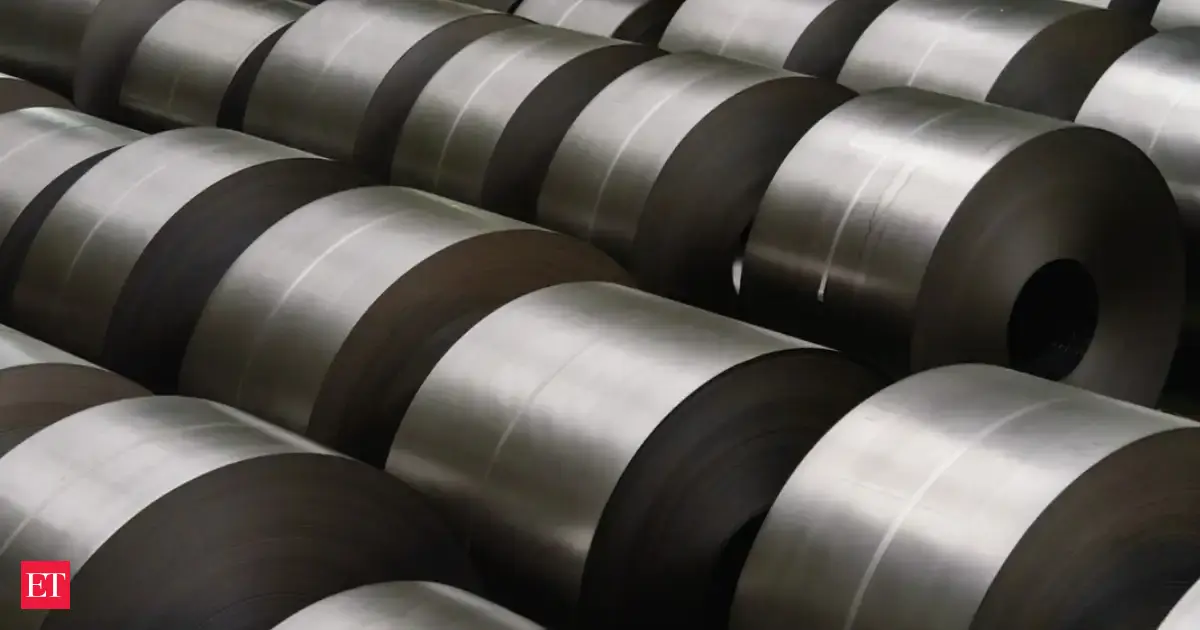
India secured a country-specific tariff-rate quota for steel exports to the European Union. This agreement will safeguard over eighty percent of the nation's steel shipments to the bloc. Indian exporters began utilizing this quota from July first, following new EU regulations. The government is also discussing carbon pricing mechanisms and verification processes with the EU. This move aims to ensure Indian exporters remain competitive within the European market. View More
India has secured a country-specific tariff-rate quota of 1.9 million tonnes annually for steel exports to the European Union and the government expects exporters to secure another 0.9 mt through residual quotas, taking the total to 2.8 mt, an official said on Thursday. This would potentially ensure that over 80% of the country's steel exports to the bloc, which stood at 3.0 mt in the last fiscal, will remain under the free trade agreement (FTA) at a time when the EU has tightened restrictions on steel imports. The government is also in talks with the EU on issues related to carbon pricing under the Carbon Border Adjustment Mechanism (CBAM), the official said. Indian exporters started availing the quota from July 1, when the EU's Steel Overcapacity Regulation came into effect, the person said. Read more - LHB coach bogies are 'corroding': Railway Board raises safety concerns as toilet leaks, salty air & even cleaning practices emerge as problems The regulation, aimed at protecting the EU's steel industry against global overcapacity, limits free-of-duty imports at 18.3 mt a year, and imposes a 50% duty on imports beyond the available quota. The quotas cover a gamut of steel products, including stainless steel, pipes and tubes, non-alloy and alloy hot-rolled sheets and strips, cold-rolled sheets, and organic-coated. ET Online For product categories where India does not have a country-specific quota, it will have access to residual quotas, including general residual quotas which are open to eligible trading partners and preferential quotas reserved for EU FTA partners. "We have safeguarded 80% of our exports to the EU," the official said. "However, duty-free access will not mean cost-free entry," the person added, noting that the CBAM will apply to Indian steel "both within and outside the quota. According to think tank GTRI, "When fully phased in, the carbon charge could average about 35%." The European Commission has submitted proposals to the EU Council concerning the signing and conclusion of the FTA. The government expects the European Parliament approval process to complete by March 2027 after which the agreement would move towards operationalisation, subject to completion of the remaining procedures. Live Events CBAM Verification India is working with the EU to build domestic capacity for CBAM verification, including recognition of at least 10 Indian verification agencies, with six applications already submitted, the official said. "We have asked for faster approvals," he said, adding that India wants exporters to have access to verification agencies domestically. The move is aimed at ensuring that Indian exporters have sufficient domestic verification capacity to provide the emissions documentation required under CBAM, rather than having to depend on a limited pool of overseas agencies. India is also working on its Carbon Credit Trading Scheme (CCTS) and discussing carbon pricing with the EU, the official said. "CBAM is levied on everyone. If our exporters are competitive, it won't make us uncompetitive," the official said. The government is also monitoring any expansion of CBAM to additional products. "If they add more goods in CBAM, we will see," the official said. .Pbanner{display:flex;justify-content:space-between;align-items:center;background-color:#ec1c40;margin-top:20px;padding:5px 10px;border-radius:4px;color:#fff;line-height:10px;width: 100%;box-sizing: border-box} .Pbannertext{display:flex;align-items:center;font-size:16px;font-weight:600;font-family:'Montserrat';} .Pbannertext img{height:20px;margin:0 6px} .Pbannerbutton a{display:flex;align-items:center;background-color:#fff;color:#ec1c40;text-decoration:none;font-weight:600;padding:4px 8px;border-radius:6px;font-size:15px;font-family:'Montserrat';} .Pbannerbutton img{height:20px;margin-right:6px} .Pbannerbutton a:hover{background-color:#f7f7f7} Add as a Reliable and Trusted News Source Add Now! (You can now subscribe to our Economic Times WhatsApp channel) (You can now subscribe to our Economic Times WhatsApp channel)
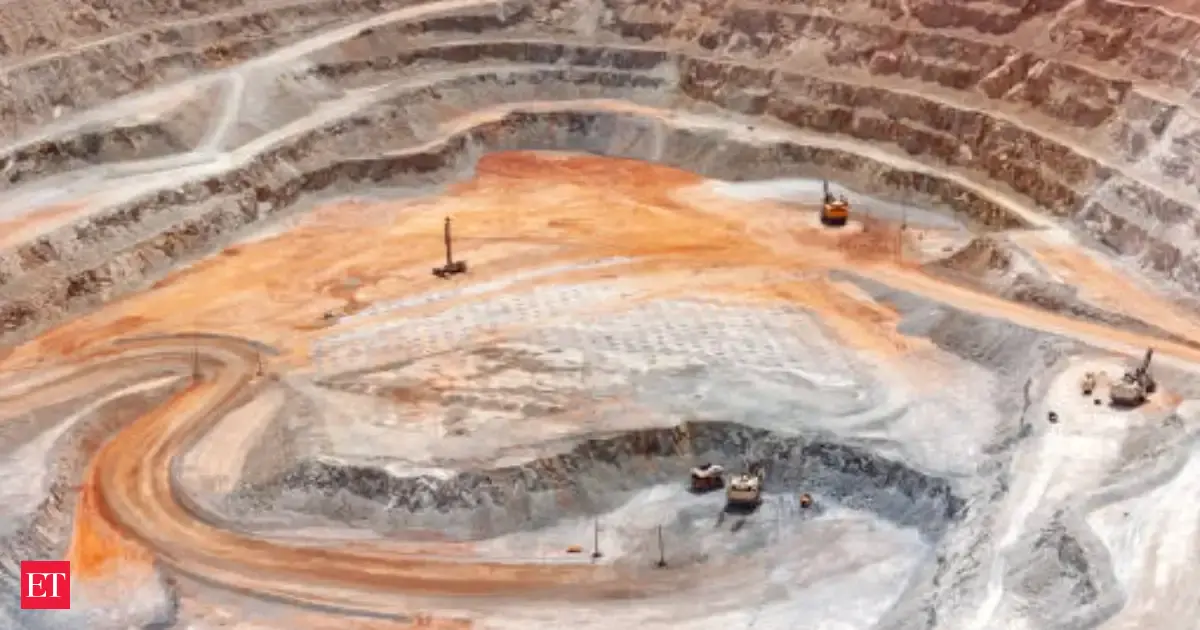
India's mining and metals sector needs technology adoption for future competitiveness. Resource efficiency and supply chain resilience are crucial for growth. Companies must unlock higher value from existing operations and materials. Increased use of low-grade ores and scrap will support circularity. Meeting future demand requires sustained efforts and wider technology integration. View More
India’s mining and metals industry needs to improve technology adoption, resource efficiency and supply-chain resilience to remain competitive as cost pressures, lower ore grades, geopolitical risks and decarbonisation reshape the sector, according to a FICCI-KPMG report released on Thursday. The report, Mineral Extraction to Metals Production: India's Technology Pivot for Competitiveness, said India’s mining and metals sector is entering a key phase of growth, supported by domestic demand, infrastructure expansion and the government’s Atmanirbhar Bharat and Viksit Bharat 2047 goals. Also Read: India launches 16th round of commercial coal mine auctions, offering 25 blocks for investment It said competitiveness will increasingly depend on how efficiently companies use existing resources and convert them into higher-value products, rather than only on production volumes. "(In this scenario) the sector's future therefore depends not only on how much India can produce, but on how efficiently it can produce, unlock higher value from existing operations, build more resilient mineral supply chains, and create sustainable competitive advantage -- competitiveness is now defined across the end-to-end value chain," the report said. Live Events Also Read: Coal Ministry opens 16th round of commercial Coal mine bidding, offering 25 blocks across 8 states The report also called for greater use of low-grade ores, slimes, tailings, scrap and other underutilised materials as feedstock. Such measures can improve resource efficiency and support greater circularity across the sector. The report was launched by Union Minister of State (Independent Charge) for Science & Technology and Earth Sciences Jitendra Singh at the 3rd FICCI Conference on ‘Digitalization, AI, Automation & Technology Integration in Mining & Metals: Enhancing Competitiveness of the Sector'. Ranjan Dhar, Co-Chair, FICCI Steel Committee and Director & Vice President - Sales & Marketing, AMNS India, said the industry needs sustained efforts and wider technology adoption to meet India’s long-term development goals. "There is an immense amount of data available across the industry, and this data can be used to propel ourselves towards efficiencies that can take the industry to the best global standards, not just the best in India," he said. The industry’s growth targets will add to the need for greater efficiency across the value chain. Steel capacity is envisaged to reach 500 million tonnes, while aluminium production is expected to grow nearly seven-fold and copper demand is projected to more than double by FY2047. FICCI said India’s global competitiveness will therefore depend not only on the volume of minerals extracted and metals produced, but also on how efficiently the country converts its mineral resources into high-value, resilient and increasingly circular material supply chains. .Pbanner{display:flex;justify-content:space-between;align-items:center;background-color:#ec1c40;margin-top:20px;padding:5px 10px;border-radius:4px;color:#fff;line-height:10px;width: 100%;box-sizing: border-box} .Pbannertext{display:flex;align-items:center;font-size:16px;font-weight:600;font-family:'Montserrat';} .Pbannertext img{height:20px;margin:0 6px} .Pbannerbutton a{display:flex;align-items:center;background-color:#fff;color:#ec1c40;text-decoration:none;font-weight:600;padding:4px 8px;border-radius:6px;font-size:15px;font-family:'Montserrat';} .Pbannerbutton img{height:20px;margin-right:6px} .Pbannerbutton a:hover{background-color:#f7f7f7} Add as a Reliable and Trusted News Source Add Now! (You can now subscribe to our Economic Times WhatsApp channel) (You can now subscribe to our Economic Times WhatsApp channel)

A new 1.9-million-tonne country-specific quota, plus residual access, could allow India to ship up to 2.8 million tonnes of steel annually to the EU View More

The administration has linked the flower field project to efforts aimed at empowering farmers and create new economic opportunities View More

India-EU FTA benefits for the steel sector are front loaded and being implemented ahead of the pact, say officials View More

Indian steel exporters have begun shipping to the 27-nation bloc, with quota access already available following the EU regulation’s July 1 implementation View More
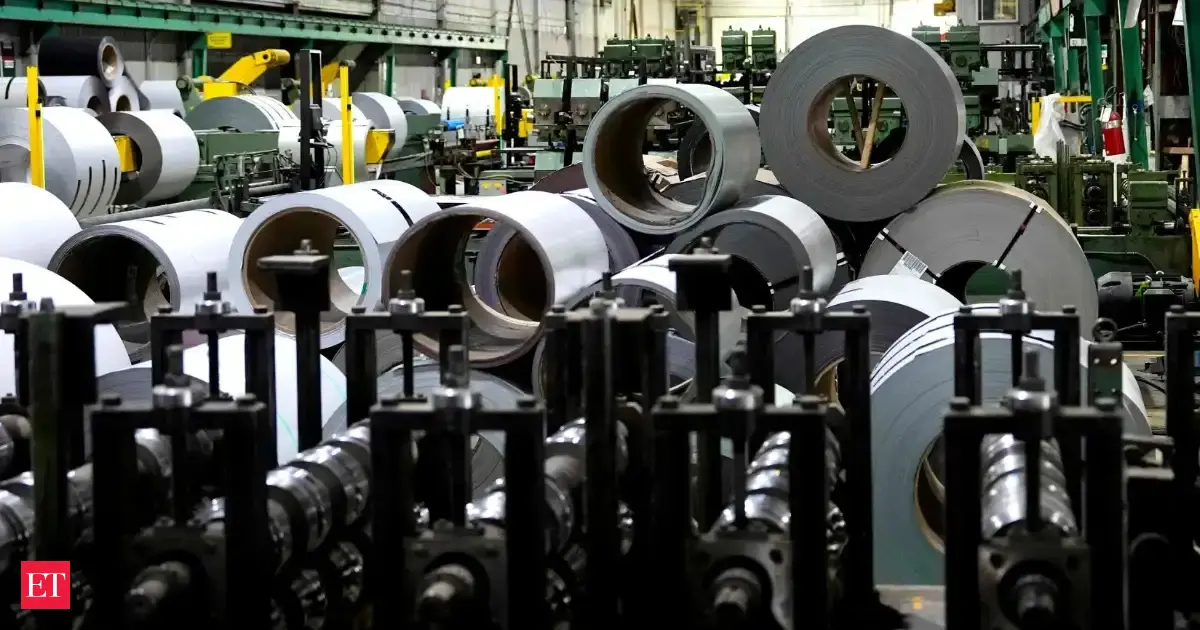
India secured a 1.9 million tonne annual steel export quota to the European Union. Exporters anticipate an additional 0.9 million tonne from residual quotas. This agreement protects the EU's steel industry against global overcapacity issues. Indian steel exports will face the EU's Carbon Border Adjustment Mechanism. The pact is expected to be implemented next year after signing. View More
New Delhi: India has received country-specific tariff-rate quota of 1.9 million tonne (MT) annually for steel exports to the European Union, while the government expects exporters to secure another 0.9 MT through residual quotas, taking the total to 2.8 MT, a commerce ministry official said on Thursday. With this, India has secured over 80 per cent of its exports to the European Union (EU). Last fiscal, India exported about 3 MT of steel goods. Also Read: Indian steel industry creating new opportunities for ferro-alloy sector: IFAPA The Tariff-Rate Quota (TRQs) follow the European Union's Steel Overcapacity Regulation, which came into force on July 1 this year. It is aimed at ensuring protection for the EU's steel industry against the effects of global overcapacity. It sets free-of-duty quotas at 18.3 MT, with a 50 per cent duty for out-of-quota imports and a melt-and-pour regime to enhance transparency. As the regulation is in place from July 1, Indian exporters have already started availing the quota and shipping steel to the 27-nation bloc, the official said, adding that "free trade agreement benefits for the steel sector have been frontloaded". Live Events The exports under the quota are going at zero duty and beyond the available quota, the shipments face a 50 per cent tariff. "However, duty-free access will not mean cost-free entry. The EU's Carbon Border Adjustment Mechanism , or CBAM, will apply to Indian steel both within and outside the quota. When fully phased in, the carbon charge could average about 35 per cent, according to estimates," think tank GTRI said. Also Read: Government reviews use of ship-recycled steel to boost manufacturing The quotas cover a wide range of steel products, including non-alloy and alloy hot-rolled sheets and strips, cold-rolled sheets, metallic-coated sheets, organic-coated sheets, tin mill products, stainless steel products, merchant bars and light sections, rebars, wire rods, pipes and tubes. As per the text, for product categories where India does not have a country-specific quota, it will have access to residual quotas, including general residual quotas open to eligible trading partners and preferential quotas reserved for EU FTA partners. India and the EU announced the conclusion of negotiations for the pact on January 27. It is expected to be signed by the end of this year and likely to be implemented next year. .Pbanner{display:flex;justify-content:space-between;align-items:center;background-color:#ec1c40;margin-top:20px;padding:5px 10px;border-radius:4px;color:#fff;line-height:10px;width: 100%;box-sizing: border-box} .Pbannertext{display:flex;align-items:center;font-size:16px;font-weight:600;font-family:'Montserrat';} .Pbannertext img{height:20px;margin:0 6px} .Pbannerbutton a{display:flex;align-items:center;background-color:#fff;color:#ec1c40;text-decoration:none;font-weight:600;padding:4px 8px;border-radius:6px;font-size:15px;font-family:'Montserrat';} .Pbannerbutton img{height:20px;margin-right:6px} .Pbannerbutton a:hover{background-color:#f7f7f7} Add as a Reliable and Trusted News Source Add Now! (You can now subscribe to our Economic Times WhatsApp channel) (You can now subscribe to our Economic Times WhatsApp channel)
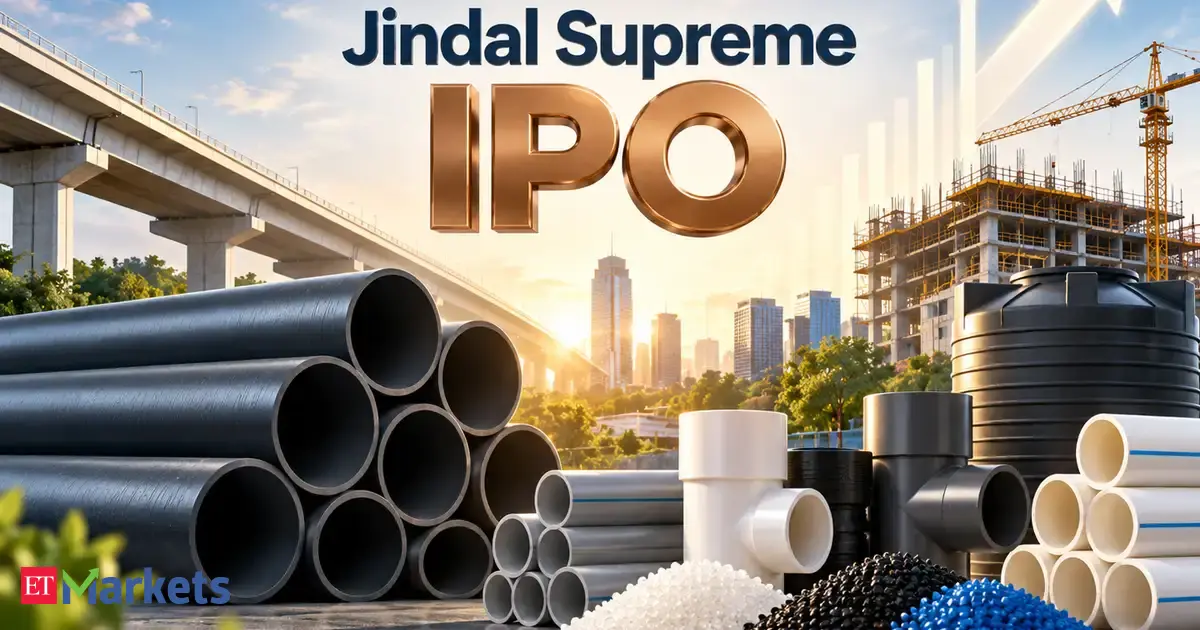
The Jindal Supreme IPO has attracted strong Day 2 demand, with overall subscription reaching 31 times. Its GMP stands at Rs 25, suggesting positive unofficial market sentiment. The Rs 124.88 crore issue closes September 18. The proceeds from the issue will primarily repay debt. View More
The Jindal Supreme IPO continued to attract strong investor interest on Day 2 of bidding and was oversubscribed by 31.50 times overall, against the total offer of 93.99 lakh shares, according to NSE data. Retail investors are showing particularly strong interest, with their reserved portion subscribed 19.13 times. The retail category has 46.99 lakh shares on offer. Adding to the excitement, the IPO’s Grey Market Premium (GMP) stands at around 27%, indicating positive expectations in the unofficial market ahead of the listing. However, GMP can fluctuate sharply and is not a guaranteed indicator of listing gains. The Rs 124.88 crore Jindal Supreme IPO comprises a fresh issue of 1.07 crore shares worth Rs 99.89 crore and an offer for sale (OFS) of 26.87 lakh shares aggregating to Rs 24.99 crore. Jindal Supreme has fixed the IPO price band at Rs 88–Rs 93 per share. The lot size is 161 shares, meaning retail investors need to invest a minimum of Rs 14,973 when applying at the upper end of the price band. Live Events The IPO opened for subscription on September 16, 2026, and the bidding window will remain open until September 18, 2026. The allotment is expected to be finalised on September 21, 2026, while the shares are proposed to be listed on both the NSE and BSE on September 23, 2026, subject to the applicable schedule. Sarthi Capital Advisors Pvt. Ltd. is the book-running lead manager for the issue, while Bigshare Services Pvt. Ltd. is the registrar. Jindal Supreme IPO Subscription Status Retail Individual Investors (RIIs): The retail portion was subscribed 39.74 times, with 46.99 lakh shares on offer. Non-Institutional Investors (NIIs): The NII category was subscribed 37.60 times, against 20.14 lakh shares offered. Qualified Institutional Buyers (QIBs): The QIB portion was subscribed 12.50 times, with 20.14 lakh shares reserved for the category. The strong subscription figures, particularly from retail and non-institutional investors, highlight robust demand for the issue as bidding progresses. Jindal Supreme IPO GMP Today The Jindal Supreme IPO GMP (Grey Market Premium) currently stands at Rs 25 per share, or around 27%, based on the upper end of the IPO price band of Rs 93 per share. At the prevailing GMP, the estimated listing price of Jindal Supreme shares works out to approximately Rs 118 per share. The Grey Market Premium (GMP) is an unofficial market indicator and is neither regulated nor guaranteed. GMP levels can fluctuate significantly before listing, and the actual listing price may differ from the estimated price based on grey market trends. Where will the Jindal Supreme IPO proceeds be utilised? The company proposes to utilise the Rs 71 crore net IPO proceeds primarily towards the repayment or pre-payment of certain outstanding borrowings, either in full or in part. The remaining amount, if any, will be used for general corporate purposes. Financial Perfomance Jindal Supreme (India) total income increased by 12% from Rs 605 crore in FY25 to Rs 676 crore in FY26. Despite the growth in revenue, profit after tax (PAT) declined by 7% from Rs 24 crore in FY25 to Rs 23 crore in FY26. About Jindal Supreme (India) Ltd. Jindal Supreme (India) Limited is a steel products manufacturer with over five decades of experience. The Company manufactures MS black pipes and tubes, galvanized pipes, metal crash barriers and GI tubular poles for infrastructure and industrial applications. Its products are used across water supply and plumbing, construction, roads and highways, bridges, oil & gas, agriculture and rural electrification . The Company expanded into W-beam and Thrie-beam crash barriers in FY2025 and GI tubular poles in FY2026. The Company operates primarily through a B2B model, serving institutional and industrial customers, infrastructure contractors and dealers. Its manufacturing facility is located in Hisar , Haryana, with in-house mills, welding and galvanizing plants, maintenance and testing facilities. As of June 30, 2026, the Company had 53 dealers and 242 employees, with a strong dealer presence across northern India. Read more: NSE IPO Tracker: Catch all the highlights here Should you subscribe? According to a research report by Master Capital Services, the global steel pipes and tubes market is estimated to expand from USD 245,999.02 million in 2026 to USD 395,563.29 million by 2036, registering a CAGR of 4.86%. The Indian market is projected to grow at a relatively higher CAGR of 5.20%, reaching approximately USD 23,932.99 million by 2036. The growth in domestic demand is expected to be driven by infrastructure development, rapid urbanisation, industrial expansion and increasing steel consumption. Government expenditure on water supply, energy and industrial infrastructure, coupled with India’s rising steel pipe exports, is likely to provide further support to the sector. Jindal Supreme (India) Limited, with over five decades of experience, an established dealer network and manufacturing facilities in Haryana, is positioned to benefit from these trends. Its expansion into crash barriers and GI tubular poles also provides additional growth opportunities beyond its core pipes and tubes business. Investors may consider the IPO as a potential long-term investment opportunity. Disclaimer: The views/recommendations mentioned in this article, wherever applicable, are those of the respective SEBI-registered Research Analyst/brokerage and have been reproduced/reported with due attribution. They should not be construed as the views or recommendations of The Economic Times Digital or the journalist. Readers are advised to consider the original research report and make their investment decisions based on their own assessment. Brokerage disclaimers here .Pbanner{display:flex;justify-content:space-between;align-items:center;background-color:#ec1c40;margin-top:20px;padding:5px 10px;border-radius:4px;color:#fff;line-height:10px;width: 100%;box-sizing: border-box} .Pbannertext{display:flex;align-items:center;font-size:16px;font-weight:600;font-family:'Montserrat';} .Pbannertext img{height:20px;margin:0 6px} .Pbannerbutton a{display:flex;align-items:center;background-color:#fff;color:#ec1c40;text-decoration:none;font-weight:600;padding:4px 8px;border-radius:6px;font-size:15px;font-family:'Montserrat';} .Pbannerbutton img{height:20px;margin-right:6px} .Pbannerbutton a:hover{background-color:#f7f7f7} Add as a Reliable and Trusted News Source Add Now! (You can now subscribe to our ETMarkets WhatsApp channel) (You can now subscribe to our ETMarkets WhatsApp channel)
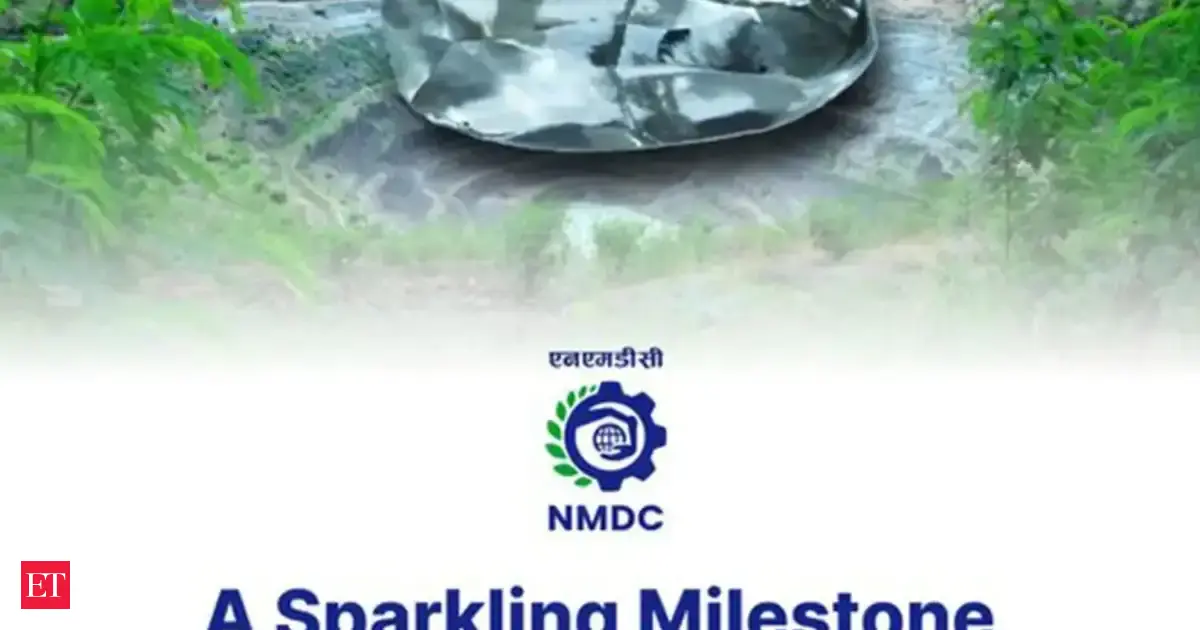
NMDC Panna has recovered a significant 27.29-carat gem-quality diamond. This discovery marks the second-largest diamond ever found at the Panna mine. The find follows a 13.16-carat diamond recovered earlier in July. NMDC operates India's only mechanized diamond mine in Panna, Madhya Pradesh. The company is also India's largest iron ore producer. View More
Panna: NMDC is an eco-friendly mining company & largest producer of iron ore in India has announce the production of a remarkable diamond. In a post on X, NMDC said, "A sparkling milestone for NMDC's Diamond Mining Project, Panna. On 15 September 2026, DMP Panna recovered a remarkable 27.29-carat gem-quality diamond - the second-largest diamond ever produced by NMDC at Panna. Coming soon after the recovery of a 13.16-carat gem-quality diamond in July 2026, this marks another proud achievement for Team NMDC." NMDC is one of the most profitable Navratna PSE under Ministry of Steel. The Diamond Mining Project at Majhgawan - Panna commenced production of diamond in 1971-72. The Majhgawan Diamond Pipe is located at about 15 km from the Panna town in the south-west direction. This project happens to be the only mechanized diamond mine in the country. The Project is equipped with the facilities of Ore Processing Plant including heavy media separation unit, X-ray sorter for diamond separation and disposal system for tailings generated. National Mineral Development Corporation (NMDC), a Navratna Public Sector Enterprise under the Ministry of Steel, Government of India is the single largest producer of iron ore in India. It owns and operates highly mechanized iron ore mines in Chhattisgarh and Karnataka and has its registered office at Hyderabad, Telangana. NMDC is considered to be one of the low-cost producers of iron ore in the world. It also operates the only mechanized diamond mine in India at Panna, Madhya Pradesh. The Company is producing about over 50+ MTPA of iron ore from its major iron producing units i.e. from Bailadila Sector in Chhattisgarh and Donimalai in Bellary-Hospet region in Karnataka. NMDC envisages to have an iron ore production capacity of 100 MNT by FY30. Live Events All of NMDC mining complexes have been rated 5 Star by Indian Bureau of Mines, Ministry of Mines which is a testimony to its scientific and sustainable mining practices. NMDC has its own R&D Centre at Hyderabad which is recognized as a Centre of Excellence by UNIDO. All the NMDC mines and R&D Centre have ISO & EMS accreditations. .Pbanner{display:flex;justify-content:space-between;align-items:center;background-color:#ec1c40;margin-top:20px;padding:5px 10px;border-radius:4px;color:#fff;line-height:10px;width: 100%;box-sizing: border-box} .Pbannertext{display:flex;align-items:center;font-size:16px;font-weight:600;font-family:'Montserrat';} .Pbannertext img{height:20px;margin:0 6px} .Pbannerbutton a{display:flex;align-items:center;background-color:#fff;color:#ec1c40;text-decoration:none;font-weight:600;padding:4px 8px;border-radius:6px;font-size:15px;font-family:'Montserrat';} .Pbannerbutton img{height:20px;margin-right:6px} .Pbannerbutton a:hover{background-color:#f7f7f7} Add as a Reliable and Trusted News Source Add Now! (You can now subscribe to our Economic Times WhatsApp channel) (You can now subscribe to our Economic Times WhatsApp channel)
A-One Steels IPO has fixed its price band at Rs 385-405 per share and will open for subscription on September 24. The Rs 405 crore issue comprises a fresh issue and OFS, with proceeds primarily earmarked for repayment of outstanding borrowings. View More
The much-awaited A-One Steels IPO has fixed its price band at Rs 385 to Rs 405 per equity share, with the issue set to open for subscription on September 24, 2026. Investors will have a three-day window to place their bids, with the issue closing on September 28, 2026. The Rs 405 crore public issue is a book-built IPO, comprising a fresh issue of 87.65 lakh shares worth Rs 355 crore and an offer for sale (OFS) of 12.35 lakh shares amounting to Rs 50 crore. The IPO will open on September 24, 2026, and close on September 28, 2026. The basis of allotment is expected to be finalised on September 29, while the shares are proposed to be listed on both the NSE and BSE on October 1, 2026, subject to the applicable approvals and timelines. The IPO price band has been fixed at Rs 385–Rs 405 per share, with a lot size of 37 shares. At the upper end of the price band, a retail investor would need to invest a minimum of Rs 14,985 for one lot of 37 shares. The floor price is 38.5 times the face value of the equity shares, while the cap price is 40.5 times the face value. Each equity share has a face value of Rs 10. Live Events Investors can bid for a minimum of 37 equity shares and in multiples of 37 shares thereafter. Read more: NSE IPO Tracker: Catch all the highlights here Based on diluted EPS for FY26, the Company’s price-to-earnings (P/E) ratio stands at 20.84x at the lower end of the price band of Rs 385 and 21.92x at the upper end of Rs 405. In comparison, the average P/E ratio of its industry peer group for FY26 is 45.20x. Eligible employees applying under the employee reservation portion will be entitled to a Rs 38 discount per equity share. PL Capital Markets Pvt. Ltd. is the book-running lead manager for the issue, while Bigshare Services Pvt. Ltd. has been appointed as the registrar. Objects of the issue The Company proposes to utilise the Net Proceeds of the Issue primarily towards the pre-payment or partial repayment of certain outstanding borrowings availed by the Company, with an estimated allocation of Rs 250 crore. The balance, if any, will be utilised towards General Corporate Purposes, subject to applicable laws and regulations. Financial performance A-One Steels India Ltd. reported a 18% increase in total income, rising from Rs 3,570 crore in FY25 to Rs 4,202 crore in FY26, reflecting continued growth in its revenues during the year. The company’s profit after tax (PAT) surged by 1,552%, from Rs 8 crore in FY25 to Rs 127 crore in FY26, marking a significant improvement in profitability. About A-One Steels India Ltd. A-One Steels India Ltd., incorporated in 2012, is a backwards-integrated steel manufacturer with a diversified portfolio of long and flat steel products, along with industrial products such as met coke, silicon manganese and ferrosilicon. The company manufactures sponge iron, MS billets, TMT bars, HR/CR coils, HR/CR pipes and galvanised tubes. Its products cater to construction, infrastructure, automotive, power, industrial and other end-use sectors. The company operates six manufacturing facilities across Karnataka and Andhra Pradesh, strategically located near iron ore sources and major ports to support efficient raw material sourcing and product transportation. The company has a strong focus on renewable energy, supported by long-term solar and wind power purchase agreements. Its TMT bars are CII-certified green products and are manufactured in multiple sizes. The company also produces sponge iron at its Koppal and Bellary facilities and is setting up a 10 MW waste-heat-recovery power plant. As of November 30, 2024, A-One Steels had 2,459 employees, including 1,377 permanent and 1,082 contractual employees, with 63 personnel in sales and marketing. Disclaimer: The views/recommendations mentioned in this article, wherever applicable, are those of the respective SEBI-registered Research Analyst/brokerage and have been reproduced/reported with due attribution. They should not be construed as the views or recommendations of The Economic Times Digital or the journalist. Readers are advised to consider the original research report and make their investment decisions based on their own assessment. Brokerage disclaimers here .Pbanner{display:flex;justify-content:space-between;align-items:center;background-color:#ec1c40;margin-top:20px;padding:5px 10px;border-radius:4px;color:#fff;line-height:10px;width: 100%;box-sizing: border-box} .Pbannertext{display:flex;align-items:center;font-size:16px;font-weight:600;font-family:'Montserrat';} .Pbannertext img{height:20px;margin:0 6px} .Pbannerbutton a{display:flex;align-items:center;background-color:#fff;color:#ec1c40;text-decoration:none;font-weight:600;padding:4px 8px;border-radius:6px;font-size:15px;font-family:'Montserrat';} .Pbannerbutton img{height:20px;margin-right:6px} .Pbannerbutton a:hover{background-color:#f7f7f7} Add as a Reliable and Trusted News Source Add Now! (You can now subscribe to our ETMarkets WhatsApp channel) (You can now subscribe to our ETMarkets WhatsApp channel)