
Latest Sectors News
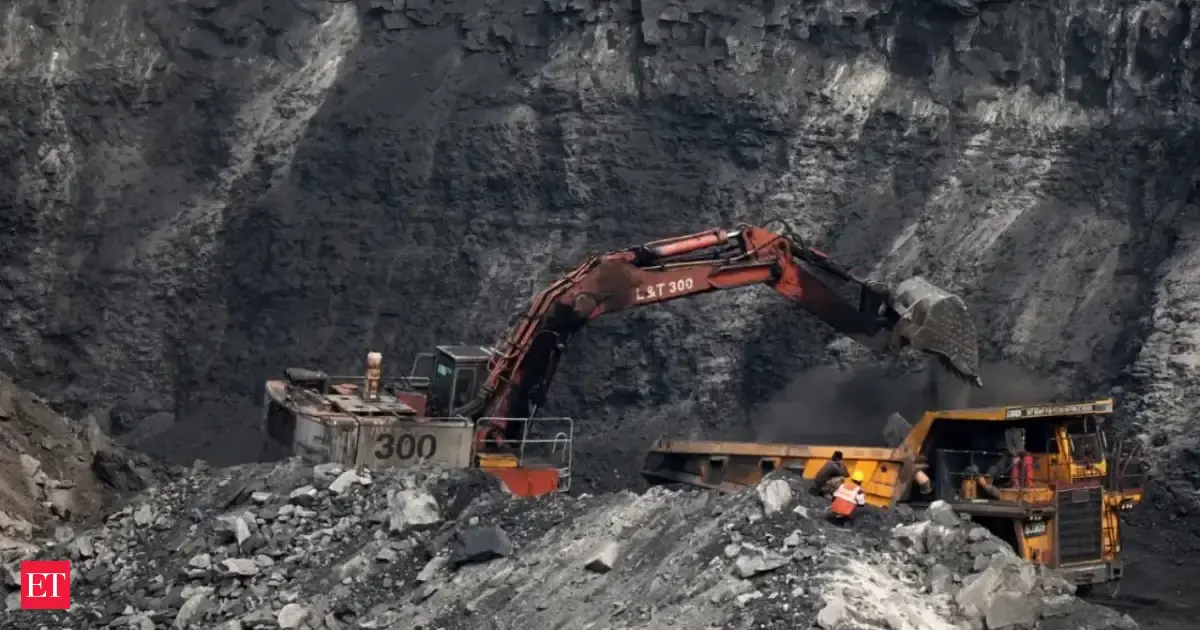
NMDC plans net zero operational emissions by 2047, focusing on scope-one and scope-two emissions. Key strategies include energy efficiency and renewable energy integration for decarbonisation. The company will progressively implement measures across three distinct phases until 2047. NMDC aims for a minimum ninety percent reduction in operational emissions through its pathway. Remaining emissions will be addressed through offsetting measures as the roadmap progresses. View More
NMDC Ltd plans to achieve net zero operational emissions by 2047, covering emissions arising from direct fuel consumption and electricity consumption, respectively. The state-run iron ore producer will focus on scope-1 and scope-2 emissions which means emissions a company directly produces from its own operations and those generated indirectly from the electricity a company buys and uses. Under its roadmap, the company has identified key strategies such as energy efficiency, renewable energy integration , electrification of its fleet, adoption of low-carbon fuels, carbon capture, utilisation and storage and demand-side management, it said in a statement on Friday. The net zero plan will be in three phases - FY26 to FY30, followed by a medium-term phase from starting FY31 to FY40, while the long-term phase will run till FY47. The company has set an overall target of a minimum 90% reduction in operational emissions as part of its Net Zero pathway, with the remaining emissions to be addressed through offsetting measures as the roadmap progresses. Live Events NMDC has already undertaken initiatives to increase the share of renewable energy and cut dependence on conventional energy sources. These include a 10.5 MW wind energy facility at Chitradurga and solar power installations across projects. The company’s logistics infrastructure is also expected to contribute to its decarbonisation efforts. The upcoming slurry pipeline project is expected to provide a greener downstream transportation solution by reducing dependence on conventional transportation and associated warehousing requirements. Further, NMDC plans to increase the movement of iron ore through rail freight, supported by the doubling of railway lines and other supply infrastructure being developed around its operations. Greater use of rail transportation is expected to help reduce the carbon intensity associated with the movement of minerals. The company plans to progressively implement the identified measures across these three phases, with energy efficiency, renewable energy adoption and electrification expected to form key components of the initial transition, followed by deeper decarbonisation measures and emerging technologies in the subsequent phases. .Pbanner{display:flex;justify-content:space-between;align-items:center;background-color:#ec1c40;margin-top:20px;padding:5px 10px;border-radius:4px;color:#fff;line-height:10px;width: 100%;box-sizing: border-box} .Pbannertext{display:flex;align-items:center;font-size:16px;font-weight:600;font-family:'Montserrat';} .Pbannertext img{height:20px;margin:0 6px} .Pbannerbutton a{display:flex;align-items:center;background-color:#fff;color:#ec1c40;text-decoration:none;font-weight:600;padding:4px 8px;border-radius:6px;font-size:15px;font-family:'Montserrat';} .Pbannerbutton img{height:20px;margin-right:6px} .Pbannerbutton a:hover{background-color:#f7f7f7} Add as a Reliable and Trusted News Source Add Now! (You can now subscribe to our Economic Times WhatsApp channel) (You can now subscribe to our Economic Times WhatsApp channel)

Tata Group companies experienced a significant market cap drop of ?46,600 crore amid a mounting governance crisis and investor uncertainty. The turmoil followed a board decision to extend Chairman Natarajan Chandrasekaran's tenure and potential public listing plans. View More

Jindal Supreme IPO: The Jindal Supreme IPO saw overwhelming investor interest, closing oversubscribed 181 times. Retail and Non-Institutional Investors showed significant demand for the offered shares. The company plans to use IPO proceeds for debt repayment and general corporate needs. Jindal Supreme manufactures steel products and has over five decades of experience. The company is positioned to benefit from projected growth in the steel pipes market. View More
The Jindal Supreme IPO received an overwhelming response from investors and ended up being oversubscribed 181.07 times overall by Day 3, against the total offer of 93.99 lakh shares, according to NSE data. Meanwhile, the IPO’s grey market premium (GMP) stands at Rs 25 per share, or around 27% over the upper end of the price band. While the GMP points to positive expectations in the unofficial market, it can fluctuate sharply and does not guarantee listing gains. The Rs 124.88 crore Jindal Supreme IPO comprises a fresh issue of 1.07 crore shares worth Rs 99.89 crore and an offer for sale (OFS) of 26.87 lakh shares aggregating to Rs 24.99 crore. Jindal Supreme has fixed the IPO price band at Rs 88-93 per share. The lot size is 161 shares, meaning retail investors need to invest a minimum of Rs 14,973 when applying at the upper end of the price band. The IPO opened for subscription on September 16 and bidding closes today, September 18. The allotment is expected to be finalised on September 21, while the shares are proposed to be listed on both the NSE and BSE on September 23, subject to the applicable schedule. Live Events Sarthi Capital Advisors Pvt. Ltd. is the book-running lead manager for the issue, while Bigshare Services Pvt. Ltd. is the registrar. Jindal Supreme IPO Subscription Status Retail Individual Investors (RIIs): The retail portion was subscribed 149.34 times against the 46.99 lakh shares on offer. Non-Institutional Investors (NIIs): The NII category was subscribed a whopping 327.99 times against the 20.14 lakh shares offered. Qualified Institutional Buyers (QIBs): The QIB portion was subscribed 126.41 times, with 20.14 lakh shares reserved for the category. Jindal Supreme IPO GMP Today The Jindal Supreme IPO’s grey market premium currently stands at Rs 25 per share, equivalent to around 27% over the upper price band of Rs 93. At the prevailing GMP, the estimated listing price of Jindal Supreme shares works out to approximately Rs 118 per share. The GMP is an unofficial market indicator and is neither regulated nor guaranteed. GMP levels can fluctuate significantly before listing, and the actual listing price may differ from the estimate indicated by grey market trends. Read more: NSE IPO Tracker: Catch all the highlights here Jindal Supreme IPO: Objects of the Issue The company proposes to utilise the Rs 71 crore net IPO proceeds primarily towards the repayment or pre-payment of certain outstanding borrowings, either in full or in part. Any remaining proceeds will be used for general corporate purposes. Financial Performance Jindal Supreme (India)’s total income increased 12% year-on-year, rising from Rs 605 crore in FY25 to Rs 676 crore in FY26. However, despite the growth in revenue, profit after tax (PAT) declined 7%, from Rs 24 crore in FY25 to Rs 23 crore in FY26. Read more: SS Retail IPO Day 3: Subscription surpasses 6 times; GMP hints at 19% listing premium; check key details inside About Jindal Supreme (India) Jindal Supreme (India) Limited is a steel products manufacturer with more than five decades of experience. The company manufactures MS black pipes and tubes, galvanized pipes, metal crash barriers and GI tubular poles for infrastructure and industrial applications. Its products are used across water supply and plumbing, construction, roads and highways, bridges, oil and gas, agriculture and rural electrification . The company expanded into W-beam and Thrie-beam crash barriers in FY2025 and GI tubular poles in FY2026. Jindal Supreme primarily operates through a B2B model, serving institutional and industrial customers, infrastructure contractors and dealers. Its manufacturing facility is located in Hisar , Haryana, and includes in-house mills, welding and galvanizing plants, maintenance facilities and testing facilities. As of June 30, 2026, the company had 53 dealers and 242 employees, with a strong dealer presence across northern India. Read more: NSE IPO Day 2: GMP at 8%, subscription reaches 44% — Should you apply? Should You Subscribe? According to a research report by Master Capital Services, the global steel pipes and tubes market is estimated to expand from USD 245,999.02 million in 2026 to USD 395,563.29 million by 2036, registering a CAGR of 4.86%. The Indian market is projected to grow at a relatively higher CAGR of 5.20%, reaching approximately USD 23,932.99 million by 2036, the report said. According to the report, domestic demand growth is expected to be driven by infrastructure development, rapid urbanisation, industrial expansion and rising steel consumption. Government expenditure on water supply, energy and industrial infrastructure, along with India’s growing steel pipe exports, is expected to provide further support to the sector. Master Capital Services said Jindal Supreme, with more than five decades of experience, an established dealer network and manufacturing facilities in Haryana, is positioned to benefit from these sector trends. Its expansion into crash barriers and GI tubular poles also provides additional growth opportunities beyond its core pipes and tubes business. Disclaimer: The views/recommendations mentioned in this article, wherever applicable, are those of the respective SEBI-registered Research Analyst/brokerage and have been reproduced/reported with due attribution. They should not be construed as the views or recommendations of The Economic Times Digital or the journalist. Readers are advised to consider the original research report and make their investment decisions based on their own assessment. Brokerage disclaimers here .Pbanner{display:flex;justify-content:space-between;align-items:center;background-color:#ec1c40;margin-top:20px;padding:5px 10px;border-radius:4px;color:#fff;line-height:10px;width: 100%;box-sizing: border-box} .Pbannertext{display:flex;align-items:center;font-size:16px;font-weight:600;font-family:'Montserrat';} .Pbannertext img{height:20px;margin:0 6px} .Pbannerbutton a{display:flex;align-items:center;background-color:#fff;color:#ec1c40;text-decoration:none;font-weight:600;padding:4px 8px;border-radius:6px;font-size:15px;font-family:'Montserrat';} .Pbannerbutton img{height:20px;margin-right:6px} .Pbannerbutton a:hover{background-color:#f7f7f7} Add as a Reliable and Trusted News Source Add Now! (You can now subscribe to our ETMarkets WhatsApp channel) (You can now subscribe to our ETMarkets WhatsApp channel)
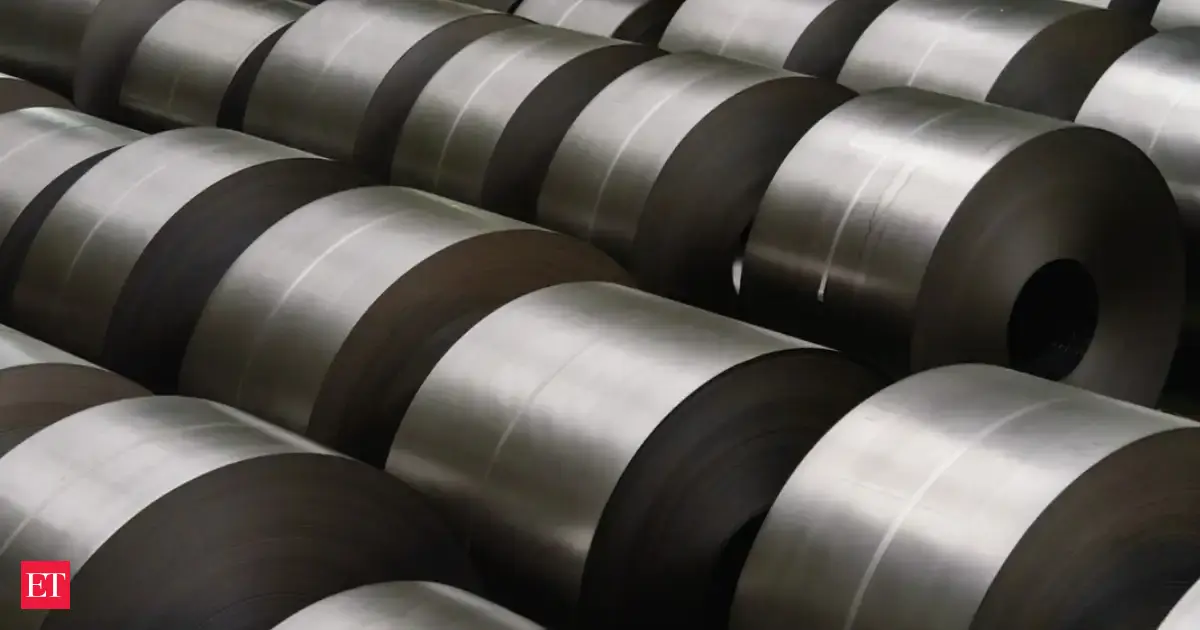
India secured a country-specific tariff-rate quota for steel exports to the European Union. This agreement will safeguard over eighty percent of the nation's steel shipments to the bloc. Indian exporters began utilizing this quota from July first, following new EU regulations. The government is also discussing carbon pricing mechanisms and verification processes with the EU. This move aims to ensure Indian exporters remain competitive within the European market. View More
India has secured a country-specific tariff-rate quota of 1.9 million tonnes annually for steel exports to the European Union and the government expects exporters to secure another 0.9 mt through residual quotas, taking the total to 2.8 mt, an official said on Thursday. This would potentially ensure that over 80% of the country's steel exports to the bloc, which stood at 3.0 mt in the last fiscal, will remain under the free trade agreement (FTA) at a time when the EU has tightened restrictions on steel imports. The government is also in talks with the EU on issues related to carbon pricing under the Carbon Border Adjustment Mechanism (CBAM), the official said. Indian exporters started availing the quota from July 1, when the EU's Steel Overcapacity Regulation came into effect, the person said. Read more - LHB coach bogies are 'corroding': Railway Board raises safety concerns as toilet leaks, salty air & even cleaning practices emerge as problems The regulation, aimed at protecting the EU's steel industry against global overcapacity, limits free-of-duty imports at 18.3 mt a year, and imposes a 50% duty on imports beyond the available quota. The quotas cover a gamut of steel products, including stainless steel, pipes and tubes, non-alloy and alloy hot-rolled sheets and strips, cold-rolled sheets, and organic-coated. ET Online For product categories where India does not have a country-specific quota, it will have access to residual quotas, including general residual quotas which are open to eligible trading partners and preferential quotas reserved for EU FTA partners. "We have safeguarded 80% of our exports to the EU," the official said. "However, duty-free access will not mean cost-free entry," the person added, noting that the CBAM will apply to Indian steel "both within and outside the quota. According to think tank GTRI, "When fully phased in, the carbon charge could average about 35%." The European Commission has submitted proposals to the EU Council concerning the signing and conclusion of the FTA. The government expects the European Parliament approval process to complete by March 2027 after which the agreement would move towards operationalisation, subject to completion of the remaining procedures. Live Events CBAM Verification India is working with the EU to build domestic capacity for CBAM verification, including recognition of at least 10 Indian verification agencies, with six applications already submitted, the official said. "We have asked for faster approvals," he said, adding that India wants exporters to have access to verification agencies domestically. The move is aimed at ensuring that Indian exporters have sufficient domestic verification capacity to provide the emissions documentation required under CBAM, rather than having to depend on a limited pool of overseas agencies. India is also working on its Carbon Credit Trading Scheme (CCTS) and discussing carbon pricing with the EU, the official said. "CBAM is levied on everyone. If our exporters are competitive, it won't make us uncompetitive," the official said. The government is also monitoring any expansion of CBAM to additional products. "If they add more goods in CBAM, we will see," the official said. .Pbanner{display:flex;justify-content:space-between;align-items:center;background-color:#ec1c40;margin-top:20px;padding:5px 10px;border-radius:4px;color:#fff;line-height:10px;width: 100%;box-sizing: border-box} .Pbannertext{display:flex;align-items:center;font-size:16px;font-weight:600;font-family:'Montserrat';} .Pbannertext img{height:20px;margin:0 6px} .Pbannerbutton a{display:flex;align-items:center;background-color:#fff;color:#ec1c40;text-decoration:none;font-weight:600;padding:4px 8px;border-radius:6px;font-size:15px;font-family:'Montserrat';} .Pbannerbutton img{height:20px;margin-right:6px} .Pbannerbutton a:hover{background-color:#f7f7f7} Add as a Reliable and Trusted News Source Add Now! (You can now subscribe to our Economic Times WhatsApp channel) (You can now subscribe to our Economic Times WhatsApp channel)
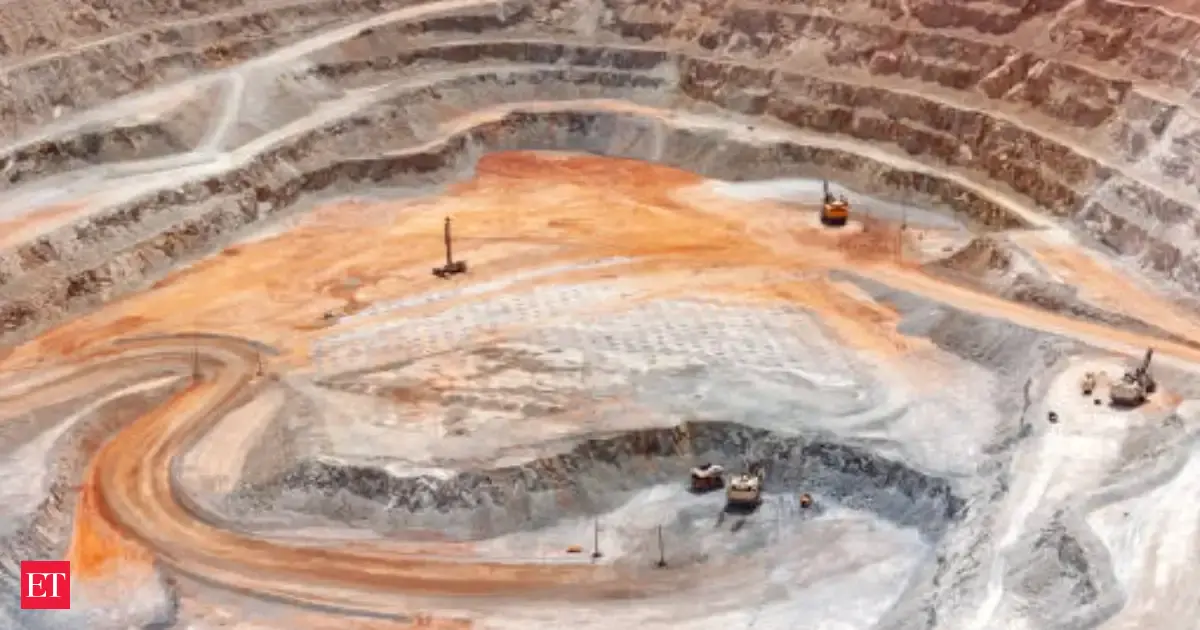
India's mining and metals sector needs technology adoption for future competitiveness. Resource efficiency and supply chain resilience are crucial for growth. Companies must unlock higher value from existing operations and materials. Increased use of low-grade ores and scrap will support circularity. Meeting future demand requires sustained efforts and wider technology integration. View More
India’s mining and metals industry needs to improve technology adoption, resource efficiency and supply-chain resilience to remain competitive as cost pressures, lower ore grades, geopolitical risks and decarbonisation reshape the sector, according to a FICCI-KPMG report released on Thursday. The report, Mineral Extraction to Metals Production: India's Technology Pivot for Competitiveness, said India’s mining and metals sector is entering a key phase of growth, supported by domestic demand, infrastructure expansion and the government’s Atmanirbhar Bharat and Viksit Bharat 2047 goals. Also Read: India launches 16th round of commercial coal mine auctions, offering 25 blocks for investment It said competitiveness will increasingly depend on how efficiently companies use existing resources and convert them into higher-value products, rather than only on production volumes. "(In this scenario) the sector's future therefore depends not only on how much India can produce, but on how efficiently it can produce, unlock higher value from existing operations, build more resilient mineral supply chains, and create sustainable competitive advantage -- competitiveness is now defined across the end-to-end value chain," the report said. Live Events Also Read: Coal Ministry opens 16th round of commercial Coal mine bidding, offering 25 blocks across 8 states The report also called for greater use of low-grade ores, slimes, tailings, scrap and other underutilised materials as feedstock. Such measures can improve resource efficiency and support greater circularity across the sector. The report was launched by Union Minister of State (Independent Charge) for Science & Technology and Earth Sciences Jitendra Singh at the 3rd FICCI Conference on ‘Digitalization, AI, Automation & Technology Integration in Mining & Metals: Enhancing Competitiveness of the Sector'. Ranjan Dhar, Co-Chair, FICCI Steel Committee and Director & Vice President - Sales & Marketing, AMNS India, said the industry needs sustained efforts and wider technology adoption to meet India’s long-term development goals. "There is an immense amount of data available across the industry, and this data can be used to propel ourselves towards efficiencies that can take the industry to the best global standards, not just the best in India," he said. The industry’s growth targets will add to the need for greater efficiency across the value chain. Steel capacity is envisaged to reach 500 million tonnes, while aluminium production is expected to grow nearly seven-fold and copper demand is projected to more than double by FY2047. FICCI said India’s global competitiveness will therefore depend not only on the volume of minerals extracted and metals produced, but also on how efficiently the country converts its mineral resources into high-value, resilient and increasingly circular material supply chains. .Pbanner{display:flex;justify-content:space-between;align-items:center;background-color:#ec1c40;margin-top:20px;padding:5px 10px;border-radius:4px;color:#fff;line-height:10px;width: 100%;box-sizing: border-box} .Pbannertext{display:flex;align-items:center;font-size:16px;font-weight:600;font-family:'Montserrat';} .Pbannertext img{height:20px;margin:0 6px} .Pbannerbutton a{display:flex;align-items:center;background-color:#fff;color:#ec1c40;text-decoration:none;font-weight:600;padding:4px 8px;border-radius:6px;font-size:15px;font-family:'Montserrat';} .Pbannerbutton img{height:20px;margin-right:6px} .Pbannerbutton a:hover{background-color:#f7f7f7} Add as a Reliable and Trusted News Source Add Now! (You can now subscribe to our Economic Times WhatsApp channel) (You can now subscribe to our Economic Times WhatsApp channel)

A new 1.9-million-tonne country-specific quota, plus residual access, could allow India to ship up to 2.8 million tonnes of steel annually to the EU View More

The administration has linked the flower field project to efforts aimed at empowering farmers and create new economic opportunities View More

India-EU FTA benefits for the steel sector are front loaded and being implemented ahead of the pact, say officials View More

Indian steel exporters have begun shipping to the 27-nation bloc, with quota access already available following the EU regulation’s July 1 implementation View More