
Latest Sectors News

Trump, facing low approval on the economy ahead of the midterm election, has an added incentive to emerge from the summit with China's Xi touting trade wins. View More
China's President Xi Jinping and President Donald Trump visit the Temple of Heaven in Beijing, China, May 14, 2026.China Pool | Getty ImagesPresident Donald Trump and Chinese leader Xi Jinping's aims of bolstering trade stability and clinching economic wins could be scrambled by a roiling debate over artificial intelligence, as well as shifting U.S. tariffs and an Iran war-related sanctions operation.The two leaders are expected to seek ways to strengthen their fragile trade truce when they meet in Washington for their second face-to-face summit this year.Despite gestures of goodwill surrounding the lead-up to the summit, the two sides continue to lob accusations and launch retaliatory trade actions.Treasury Secretary Scott Bessent, in an interview with CNBC's "Squawk Box" on Monday, said the "great respect" Trump and Xi have for each other trickles down to broader U.S.-China negotiations. He then noted, "We had some deliverables that have not been completely fulfilled" by China as part of a trade agreement Trump and Xi reached in Busan, South Korea, nearly a year ago.Some China analysts have raised concerns about the unusually top-down diplomatic arrangement between the two economic superpowers. "A number of inconsistent viewpoints seem to be jostling each other," as Trump dictates "the overarching approach" toward China "while letting more negative actions occur at the margins," said Claire Reade, a senior associate with the trustee chair in Chinese business and economics at the Center for Strategic and International Studies.The summit comes with less than six weeks left in a U.S. election cycle that has largely centered on Americans' cost of living concerns. Trump, whose polling marks on that key issue have sunk to new lows, has even more of an incentive to emerge from the summit with Xi touting some form of economic deal.Here's where the U.S.-China trade relationship stands and what's at risk when Trump and Xi meet:State of tradeLast year's explosive trade war saw the two economic superpowers hike tariffs on each other's goods to dizzying heights: U.S. levies on Chinese imports hit 145% at the peak of the squabble, while Beijing's retaliatory duties reached 125%.Those tariffs were slashed in May 2025 after trade negotiators in Switzerland struck a temporary deal, which was extended in mid-August. Trump and Xi then made an agreement in Busan that led the countries to further scale back their tit-for-tat trade measures. As part of that deal, China agreed to suspend export controls on rare earths and buy U.S. agricultural products, while the U.S. reduced some tariffs and suspended other trade retaliation. That deal was set to last for one year, and will expire Nov. 10, a week after the U.S. election, absent an extension.Despite the cooldown, both countries continue to impose high tariffs on each other's goods, multiple analyses show. As of July, the effective tariff rate of 22.8% on Chinese products is the highest among major U.S. trading partners, with steel and aluminum imports facing the heaviest duties, according to the Penn Wharton Budget Model from the University of Pennsylvania.The Congressional Research Service's estimate is even higher, calculating the U.S. average tariff rate on China in July at roughly 36.5%, versus Beijing's 31% rate on U.S. goods.U.S. trade with China fell sharply in 2025, with total goods trade declining nearly 30% from the prior year â and the first seven months of 2026 show a continued decline, according to U.S. Census data. But Beijing remains a major economic partner with Washington, behind only Mexico and Canada. As recently as 2019, China was the largest U.S. trading partner.Trump has long complained about the large trade deficits the U.S. maintains with other countries, including China, while advocating for a domestic manufacturing resurgence. While the U.S. goods trade deficit with China so far this year is lower than the same period in 2025, it remains among the highest in the world at roughly $91.2 billion.Setting the tableTrump and Xi last convened at a state dinner in Beijing in mid-May, part of a whirlwind summit heavy on pomp and circumstance but ultimately lacking in deliverables.Many China watchers expect a similar outcome this time.A one-year extension of the trade truce is "our base case," China analysts from Bank of America Global Research said in a client note last week. That extension would maintain the status quo on tariffs and bar new export controls, a major sticking point before the Busan meeting.China could also agree to make additional purchases of U.S. goods, "potentially including more Boeing aircraft," they wrote. After Beijing, the countries confirmed that China would buy 200 Boeing planes, a smaller number than some investors had expected."We expect limited progress elsewhere," including on the prospect of expanding access to advanced semiconductors or changing export controls that remain in place, the bank's analysts said.watch nowVIDEO22:2922:29Watch CNBC's full interview with Treasury Secretary Scott BessentSquawk BoxOther China experts agreed. Both Trump and Xi "appear to be managing for small gains and conflict avoidance," Ryan Hass, director of the Brookings Institution's John L. Thornton China Center, told CNBC in an email."The uneasy equilibrium sustains because it serves two functions for both leaders," Hass explained. "First, it gives both leaders an ability to signal to their citizens that they have the situation with their foremost geopolitical rival under control. Second, it buys time and space for both leaders to reduce dependencies and vulnerabilities from the other."Bessent seemed to confirm some of those predictions Monday morning, telling CNBC, "I think we're going to maintain" the tariff truce."That was a focal point" of talks over the weekend with Chinese Vice Premier He Lifeng, Bessent said, adding, "We've had great stability in the relationship since last fall."Read more CNBC politics and policy coverageTrump administration advances $24.3 billion F-35 deal to Saudi ArabiaBill to curb AI data center utility costs hits snag in SenateHouse heads home to campaign amid calls for urgent AI actionBessent also suggested progress was made on an arrangement for a reciprocal $30 billion tariff reduction, which Beijing floated earlier this month.Bessent said U.S. Trade Representative Jamieson Greer has "operationalized" that proposal, which he called a "30-by-30 trade deal for non-critical goods."The U.S. side of the deal would involve selling agriculture, energy and other products such as medical devices, while China "would be bringing in more everyday items," Bessent told CNBC.Reade, of CSIS, told CNBC the U.S. may only want a limited extension of the trade truce.That truce is a key source of U.S. leverage, and "they're not going to want to let go of that leverage on the truce [by letting it] extend too far into the future," said Reade, who was an assistant U.S. trade representative for China during the Obama administration.AI takes over Bessent has said AI will be at the top of the agenda for Trump and Xi. They'll have much to discuss.The U.S. and China are competing leaders in the nascent industry, which is increasingly central to the world economy. Trump sees AI dominance and U.S. economic superiority as inextricably linked and has strongly encouraged the buildout of AI infrastructure with minimal regulatory interference."There is a SICK conspiracy going on against AI and Data Centers, and the only one that is happy about it is China," Trump wrote on Truth Social last week. "WHOEVER WINS AI, WINS! We are leading China, and all others, and will continue to do so."Some heads of AI companies in the U.S., however, have sounded alarms about the potentially catastrophic risks posed by advanced AI models developing too quickly.Those calls have drawn rebukes from Trump. But in a Truth Social post on Monday, Trump said the government "will rein things in if we have to" â suggesting at least a slight shift away from his more laissez-faire stance that could carry into talks with Xi.Bessent said Sunday that he and his Chinese counterparts discussed establishing a dialogue that would allow for the two countries to notify each other about AI incidents.Iran sanctionsTrump's latest moves in the war against Iran could also weigh on Xi's visit. Last month, the U.S. launched its effort to intensify economic pressure on Iran by targeting its financial enablers â a plan that instantly put a spotlight on China, Tehran's top trading partner.The Trump administration has said no country is exempt from potential sanctions, but it has yet to directly target Beijing.Bessent told CNBC on Monday that "we did" talk about those sanctions during the weekend meeting with Chinese officials."Having quiet behind the scenes discussions are better than having a public display," Bessent said, adding that Chinese financial authorities "have been very engaged in the process."Who's coming?Just like in Beijing, numerous top business executives are once again joining the festivities. A senior U.S. official told reporters last week that CEO attendees at Thursday's state dinner will include Amazon's Jeff Bezos, Elon Musk of Tesla and SpaceX, Google's Sundar Pichai, Michael Dell of Dell and Apple executive board chairman Tim Cook. CNBC has previously reported the planned attendance of JPMorgan Chase CEO Jamie Dimon, Citigroup chief Jane Fraser, Nvidia CEO Jensen Huang and OpenAI's Sam Altman.Other signs have emerged that Trump is planning a lavish affair for the Chinese leader. First lady Melania Trump's office reportedly said the ceremony for Xi will include a presidential salute from U.S. Marines on the White House South Lawn, followed by a military review in the Rose Garden featuring rooftop herald trumpets and concluding with a multi-aircraft flyover.The first lady last week posted a video hyping up her meticulous planning for the state dinner. The president himself will greet Xi on the tarmac upon his arrival at Joint Base Andrews in Maryland. Choose CNBC as your preferred source on Google and never miss a moment from the most trusted name in business news.

BigMint benchmark Mumbai HRC assessment rose by ?1,200 a tonne to ?63,900 a tonne while CRC prices jumped ?1,300 a tonne to ?73,500 a tonne View More
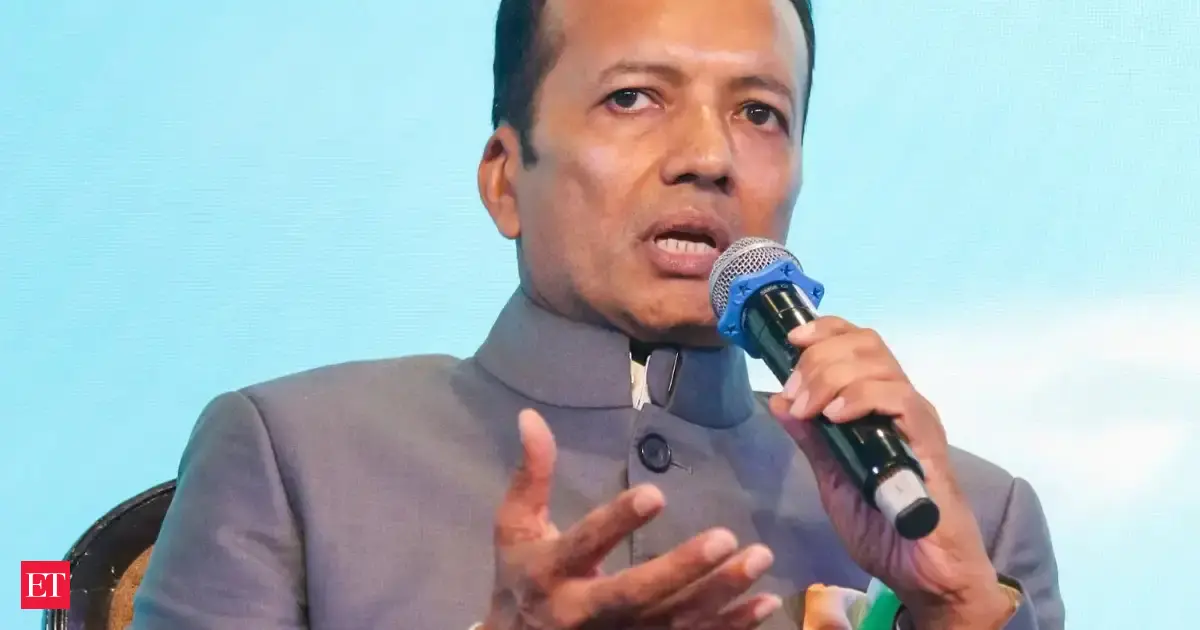
Naveen Jindal, chairman of Jindal Steel, said India can sustain its steel industry without depending on exports to the US, as domestic demand offers significant growth opportunities. He said higher US tariffs would have a limited impact on Indian producers. Jindal also discussed EU carbon rules, coal gasification and green steel. View More
India can sustain its steel industry without relying on exports to the United States, as its large domestic market offers sufficient scope for growth, Jindal Steel Chairman and Member of Parliament Naveen Jindal said on Monday. He added that higher US tariffs would have a limited impact on Indian steel producers. Speaking to the media on the sidelines of the 53rd National Management Convention 2026, Jindal said Indian steel products had faced high tariffs in the US market for more than a decade. Also Read: Domestic steel prices likely to stay firm as demand recovery, supply constraints support market: Report "A lot of products in steel already have more than 200% tariff for more than a decade. So US could put 100% or 200% on steel. It doesn't help. Even with 50%, when it was 50%, we were not exporting any steel to the US. So India is a very big market in itself and we can do without USA," he said. The remarks come as the US continues to impose an additional 50% tariff on most imported steel products under Section 232 of the Trade Expansion Act. Live Events Jindal said India's infrastructure development and relatively low per-capita steel consumption could support further growth in the domestic steel industry. Also Read: India protects over 80% of steel exports to EU as 1.9 MT country quota is secured; residual access could push total to 2.8 MT "So steel per capita consumption is still quite low. It's just about 107 kg per person per annum compared to world average which is more than 220. So there's a huge scope to grow," he said. According to an August 2026 press release by the Ministry of Steel, India's finished steel consumption increased 7.9% year-on-year to 56 million tonnes during April-July 2026. Crude steel production stood at 56.2 million tonnes during the period. The National Steel Policy 2017 envisages crude steel production capacity of 300 million tonnes and actual production of 255 million tonnes by 2030-31, the ministry has said. Indian steelmakers must comply with EU rules On the European Union's Carbon Border Adjustment Mechanism (CBAM), Jindal said Indian steel companies would have to follow the rules applicable to products entering the European market. "If they have put these conditions on their own producers, right? So obviously they will put these conditions on imports also. So they cannot disadvantage their own industry. So we understand that and whatever their rules are, you know, we have to play by those rules," he said. Jindal backs domestic coal gasification Jindal also highlighted the need to reduce India's dependence on imported natural gas by increasing the use of domestic coal gasification. "Obviously a lot of natural gas is required by many industries and so we worked on coal gasification and that's why government is also encouraging gasification of domestic coal," he said. According to a July 2026 press release by the Ministry of Coal, around 22.6 million tonnes per annum of coal gasification capacity was operational or under implementation in India. This included about 8 million tonnes per annum of operational capacity at Jindal Steel Limited. On green steel , Jindal said steel producers were taking steps to lower their emissions. "Every steel maker is working on reducing their emissions and we all feel it's our duty to do that and everybody is working on achieving that," he said. .Pbanner{display:flex;justify-content:space-between;align-items:center;background-color:#ec1c40;margin-top:20px;padding:5px 10px;border-radius:4px;color:#fff;line-height:10px;width: 100%;box-sizing: border-box} .Pbannertext{display:flex;align-items:center;font-size:16px;font-weight:600;font-family:'Montserrat';} .Pbannertext img{height:20px;margin:0 6px} .Pbannerbutton a{display:flex;align-items:center;background-color:#fff;color:#ec1c40;text-decoration:none;font-weight:600;padding:4px 8px;border-radius:6px;font-size:15px;font-family:'Montserrat';} .Pbannerbutton img{height:20px;margin-right:6px} .Pbannerbutton a:hover{background-color:#f7f7f7} Add as a Reliable and Trusted News Source Add Now! (You can now subscribe to our Economic Times WhatsApp channel) (You can now subscribe to our Economic Times WhatsApp channel)

Tata Steel is looking to have a discussion with the UK government to discuss issues being faced in timely implementation of the electric arc furnace (EAF) project at Port Talbot, the company's CEO T V Narendran said.
The company official noted that there is no delay from Tata Steel in construction of 3.2 million tonne project being set up at an investment of 1.25 billion pounds.
"We are in conversation with the UK government to say let's have a discussion on what can be done," Narendran told PTI on the sidelines of the 53rd National Management Convention organised by All India Management Association (AIMA).
He made the remarks while replying to a question on the future course of action for the UK project, which is facing delays in securing power supply.
In August, Narendran had said Tata Steel UK is expecting to secure access to electricity for its 3.2 million tonne electric arc furnace by 2029.
In May 2024, Tata Steel signed a connection offer with the Electricity System Operator View More

The overall index eased to a four-month low of 119.2 from 120.8 in July, a sequential decline of 1.32 per cent even as year-on-year growth stayed in positive territory View More
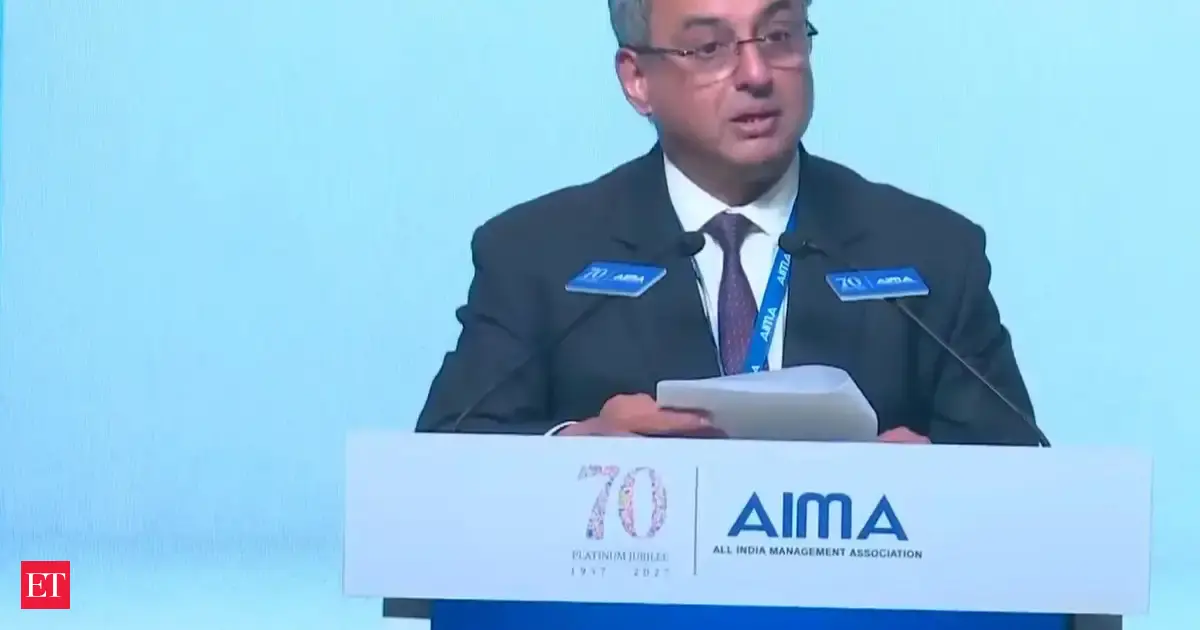
Global interest in India as a market and strategic partner is at an all-time high. The world is changing, creating opportunities for India to capture. Resilience and competitiveness are crucial for India to succeed in this environment. Disruptions like geopolitical events and climate change pose significant challenges. India must develop proprietary design and technical talent across all sectors. View More
New Delhi: T V Narendran , Chief Executive Officer and Managing Director of Tata Steel Ltd and President of the All India Management Association (AIMA), stated that there has never been a time when the world has had more interest in India than now. While addressing the Platinum Jubilee of the National Management Convention 2026 of AIMA, Narendran noted that global interest covers India as a market, a manufacturing base, a source of technology and talent, and increasingly as a strategic partner, even as predicting the global environment in the coming years remains difficult. Also read: Tata Steel seeks fresh UK government funding as Port Talbot EAF project faces delays: Report "The world is changing and that change is creating an opportunity for India, but whether we are able to capture that opportunity will depend on how capable and competitive we become...There has probably never been a time when the world has been more interested in India as a market," Narendran said. Addressing the convention on the theme of growth with resilience, he pointed out that recent developments show a contested global trading framework, where focus remains fixed on trade, investment, technology, energy, and supply chains amid tariffs and trade barriers . Live Events " Climate events can be very difficult to anticipate. Geopolitical developments can change the assumptions on which businesses have been planned for years. Technology is moving at a pace that can make some of the skills and business models we take for granted look very different in a short period of time," he said. He noted that disruptions such as the conflict in West Asia impacted shipping routes through the Strait of Hormuz , raising energy costs, freight rates, and insurance premiums, which directly affect the cost of doing business in India. Unpredictable disasters, including the recent devastating floods and loss of life in Nepal, also show the need to prepare beyond known risks. Despite these headwinds, the Indian economy recorded a 7.8 per cent expansion in the April to June quarter, with investment growing by 11.9 per cent alongside strong contributions from manufacturing and services. "Over the last few decades, we became very good at optimizing businesses for efficiency. We built global supply chains, reduced inventories, sourced from the lowest cost locations and moved capital and products across borders," Narendran said. Also read: Decoding GDP growth: The good, the bad & the data "Today the question is not only what is the most efficient way to do this, but also what happens if something changes. Where do we source from? How quickly can we find an alternative? How much technology do we control ourselves? Do we have the talent to adapt? Can we continue to compete if energy prices change sharply or trade barriers go up? And this is where the conversation on resilience becomes a conversation about competitiveness," he added. Focusing on manufacturing, Narendran highlighted that global firms look at cost, quality, logistics, infrastructure, and delivery at scale. Free trade agreements open market access, but long-term gains depend on domestic execution. "There is a significant difference between assembling a product and designing and engineering that product," Narendran said, adding that India must develop proprietary design, intellectual property, and technical talent across sectors. .Pbanner{display:flex;justify-content:space-between;align-items:center;background-color:#ec1c40;margin-top:20px;padding:5px 10px;border-radius:4px;color:#fff;line-height:10px;width: 100%;box-sizing: border-box} .Pbannertext{display:flex;align-items:center;font-size:16px;font-weight:600;font-family:'Montserrat';} .Pbannertext img{height:20px;margin:0 6px} .Pbannerbutton a{display:flex;align-items:center;background-color:#fff;color:#ec1c40;text-decoration:none;font-weight:600;padding:4px 8px;border-radius:6px;font-size:15px;font-family:'Montserrat';} .Pbannerbutton img{height:20px;margin-right:6px} .Pbannerbutton a:hover{background-color:#f7f7f7} Add as a Reliable and Trusted News Source Add Now! (You can now subscribe to our Economic Times WhatsApp channel) (You can now subscribe to our Economic Times WhatsApp channel)

JSW Energy plans to raise around ?1,500 crore through up to five-year bonds, while JSW Steel could raise around ?1,350 crore via three-year or four-year debt View More

Jindal Supreme IPO allotment is expected today after the issue was subscribed 181.07 times. Here is how investors can check allotment status, GMP, listing expectations, issue details and the company’s financial performance. View More
Investors in the Jindal Supreme IPO could receive the much-awaited allotment update today. After the issue was subscribed a staggering 181.07 times, investors are now awaiting the basis of allotment and looking ahead to the company’s stock-market debut. The Rs 124.88 crore Jindal Supreme IPO is expected to finalise its allotment today, allowing investors to check online whether they have been allotted shares. The company’s shares are scheduled to make their debut on both the BSE and NSE on September 23, 2026. Adding to investor interest, the IPO’s grey market premium (GMP) is currently around 31%, pointing to expectations of a potentially strong listing gain. The IPO, which opened on September 16, 2026, and closed on September 18, 2026, was subscribed 181.07 times overall. Retail investors subscribed 149.34 times, non-institutional investors (NIIs) 327.99 times, and qualified institutional buyers (QIBs) 126.41 times. The Rs 124.88 crore Jindal Supreme IPO comprises a fresh issue of 1.07 crore shares worth Rs 99.89 crore and an offer for sale (OFS) of 26.87 lakh shares aggregating to Rs 24.99 crore. Jindal Supreme has fixed the IPO price band at Rs 88–Rs 93 per share. The lot size is 161 shares, meaning retail investors need to invest a minimum of Rs 14,973 when applying at the upper end of the price band. Live Events Sarthi Capital Advisors Pvt. Ltd. is the book-running lead manager for the issue, while Bigshare Services Pvt. Ltd. is the registrar. Investors can verify their allotment through either of the following platforms: 1. Registrar’s Website - Bigshare Services Visit the Jindal Supreme Allotment page ( https://ipo.bigshareonline.com/ipo_status.html) Select Skyways Air from the drop-down menu. Enter your PAN, application number, or DP/Client ID to view allotment details. 2. NSE Website ( https://www.nseindia.com/invest/check-trades-bids-verify-ipo-bids) Go to the NSE IPO Allotment page Select Equity Choose Jindal Supreme Enter your application number and PAN. 3. BSE Website ( https://www.bseindia.com/investors/appli_check) Select Equity under issue type. Select Jindal Supreme from the dropdown. Enter your application number OR PAN number. Then fill the captcha and click Search to view allotment. Jindal Supreme IPO GMP today The Jindal Supreme IPO GMP (Grey Market Premium) currently stands at Rs 29 per share, or around 31%, based on the upper end of the IPO price band of Rs 93 per share. At the prevailing GMP, the estimated listing price of Jindal Supreme shares works out to approximately Rs 122 per share. The Grey Market Premium (GMP) is an unofficial market indicator and is neither regulated nor guaranteed. GMP levels can fluctuate significantly before listing, and the actual listing price may differ from the estimated price based on grey market trends. Objects of the issue The company proposes to utilise the Rs 71 crore net IPO proceeds primarily towards the repayment or pre-payment of certain outstanding borrowings, either in full or in part. The remaining amount, if any, will be used for general corporate purposes. Financial performance Jindal Supreme (India) total income increased by 12% from Rs 605 crore in FY25 to Rs 676 crore in FY26. Despite the growth in revenue, profit after tax (PAT) declined by 7% from Rs 24 crore in FY25 to Rs 23 crore in FY26. About Jindal Supreme (India) Ltd. Jindal Supreme (India) Limited is a steel products manufacturer with over five decades of experience. The Company manufactures MS black pipes and tubes, galvanised pipes, metal crash barriers and GI tubular poles for infrastructure and industrial applications. Its products are used across water supply and plumbing, construction, roads and highways, bridges, oil & gas, agriculture and rural electrification . The Company expanded into W-beam and Three-beam crash barriers in FY2025 and GI tubular poles in FY2026. The Company operates primarily through a B2B model, serving institutional and industrial customers, infrastructure contractors and dealers. Its manufacturing facility is located in Hisar , Haryana, with in-house mills, welding and galvanising plants, maintenance and testing facilities. As of June 30, 2026, the Company had 53 dealers and 242 employees, with a strong dealer presence across northern India. Disclaimer: The views/recommendations mentioned in this article, wherever applicable, are those of the respective SEBI-registered Research Analyst/brokerage and have been reproduced/reported with due attribution. They should not be construed as the views or recommendations of The Economic Times Digital or the journalist. Readers are advised to consider the original research report and make their investment decisions based on their own assessment. Brokerage disclaimers here .Pbanner{display:flex;justify-content:space-between;align-items:center;background-color:#ec1c40;margin-top:20px;padding:5px 10px;border-radius:4px;color:#fff;line-height:10px;width: 100%;box-sizing: border-box} .Pbannertext{display:flex;align-items:center;font-size:16px;font-weight:600;font-family:'Montserrat';} .Pbannertext img{height:20px;margin:0 6px} .Pbannerbutton a{display:flex;align-items:center;background-color:#fff;color:#ec1c40;text-decoration:none;font-weight:600;padding:4px 8px;border-radius:6px;font-size:15px;font-family:'Montserrat';} .Pbannerbutton img{height:20px;margin-right:6px} .Pbannerbutton a:hover{background-color:#f7f7f7} Add as a Reliable and Trusted News Source Add Now! (You can now subscribe to our ETMarkets WhatsApp channel) (You can now subscribe to our ETMarkets WhatsApp channel)

How local minerals can help solve India’s solar curtailment problem at a lower cost vis-a-vis Li-ion batteries View More
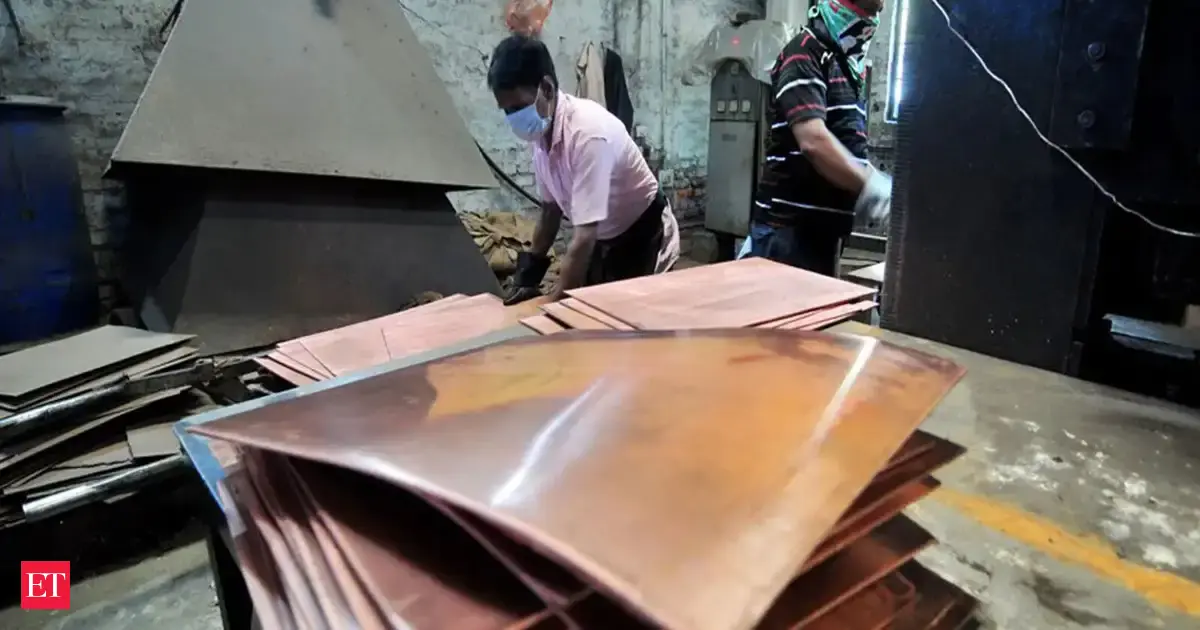
Domestic steel prices are expected to remain firm this September. Post-monsoon construction activity is gradually recovering, supporting demand. Maintenance-related supply constraints will further support rebar prices. Rebar prices are predicted to outpace hot rolled coil price increases. Steel consumption remained supportive with finished steel consumption rising. View More
New Delhi: Domestic steel prices are expected to remain firm in September as post-monsoon construction activity gradually recovers, while maintenance-related supply constraints are likely to provide additional support to rebar prices , according to a research report by SBICAP Securities . The brokerage expects rebar prices to outpace HRC (hot rolled coil) price increases in September, leading to a further narrowing of the HRC-BF (Blast Furnace) rebar spread as supply constraints persist and domestic demand improves gradually. It said the trajectory of domestic steel prices will primarily depend on the pace of post-monsoon demand recovery and the gap between steel exports and imports . Also read: Tata Steel seeks fresh UK government funding as Port Talbot EAF project faces delays: Report The outlook comes after a sharp recovery in domestic rebar prices in August. The average BF-route rebar price rose 8.6 per cent month-on-month to Rs 53,294 per tonne, snapping a three-month losing streak. The increase followed planned maintenance by several integrated steelmakers, which constrained supply, while expectations of improving construction activity supported demand. As a result, the HRC-BF rebar spread narrowed to around Rs 5,280 per tonne in August from a 42-month high of about Rs 8,800 per tonne in July. Meanwhile, the average Mumbai HRC price rose 1.2 per cent month-on-month to Rs 58,575 per tonne in August. HRC prices subsequently climbed to a four-year high of Rs 62,000 per tonne on September 1. Live Events India's steel consumption also remained supportive, with finished steel consumption rising 6.5 per cent year-on-year and 1 per cent month-on-month to 14.4 million tonnes in July, according to Joint Plant Committee data cited in the report. Finished steel production increased 1.4 per cent year-on-year to 13.7 million tonnes, while crude steel output rose 1.2 per cent to 14.3 million tonnes. Steel exports rose 44.1 per cent year-on-year to 0.7 million tonnes in July, while imports increased 9.5 per cent to 0.7 million tonnes, leaving India a marginal net importer. The report noted that domestic producers benefited from trade restrictions on Chinese steel in select export markets, although HRC imports remained elevated due to previously booked cargoes. In non-ferrous metals , the report said prices remained supported by tight supplies and lower inventories. August LME aluminium, copper and zinc prices rose 2.9 per cent, 5.8 per cent and 7.7 per cent month-on-month, respectively, while inventories of these metals declined. .Pbanner{display:flex;justify-content:space-between;align-items:center;background-color:#ec1c40;margin-top:20px;padding:5px 10px;border-radius:4px;color:#fff;line-height:10px;width: 100%;box-sizing: border-box} .Pbannertext{display:flex;align-items:center;font-size:16px;font-weight:600;font-family:'Montserrat';} .Pbannertext img{height:20px;margin:0 6px} .Pbannerbutton a{display:flex;align-items:center;background-color:#fff;color:#ec1c40;text-decoration:none;font-weight:600;padding:4px 8px;border-radius:6px;font-size:15px;font-family:'Montserrat';} .Pbannerbutton img{height:20px;margin-right:6px} .Pbannerbutton a:hover{background-color:#f7f7f7} Add as a Reliable and Trusted News Source Add Now! (You can now subscribe to our Economic Times WhatsApp channel) (You can now subscribe to our Economic Times WhatsApp channel)