
Latest Sectors News

The study is expected to generate operational data and insights into the suitability of the technology for long-duration energy storage applications View More

The coal miner plans to bid for more iron ore blocks, but only where the economics work, as it prepares to enter pelletization after winning an Odisha mine at a 114% premium. View More

Indian stocks remained subdued on August 17, with the Nifty down 0.11% and the Sensex down 0.19% due to ongoing Middle East conflicts and high crude oil prices. Despite this, midcap and small-cap indices saw slight gains. View More

Geopolitical tensions are pushing West Asian countries to invest in new pipelines and safer overland energy routes, opening up a growth opportunity for Indian pipe makers. Welspun Corp, Jindal Saw, Man Industries and Ratnamani Metals are expanding in the region to tap this demand. View More

ArcelorMittal Kryvyi Rih, Ukraine's largest steel plant, announced a partial shutdown following the Russian strikes View More

Japanese automakers vulnerable to one-two punch of Iran war, yen rally View More
In this article7201.T-JP@JY26UFollow your favorite stocksCREATE FREE ACCOUNT A lot of cars are lined up for importing and exporting cars to the port.Kokouu | E+ | Getty Images Japanese automakers are looking vulnerable to fallout from the Iran war and any turnaround in the yen.Toyota, Honda and Nissan benefited in their most recent quarterly reports from a historically weak currency, with the first two upgrading their full-year forecasts and the latter seeing its first profit in about two years. But outside factors might not be so cooperative going forward.The U.S. Treasury and Japan's Ministry of Finance jointly coordinated a rare yen-buying intervention in early August in a historic move, after the currency fell to 40-year lows past 163 per dollar. Since Japanese automakers traditionally rely on a weak yen to make their exported vehicles cheaper and boost competitiveness in global markets, the actions raised cautionary flags."If government intervention is to strengthen yen, this would be negative for Japanese automakers," said Vincent Sun, senior equity analyst at Morningstar. Stock Chart IconStock chart icon JPY A strong yen would force automakers to decide between raising prices in foreign markets, which could lead to market-share losses, or have their operating profit pressured by a lower yen value of foreign profits, Sun noted. "A 1% change in the yen generally affects Japanese automakers' operating profit by roughly 2%," said Masahiro Akita, senior analyst at Bernstein, "although sensitivity varies by company and can reach around 4% for some automakers."Analyst also reckon the ongoing Middle East conflict could cause problems, with Sun pointing to more supply chain disruptions and higher costs. The Strait of Hormuz and the Red Sea are crucial critical shipping lanes for Japanese automakers that rely on aluminum and petrochemicals like naphtha for car production."The most significant headwind to automakers' earnings is the surge in raw material costs, which has intensified amid the ongoing Middle East conflict," Akita said. "Inflation across key inputs, including naphtha and resins linked to oil prices, memory chips, and industrial metals such as aluminum, copper, and steel, is having a broad-based negative impact on industry profitability," Akita added. Choose CNBC as your preferred source on Google and never miss a moment from the most trusted name in business news.

Domestic mills are developing specialized grades for oil and gas pipelines, but limited volumes and high prices are keeping the pipe maker dependent on imports. View More
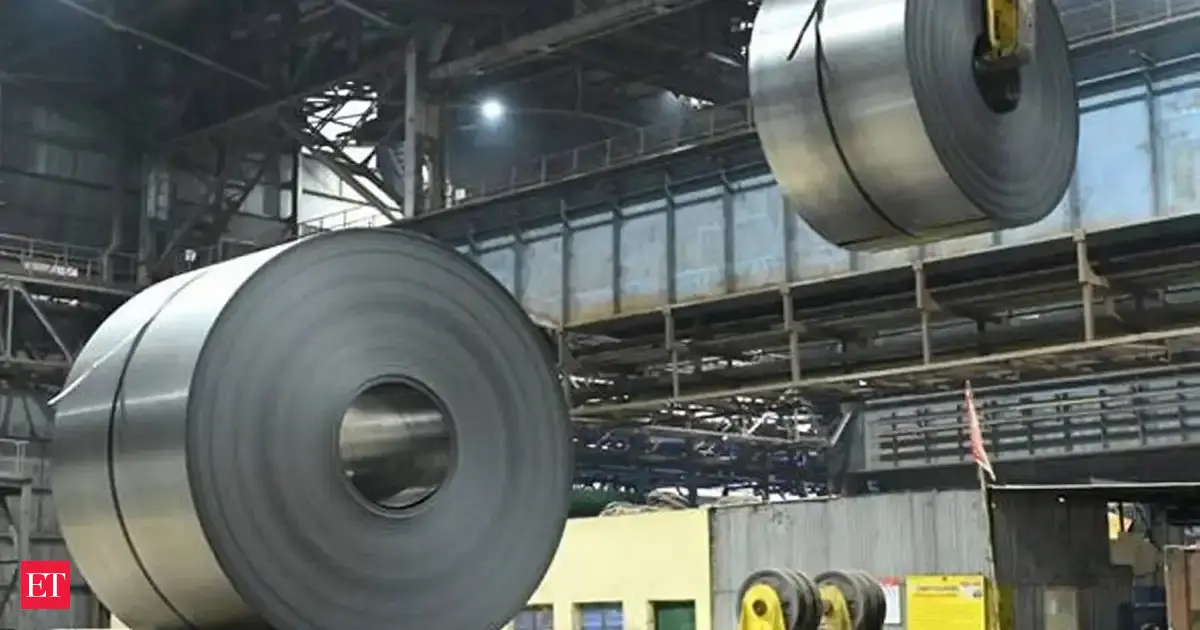
Jindal Stainless plans a Rs 900 crore investment to expand its cold rolling capacity. This expansion will support rising demand from key industrial sectors. The company is also planning a significant Rs 40,000 crore manufacturing facility in Maharashtra. This new plant will produce specialized steel grades for emerging strategic sectors. Jindal Stainless reported strong financial performance and progress towards sustainability goals. View More
New Delhi, Jindal Stainless is investing Rs 900 crore to increase its cold rolling capacity to cater to the rising demand of the product from sectors such as automotive , appliances, and food processing, the company's Managing Director Abhyuday Jindal said. The investment will increase the company's cold rolling capacity from 2.05 MTPA to 2.67 MTPA by FY28, he said in the company's annual report for FY26. Besides upstream, the company is also making significant investments to build up its downstream capabilities, the industry executive said. "Our Rs 900 crore investment across Hisar and Kharagpur, along with new hot rolled annealing, pickling, and cold rolling facilities at Jajpur, will...support a higher-value mix for automotive, appliances, food processing, and industrial applications," Jindal said. Cold rolling is a precision metalworking process that shapes and compresses steel without heat. This method enhances structural strength, tightens dimensional tolerances, and delivers a smooth, high-quality surface finish, making cold-rolled sheet metal essential for high-precision, high-durability applications. Live Events About the Maharashtra project, he said the proposed facility will improve logistics efficiency, support import substitution, and serve high-growth strategic sectors. Jindal Stainless is in the process of identifying a site for its proposed Rs 40,000-crore stainless steel manufacturing facility in Maharashtra, where it will produce specialised grades of steel for critical applications in emerging sectors such as hydrogen, nuclear energy, defence, mobility, infrastructure, and process industries. Jindal further said that during FY26, renewable sources accounted for nearly 47 per cent of total electricity consumption across its Hisar and Jajpur facilities. The company also maintained approximately 70 per cent recycled scrap utilisation in its electric arc furnace-based manufacturing process and continued to progress towards its targets of reducing Scope 1 and Scope 2 emissions by 50 per cent by 2035 and achieving net zero by 2050. Sharing financial details, the MD said that in FY26, consolidated revenue of his company stood at Rs 42,955 crore, while EBITDA increased 19.2 per cent year-on-year to Rs 5,560 crore and profit after tax grew 27.4 per cent to Rs 3,185 crore. Finished goods sales volume reached a record 2.57 million tonnes during the year, while the balance sheet remained strong with a net debt-to-equity ratio of 0.15x, providing the financial flexibility to support future growth investments. .Pbanner{display:flex;justify-content:space-between;align-items:center;background-color:#ec1c40;margin-top:20px;padding:5px 10px;border-radius:4px;color:#fff;line-height:10px;width: 100%;box-sizing: border-box} .Pbannertext{display:flex;align-items:center;font-size:16px;font-weight:600;font-family:'Montserrat';} .Pbannertext img{height:20px;margin:0 6px} .Pbannerbutton a{display:flex;align-items:center;background-color:#fff;color:#ec1c40;text-decoration:none;font-weight:600;padding:4px 8px;border-radius:6px;font-size:15px;font-family:'Montserrat';} .Pbannerbutton img{height:20px;margin-right:6px} .Pbannerbutton a:hover{background-color:#f7f7f7} Add as a Reliable and Trusted News Source Add Now! (You can now subscribe to our Economic Times WhatsApp channel) (You can now subscribe to our Economic Times WhatsApp channel)


India imported around 244.2 million tonne of non-coking and metallurgical coal in FY2025-26, broadly unchanged from about 245.3 million tonne in the previous financial year View More