
Latest Sectors News

Trump's new tariffs on about $20 billion worth of Canadian goods were set to take effect Wednesday, but were postponed by three days. View More
U.S. President Donald Trump greets Canadian Prime Minister Mark Carney as he arrives at the West Wing of the White House on May 6, 2025 in Washington, DC.Alex Wong | Getty Images News | Getty Images Less than two hours before massive U.S. tariffs on certain Canadian goods were set to switch on, President Donald Trump announced a tentative deal to stave off the new duties.The postponement could be just a brief respite for businesses who warn that the planned 50% tariffs on imports of wine, hockey sticks and a range of other Canadian products are already taking a toll.The new import taxes on about $20 billion worth of goods were unveiled last month in response to what the Trump administration described as Canadian trade discrimination against key U.S. industries. watch nowVIDEO2:2402:24President Trump: We have a deal with CanadaSquawk on the Street The tariffs were set to take effect Wednesday at 12:01 a.m. ET. But at 10:15 p.m. Tuesday, Trump announced on Truth Social that he would pause the tariffs for three days, "based on the fact that Canada and the U.S.A., subject to the finalization of documents, have a DEAL!"Trump's statement on the to-be-finalized deal included few details. But it hinted that an agreement with Canada could include restarting Keystone XL, the planned oil pipeline from Alberta to Nebraska that was scrapped in 2021 by then-President Joe Biden."The great Keystone XL Pipeline, long ago killed by Sleepy Joe Biden, may be awoken from the grave!" Trump wrote in the post.In a follow-up post, Trump shared an AI-generated image depicting him pulling a pipeline labeled "KEYSTONE" out of the ground.At the White House on Wednesday afternoon, Trump signaled that the deal might also include the U.S. lowering tariffs on steel and aluminum."We may bring some of the tariffs down to a level where other countries are," Trump said when asked about the duties on Canadian metals, "because Canada was paying a higher tariff."Canada-U.S. Trade Minister Dominic LeBlanc declined to confirm that a reduction in U.S. steel and aluminum tariffs was on the table."As negotiations are still ongoing and we are working collectively with the U.S. administration towards a finalized agreement, we will not provide further comments," LeBlanc told CNBC in a text Wednesday.Canadian Prime Minister Mark Carney, in a statement released Tuesday night, was initially more circumspect than Trump."Substantial progress has been made, although there is important work still to be done," Carney's statement said.In an X post midday Wednesday, however, Carney boasted that Canada "entered these discussions with the best overall trade terms.""We are now moving towards an agreement that reinforces that Canadian advantage, including by securing the best terms in each of Canada's most important strategic sectors and providing greater certainty about our future trading relationship," the prime minister wrote.Asked Wednesday morning about the coming deal, Trump claimed that Canada made multiple concessions, including lowering its retaliatory tariffs on U.S. goods."We've come to a deal with Canada" after a "very good conversation" with Carney, Trump told reporters while touring construction projects on the White House grounds."They called yesterday and they gave us the points that we had to have," Trump said, calling it a "very fair deal for both."Trump did not mention Keystone XL. But he said Canadian tariffs "will be non-existent for our farmers," without specifying which duties he was referring to. Trump's 50% tariff proposal was partly based on Canada's alleged discrimination against the U.S. dairy industry.Asked if the U.S. would lower its tariffs on Canadian autos as part of the deal â a top goal for Ottawa's trade negotiators â Trump said, "We're doing certain things.""We've got to give something," he added. "They were paying a high number, we're reducing it a little bit, it's good for everybody.""Basically, we have no tariffs going into Canada anymore. Canada was charging us tremendous tariffs. We no longer have any tariffs," he said.The president noted, however, that the deal is "subject to the finalization of documents."The comments came after a presidential proclamation released Tuesday night signaled that Canada would lower or remove its trade barriers on the U.S. as part of an agreement. Read more CNBC politics and policy coverageTrump touted a deal to avert new tariffs on Canada. Here's what we know so farUAE severs trade with Iran after reported missile strikeUkraine's Zelenskyy faces call for wartime election from former defense chiefU.S. push for allies to step up defense spending may mean more nuclear statesTrump pauses 50% scheduled tariffs on Canada for three days, announces 'deal' "According to senior executive branch officials, Canada has expressed a commitment to remove the discriminations or unreasonable and unequal impositions" that spurred the 50% tariff threat, according to the proclamation. The same evening, U.S. Trade Representative Jamieson Greer wrote in an X post that the deal "will include comprehensive market access for all American goods, economic security commitments, digital trade alignment, and many important provisions that will continue to protect our market and American workers, along with our Canadian partners."After Greer met again with LeBlanc in Washington on Wednesday morning, he said the Trump administration feels "confident that we've reached an agreement" to protect American workers and "strengthen the North American economy.""We certainly, I think, have eliminated some of the irritants that we've had in the past year," Greer said.â CNBC's Ashlee Trujillo contributed to this report. Choose CNBC as your preferred source on Google and never miss a moment from the most trusted name in business news.

A remarkable eighteen-year-old student has developed an ingenious device aimed at eradicating toxic algal blooms. Utilizing wind-driven waves and invasive plant species, this unique system demonstrated impressive results in field tests, removing nearly all cyanobacteria and trapping decayed cell matter. This groundbreaking solution offers a cost-effective way to restore and revitalize unhealthy freshwater ecosystems. View More

ECB chief Christine Lagarde called for better integration across the region if Europe wants to compete in the age of AI. View More
Christine Lagarde, president of the European Central Bank (ECB), during a rates decision news conference in Frankfurt, Germany, on Thursday, June 11, 2026. Alex Kraus | Bloomberg | Getty Images Europe is facing an erosion of the conditions that historically drove the continent's growth, its top central banker warned Wednesday, as she called on leaders not to repeat mistakes made during the dotcom boom in the age of AI. Speaking at the World Economic Forum's International Business Council in Geneva, Switzerland, on Wednesday, European Central Bank President Christine Lagarde warned that the continent's post-war growth model is "eroding" and "unlikely to return to the form we once knew."This economic growth, Lagarde told an audience, rested on three pillars: expanding global trade, manufacturing supported by access to cheap energy, and "a stable, rules-based global order, underpinned by a U.S. security umbrella."All three of those pillars are weakening today, Lagarde said.Last year alone, she said, more than 2,500 trade restrictions were implemented globally. Shortly after his return to the White House, President Donald Trump unveiled a raft of targeted tariffs, including a 20% baseline levy on goods imported to the U.S. from the European Union. That tariff rate was later reduced to 15% when the two sides agreed on a trade deal, but uncertainty remains about the stability of that agreement and how imports of certain European goods, such as steel, will be taxed by Washington. U.S. retreat from the post-war world order More broadly, Lagarde said in Wednesday's speech, America's pullback from leading Western security was adding further pressures to the European economy. "That [past] environment allowed European supply chains to deepen, and enabled firms to organize investment around efficiency rather than resilience," she said. "Today, that global order is under pressure. Geopolitical tensions are bringing critical dependencies and chokepoints into sharper focus, while Europe faces growing security threats on its doorstep."Trump has long rebuked America's European allies for not spending enough on defense, with his administration issuing threats to withdraw from the military alliance and even bring NATO territory under Washington's control by force. Meanwhile, Russian aircraft have increasingly encroached on European airspace, and the U.S.-Iran war has weighed on the continent's economy and raised new security threats for the region. As the world has become less secure, Lagarde said on Wednesday, capital flows into Europe have been put at risk. "When economic dependencies can be weaponized or when perceptions of deterrence weaken, concerns about resilience enter economic decisions directly. Firms invest less when capital is seen as less safe, weighing on output and consumption," she said."Taken together, these shifts suggest that Europe's post-war growth model is eroding. And it is unlikely to return to the form we once knew." watch nowVIDEO4:2404:24Global trade body boss: Trade partners looking beyond U.S. amid tariff uncertaintySquawk Box Europe AI warning Looking ahead, Lagarde said Europe still has "substantial strengths to build on," including the world's largest network of trade agreements, world-class manufacturing capabilities and the EU's massive single market. However, she issued a warning to the region not to repeat dotcom-era mistakes when it comes to the AI revolution. "Europe largely missed out on the first digital revolution, as the commercial gains from the spread of information and communication technologies were captured disproportionately elsewhere. We cannot afford to repeat that experience with artificial intelligence, the second digital revolution," Lagarde said. Europe's tech sector has long been dwarfed by that of the U.S. Europe's 34 most valuable listed tech companies have a combined market capitalization of about â¬1.37 trillion ($1.59 trillion), while the United States' so-called Magnificent Seven stocks have a combined market value of more than $23 trillion.While Lagarde told the WEF's council Wednesday there were already "encouraging signs" that European firms are investing in AI, she said questions remain as to "whether Europe can create the conditions for that investment to spread and scale.""One prominent proposal is 'EU Inc.' â an optional EU-wide corporate legal form that would allow companies to incorporate once and then operate under a single set of rules across the EU," she said, while noting that capital market reforms were being devised to help European companies scale across the continent.   "We already have many of the ingredients for stronger long-term growth," she said. "Turning European size into European scale would help innovative firms grow at home, allow new technologies to spread faster and boost productivity. In doing so, it would help make domestic demand a more lasting engine of growth."Marco Forgione, director general of The Chartered Institute of Export and International Trade, told CNBC's "Squawk Box Europe" on Wednesday that Europe was also guilty of protectionism when it comes to trade."The internal market within Europe is free, but trading into Europe is very far from free, and it's a very protectionist environment. And I think the issue for Europe is how it's going to play the role it's going to play in a new world order," he said. "Competition from China and the likes, who have moved way up the value chain with regards to manufacturing, is a real challenge.""Fundamental changes, both political and economic, are required if Europe is going to break free from the sort of stasis that it's been in for decades and really start to see growth in its economy," he added. Choose CNBC as your preferred source on Google and never miss a moment from the most trusted name in business news.

India, the world's biggest crude steel producer after China, meets 95% of its coking coal needs through imports, with at least half shipped from Australia View More
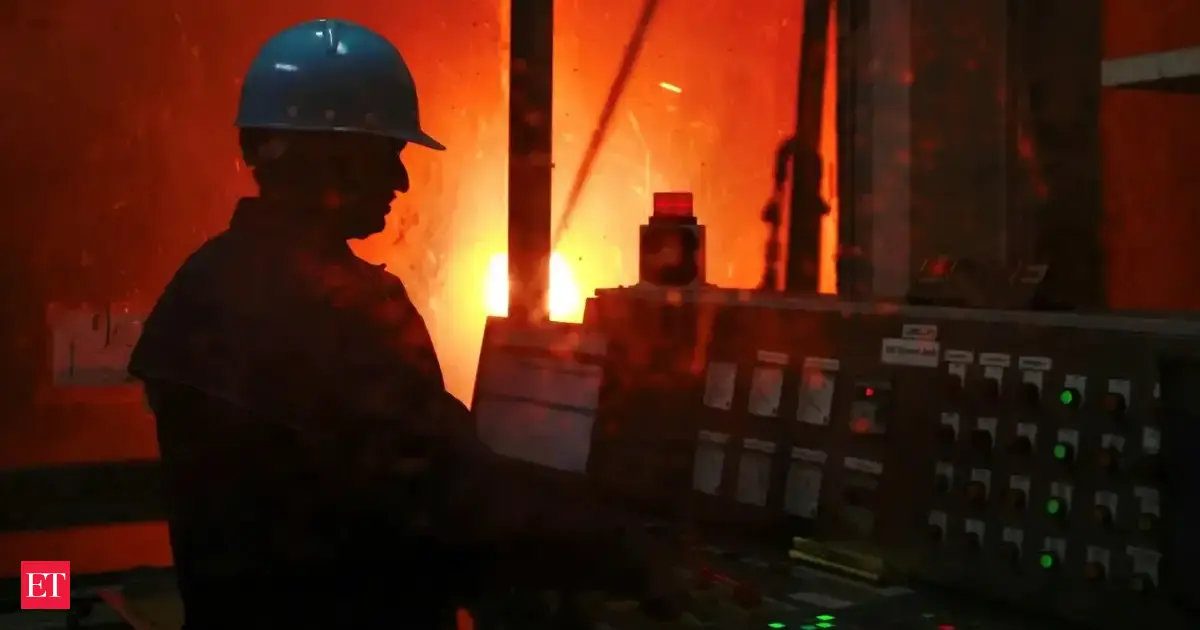
Indian steelmakers face margin pressure from higher coking coal prices. Supply disruptions in Australia and China raise steelmaking costs significantly. These increased costs could delay capacity expansion plans for mills. Higher import demand also contributes to rising transport and freight expenses. Companies are diversifying imports while seeking new supply sources. View More
Indian steel mills are facing mounting pressure on margins as higher coking coal prices, driven by supply disruptions in Australia and China and the Iran war, raise steelmaking costs, executives and analysts said. India, the world's biggest crude steel producer after China, meets 95% of its coking coal needs through imports, with at least half shipped from Australia. Coking coal accounts for nearly 40% of steel production costs. Squeezed margins could impede investment and delay capacity expansion as Indian steelmakers step up spending to meet buoyant domestic demand driven by infrastructure and strong economic growth. Also Read: Tata Steel gets CCI nod to acquire additional 23% stake in TM International Logistics Premium hard coking coal prices jumped 25% from last year to average $236 per metric ton freight on board (FOB) Australia in the first seven months of 2026, said Banmeet Khurmi, lead, metallurgical coal and coke market service, at consultancy CRU in Sydney. Live Events "Prices have been higher this year due to supply disruptions in Australia, slower-than-expected ramp-up at new mines, price support from the conflict in the Middle East and, more recently, a large accident in Shanxi, China," Khurmi said. Costs are likely to remain high in the second half of the year, partly due to the loss of supply following the Shanxi coal mine disaster, said Freddie Brooks, commodities analyst at BMI, a unit of Fitch Solutions. Also Read: India's steel ambitions face a coal reality check For blast furnace-based steelmakers, every $10 a ton increase in coking coal prices adds approximately $7 to $9 per metric ton to steelmaking costs, said an executive at a large steel mill, who was not authorised to speak to the media. Higher coking coal prices have squeezed margins, three other executives at leading steelmakers said, with little headroom to raise steel prices, given competition from cheap Chinese steel. Shipments from China have increased despite import tariffs on some grades. IMPORT DEMAND GROWS Coking coal imports are expected to rise by between 2 million and 3 million tons in 2026-27 from 64 million tons a year earlier, commodities consultancy BigMint said. With the higher demand for imports, comes higher transport costs, partly due to disruptions from the U.S.-Iran war. "Trade flows have tightened with high demand from India and higher diesel, freight and insurance costs," said Hui Ting Sim, vice president at Moody's Ratings. Australia is expected to continue meeting at least half of India's coking coal needs, although imports from Russia, Mozambique and the United States are also set to rise. Discounts on Russian coal, which accounted for 24% of India's coking coal imports in recent years, have diminished over the past two years, Khurmi said. "Over the longer term, we expect Mozambique to overtake the United States and Russia as the second largest exporter of coking coal to India after Australia," Brooks said, adding that Indian companies such as state-run Steel Authority of India and JSW Steel were turning to Mozambique for supplies. India has been seeking to diversify its coking coal imports and gain access to Mongolia although experts say this remains difficult because of logistical challenges. .Pbanner{display:flex;justify-content:space-between;align-items:center;background-color:#ec1c40;margin-top:20px;padding:5px 10px;border-radius:4px;color:#fff;line-height:10px;width: 100%;box-sizing: border-box} .Pbannertext{display:flex;align-items:center;font-size:16px;font-weight:600;font-family:'Montserrat';} .Pbannertext img{height:20px;margin:0 6px} .Pbannerbutton a{display:flex;align-items:center;background-color:#fff;color:#ec1c40;text-decoration:none;font-weight:600;padding:4px 8px;border-radius:6px;font-size:15px;font-family:'Montserrat';} .Pbannerbutton img{height:20px;margin-right:6px} .Pbannerbutton a:hover{background-color:#f7f7f7} Add as a Reliable and Trusted News Source Add Now! (You can now subscribe to our Economic Times WhatsApp channel) (You can now subscribe to our Economic Times WhatsApp channel)

Following the proposed acquisition, Tata Steel will become the majority stakeholder and IQ Martrade will exit from the JV entity View More

With up to 20% better fuel efficiency, the trucks are designed to improve operating efficiency while helping fleet operators reduce the carbon intensity of their transportation operations View More
The Competition Commission of India has approved Tata Steel’s acquisition of an additional 23% stake in TM International Logistics from IQ Martrade. The transaction will raise Tata Steel’s holding to 74%, making it the majority shareholder, while NYK Europe will retain 26%. IQ Martrade will exit the joint venture. View More
The Competition Commission of India (CCI) on Tuesday approved Tata Steel Ltd ’s proposed acquisition of an additional 23% equity stake in TM International Logistics Ltd (TMILL), paving the way for the steelmaker to become the majority shareholder in the logistics joint venture . The proposed transaction involves Tata Steel acquiring the entire 23% stake held by existing joint venture partner IQ Martrade Holding Und Management GmbH. Following the completion of the deal, IQ Martrade will exit TMILL, while Tata Steel’s stake will rise to 74%. Also read: Tata Sons AGM deferred for lack of quorum, first in group’s history "The proposed combination pertains to the acquisition by Tata Steel Ltd of the entire shareholding comprising 23 per cent equity shares held by one of the existing joint venture partners, ie, IQ Martrade Holding Und Management GmbH in TM International Logistics Ltd, and the consequent exit of IQ Martrade from TMILL," CCI said in a release. NYK Europe, the third partner in TMILL, will retain its 26% equity stake after the transaction, the regulator said. Live Events TMILL joint venture TMILL is a public limited company established as a 51:23:26 joint venture between Tata Steel, IQ Martrade and NYK Europe. It was incorporated primarily to meet Tata Steel’s logistics and cargo transportation requirements . In a post on X, the regulator said, "CCI approves acquisition of 23 per cent equity shareholding of TM International Logistics Ltd by Tata Steel Ltd." Also read: Tata Steel bets on higher prices, cost savings to lift FY27 margins After the proposed combination is completed, Tata Steel and NYK Europe will hold 74% and 26% respectively in TMILL, CCI said. The proposed transaction requires regulatory clearance as it crosses the thresholds prescribed under India’s competition law. The CCI is responsible for reviewing such combinations and preventing practices that could have an adverse impact on competition in the market. .Pbanner{display:flex;justify-content:space-between;align-items:center;background-color:#ec1c40;margin-top:20px;padding:5px 10px;border-radius:4px;color:#fff;line-height:10px;width: 100%;box-sizing: border-box} .Pbannertext{display:flex;align-items:center;font-size:16px;font-weight:600;font-family:'Montserrat';} .Pbannertext img{height:20px;margin:0 6px} .Pbannerbutton a{display:flex;align-items:center;background-color:#fff;color:#ec1c40;text-decoration:none;font-weight:600;padding:4px 8px;border-radius:6px;font-size:15px;font-family:'Montserrat';} .Pbannerbutton img{height:20px;margin-right:6px} .Pbannerbutton a:hover{background-color:#f7f7f7} Add as a Reliable and Trusted News Source Add Now! (You can now subscribe to our Economic Times WhatsApp channel) (You can now subscribe to our Economic Times WhatsApp channel)

The country is keen to import steel from India via a shorter, alternative route; It would lower its logistics cost, the industry member said View More
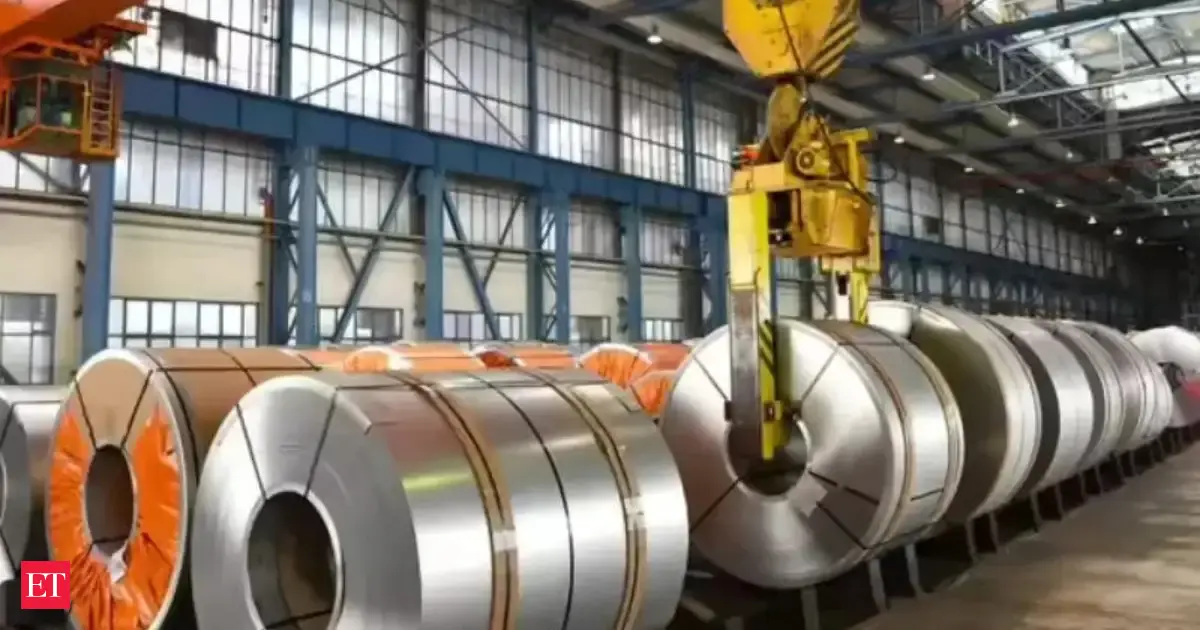
The Steel Ministry has introduced a melt-and-pour clause for domestic steel procurement. This policy tightens rules for suppliers participating in government tenders. It ensures that procured steel meets specific incentive program compliance standards. Sector watchers believe this benefits domestic steel makers significantly. Micro, small, and medium enterprises may face margin constraints due to import curbs. View More
The Steel Ministry has introduced melt-and-pour clause in the Domestically Manufactured Iron & Steel Products Policy. This tightens the regime to ensure local procurement by suppliers to government tenders. A notification dated earlier this month mandated melt-and-pour in flat-rolled products of iron or non-alloy steel, bars and rods, hot-rolled, in irregularly wound coils, of iron or non-alloy steel, and electrical steel and other articles of iron or steel among others. A melt and pour mandate ensures the steel being supplied is compliant with an incentives programme under which it is being procured. The guardrail can specify countries of origin to prevent circumventing import barriers. Sector watchers say this is beneficial for domestic steel makers who stand to gain significantly from the tighter localisation mandate. Micro, small, and medium enterprise suppliers may face constrained margins due to higher demand for local steel and curbs on imports. Also Read | India's small steelmakers could save money and cut emissions with switch to renewable power “The melt and pour mandate will curb instances of importing steel by traders and then selling it to suppliers in government procurement,” a steel industry representative told ET. Live Events A 20% purchase preference is granted to domestic suppliers of capital goods used in steel manufacturing under the Domestically Manufactured Iron & Steel Products Policy. It applies to contracts exceeding Rs 5 lakh for iron and steel products . Further, Global Tender Enquiries are barred up to Rs 200 crore for iron, steel, and capital goods procurements without requisite approvals. Also Read | Jindal Stainless investing Rs 900 crore to increase cold rolling capacity to 2.67 MT by FY28: MD Under the revised mandate in force from August 7, most steel products in the list of iron and steel products which can only be procured from domestic sources. Railway coaches, wagons, parts of locomotives, and steel tubes and pipes are among the commodities that continue to be governed under the 50% Domestic Value Addition mandate. This exemption has irked seamless pipes manufacturers that seek the melt and pour mandate extended to their products as well. .Pbanner{display:flex;justify-content:space-between;align-items:center;background-color:#ec1c40;margin-top:20px;padding:5px 10px;border-radius:4px;color:#fff;line-height:10px;width: 100%;box-sizing: border-box} .Pbannertext{display:flex;align-items:center;font-size:16px;font-weight:600;font-family:'Montserrat';} .Pbannertext img{height:20px;margin:0 6px} .Pbannerbutton a{display:flex;align-items:center;background-color:#fff;color:#ec1c40;text-decoration:none;font-weight:600;padding:4px 8px;border-radius:6px;font-size:15px;font-family:'Montserrat';} .Pbannerbutton img{height:20px;margin-right:6px} .Pbannerbutton a:hover{background-color:#f7f7f7} Add as a Reliable and Trusted News Source Add Now! (You can now subscribe to our Economic Times WhatsApp channel) (You can now subscribe to our Economic Times WhatsApp channel)