
Latest Sectors News

Vice President JD Vance joined Sen. Jon Husted and other GOP leaders at a Middletown, Ohio, steel plant, as data center fears loom. View More
Sen. Jon Husted, R-Ohio, speaks during a Senate Appropriations committee hearing in the Dirksen Senate Office Building in Washington, July 21, 2026.Finn Gomez | Getty Images Sen. Jon Husted, R-Ohio, defended President Donald Trump's energy and economic agenda on Friday during an appearance at a southwestern Ohio steel mill with Vice President JD Vance, as Republicans warn that backlash over data centers could be putting his seat in jeopardy.Husted's comments come days after the National Republican Senatorial Committee, or NRSC, warned in a memo that data centers have become a "sleeper issue" this election cycle, as Americans increasingly worry about the impact they could have on their utility costs.Ohio is home to several large data center projects, including a proposed 10-gigawatt campus in Pike County that could cost more than $500 billion.But higher electricity costs, Husted said, are the result of Democratic policies, not data center construction."You want to have lower electricity prices â I want to tell you why they're rising. Because Congress and, under the Obama administration, under the Biden administration, they closed 23 power plants in the state of Ohio, representing half the electricity we use on a daily basis," Husted said at the Cleveland-Cliffs steel plant, in Middletown, Ohio. "Radical climate policies did that."Aging power plants have been closed in the state under both Democratic and Republican presidential administrations in recent years. Read more CNBC politics and policy coverageSupreme Court allows Trump to continue White House ballroom construction for nowHusted defends energy policy as GOP warns data centers put Ohio seat at riskTrump to allow import of 300,000 metric tons of ground beef without tariffTrump tariff deadline looms, Canada says resolving 'trade issues' with U.S.Trump touted a deal to avert new tariffs on Canada. Here's what we know so far Husted and Vance were joined by other GOP candidates, including Vivek Ramaswamy, the Republican candidate for Ohio governor who is locked in a close race with Democrat Amy Acton. According to recent polling, Husted is narrowly trailing former Democratic Sen. Sherrod Brown in his bid for reelection. Lauren Chou, a spokesperson for Brown's campaign, said in a statement that Husted had played a pivotal role during his time as the state's lieutenant governor in securing tax breaks for data centers, which she said were the true cause of higher utility bills. Husted's campaign did not immediately respond to a request for comment in response.Husted's seat is seen as crucial for Republicans if they want to retain their majority in the Senate in the next Congress. The GOP is widely favored to keep the Senate, though Trump's falling approval ratings, rising inflation, the ongoing Iran war and growing data center anxieties are causing concerns within the party."If voters' perceptions of data centers are not fixed quickly, the campaign against them will expand far beyond Ohio," the NRSC wrote in the Tuesday memo, which was obtained by CNBC and first reported by Axios. Husted, meanwhile, touted the Trump administration's investment in manufacturing in Ohio, including a $500 million Department of Energy grant to Cleveland-Cliffs, which was initially awarded by the Biden administration to finance a hydrogen-powered furnace at the Middletown facility, but now will be used for other upgrades, including to its blast furnace and artificial intelligence technologies.Cleveland-Cliffs said in a statement it will match the DOE's funding, for a total $1 billion investment in the facility. The company said the project would employ more than 1,500 workers during construction."We can bring back manufacturing to this great country, in places like Middletown and across our great state," Husted said. "And why is it important that we do this? Investments like this, a billion-dollar investment right here? Because it's job security, it's economic security, it's national security." Choose CNBC as your preferred source on Google and never miss a moment from the most trusted name in business news.

Trump had already postponed the 50% tariffs on a range of Canadian goods so Washington and Ottawa could finalize a tentative deal. View More
Dominic LeBlanc (C), Canada's minister in charge of US-Canada trade, arrives to meet with US Trade Representative Jamieson Greer at the headquarters of the Office of the United States Trade Representative in Washington, DC, on August 20, 2026. Mandel Ngan | AFP | Getty Images The U.S. and Canada continued trade talks Friday, as the clock ticked down to reach a deal before President Donald Trump's new tariffs on hockey sticks, wine and other Canadian goods take effect.As of 5:30 p.m. ET, negotiators in Washington had yet to emerge from the Office of the U.S. Trade Representative with a final agreement in hand. If no deal is reached by 12:01 a.m. ET on Saturday, the 50% tariffs on roughly $20 billion worth of imports will switch on. Trump, when asked Friday afternoon if the two countries have reached a deal that would avert the looming duties, said, "I think so. We'll see.""We have to take care of our farmers. Our farmers are very important to me," Trump said before boarding Air Force One. "The deal with Canada is moving along," he added. "We should be able to have a deal with Canada."Trump's latest comments differed from his declaration three days earlier that the U.S. and Canada "have a deal" that merely needed to be finalized.Earlier Friday afternoon, Canada said it is still working to "resolve outstanding trade issues" with the U.S.The "intensive discussions" are continuing "for the mutual benefit of both countries," a spokesperson for Dominic LeBlanc, Canada's trade minister for the U.S., said in a statement after 1 p.m. ET.LeBlanc and chief Canadian trade negotiator Janice Charette had arrived at Greer's office around noon. LeBlanc did not speak to reporters on his way into the building.The 50% retaliatory tariffs were initially set to kick in Wednesday â until Trump, in an eleventh-hour post on Truth Social, said he would postpone them for three days so Washington and Ottawa could finalize a tentative deal.Trump's post signaled that the agreement was all but complete, "subject to the finalization of documents." But trade officials emerged from additional rounds of talks in Washington on Wednesday and Thursday without a final deal in hand."We're very close," LeBlanc told reporters Thursday afternoon. "We continue to make progress, and we're going to stay here and do the work that's necessary until we get to that point."He said that at that time Charette was still engaged in talks with Greer and other Trump administration officials."Canadians expect us to get a deal that's in the economic interest of Canada and Canadian workers," LeBlanc said. Read more CNBC politics and policy coverageSupreme Court allows Trump to continue White House ballroom construction for nowHusted defends energy policy as GOP warns data centers put Ohio seat at riskTrump to allow import of 300,000 metric tons of ground beef without tariffTrump tariff deadline looms, Canada says resolving 'trade issues' with U.S.Trump touted a deal to avert new tariffs on Canada. Here's what we know so far Businesses have warned that the duties could cripple their sales and that the threat alone has already taken a toll.Negotiators have been tight-lipped about the specifics of a deal, as well as the remaining sticking points. Trump's existing tariffs on imports of Canadian steel, aluminum and lumber are a central concern, The New York Times reported Thursday, citing people familiar with the talks.LeBlanc and his office have declined to comment to CNBC on how the metals tariffs factor into the negotiations.Trump said Wednesday that the U.S. might agree to lower those duties and suggested that lower tariffs on Canadian autos might also be on the table. Trump has also suggested that the deal could revive Keystone XL, the planned oil pipeline from Alberta to Nebraska that was scrapped in 2021 by then-President Joe Biden.The Trump administration has said that Canada has committed to lower its trade barriers on the U.S., without offering specifics. Trump said Wednesday that Canadian tariffs "will be nonexistent for our farmers." The looming 50% tariff threat was partly based on the administration's allegation that Canada discriminates against the U.S. dairy industry. Canada has not confirmed Trump's claim.Prime Minister Mark Carney said in an X post Wednesday, "We are now moving towards an agreement that reinforces that Canadian advantage, including by securing the best terms in each of Canada's most important strategic sectors and providing greater certainty about our future trading relationship."The looming 50% tariffs were invoked last month under Section 338 of the Tariff Act of 1930, which lets the president impose duties in response to discrimination or unfair commerce. But the Great Depression-era law has rarely, if ever, been invoked, and it has been neglected for decades. Choose CNBC as your preferred source on Google and never miss a moment from the most trusted name in business news.


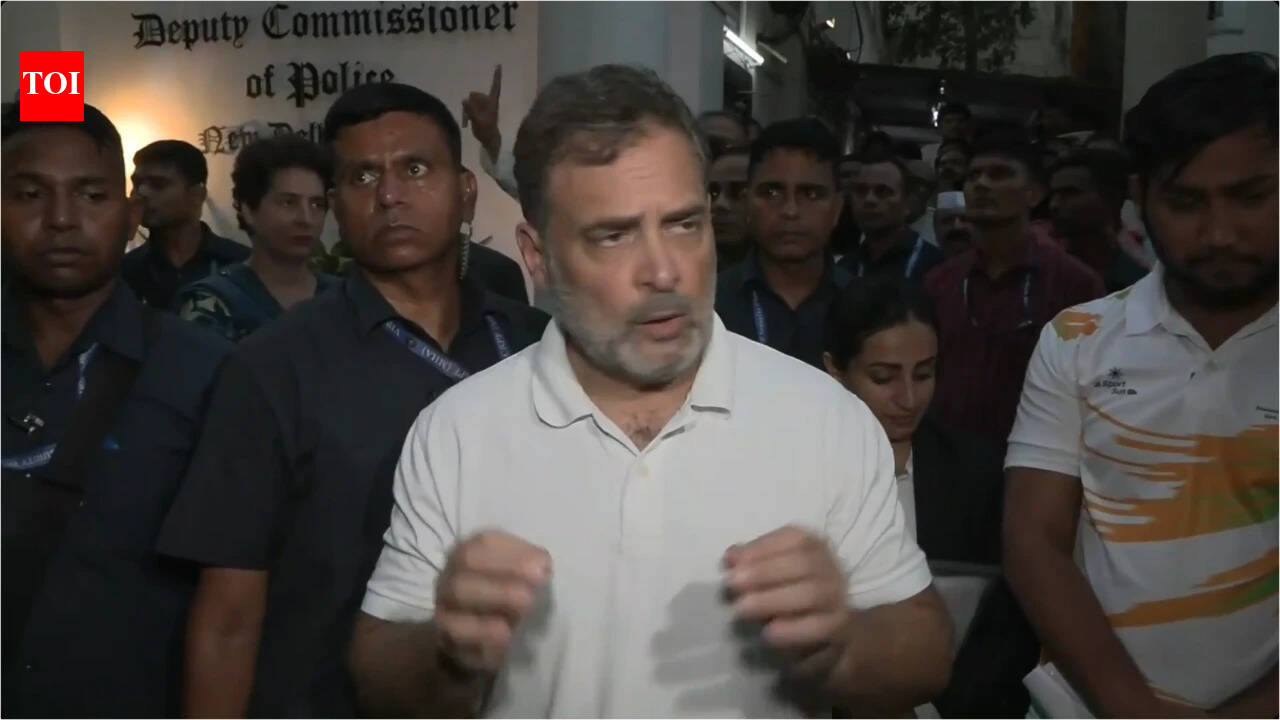
The Delhi Police on Friday registered an FIR following a complaint about the alleged use of pellet guns during the 20 July CJP protests. Rahul Gandhi visited the Parliament Street police station and staged a sit-in, which ended after the FIR was filed. View More

NMDC Steel (NSL) rose 1.29% to Rs 40.08 after the company said that Crisil Ratings has upgraded its rating on the long-term bank facilities of the company to 'Crisil A/Stable' from 'Crisil BBB+/Stable'. View More

JSW Steel, India’s largest iron ore importer, plans to phase out imports as new domestic mines and logistics infrastructure come online, shielding its costs from global price shocks. View More

Micron CEO Sanjay Mehrotra said on Thursday that AI has dramatically changed the memory business. View More
In this articleMUSNDKFollow your favorite stocksCREATE FREE ACCOUNT watch nowVIDEO1:4101:41There is no AI without memory, says Micron CEO MehrotraMad Money with Jim Cramer Micron CEO Sanjay Mehrotra said on Thursday artificial intelligence has fundamentally changed the memory business, an industry prone to boom-and-bust cycles."Today there is no AI without memory. AI systems need more memory. They need higher performance memory. They need lower power memory," Mehrotra told Jim Cramer on "Mad Money." "So, the value of memory, that equation has totally changed."His comments came in the shadow of a massive semiconductor fabrication site under construction near Micron's headquarters in Boise, Idaho, part of the company's planned $250 billion investment in U.S. manufacturing and research. The Boise site alone will eventually include two fabs, each roughly the size of 10 football fields; a single fab will have enough steel rebar to circle Earth twice, according to Mehrotra. The first Boise fab is expected to begin producing wafers in mid-2027. The scale of that investment reflects how dramatically Mehrotra thinks AI has altered the outlook for memory. Memory has historically been a cyclical business, with periods of strong demand encouraging manufacturers to add capacity, only for excess supply to eventually drive down prices. However, Mehrotra â an engineer by trade who's worked in the chip industry for over 40 years and previously co-founded SanDisk â said AI is creating a more durable source of demand. The opportunity extends beyond data centers, he said. Mehrotra said he expects autonomous vehicles, robots, and AI-enabled consumer devices to require increasingly large amounts of memory in the years ahead. "Memory today is essential," Mehrotra said. "That's why I call it the strategic infrastructure of the AI era." That demand is also changing the value customers place on memory, according to Mehrotra. Instead of customers simply soliciting bids and buying from whichever supplier offers the lowest price, he said memory must increasingly be designed alongside the processors and systems in which it will operate. Mehrotra said that makes memory essential to the performance of the broader system rather than simply another component. "We are working closely with them earlier and earlier in their development cycle," he said. "Our customers recognize the value of memory, because memory is what is enabling them to design products that are driving growth engines for them."He said Micron still can't produce enough to satisfy that demand. "All our customers across our end markets will buy everything that we make," Mehrotra said, adding that data-center customers currently want roughly 50% more supply than Micron is able to commit. The memory maker is gaining greater visibility into that demand through long-term customer agreements, another important shift for a business historically exposed to swings in the spot market. During the company's most recent earnings call in late June, Micron announced that it had signed five-year strategic agreements with 16 customers. Mehrotra said the company has since inked additional deals. "They have committed to taking the supply," Mehrotra said. "So, this gives us assurance of demand." watch nowVIDEO23:0723:07Watch Jim Cramer's full interview with Micron CEO Sanjay MehrotraMad Money with Jim Cramer Jim Cramer's Guide to InvestingClick here to read Jim Cramer's Guide to Investing at no cost to help you build long-term wealth and invest smarter Sign up now for the CNBC Investing Club to follow Jim Cramer's every move in the market.DisclaimerQuestions for Cramer? Call Cramer: 1-800-743-CNBCWant to take a deep dive into Cramer's world? Hit him up! Mad Money Twitter - Jim Cramer Twitter - Facebook - InstagramQuestions, comments, suggestions for the "Mad Money" website? madcap@cnbc.com Choose CNBC as your preferred source on Google and never miss a moment from the most trusted name in business news.

Six of the nine core sectors recorded growth in July, while natural gas, crude oil and fertilisers contracted; refinery products returned to growth after three months View More