
Latest Sectors News

Tata Steel Q2 results 2026: Nuvama report says company's EBITDA per tonne may decline on sequential basis View More
Trained apprentices at Bokaro Steel Plant have blocked all 11 factory gates as part of their protest. This ongoing agitation, which entered its eighth day, includes an indefinite hunger strike. Protesters, mainly from displaced families, demand regularisation of their jobs and a clear recruitment policy. BSL management claims 204 of the 950 apprentices are already engaged as contractual workers. View More
Bokaro: A section of trained apprentices of the Bokaro Steel Plant on Saturday blocked all 11 gates of the factory as part of their continuing agitation , including an indefinite hunger strike , adversely affecting production, an official said. The agitators belonging to families displaced during the establishment of the Bokaro Steel Limited's (BSL) plant decades ago have been demanding regularisation of their jobs, and the current protest entered its eighth day on Saturday. Also Read: India's steel industry growing while global output falls: FM Nirmala Sitharaman BSL spokesperson Manikant Dhan told PTI that agitators had blocked all 11 gates of the steel plant from Saturday morning, making it impossible for workers to enter or exit the factory. "We had to continue with work in the morning with workers who were inside the plant for the night shift. With all gates closed, no staff could either go inside or come outside. The production and other official work has been severely affected," the official added, without divulging details of production loss. Live Events Also Read: India fastest-growing major steel market; demand to grow 7.9% in 2026: World Steel Association Arun Kumar Mahato, president of Visthapit Naujawan Sangharsh Morcha, an organisation spearheading the agitation, said they had warned the authorities on Thursday by closing gates that they would close all of them if their demands are not met. He said that they were on an indefinite hunger strike demanding permanent jobs and a clear recruitment policy by the SAIL unit. As many as 106 people have been agitating near the BSL plant under the banner of the Morcha, with Congress Bokaro MLA Shweta Singh, BJP Dhanbad MP Dhullu Mahato and JLKM MLA Jairam Mahato lending support to the agitation. "The protesters want regular appointments for 1,500 trained apprentices from displaced families. They also want the earlier reservation arrangement in Class-IV jobs restored. And they want a clear employment policy spelt out for displaced families ," said Arun Mahato. SAIL, a Central Public Sector Enterprise, has maintained the statutory quota system for Class-IV jobs -- non-executive or trainee level positions. Besides, it has an employment policy for Local Displaced Persons for those posts to hire people from families that surrendered land for setting up the plant. Arun Mahato alleged that the agitator's families gave up their land for the plant's establishment and claimed that their children are still struggling to find work. BSL spokesperson said that the company is committed to ensuring that all available apprentices are prioritised for contractual employment within the plant by its contractors. He said that though the agitators are talking about 1,500 trained apprentices, the figure is 950 as per the company's record. "Out of the 950 available apprentices, 204 have already been engaged as skilled workers on a contractual basis as of October 3. Besides, more than 50 additional young apprentices are currently in the process of securing contractual employment following the completion of their safety training," Dhan said. Additionally, for BSL's expansion and all other projects, 10 per cent of the total manpower-hired through outsourcing agencies-has been reserved for those displaced by the project, the spokesperson said. Bokaro Deputy Commissioner Ajay Nath Jha has appealed to the agitators to postpone their agitation during the festive season. He also asked the BSL management to hold dialogues with the protesters and end the deadlock. Conceived in the late 1950s, the Bokaro Steel Plant was established in collaboration with the former Soviet Union. Incorporated as a limited company in 1964, it became a part of SAIL in 1978. .Pbanner{display:flex;justify-content:space-between;align-items:center;background-color:#ec1c40;margin-top:20px;padding:5px 10px;border-radius:4px;color:#fff;line-height:10px;width: 100%;box-sizing: border-box} .Pbannertext{display:flex;align-items:center;font-size:16px;font-weight:600;font-family:'Montserrat';} .Pbannertext img{height:20px;margin:0 6px} .Pbannerbutton a{display:flex;align-items:center;background-color:#fff;color:#ec1c40;text-decoration:none;font-weight:600;padding:4px 8px;border-radius:6px;font-size:15px;font-family:'Montserrat';} .Pbannerbutton img{height:20px;margin-right:6px} .Pbannerbutton a:hover{background-color:#f7f7f7} Add as a Reliable and Trusted News Source Add Now! (You can now subscribe to our Economic Times WhatsApp channel) (You can now subscribe to our Economic Times WhatsApp channel)

Berkshire Hathaway shares are at their highest level since Warren Buffett told shareholders at the May 2025 annual meeting he planned to step down as CEO at the end of that year. View More
In this articleBRK.BBRK.BFollow your favorite stocksCREATE FREE ACCOUNT (This is the Warren Buffett Watch newsletter, news and analysis on all things Warren Buffett and Berkshire Hathaway. You can sign up here to receive it every Friday evening in your inbox.)Berkshire Hathaway shares closed Friday at their highest level since Warren Buffett told shareholders at the May 2025 annual meeting he planned to step down as CEO at the end of that year.The day before that Saturday surprise, both the Class A and Class B shares had closed at all-time highs.Over the next three months, they lost more than 14% of their value as investors worried a "Buffett premium" was dissolving.It's been more than a year since their post-meeting low in August of 2025, and the recovery has not been a straight line, but BRK.A ended Friday at $798,000, just 1.4% below its all-time closing high of $809,350.The B shares finished at $532.02, also 1.4% under their all-time closing high of $539.80.Zoom In IconArrows pointing outwardsA loss Thursday broke a 10-session winning streak that added 5% to Berkshire's stock prices but they rebounded with gains of more than 1% Friday.CNBC Pro thinks investors may be happy Berkshire is spending some of its big cash pile under CEO Greg Abel, with $4.5 billion of buybacks in Q2, investments in Alphabet, Taylor Morrison Home, Lennar, (although there haven't been any buys of that stock since October 2), and now, Bending Spoons. (More on that below).It also notes Keefe, Bruyette & Woods analyst Meyer Shields believes higher short-term interest rates are helping to lift the shares.Berkshire still has roughly $360 billion in cash, "a good symbol of continued patience under the new CEO," and those higher rates mean "they'll be making more money" on that money.In addition, its insurance operations have benefited from a quiet hurricane season so far.Higher oil prices are good for its $19 billion stake in Chevron, which closed Friday at an all-time high after gaining almost 36% since the start of July. Berkshire's energy-related subsidiaries are also getting a tailwind.And recently, Berkshire may be getting a boost as investors shift away from high-flying AI and tech stocks and turn to "old" economy names.For example, Coca-Cola, a long-time Buffett favorite and now a $37.6 billion holding, also closed Friday at an all-time high, perhaps with some extra help from KFC's switch from Pepsi to Coke. It's up 34% year-to-date.Berkshire's position has gained $2.4 billion since last Friday, overtaking Alphabet to become the third largest stake in its portfolio. (See the full top 10 below.)Zoom In IconArrows pointing outwardsBerkshire's B shares have cut their June 1 deficit of 17.5 percentage points versus the S&P 500 by almost two-thirds.They are now 6.0 percentage points behind the benchmark for the year.Atypical bet on 'buzzy' Italian tech company is big win ... so farBerkshire Hathaway's surprising bet of close to $1 billion on Bending Spoons is paying off big, at least in the short term.The Italian company, which began trading on Nasdaq in the U.S. in July, buys cast-off internet names like AOL, Evernote, and Vimeo, uses AI to cut costs, and deploys the savings to make more acquisitions.In late July, CNBC Pro said, "Wall Street is buzzing," and "analysts ... see big gains ahead."The tech stock is decidedly not a typical Berkshire value play, trading at a large multiple to its earnings.Matteo Danieli, co-founder of Bending Spoons, center, during the company's initial public offering (IPO) at the Nasdaq MarketSite in New York, US, on Wednesday, July 1, 2026. Michael Nagle | Bloomberg | Getty ImagesBut before Wall Street's open Wednesday morning, a Bending Spoons news release revealed Berkshire is investing a "further" $330 million in the company by purchasing 10 million newly issued shares at $33 per share in a private placement.That was already an almost 12% discount from Tuesday's closing price of $37.86 and the news sent Bending Spoons shares even higher.They hit an intraday high of $58.56 before closing up 41% at $53.46 on Wednesday. Bending Spoons shares are up 24.3% over the three trading days since the revelation, after giving up a chunk of their earlier gains in Friday's tech sell-off to end at $47.07.That's a solid 42.6% higher than Berkshire's $33 purchase price for a profit, on paper, of nearly $141 million.Zoom In IconArrows pointing outwardsBut what's that "further" in Bending Spoon's statement?The release also disclosed, apparently for the first time, that Berkshire invested $600 million at Bending Spoon's IPO more than three months ago.The release doesn't specify how many shares Berkshire bought in July, and Bending Spoons wouldn't confirm my math, but assuming Berkshire paid the $29 per share IPO price, that initial purchase would have been almost 20.7 million shares.That puts Berkshire's holding now at close to 30.7 million shares, which would be worth more than $1.4 billion at Friday's close, a gain of 55.3% for its overall investment of $930 million.watch nowVIDEO2:3502:35Bending Spoons shares soar after Berkshire reveals $330M investment, taking a 4% stakeSquawk BoxBending Spoon's release also says the "new investment brings Berkshire Hathaway's ownership to 4%."The company told me in an email it hasn't "specifically disclosed" how many outstanding shares it has now, "but we had 635 million fully diluted weighted average shares outstanding in Q2, we issued 34 million shares as part of the IPO, and we will be issuing an additional 10 million as part of this transaction."Using those numbers, Berkshire's presumed 30.7 million shares are a 4.5% stake, and that's what I've put in the Berkshire Portfolio Tracker for now.We may learn more next month about exactly how many shares Berkshire bought in the IPO when its portfolio snapshot as of September 30 is due to be disclosed.Another unknown: who at Berkshire made the call to take a stake in Bending Spoons.watch nowVIDEO4:5804:58Bending Spoons CEO Luca Ferrari: We'll buy any company as long as we think we can make it betterSquawk on the StreetBending Spoons CEO and Co-Founder Luca Ferrari shares Wall Street's enthusiasm about Berkshire's investments, saying in the news release the Omaha company "has been among the finest and most respected capital allocators in the world, and is a longstanding inspiration for Bending Spoons."Morningstar's Greggory Warren (who was one of the designated analyst questioners at Berkshire shareholders meetings from 2014 to 2019) writes the Bending Spoons buy, along with Berkshire's now $36 billion stake in Alphabet, show "the firm is finally moving out of its comfort zone to find places to put capital to work, which should be viewed as a positive for long-term investors."At Barron's, Andrew Bary says, "Many Berkshire holders would like to see the company invest more heavily in stocks given the company's $350 billion-plus in cash, but Bending Spoons was a surprise" given its high valuation.BUFFETT & BERKSHIRE AROUND THE INTERNETSome links may require a subscription:Bloomberg on Yahoo Finance: JPMorgan's Combs Directs $5 Billion in Spending Since JoiningThe Motley Fool on Yahoo Finance: Berkshire Hathaway Outperformed the S&P 500 Over a 60-Year Period Under Warren Buffett. Here's the Stock That Could Help Continue the Streak Under Greg Abel.HIGHLIGHTS FROM CNBC'S BUFFETT ARCHIVE'I am one-quarter Coca-Cola' (2015)Warren Buffett defends Coca-Cola, a big and long-time Berkshire Hathaway holding, against health concerns over sugary beverages.WARREN BUFFETT: Yeah well â people have been drinking Coca-Cola since 1886, so I imagine that there's been some â I don't know of any study that's been made on the lifetime of heavy users of Coca-Cola versus people who drink nothing but water.But speaking for myself, I'm 84, literally one-quarter of all the calories I've consumed in the last 30 years have been Coca-Cola. And I don't see how anybody can feel any better than I feel. I am one-quarter Coca-Cola, and I can tell you, I haven't missed a day of work, you know â since I had the prostate cancer â radiation â three years ago. And I don't think the prostate cancer was caused (laughs) by Coca-Cola.So â I â and all my friends drink it like crazy.So there's 1.9 billion eight-ounce servings of Coca-Cola products sold around the world today, and there will be more than 1.9 billion a year from now, and more than that five years from now, and more than that ten years from now. And that's been true.  And some people will like other things, and â and if they like broccoli and Brussels sprouts, God bless them, you know, but don't invite me for dinner.  (Laughter)BERKSHIRE STOCK WATCHFour weeksZoom In IconArrows pointing outwardsTwelve monthsZoom In IconArrows pointing outwardsBRK.A stock price: $798,000.00BRK.B stock price: $532.02BRK.B P/E (TTM): 13.38Berkshire market capitalization: $1,138,885,966,355Berkshire Cash as of June 30: $365.5 billion (Down 8.0% from March 31)Excluding Rail Cash and Subtracting T-Bills Payable: $359.2 billion (Down 3.8% from March 31)Berkshire repurchased $4.5 billion of its shares in Q2 2026.BERKSHIRE'S TOP EQUITY HOLDINGS - Oct. 16, 2026Zoom In IconArrows pointing outwardsBerkshire's top holdings of disclosed publicly traded stocks in the U.S. and Japan, by market value, based on the latest closing prices.Holdings are as of June 30, 2026, as reported in Berkshire Hathaway's 13F filing on August 14, 2026, except for:Mitsubishi, which is as of April 30, 2026The full list of holdings and current market values is available from CNBC.com's Berkshire Hathaway Portfolio Tracker.QUESTIONS OR COMMENTSPlease send any questions or comments about the newsletter to me at alex.crippen@cnbc.com. (Sorry, but we don't forward questions or comments to Buffett himself.)If you aren't already subscribed to this newsletter, you can sign up here.Also, Buffett's annual letters to shareholders are highly recommended reading. There are collected here on Berkshire's website.-- Alex Crippen, Editor, Warren Buffett Watch Choose CNBC as your preferred source on Google and never miss a moment from the most trusted name in business news.

The policy, which builds a roadmap up to 2027 for the sector, also focuses on decarbonisation of the Indian steel industry View More

Ukraine says Russia launched overnight strikes on critical infrastructure including Kryvyi Rih steelworks and Zaporizhzhia plant, affecting energy networks nationwide View More

The start of commercial operations in Paradip will help Jindal Steel secure dedicated long-term access to the port View More
Russia now exports more than $60 billion worth of goods annually to India, primarily crude oil, petroleum products, coal, and fertilisers. View More
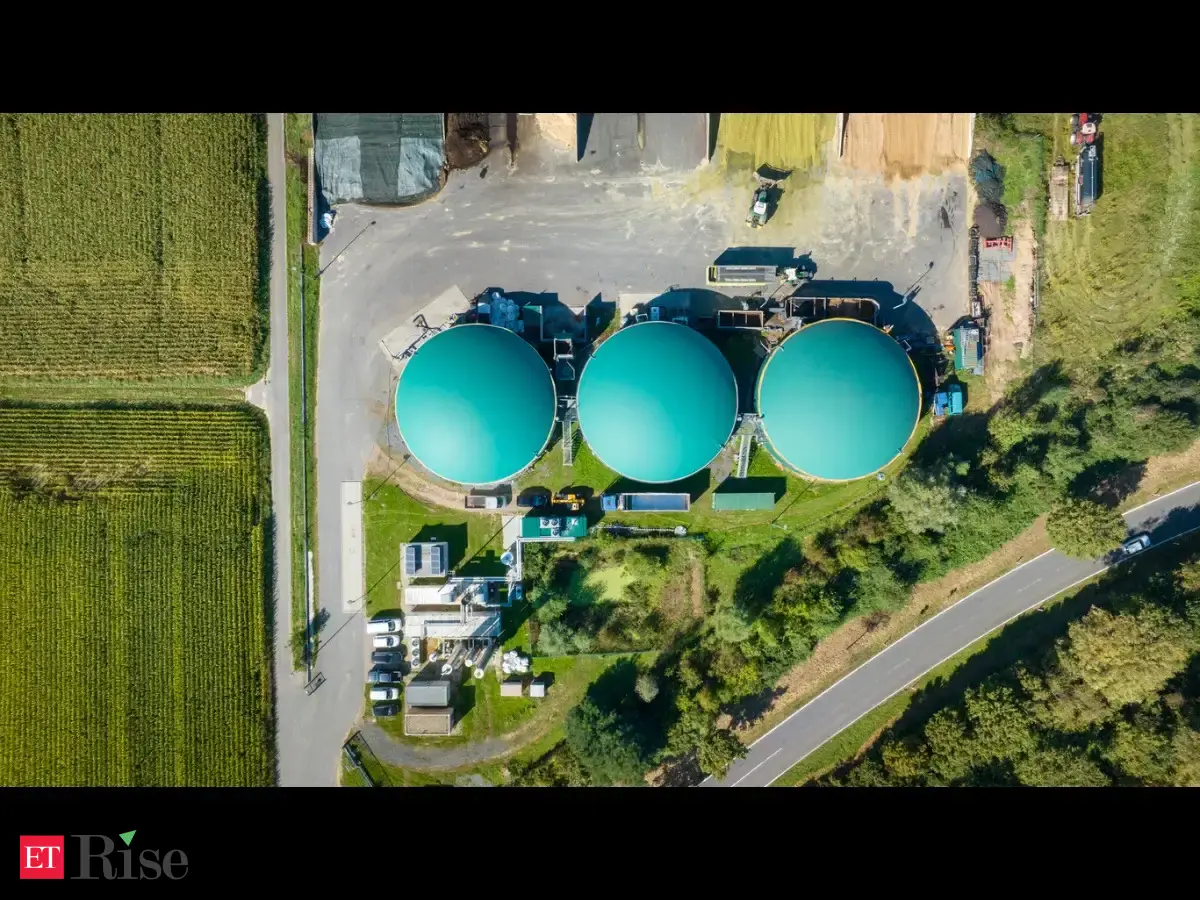
India's economic relationship with Russia is often described as one of the most resilient strategic partnerships in the world. Yet in spite of the strength of diplomatic ties there is a widening trade deficit that has become one of the largest bilateral imbalances in India's external trade portfolio. The challenge before policymakers today is not merely to sustain trade growth but to make it more diversified, balanced, and future-oriented. One promising avenue is bioenergy collaboration through bilateral investments. The numbers tell a striking story. India-Russia bilateral trade has surged from about $13 billion in 2021 to nearly $68-69 billion in FY2024-25, driven overwhelmingly by India's purchases of discounted Russian crude oil. However, India's exports to Russia have remained below $5 billion, resulting in a trade deficit approaching $59 billion. This imbalance emerged after the Ukraine conflict reshaped global energy flows. Russia became India's largest supplier of crude oil, accounting for nearly 40% of India's imports at various points during 2024 and 2025. India's crude imports from Russia alone exceeded $46 billion in FY2023-24, helping India save billions in fuel costs and contain inflation. While these imports have strengthened India's energy security, they have also created structural vulnerabilities. Russia now exports more than $60 billion worth of goods annually to India, primarily crude oil, petroleum products, coal, and fertilisers, while Indian exports remain concentrated in pharmaceuticals, engineering goods, machinery, and agricultural products. To navigate the vulnerability in an interconnected world, the two countries must expand cooperation into new sectors that generate investment, manufacturing, technology transfer, and long-term value creation. Bioenergy offers exactly such an opportunity. Live Events Why bioenergy matters India has emerged as one of the world's fastest-growing bioenergy markets. The International Energy Agency estimates that India will account for more than one-third of global bioenergy demand growth through 2030. The country has already established ambitious targets, including 20% ethanol blending, 5% biodiesel blending, mandatory compressed biogas (CBG) blending, biomass co-firing in thermal power plants, and sustainable aviation fuel deployment and introduction of Flex fuel vehicles operating on E85 fuel. These targets create enormous demand for feedstock, technology, and investment. India possesses abundant agricultural residues, livestock waste, municipal solid waste, and sugar industry by-products. Yet large-scale deployment requires capital, advanced conversion technologies, logistics infrastructure, and international partnerships. Russia, meanwhile, possesses vast agricultural land, forestry resources, biomass availability, scientific expertise, and energy engineering capabilities. Although Russia's energy diplomacy has traditionally focused on oil, gas, and nuclear power, diversification into renewable fuels aligns with Moscow's broader goal of expanding economic cooperation beyond hydrocarbons. Recent bilateral discussions have continued to emphasize energy diversification, innovation, and investment cooperation. Existing policy frameworks could facilitate cooperation A key advantage is that India and Russia need not start from scratch. Several policy frameworks already exist. First, both countries have adopted long-term economic cooperation roadmaps extending to 2030, with a bilateral trade target of $100 billion. These frameworks emphasize investments, industrial partnerships, logistics connectivity, and technology collaboration. Second, negotiations involving India and the Eurasian Economic Union (EAEU), led by Russia, have advanced toward a free trade arrangement. A future agreement could significantly reduce tariff and non-tariff barriers for biofuel equipment, biomass processing technologies, enzymes, industrial machinery, and agricultural products. Third, the growing use of national currencies in bilateral trade creates an additional opportunity. One of the persistent concerns in India-Russia trade has been the accumulation of Russian-held rupees due to the trade imbalance. Investing these rupee balances into bioenergy projects within India could transform a payment challenge into a productive investment channel. The bilateral investment model A practical model would involve Russian sovereign funds, energy companies, and fertiliser firms investing directly in India's bioenergy ecosystem. This could include investments in compressed biogas (CBG) plants using agricultural residues, second-generation ethanol facilities based on crop waste, biomass pellet manufacturing units, sustainable aviation fuel projects, and urban waste-to-energy installations. Opportunities could also extend to biomethane and green fuel distribution infrastructure, along with the manufacturing and supply of capital equipment required for these projects. Such investments would create domestic jobs, increase domestic technology supply chains for the Bioenergy sector, help augment existing capacities, introduce new facilities, reduce stubble burning, improve rural incomes, and lower India's fossil fuel import dependence. At the same time, Russian investors would gain long-term exposure to one of the world's most rapidly expanding renewable fuel markets. This would represent a strategic shift from a buyer-seller relationship toward a production-investment partnership. Fertilisers and bioenergy: A natural link Another major area of cooperation lies at the intersection of fertilisers and bioenergy. Russia is already a crucial supplier of fertilisers to India. Modern biogas and biomethane plants generate organic digestate, which can supplement chemical fertilisers and help improve soil health. Integrating Russian fertiliser expertise with Indian biogas expansion could produce a circular agricultural economy model that benefits both countries. Joint ventures combining biogas production, bio-fertilisers, and carbon-credit generation could be particularly attractive under emerging global climate-finance frameworks. Russia can also serve as a large market for use of biofertilisers and provide a large, consistent offtake ensuring operational viability. Logistics corridors could boost green trade India and Russia are simultaneously developing strategic connectivity projects, including the International North-South Transport Corridor (INSTC), the Chennai-Vladivostok Maritime Corridor, and Arctic shipping routes. These logistics corridors are generally discussed in the context of oil and commodities, but they could equally support biomass equipment, renewable-energy components, and biofuel trade. Improved connectivity would lower transportation costs and encourage deeper industrial integration between the two economies. Some hurdles need joint navigation Despite the potential, there may be hurdles that may need joint navigation. Restrictions on Russian entities continue to have uncertainty for financing and technology partnerships. Regulatory standards for biofuels differ across jurisdictions. Moreover, both governments remain heavily focused on hydrocarbons because oil continues to dominate bilateral trade revenues. There is also the question of commercial viability. Bioenergy projects require stable feedstock supply chains, long-term policy certainty, predictable pricing mechanisms and progressive approach to improving output quality and robust and effective standards. Without these conditions, investors will remain cautious irrespective of diplomatic enthusiasm. “Building a common standardization framework between India and Russia for fuel quality and feedstock quality can be a stepping stone to build confidence in the bilateral bioenergy eco-system” opines Nishant Sarna, a bioenergy expert with more than decade of experience in this sector. This eco-system can be another success story and step in energy supply resilience. The author is Deputy Director General, All India Distillers’ Association (AIDA) .Pbanner{display:flex;justify-content:space-between;align-items:center;background-color:#ec1c40;margin-top:20px;padding:5px 10px;border-radius:4px;color:#fff;line-height:10px;width: 100%;box-sizing: border-box} .Pbannertext{display:flex;align-items:center;font-size:16px;font-weight:600;font-family:'Montserrat';} .Pbannertext img{height:20px;margin:0 6px} .Pbannerbutton a{display:flex;align-items:center;background-color:#fff;color:#ec1c40;text-decoration:none;font-weight:600;padding:4px 8px;border-radius:6px;font-size:15px;font-family:'Montserrat';} .Pbannerbutton img{height:20px;margin-right:6px} .Pbannerbutton a:hover{background-color:#f7f7f7} Add as a Reliable and Trusted News Source Add Now!
Cement companies are gearing up for a promising September 2026 quarter, with expectations of significant volume growth fueled by heightened demand and new capacity. Despite this optimistic outlook, profitability may take a hit due to escalating operating costs, especially in fuel. Ultratech Cement and JK Cement are anticipated to shine in volume performance, while necessary price increases for cement bags will help mitigate rising expenses. View More
MUMBAI - Cement companies are likely to report healthy volume growth in the September 2026 quarter, supported by improving demand and capacity additions. However, profitability is likely to be at the lowest in nearly two years in the September quarter, weighed down by higher operating costs, especially that of fuel. While Ultratech Cement and JK Cement are expected to lead on volume growth, margin compression could weigh earnings across most cement makers despite a gradual recovery in cement prices. Power and fuel costs together account for about a third of the total production costs for cement companies. The continued crisis in West Asia has led to a spike in prices of international pet coke and coal. Companies also faced higher costs of logistics and packing bags; combined with the annual maintenance and shutdowns that companies generally take during the quarter, this has added to the cost pressures during the quarter. Cement companies have increased prices by Rs 15-20 per 50 kg bag, while costs have risen by at least Rs 200 per tonne. Every $10 per tonne increase in the cost of fuel results in a corresponding increase of Rs 40–50 per tonne for cement makers. Shree Cement seems to be the most exposed to international fuel prices, DAM Capital said in a report. “Pricing improved in Sep-26 but more hikes are needed to keep rising costs at bay,” Nuvama Institutional Equities said in a pre-earnings note. Ultratech Cement is expected to report healthy double-digit volume growth, aided by improving demand and market-share gains. While realizations are likely to remain broadly stable year-on-year, higher input costs may weigh on margins. Live Events JK Cement is expected to deliver strong revenue growth supported by 20% volume growth, capacity ramp-up and healthy demand across both grey and white cement segments and modest realization improvement. However, rising fuel and operating costs means profit growth may trail top line growth. Ambuja Cements is expected to report a subdued revenue growth amid low single-digit volume growth. Profitability may remain under pressure, with per tonne operating profit before depreciation and amortisation (EBITDA) expected to decline sharply by around 30%. Key monitorables include demand recovery, cement price trends, ramp-up of new capacities, and the pace of cost savings from Adani Group synergies. Shree Cement is expected to report mid-high single digit volume growth supported by improving demand and capacity additions. Revenue is likely to increase on the back of higher volumes, although realizations may remain under pressure sequentially. EBITDA per tonne is estimated to drop nearly 24% compared with last year. In the near term, pricing actions taken by companies will be critical amid expectations of firm input costs. “With the industry entering its seasonally stronger period, industry players have announced further price hikes of INR 10–20/bag across most markets in October 2026, although the extent of absorption and sustainability remain the key variables to monitor,” JM Financial Institutional Equities said. .Pbanner{display:flex;justify-content:space-between;align-items:center;background-color:#ec1c40;margin-top:20px;padding:5px 10px;border-radius:4px;color:#fff;line-height:10px;width: 100%;box-sizing: border-box} .Pbannertext{display:flex;align-items:center;font-size:16px;font-weight:600;font-family:'Montserrat';} .Pbannertext img{height:20px;margin:0 6px} .Pbannerbutton a{display:flex;align-items:center;background-color:#fff;color:#ec1c40;text-decoration:none;font-weight:600;padding:4px 8px;border-radius:6px;font-size:15px;font-family:'Montserrat';} .Pbannerbutton img{height:20px;margin-right:6px} .Pbannerbutton a:hover{background-color:#f7f7f7} Add as a Reliable and Trusted News Source Add Now! (You can now subscribe to our Economic Times WhatsApp channel) (You can now subscribe to our Economic Times WhatsApp channel)
Through this partnership, ANSCO will lend its technical expertise while MISI assists with supply and marketing strategies. View More
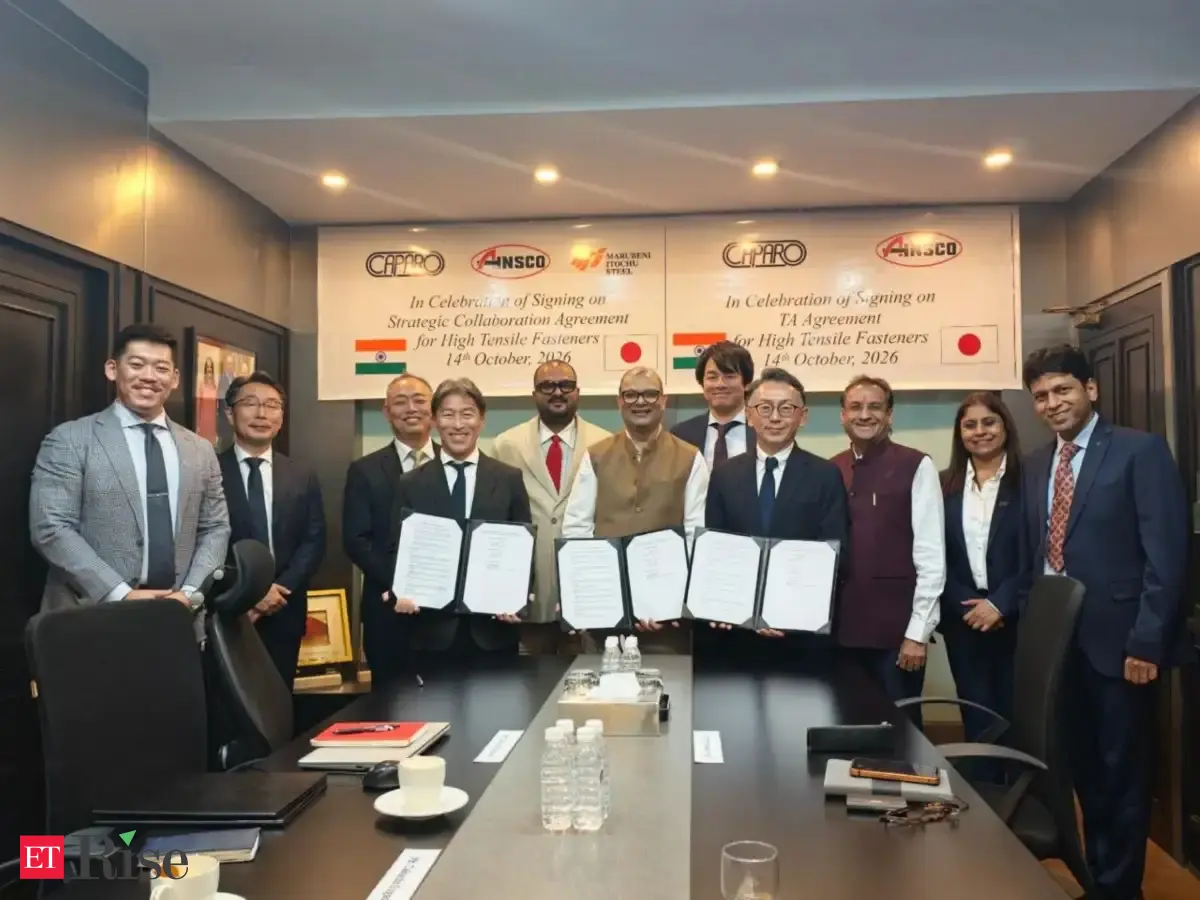
GURUGRAM: Caparo Engineering India Ltd. has partnered with Japan’s ANSCO Co., Ltd. and Marubeni-Itochu Steel Inc. (MISI) to develop and expand its business in India. The agreement, signed on October 14, 2026, is supported by a separate technical assistance agreement between Caparo Engineering India and ANSCO to strengthen manufacturing technology, production processes and quality control. Under the technical assistance agreement, ANSCO will support Caparo in high-strength fastener manufacturing technology, quality control, product development and employee skill development. MISI will support raw material and product supply arrangements, marketing and business expansion, while Caparo will focus on strengthening its production systems, improving quality and expanding its market reach. Akash Paul, Chairman of Caparo Engineering India Ltd., highlighted the importance of the company's legacy, long-term growth and international partnerships. He acknowledged the contribution of Arush Paul, Vice Chairman of Caparo India, and emphasised the importance of carrying forward the group's achievements, values and partnerships for future generations. Arush Paul, Vice Chairman and CEO of Caparo India, said in a statement that the 19-year business relationship between Caparo and MI Steel had been built on trust, mutual respect and a shared commitment to manufacturing excellence. Highlighting the potential of India-Japan collaboration, he said combining Japanese engineering precision and quality with India's manufacturing capabilities, skilled talent and growth potential could help build a strong and competitive business. He added that the initiative was not merely about expanding fastener manufacturing but also about setting higher benchmarks for quality, competitiveness and technological excellence in India. Live Events Vinod Kumar Bapna, CEO of Caparo Maruti Ltd. and Group CFO of Caparo India, highlighted the opportunities emerging from the growth of India's automotive industry. Rising vehicle demand, the expansion of electric mobility and India's emergence as a global manufacturing hub are creating new opportunities for high-strength fasteners . He emphasised that quality, productivity, innovation and technical expertise would be critical to meeting the requirements of an increasingly competitive industry. Combining Indian manufacturing capabilities with Japanese technical expertise, he said in a statement, could help deliver better outcomes for customers. Atul Jain, CEO and Whole-Time Director of Caparo Engineering India Ltd., described the technical assistance agreement with ANSCO as an important step towards strengthening the company's manufacturing capabilities. He said ANSCO's technical expertise, combined with Caparo's manufacturing experience and understanding of the Indian market, would support the development of specialised and critical fasteners. The collaboration is expected to strengthen product development, improve quality and enhance customer service for engine applications, Maruti Suzuki India Ltd. (MSIL), Honda and export markets. Going forward, the three companies will work towards strengthening Caparo's production and quality control capabilities and establishing development and supply systems tailored to the requirements of Indian customers. MISI will facilitate collaboration by leveraging its expertise in the steel products industry and its domestic and international business network. By combining local manufacturing and market access with Japanese engineering expertise and international supply chain capabilities, the companies aim to establish a competitive foundation for the high-strength fastener business in India. .Pbanner{display:flex;justify-content:space-between;align-items:center;background-color:#ec1c40;margin-top:20px;padding:5px 10px;border-radius:4px;color:#fff;line-height:10px;width: 100%;box-sizing: border-box} .Pbannertext{display:flex;align-items:center;font-size:16px;font-weight:600;font-family:'Montserrat';} .Pbannertext img{height:20px;margin:0 6px} .Pbannerbutton a{display:flex;align-items:center;background-color:#fff;color:#ec1c40;text-decoration:none;font-weight:600;padding:4px 8px;border-radius:6px;font-size:15px;font-family:'Montserrat';} .Pbannerbutton img{height:20px;margin-right:6px} .Pbannerbutton a:hover{background-color:#f7f7f7} Add as a Reliable and Trusted News Source Add Now!
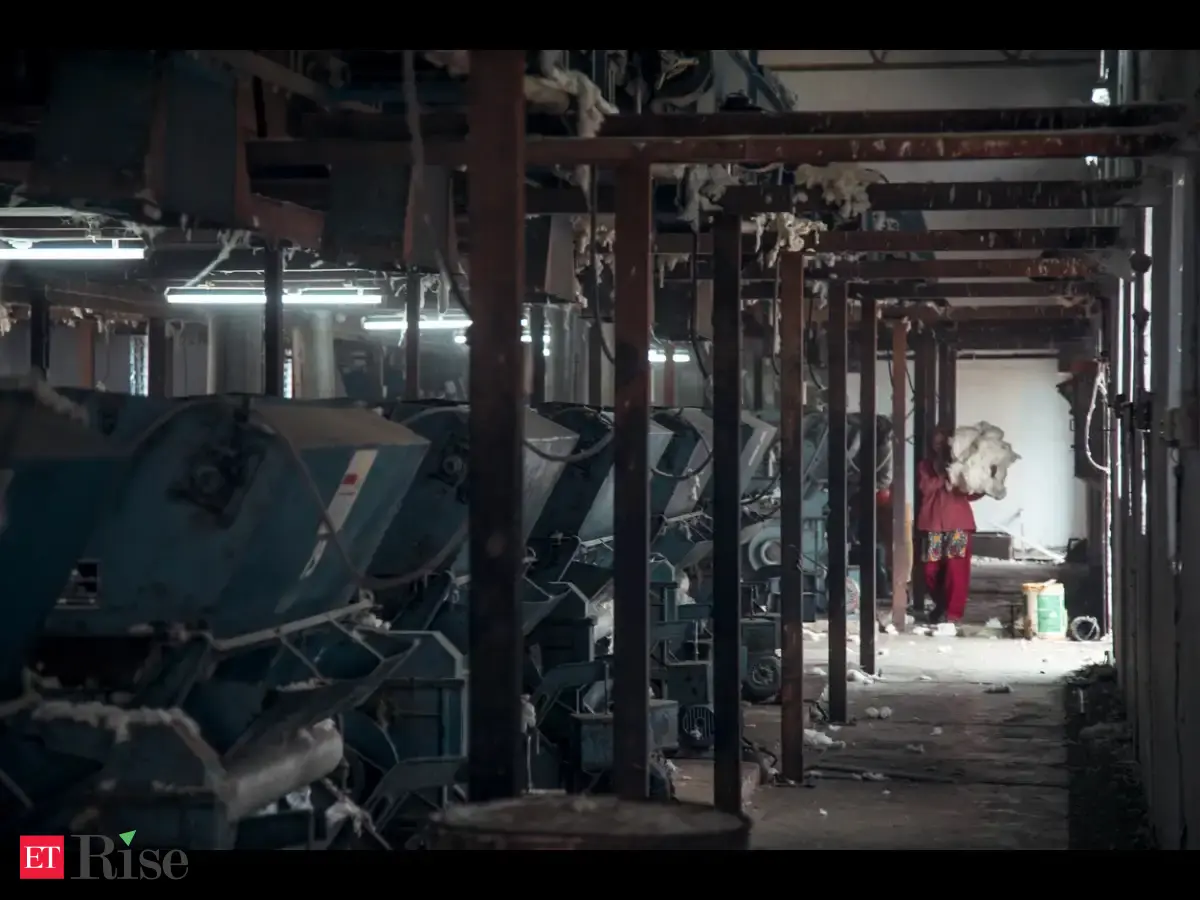
With major industrial investments taking shape across Vidarbha, industry stakeholders believe Nagpur has an opportunity to emerge as a diversified manufacturing and technology centre. View More
Nagpur and the wider Vidarbha region are emerging as promising industrial investment destinations, with major projects in steel, solar manufacturing, and automobiles expected to create fresh opportunities for micro, small, and medium enterprises (MSMEs) in the region. However, rising industrial electricity tariffs, difficulties in accessing land, and gaps in policy support continue to weigh on smaller businesses, raising questions about the region’s ability to translate large investments into broad-based industrial growth. Despite all these challenges, industry representatives remain optimistic about Nagpur's industrial prospects, citing substantial investments by large companies and the potential development of a stronger ancillary manufacturing ecosystem. Julfesh Shah, Chairman of the Chamber of Small Industry Associations (COSIA), Vidarbha Chapter, says the region is witnessing growing interest from major industrial groups across multiple sectors. “If we look at Vidarbha as a whole, with Nagpur as its principal industrial centre, the region is witnessing significant interest from large industrial groups. Several mega projects have been proposed or announced across different sectors, which could substantially transform the industrial landscape and create new opportunities for MSMEs,” Shah adds. He points to Gadchiroli’s emergence as a steel manufacturing hub, with companies, including Jindal, JSW, and Lloyds, investing or planning facilities in the district. Lloyd Metals and Lloyds Steel are already operational, while three to four additional large steel units could become operational over the next two to three years, he says. Nagpur’s Butibori industrial area is also attracting investments in solar manufacturing from companies such as Avaada, Waaree, and Jupiter. Meanwhile, Mahindra’s proposed investment of Rs 7,500 crore in a utility vehicle manufacturing facility is expected to strengthen the region’s automobile ecosystem, believes Shah. Live Events “A single large or ultra-mega manufacturing unit can support around 100 to 150 ancillary units. This will directly contribute to the growth of MSMEs and encourage the establishment of new small and medium enterprises,” Shah says. On financing, Shah maintains that banks are willing to lend to viable businesses with credible promoters and sound proposals. He also highlights collateral-free lending opportunities under the Credit Guarantee Fund Trust for Micro and Small Enterprises (CGTMS). Notably, Maharashtra has more than 10.1 million registered MSMEs (as of February 28, 2026), according to the government data. The Vidarbha region, comprising 11 districts, also houses 1.34 million Udyam-registered MSMEs (as of December 2025). However, Maharashtra reported 28,764 MSME closures between FY24 and FY26, the highest among all states, as per data tabled in the Rajya Sabha by Union MSME Minister Jitan Ram Manjhi. During the same period, the state recorded 75,57,276 new MSME registrations, retaining its position as the country’s leading state in terms of registrations. Industry representatives flag some structural bottlenecks for the closure of MSMEs. Rajib Chakraborty, Founder of Ishita International and the National President of Soluble Fertilizer Industry Association (SFIA), says high electricity tariffs and difficulties in industrial land allotment were undermining competitiveness. “While power availability is adequate, electricity tariffs remain among the highest in the country, significantly increasing the cost of doing business and undermining industrial competitiveness,” Chakraborty adds. He also questions the effectiveness of existing land allocation policies for smaller enterprises. “Policy commitments to preferential allotment for MSMEs and the promotion of import substitution appear to remain largely on paper, with little tangible benefit reaching the intended beneficiaries,” he says, adding that the online land allotment mechanism needed greater transparency and accountability. Suhas Buddhe, former Vice-President and Secretary of the Vidarbha Industries Association (VIA), calls for easier availability of industrial land through the Maharashtra Industrial Development Corporation (MIDC) and competitive electricity tariffs. He suggests bringing industrial power costs down to Rs 5-6 per unit from the prevailing Rs 10 or more per unit. Buddhe also advocates special incentives for investors setting up operations in Nagpur and additional support for export-oriented units in the region’s Special Economic Zone (SEZ). Since exports do not qualify for certain state GST-linked incentives, he suggests introducing dedicated export, transportation and electricity incentives to make manufacturing units more competitive in international markets. New age businesses: A ray of hope Beyond traditional manufacturing, entrepreneurs believe Nagpur must develop a stronger ecosystem for technology-driven enterprises to sustain industrial growth. Trishala Bothra, Co-Founder of online wellness and habit-building platform Habuild, says Nagpur's established manufacturing and logistics strengths could provide a foundation for technology, artificial intelligence and digital businesses. “We have seen how a digital business can be built from Nagpur and serve people across India. However, scaling new-age businesses requires access to skilled talent, mentorship, capital and industry networks,” Bothra adds. She calls for simpler compliance requirements, better start-up funding, cash-flow-based lending for digital businesses, and stronger collaboration between educational institutions and industry. “Digital businesses can serve national and global markets without moving their operations to a metro, provided they have the right talent, technology, and ecosystem support,” she says. With major industrial investments taking shape across Vidarbha, industry stakeholders believe Nagpur has an opportunity to emerge as a diversified manufacturing and technology centre. However, translating investment announcements into sustained MSME growth will depend on addressing longstanding concerns over land, power costs, financing and export competitiveness. .Pbanner{display:flex;justify-content:space-between;align-items:center;background-color:#ec1c40;margin-top:20px;padding:5px 10px;border-radius:4px;color:#fff;line-height:10px;width: 100%;box-sizing: border-box} .Pbannertext{display:flex;align-items:center;font-size:16px;font-weight:600;font-family:'Montserrat';} .Pbannertext img{height:20px;margin:0 6px} .Pbannerbutton a{display:flex;align-items:center;background-color:#fff;color:#ec1c40;text-decoration:none;font-weight:600;padding:4px 8px;border-radius:6px;font-size:15px;font-family:'Montserrat';} .Pbannerbutton img{height:20px;margin-right:6px} .Pbannerbutton a:hover{background-color:#f7f7f7} Add as a Reliable and Trusted News Source Add Now!