Latest Sectors News
JSW Steel is investing heavily in growth, expecting India's steel demand to remain strong through upcoming years. Geopolitical uncertainties are being managed, and India's growth outlook has been positively adjusted by the IMF. The company reported a drawdown in inventory, indicating solid demand. JSW Steel has achieved a strong financial position through internal accruals and debt reduction. They are committed to expanding production capacity and focusing on high-value products. View More
Underlying demand, operating leverage and balance sheet strength are giving JSW Steel the confidence to continue investing in growth, chief executive officer Jayant Acharya tells Nikita Periwal. The country's largest steelmaker has announced a fresh round of capital expenditure , which will increase its production capacity to nearly 65 mt by 2031. Edited excerpts: How does continued geopolitical uncertainty impact the way boardrooms are thinking business? The economy has been resilient in spite of the war. The IMF has upgraded India's growth outlook by 10 basis points to 7.1%. So while there are challenges in the world, the impact on costs and supply chains has been navigated well. The second is that the opportunities which certain markets are providing will continue to remain, especially in India. It is a mixed bag. If you look at the steel consumption in India , it grew 7.5% in the first half in spite of the challenges. After some caution in Q1, demand picked up in Q2. The drivers are structurally strong and local in nature. What has the September quarter been like? Live Events Our strong revenues were driven by sales, and we added to sales by liquidating 200,000-210,000 tonnes of inventory. Usually you will not see a drawdown of inventory in Q2, so what it indicates is that demand on the ground is very strong. With demand turning out the way it is, does it give you headroom to hike prices? We have seen a recovery in prices, which is fundamentally because of the demand. What we have been able to do is the highest-ever capital expenditure of ₹6,266 crore during the quarter, largely from our internal accruals. And with 38 mt of capacity, including 32 mt in India, our scale is generating cash flows strong enough to manage our capex cycle. We have also seen a lot of savings from lower finance costs during the quarter... We have repaid costly debt across two quarters after getting the funds from the Bhushan deal. Combined with the free cash flow we have generated from our existing operations, it has helped reduce debt, and our weighted average interest rate is now 6.09%, down from 6.16% in the previous quarter, and 6.67% in the September quarter last year. We have also been upgraded by Moody's to investment grade . So these fundamental changes in our balance sheet give us additional comfort apart from scale. In more than 10 years now, we have built a substantial scale in terms of volume, initiatives on raw material security , value-added portfolio, logistics and cost improvement, which has structurally enabled us to be better even during difficult stress times. When chasing volumes aggressively, do you sometimes have to let go of margins? Our focus is to create a strong growth pipeline. We want to have control on our raw material assets, while ensuring that the value-added products and special products which India requires are made available. This quarter we approved new projects of ₹29,000 crore, which will add volume, raw material security and value-added products. We are on track, and our focus is on delivering them. From a supply-demand balance, the way I see the growth in India for the next few years, we are quite confident that supply will not be outstripping demand. .Pbanner{display:flex;justify-content:space-between;align-items:center;background-color:#ec1c40;margin-top:20px;padding:5px 10px;border-radius:4px;color:#fff;line-height:10px;width: 100%;box-sizing: border-box} .Pbannertext{display:flex;align-items:center;font-size:16px;font-weight:600;font-family:'Montserrat';} .Pbannertext img{height:20px;margin:0 6px} .Pbannerbutton a{display:flex;align-items:center;background-color:#fff;color:#ec1c40;text-decoration:none;font-weight:600;padding:4px 8px;border-radius:6px;font-size:15px;font-family:'Montserrat';} .Pbannerbutton img{height:20px;margin-right:6px} .Pbannerbutton a:hover{background-color:#f7f7f7} Add as a Reliable and Trusted News Source Add Now! (You can now subscribe to our Economic Times WhatsApp channel) (You can now subscribe to our Economic Times WhatsApp channel)


Jayant Acharya, joint managing director and CEO of JSW Steel, calls for faster iron ore mining and coal washery investments to support India's long-term capacity push, even as JSW prioritises brownfield projects over green steel. View More
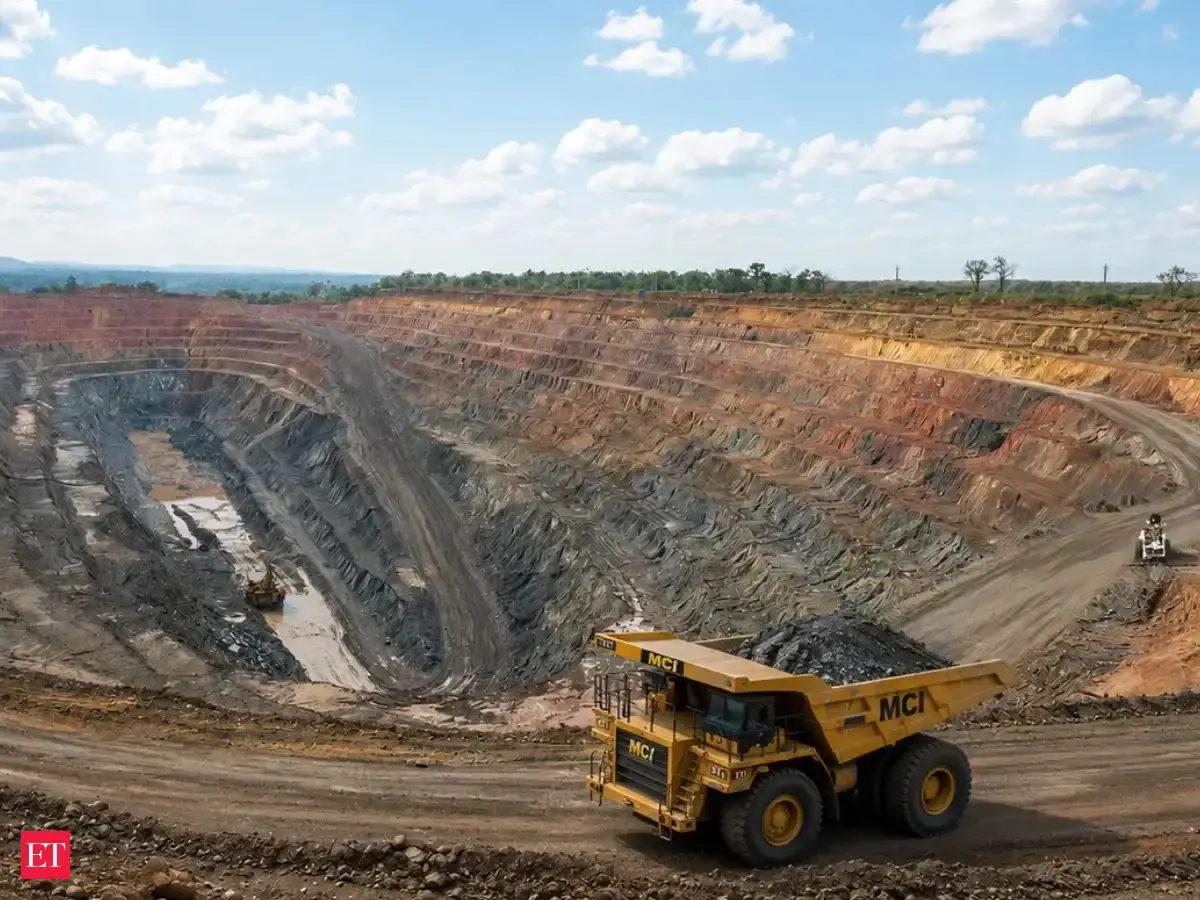
NMDC is actively seeking mining assets worldwide, including critical minerals to support various industries. The company aims to earn 20 percent of revenues from minerals other than iron ore. This expansion aligns with government initiatives to secure raw material supplies and decrease import dependency. NMDC's strategy is expected to enhance its role in India's manufacturing sectors. Industries such as automotive, renewable energy, and electronics will benefit from these efforts. View More
From South America in the west to Australia in the east, state-owned iron ore giant NMDC is scouting mining assets, including critical minerals , in four continents to meet the future needs of industries such as automotive, renewable energy, electronics, and steel, according to industry sources. NMDC, which caters to India's one-fourth iron ore demand , has set a goal to earn at least 20 per cent of revenues from sale of minerals other than the key steel making raw material. Industry sources stated that the PSU is exploring lithium, copper, cobalt and rare earth blocks in Chile (South America), Australia, Africa, Brazil and parts of Asia. The company is also scouting for limestone mines, dolomite, coking coal and tungsten blocks in the UAE, Oman, Bhutan, and Australia, they said. Acquiring these minerals will allow NMDC to cater to major industries in India on a growth trajectory, such as steel, auto, electronics, renewable energy, aerospace and defence, railway and metros, etc., sources said. Live Events When asked for a comment, NMDC said, "Right now, we are a 99.9 per cent iron ore company. We aim to help the growing industries in the country with the maximum of their mineral needs". In an earlier interview with PTI, NMDC Chairman Amitava Mukherjee confirmed the company is working on strategies to diversify into selling other minerals as well. NMDC aims to be India's largest mineral mining company and earn at least 20 per cent of revenue from minerals other than iron ore, he had said. NMDC's expansion aligns directly with government initiatives aimed at securing long-term raw material supplies and reducing import dependency across economic sectors. For the steel sector alone, raw materials account for around 65-70 per cent of steelmaking costs, as per the Ministry of Steel's draft Steel Policy Vision 2047, which aims to reduce import dependence through domestic mining, washery expansion, asset acquisition, long-term supply arrangements, and AI-based optimisation of coal blends. The draft policy said India's objective of increasing the share of manufacturing in the economy, supported by initiatives such as Make in India, the Production Linked Incentive (PLI) Scheme, semiconductor manufacturing, defence indigenisation and the development of industrial corridors, is expected to significantly expand steel consumption in sectors such as automotive, engineering goods, capital goods, machinery, shipbuilding, renewable energy equipment and defence production. .Pbanner{display:flex;justify-content:space-between;align-items:center;background-color:#ec1c40;margin-top:20px;padding:5px 10px;border-radius:4px;color:#fff;line-height:10px;width: 100%;box-sizing: border-box} .Pbannertext{display:flex;align-items:center;font-size:16px;font-weight:600;font-family:'Montserrat';} .Pbannertext img{height:20px;margin:0 6px} .Pbannerbutton a{display:flex;align-items:center;background-color:#fff;color:#ec1c40;text-decoration:none;font-weight:600;padding:4px 8px;border-radius:6px;font-size:15px;font-family:'Montserrat';} .Pbannerbutton img{height:20px;margin-right:6px} .Pbannerbutton a:hover{background-color:#f7f7f7} Add as a Reliable and Trusted News Source Add Now! (You can now subscribe to our Economic Times WhatsApp channel) (You can now subscribe to our Economic Times WhatsApp channel)

In a bustling week for the IPO market, five mainboard offerings are set to debut between October 26 and 30, aiming to amass an impressive Rs 2,581 crore. EAAA India Alternatives spearheads the launches, while Jio Platforms makes its entrance on October 28. Other notable entries include SFC Environmental Technologies and BLS Polymers on October 27, with MK Sons Fine Jewels and Bombay Coated and Special Steels following closely. View More
The primary market is set for another busy week, with five mainboard IPOs looking to raise a combined Rs 2,581 crore between October 26 and 30. The upcoming issues will be led by EAAA India Alternatives, while investors will also closely watch the stock market debut of Jio Platforms, India's largest IPO , and Paras Healthcare. The five companies hitting Dalal Street are EAAA India Alternatives, SFC Environmental Technologies, BLS Polymers, MK Sons Fine Jewels and Bombay Coated and Special Steels. Of the combined Rs 2,581 crore fundraising, fresh equity issuance accounts for Rs 808 crore, while the remaining Rs 1,773 crore will come through offers for sale (OFS) by existing shareholders. The new offerings follow a record-breaking week for India's IPO market, with Jio Platforms attracting bids worth more than Rs 4.5 lakh crore and receiving over 1.25 crore applications, according to data compiled by Safal Capital. Jio listing GMP and outlook Two mainboard companies, Jio Platforms and Paras Healthcare, are scheduled to make their stock market debut on October 28. Live Events Jio's Rs 30,213 crore IPO closed on October 23 with an overall subscription of 22.19 times. Qualified institutional buyers subscribed 70.55 times their allotted shares, while retail investors bid for 2.72 times their reserved portion. As of October 25, Jio shares were commanding an unofficial grey market premium (GMP) of around Rs 247 over the upper issue price of Rs 1,119. This indicates a potential listing price of Rs 1,366, representing a premium of nearly 22%. Paras Healthcare, which raised Rs 1,450 crore through its IPO, is also scheduled to list on October 28. Its public offering was subscribed 2.23 times. The healthcare company's grey market premium was hovering around Rs 10-12 over its issue price of Rs 693, indicating a possible listing price of Rs 703-705, or gains of 1-2%. Grey market premiums are unofficial indicators and may change before listing. Actual debut prices will depend on market conditions and investor demand. EAAA India Alternatives IPO EAAA India Alternatives will launch the largest IPO of the week, seeking to raise Rs 1,200 crore. The issue opens on October 26 and closes on October 28, with a price band of Rs 1,585-1,665 per share. The offering consists entirely of an OFS by promoter Edelweiss Securities and Investments, meaning the company will receive no proceeds from the IPO. The minimum retail application is nine shares, requiring an investment of Rs 14,985 at the upper price band. EAAA operates an alternative investment management platform focused on real assets and private credit. It managed assets worth Rs 95,345 crore as of June 2026. SFC Environmental Technologies IPO Wastewater treatment solutions provider SFC Environmental Technologies will open its Rs 667.53 crore IPO on October 27. The issue will close on October 29, with shares priced between Rs 313 and Rs 330 apiece. The IPO comprises a fresh issue of Rs 150 crore and an OFS worth Rs 517.53 crore. The company plans to use part of the fresh proceeds to repay borrowings and meet working capital requirements. SFC provides wastewater treatment and solid waste management solutions, including technology and equipment used in environmental infrastructure projects. Retail investors can apply for a minimum of 45 shares, requiring Rs 14,850 at the upper end of the price band. BLS Polymers IPO BLS Polymers will raise Rs 255 crore through an entirely fresh issue opening on October 27 and closing on October 29. The company has fixed a price band of Rs 142-150 per share, with a minimum application size of 100 shares costing Rs 15,000 at the upper end. BLS Polymers manufactures specialised polymer compounds used in power cables, telecommunications networks, railways and underground pipelines. The company intends to use Rs 77.56 crore to expand its Goa manufacturing facility and Rs 89.5 crore to meet working capital requirements. MK Sons Fine Jewels IPO Jewellery retailer MK Sons Fine Jewels will open its Rs 275 crore public issue on October 28. The IPO will close on October 30, with a price band of Rs 153-162 per share. The Mumbai-based company operates jewellery showrooms in Mumbai and Ahmedabad, offering gold, diamond and other jewellery products. Bombay Coated and Special Steels IPO Bombay Coated and Special Steels will be the final mainboard IPO to open during the week, launching its Rs 183.06 crore issue on October 29. Subscription will remain open until November 2. The company has fixed a price band of Rs 78-82 per share, and the entire offering consists of fresh equity. Bombay Coated operates a steel processing business, converting steel coils into value-added products for industrial customers. The company plans to use Rs 125 crore of the proceeds to repay borrowings and Rs 15.7 crore to acquire capital equipment, with the balance going towards general corporate purposes. SME IPOs next week The SME segment will also remain active, with four new issues scheduled to open for subscription, collectively seeking nearly Rs 200 crore. Wiscon Industries will launch its Rs 110 crore IPO on October 27, followed by Carver Roboweld's Rs 28.29 crore issue and Ajwa Projects' Rs 38.05 crore offering on October 28. Antala Industries will open its Rs 23.33 crore IPO on October 29, with subscription closing on November 2. Disclosure: This article has been written by Podishetti Akash, who is not a SEBI-registered Research Analyst or an Investment Adviser. Podishetti Akash and his ‘relative(s)’ (as defined under Section 2(77) of the Companies Act, 2013) do not hold any financial interest in the companies mentioned in this article as of the date of publication. The views/recommendations mentioned in this article, wherever applicable, are those of the respective SEBI-registered Research Analyst/brokerage and have been reproduced/reported with due attribution. They should not be construed as the views or recommendations of The Economic Times Digital or the journalist. Readers are advised to consider the original research report and make their investment decisions based on their own assessment. Brokerage disclosures here . .Pbanner{display:flex;justify-content:space-between;align-items:center;background-color:#ec1c40;margin-top:20px;padding:5px 10px;border-radius:4px;color:#fff;line-height:10px;width: 100%;box-sizing: border-box} .Pbannertext{display:flex;align-items:center;font-size:16px;font-weight:600;font-family:'Montserrat';} .Pbannertext img{height:20px;margin:0 6px} .Pbannerbutton a{display:flex;align-items:center;background-color:#fff;color:#ec1c40;text-decoration:none;font-weight:600;padding:4px 8px;border-radius:6px;font-size:15px;font-family:'Montserrat';} .Pbannerbutton img{height:20px;margin-right:6px} .Pbannerbutton a:hover{background-color:#f7f7f7} Add as a Reliable and Trusted News Source Add Now! (You can now subscribe to our ETMarkets WhatsApp channel) (You can now subscribe to our ETMarkets WhatsApp channel)

Airplanes are getting dismantled for parts years ahead of schedule because engines and other components are in short supply. View More
watch nowVIDEO8:0208:02Why young airplanes are being torn apart for scrapConsumer & Retail Digital Original VideoGOODYEAR, Ariz. â An Airbus A320neo, one of the world's most popular planes, rolled off the Mobile, Alabama, factory line in July 2022, painted bright yellow for its next destination: Spirit Airlines. It was built to fly for decades. But this May, less than four years later, it was stripped for parts worth millions and crushed, the steel teeth of an excavator tearing through its fuselage at a facility on the outskirts of Phoenix. More aircraft are getting dismantled years, if not decades, earlier than expected, industry executives told CNBC. It is the result of a shortage of parts, none more precious and expensive than aircraft engines, that has exasperated airlines and driven up costs for years.addEventListener("message",function(e){var d=e.data&&e.data.youngJetsH;if(!d)return;document.querySelectorAll("iframe").forEach(function(f){if(f.contentWindow===e.source)f.style.height=d[1]+"px"})})Even after the engines are removed, firms are looking for parts as varied as landing gear and antennae to sell."It's the first time in my career that involved purchasing an aircraft that's less than five years since date of manufacture," said Bill Thompson, vice president who leads aircraft and engine acquisition for the Americas at aviation asset management and trading firm EirTrade Aviation, which bought the less than 4-year-old Airbus A320neo earlier this year. An Airbus plane painted in Spirit Airlines' livery sits at an AerSale's facility in Goodyear, Arizona.Leslie Josephs / CNBCHe said the company paid "single-digit" millions each for that airplane and a similarly aged one, and it expects to make a profit from selling the more than 1,000 parts it took off them before they were crushed. "I don't know if you're going to sell the coffee makers but you never know. Sometimes you do," he said.'Don't fall in love with the metal'Twenty-one newest-generation aircraft were torn down from June 2025 through this past August, according to aviation data and advisory firm IBA Group. The scrapped planes were 6.4 years old on average, and included mostly Airbus but also some Boeing planes. That compares with an average retirement age for narrow-body airplanes of 21.7 years, IBA said."Anytime that you end up with any period of market softness in aircraft availability, engine availability, it's going to cause investors to look at other options," said Simon Goodson, CEO of AerFin, a company that buys, sells, repairs and leases aircraft and parts. "We always say to our aircraft and engine traders, 'Please don't fall in love with the metal.'"A scrapped Singapore Airlines jet at AerSale in Goodyear, Arizona.Leslie Josephs / CNBCHundreds of aircraft are retired each year as manufacturers ramp up production for airlines, so older planes are swapped out for newer, more fuel-efficient models.But aside from retiring aging planes, some owners don't want to wait around for replacement parts or repairs on younger jets. "A year might not sound that long, but does three or four years?" said Dave Querio, CEO of Ascent Aviation Services, a company that repairs, modifies, stores and disassembles aircraft, based in Marana, Arizona, outside of Tucson. "That's the issue for the aircraft that came in in '23, '24 and '25."In some cases, owners can reap more for the parts than they can selling the plane or paying storage costs and waiting for it to get back in the air again.Querio said he hasn't seen "the volume of younger aircraft being torn down as I'm seeing today."Hot engine marketA major reason for the young retirements is the long wait and rising prices for jet engines.One problem is that cutting-edge engines that burn hotter and use less fuel are coming up for maintenance far earlier than airlines expected. The maintenance requests have kept engine repair and overhaul facilities backed up, from those owned by manufacturing giants GE Aerospace and RTX unit Pratt & Whitney to smaller, independent ones. Airlines and leasing firms have been hunting for spare parts and engines anywhere they can find them, like here in Goodyear, Arizona.A Pratt & Whitney engine mounted on Spirit Airlines Airbus plane.Leslie Josephs / CNBCThe trend has added more fuel to the already hot secondhand parts market. An engine fan blade could cost $50,000 or even more than $100,000 for bigger jets, Goodson said. Engines that power some Airbus A320neo aircraft have 20 of those blades. A disc for the engine, meanwhile, could cost between $1 million and $2 million.An engine recall because of a manufacturing defect has backed up repair shops and grounded hundreds of Airbus planes around the world. Spirit Airlines bore the brunt of that problem in the United States, years before the airline collapsed.The engine is made by Pratt & Whitney, which issued the recall in 2023 after discovering contaminated powdered metal used in making some parts. Those engines are worth close to $17 million this year at the high end, up 60% from the upper end of the range in 2019, according to IBA. Airlines are removing some engines off retired planes to keep current aircraft flying while they wait for engines to come back from the shop.addEventListener("message",function(e){var d=e.data&&e.data.youngJetsH;if(!d)return;document.querySelectorAll("iframe").forEach(function(f){if(f.contentWindow===e.source)f.style.height=d[1]+"px"})})"So you're just playing Legos and moving engines on and off aircraft," said Mike Stengel, a partner at AeroDynamic Advisory, an aerospace consulting firm.The problems are driving up the cost to buy or rent one of the popular engines to record levels.Renting one is ranging from about $160,000 to $180,000 a month, according to IBA data. A competing engine for the A320neo family made by CFM International, a joint venture of GE Aerospace and France's Safran, is far from a bargain, renting in a similar range of $130,000 to $180,000 a month. (function(){addEventListener("message",function(e){var d=e.data;if(!d||d.dmId!=="yjengleases"||!d.dmH)return;var f=document.querySelectorAll('iframe[data-dm="yjengleases"]');for(var k=0;k

South Africa is reportedly moving towards a ?5,400 crore takeover of Lakshmi and Aditya Mittal’s steel business. Here is how the deal splits cash payments and debt, and what it means for the global steel giant. View More

Higher realisations and strong domestic demand drove a surge in September-quarter earnings, as the steelmaker cleared ?16,150 crore in fresh capex to support its long-term growth targets. View More

The company spent ?11,136 crore on capex in the first half of this fiscal year and plans to invest another ?12,864 crore in the second half, bringing total investment to ?22,000-24,000 crore in FY27 View More

Q2 Results Today, 23rd October 2026 Highlights: Follow the latest announcements and developments on the company's September quarter earning on Adani Power, JSW Steel, Tata Motors, Shriram Fin, Torrent Pharma, CG Power, BPCL, Dr Reddys Lab and others View More