
Latest Sectors News


In a rare occurrence, Modi's government was forced to concede demands of Gen Z protesters, underscoring their rising influence in the country's polity. View More
Protesters raise slogans, hold placards and wave Indian flags during a gathering organized by supporters of the Cockroach Janta Party after the resignation of Education Minister Dharmendra Pradhan over exam paper leaks, in Mumbai, India, on July 26, 2026. (Photo by Indranil Aditya/NurPhoto via Getty Images)Nurphoto | Nurphoto | Getty Images Prime Minister Narendra Modi's government caved under the pressure of student protests across India â a rarity in the current administration â underscoring the rising influence of Gen Zs in the world's largest democracy.On Saturday, India's education minister Dharmendra Pradhan resigned, a key demand of the student protesters who were voicing concerns over examination test paper leaks. The government also agreed to the other demands of the Cockroach Janta Party, the youth movement at the helm of the protest, such as providing compensation to the families of students who died by suicide due to the exam paper leak in May.The protests that got amplified on social media, pushed 75-year-old Modi to make his first reel on Instagram as he looks to develop his presence on the platform in his bid to connect with the younger generation of voters. In his latest reel on Sunday, Modi promised a "HIGH POWERED TASK FORCE" led by Indian tech entrepreneur Nandan Nilekani to oversee examination reforms. The protests exposed a growing disconnect between the Modi government and younger Indians, a generation that will dominate the electorate for decades to come, experts said."It's very striking to see the rhetoric and the language from these protesters," Michael Kugelman, senior fellow for the South Asian region at the Atlantic Council, told "Inside India" on Monday. The protesters were "witheringly critical" and "profane at times toward Modi and his government," he said, adding that it was surprising given the popularity of the Modi government. Disconnect with young voters Experts highlighted that in 2027, there are several major state elections, including for Uttar Pradesh, India's most populous state with one of the largest youth voter bases. By 2029, in time for the next general election, Gen Zs will be the most "influential demographic," and all political parties will emphasize addressing their priorities. "Don't make me a hero because of Dharmendra Pradhan's resignation," Abhijeet Dipke, founder of the CJP said in a speech on Saturday, adding that the "country has been ruined because of making one person a hero," in a veiled reference to the prime minister. For much of the last decade, economic aspirations have been the driving factor for Modi's electoral appeal, experts said, but added that many young people feel the promise has not materialized amid rising unemployment and lack of upward mobility. NEW DELHI, INDIA - JULY 25: CJP (Cockroach janta Party) founder Abhijeet Dipke announces the resignation of Indian Education Minister Dharmendra Pradhan while addressing supporters at Jantar Mantar on July 25, 2026 in New Delhi, India. A mix of protesters gathered in New Delhi on Monday as discontent bubbled over myriad issues, and as Sonam Wangchuk, an activist who was fasting in protest, was forcibly taken to hospital on Sunday. Opposition leader Rahul Gandhi was detained on Tuesday among others, as the movement continues well into the week. (Photo by Ritesh Shukla/Getty Images)Ritesh Shukla | Getty Images News | Getty Images The CJP was launched on May 16 by political communications strategist and Boston University student Dipke, after Chief Justice of India Surya Kant referred to people attacking institutions as "parasites" and likened some unemployed youngsters and activists to "cockroaches" during a courtroom hearing. The CJI later said his oral observations were "misquoted," but the CJP had already gone viral on social media, amassing more than 22 million followers in a short span. The CJP called for a protest on June 6, demanding the resignation of Pradhan, blaming him for the exam paper leaks that happened in May. But the demonstration gained momentum on July 20 after Delhi Police violently cracked down against students as they breached security barricades surrounding the protest site to march towards the parliament. Galvanizing protests The political impact of the student protest on the Modi government could potentially be significant, Arpit Chaturvedi, South Asia advisor at Teneo, told CNBC.The CJP movement suggests that the Modi government's "political and developmental narrative may not resonate as strongly with the next generation of voters," and challenges the "perception of the government's political invincibility," Chaturvedi said. watch nowVIDEO3:4503:45CJP's victory will have 'galvanizing effect' on other civil groups: ExpertInside India As per local media reports, the CJP's successful protest has already inspired a copycat group, E20 Janta Party, seeking the resignation of India's Road Transport and Highways minister Nitin Gadkari over the mandate of mixing 20% ethanol with petrol. Indian farmers are also planning a protest to raise their concerns against the U.S.-India trade deal.The success of the CJP protest is going to have a "galvanizing effect" on other civil society campaigns, said Kugelman of the Atlantic Council. The last time the Modi government had to concede to the demands of protestors was in 2021, following demonstrations held by farmers that lasted for over a year. Choose CNBC as your preferred source on Google and never miss a moment from the most trusted name in business news.

Rhetan TMT Ltd shares fell after nearing a 52-week high despite receiving BIS certification to manufacture high-grade TMT bars. This approval expands their market to government projects and enhances their product portfolio, positioning the company for growth amid rising steel demand in India. View More

India secured an advantage in United States tariffs due to ongoing trade negotiations. A significant portion of Indian exports remain exempt from the recent additional levies. This allows key sectors like pharmaceuticals and smartphones to maintain their market access. View More
(Bloomberg) --India said trade negotiations with the US have helped place it in the “lower tier” of additional tariffs imposed by President Donald Trump’s administration, allowing the country to secure an advantage for key exports. A large portion of India’s exports to the US, including generic pharmaceuticals and smartphones, continue to be exempt from the additional 10% levy imposed last week, the Ministry of Commerce and Industry said in a statement dated Saturday. It added that it’s working towards the early conclusion of a bilateral trade agreement . Products such as steel, aluminium and auto parts are also not subject to the extra 10% duty, the ministry said, with the exemptions taking an estimated 45% of India’s exports to the US outside the scope of the additional levies. “The remaining 55% of exports will attract the additional 10% duty, where India’s tariff incidence is comparatively lower than that for most other economies covered by the investigation,” the statement read. The government’s remarks come even as Trump’s plan to impose steep tariffs on generic medicines has unsettled Indian drugmakers and put the spotlight on their strategy in their biggest export market. Live Events The two countries have been locked in negotiations over a trade deal since last year. While an initial trade agreement was reached in February with an 18% duty on Indian goods, a US Supreme Court order shortly after invalidated Trump’s reciprocal tariffs. This month, India defended itself against the threats of higher US tariffs, arguing that Washington failed to provide evidence the country lacked policies preventing forced labor. .Pbanner{display:flex;justify-content:space-between;align-items:center;background-color:#ec1c40;margin-top:20px;padding:5px 10px;border-radius:4px;color:#fff;line-height:10px;width: 100%;box-sizing: border-box} .Pbannertext{display:flex;align-items:center;font-size:16px;font-weight:600;font-family:'Montserrat';} .Pbannertext img{height:20px;margin:0 6px} .Pbannerbutton a{display:flex;align-items:center;background-color:#fff;color:#ec1c40;text-decoration:none;font-weight:600;padding:4px 8px;border-radius:6px;font-size:15px;font-family:'Montserrat';} .Pbannerbutton img{height:20px;margin-right:6px} .Pbannerbutton a:hover{background-color:#f7f7f7} Add as a Reliable and Trusted News Source Add Now!

Tata Steel explores pathway to reducing coke usage while retaining existing steel-making infrastructure View More

Jindal Steel Ltd’s new managing director, Vidya Rattan Sharma, shifts the focus to the company's ‘upper middle management force’. View More

It's a busy week filled with Big Tech earnings, a Fed meeting and inflation data. View More
Amazon , Meta Platforms , Microsoft and Apple headline the busiest week of this summer earnings season. Plus, the Federal Reserve holds its July policy meeting, which adds intrigue following rekindled Middle East tensions. 1. Earnings: We've got 10 Club names reporting this week, including the other three hyperscalers on the heels of Alphabet earnings last week. Without further ado, let's get into it. All quarterly revenue and earnings per share (EPS) estimates are from LSEG. Estimates for other metrics are from FactSet. BA YTD mountain Boeing YTD Boeing kicks off the busy week of earnings on Tuesday morning . The stock is limping into the print, thanks in large part to rekindled Mideast tensions and the resulting surge in oil prices. The inverse relationship between oil prices and aerospace stocks has been on display since the Iran war first broke out on Feb. 28. Our investment in Boeing is predicated on CEO Kelly Ortberg cleaning up the planemaker to capitalize on strong long-term flying demand, so we've largely looked through this year's ups-and-downs for the stock. That patient attitude can be maintained as long as Boeing's financial performance shows improvement, which makes Tuesday's check-in critical. The biggest metric to watch is free cash flow, both for the reported quarter and its full-year guidance (currently for $1 billion to $3 billion). For the second quarter, Wall Street expects Boeing to report a cash burn of $179 million, before turning positive in the third and fourth quarters. We'll also pay close attention to any updates to Boeing's outlook for 2026 plane deliveries (currently 500) and the timeline for increasing monthly production of 737 Max jets. Revenue: $24.25 billion Earnings per share: loss of 30 cents GLW YTD mountain Corning YTD Corning , which will also report on Tuesday morning , has been absolutely crushed following a monster rally on seemingly no news at the end of June. As a result, management needs to reaffirm its status as a key beneficiary of the massive capital expenditure (capex) spending on data center infrastructure. The company must also provide an updated timeframe for the shift from copper wiring to fiber optics, which we expect to start ramping sometime around 2028. Any update on the company's multiyear Springboard growth initiative, such as long-term supply deals with hyperscalers or negotiations in the works, will no doubt be viewed positively by the Street. Since Corning's late April earnings report, it has inked deals with Nvidia and Amazon. Revenue: $4.61 billion Earnings per share: 76 cents PG YTD mountain Procter & Gamble YTD Our expectations for Procter & Gamble on Wednesday morning are fairly muted. For starters, CFO Andre Schulten said at an early June conference that U.S. consumer trends "have been softening," on the heels of the war-driven pickup in inflation. The other piece to the puzzle: P & G has to contend with the pickup in oil prices and associated supply chain problems for inputs sourced from the Middle East, most notably chemicals used in cleaning products. This means P & G is experiencing pressure on both its top line (consumer) and bottom line (elevated costs), explaining our subdued stance into the company's fiscal 2026 fourth quarter. In some respects, the most pertinent question is where P & G establishes its initial guidance for fiscal year 2027. The current consensus for FY27 organic sales growth is 2.2% and EPS of $7.02, implying a 2% year-over-year increase, according to FactSet. We'll also be listening to updates from new CEO Shailesh Jejurikar on his plan to invest in innovation and put P & G on solid ground to reaccelerate sales growth when the tough macro backdrop improves. Reinvigorated top-line growth could turn P & G into more than just a defensive hedge in our portfolio. We trimmed the position in early July, at roughly $152 a share. Revenue: $21.38 billion Earnings per share: $1.41 SBUX YTD mountain Starbucks YTD On a Wednesday night dominated by Big Tech, we'll also hear from Starbucks . Last quarter proved the "turn" in CEO Brian Niccol's turnaround had arrived . Now we want confirmation it's sustaining â measured by same-store sales growth on both a global basis and in the U.S., its most important market and the main focus of Niccol's revitalization efforts since taking over in September 2024. That's no longer all. Investors are demanding stronger profits after initially accepting a steep drop from Niccol's in-store investments. Accordingly, we want to see a second straight quarter with year-over-year improvement in adjusted operating margins and another EPS beat. Looming over the results is the impact that elevated gas prices had on consumers' willingness to buy coffee, tea, and energy refreshers away from home. We've also seen some analysts flag that this will be Starbucks' first report since its China operations went into a joint venture with private-equity firm Boyu Capital, creating some potential noise in the financials. Finally, while immaterial to the quarter, we hope Niccol is asked on the earnings call about a recent Bloomberg News report that Starbucks is using AI to develop in-house software to replace apps from the likes of IBM and Microsoft . We have deep respect for Niccol as a CEO and value his perspective on the embrace of AI tools in the workplace. Revenue: $9.16 billion Earnings per share: 66 cents META YTD mountain Meta Platforms YTD For Meta on Wednesday night , the focus will be on AI capex guidance and management's intentions for all the compute power currently being stood up. In addition to gauging how Meta's AI spending is improving its core ad business and helping internal productivity, analysts will likely do everything they can to better understand plans for a cloud business to rent out any excess compute in the future. Remember, the company's last quarterly results in April were superb, but the stock got dinged on the spending guide. The silver lining going into Wednesday's release is that the stock is 11% below its pre-April earnings levels, so the bar of expectations isn't as high as it was last time around. Plus, after Alphabet's capex raise last week, investors are prepared for some commentary about the need to spend aggressively. The reception to Meta's latest AI models, particularly Muse Spark 1.1 , from its Meta Superintelligence Labs figures to be another conversation on the earnings call. It's not a major revenue driver right now, but it matters to sentiment around the stock. Revenue: $60.17 billion Earnings per share: $7.22 MSFT YTD mountain Microsoft YTD Like with Meta, Microsoft on Wednesday evening needs to do a better job explaining its AI strategy and justifying the massive levels of capex spend. Unlike Meta, however, Microsoft has the benefit of already having a cloud business. Azure growth remains the key metric outside of sales and earnings. Commentary on balancing internal compute allocations with devoting resources to rent externally will also be notable, given Microsoft continues to invest in Copilot and its first-party AI models. The company's partnership with OpenAI is also likely to come up on the conference call because it accounts for much of Microsoft's cloud backlog. Another question surrounding the Azure business is the shift from "tokenmaxxing" to token efficiency , as enterprises take a more disciplined approach to spending on AI computing. How is that changing AI usage rates and adoption? We also want to hear CEO Satya Nadella's thoughts on the rise of cheaper, open-weight Chinese models and the implications for Azure. Finally, investors will pay close attention to the performance of Microsoft's core enterprise software business, especially the number of paid Copilot seats. In recent weeks, some Wall Street analysts have been surprisingly positive on Copilot. We'll find out if that was justified. Revenue: $87.63 billion Earnings per share: $4.24 Amazon is the final hyperscale cloud provider set to report this week. It will do so Thursday night , giving investors some time to digest Meta and Microsoft. Amazon Web Services (AWS) growth will be the key metric, and you can bet that investors will be comparing growth rates across Azure, AWS and Google Cloud. Capex remains in focus as memory prices remain high and commentary from Alphabet made it clear that the AI infrastructure buildout is nowhere near over. We'll also be listening for insight into demand dynamics for the various AI models accessible via AWS, given Amazon's more agnostic approach to model offerings. That may make the company best positioned for the shift to more efficient AI usage, with customers no longer seeking out only the latest and greatest options. On the retail side, we had a Prime Day selling event during the quarter that will have helped results. Revenue: $196.4 billion Earnings per share: $1.82 AAPL YTD mountain Apple YTD On Thursday night , the release from Apple shouldn't bring too many surprises because we're in the tail end of the iPhone 17 cycle. That said, Apple's Services business will likely receive more attention than usual, in light of the company deciding it simply couldn't afford to leave Mac and iPad prices unchanged due to soaring memory prices. Analysts will no doubt ask about customers' reception to those price hikes . They also likely seek more color on how management arrived at its decision and plans to navigate these cost pressures going forward. For example, may we see across the board on all products? Or only on products where buyers are less price sensitive? The Street will also look to Apple's gross margin, both for the reported quarter and in its guidance, to gauge the memory impact. This will also be Tim Cook's last call as CEO , before he transitions into his new role as executive chairman in September. Revenue: $108.6 billion Earnings per share: $1.89 LIN YTD mountain Linde YTD Linde 's earnings reports do not usually feature fireworks, and let's hope it stays that way Friday morning . One of the main focuses will be the industrial gas supplier's volumes in North America, where manufacturing activity has picked up. During the second quarter, U.S. factory output, in particular, grew at its fastest annualized rate in five years, according to the Fed . That's a good thing for Linde, whose gases are used in basically every industry, including steel, mining and healthcare. The more economic activity taking place, the better for Linde. Linde's volumes serving semiconductor and electronics manufacturing in the U.S. and Asia â a key growth area â will be in an especially bright spotlight. The same goes for its business supplying customers in the space industry , including Elon Musk's SpaceX , where Linde's gases are used for rocket propulsion, satellite positioning and more. Linde's performance in Europe and the Middle East is a question mark due to the Iran war. It was softer in the first quarter, due partially to direct and indirect impacts from the conflict. In addition to the second-quarter results, any changes to customer behavior so far in July, when fighting between the U.S. and Iran ramped back up, carry implications for future results. Revenue: $8.99 billion Earnings per share: $4.48 ETN YTD mountain Eaton YTD Eaton will also report Friday morning , closing out the week. Like Corning, electrical equipment supplier Eaton stands to benefit from all the spending needed to build out AI. That's even more true following the Boyd Thermal acquisition , which added liquidâcooling technology to its portfolio to complement its power solutions. In the first quarter, the Boyd business was up over 100% from a year earlier. Aside from the headline numbers, it's orders and backlog growth that investors will be focused on. Given the strength we saw from fellow Club name GE Vernova last week, we don't expect to see much change in the robust demand for Eaton's products. In May, Eaton's data center backlog already stood at 228 gigawatts, or 12 years worth based on 2025 build rates. So, we're interested to hear about what management is doing to increase capacity and accelerate delivery times. Revenue: $8.1 billion Earnings per share: $3.07 2. Two-day Fed meeting: In the middle of the jam-packed week, the Fed on Wednesday afternoon will issue its latest decision on interest rates at the end of its July gathering, followed by Chairman Kevin Warsh's post-meeting press conference. There's more intrigue around this meeting than a week ago, thanks to resurgent oil prices putting more pressure on inflation. After the June consumer price index (CPI) report on July 14 came in softer than expected, it seemed unlikely that the Fed would hike at this week's meeting, while a September hike was roughly 50-50, according to market probabilities compiled by the CME FedWatch tool. The market is pricing in a one-third chance of a quarter-point hike Wednesday and a 95% chance of a hike by September. While he has said the Fed can't control short-term bursts of inflation, Warsh recently stressed to Congress that the central bank is responsible for controlling it over the medium term. But how long is the medium term? That's a relevant question considering it's been going on for five months of war-driven pressure on energy prices. Perhaps we'll get some clarity on that from Warsh. Another debate that could come up during the press conference: Is the AI capex boom causing a generalized rise in prices? Fed Governor Lisa Cook flagged this as a potential risk in a mid-July speech . Warsh has said he believes AI will be deflationary over the long run, but he may be asked where he stands on the spending boom's current impacts. 3. Economic data: For the reasons laid out above, the most influential economic report of the week comes Thursday morning when the personal consumption expenditures (PCE) price index for June. The PCE is the Fed's preferred measure of inflation. Economists polled by FactSet expected the June PCE to decline 0.07% from May and be up 3.7% year over year. Central bankers pay the most attention to the so-called core PCE, which strips out the impact of volatile food and energy prices. The core PCE is expected to rise 0.2% month over month and be up 3.3% on an annual basis. Some on Wall Street, including the economists team at Bank of America, believe that the underlying inflation trends remain well above the Fed's 2% target, even when excluding "special factors that are likely temporarily boosting inflation." In a Tuesday note to BofA clients, they wrote, "That argues for tighter policy rates rather than an extended pause from the Fed, in our view." Also on Thursday morning , we'll get the first reading of second-quarter U.S. gross domestic product (GDP). Week ahead Monday, July 27 Durable goods orders at 8:30 a.m. ET Before the bell: Baker Hughes (BKR), AstraZeneca (AZN) After the bell: Applied Digital (APLD), Navitas Semiconductor (NVTS), Celestica (CLS), Nucor (NUE), Rambus (RMBS), Element Solutions (ESI), Universal Health Services (UHS), Amkor Technology (AMKR) Tuesday, July 28 Before the bell: Corning (GLW), Boeing (BA), PayPal (PYPL), Coca-Cola (KO), United Parcel Service (UPS), HF Sinclair (DINO), JetBlue Airways (JBLU), Commvault Systems (CVLT), Hubbell (HUBB), Incyte (INCY), Centene (CNC), Royal Philips (PHG), Polaris (PII), Pentair (PNR), Royal Caribbean Cruises (RCL), S & P Global (SPGI), TransUnion (TRU), AllianceBernstein Holding (AB) After the bell: Bloom Energy (BE), Seagate Technology (STX), Enphase Energy (ENPH), KLA Corporation (KLAC), Visa (V), Tilray (TLRY), Avis Budget Group (CAR), Ford Motor Company (F), Teradyne (TER), Cheesecake Factory (CAKE), Caesars Entertainment (CZR) Wednesday, July 29 Federal Reserve decision at 2 p.m. ET Fed Chairman Kevin Warsh press conference at 2:30 p.m. ET Before the bell: SoFi (SOFI), Boston Scientific (BSX), Vertiv Holdings (VRT), Amphenol (APH), Generac Holdings (GNRC), Automatic Data Processing (ADP), Cognizant Technology Solutions (CTSH), Flex (FLEX), Humana (HUM), Procter & Gamble (PG), United Microelectronics (UMC), General Dynamics (GD), Garrett Motion (GTX), UBS (UBS), Frontier Group Holdings (ULCC), Cenovus Energy (CVE), Fortive (FTV), Lemonade (LMND), Vulcan Materials (VMC), Biogen (BIIB) After the bell: Starbucks (SBUX), Microsoft (MSFT), Meta Platforms (META), Procter & Gamble (PG), Arm Holdings (ARM), O'Reilly Automotive (ORLY), Qualcomm (QCOM), Robinhood Markets (HOOD), Lam Research (LRCX), Chipotle Mexican Grill (CMG), Agnico Eagle Mines (AEM), Fortinet (FTNT), Aurora Innovation (AUR), Carvana (CVNA), VICI Properties (VICI), Alamos Gold (AGI), Align Technology (ALGN), Equinix (EQIX) Thursday, July 30 Initial jobless claims at 8:30 a.m. ET PCE index at 8:30 a.m. ET Second-quarter GDP (preliminary reading) at 8:30 a.m. ET Before the bell: Bristol Myers Squibb (BMY), Cigna (CI), Mastercard (MA), Valero Energy (VLO), Altria Group (MO), Blue Owl Capital (OWL), Quanta Services (PWR), Stellantis (STLA), Baxter International (BAX), Cinemark (CNK), Crocs (CROX), Solstice Advanced Materials (SOLS), Virtu Financial (VIRT), American Electric Power (AEP), First Majestic Silver (AG), Allegro MicroSystems (ALGM), Anheuser-Busch InBev (BUD), CRH (CRH) After the bell: Apple (AAPL), Amazon (AMZN), Roblox (RBLX), Reddit (RDDT), AXT (AXTI), MasTec (MTZ), DiamondRock Hospitality (DRH), Rivian Automotive (RIVN), DexCom (DXCM), Huntsman (HUN), Merit Medical Systems (MMSI), Sony Group (SONY), Cohu (COHU), Corteva (CTVA), First Solar (FSLR), GoDaddy (GDDY), Illumina (ILMN), Mohawk Industries (MHK) Friday, July 31 Before the bell: Linde (LIN), Eaton (ETN), Exxon Mobil (XOM), Cameco (CCJ), Moderna (MRNA), AutoNation (AN), AbbVie (ABBV), Chevron (CVX), Dominion Energy (D), Magna International (MGA), Church & Dwight (CHD), Colgate-Palmolive (CL), Forum Energy Technologies (FET), Federal Realty Investment Trust (FRT), Ares Management (ARES) (Jim Cramer's Charitable Trust is long BA, PG, SBUX, LIN, GLW, META, MSFT, AAPL, AMZN, ETN. See here for a full list of the stocks.) As a subscriber to the CNBC Investing Club with Jim Cramer, you will receive a trade alert before Jim makes a trade. Jim waits 45 minutes after sending a trade alert before buying or selling a stock in his charitable trust's portfolio. If Jim has talked about a stock on CNBC TV, he waits 72 hours after issuing the trade alert before executing the trade. THE ABOVE INVESTING CLUB INFORMATION IS SUBJECT TO OUR TERMS AND CONDITIONS AND PRIVACY POLICY , TOGETHER WITH OUR DISCLAIMER . NO FIDUCIARY OBLIGATION OR DUTY EXISTS, OR IS CREATED, BY VIRTUE OF YOUR RECEIPT OF ANY INFORMATION PROVIDED IN CONNECTION WITH THE INVESTING CLUB. NO SPECIFIC OUTCOME OR PROFIT IS GUARANTEED.

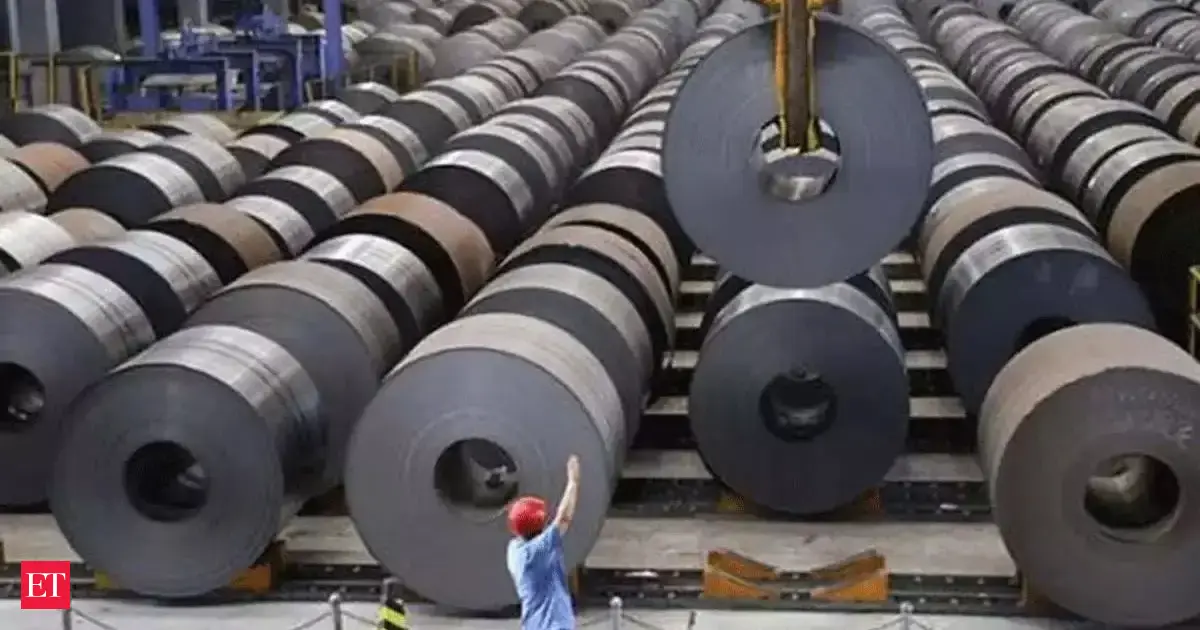
The price of kitchen utensils saw a notable uptick in June, driven by escalating global metal costs. Specifically, inflation for stainless steel utensils escalated to 7.1 percent compared to last year. Pressure cooker prices climbed by 4.7 percent, while other metal utensils faced a 4.8 percent increase. With stainless steel prices likely to stabilize until September, consumers may find more advantageous buying opportunities in 2026 as conditions improve. View More
New Delhi: Kitchen utensils and cookware became more expensive in June as higher global metal prices and elevated stainless steel production costs pushed up retail prices, with costs expected to remain firm over the next few months. Inflation in stainless steel utensils accelerated to 7.1% year-on-year in June from 6.4% in May and 4.5% in January. Prices of pressure cookers and pressure pans rose 4.7% last month, while inflation in other metal utensils, including non-stick cookware, increased to 4.8% from 4.2% a year earlier. Also read: India's steel ambitions face a coal reality check "The major reason is the rise in metal prices due to the West Asia conflict," said Madan Sabnavis, chief economist at Bank of Baroda . He said new households setting up homes are likely to bear the maximum brunt of the increase. Live Events Higher stainless steel production costs during the first half of 2026 have been the key driver of the increase in utensil prices . "Prices of 304-grade stainless steel have been supported by higher nickel and ferro alloy costs, elevated energy prices and tighter raw material availability, particularly from Indonesia, the world's largest nickel supplier," said Ashima Tyagi, economics associate director, pricing and purchasing, at S&P Global Market Intelligence. ET BureauInflation in stainless steel utensils up to 7.1% YoY in June as manufacturers pass on input costs; Q4 may see prices moderating She added that manufacturers have gradually passed these higher input costs on to consumers, resulting in faster inflation in stainless steel cookware. Inflation in other crockery and utensils also edged up to 3.8% in June compared with 3.4% in May, while casseroles, thermos, flask and thermoware recorded 3% inflation against 2.7% over the same period. Outlook According to S&P Global Market Intelligence, stainless steel prices are expected to remain firm globally through the July-September quarter, as higher nickel, chrome, and molybdenum costs continue to keep alloy surcharges elevated. Also read: India must fix gas market, pipelines to unlock LNG opportunity: IGU report Tyagi said the impact is higher replacement and purchase costs for household kitchenware for Indian consumers. "While stainless steel utensil prices may continue to rise in the short term, easing alloy costs and persistent oversupply across Asia are expected to moderate inflationary pressures later in 2026 and into 2027. From a purchasing perspective, the fourth quarter may offer more favourable buying conditions if the anticipated softening in raw material prices materialises," she added. .Pbanner{display:flex;justify-content:space-between;align-items:center;background-color:#ec1c40;margin-top:20px;padding:5px 10px;border-radius:4px;color:#fff;line-height:10px;width: 100%;box-sizing: border-box} .Pbannertext{display:flex;align-items:center;font-size:16px;font-weight:600;font-family:'Montserrat';} .Pbannertext img{height:20px;margin:0 6px} .Pbannerbutton a{display:flex;align-items:center;background-color:#fff;color:#ec1c40;text-decoration:none;font-weight:600;padding:4px 8px;border-radius:6px;font-size:15px;font-family:'Montserrat';} .Pbannerbutton img{height:20px;margin-right:6px} .Pbannerbutton a:hover{background-color:#f7f7f7} Add as a Reliable and Trusted News Source Add Now! (You can now subscribe to our Economic Times WhatsApp channel) (You can now subscribe to our Economic Times WhatsApp channel)