Latest Sectors News
The vote to allow mining near the protected wilderness area came over the objection of Democrats and two Republicans. View More
In this articleANTO-GBFollow your favorite stocksCREATE FREE ACCOUNT Outdoor enthusiasts travel by canoe through several of the hundreds of fresh water lakes that make up the Boundary Waters in the northern woods of Minnesota. Andrew Lichtenstein | Corbis News | Getty Images The Senate on Thursday overturned a mining moratorium in Minnesota's Superior National Forest, a boon for a Chilean mining company subsidiary and a stinging loss for environmentalists trying to protect the Boundary Waters Canoe Area Wilderness. The chamber voted 50-49 to overturn a protection imposed by President Joe Biden in 2023 that he set for 20 years. It clears the way for a long-stalled mine project proposed by Twin Metals Minnesota to restart plans to access the immense stores of copper and other minerals in the Superior National Forest near the Boundary Waters. It's the latest step in a long battle over mining in the area, which has seesawed for years between Democratic and Republican administrations as environmental groups warn the project could pollute the country's most visited wilderness area. The mine sought by Twin Metals, a subsidiary of Chilean mining conglomerate Antofagasta, seeks to access copper, nickel, cobalt and platinum buried deep under the Superior National Forest. While the site itself is outside of the Boundary Waters and the company dismisses pollution concerns, opponents say it would inevitably spill toxic chemicals into the Boundary Waters. "Twin Metals Minnesota is one of several companies focused on responsibly developing the minerals in the Duluth Complex, which is the world's largest known undeveloped copper, nickel, cobalt and platinum group metals deposit," Twin Metals spokesperson Kathy Graul said in a statement to CNBC. "A significant portion of these resources were locked up as a result of the mineral withdrawal enacted in 2023, negatively impacting communities across the Iron Range.""The Twin Metals team looks forward to a robust discussion and engagement with our communities through any future regulatory processes," Graul added. Republicans who pushed the resolution lauded the result. The change went forward under the Congressional Review Act procedure that allows Congress to undo new executive rulemakings by a simple majority vote. It cleared the House in January."A major victory for America and Minnesota's 8th Congressional District was secured today," Rep. Pete Stauber, R-Minn., said in a post to X. "The Senate just passed my bill to reverse Biden's illegal mining ban in the Superior National Forest â it's now headed to the President's desk!"The vote came over the objection of Democrats and two Republicans, Sens. Thom Tillis of North Carolina and Susan Collins of Maine, who warned of irreparable harm to the Boundary Waters and irregular use of the Congressional Review Act that could come back to bite the now-majority Republicans if Democrats control the Senate.The Boundary Waters was established as a federal wilderness area by a 1978 law. Motorized boats and other vehicles are mostly prohibited on the nearly 2,000 lakes spanning 1.1 million acres in northeastern Minnesota bordering Canada. A lake within the Boundary Waters Canoe Area Wilderness in Ely, MN. (Photo by Salwan Georges/The Washington Post via Getty Images) Salwan Georges | The Washington Post | Getty Images Sen. Martin Heinrich, D-N.M., the ranking member of the Senate Energy and Natural Resources Committee, said the vote was a "dark day" and a "stain" on the Senate. "I can tell you, as somebody who has been a natural resources trustee, who has had to negotiate with copper companies in my own state, that this type of copper mining has never been done without polluting the water. Never, not once," he said in a floor speech prior to the vote. "So we're guaranteeing that we're going to pollute the Boundary Waters." The resolution was also passed over the objections of the Minnesota Senate delegation, Sens. Amy Klobuchar and Tina Smith, who are both Democrats. "You can support mining, but that does not mean that you support every mine in every place," Smith said. "Whatever the outcome of this vote this afternoon, we will not stop fighting, and we will not stop our work to protect the Boundary Waters." Actor Nick Offerman holds a discussion in the U.S. Capitol on Wednesday, April 15, 2026.Bill Clark | CQ-Roll Call, Inc. | Getty Images Overturning the mining moratorium also drew considerable outside pressure, including from figures like actor Nick Offerman. "Enjoying the Minnesotan/Canadian wilderness by canoe or other lesser watercraft is one of our nations greatest available pastimes, and one I have personally enjoyed my entire life," Offerman said in a post to X on Wednesday. "We must protect these public lands from the rapacious capitalists threatening to turn them into a poisoned wasteland."Ingrid Lyons, executive director of the advocacy group Save the Boundary Waters, said the vote goes against the will of Minnesotans. "Today is a dark day for America's most beloved Wilderness area, the Boundary Waters Canoe Area Wilderness, and a stark warning call for public lands nationwide," she said in a statement. "Minnesotans and the American public writ large have been loud and clear â this iconic place needs to be protected. Today, by the very people who claim to represent them, they were ignored, and even worse, silenced."Public lands have been a flashpoint during this Congress. Some Republicans pushed to sell off a large portion of federally owned property as part of their tax and spending bill last year, which was quashed after the resistance of outdoor and hunting groups and the staunch opposition of members of the Montana delegation. The bill now heads to President Donald Trump's desk. He is expected to sign it. Choose CNBC as your preferred source on Google and never miss a moment from the most trusted name in business news.
An initial investigation into the Vedanta power plant blast in Chhattisgarh's Sakti district revealed excessive fuel accumulation in the boiler furnace caused a pressure build-up, leading to the explosion. This incident, which claimed 20 lives, has resulted in an FIR against Vedanta and its contractor for negligence in maintenance and operational standards. View More
Sakti (Chhattisgarh), A preliminary technical investigation into the blast at the Vedanta power plant in Chhattisgarh's Sakti district has found that excessive fuel accumulation inside the boiler furnace led to a pressure build-up, triggering the explosion, police officials said on Thursday. The explosion occurred on April 14 at the plant in Singhitarai village when a steel tube carrying high-pressure steam from the boiler to the turbine burst, leaving several workers with severe burn injuries. The incident claimed 20 lives and left 16 persons injured. "According to an initial report submitted by the Chief Boiler Inspector, the excessive fuel inside the furnace generated high pressure, causing a blast in the boiler. The pressure forced a lower pipe of the boiler out of its designated position, resulting in the severe accident," a police statement informed. A report by the Forensic Science Laboratory (FSL) in Sakti also confirmed that the accumulation of fuel and the resulting excessive pressure were the primary causes of the explosion, the statement added. During the investigation, it emerged that Vedanta company and its contractor NGSL ( NTPC GE Power Services Limited) failed to properly adhere to maintenance and operational standards for machinery and equipment, the statement said. Live Events "Lapses in upkeep and negligent operation led to sudden fluctuations in boiler pressure, ultimately causing the accident. Based on the available evidence and technical findings, negligence has been established prima facie, following which an FIR was lodged," it said. The FIR has been lodged at Dabhra police station under sections 106 (causing death by negligence), 289 (negligent conduct with respect to machinery) and 3(5) (common intention) of Bharatiya Nyaya Sanhita, Sakti Superintendent of Police Prafull Thakur said. "Eight to ten individuals, including Vedanta Group chairman Anil Agarwal and management official Devendra Patel, have been named in the FIR. If more persons are found responsible during the investigation, their names will be added," Thakur told PTI. A special team led by Additional SP Pankaj Patel has been constituted, comprising Sub Divisional Officer of Police Sumit Gupta, forensic officer Srishti Singh, and Dabhra police station in-charge Rajesh Patel, he said. .Pbanner{display:flex;justify-content:space-between;align-items:center;background-color:#ec1c40;margin-top:20px;padding:5px 10px;border-radius:4px;color:#fff;line-height:10px;} .Pbannertext{display:flex;align-items:center;font-size:16px;font-weight:600;font-family:'Montserrat';} .Pbannertext img{height:20px;margin:0 6px} .Pbannerbutton a{display:flex;align-items:center;background-color:#fff;color:#ec1c40;text-decoration:none;font-weight:600;padding:4px 8px;border-radius:6px;font-size:15px;font-family:'Montserrat';} .Pbannerbutton img{height:20px;margin-right:6px} .Pbannerbutton a:hover{background-color:#f7f7f7} Add as a Reliable and Trusted News Source Add Now! (You can now subscribe to our Economic Times WhatsApp channel) (You can now subscribe to our Economic Times WhatsApp channel)
Global steel demand will stay weak, growing just 0.3% in 2026, with China dragging growth while India emerges as a strong outlier. Despite soft demand, steel prices are rising due to higher raw material costs, supply tightness, and geopolitics. Aluminium leads gains among metals, while copper, zinc, and nickel show mild declines amid continued global volatility. View More
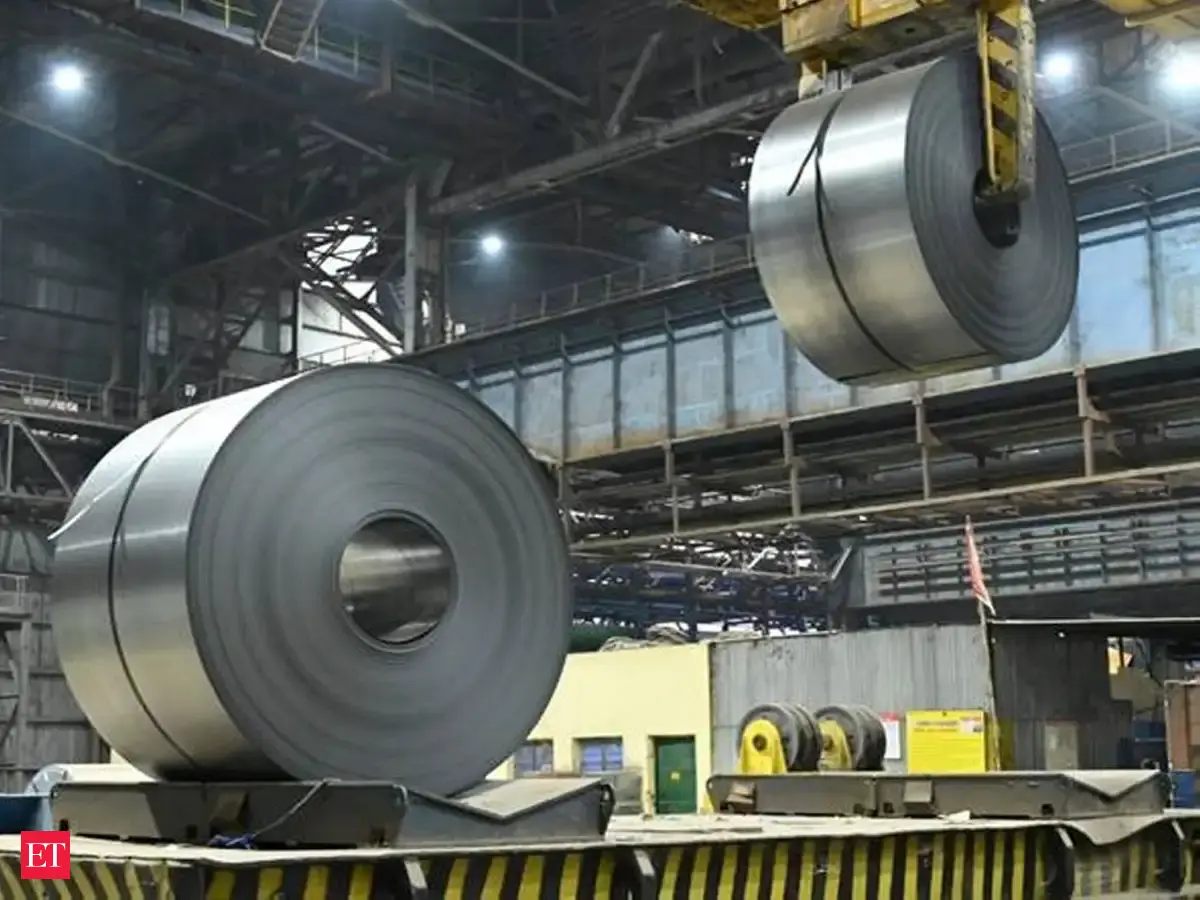
Global steel demand is likely to remain weak in the near term as the World Steel Association sees growth of just 0.3 per cent in 2026, with a stronger recovery only coming in 2027, according to a report by Centrum. China remains the main drag on demand, while India stands out as the bright spot, the brokerage noted Despite soft demand, steel prices have jumped across major markets. For raw materials, iron ore and non-coking coal have moved up, but coking coal slipped from last month. Among non-ferrous metals, aluminium is still the top performer with prices holding firm, while other metals like copper, zinc, and nickel saw small dips, the report said. The report suggests that the drag is mainly China, where demand is "likely to decline by 1.5 per cent YoY in CY26 and remain flat YoY in CY27." India is the key outlier. Centrum notes India "is expected to outperform with growth of 7.4 per cent in CY26 and 9.2 per cent in CY27," making it the main bright spot for steel consumption. In February, the global crude steel output was 141.8mn tonnes, down 2 per cent year on year and a decline of 4 per cent over January. China produced 76.1mn tonnes, down 4 per cent on year, while India stood at 13.6mn tonnes, up 7 per cent on year but down 10 per cent on a month on month basis. Despite weak demand, steel prices rallied sharply in March 2026. China's export hot rolled coil (HRC) rose 2 per cent month-on-month. Domestic prices were even stronger with HRC up 6 per cent MoM and 12 per cent YoY, and primary rebar up 2 per cent MoM and 8 per cent YoY. Live Events Centrum said "steady order bookings, higher raw material prices, lower imports and increased purchases by traders to hedge against volatility and disruptions amid ongoing US-Iran conflict" drove the move. Prices have risen further since then, with HRC and rebar up Rs 2,400/tonne and Rs 660/tonne vs March averages. Stainless steel 304 grade also strengthened, up ~8 per cent MoM and 17 per cent YoY in February. The report said input costs are supporting steel prices. Iron ore rebounded in March, with Australian ore up 6 per cent MoM and 4 per cent YoY. Domestically, NMDC hiked lump prices by Rs 500/tonne and fines by Rs 450/tonne in April. Centrum "expects near-term support for iron ore prices, driven by elevated fuel costs impacting mining economics." Coal was mixed. Australian coking coal fell 8 per cent MoM but was still up 30 per cent YoY, due to better supply and high freight costs limiting buying. South African non-coking coal jumped 14 per cent MoM and 21 per cent YoY on freight and supply concerns. Aluminium "continues to outperform with strong price trend." LME aluminium rose 10 per cent MoM and 27 per cent YoY to USD 3,373/tonne in March, and is now at USD 3,619/tonne. China's alumina prices also rebounded 5 per cent MoM after six months of decline. Global aluminium output was 5.7mn tonnes in February, up 1 per cent YoY but down 10 per cent MoM. Other base metals softened during February. Zinc was down 4 per cent MoM, copper 3 per cent, lead 2 per cent, and nickel 1 per cent. The brokerage further added that for the rest of 2026, volatility is expected in the market due to geopolitics and freight costs. .Pbanner{display:flex;justify-content:space-between;align-items:center;background-color:#ec1c40;margin-top:20px;padding:5px 10px;border-radius:4px;color:#fff;line-height:10px;} .Pbannertext{display:flex;align-items:center;font-size:16px;font-weight:600;font-family:'Montserrat';} .Pbannertext img{height:20px;margin:0 6px} .Pbannerbutton a{display:flex;align-items:center;background-color:#fff;color:#ec1c40;text-decoration:none;font-weight:600;padding:4px 8px;border-radius:6px;font-size:15px;font-family:'Montserrat';} .Pbannerbutton img{height:20px;margin-right:6px} .Pbannerbutton a:hover{background-color:#f7f7f7} Add as a Reliable and Trusted News Source Add Now! (You can now subscribe to our Economic Times WhatsApp channel) (You can now subscribe to our Economic Times WhatsApp channel)
UBS analysts changed their previously bearish rating on shares of Tesla this week. View More
In this articleTSLAFollow your favorite stocksCREATE FREE ACCOUNT Tesla cars charge at a Tesla Supercharger station in Pasadena, California, March 30, 2026.Justin Sullivan | Getty Images Tesla stock closed nearly 8% higher on Wednesday at $391.95 per share after CEO Elon Musk touted progress on the company's forthcoming AI5 chip.Musk said in a post on his social network X that the chip has reached a key engineering milestone and is getting closer to production.Tesla is also planning to build two advanced chip factories in Austin, Texas, in partnership with SpaceX â one to make chips for vehicles and robots, and another to produce chips for use in orbital data centers. Intel recently joined the Tesla-SpaceX Terafab project.UBS analysts upgraded their rating on the stock from sell to hold on Tuesday, and increased their price target by about a dollar to $352. The stock gained just over 3% on Tuesday and has rallied more than 12% so far this week.Flipping from a previously bearish outlook, UBS analysts led by Joseph Spak wrote in their upgrade that news that Tesla is working on a new, smaller SUV is a "welcome development," given the firm's view that Tesla's current light-duty vehicle offerings are "too limited." Read more CNBC tech newsAltman arson suspect Moreno-Gama suffered 'acute mental health crisis,' lawyer saysNAACP sues Elon Musk's xAI over Memphis data center air pollutionMeta commits to 1 GW of custom chips with Broadcom as Hock Tan decides to leave boardNvidia stock is on a 10-day winning streak and up 18% over that stretch The company's lineup currently includes its Model 3 sedan, Model Y SUV and angular steel Cybertruck. The company has stopped selling its flagship Model S and X vehicles in order to transition part of its Fremont, California, factory to produce its humanoid robot, Optimus, now in development.The rising share price also comes after Tesla launched the spring update for its in-vehicle software, including features that make it easier for customers to subscribe to the company's premium, Full Self Driving (Supervised) option, and to view statistics in their touchscreens about how often they are using it. FSD (Supervised) costs $99 per month currently in the U.S. and can automatically handle some steering, lane changes, and parking, under active driver supervision. FSD (Supervised) does not make Tesla vehicles autonomous. The company is testing a small number of driverless vehicles in its Robotaxi ride-hail service in Austin, Texas.The spring software update also included changes to the in-vehicle capabilities of AI chatbot Grok, made by Musk's xAI, which is now owned by his rocket maker SpaceX. Drivers can now say, "Hey Grok" to wake the app and start using it hands-free in Tesla EVs.Musk has promised, for more than a decade, that Tesla is on the brink of delivering driverless, or "robotaxi-ready," vehicles to customers. That hasn't happened yet, although its systems have evolved.â CNBC's Michael Bloom contributed to this report. watch nowVIDEO1:1601:16Tesla reports 358,000 first-quarter vehicle deliveries, down 14% from last quarterSquawk on the Street Choose CNBC as your preferred source on Google and never miss a moment from the most trusted name in business news.
Steelmakers are poised for a significant profit surge in the March quarter, driven by a new protectionist measure and seasonal demand. Higher prices and increased volumes are expected to outweigh rising coking coal costs, with SAIL anticipated to lead profit growth. India's steel sector also saw a notable increase in production and exports while imports declined. View More
A protectionist measure introduced in late December, along with seasonal strength in the January-March period, is set to drive a sharp sequential rise in profits for steel makers in the March quarter. Higher prices and volumes are expected to offset the impact of rising coking coal costs. State-owned Steel Authority of India ( SAIL ) is likely to report the sharpest sequential profit growth, with earnings seen rising threefold from the December quarter, analysts said. A growth in Tata Steel 's consolidated bottom line, however, will be weighed down by losses in its UK operations. JSW Steel , Tata Steel, SAIL and Jindal Steel are among the largest listed integrated steel producers in the country. Average hot-rolled coil prices rose 12-15% sequentially in the March quarter as producers implemented multiple price increases, supported by a 12% safeguard duty that came into effect in late December. "Average retail steel price rose ₹6,300-9,800/t QoQ, much higher than what steel companies might report amid project-led sales and contracts," analysts at Nuvama Institutional Equities said. Live Events Sequential volume growth of about 7% is also expected to lift operating profit, or earnings before interest, tax, depreciation and amortisation (Ebitda), by ₹2,000-3,000 per tonne. This comes despite a $15-20 per tonne increase in coking coal costs and a ₹100 per tonne rise in iron ore prices during the quarter. Between April 2025 and February 2026, India's steel production rose 10.4% to 146.8 million tonnes, while consumption increased 7.2% on-year to 147 million tonnes. Imports fell 25% on-year to 6.95 million tonnes, while exports rose 40% to 7.76 million tonnes, making India a net exporter of steel during the period. .Pbanner{display:flex;justify-content:space-between;align-items:center;background-color:#ec1c40;margin-top:20px;padding:5px 10px;border-radius:4px;color:#fff;line-height:10px;} .Pbannertext{display:flex;align-items:center;font-size:16px;font-weight:600;font-family:'Montserrat';} .Pbannertext img{height:20px;margin:0 6px} .Pbannerbutton a{display:flex;align-items:center;background-color:#fff;color:#ec1c40;text-decoration:none;font-weight:600;padding:4px 8px;border-radius:6px;font-size:15px;font-family:'Montserrat';} .Pbannerbutton img{height:20px;margin-right:6px} .Pbannerbutton a:hover{background-color:#f7f7f7} Add as a Reliable and Trusted News Source Add Now! (You can now subscribe to our Economic Times WhatsApp channel) (You can now subscribe to our Economic Times WhatsApp channel)
Despite the government’s TReDS push, experts say the RBI’s move to ease onboarding lacks clarity as credit ratings continue to be a key bottleneck, limiting MSME participation. View More
Finance has always been a perennial problem for micro, small, and medium enterprises (MSMEs) in the country. In the Union Budget 2026-27 , Finance Minister Nirmala Sitharaman announced scaling up the Trade Receivables Discounting System ( TReDS ) to alleviate MSMEs’ credit flow. The platform has so far unlocked more than Rs 7 lakh crore in liquidity. To further expand its reach, the government, in the Budget, proposed making TReDS mandatory for all CPSE procurement from MSMEs while encouraging private sector adoption. In line with the government’s TreDS push, the Reserve Bank of India (RBI) in its April monetary policy announced that it will simplify TreDS onboarding norms by removing due diligence requirements for MSMEs. The change, it says, is aimed at easing registration and accelerating access to funds. “It is proposed to dispense with the requirement of due diligence of MSMEs while onboarding on TReDS platforms,” says RBI Governor Sanjay Malhotra during the policy announcement. For the uninitiated, TReDS is an RBI-regulated digital platform, launched in 2014, that enables MSMEs to quickly convert invoices into cash by auctioning them to banks and non-banking finance companies (NBFCs), without the need for collateral, helping ease working capital constraints. As of early 2026, TReDS has facilitated more than Rs 3.5 lakh crore in cumulative invoice financing, according to government data. Despite the policy push on TReDS, experts, however, say the RBI’s proposal lacks clarity and fails to address the core challenge; credit ratings remain a persistent bottleneck. They argue that TReDS works well for MSME-large corporate deals but is less robust for unrated “small-to-small” transactions. Live Events They explain, “On TReDS, the financier bears the risk if the buyer defaults, making the lenders wary when the purchaser is small, unrated, or financially weak, as underwriting such entities is both costly and risky. As a result, a credit gap emerges.” iStockDespite the policy push on TReDS, experts, however, say the RBI’s proposal lacks clarity and fails to address the core challenge; credit ratings remain a persistent bottleneck. The platform works best when MSME sellers transact with large, creditworthy corporations, according to them. “But when both—buyer and seller—are small, the lack of a strong credit profile makes invoice discounting difficult, and the problem is compounded by limited digital readiness among small buyers, who may struggle to approve invoices on time,” they note. “The core issue lies in the requirement for an investment-grade credit rating of BBB and above A, AA, or AAA, while avoiding lower-rated entities for participation on the TReDS platform. Out of nearly 60 million MSMEs in India, only a negligible number, estimated at fewer than 10, currently meet this threshold. As a result, invoices raised on such MSMEs cannot be discounted by their suppliers through NBFCs or other financiers on the platform, limiting access to formal liquidity,” says Pankaj Chadha, Chairman of the Engineering Export Promotion Council of India (EEPC India). According to Chadha, the fundamental issue lies within the credit rating framework itself. Rating agencies assess firms across all sizes using uniform benchmarks, without adequately accounting for scale differences. “This means a small MSME, for instance in the steel sector, is evaluated against large corporations, creating a structural disadvantage,” says Chadha. He notes that the parameters such as financials, returns, and operational metrics are not contextualised to the MSME segment, making it difficult for smaller firms to achieve investment-grade ratings. As a result, firms without BBB-or-higher ratings face higher collateral requirements and are effectively excluded from bill discounting platforms such as TReDS, he observes. In fact, industry stakeholders have raised this matter with the banking regulator, suggesting that while rating methodologies may remain unchanged, benchmarking should be peer-based. They believe that introducing slabs within the MSME segment and comparing firms of similar size and capacity could facilitate more realistic assessments. “The matter has been taken up with the RBI. The proposal has been acknowledged and referred to the relevant internal team for examination. Discussions are ongoing, and stakeholders have sought a formal consultation to arrive at a workable solution,” informs Chadha. “The issue remains under consideration, with expectations of progress in the coming months. It’s still a work in progress,” he says. Anil Bhardwaj, Secretary General, Federation of Indian Micro and Small and Medium Enterprises (FISME), expressed similar concerns, noting that MSMEs in India face a structural disadvantage under the current credit rating framework, which is largely designed for large, listed corporates and long-term investment risk assessment. He pointed out that, as highlighted by FISME to the RBI, rating models disproportionately focus on scale, capital structure, and market share, resulting in most MSMEs being clustered in the BBB or below category, regardless of their repayment track record. “This creates a systemic bias, where even viable enterprises are classified as sub-investment grade, resulting in higher borrowing costs, additional collateral requirements and restricted access to credit,” he says. “Although the RBI has clarified that external ratings are not mandatory, banks, particularly public sector banks (PSBs), continue to insist on them, making ratings a de facto requirement,” says Bhardwaj. “Concerns around opaque pricing, limited competition among rating agencies, weak sectoral understanding, and lack of effective grievance redressal further compound the problem, turning ratings into a barrier rather than an enabler of MSME finance,” he adds. With most MSMEs structurally rated BBB or below due to scale biases, experts say, these businesses face restricted access to finance or higher discounting costs, despite TReDS risk being driven largely by the buyer’s creditworthiness, not the MSME supplier. iStockThe ratings should weigh behavioural metrics, account conduct, repayment discipline, and banking history, along with sector risks, say experts. “By using MSME ratings as a filtering criterion, the system mis-specifies risk and undermines the very objective of TReDS, which is to ease working capital constraints. Additionally, benchmarking MSMEs against large corporates further distorts risk perception, leading to fewer bids, higher financing costs, and inefficient price discovery, thereby limiting the platform’s effectiveness as a liquidity tool,” says Bhardwaj. Something more fundamental is at play here. An email seeking RBI’s response on the issue remained unanswered at the time of publication. Deeper systemic issues Experts say the TReDS challenges reflect deeper systemic issues in MSME credit access in India, with a fundamental mismatch between risk assessment models and the realities of MSME operations. Lenders over-rely on ratings and bureau scores, overlooking ground realities like delayed payments, sector volatility, and cash-flow cycles. “There is also a clear institutional bias in favour of large corporates, which often enjoy better ratings despite questionable trade practices, while MSMEs are penalised for temporary or technical stress. Fragmentation across TReDS platforms, lack of interoperability, and uneven participation by financiers further mirror the broader inefficiencies in the credit ecosystem,” says Bhardwaj. Vikesh Agrawal, COO of solar finance provider NetZero Finance, says banks rely on internal credit models, but with over 63 million MSMEs, most remain unrated. The credit rating agencies need structured, regularly updated data, yet many ratings lapse as “Issuer Not Co-operating (INC)” due to compliance challenges, adds Agrawal. “Credit ratings act as a two-sided sword; unrated MSMEs face lower risk weights (under Basel framework) than those rated below investment grade (BBB-), which increases banks’ regulatory capital adequacy burdens (20%-150% risk weights),” says Agrawal. According to the RBI’s 2024-25 Annual Report, MSME credit outstanding stands at Rs 25.6 lakh crore, yet a CRISIL study indicates 60-70% of MSMEs remain unrated or below investment grade, limiting TReDS access. RBI data shows only 18% of eligible MSMEs actively use TReDS. As per industry body FICCI’s estimate, there is a gap of Rs 10 lakh crore in invoice financing. Sundeep Mohindru, Founder & Promoter, M1xchange, says the MSMEs are rated in isolation despite trade-linked risk; many remain unrated or sub-investment grade, which limits credit and forces them to costly borrowing (16-24%), even though invoice discounting places the risk on the buyer, rather than the MSME. iStockExperts say the TReDS challenges reflect deeper systemic issues in MSME credit access in India, with a fundamental mismatch between risk assessment models and the realities of MSME operations. “Ratings continue to evaluate MSMEs independently based on their balance sheet, without adequately factoring in supply chain linkages. This traditional methodology ignores rich transaction data, such as golden sources like GST filings, banking flows, and receivables behaviour, which are far more indicative of repayment capacity. This creates a structural disconnect; even operationally strong MSMEs, embedded in credible supply chains, remain excluded, highlighting that the issue is not just risk perception, but a misalignment between how creditworthiness is assessed and how MSMEs actually function,” adds Mohindru. “It’s important to clarify that on TReDS, financing is fundamentally anchored to the buyer’s credit profile rather than the MSME’s standalone rating, which is why discounting rates typically have a super-prime range of RoI offered, ranging from nearly 7-10%. However, constraints emerge when MSMEs supply to lower-rated or unrated buyers; liquidity becomes limited as financiers naturally gravitate towards higher-rated counterparties, restricting participation,” notes Mohindru. To overcome this constraint, the government, however, has introduced the CGTMSE scheme for securing the credit of low-rated or unrated buyers. As a result, banks or NBFCs will get confidence to finance the receivables of MSMEs supplying to such buyers. Neha Bahadur, General Manager-Head of Business, C2treds, says MSMEs supplying to lower-rated buyers face limited discounting access—BBB+ thresholds and benchmarking against large corporates distort risk assessment, indirectly excluding even sound businesses. “This results in limited participation, even though TReDS is designed as an invoice-backed financing mechanism. As industry data shows, despite strong growth, TReDS still covers only a small portion of overall MSME receivables, indicating structural constraints in scaling access,” adds Bahadur. However, Pratik Singhania, Vice President and Head-Credit Policy, ICRA , says credit ratings must remain relative to ensure comparability and transparency, as they guide capital norms, exposure limits, and risk-based pricing, enabling consistent risk differentiation across entities regardless of size, sector, or structure. Singhania says TReDS invoices are discounted “without recourse” to MSMEs, with risk assessed on the buyer’s profile. “So, an MSME’s own rating does not materially limit its participation on TReDS, as the buyer’s creditworthiness is the key driver of the transaction,” adds Singhania. Need for a differentiated MSME rating framework Chadha says they have flagged this to the banking regulator, asking it to retain methodologies but shift to peer-based benchmarking with MSME slabs by size or capacity for more realistic assessments. Bhardwaj says, “I think there is a compelling case for a differentiated rating mechanism tailored specifically to MSMEs, in line with global best practices where small businesses are assessed using portfolio-based and cash-flow-driven approaches rather than capital market frameworks.” “Such a mechanism should prioritise real-time cash-flow analysis using GST data, bank transaction history, and receivables cycles, instead of relying predominantly on balance-sheet strength. It should incorporate transaction-level risk, especially in platforms like TReDS, by anchoring credit assessment to the buyer’s creditworthiness,” adds Bhardwaj. The ratings should weigh behavioural metrics, account conduct, repayment discipline, and banking history, along with sector risks, say experts. “The shift needs to be towards transaction- and cash flow-based assessment, where creditworthiness is evaluated on the basis of real business activity rather than static financials. This includes leveraging banking and GST data, assessing the strength of an MSME’s relationship with its buyers, analysing receivables quality and payment track record, and incorporating behavioural indicators, such as repayment discipline and transaction consistency,” adds Mohindru. Agrawal said ample data in the form of GST (over 140 million entities) and bank statements can power a robust framework. A robust framework can use GST to map supplier-buyer links and ecosystem scores, assess plant or machinery, output vs capacity, and team credentials, triangulate with purchase-sales data to verify formal operations, and score cash sales via assessed income, he adds. “Given digital availability, credit rating agencies can test scoring models for ongoing monitoring, standardising evolved surrogate lending models from MSME-focused banks and NBFCs. This prevents ratings from lapsing into 'Issuer not cooperating' status, enabling seamless data provision,” adds Agrawal. Bahadur acknowledges that the system must shift to transaction-and cash-flow-based risk assessment, factoring in buyer–supplier history, GST or e-invoicing data, payment behaviour, and credit enhancements like insurance or guarantees. The rating agencies introduced a separate SME grading scale for better differentiation, and after SEBI’s September 2018 notification, they moved this activity to dedicated group entities; experts believe this can be used to enable a more meaningful relative differentiation among MSMEs. “Such SME gradings can be used by market participants to supplement conventional credit ratings and facilitate a more nuanced assessment of MSMEs based on their relative strengths and risk characteristics,” says Singhania. .Pbanner{display:flex;justify-content:space-between;align-items:center;background-color:#ec1c40;margin-top:20px;padding:5px 10px;border-radius:4px;color:#fff;line-height:10px;} .Pbannertext{display:flex;align-items:center;font-size:16px;font-weight:600;font-family:'Montserrat';} .Pbannertext img{height:20px;margin:0 6px} .Pbannerbutton a{display:flex;align-items:center;background-color:#fff;color:#ec1c40;text-decoration:none;font-weight:600;padding:4px 8px;border-radius:6px;font-size:15px;font-family:'Montserrat';} .Pbannerbutton img{height:20px;margin-right:6px} .Pbannerbutton a:hover{background-color:#f7f7f7} Add as a Reliable and Trusted News Source Add Now!
The trials, covering 10 units with a combined capacity of about 18,000 MW, will determine the extent to which such plants can shift to domestic supplies, people familiar with the matter said. The exercise is evaluating operational feasibility, including the impact on efficiency, combustion and equipment performance. View More
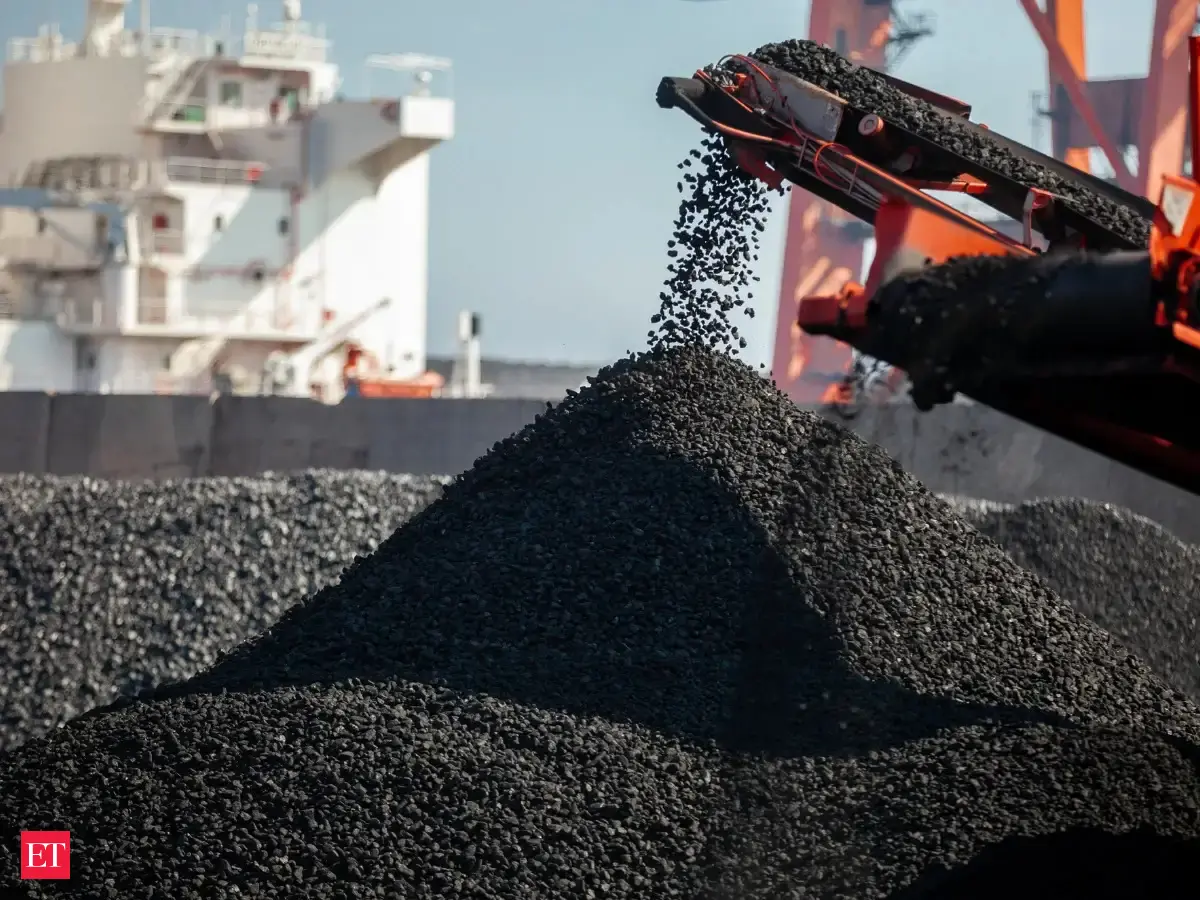
New Delhi: India has begun testing whether power plants designed to run on imported coal can blend domestic fuel , as part of a broader push to increase local sourcing and reduce exposure to volatile global markets. The trials, covering 10 units with a combined capacity of about 18,000 MW, will determine the extent to which such plants can shift to domestic supplies, people familiar with the matter said. The exercise is evaluating operational feasibility, including the impact on efficiency, combustion and equipment performance. The government is pushing plants to reduce dependence on imported coal amid ample domestic availability, aiming to limit vulnerability to supply chain disruptions. It is seeking to increase blending wherever feasible. Some imported coal-based power producers have agreed to conduct trial runs. An industry expert said the move could help manage fuel costs and reduce exposure to global price volatility. However, some plants have cited technical constraints, including designs suited to low ash-content coal, specific size of coal requirements, stringent emission norms and space limitations. Live Events India still needs to import coking coal for industries such as steel and high-grade thermal coal mostly for imported coal-based plants as these are not sufficiently available within domestic reserves. The country imported about 250 million tonnes of coal, both thermal and coking coal, annually in the last few years. About 39.2 million tonnes of imported thermal coal was used by imported coal-based power plants in FY26 compared with 48.3 million tonnes a year back. The initiative aligns with efforts to increase domestic coal utilisation. India's coal output surpassed 1 billion tonnes in FY26. In January 2024, the coal ministry said imported coal-based plants would be encouraged to switch to or blend more domestic fuel as output rises. .Pbanner{display:flex;justify-content:space-between;align-items:center;background-color:#ec1c40;margin-top:20px;padding:5px 10px;border-radius:4px;color:#fff;line-height:10px;} .Pbannertext{display:flex;align-items:center;font-size:16px;font-weight:600;font-family:'Montserrat';} .Pbannertext img{height:20px;margin:0 6px} .Pbannerbutton a{display:flex;align-items:center;background-color:#fff;color:#ec1c40;text-decoration:none;font-weight:600;padding:4px 8px;border-radius:6px;font-size:15px;font-family:'Montserrat';} .Pbannerbutton img{height:20px;margin-right:6px} .Pbannerbutton a:hover{background-color:#f7f7f7} Add as a Reliable and Trusted News Source Add Now! (You can now subscribe to our Economic Times WhatsApp channel) (You can now subscribe to our Economic Times WhatsApp channel)
A boiler explosion at Vedanta’s Singhitarai power plant in Chhattisgarh’s Sakti district killed 11 workers and injured 22 others on Monday. The affected personnel were working for a sub-contractor operating and maintaining the unit. Vedanta said it is providing medical assistance to the injured and coordinating with authorities, while an investigation has been launched to determine the cause of the blast. View More
Mumbai: A boiler exploded at a power plant operated by Vedanta in Chhattisgarh on Monday, killing eleven people and injuring 22 workers. The incident at one of the boiler units at Vedanta's Singhitarai plant in the afternoon involved personnel from its sub-contractor NGSL that operates and maintains the unit, a Vedanta spokesperson said. Vedanta operates a 1,200 MW power plant at Singhitarai in Sakti district. This plant was acquired by the company in 2022 under the Insolvency and Bankruptcy Code. The project was amalgamated with Vedanta in 2023, and started commercial operations in 2025. Also Read: Vedanta questions metrics behind Adani’s winning bid for JAL "Our immediate priority is to ensure the best possible medical assistance and treatment for all those affected. We are extending full support to the injured and are closely coordinating with medical teams and local authorities," the spokesperson said. Live Events The company is in the process of ascertaining details, and a thorough investigation has been initiated in coordination with its partner and relevant authorities, the person said. Natural resources major Vedanta is also in the business of aluminium, oil and gas, zinc, lead, silver, iron ore and steel. .Pbanner{display:flex;justify-content:space-between;align-items:center;background-color:#ec1c40;margin-top:20px;padding:5px 10px;border-radius:4px;color:#fff;line-height:10px;} .Pbannertext{display:flex;align-items:center;font-size:16px;font-weight:600;font-family:'Montserrat';} .Pbannertext img{height:20px;margin:0 6px} .Pbannerbutton a{display:flex;align-items:center;background-color:#fff;color:#ec1c40;text-decoration:none;font-weight:600;padding:4px 8px;border-radius:6px;font-size:15px;font-family:'Montserrat';} .Pbannerbutton img{height:20px;margin-right:6px} .Pbannerbutton a:hover{background-color:#f7f7f7} Add as a Reliable and Trusted News Source Add Now! (You can now subscribe to our Economic Times WhatsApp channel) (You can now subscribe to our Economic Times WhatsApp channel)