
Latest Sectors News

Shares of Coke have risen just 6% over the last year, hurt by concerns about the broader economy. View More
In this articleKOFollow your favorite stocksCREATE FREE ACCOUNT Bottles of Coca-Cola for sale at a store in LaBelle, Florida, Feb. 8, 2026.Zak Bennett | Bloomberg | Getty Images Coca-Cola on Tuesday reported quarterly earnings and revenue that topped analysts' expectations, fueled by higher demand for its beverages.For the full year, Coke is now projecting comparable earnings per share growth of 8% to 9%, up from its prior forecast of 7% to 8%, thanks to lower effective tax rates. And despite uncertainty over the U.S.-Iran war and its ramifications for the broader economy, the company reiterated its previous outlook of organic revenue growth of 4% to 5%."During the quarter, the external environment differed greatly across our markets," CEO Henrique Braun said on the company's conference call. "While many consumers remained resilient, others are under pressure due to persistent inflation, greater macroeconomic uncertainty and volatilities driven by the conflict in the Middle East."Shares of the company rose 5% in morning trading.Here's what the company reported compared with what Wall Street was expecting, based on a survey of analysts by LSEG:Earnings per share: 86 cents adjusted vs. 81 cents expectedRevenue: $12.47 billion adjusted vs. $12.24 billion expectedCoke reported first-quarter net income attributable to shareholders of $3.92 billion, or 91 cents per share, up from $3.33 billion, or 77 cents per share, a year earlier.Excluding impairment charges and other items, the beverage giant earned 86 cents per share.The company's adjusted net sales climbed 12% to $12.47 billion. Coke's organic revenue, which strips out acquisitions, divestitures and currency, rose 10% in the quarter.The company's unit case volume increased 3% globally. The metric excludes pricing to reflect demand more accurately.In the past few quarters, Coke executives have reported weaker demand from lower-income consumers. However, premium brands like Fairlife and Smartwater have stayed strong in the current K-shaped economy, boosted by high-income shoppers who aren't feeling the same pinch as low-income consumers. Coke has also been trying to offer more affordable options for budget-conscious shoppers, Braun said on Tuesday's call.All of Coke's operating segments reported volume growth for the quarter, including its home market. The company's volume in North America increased 4%. Across the portfolio, Coke's water, sports, coffee and tea segment reported the strongest global growth. The division saw volume rise 5%, fueled by stronger demand for its tea and bottled water. The sparkling soft drinks division reported that volume increased 2%, fueled by a 13% jump for Coca-Cola Zero Sugar.The laggard of the portfolio this quarter was Coke's juice, value-added dairy and plant-based beverage segment, which reported a volume decline of 1%. Growth in Fairlife and Santa Clara, a Mexican dairy brand, was not enough to offset the sale of the company's finished product operations in Nigeria last year.Looking ahead to the rest of the year, Coke executives expressed confidence that they would be able to weather the uncertainty caused by the war between the U.S. and Iran. "Notwithstanding volatility in certain commodities, like tea and coffee, we believe the overall impact on our cost basket is manageable at this time," CFO John Murphy said, adding that the outlook may change as the geopolitical situation progresses.The company has less exposure to higher aluminum and plastic prices than its bottling partners. However, sales in the Middle East did weaken in March after the conflict began, executives said. Choose CNBC as your preferred source on Google and never miss a moment from the most trusted name in business news.

Steel company shares hit new highs as brokerage optimism increased due to improving global dynamics and strong earnings potential. Jefferies and Goldman Sachs project growth for Indian steel firms. View More
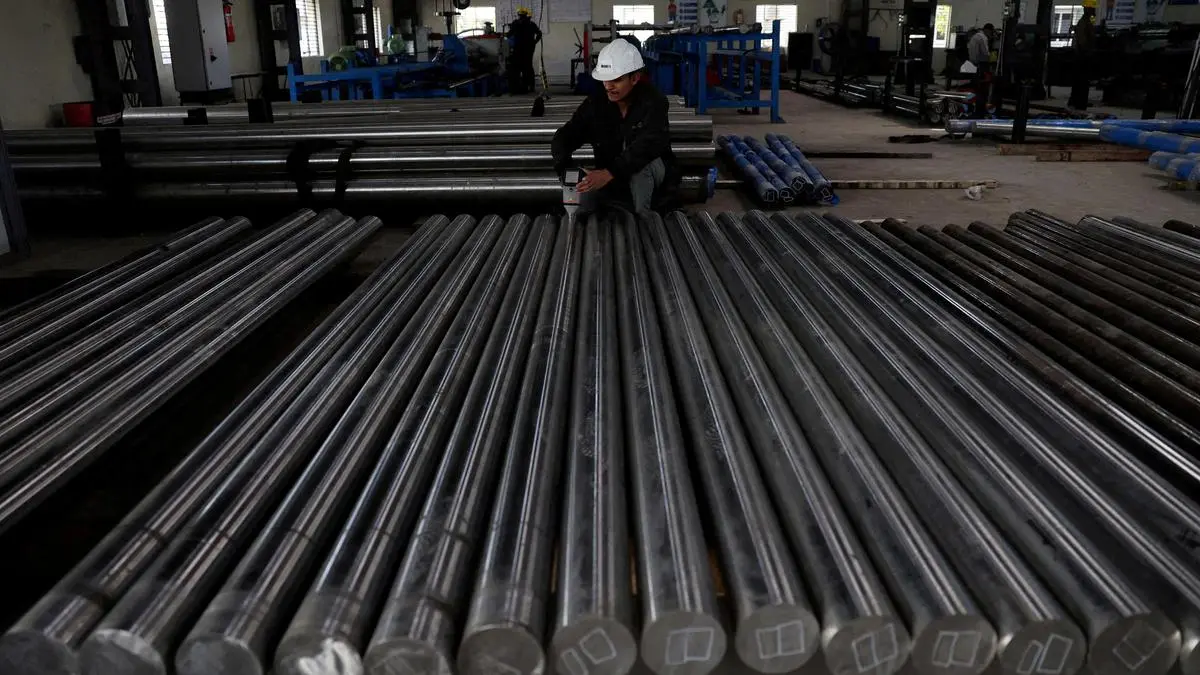
Italy, Vietnam, Belgium, the UAE, and Spain were ?the biggest buyers of Indian ?finished steel View More
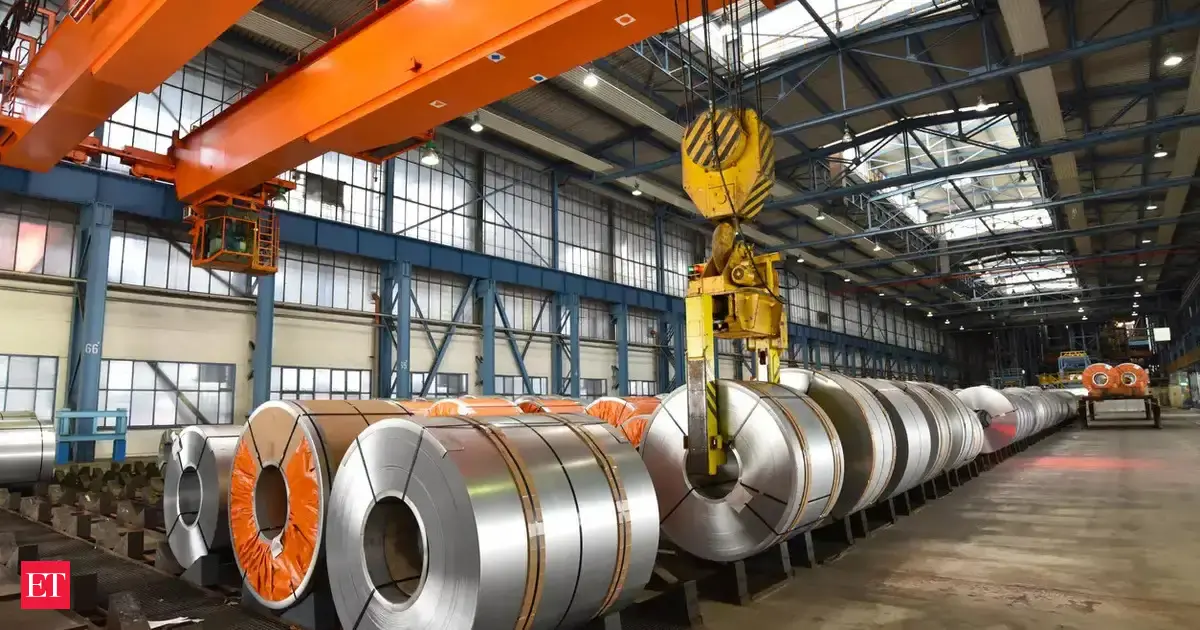
India has become a net exporter of finished steel for the first time in the fiscal year ending March 31. The nation shipped 6.6 million metric tons, a significant 35.9% increase from the previous year, while imports fell by 31.7%. Crude steel production also saw a substantial rise. View More
By Neha Arora NEW DELHI, - India turned a net exporter of finished steel in the financial year that ended on March 31, provisional government data reviewed by Reuters showed on Tuesday. Here are some key details: The world's second-biggest crude steel producer shipped 6.6 million metric tons of finished steel in 2025/26, up 35.9% from a year ago, the data showed. Italy, Vietnam, Belgium, the UAE, and Spain were the biggest buyers of Indian finished steel. New Delhi imported 6.5 million tons of finished steel during the fiscal year 2025/26, down 31.7% from a year earlier. South Korea, China, Japan, Vietnam, and Russia were the biggest exporters of finished steel to India. Crude steel production in the year reached 169.2 million tons, up 11.2% on year. Finished steel consumption was at 164.2 million tons, up 8%, the data showed. .Pbanner{display:flex;justify-content:space-between;align-items:center;background-color:#ec1c40;margin-top:20px;padding:5px 10px;border-radius:4px;color:#fff;line-height:10px;} .Pbannertext{display:flex;align-items:center;font-size:16px;font-weight:600;font-family:'Montserrat';} .Pbannertext img{height:20px;margin:0 6px} .Pbannerbutton a{display:flex;align-items:center;background-color:#fff;color:#ec1c40;text-decoration:none;font-weight:600;padding:4px 8px;border-radius:6px;font-size:15px;font-family:'Montserrat';} .Pbannerbutton img{height:20px;margin-right:6px} .Pbannerbutton a:hover{background-color:#f7f7f7} Add as a Reliable and Trusted News Source Add Now! (You can now subscribe to our Economic Times WhatsApp channel) (You can now subscribe to our Economic Times WhatsApp channel)
Orissa High Court quashes demand notices raised against the company over alleged shortfalls in chromite ore dispatch from its Sukinda mine in Odisha View More

A supply chain bottleneck in aluminum cans has triggered a nationwide Diet Coke shortage, allowing Indian D2C startups to capture market share through PET-bottle availability. These local brands are leveraging the disruption to drive consumer trials of zero-sugar alternatives. View More

Sun Pharmaceutical Industries Ltd will acquire US-based Organon & Co for ?11.75 billion, marking India’s largest overseas pharmaceutical acquisition. This deal underscores the increasing ambition of Indian firms in the global market View More

America's largest automakers are set to report first-quarter earnings results this week. View More
In this articleSTLAFSTLAGMFollow your favorite stocksCREATE FREE ACCOUNT Traders work on the floor at the New York Stock Exchange in New York City, March 27, 2025.Brendan McDermid | Reuters DETROIT â As America's largest automakers prepare to report first-quarter earnings results this week amid rising oil and commodity costs due to the Iran war, they find themselves traversing different terrains.General Motors is on the smoothest track, and Wall Street analysts are expecting it to continue on its current path. Ford Motor is on a bumpy road as it detours from CEO Jim Farley's turnaround plan. And Stellantis is off-roading, going through some tough terrain, but it has its Jeep and Hemi V8-powered Ram brands to keep it moving.Their individual circumstances are being exacerbated by current market conditions, as the auto industry faces massive losses from all-electric vehicles, slowing consumer demand for new vehicles, and rising prices from supply chain issues and the Iran war. Wall Street's first-quarter expectations are a testament to their current terrains: GM is anticipated to outperform its crosstown rivals with adjusted earnings per share, or EPS, of $2.61 during the first three months of the year, followed by 19 cents for Ford, according to average estimates compiled by LSEG. Estimates from LSEG for Stellantis did not meet CNBC standards for comparison for the quarter, but the average forecast for the year is 73 euro cents (85 U.S. cents)."GM has a strong multiyear track record of the three things I think are asked of any successful auto company: steady, slightly growing market share; solid margins ... and that solid margin performance translating to strong free cash flow, which ultimately funds a strong shareholder return," said James Picariello, BNP Paribas Equity Research senior analyst and head of U.S. auto research. "GM really has, and continues to, check all those boxes." Stock Chart IconStock chart iconGM, Ford and Stellantis stocks in 2026. GM is rated overweight with a $94.71 target price, according to average ratings compiled from analysts by financial data provider FactSet. That compares with Ford and Stellantis at hold ratings with $13.67 and $9.09 price targets, respectively. While many analysts have said they're optimistic about upsides for the "Detroit Three" companies, including potential rebates from tariffs and pricing resiliency, others are more bearish, largely due to the Iran war driving up raw material, freight and energy costs."[Automakers] ultimately pay the bills, and therefore we see downside risk to guides," Wells Fargo analyst Colin Langan said in a March 31 investor note. "We forecast all the D3 miss Q1 consensus EBIT," Langan said, referring to earnings before interest and taxes.GM is set to report its first-quarter results Tuesday, followed by Ford on Wednesday and Stellantis on Thursday. GM While the country's largest automaker has been steady, investors continue to watch its move away from EVs, tariff impacts and pending updates to its crucial full-size pickups.Picariello and other analysts expect GM will maintain, if not slightly raise, its 2026 guidance. CFO Paul Jacobson has described 2026 as the "most stable start to a year that we've seen in the last five years," and GM has had a history of conservative forecasting. General Motors Executive Vice President and Chief Financial Officer Paul Jacobson addresses investors at the GM Tech Center in Warren, Michigan, Oct. 6, 2021.Courtesy GM "As a team, what we've really done over the last several years, and I think has been a great story of our resilience, is just focus on overcoming obstacles. It's a team that is focused on achieving our objectives, and we're doing it with more discipline and really looking forward to more of that in 2026," Jacobson said in mid-February.GM's 2026 earnings guidance is better than its expectations and results from last year. It includes net income attributable to stockholders of between $10.3 billion and $11.7 billion; EBIT of $13 billion to $15 billion; and EPS of between $11 and $13 for the year.GM's first quarter could be boosted by potential tariff rebates, resilient pricing, growth in entry-level vehicles and pullback in all-electric vehicles, according to Wall Street analysts.The automaker, which is still analyzing its electric portfolio, has so far announced $7.6 billion in write-downs related to EVs. Ford Ford, meanwhile, hasn't been quite as steady as its crosstown rival.The company announced a leadership change and business restructuring last week and is dealing with supply chain disruptions and cost increases for aluminum, a key material for its F-Series pickup trucks. Ford said it lost 100,000 units of F-Series production last year due to fires at a New York aluminum plant of supplier Novelis. Ford has said the supplier isn't expected to be operational again until between May and September. Ford has plans to recapture at least half of those units this year, but that may be harder to do than expected. Based on Ford's reported production numbers, the company would need to achieve near-record output for the remainder of the year, according to Picariello."It's a level that Ford has only done in a single month in the last two and a half years," he said. "I'm not raising alarm bells on Ford. I have a neutral rating, but that's a major, major watch item bucket to this earnings bridge for this year." Ford vehicles at a production center in Dearborn, Michigan, on the day of a visit by President Donald Trump, Jan. 13, 2026.Evelyn Hockstein | Reuters There are also concerns about aluminum prices, as Ford has sourced that material from other suppliers at a higher cost during the first half of the year. Amid the Iran war, aluminum spot prices also increased by 13% quarter over quarter, Deutsche Bank noted. "Ford highlighted stability in aluminum supply costs for 2H26 as a positive factor. However, following Ford's 2026 guidance, the Middle East crisis has significantly impacted aluminum and steel prices," Deutsche Bank analyst Edison Yu said in an April 17 note to investors. Ford's 2026 guidance includes adjusted EBIT of between $8 billion and $10 billion, up from $6.8 billion last year; adjusted free cash flow of between $5 billion and $6 billion, up from $3.5 billion in 2025; and capital expenditures of $9.5 billion to $10.5 billion, up from $8.8 billion. Stellantis Stellantis' global vehicle shipments during the first quarter increased 12% compared with a year earlier, as the automaker executes a sales recovery plan under CEO Antonio Filosa. Shipments were up in every region, including a 4% increase in the U.S., which has been a focus for the company to regain market share following years of declines under Filosa's predecessor Carlos Tavares.Jeep accounted for 47% of the company's U.S. sales during the first quarter, followed by Ram Trucks at 37%, combining for roughly 84% of Stellantis' U.S. volumes to begin the year. Stellantis CEO Antonio Filosa speaks during an event in Turin, Italy, Nov. 25, 2025.Daniele Mascolo | Reuters "2026 is our year of execution. What we have committed to deliver is progressive performance improvements on all our business [key performance indicators]," Filosa said during the company's fourth-quarter results call. "2025 was a year of reset, with results that reflect the considerable cost of needed changes."The automaker, which formed in 2021, reported its first-ever annual loss of 22.3 billion euros ($26 billion) in 2025 after booking substantial write-downs amid a major strategic shift away from EVs that included 25.4 billion euros in write-downs.While investors will be watching Stellantis' first-quarter results for signs of traction in the company's turnaround plan, they are anxiously awaiting the company's capital markets event next month where Filosa has said he will lay out the company's future plans.Stellantis' 2026 forecast includes a mid-single-digit percentage increase in net revenue and a low-single-digit adjusted operating margin."The bar is set particularly low in all metrics, and we see opportunities but also risks into 2026 as the sequential product improvement is not translating into clear share gains yet, potentially impacting price, margin and [free cash flow] pressure," Morgan Stanley analyst Javier Martinez de Olcoz Cerdan said in a Feb. 3 investor note downgrading the stock.â CNBC's Michael Bloom contributed to this report. Choose CNBC as your preferred source on Google and never miss a moment from the most trusted name in business news.

A growing number of Gen Zers and millennial consumers with disposable income are shifting away from both luxury- and discount-priced retail items alike. View More
When Jenny Lei launched her handbag company Freja, she thought about how much she'd personally want to spend on a work tote as a 20-something in New York City, she says. "I think a justifiable treat is less than $300. Above that, I start bargaining with myself," says Lei, now 30, who launched Freja in 2019 after struggling to find an appropriate work tote for a job interview. Freja bags, made with vegan leather, now sell for $258 to $398 â more expensive than $62 nylon option from Baggu, but less than a $2,700 pre-owned Goyard carryall â to tens of thousands of customers each year, primarily in their 20s and 30s, says Lei.A growing number of Gen Z and millennial shoppers are ditching budget and luxury brand products alike â and gravitating toward mid-priced retail items across a wide range of industries including clothing, jewelry and homeware, some marketing and retail experts say. The products are never the most expensive option, but they cost just enough to count as a splurge for young shoppers who've advanced enough in their careers to have some extra cash to spend.Mid-priced products allow zillennial consumers, who aren't immune to rising costs of living, the opportunity to treat themselves more frequently â compared with saving up for years to splurge on a single luxury item, says Jennie Liu, a Yale School of Management lecturer who researches branding. "Today's consumer doesn't want to wait, they don't want to save up," Liu says.Nearly a third of global customers say they're willing to splurge on fashion, according to a McKinsey and Business of Fashion report published in January. But while a $5,000 earrings from a luxury brand might be difficult for a young shopper to justify, a $150 pair, still made in gold, could be an easier sell â especially from a brand advertising millennial-chic qualities like artisan craftsmanship, eco-conscious materials or humane factory conditions.DON'T MISS: The communication skill that can help you accelerate your career growthAlternatively, that shopper might buy a small item from a luxury brand â like a $60 hat from outdoor apparel retailer Arc'teryx or $160 lipstick from Louis Vuitton â just to own something from a culturally significant retailer. The businesses can benefit: Luxury labels can still hook new customers with their least expensive products, while raising prices on the rest of their catalogue.Mid-priced products â sometimes referred to as "affordable luxury" or "advanced contemporary items" â aren't necessarily outpacing the rest of the retail industry, but their popularity is reflective of zillennial consumers' shopping priorities, says Marni Shapiro, a co-founder and managing partner of research and consulting firm The Retail Tracker. The more popular these items become, the more they pressure the budget and luxury ends of their markets to shift toward a middle ground, Shapiro says.Some fast fashion brands, like H&M and Spain-based Bershka, have reduced the number of products in their lowest price tiers in the UK, according to the McKinsey and Business of Fashion report. Their intent is likely to separate themselves from ultra-low-cost options, like Shein and Temu, and give the appearance of the same "affordable aspiration" that mid-priced brands offer to "trend-focused shoppers," the report found."The meaning of luxury has changed a lot," for this generation, says Lei. "In the past it was, 'I buy luxury because I want to be someone else and that item gives me status.' Now, luxury is luxury of choice. What I invest in is what my taste is, instead of [an identity] I'm trying to fit into." A shifting market, a new class of consumers Companies that sell mid-priced products aren't new, but the sector's popularity has historically ebbed and flowed. In fashion, for example, 2000s-era brands like Coach, Kate Spade and Michael Kors reached non-wealthy shoppers in department stores â until many of those consumers turned to fast fashion after the 2008 financial crisis, says Thomaï Serdari, an associate professor of marketing at New York University Stern School of Business who studies the luxury goods market.For about a decade, that sector remained K-shaped: Luxury brands attracted wealthy consumers and fast fashion provided a popular outlet for everyone else, says Serdari. And the post-recession economy made it difficult for would-be entrepreneurs to start mid-priced competitors, says Shapiro. Today, you can buy a $970 stainless steel eight-piece cookware set from All-Clad, a similar-looking nine-piece version from Ikea for $100, or one of several mid-priced options â a 10-piece titanium set from Our Place for $490 or 12-piece HexClad set for $700, for example. The variety of mid-priced choices would've been harder to find a decade ago, Shapiro says.Our Place, like multiple other modern mid-priced brands, gained popularity after launching in 2019 by advertising a single product â its "Always Pan" â on social media. "Some of these brands [become popular] by utilizing one product as the brand," says Liu. "Whether or not you know the brand name, the product becomes very visible on social media, and kind of serves as the brand [before the company] gradually expands their product line." The meaning of luxury has changed a lot ... Now, luxury is luxury of choice.Jenny LeiFounder and CEO, Freja Social media, in general, has supercharged this generation of mid-priced brands, says Americus Reed, a marketing professor at The Wharton School of the University of Pennsylvania. "There are more channels to explore and distribute who we are," he says. In a way, young shoppers use the brands they see on social media to develop their sense of self and signal it to others â similar to how some people build their identities around volunteering at church or playing sports in a local rec league, he adds.Social media shopping services like TikTok Shop have also recalibrated consumer expectations, similar to how on-demand platforms like DoorDash, Uber and Amazon Prime did a decade ago, says Liu: "You can go from awareness of a brand to purchase within minutes." Consumer willingness to engage with brands on social media enables retailers to pull tactics "from the luxury playbook," she notes, including "talking about how the products are made, that they're made in a small town, that they're crafted slowly."Notably, a mid-range price tag doesn't necessarily promise high quality, says Sedari. Recently, one of her MBA students was showing off her blazer, a trending product from a mid-priced brand, she says."I got very curious about the blazer and went to check it out online. It's polyester," says Sedari. "I'm not willing to pay $400 for a polyester jacket."Want to get ahead at work? Then you need to learn how to make effective small talk. In CNBC's new online course, How To Talk To People At Work, expert instructors share practical strategies to help you use everyday conversations to gain visibility, build meaningful relationships and accelerate your career growth. Sign up today! Use coupon code EARLYBIRD for 20% off. Offer valid from April 20, 2026 to May 4, 2026. Terms apply. Take control of your money with CNBC Select CNBC Select is editorially independent and may earn a commission from affiliate partners on links.Nearly half of Americans feel homeownership is impossibleAmazon Prime is offering a 20-cent-per-gallon discount. Stack those savings with a credit cardHow to use credit cards to access presale and VIP tickets Travel insurance is gaining popularity among spring breakers this year â how to protect your tripWhat is a good monthly retirement income in 2026? VIDEO9:1009:10I spent $20K to open a store in NYCânow it brings in $1.6 million a yearHow I Made It
