Latest Sectors News
What Brian Sullivan is hearing from energy insiders. View More
SUBSCRIBE TO CNBC'S "POWER INSIDER NEWSLETTER POWER POINT What I'm hearing from energy insidersOpen. Closed. Down. Up.That's the recent rhythm of the Strait of Hormuz (SOH). It's also the subsequent moves in crude oil prices.I'm almost reluctant to write anything concrete here because by the time you read it, it may already be dated. But Power Insider has to go to 'print' (so to speak) and so at some point we have to just call it and go forth!As I recently wrote, any energy investor has to stay very nimble these days. The news doesn't change from day to day but from hour to hour. The fluidity of the situation is painted by headlines from the U.S. military's Central Command. Witness these three only on Sunday.Just after 8am ET Wednesday, this optimistic post landed. Zoom In IconArrows pointing outwards A few hours later, things turned troubled. Zoom In IconArrows pointing outwards Less than 5 hours after that, it really ramped up. Zoom In IconArrows pointing outwards The speed and direction of the news has been almost impossible to keep up with. In just the past couple of days, the world has seen more Iranian military attacks on ships - including two strikes on U.A.E. oil tankers, one resulting in a death - hits on Kuwait, and then news about a proposed 20% 'security fee' from President Trump, which then went away nearly as quickly as it came about. By the way, a 20% toll on a supertanker full of oil could cost over $30 million dollars. It would've eliminated all profit or economic incentive to move the cargo. That fee was clearly a nonstarter for most shippers and oil companies. Thus, it went away. 20% fee, we hardly knew thee!So where does the oil market stand right now?  I laid out both the bull and bear cases for crude on CNBC TV this week.Those seeing higher prices ahead point to the Iran risk, the draining of global inventories - including the U.S. SPR - and still-strong global economies. OPEC just released a new economic forecast that keeps its 3.2% global growth estimate intact.  The lower price bear camp also points to the global storage releases, but as keeping the market well supplied. They also note the big drop in China's oil demand and the increasingly important Russia story. Ukraine is pounding Putin's refinery assets with long-range drone attacks. Damaged refineries can't process oil. That oil then has to be sold on the global market because it can't be refined domestically. That actually increases the availability of Russian oil on the market, helping alleviate any Hormuz-related supply slowdown (see the RBI below). Zoom In IconArrows pointing outwards The supertanker-sized question many of you may be asking: when does the price of oil begin to meaningfully impact stocks and the macro market?Oil is already moving borrowing costs. U.S. 10-year bond yields here in the U.S. have popped back above 4.6%, and powerful members of our Federal Reserve are saying we may need interest rate hikes to stave off growing inflation.  That's one part of a succinct breakdown from the team at Deutsche Bank:"When the Iran conflict began earlier this year, we outlined a framework to think about what it takes to generate a meaningful selloff for risk assets. We pointed out 3 criteria to look for, to get a big risk-off move after an oil shock (e.g. S&P 500 down 15%). Generally, at least one of the following is required: 1. Large and sustained oil price spike: An oil price spike of at least +50-100% that is sustained over several months. 2. Hawkish policy response: The shock forces a sharp, hawkish pivot from central banks to fight the resulting inflation (e.g. 1979, 2022).3. Broader macro damage: The shock is big enough to tip an already-slowing economy into recession or cause a meaningful economic slowdown (e.g. 1990 Gulf War).Yet on all 3 of these criteria, today's shock has not met these thresholds, and is still not doing so, even after the latest jump in oil prices."Not to be outdone, Seaport Securities' strategist Jonathan Golub says the overall stock market is still cheap, in part because earnings estimates keep going up. He now has a forward P/E multiple of 19 ½ times earnings on the S&P 500. Energy stocks are only 3% of the S&P 500, but they generate 5% of earnings. Golub stated on our show Power Lunch that energy company earnings are expected to double. ExxonMobil, Chevron, ConocoPhillips, and others are greatly exposed to the rising price of oil, so as prices have gone higher, so too have earnings estimates. Whether this earnings optimism will be rewarded remains to be seen; the market will discover in just a couple of weeks. Circle Friday, July 31st on your calendar! Zoom In IconArrows pointing outwards The news moves fast. Stay focused. Stay nimble. And stay tuned.  I have a feeling the Hormuz headlines aren't over yet.  Zoom In IconArrows pointing outwards WALL STREET'S TAKE While many investors remain more focused on the latest developments in Iran, what's happening in Russia is also driving a handful of U.S. energy stocks. Ukraine continues to pound Putin by hitting Russian refineries deep inside that country. Those drone strikes are driving up the prices of many refined oil products, such as diesel fuel. That move is one reason stock buyers are flocking to U.S. refining companies. Six stocks keep powering to new highs. PBF Energy (PBF) has doubled this year and Par Pacific (PARR) and Delek (DK) aren't far behind.  A big note if you're considering some of these stocks. A few are at or above their mean Wall Street price target. Caveat emptor! Zoom In IconArrows pointing outwards We wrote recently about nuclear power and how it's back to growth mode. One stock we discussed was uranium producer Cameco (CCJ). Truist Securities is out with a positive note on the stock. Truist analyst Christopher Souther is initiating coverage of CCJ with a buy rating and a $129 target. That's a whopping 40% upside from here. Souther says he views Cameco as a "high-quality, vertically integrated uranium platform with strong positioning to a favorable long-term supply-demand outlook and rising uranium pricing." He also notes that while Cameco has had a "meaningful re-rating in recent years," he thinks improved contract pricing is coming, which commands a higher multiple.Speaking of power .. lets talk about the bitcoin-turned-AI power providers like TeraWulf (WULF). Easton, Maryland-based 'WULF' is one of a group of companies that began as bitcoin power providers but pivoted to power for A.I. To be clear, these companies - TeraWulf along with Hut 8 (HUT), Cypher Digital (CIFR) and CleanSpark (CLSK) - may get lumped together, but they are not the same. Their models are different, and demand investors view and value them individually and on their merits. That said, they do have a loose affiliation in that they all produce power; power that is needed by the big datacenters and hyperscalers. These companies make money by signing large, long-term contracts to provide power. TeraWulf just signed a massive 20-year, $19 billion (or more) deal with Anthropic. CleanSpark just landed its own two decade agreement with a big tech customer in Georgia. We spoke about it on CNBC with the CEO.  And a few months ago, Hut 8 inked a 15-year, $9.8 billion dollar deal of its own.  These gains haven't deterred star Morgan Stanley analyst Stephen Byrd. He remains 'unashamedly bullish' on many of these stocks. His $72 dollar target on TeraWulf implies a tripling from here. His $48.50 target on Cipher Digital is more than a double. Part of the bullish rationale is that these huge deals the companies are signing should reset their valuations.RBI â We need to figure out a new name for these companies as "bitcoin-turned-AI power providers" is way too lumpy. We threw that out to you on X and you turned in some good, and funny, ideas.  Check it out.If you are bullish around data centers, there is one big(ish) piece of news to note: New York has become the first state to ban new data centers.  At least for one year. You can read more in the CNBC story here. So what to make of it?TeraWulf CEO Paul Prager gave us a statement about NY's move against data centers, saying: "The Executive Order should bring greater clarity and a sensible, practical path forward led by the recognized experts at the [Public Service Commission]." Prager continued, referring to one of his power projects in the state, "Lake Mariner is operational, fully permitted, and on pace - the gold standard for power-secured, development-ready AI infrastructure.  And it [the moratorium] does not change our expectations for Lake Hawkeye."New York is competitive and likes to be first. Let's see if this power move by the state is the first of its kind around America. Investors take note. TAKE A LOOK Carlyle's Jeff Currie explains why you shouldn't be focused solely on oil prices. watch nowVIDEO6:1706:17Carlyle's Jeff Currie: Watch gasoline and diesel prices, not just crude oilPower Lunch INSIDE LINE This week's Inside Line is with David Crane. David is the current CEO of investment platform Generate and has been the CEO of five publicly traded companies and was Under Secretary for Infrastructure in the Department of Energy under then President Joe Biden Zoom In IconArrows pointing outwards Zoom In IconArrows pointing outwards RANDOM, BUT INTERESTING Russia's energy infrastructure continues to get pounded by Ukrainian drones. Ukraine isn't just hitting small Russian refineries near the border, it's hitting large oil facilities hundreds of miles inside Putin's land. While those blasts are spiking prices for products Russia isn't able to make if a refinery goes down - think diesel fuel - it is forcing Russia to sell that oil on the global market. J.P.Morgan lays it out in the chart below. Ukrainian strikes on Russian oil infrastructure helping keep prices stable is definitely random but interesting. Zoom In IconArrows pointing outwards THE GRID This may be why Trump's 20% shipping fee only lasted about 24 hours. Trump's Hormuz toll plan could backfire, shipping industry warns The solar power bulls are going to love this one: Alphabet building the largest solar plant in the U.S.: Google to partner with Steel River Energy Center in Arkansas Russia oil isn't their only growing energy export. Europe quietly buying a record amount of Putin's natural gas: EU buys record amount of gas from Russia's flagship plant The wonky subject of energy infrastructure permitting reform is getting more attention on Wall Street: From the desks of Jonathan Cox, Jennifer Dooly and James Janoskey: Why permitting reform matters now We talked a bit about nuclear last week, so here's some new news: Argentina begins construction of new nuclear reactor | Semafor China carmaker BYD is rolling out its own copy of Porsche's Panamera. What do you think: DENZA Z9GT | Electric & Hybrid | Design & Technology | Denza Europe Australia's Courtney Barnett always has my ear. Her newest work Mantis should have yours: Courtney Barnett - Mantis Catch up with more on energy including interviews and video content from CNBC and Power Insider.   Read the last issue of Power Insider here: Why energy could be a great place to invest even with oil prices retreating â 5 stocks to buy Choose CNBC as your preferred source on Google and never miss a moment from the most trusted name in business news.
Trump warned that the U.S. will target Iranian infrastructure next week if negotiations do not resume. View More
In this article@LCO.1@CL.1Follow your favorite stocksCREATE FREE ACCOUNT Pro-government supporters stand next to a banner depicting a portrait of Iran's late Supreme Leader Ayatollah Ali Khamenei during a nightly rally in Tehran, Iran, on July 12, 2026.Morteza Nikoubazl | Nurphoto | Getty Images Iran warned Thursday that it would "crush" key targets in the Middle East if U.S. President Donald Trump's threats to target the country's infrastructure in the coming days are carried out. Trump said in a Tuesday evening interview with Fox News that U.S. forces would target key Iranian infrastructure next week if a diplomatic breakthrough is not achieved. "Next week it gets really bad for them because next week comes the power plants," he said. "Next week comes the bridges. We're going to knock out all their power plants. We're going to knock out all their bridges unless they get to the table and negotiate."In a statement published on Telegram on Thursday morning, a spokesperson for Iran's top military command said that if Trump's threats were implemented "everything that is still intact ⦠that is, all the infrastructure in the region â will be crushed under the steel blows of the powerful armed forces of the Islamic Republic of Iran; so that no trace of them remains and it is as if they never existed in the first place."They added that "under no circumstances and in no way will we allow America, as a foreign and extra-regional country, to interfere in the Strait of Hormuz.""This is Iran's invincible red line," the spokesperson said.The strait, a waterway in the Middle East that's critical to the shipping of oil and other key commodities, has become the focal point of fighting between American and Iranian forces. Reuters reported on Thursday that Iran may also be looking to expand its grip on global shipping. Citing anonymous sources, the news agency said the Iranian government had asked Yemen's Tehran-backed Houthis to stand ready to close the Red Sea oil route should U.S. forces carry out Trump's threatened attacks. Armed conflict has escalated in recent days after the U.S. launched strikes against Iran earlier this week in retaliation for commercial ships in the Strait of Hormuz coming under attack.Tehran, meanwhile, has launched attacks on multiple Gulf countries. watch nowVIDEO4:1004:10Trumpâs Iran strategy has 'very littleâ to do with war: Ex-U.S. AmbassadorAccess Middle East U.S. Central Command carried out a fresh wave of attacks on Iran overnight that concluded at 9 p.m. ET. "U.S. forces struck Iranian command centers, air defense sites, missile and drone capabilities, and coastal surveillance facilities to further degrade Iran's ability to threaten innocent mariners crewing commercial vessels transiting the Strait of Hormuz," Centcom said in a statement posted on X. "CENTCOM used precision munitions to hit targets in multiple locations including Bandar Abbas."A spokesperson for Iran's Foreign Ministry also warned of retaliation on Wednesday. "Our hands are not tied," he said at an event in Tehran, according to state-affiliated media. "Our fighters will respond with full force and power to US aggressions, and in other clauses of the memorandum, wherever we had reciprocal commitments, we have not implemented them."Last week, Trump said the ceasefire agreed between the two sides last month was "over." On Wednesday, he told Fox Business News that Iranian officials wanted to meet with American delegates for fresh negotiations. Stock Chart IconStock chart iconRenewed hostilities have driven a rebound in oil prices this week Hostilities face potential stalemate Oil prices fell on Thursday morning, with Brent crude futures for September delivery shedding 0.5% to trade at $84.42 per barrel by 4:30 a.m. ET. Front-month U.S. West Texas Intermediate crude futures were down almost 0.2% at $79.47 a barrel. Clark H. Summers, adjunct professor of government and political philosophy at North Carolina's Belmont Abbey College, told CNBC he believes the current situation will most likely result in a stalemate."The U.S. will continue to make precision air strikes to destroy [drones] and surface-to-surface missile launch sites as Iran pops-up to launch," he said in an email. "Also, the U.S. will act to defeat air attacks launched against neutral shipping in the Persian Gulf. I expect these actions ⦠to be very effective at the tactical level, but ineffective strategically as long as Iran can continue to produce drones and missiles (or has them stockpiled)."Summers added that Trump's recent proposals to slap a 20% fee on shipping through the Strait of Hormuz â something the president has since walked back from â strongly suggest the Trump administration is aware the costs of the war are undermining public support for the president. "He has tread carefully around the War Powers Act, and seems to be well aware that current U.S. industrial and logistics capabilities are not able to sustain this conflict on an open-ended basis (probably not through the midterm elections, and certainly not through '28," Summers said. However, he noted that as long as the Revolutionary Guard remains in power in Iran and "can crawl out of the rubble alive," they will be able to claim victory. "Only a serious ground threat will destroy the IRGC as a governing body and compel it to accept surrender," Summers told CNBC. "Such a threat is extremely unlikely to come from conventional U.S. forces; such an operation is beyond the current capabilities of the U.S. Army and USMC combined."A raid on the critical Kharg Island to tighten a blockade on Iranian oil exports may help achieve a negotiated peace deal, Summers said, "but it is unlikely that the IRGC will honor any agreement." Read more CNBC politics coverageIran warns of Hormuz 'red line,' retaliation to Trump's strike threatsFed's Warsh says he meets 'often' with Trump administrationJay Clayton, DNI pick, won't say if Biden beat Trump in 2020 election Richard de Meo, founder and CEO of Attara, a London-based brokerage firm specializing in commodity hedging, told CNBC that markets had become increasingly desensitized to developments in the U.S.-Iran war. "Across the corporate sector, there is a growing sense of fatigue in response to the sheer volume of geopolitical risks, with some businesses taking false comfort from relatively range-bound market conditions and overlooking the sharp bouts of volatility we have seen, particularly in energy markets," he said. "Nevertheless, treasury teams continue to show strong discipline in their approach to risk management. Where policy flexibility allows, many are increasing hedge ratios and extending hedge tenors, taking steps to secure greater protection and resilience against future market uncertainty." Choose CNBC as your preferred source on Google and never miss a moment from the most trusted name in business news.
Businesses welcome the pact but seek clarity on implementation details and regulations. Technical standards and rules of origin require further guidance for effective trade. Medical device exporters express cautious optimism and need policy safeguards. The agreement aims to boost exports and integrate India into global value chains. View More
As the India-UK Free Trade Agreement ( FTA ) came into force on Wednesday, industry stakeholders welcomed it but said its long-term success would ultimately depend on the effective resolution of implementation challenges, particularly those involving technical standards, rules of origin, and sanitary regulations. The India-UK Comprehensive Economic and Trade Agreement (CETA) is expected to eliminate tariffs on 99% of tariff lines, improve market access across goods and services, and strengthen investment and supply chain partnerships between the two countries. India-UK bilateral trade in goods an services stands at about $55-60 billion, with both sides targeting $100 billion by 2030. Prime Minister Narendra Modi described the India-UK CETA as “a historic milestone” in bilateral relations, saying it would significantly boost trade and investment between the two countries. In a post on social media platform X, Modi said the agreement would unlock new opportunities for Indian farmers, workers, MSMEs, start-ups and innovators, while contributing meaningfully to the realisation of the Viksit Bharat 2047 vision. The Compound Livestock Feed Manufacturers Association (CLFMA) of India said while the agreement provides a strong framework for expanding bilateral trade, businesses require greater clarity on implementation, especially in the agriculture and livestock sectors. “The agreement provides the framework, but many technical import conditions will continue to be governed by domestic regulations and competent authorities,” said Divya Kumar Gulati, Chairman of CLFMA of India. Live Events He said exporters need detailed operational guidance on product-specific import requirements, veterinary health certificates, certification procedures, inspection protocols, and equivalence arrangements for animal and livestock products. According to Gulati, such clarity would be essential for enabling commercial exports of dairy, meat, poultry, and other livestock products while ensuring compliance with the UK’s stringent food safety and animal health regulations. The industry body also highlighted Rules of Origin (RoO) as another area requiring greater clarity. Gulati added that businesses need sector-specific guidance on value-addition thresholds, documentation requirements, certification processes, cumulation provisions and compliance procedures, particularly for processed food, animal feed, veterinary products and other value-added agricultural exports. Clear implementation guidance, he said, would help businesses fully utilise the agreement’s preferential tariffs while minimising compliance risks. Despite these concerns, CLFMA said the agreement establishes a stronger platform for regulatory cooperation, enabling smoother trade in animal health products, feed ingredients, genetics, and livestock technologies. The association said India is expected to benefit from greater access to advanced UK expertise in animal breeding, veterinary pharmaceuticals, feed additives, precision livestock farming, disease surveillance, cold chain infrastructure, and sustainable livestock production systems. It added that farmers, fisherfolk, MSMEs, and food-processing industries are expected to gain improved access to premium UK markets under the agreement. CLFMA said reduced trade barriers and improved market certainty are expected to encourage long-term commercial partnerships, research collaborations and investment in livestock innovation. It added that the agreement’s emphasis on internationally recognised food safety, animal health and quality standards would help strengthen resilient agri-food supply chains between India and the UK while accelerating technology exchange and creating long-term value for producers, processors and agribusinesses in both countries. The All India Medical Device Association (AiMeD) lauded the CETA with “cautious optimism”. “We welcome it with cautious optimism. It offers opportunities for Indian medical device exports to grow, but we remain concerned about the risk of third-country manufacturers routing competitive imports via the UK under reduced duty access. Indian industry can compete fairly with British devices, yet our nascent medical devices sector, already import-dependent, needs policy safeguards to prevent circumvention and ensure Make in India gains are not undermined,” said Rajiv Nath, Forum Coordinator, AiMeD. He added that India’s medical device imports from across the world rose 17% last year to Rs 89,000 crore from Rs 77,000 crore. India’s medical device exports to the UK currently remain stagnant at around $130 million, while imports from the UK stand at $227 million, he said. Ashok Rajani, Managing Director and Partner at BCG, said the agreement marks a significant milestone for India’s export sector but stressed that the next phase would be about converting preferential access into long-term manufacturing competitiveness. “CETA marks a defining moment in India’s export journey. More importantly, it shifts the conversation from preferential access on paper to preferential access in practice,” he said. “We are already seeing early signs of this momentum, with textile and garment orders from the UK up 12% year-on-year, leather goods and footwear orders up 20%, and the gems and jewellery industry targeting exports of around $2.5 billion over the coming years. As tariffs ease across sectors such as textiles, leather, chemicals and pharmaceuticals, the real opportunity now lies in converting this early momentum into durable manufacturing capacity, particularly by helping MSME exporters build capabilities around compliance, standards, and traceability. If implemented well, CETA can become a template for how India scales both manufacturing and services exports while integrating more deeply into global value chains,” Rajani added. Independent trade expert Manasvi Srivastava called the agreement a “win-win” on the goods front, with Indian exports such as garments, leather goods, jewellery, shrimps, and auto parts expected to benefit from preferential market access. He noted that in several of these sectors, India would now get a level playing field with competing developing countries. He said one of the biggest gains under the agreement lies in services. “A very significant benefit for India is enhanced market access to the services sector, wherein CETA provides for institutionalisation of national treatment (non-discrimination from domestic service providers) to many sub-sectors. In the case of services, the exemption for temporary workers from compulsory payment into social security contributions is also a big win for India under CETA,” Srivastava said. However, he said FTA’s implementation would remain crucial. “Perhaps greater focus on technical barriers like certifications, standards, quality control orders (QCOs) and mutual recognition agreements would help. This is an area that, if left unaddressed, can significantly reduce the market access promised by CETA.” Srivastava also suggested introducing a direct reference to the Customs (Administration of Rules of Origin under Trade Agreements) Rules, 2020 (CAROTAR), saying it would generate greater confidence in implementing the agreement “in letter and spirit”. “As FTAs do not have penal enforcement mechanisms (unlike a rules-based multilateral trading system), they are only as effective as the national officials want them to be. Hence creating clarity and predictability on these two aspects would help,” he said. Nirmal K. Minda, President of industry body ASSOCHAM, said the agreement is expected to unlock significant opportunities for businesses in both countries. “India-UK trade will expand in a steady mode as this FTA ensures tariff elimination for 99% tariff lines and covers nearly 100% of trade value, including textiles, leather, marine products, gems and jewellery, toys, engineering goods, chemicals and auto components. It has overcome disagreements related to British trade restrictions on steel and unlocked tariff-free access for India’s steel exports,” Minda said. He, however, pointed to India’s historically low utilisation of free trade agreements as a concern. “The only concern is the low utilisation rate of India’s FTAs so far. However, with respect to this agreement, we have noted that the government has indicated deployment of 1,000 advisory personnel across India to help businesses maximise India-UK CETA, and our Commerce Minister has recently released the UK-India CETA Business Utilisation Manual, which is a practical activation guide for Indian and UK businesses.” .Pbanner{display:flex;justify-content:space-between;align-items:center;background-color:#ec1c40;margin-top:20px;padding:5px 10px;border-radius:4px;color:#fff;line-height:10px;width: 100%;box-sizing: border-box} .Pbannertext{display:flex;align-items:center;font-size:16px;font-weight:600;font-family:'Montserrat';} .Pbannertext img{height:20px;margin:0 6px} .Pbannerbutton a{display:flex;align-items:center;background-color:#fff;color:#ec1c40;text-decoration:none;font-weight:600;padding:4px 8px;border-radius:6px;font-size:15px;font-family:'Montserrat';} .Pbannerbutton img{height:20px;margin-right:6px} .Pbannerbutton a:hover{background-color:#f7f7f7} Add as a Reliable and Trusted News Source Add Now!
Tariff concessions alone will not secure India’s long-term economic success; strengthening manufacturing competitiveness is the key, says Ajay Srivastava. View More
India is negotiating some of its most ambitious trade agreements in recent history. With negotiations underway or deals concluded with the US, UK, the European Union (EU), and New Zealand, preferential trade arrangements could soon cover more than 60% of the country’s exports. The key question, however, is whether these agreements will strengthen India’s long-term economic competitiveness or expose its underlying structural weaknesses. Ajay Srivastava , Founder of the Global Trade Research Initiative (GTRI), argues that while free trade agreements (FTAs) can enable market access, they are no substitute for a strong manufacturing base. He says India must shift its focus from tariff negotiations to improving domestic competitiveness if the country wants to fully benefit from these trade deals. He disputes the popular narrative that globalisation is ending. Srivastava, a former Indian Trade Service officer who was part of India’s WTO and FTA negotiating teams, argues that free trade is not disappearing, rather, major economies are increasingly embracing protectionist policies and industrial strategies to safeguard their own economic interests. “More than 80% of global trade still takes place under established international trade rules.” he says. However, he argues that the world’s largest economies, the US, EU, and China, are increasingly embracing industrial policy and protectionism. “The concern is not that free trade has ended. The concern is that the biggest economies are becoming more protectionist, and that creates challenges for countries like India.” India must strengthen manufacturing Live Events India, Srivastava argues, can achieve far more if manufacturing receives greater policy attention. “If we focus much more on manufacturing, our exports will increase. The government is taking the right steps, but the pace must accelerate.” According to him, exports are ultimately a reflection of manufacturing capability, not merely trade agreements. One of the biggest concerns is India’s widening trade deficit with many FTA partners, he says, pointing out that India’s imports from countries, such as Japan and South Korea, have increased far more quickly than exports since the agreements came into force. Similarly, imports from newer FTA partners, including Australia, the United Arab Emirates (UAE), and Switzerland, are also rising at nearly twice the pace of exports. The structural reason, he explains, is simple. “Most developed economies already maintain very low import tariffs. Therefore, India gains little additional market access when tariffs fall further. India, however, maintains relatively higher tariffs.” “When India cuts tariffs under an FTA, partner countries receive a significant price advantage in the Indian market, whereas Indian exporters receive only limited additional benefit because tariffs abroad were already low.” India-US trade deal: What’'s the incentive? Discussing the proposed India-US trade agreement, Srivastava says the negotiations face a fundamental challenge. The joint statement issued earlier this year was built around the assumption that the US would reduce reciprocal tariffs in return for Indian concessions. However, after US courts questioned the legality of those reciprocal tariffs, he believes the negotiating landscape changed dramatically. “If the US is no longer in a position to offer tariff concessions, the obvious question becomes: what exactly is India receiving in return?” He believes this uncertainty explains why negotiations have slowed. Agriculture: India’s biggest red line Agriculture continues to be among the most sensitive issues in India-US negotiations. According to Srivastava, opening India’s farm sector involves much more than lowering tariffs. He argues that American concerns extend to India’s minimum support price (MSP) system and broader agricultural policies. “Agriculture is the livelihood of nearly half of India’s population. This is not merely a trade issue.” He warns that heavily subsidised American agriculture could destabilise India's food security if market access is opened without safeguards. Drawing from history, he recalls that India once agreed under international pressure to bind tariffs on wheat and rice at zero during the General Agreement on Tariffs and Trade (GATT) era. After the Green Revolution transformed India into a food-surplus nation, New Delhi had to renegotiate those commitments at significant cost. “It’s a lesson India cannot afford to forget.” Beyond trade, Srivastava argues that India’s foreign policy should remain independent. The US remains an important strategic partner, he says, but India should simultaneously maintain strong engagement with Europe, Russia, Gulf countries, and China wherever national interests align. “We should have balanced relations with everyone without compromising India's sovereign interests.” China’s rise has changed America’s Asia strategy According to Srivastava, one of the biggest geopolitical shifts underway is America’s reassessment of its China strategy. Earlier initiatives, such as the Indo-Pacific framework, supply-chain resilience, and China-plus-one, were designed to reduce dependence on China. However, he believes those efforts have delivered only limited success because global manufacturing remains deeply integrated with Chinese supply chains. “China still dominates processing of critical minerals, electronics, solar components, and several manufacturing ecosystems.”" As a result, many products exported from countries such as Vietnam still contain substantial Chinese inputs. India-UK FTA: Opportunity with limitations Srivastava believes the India-UK agreement will benefit sectors such as garments, engineering goods, and gems. However, tariff reductions alone will not guarantee export growth. British consumers demand high product quality, certifications, and strict regulatory compliance. “Indian MSMEs will need substantial investment in quality standards if they wish to compete successfully.” He cites India’s experience with Japan, where zero-duty access for garments failed to translate into significant export gains because Indian manufacturers struggled to meet Japanese quality requirements. CBAM: A growing concern The EU’s Carbon Border Adjustment Mechanism (CBAM), particularly for steel and other carbon-intensive sectors, remains another major challenge. Even as tariffs under an India-EU FTA may eventually decline, Indian exporters could still face significant carbon-related taxes. “This creates a situation where tariff concessions are offset by climate-related trade barriers.” He believes India may eventually need calibrated countermeasures if such barriers substantially affect exports. Vietnam’s success can’t simply be replicated Vietnam is often cited as a model for export-led manufacturing. Srivastava agrees that Vietnam has successfully attracted multinational investment but notes that its strategy differs fundamentally from India’s. Vietnam has offered extensive market access and investment flexibility to foreign companies. However, he argues that such an approach may be less suitable for a large economy like India. “Large economies such as India, China, and the US cannot simply copy the model of smaller export-dependent economies.” China’s manufacturing lesson Asked where India stands compared with China, Srivastava’s assessment is candid. China, he says, invested relentlessly in manufacturing capacity over several decades. India, by contrast, liberalised its economy but did not build comparable manufacturing depth. His recommendation is highly specific. Rather than discussing manufacturing only in broad policy terms, India should identify thousands of individual products currently imported, particularly from China, and systematically develop domestic production capabilities. “We should become a product-nation.” The road ahead Srivastava believes FTAs remain important instruments of economic diplomacy, but they cannot substitute for domestic competitiveness. Without stronger manufacturing, better product quality, deeper supply chains, and greater industrial capability, India may continue to witness imports growing faster than exports—even under preferential trade agreements. “Manufacturing is India’s real long-term strategy. Trade agreements can help, but they cannot replace competitiveness,” concludes Srivastava. .Pbanner{display:flex;justify-content:space-between;align-items:center;background-color:#ec1c40;margin-top:20px;padding:5px 10px;border-radius:4px;color:#fff;line-height:10px;width: 100%;box-sizing: border-box} .Pbannertext{display:flex;align-items:center;font-size:16px;font-weight:600;font-family:'Montserrat';} .Pbannertext img{height:20px;margin:0 6px} .Pbannerbutton a{display:flex;align-items:center;background-color:#fff;color:#ec1c40;text-decoration:none;font-weight:600;padding:4px 8px;border-radius:6px;font-size:15px;font-family:'Montserrat';} .Pbannerbutton img{height:20px;margin-right:6px} .Pbannerbutton a:hover{background-color:#f7f7f7} Add as a Reliable and Trusted News Source Add Now!
Indian exporters can now ship over eleven lakh tonnes of steel duty-free to the UK. This benefit comes into effect through a new free trade agreement implemented on Wednesday. The agreement resolves previous steel safeguard measures which had become a major sticking point. India has secured robust market access and continuity for its steel exporters. This development paves the way for enhanced bilateral trade in steel products. View More
Indian steel exporters will be able to ship more than 11 lakh tonnes of steel to the UK each year without paying import duty under the India-UK Comprehensive Economic and Trade Agreement (CETA), which came into effect on Wednesday, after New Delhi negotiated enhanced market access despite Britain's steel safeguard measures. The UK's steel safeguard regime, introduced in March, had emerged as one of the key hurdles to operationalising the trade pact signed on July 24, 2025. With both sides resolving the issue, the agreement has now been implemented from July 15. Also read: India-UK FTA explained: No new work visa, but these professionals benefit According to a government official, India secured duty-free access through a combination of country-specific quotas and the UK's Authorised Use Scheme (AUS), ensuring continuity of exports while expanding access across several product categories. A total of 188 steel products, representing exports worth USD 137 million to the UK, were covered under Britain's safeguard measures. India's overall steel exports to the UK stood at USD 960 million in 2025. To address concerns over the impact of the safeguards, India held extensive discussions with the UK and sought higher quota allocations after consultations with domestic stakeholders. Live Events "After prolonged and intense discussions at all levels between the two sides, India has been able to secure robust market access and continuity for Indian exporters," the official said. "As a result of these successful negotiations, India's total country-specific quota (CSQ) under the new framework stands elevated at 1,68,029 tonnes, seamlessly complemented by the exclusive 9.45 lakh tonnes under the Authorised Use Scheme (AUS)," the official added. As part of the revised arrangement, the UK has widened tariff-free access across several key steel categories. The country-specific quota for non-alloy and other alloy hot-rolled sheets and strips has increased to 33,456 tonnes from 12,405 tonnes. Also read: UK-India pact to shield working professionals from dual social security taxes India has also secured an exclusive 40% share of the quota available under the Authorised Use Scheme, equivalent to nearly 9.45 lakh tonnes of annual trade volume. In Category 28, covering non-alloy wire, the UK has removed nine commodity codes from the safeguard measures, allowing around 95% of India's exports in that category to continue without restrictions. The agreement also provides higher residual quotas in other segments. Under Category 12B, covering non-alloy merchant bars and light sections, the residual quota has been raised to 4,540 tonnes from 468 tonnes. For Category 26, covering other welded tubes, the quota has increased to 16,327 tonnes from 10,809 tonnes. (With inputs from PTI) .Pbanner{display:flex;justify-content:space-between;align-items:center;background-color:#ec1c40;margin-top:20px;padding:5px 10px;border-radius:4px;color:#fff;line-height:10px;width: 100%;box-sizing: border-box} .Pbannertext{display:flex;align-items:center;font-size:16px;font-weight:600;font-family:'Montserrat';} .Pbannertext img{height:20px;margin:0 6px} .Pbannerbutton a{display:flex;align-items:center;background-color:#fff;color:#ec1c40;text-decoration:none;font-weight:600;padding:4px 8px;border-radius:6px;font-size:15px;font-family:'Montserrat';} .Pbannerbutton img{height:20px;margin-right:6px} .Pbannerbutton a:hover{background-color:#f7f7f7} Add as a Reliable and Trusted News Source Add Now! (You can now subscribe to our Economic Times WhatsApp channel) (You can now subscribe to our Economic Times WhatsApp channel)
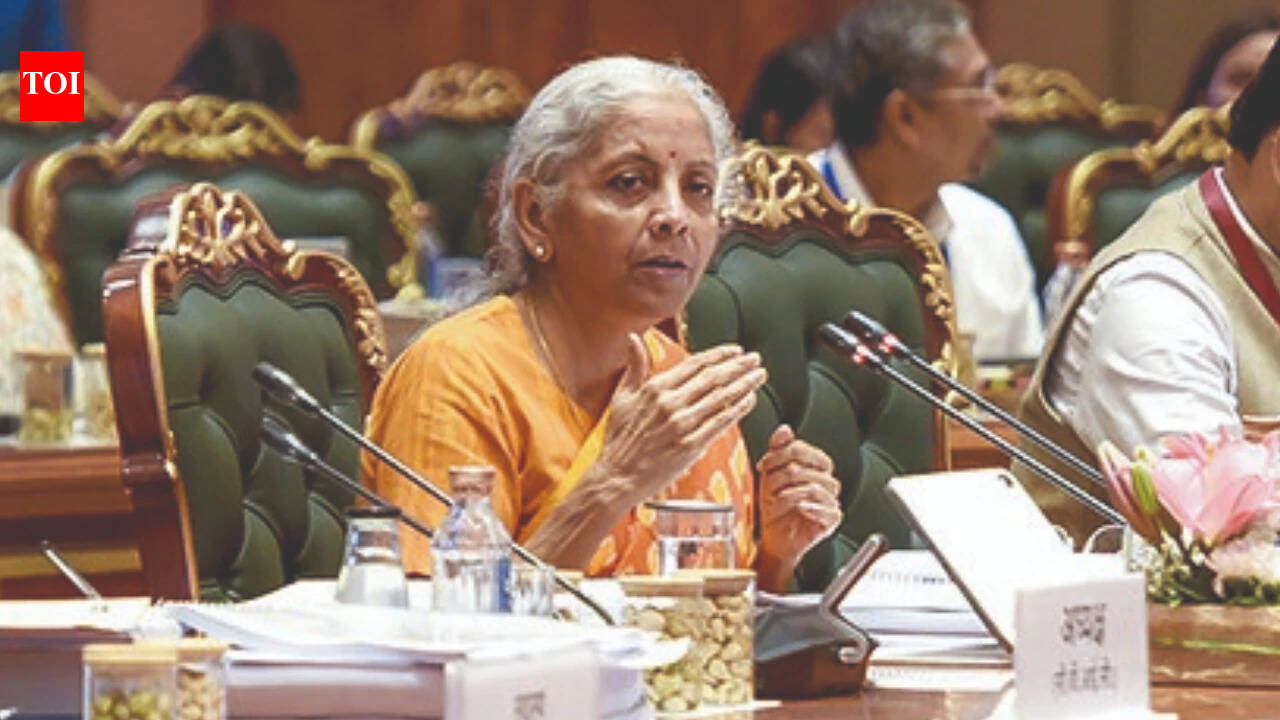
Commerce Secretary says New Delhi secured a higher quota than several other countries after fresh negotiations; discussions on CBAM still on View More
Vedanta plans to significantly increase zinc and lead production capacity by 2031. Aluminium production capacity will double over the next three years. The company targets iron and steel output expansion to fifteen million tonnes annually. Vedanta will invest five billion dollars in its oil and gas business. This expansion aims to meet rising domestic demand and strengthen global presence. View More
Oil-to-metals conglomerate Vedanta on Tuesday unveiled an ambitious expansion roadmap across its metals, mining and energy businesses, outlining plans to sharply increase production capacities over the coming years while committing a $5 billion investment in its oil and gas business. Addressing the company's annual general meeting (AGM), Vedanta Chairman Anil Agarwal said the company aims to nearly triple its zinc and lead production capacity to 3 million tonnes by 2031, reinforcing its position in one of its largest businesses. Also Read: Inside Anil Agarwal’s $100bn vision: Vedanta Resources plans to relist with US as a likely target The company also plans to double aluminium production capacity to 6 million tonnes per year over the next three years, while its iron and steel business is targeted to expand from 4 million tonnes to 15 million tonnes annually, Agarwal said. On the energy front, Agarwal said Vedanta would invest $5 billion over the next three to five years to expand its oil and gas business. Live Events "Will invest $5 bln over three to five years for Vedanta Oil & Gas," he said at the AGM. Also Read: A titan in tears: Anil Agarwal’s gritty journey from Bihar to billions He added that the company is targeting oil production of 500,000 barrels per day, saying, "At Vedanta Oil and Gas , we aim to produce 500,000 barrels per day." The expansion plans underscore Vedanta's strategy to significantly scale up capacity across its core businesses as it seeks to meet rising domestic demand while strengthening its global presence in metals and natural resources. The comments come as the conglomerate's four demerged entities- Vedanta Aluminium Metal Ltd, Vedanta Oil & Gas Ltd, Vedanta Power Ltd and Vedanta Iron & Steel Ltd- debuted on stock exchanges on June 15. Vedanta Oil & Gas reported a 16% year-on-year decline in average daily gross operated production in FY26, while revenue fell 13% to Rs 9,582 crore, according to an investor presentation dated April 29. EBITDA declined 7% from a year earlier to Rs 4,664 crore. The company's future will be built on three Ps — Produce More, Partner Better and Purpose Beyond Profit. Reflecting on the successful completion of Vedanta's demerger, he mentioned that each of the Group's five pure-play entities -- Vedanta Ltd , Vedanta Aluminium Metal Ltd, Vedanta Oil and Gas Ltd, Vedanta Iron and Steel Ltd, and Vedanta Power Ltd -- has the potential to become a USD 100-billion company. Highlighting technology as Vedanta's strongest partner, Agarwal said, "The future belongs to companies that embrace technology. Artificial intelligence is transforming industries across the world. Technology is our best partner. Whether it is exploration, operations, sustainability, safety or productivity, we are deeply embedding technology across every one of our businesses. Our goal is simple: To become smarter, faster, safer, and better." ( With inputs from PTI ) .Pbanner{display:flex;justify-content:space-between;align-items:center;background-color:#ec1c40;margin-top:20px;padding:5px 10px;border-radius:4px;color:#fff;line-height:10px;width: 100%;box-sizing: border-box} .Pbannertext{display:flex;align-items:center;font-size:16px;font-weight:600;font-family:'Montserrat';} .Pbannertext img{height:20px;margin:0 6px} .Pbannerbutton a{display:flex;align-items:center;background-color:#fff;color:#ec1c40;text-decoration:none;font-weight:600;padding:4px 8px;border-radius:6px;font-size:15px;font-family:'Montserrat';} .Pbannerbutton img{height:20px;margin-right:6px} .Pbannerbutton a:hover{background-color:#f7f7f7} Add as a Reliable and Trusted News Source Add Now! (You can now subscribe to our Economic Times WhatsApp channel) (You can now subscribe to our Economic Times WhatsApp channel)
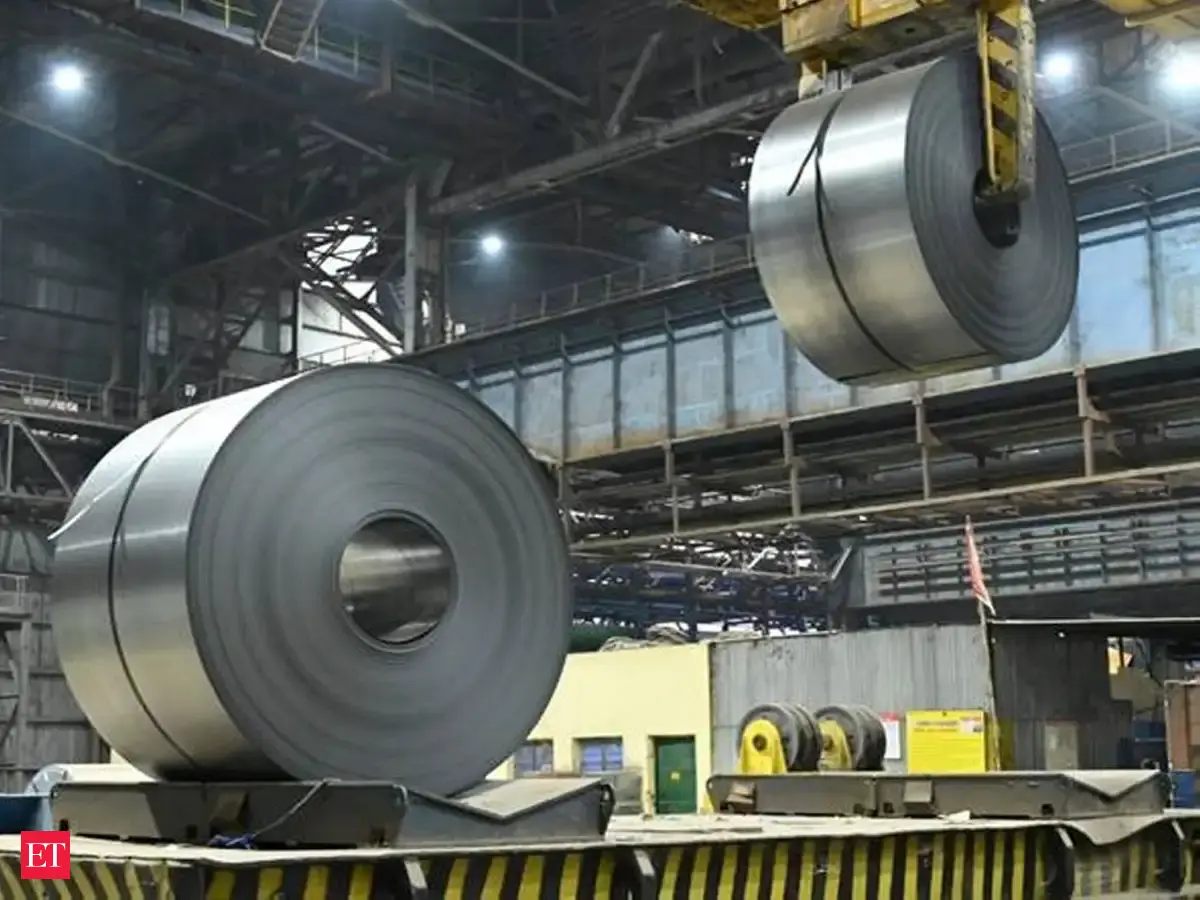
Domestic steel prices are expected to remain mixed in the coming months. Long steel prices will likely stay under pressure due to monsoon demand weakness. Flat steel prices should remain relatively resilient, supported by lower imports. Raw material costs for steel production are also showing varied trends. This outlook reflects current market conditions and anticipated seasonal impacts. View More
New Delhi: Domestic steel prices are expected to remain mixed in the coming months, with long steel prices likely to stay under pressure due to weak demand during the monsoon season and high inventory levels, according to a Centrum report. The report said global and domestic steel prices showed mixed trends. US hot rolled coil (HRC) prices rose around 3 per cent month-on-month, marking the eighth straight month of gains. In contrast, European HRC prices declined about 4 per cent for the second consecutive month, while China's export HRC prices fell around 1 per cent after six months of continuous gains. Also Read: India will monitor Chinese steel imports before deciding on further curbs, source says In India, domestic HRC prices remained largely stable, supported by safeguard duties on imports and firm global prices. However, "long steel prices witnessed a sharp correction, with primary rebar declining ~9% MoM, giving back part of the strong rally seen since late 2025." The report attributed the decline to weak construction activity, higher inventories, aggressive trader discounts and increased competition from secondary rebar producers. Live Events Centrum said the weakness continued in July, noting that "spot HRC and primary rebar prices down ~Rs 210/tonne and ~Rs 3,020/tonne, respectively, from June averages." It also said prices of 304-grade stainless steel fell around 3 per cent month-on-month in June but remained about 19 per cent higher than the same period last year. Among raw materials, Australian iron ore prices declined around 7 per cent month-on-month. In India, NMDC reduced lump ore prices by Rs 250 per tonne and fine ore prices by Rs 150 per tonne. The report added that Australian coking coal prices increased about 2 per cent month-on-month and 36 per cent year-on-year due to limited spot supplies, firm supplier pricing and stronger demand from China following disruptions at domestic mines. South African non-coking coal prices remained largely unchanged from the previous month but were still 22 per cent higher than a year ago. In the non-ferrous metals segment, aluminium was the weakest performer. Also Read: Indian steelmakers grapple with resurgence of cheap Chinese imports On the outlook, the report said, "Going ahead, the domestic steel pricing environment is likely to remain mixed. Long steel prices are expected to stay under pressure amid monsoon-related demand weakness and elevated inventories, while flat steel prices should remain relatively resilient, supported by lower imports and steady raw material costs." .Pbanner{display:flex;justify-content:space-between;align-items:center;background-color:#ec1c40;margin-top:20px;padding:5px 10px;border-radius:4px;color:#fff;line-height:10px;width: 100%;box-sizing: border-box} .Pbannertext{display:flex;align-items:center;font-size:16px;font-weight:600;font-family:'Montserrat';} .Pbannertext img{height:20px;margin:0 6px} .Pbannerbutton a{display:flex;align-items:center;background-color:#fff;color:#ec1c40;text-decoration:none;font-weight:600;padding:4px 8px;border-radius:6px;font-size:15px;font-family:'Montserrat';} .Pbannerbutton img{height:20px;margin-right:6px} .Pbannerbutton a:hover{background-color:#f7f7f7} Add as a Reliable and Trusted News Source Add Now! (You can now subscribe to our Economic Times WhatsApp channel) (You can now subscribe to our Economic Times WhatsApp channel)