
Latest Sectors News

Women's hockey is growing, and the PWHL is aiming to become the first professional women's hockey league to have long-term success. View More
Laura Stacey #7 of the Montréal Victoire celebrates her goal with teammates during the third period against the Seattle Torrent at Place Bell on March 19, 2026 in Laval, Quebec, Canada. Minas Panagiotakis | Getty Images Sport | Getty Images The 2026 Milan Winter Olympics, which culminated in a U.S.-Canada gold medal game that set viewership records across the U.S., thrust women's hockey into the spotlight like it hasn't been before. The Professional Women's Hockey League has spent much of the last three years positioning itself to capitalize on the momentum to build a sustainable women's hockey league."Every Olympic year, there would be some boost in excitement and interest around the women's game," said Jayna Hefford, executive vice president of hockey operations for the PWHL, who won five Olympic medals playing for Team Canada. "When I think about where we are now, it's sort of exponential from that."Despite the recent success of women's sports and leagues like the WNBA and NWSL, women's hockey leagues have struggled to find a similar footing, and that is even with the Olympic success of the U.S. and Canadian teams. Since women's ice hockey was introduced as an Olympic sport in 1998, Canada has won five of the eight gold medals, with the U.S. winning the other three, including a 2-1 overtime win at the 2026 Games. Several previous attempts to launch women's hockey leagues in North America have failed, often due to financial difficulties. While the WNBA is partially owned and subsidized by the NBA, the NHL has not historically provided financial support for a women's league, and many of those organizations have struggled to pay players sustainable wages. In 2019, many of the top women's players boycotted the existing professional leagues in a fight for better resources.But that landscape shifted in 2023 with the launch of the PWHL. The league is privately funded by Mark Walter, the billionaire Guggenheim Partners co-founder and CEO, who over the last few years has become one of the largest sports investors with controlling stakes in MLB's Los Angeles Dodgers, the NBA's Los Angeles Lakers, the WNBA's Los Angeles Sparks, and motorsports organization Andretti Global. Walter, who acquired the rights of another women's hockey league as part of the PWHL's launch, also brought on tennis legend Billie Jean King and her partner Ilana Kloss as members of the PWHL's advisory board.Despite a short timeline (the league was announced in August 2023 and played its first game on Jan. 1, 2024), the PWHL has seen success over its first three seasons. The now-eight-team league has drawn fans across North America, set multiple attendance records, attracted major sponsors, and, perhaps most importantly, was a platform for the best women's hockey players in the world as they prepared for the 2026 Winter Olympics. Billie Jean King and Jayna Hefford walk to center ice for the ceremonial puck drop before Toronto plays New York in their PWHL hockey game at the Mattamy Athletic Centre on January 1, 2024 in Toronto, Ontario, Canada.Mark Blinch | Getty Images New fans and more revenue post-Olympics The league prepared for the stage the 2026 Winter Olympics would provide."We understood it was going to put a camera on our league, unlike anything else," said Stan Kasten, Los Angeles Dodgers president and CEO and a member of the PWHL advisory board.When the Olympic rosters were announced, 61 of the league's roughly 184 players were named to national teams, with 39 of those players appearing in the gold medal game."Right then, we talked about it: it's going to require extra budget, it's going to require extra people, let's get a facility in Milan and prepare to take sponsors, investors, and a world of assembled media who are all seeing the foremost women's hockey league in the world for the first time," Kasten said. "We thought about it as a launch pad for our next wave of interest. I have to tell you, like with a lot of things from the first day we started this league, I could not have predicted it would turn out this well."The Olympic momentum has carried over into arenas. The PWHL set a new U.S. arena record with 17,335 fans at the first-ever sellout of Climate Pledge Arena in Seattle on Feb. 27, marking the third time the league set a new attendance record this season alone. The first weekend the league returned to play, it set a new league weekend attendance record with 49,343 fans. In total, attendance through 71 games of the 2025-2026 PWHL season was at 616,795 fans, an average of 8,687 and a 20% increase compared to the previous season.During the month of February, merchandise sales were up 101% compared to the sales prior to the Olympics. The PWHL saw its video views on YouTube, where it predominantly broadcasts games, increase 200% over the Olympics period. It also saw traffic to its website grow by six times during the Olympics period, with 73% of website traffic coming from new users."It's great to see the numbers today, but the hard work actually starts now," said Amy Scheer, PWHL executive vice president of business operations. "We've got these fans, we've got these new followers, we've got this attention, now what do we do with it?" Fans greet Abby Boreen #22 of the Vancouver Goldeneyes as she takes the ice prior to the team's first ever PWHL game against the Seattle Torrent at Pacific Coliseum on November 21, 2025 in Vancouver, Canada. Rich Lam | Getty Images Sport | Getty Images For Scheer, who was named to the 2026 CNBC Changemakers list alongside Hefford, that means helping the league take its next big steps on the commercial side, pushing for higher valuation sponsorships and major media rights deals. "We're looking to strike while the iron is hot, and the value proposition has changed for us," she said. The league has more than 75 corporate sponsors now, and the PWHL recently signed a partnership with Oak View Group to help it secure additional deals.In March, the PWHL signed a deal with Scripps Sports to broadcast the league's Walter Cup Finals on Ion, which will mark the first time it will be aired across the U.S. on a linear network. Ion also aired a game on March 28, marking the league's first nationally televised game. Scheer said the league is in talks with a variety of partners over potential media rights deals for next season, declining to provide additional details. Filling bigger arenas around North America The increase in popularity is helping the league fill bigger and bigger arenas, and in cities where there is not a PWHL team. Since it launched, the PWHL has used a "Takeover Tour" barnstorming strategy to play some games outside of home arenas to test new markets or try to fill up larger arenas.That strategy will be on display on Saturday when the New York Sirens, who normally play at the Prudential Center in Newark, home of the NHL's New Jersey Devils, will play at Madison Square Garden versus the Seattle Torrent. The game has already been marked as a sell-out of the more than 18,000-seat arena.The league has also sold out a scheduled game at TD Garden in Boston on April 11 between the Boston Fleet and the Montreal Victoire. That arena seats more than 17,800 people.Scheer said that on previous stops of the league's Takeover Tours, upwards of 60% of the fans attending had never been to an NHL game at those arenas. That is informing the league's expansion strategy, with plans to add as many as four new teams next season."The list of cities that want us is as long as any list you could have," Kasten said. "The problem we have, particularly in American cities, is that the most appropriate venue for us is no longer the 5,000- or 6,000-seat arena; it's the big venues, and they don't have dates for us. I've talked to the NHL teams in those buildings, and the owners of those buildings, and finding dates is our biggest issue now in cities."All of these things add up as the PWHL looks to be a sustainable â and ultimately profitable â league. Kasten said the league has outpaced its expense projections each season, but that "it has always matched the growth in revenue, so it turned out to be worth it.""The revenue growth has been consistent, and next year it's going to take another jump," he said. "We're still in the red again, but that's what we planned for, and the gap is closing." The league signed a CBA with its players through 2031, and it hopes to be profitable by that point.Kasten said there are no current plans to sell teams to individual owners, but there has been some recent talk about bringing on additional investors, especially as more people approach the league looking for attractive sports opportunities.Hefford said that as she's watched the league grow, "it's much different than anything that's ever existed before, and people understand that." Hefford herself played in previous professional women's hockey league iterations and also served as a commissioner, and she said the PWHL has the opportunity to offer players and fans something those other leagues hadn't."For a long time, it was always about the national teams, and now I think we're seeing a shift where there's a loyalty towards the PWHL teams and the communities," she said. "National teams will always be an incredible opportunity, but there's just so much more now that they can be excited about as well." What's next for the league and its players When Laura Stacey returned from the 2022 Winter Olympics in Beijing after playing for Canada, she said she had to ask herself a tough question."You come back, it's like, 'What's next? Where do I go? Do I keep going for another four years?" she said. "It's this four-year cycle situation of players thinking if they can afford to continue taking on an Olympic dream."Stacey said that the Olympics have always been the "pinnacle" for women's hockey players, a dream that she's been able to live three times, including winning two gold medals."The fact that now we get to play all year long, every single year in an incredible league, and then every four years, players who are at the top of their game get a chance to represent their countries at the Olympics and then come back and still have this professional league behind them, it's just incredible," she said.Still, there is work to do. Stacey, who is the president of the players' association, said the players are working closely with the league to make sure facilities and other aspects of the player experience remain high as the league expands. The players also want to see salaries grow as the league does â league average salaries are roughly $55,000, according to the CBA.Kasten said the league is pushing for more visibility and coverage. Currently, the league's scores are not highlighted on ESPN's app or its website.Scheer said while she no longer has to educate potential sponsors about what the PWHL is or why women's hockey is an attractive opportunity, the conversation is now shifting to asking supposed supporters to "put your money where your mouth is." Hefford said while the league has launched several initiatives encouraging young girls to play hockey, there is still plenty to do to encourage the next generation of PWHL stars and fans.However, Stacey said it is not lost on her or the players that the PWHL has already made significant progress."We've had every version [of a league], and they all have not worked out for many various reasons until now. But none of that was even close to where we're at now," she said. "So for us, it's like we're here. We've made it. This has been created now. We need to do whatever we possibly can to make sure that this is bigger, better, stronger when we all leave." watch nowVIDEO24:0124:01CNBC Sport: PWHLâs Amy Scheer on hockeyâs boom, league expansion and OlympicsCNBC Sport Choose CNBC as your preferred source on Google and never miss a moment from the most trusted name in business news.
Tata Steel has been issued a demand notice of Rs1,755.10 crore by the District Mining Office in Ramgarh, Jharkhand. The notice alleges excess coal extraction of over 1.62 crore metric tonnes from its West Bokaro Colliery between FY2000-01 and FY2006-07, citing grounds similar to a Supreme Court ruling on illegal mining. View More
Tata Steel Limited has received a demand notice of Rs1,755.10 crore (about $189 million) from the District Mining Office in Ramgarh, Jharkhand, the company said in a regulatory filing on Saturday. The notice pertains to alleged excess extraction of coal from its West Bokaro Colliery between FY2000-01 and FY2006-07. According to the statement issued to stock exchanges, the notice, dated March 30, 2026, was received by the company on April 3. It alleges that Tata Steel extracted approximately 1,62,40,399 metric tonnes of mineral coal beyond permissible limits during the specified period. The demand has been raised based on grounds similar to those cited by the Supreme Court in the Common Cause vs. Union of India case (Writ Petition No. 114 of 2014), which dealt with issues of illegal mining and excess production, the company added. Tata Steel said it does not agree with the basis of the demand and has contested the allegations. “The management believes that the demand lacks justification and substantive basis,” the company said in its filing. Live Events The steelmaker added that it will pursue appropriate legal remedies against the notice. It plans to challenge the demand before relevant judicial or quasi-judicial forums. The disclosure was made in compliance with the Securities and Exchange Board of India’s Listing Obligations and Disclosure Requirements (LODR) Regulations, 2015. .Pbanner{display:flex;justify-content:space-between;align-items:center;background-color:#ec1c40;margin-top:20px;padding:5px 10px;border-radius:4px;color:#fff;line-height:10px;} .Pbannertext{display:flex;align-items:center;font-size:16px;font-weight:600;font-family:'Montserrat';} .Pbannertext img{height:20px;margin:0 6px} .Pbannerbutton a{display:flex;align-items:center;background-color:#fff;color:#ec1c40;text-decoration:none;font-weight:600;padding:4px 8px;border-radius:6px;font-size:15px;font-family:'Montserrat';} .Pbannerbutton img{height:20px;margin-right:6px} .Pbannerbutton a:hover{background-color:#f7f7f7} Add as a Reliable and Trusted News Source Add Now! (You can now subscribe to our Economic Times WhatsApp channel) (You can now subscribe to our Economic Times WhatsApp channel)

Vedanta Ltd reported a mixed financial quarter, with a 2% rise in aluminium production and a similar increase in Zinc India's mined metal output. However, the company experienced declines in iron ore, steel, and oil & gas production, with the latter dropping 15% to 81,500 boepd. View More
Mining major Vedanta Ltd on Friday reported a mixed performance for the last quarter of 2025-26, as its production of aluminium and zinc rose while output of iron ore, steel, and oil & gas declined. The company's total aluminium production during the quarter rose by 2 per cent, and Zinc India's mined metal production increased by 2 per cent. In the oil and gas segment, Vedanta's average daily gross operated production dropped 15 per cent during the March quarter to 81,500 barrels of oil equivalent per day (boepd). While the production of saleable iron ore dropped 3 per cent during the quarter, the saleable steel output during the quarter declined marginally by 1 per cent, the company said in a regulatory filing. In a statement, the company said that it remains focused on driving efficiency, scale, and long-term value creation. Live Events Vedanta Group, a global natural resources and technology conglomerate, has a broad portfolio spanning critical minerals, energy transition metals, oil & gas, and power. .Pbanner{display:flex;justify-content:space-between;align-items:center;background-color:#ec1c40;margin-top:20px;padding:5px 10px;border-radius:4px;color:#fff;line-height:10px;} .Pbannertext{display:flex;align-items:center;font-size:16px;font-weight:600;font-family:'Montserrat';} .Pbannertext img{height:20px;margin:0 6px} .Pbannerbutton a{display:flex;align-items:center;background-color:#fff;color:#ec1c40;text-decoration:none;font-weight:600;padding:4px 8px;border-radius:6px;font-size:15px;font-family:'Montserrat';} .Pbannerbutton img{height:20px;margin-right:6px} .Pbannerbutton a:hover{background-color:#f7f7f7} Add as a Reliable and Trusted News Source Add Now! (You can now subscribe to our Economic Times WhatsApp channel) (You can now subscribe to our Economic Times WhatsApp channel)

A year after his "liberation day," Trump's trade war has reshaped how companies in industries such as retail and autos are modeling economic and policy risk. View More
watch nowVIDEO3:2203:22How industries are faring one year after Trump's tariffsDigital Original A year after President Donald Trump declared his "liberation day" and imposed sweeping tariffs on imports, kicking off a wave of economic and political uncertainty, some companies are still feeling the effects. While some industries have emerged largely unscathed â having weathered twists and turns of several tariff iterations â others, such as retail, automotive, consumer packaged goods and pharmaceuticals, are navigating a new reality in global supply chains. "Leadership at U.S. corporations really had to think about where we buy from versus whether we can import or not," said Venky Ramesh, a supply chain expert with AlixPartners. "Around 80% to 85% of the costs were absorbed domestically, meaning either the U.S. corporations had to take the hit, or they passed it on to the customers, or a mix of both."On April 2, 2025, in the White House's Rose Garden, Trump announced broad country-by-country tariffs, as well as a 10% baseline levy on countries that weren't specifically listed in that declaration. Those tariff policies fluctuated wildly over the following months as Trump made deals and walked back some of the most extreme duties. window.addEventListener("message",function(a){if(void 0!==a.data["datawrapper-height"]){var e=document.querySelectorAll("iframe");for(var t in a.data["datawrapper-height"])for(var r,i=0;r=e[i];i++)if(r.contentWindow===a.source){var d=a.data["datawrapper-height"][t]+"px";r.style.height=d}}}); With ever-changing trade and tariff policies, companies have been forced to be more flexible and diversify their supply chains over the past year. Moving operations out of countries such as China, Vietnam or Mexico meant import cost savings, but for many industries, it was a tall task.Ramesh said he saw clients in the first few months making "aggressive" changes to get ahead of the tariff costs, but because those policies kept shifting, companies begin to move slower and invest resources into scenario modeling."Moving supplier bases cannot happen overnight," Ramesh said. "I think what companies are doing is they're taking it gradually, so they want to make sure that they are well-diversified."On Feb. 20, the Supreme Court ruled that the country-specific "reciprocal" tariffs Trump imposed under the International Emergency Economic Powers Act of 1977, or IEEPA, were unconstitutional. But hours after the ruling, Trump announced a new "global tariff" rate of 10% under a separate statute, Section 122 of the Trade Act of 1974, for a period of 150 days. He later said he would increase global tariffs to 15%. Meanwhile, those imposed under Section 232 of the Trade Expansion Act of 1962 â intended to target specific imports that threaten national security â remain in place. Section 232 tariffs largely affected imports of steel, semiconductors, aluminum and other products.Still, Ramesh said, overall imports into the U.S. in 2025 were actually higher than in the previous year, especially as companies pulled forward inventory in the first few months of the year. window.addEventListener("message",function(a){if(void 0!==a.data["datawrapper-height"]){var e=document.querySelectorAll("iframe");for(var t in a.data["datawrapper-height"])for(var r,i=0;r=e[i];i++)if(r.contentWindow===a.source){var d=a.data["datawrapper-height"][t]+"px";r.style.height=d}}}); Ultimately, he said, he believes the past year of tariffs has culturally shifted the way U.S. companies operate. "The things that would stick are supply chain being a very, very critical component of any company. I think that has really changed over the last year," he said. "Corporations are not going to make the rash decisions. They're not as susceptible to these changes as they were a year ago. They've stabilized more."As the U.S. enters its second year of Trump-imposed tariffs, here's how some of the consumer-facing sectors have fared. Retail Eduardo Munoz Alvarez | Corbis News | Stephanie Keith | Bloomberg | Spencer Platt | Erik McGregor | Lightrocket | Getty Images One year into Trump's trade war, the retail industry has been disproportionately affected by tariffs. Mega-retailers such as Walmart, which have a range of different revenue streams and deep negotiating power, have emerged relatively unscathed, while smaller businesses have been crushed.Several retailers said that although they initially estimated they would see significant hits to revenue and profitability after the new tariffs were imposed, they've since taken a new approach, aiming to not rely too heavily on any single country for imports or manufacturing. And, for the most part, they've managed to avoid the massive impact that many projected at the start of the trade war.Home Depot's chief financial officer, CFO Richard McPhail, told CNBC in late February that the company is pressing ahead with its goal of limiting any one country outside the U.S. to 10% of the company's purchases. More than half of what Home Depot sells is sourced in the U.S. The retail supply chain has been forced to become more nimble in the past year, according to Max Kahn, the president of Coresight Research."One of the things that really started back with the pandemic is that retailers have become much better at building flexibility in their supply chains, and that got accelerated a lot last year with tariffs," Kahn said. "Shocks to the system or unexpected events are a little bit more business as usual now."Tariffs have also meant higher costs for shoppers. Retailers such as Walmart, Best Buy and Macy's have raised prices of some items, while also looking for ways to defray costs. But as retailers reported quarterly earnings over the past few months, executives were hesitant to declare victory in the tariff back-and-forth. While the Supreme Court's decision earlier this year was largely a boon, especially for apparel companies that rely primarily on supply chains throughout East Asia, there's still a lot of uncertainty, and companies were mixed on whether, and how, to size up the potential tariff impact.Abercrombie & Fitch in March decided to explicitly incorporate the latest 15% tariff assumption into its outlook, becoming one of the first retailers to provide clarity on the new guidelines. However, the company did not predict or quantify any potential tariff refunds that it may receive after the IEEPA tariffs were struck down. window.addEventListener("message",function(a){if(void 0!==a.data["datawrapper-height"]){var e=document.querySelectorAll("iframe");for(var t in a.data["datawrapper-height"])for(var r,i=0;r=e[i];i++)if(r.contentWindow===a.source){var d=a.data["datawrapper-height"][t]+"px";r.style.height=d}}}); On the other hand, American Eagle Outfitters said in March that its guidance for the first quarter and full year was based on tariffs imposed under the IEEPA guidelines and did not take into account the recent Supreme Court ruling. Gap also didn't factor recent changes to tariffs into its 2026 outlook, but it could issue stronger guidance in the upcoming quarter because the newly enacted tariff rate is slightly below the previous rates for many countries.Dollar Tree, too, isn't betting on significant savings. CFO Stewart Glendinning said last month that the company already paid tariffs on its current inventory before the Supreme Court ruling. "While there may be some upside, we remain cautious because of the potential for further near-term changes and because of the potential for negative freight and other costs related to the conflict in the Middle East," Glendinning said.His comment underscores a new reality for retailers: The Trump administration's aggressive tariff policies are now a constant on the long list of factors that make the year ahead hard to predict. Autos The automotive industry has been, and continues to be, one of those most affected by Trump's trade and tariff policies.Both foreign and domestic automakers have faced billions of dollars in additional costs due to the levies. Toyota, for example, forecast a 1.4 trillion yen ($9.5 billion) impact from U.S. tariffs during its fiscal year. And the changes cost Detroit automakers General Motors, Ford Motor and Chrysler parent Stellantis a combined total of $6 billion last year, according to the companies.Autos have been most affected by Section 232 tariffs, but the impact hasn't been as bad as initially expected. The Trump administration last year decided to give some reprieve by "de-stacking" tariffs that were piling up on the automotive industry, so companies wouldn't be paying overlapping duties for parts and vehicles."We should end up at a position where our net tariffs are actually lower in 2026 than they were in 2025," GM CFO Paul Jacobson said Jan. 27, during the company's most recent quarterly earnings call.U.S. tariffs cost GM $3.1 billion in 2025, below the company's previous expectations of between $3.5 billion and $4.5 billion, Jacobson said.Companies including GM have said they have taken varying actions to offset the additional expenses, including redirecting and resourcing supply chains to better meet U.S. standards. GM's chief rival, Ford, told CNBC in February that it is continuing to work with the Trump administration on policies that "promote a strong and globally competitive U.S. auto sector."International companies such as Toyota â the world's largest automaker â and its Japanese peers Nissan Motor and Honda Motor have announced plans to increase domestic manufacturing and export vehicles from the U.S. to Japan to appease the Trump administration. Consumer packaged goods President Donald Trump speaks about his new tariff plan at the White House, in Washington, D.C., on April 2, 2025.Brendan Smialowski | Afp | Getty Images Most consumer packaged goods companies manufacture their products in the U.S. but import key commodities, such as the pulp found in diapers and toilet paper and the aluminum used for soda and beer cans. Supply chain diversions aren't an option for those resources, like they are for the retail or auto industries.While the tariffs broadly resulted in higher costs for these manufacturers, some companies found themselves under unique pressure. For example, spice maker McCormick initially warned investors that tariffs could cost $70 million in fiscal 2025 as prices for black pepper, cinnamon and vanilla were projected to rise. However, it managed to mitigate the impact of the import duties to just $20 million by cutting expenses, raising prices and sourcing alternatives from lower-tariffed countries when possible.Consumer packaged goods company Procter & Gamble said in July that it had to raise prices on 25% of its products due in part to a $1 billion total annual tariff impact. Beer maker Constellation Brands said in July that it estimated a $20 million hit to its fiscal 2026 earnings due to tariffs on aluminum, a crucial material for its cans."At these rates, tariffs alone are a 5-point headwind to core EPS growth in fiscal 2026," Procter & Gamble CFO Andre Schulten said on a July earnings call, referring to earnings per share. "We will look for every opportunity to mitigate these impacts, including sourcing flexibility, productivity improvements, and pricing with innovation in affected categories and markets."But not all consumer companies chose to pass on higher costs to consumers. J.M. Smucker, which owns Folgers and Cafe Bustelo, originally planned to hike prices on its packaged coffee in response to the tariffs â the third increase for that fiscal year after a tough harvest. But the company reversed those plans and instead absorbed the $75 million hit to its margins. Smucker executives cited an executive order that excluded green coffee and other agricultural products as one reason for the decision. Pharmaceuticals The pharmaceutical industry has fared better than some industries, thanks to recent drug pricing agreements with Trump.Since November, more than a dozen major drugmakers have signed landmark deals with Trump to lower the prices of new and existing medicines. The drugmakers include several U.S.-based companies such as Pfizer, Eli Lilly, Merck, Gilead and Bristol Myers Squibb, as well as companies based abroad, including Novo Nordisk, GSK and Novartis.On Thursday, the Trump administration said 13 companies have already signed those deals, and negotiations are progressing with four others.Those agreements are part of the president's so-called "most favored nation" policy, which ties U.S. drug prices to cheaper ones abroad. In exchange for the price cuts, Trump awarded the companies a three-year exemption from pharmaceutical tariffs, as long as they invest further in U.S. manufacturing.The president on Thursday imposed new tariffs on branded drugs from drugmakers that did not strike deals with the administration, but that long-awaited move will likely affect only a small number of companies. Patented medications and their active ingredients would be hit with a 100% tariff, but there are pathways for exemptions. The administration will impose a 20% tariff on companies that plan to onshore production, increasing to 100% four years from now, it said this week.Months before the deals with Trump, tariff threats â and efforts to get into the president's good graces â fueled a new wave of U.S. manufacturing investments from the pharmaceutical industry after years of domestic drug manufacturing shrinking. AbbVie, for example, said last April that it will put more than $10 billion into U.S. manufacturing and other capabilities over the next decade, including building four new plants. Johnson & Johnson in March 2025 said it will spend more than $55 billion to build four plants in the U.S.â CNBC's Gabrielle Fonrouge, Melissa Repko, Michael Wayland, Amelia Lucas and Annika Kim Constantino contributed to this report. Choose CNBC as your preferred source on Google and never miss a moment from the most trusted name in business news.
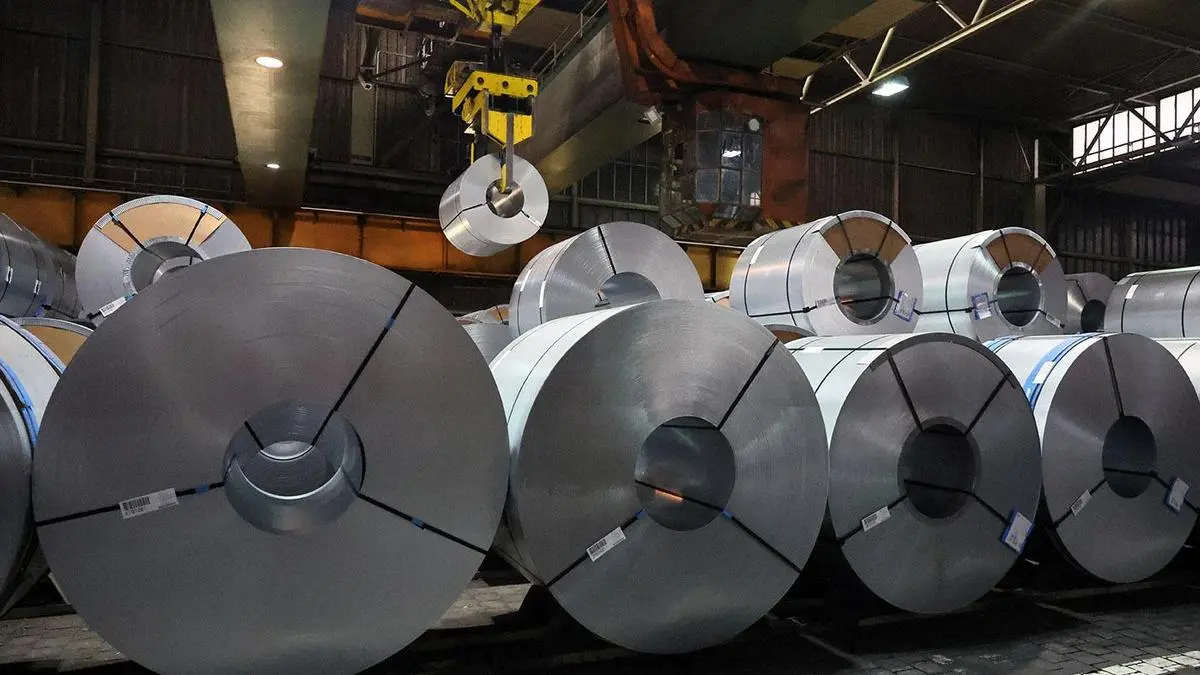
The sources told Reuters that the change is being made to simplify an overly complicated ?tariff regime put in ?place last year when Trump doubled the rate of his Section 232 tariffs on steel and aluminum to 50% View More
US President Trump has imposed steep 100% tariffs on imported patented medicines and new duties on steel, aluminium, and copper. This aims to compel companies to manufacture within the US, with exemptions for some nations. The move seeks to bolster domestic production and national security, building on previous trade actions. View More

The Trump administration is preparing to impose new tariffs on drugmakers that have not struck deals with the president to lower their U.S. drug prices. View More
In this articleNVOFollow your favorite stocksCREATE FREE ACCOUNT watch nowVIDEO3:4303:43Where Trumpâs tariff rates are headed nextEconomy The Trump administration on Thursday imposed new tariffs on branded drugs from pharmaceutical companies that have not struck deals with the president to lower their U.S. drug prices â a long-awaited move that will likely only affect a small portion of drugmakers."We need to make sure that our drug supply is protected, secure and domestic," a senior administration official, who declined to be named, told reporters on Thursday. "That is what we're doing."Also on Thursday, the Trump administration changed how tariffs are calculated on imported raw materials made from steel, aluminum, and copper, and on imported products that contain those metals.Patented medications and their active ingredients face a 100% tariff under the pharmaceutical plan, but there are pathways for drugmakers to reduce or avoid the levies, the official said. The administration will impose a 20% tariff on companies that plan to onshore production, which would increase to 100% four years from now. Drugmakers that have fully executed drug pricing deals or are currently negotiating with the Health and Human Services Department and are building manufacturing domestically would be exempt from the tariffs. New domestic plants must be completed by January 2029 to qualify, the official said. Larger drugmakers have 120 days before the 100% tariff rate goes into effect, the official said, but the administration expects more companies to announce reshoring plans before then. Smaller drugmakers, which rely on contract manufacturers, have 180 days before that rate hits. watch nowVIDEO1:1501:15Trump administration prepares up to 100% pharmaceutical tariffs on some imported drugsMoney Movers Meanwhile, some countries that have struck larger trade deals with the U.S. will face different pharmaceutical levies, with a 15% rate in the European Union, Japan, Korea and Switzerland. The U.K. will face a 10% tariff, in part because its government has raised the price of what it will pay for pharmaceuticals, the official said. "Those countries, the production can stay in those countries because they've made a bigger trade deal with America," the official said. Genetic products, biosimilars and related ingredients are not subject to tariffs at this time, but that will be reassessed in one year, the White House said in a fact sheet. Certain specialty pharmaceutical products, including those for animal health and treatments for rare conditions, will be exempt from levies if they come from countries with trade deals or "meet an urgent public health need," the fact sheet said.The plan represents another shift in Trump's aggressive trade strategy, more than a month after the Supreme Court struck down the global levies he imposed in 2025, which excluded the pharmaceutical industry. The sector-specific tariffs follow a Commerce Department investigation that determined certain pharmaceutical imports pose a national security risk to the United States. US President Donald Trump (C), alongside Secretary of Health and Human Services Robert F. Kennedy Jr. (R) and National Institute of Health (NIH) Director Jayanta Bhattacharya (L), speaks during a news conference about prescription drug prices, in the Roosevelt Room of the White House on May 12, 2025, in Washington, DC. Jim Watson | Afp | Getty Images Since November, more than a dozen major drugmakers, including Eli Lilly, Pfizer and Novo Nordisk, have inked deals with Trump to lower the prices of new and existing medicines. Those agreements are part of the president's "most favored nation" policy, which ties U.S. drug prices to cheaper ones abroad, and exempts the companies from tariffs for three years.The Trump administration official said 13 companies have already signed a drug pricing agreement, while negotiations with another four drugmakers are progressing. There are already $400 billion in commitments to reshore manufacturing so far in the sector during Trump's term, the official added. Prior to the landmark drug pricing deals, Trump repeatedly threatened duties on pharma imports. Those threats â and efforts to get into the president's good graces â fueled a new wave of U.S. manufacturing investments from the pharmaceutical industry. Those commitments come at a time when domestic drug manufacturing had shrunk significantly.In the separate tariff action related to metals, the duty remains at 50% on raw material made from steel, aluminum and copper â such as aluminum sheets or steel coils â but it will be on the full price paid by U.S. importers. The senior administration official, during a call with reporters on Thursday, said the adjustment is being made to prevent foreign sellers from undervaluing their products to pay less in tariffs.Imported finished products containing more than 15% of those metals will now be subject to a 25% tariff on the total value of the item. The prior duty was 50% only on the value of the metal in the product.Finished products that contain less than 15% of those metals will not be subject to a tariff.A senior administration official said the changes in tariffs on the metals should not affect the cost of goods, but non-government estimates suggest that it will modestly raise the effective duty rate.The Committee for a Responsible Federal Budget estimates that the change will raise an additional $70 billion in federal revenue over the next 10 years.â CNBC's Megan Cassella contributed to this article. Choose CNBC as your preferred source on Google and never miss a moment from the most trusted name in business news.

Tesla is coming off a year of declining deliveries due in part to increased competition from rivals in China offering lower-cost models. View More
In this articleTSLAFollow your favorite stocksCREATE FREE ACCOUNT watch nowVIDEO1:1601:16Tesla reports 358,000 first-quarter vehicle deliveries, down 14% from last quarterSquawk on the Street Tesla shares slid more than 5% on Thursday, their worst slump of the year, after the company's deliveries and production report for the first quarter showed a drop from the prior period, with mild growth from a year earlier. Tesla has recorded annual declines in the past two years.Here are the key numbers:Total Q1 vehicle deliveries: 358,023Total Q1 vehicle production: 408,386 Analysts were expecting 370,000 deliveries, according to StreetAccount estimates, while a company-compiled consensus by Tesla, published on March 26, said the average estimate was for 365,645 deliveries in the first quarter.Deliveries improved 6% from a year ago, when Tesla reported 336,681. The first quarter of 2025 marked a decline of 13% over the first quarter of 2024. Tesla's total deliveries for 2025 fell to 1.64 million from 1.79 million in 2024. With Thursday's drop, the stock is down 20% in 2026. Tesla's entry-level Model 3 sedan and most popular Model Y SUVs accounted for 341,893 for the quarter, the company said in the latest report. Deliveries are the closest approximation of sales reported by Tesla, but are not precisely defined in the company's shareholder communications.While CEO Elon Musk has been refocusing the company to produce a driverless Cybercab and Optimus humanoid robots, Tesla has yet to sell those products and still relies on auto sales for the bulk of its revenue. In January, Tesla announced it was ending production of its flagship Model S and X vehicles, and would use the factory lines where they were assembled in Fremont, California, to build Optimus robots.The S and X had long been in decline for Tesla. The 3 and Y accounted for 97% of the company's deliveries last year. Read more CNBC tech newsSpaceX confidentially files for IPO, setting stage for record offeringFive key questions Apple faces entering its second half-centuryBaidu robotaxis reportedly halted mid-traffic causing crashes in Wuhan, ChinaIran threatens Nvidia, Apple and other tech giants with attacks Musk said in a post on his social network X on Wednesday that orders of the S and X have "come to an end," but some were left in inventory. "We will have an official ceremony to mark the ending of an era. I love those cars," he added.The angular, steel Cybertruck, which Tesla started delivering to customers in late 2023, has not become a mainstream success. Tesla is poised to ramp up deliveries of its fully electric Semi in 2026, a class 8 truck with a promised range of 500 miles.In its energy business, Tesla said that it deployed 8.8 gigawatt hours of battery energy storage systems in the first quarter, following a record of 14.2 gigawatt hours in the fourth quarter of 2025. In Q1 of 2025 the company deployed 10.4 GWh of its energy products.Tesla's battery energy storage products include its Powerwall backup batteries for homes, and larger Megapack and Megablock systems used alongside data centers and utilities.William Blair equity analysts, led by Jed Dorsheimer, said in a note Thursday that they were not surprised by Tesla's automotive numbers because "global EV demand ex-China remains under pressure, and Tesla is actively sacrificing its EV business in favor of a fully autonomous future."However, Tesla's whiff on energy was of greater concern. "This business can be lumpy and swing depending on customer grid hook-up timing, but that does not fully explain this drop-off," the note said. "We are confused as to what happened with supply this quarter."Tesla shares dropped 15% in the first quarter, continuing a trend that started two years ago. The stock plunged from January through March in 2024 and 2025 but rose in every other quarter to end the years higher. Tesla's 2025 vehicle sales slump stemmed from increased competition across the globe, and a consumer backlash against Musk in response to his politics. In addition to Musk's financial support for President Donald Trump and his work for Trump's second administration, the Tesla CEO has endorsed Germany's anti-immigrant extremist party AfD, and anti-Islam activist Tommy Robinson in the UK, among others. Stock Chart IconStock chart iconTesla year-to-date stock chart. Tesla, and the broader U.S. EV market, was also hurt by the end of a $7,500 federal incentive for the purchase of new EVs in September.But sales of used electric vehicles have been on the rise since the U.S. and Israel launched strikes against Iran in late February, sparking a conflict that's sent oil prices soaring. Iran has retaliated by targeting ships trying to pass through the Strait of Hormuz. Tesla's automotive gross margins and supply chain disruptions are likely to be in focus when the company reports first-quarter earnings on April 22.WATCH: Tesla reports Q1 deliveries watch nowVIDEO1:1601:16Tesla reports 358,000 first-quarter vehicle deliveries, down 14% from last quarterSquawk on the Street Choose CNBC as your preferred source on Google and never miss a moment from the most trusted name in business news.

A company statement said new benchmarks have been achieved in both sales and production. This was possible by achieving record supplies of 1.25 MT to Indian Railways, along all-time high long rail production from the Universal Rail Mill. Exports surged to 2.9 Lakh Tonnes, registering a 162% growth, with SAIL successfully expanding into new international markets, including Bhutan. View More
Steel Authority of India Limited (SAIL), reported 20.14 million tonnes (MT) sales in fiscal 2025-26, 11.5% higher than the previous year’s 18.07 MT. The public sector undertaking delivered its best-ever crude steel output at 19.43 MT and saleable steel production at 19.176 MT. A company statement said new benchmarks have been achieved in both sales and production. This was possible by achieving record supplies of 1.25 MT to Indian Railways, along all-time high long rail production from the Universal Rail Mill. Exports surged to 2.9 Lakh Tonnes, registering a 162% growth, with SAIL successfully expanding into new international markets, including Bhutan. Krishna Kumar Singh, SAIL’s director-personnel also assumed additional charge of Chairman & Managing Director on Thursday. He has close to four decades of extensive experience across diverse functions including steel plant operations and maintenance, human resource development, vigilance, and personnel and administration. Last week, the Public Enterprises Selection Board (PSEB) recommended Ashok Kumar Panda, currently director-finance at SAIL, to the post of chairman and managing director of the state-run steelmaker. Panda also held the additional charge of director-commercial at SAIL before TN Natarajan was appointed to the post. Singh is said to hold this post till Panda takes over. .Pbanner{display:flex;justify-content:space-between;align-items:center;background-color:#ec1c40;margin-top:20px;padding:5px 10px;border-radius:4px;color:#fff;line-height:10px;} .Pbannertext{display:flex;align-items:center;font-size:16px;font-weight:600;font-family:'Montserrat';} .Pbannertext img{height:20px;margin:0 6px} .Pbannerbutton a{display:flex;align-items:center;background-color:#fff;color:#ec1c40;text-decoration:none;font-weight:600;padding:4px 8px;border-radius:6px;font-size:15px;font-family:'Montserrat';} .Pbannerbutton img{height:20px;margin-right:6px} .Pbannerbutton a:hover{background-color:#f7f7f7} Add as a Reliable and Trusted News Source Add Now! (You can now subscribe to our Economic Times WhatsApp channel) (You can now subscribe to our Economic Times WhatsApp channel)

The restaurant industry has been struggling with declining traffic and sluggish sales growth. View More
In this articleKODPZJACKWENWINGFollow your favorite stocksCREATE FREE ACCOUNT Coca-Cola on Thursday unveiled a new marketing campaign to boost sales of its soda at restaurants as declining traffic and sluggish sales growth challenge both the industry and its top beverage supplier.The campaign marks the first time Coke has released ads featuring multiple restaurant partners. The commercials flash across different consumers ordering their meals at a medley of chains, all ending their orders with the same phrase, "And a Coke."Across the three spots released Thursday, 13 different chains share the spotlight: Arby's, Culver's, Domino's Pizza, Five Guys, Jack in the Box, Jimmy John's, Panda Express, Popeyes, Sonic, Wendy's, Whataburger, White Castle and Wingstop.For restaurants, drinks â even a simple Coke â are high-margin menu items, helping lift profits in an industry known for its razor-thin margins. That sale becomes even more important as consumers cut back on restaurant visits and spend less when they do dine out.In February, traffic to U.S. restaurants fell 2%, according to data from Black Box Intelligence. And 38% of consumers said they were spending less at restaurants during the first quarter of 2026, based on a survey conducted by Revenue Management Solutions.Behind the scenes, Coke has also been trying to help boost restaurant sales amid the spending slowdown. As the so-called value wars kicked off among fast-food chains in 2024, Coke executives said that the company had teamed up with restaurant partners to market combo meals with drinks to drive traffic and beverage sales; CNBC previously reported that Coke threw in marketing funds to make a $5 value meal more attractive to McDonald's U.S. franchisees.Coke chose the chains in its new campaign based on the different cuisines and the occasions they represent, like late-night pickup or drive-thru, according to Dagmar Boggs, Coke's North American president of foodservice and on-premise. The commercials will air in movie theaters starting Friday. By mid April, the campaign will spread to linear TV, digital channels and third-party delivery providers like UberEats and DoorDash.The chains did not pay Coke to participate in the advertisements. Boggs called it "the perk of being a partner with Coca-Cola." Boggs describes Coke as a "business partner" rather than a "beverage supplier" for restaurants, giving insight and marketing suggestions to chains like Burger King or Wendy's. Of course, higher Coke sales at restaurants will also benefit the beverage giant. Coke does not publicly disclose how much of its sales come from restaurants. However, executives have previously said that about half of its overall sales come from away-from-home channels, which also include movie theaters, airplanes and amusement parks.Coke's food service business also serves a bellwether for consumer sentiment."If food service catches a cold in the North America operating unit, North America will catch a cold," Boggs said. "That's why we are always looking to grow our partners' business, because when they grow, we grow."In 2025, Coke's North American organic sales rose 4%, but its domestic unit case volume fell 1%, a signal of weaker demand for its drinks. The company is projecting modest sales growth in 2026, according to the outlook it released in early February. Choose CNBC as your preferred source on Google and never miss a moment from the most trusted name in business news.