
Latest Sectors News

A curious dynamic is happening in shares of Nvidia ahead of two potential catalysts this month. View More
In this articleNVDAFollow your favorite stocksCREATE FREE ACCOUNT watch nowVIDEO4:4104:41AI is in focus ahead of U.S.-China talks. Here's how it could sway shares of NvidiaOptions ActionA curious dynamic is happening in shares of Nvidia ahead of two potential catalysts this month, and it's presenting an unique opportunity for options traders. As shares of the AI giant have surged, the stock's forward multiple, a measure of how expensive it is relative to the market, has fallen as the chip maker continues to rake in money. Also falling? The price of Nvidia options.  Nvidia shares have rallied 24% in 2026, rising five straight sessions with the stock sitting just 3.5% below its all-time closing high of $235.74 back in May. However, several potential catalysts in the days ahead may reverse or accelerate Nvidia's trajectory from here. According to CNBC, Nvidia CEO Jensen Huang is expected to attend a state dinner for Chinese President Xi Jinping when he travels to Washington to meet with President Trump this Thursday. AI is expected to be a main topic of discussion when Xi meets with Trump. Then September 30, the following week, Micron is expected to report fiscal Q4 earnings, a barometer for AI memory demand that may have ripple effects on Nvidia.Stock Chart IconStock chart iconNvidia, YTDDespite these potential catalysts and Monday's volatility among prominent chip names, Nvidia's option prices are unusually cheap. Nvidia's implied volatility, derived from current options prices, is sitting near its lowest level of the past year. That basically means the market isn't pricing in much movement over the coming weeks, and options prices are lower to reflect that. For options traders anticipating a large move in Nvidia, either because of Nvidia-specific catalysts or near-term shifts in the semiconductor sector, those options can now be traded at a discount relative to the past year.Trade: Buying the Oct 16 210/220 put spread and the Oct 16 235/245 call spread, for a total debit of roughly $4.86This is a reverse iron condor, a directionally neutral strategy structured to profit from a large move in Nvidia in either direction before October 16th. The core bet is in buying the 220 put and the 235 call, the two strikes closest to Nvidia's current price, which are relatively cheap given Nvidia's low implied volatility. Selling the 210 put and 245 call, each 10 points further from the money, generates a credit that partially finances the trade. This lowers the cost of the trade and increases the position's theoretical probability of profit to ~56%. The max loss of the position is $486, hit if Nvidia remains between $220 and $235 and the long legs expire worthless. The max gain is $514 on either side, realized if Nvidia closes at or beyond $210 on the downside or $245 on the upside. Breakevens sit at $215.14 and $239.86, meaning Nvidia needs roughly a 5% to 6% move from current levels by October 16th for the trade to turn a profit.The semiconductor sector has a proven, recent history of moving fast. This was on display Monday, when AMD surged more than 9% to cross a $1 trillion market cap and Intel and Arm each jumped double digits on renewed enthusiasm for AI chip demand. With cheap options, a stock sitting near its highs, and multiple catalysts still ahead, this setup is an example of how to use options for positioning into anticipated volatility.As with any defined risk options spread, consider closing this position out before expiration rather than holding into settlement to avoid potential assignment risk.Disclosures: Spina owns this trade.All opinions expressed by CNBC Pro contributors are solely their opinions and do not reflect the opinions of CNBC, or its parent company or affiliates, and may have been previously disseminated by them on television, radio, internet or another medium. This content is provided as part of our editorial output for informational purposes only and does not constitute financial, investment, tax or legal advice or a recommendation to buy any security or other financial asset. The content is general in nature and does not reflect any individual's unique personal circumstances. The above content might not be suitable for your particular circumstances. Before making any financial decisions, you should strongly consider seeking advice from your own financial or investment advisor.THIS CONTENT IS PROVIDED FOR INFORMATIONAL PURPOSES ONLY AND DOES NOT CONSTITUTE FINANCIAL, INVESTMENT, TAX OR LEGAL ADVICE OR A RECOMMENDATION TO BUY ANY SECURITY OR OTHER FINANCIAL ASSET. THE CONTENT IS GENERAL IN NATURE AND DOES NOT REFLECT ANY INDIVIDUAL'S UNIQUE PERSONAL CIRCUMSTANCES. THE ABOVE CONTENT MIGHT NOT BE SUITABLE FOR YOUR PARTICULAR CIRCUMSTANCES. BEFORE MAKING ANY FINANCIAL DECISIONS, YOU SHOULD STRONGLY CONSIDER SEEKING ADVICE FROM YOUR OWN FINANCIAL OR INVESTMENT ADVISOR.Click here for the f Choose CNBC as your preferred source on Google and never miss a moment from the most trusted name in business news.
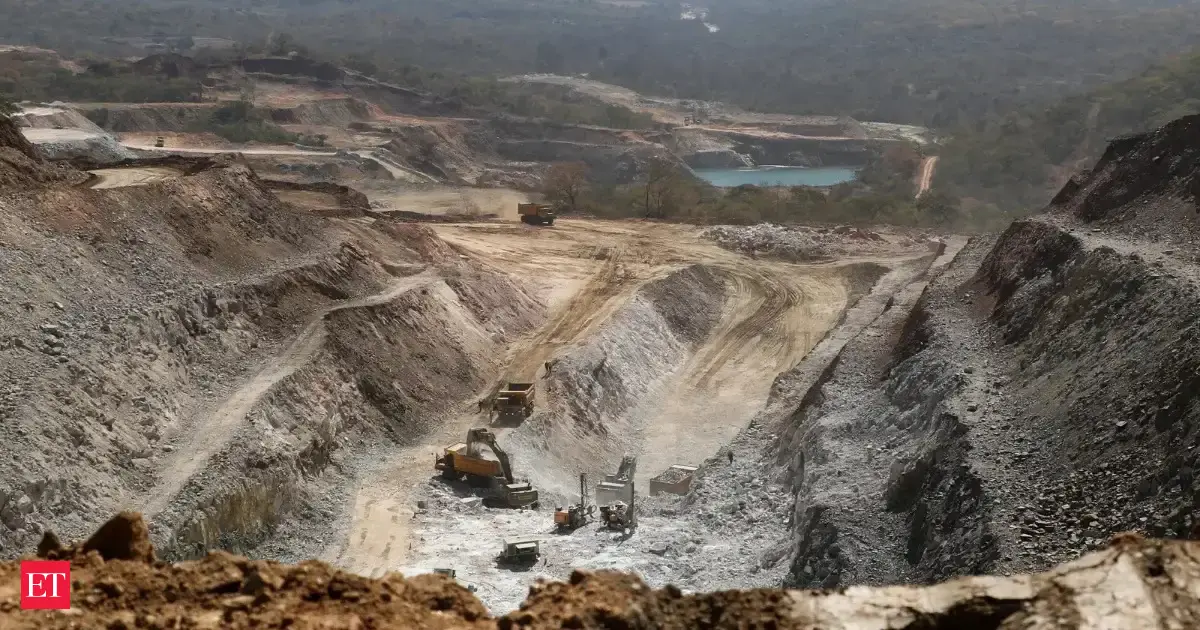
The Mines Ministry will soon launch an incentive scheme to promote domestic processing of lithium and nickel as India seeks to build an integrated critical mineral value chain and reduce dependence on imported processed materials. The government has also cleared critical mineral processing parks in Gujarat, Maharashtra, Odisha and Andhra Pradesh, while flagging concerns over auctioned mining blocks that remain idle despite securing clearances and leases. View More
New Delhi: The Mines Ministry will soon introduce an incentive scheme to promote the domestic processing of lithium and nickel, Mines Secretary Keshav Chandra said on Tuesday. The initiative is intended to support the creation of an integrated critical mineral value chain in the country and lower India's dependence on imported processed materials. Also Read: India's state-owned KABIL expects to start lithium production in Argentina in 4-5 years "Very soon, we will be launching our scheme for lithium and nickel," Chandra said at the 60th Annual General Meeting of the Federation of Indian Mineral Industries (FIMI). The government has also cleared proposals for setting up critical mineral processing parks in Gujarat, Maharashtra, Odisha and Andhra Pradesh. Live Events Chandra said he had recently assessed the progress made by the four states and expressed satisfaction with their preparations. "All of them are doing a fantastic job. Within a short period, they have identified the sources of minerals, the manner in which they will be processed and the downstream industries that can be developed," he said. He said the states had identified mineral sources, processing methods and the downstream industries that could be developed around the proposed parks. The secretary also flagged concerns over mining blocks that have not begun operations even after the completion of auctions, receipt of statutory clearances and execution of mining leases. Also Read: India to soon unveil incentives for lithium, nickel processing with around Rs 3,000 crore outlay, sources say Referring to the practice as "squatting", Chandra said the government was not comfortable with companies holding on to mining blocks without commencing operations. "Somebody has secured a mining block, all clearances have been obtained, and the lease has been signed, but operationalisation has still not commenced," he said. Chandra urged FIMI members to address the issue seriously, saying the government was concerned about such instances. Lithium is an important input for lithium-ion batteries used in electric vehicles, consumer electronics and battery energy-storage systems. Its light weight and high electrochemical potential help batteries store greater amounts of energy. Nickel, widely used in stainless steel manufacturing, is also important for high-energy-density lithium-ion batteries. Nickel-rich cathode chemistries can increase battery energy density and reduce reliance on cobalt, supporting their use in electric vehicles and stationary energy-storage systems. .Pbanner{display:flex;justify-content:space-between;align-items:center;background-color:#ec1c40;margin-top:20px;padding:5px 10px;border-radius:4px;color:#fff;line-height:10px;width: 100%;box-sizing: border-box} .Pbannertext{display:flex;align-items:center;font-size:16px;font-weight:600;font-family:'Montserrat';} .Pbannertext img{height:20px;margin:0 6px} .Pbannerbutton a{display:flex;align-items:center;background-color:#fff;color:#ec1c40;text-decoration:none;font-weight:600;padding:4px 8px;border-radius:6px;font-size:15px;font-family:'Montserrat';} .Pbannerbutton img{height:20px;margin-right:6px} .Pbannerbutton a:hover{background-color:#f7f7f7} Add as a Reliable and Trusted News Source Add Now! (You can now subscribe to our Economic Times WhatsApp channel) (You can now subscribe to our Economic Times WhatsApp channel)

German Green Steel and Power Ltd will hit the primary market on September 25 with a Rs 304-crore initial public offering (IPO), as the iron and steel maker seeks funds to expand its manufacturing capacity and invest in renewable power.
In a public announcement, the Gujarat-based company has fixed a price band of Rs 132-139 per equity share for its IPO, which is scheduled to close on September 29.
The IPO comprises a fresh issue of equity shares worth up to Rs 290 crore and an Offer for Sale (OFS) of 10 lakh equity shares valued at Rs 13.9 crore.
At the upper end of the price band, the issue size works out to around Rs 304 crore.
The company has reduced its issue size as the earlier IPO plan comprised a fresh issue of up to Rs 450 crore and an OFS of up to 20 lakh equity shares.
Proceeds from the fresh issue will be utilised for the expansion of the company's manufacturing facility at Samakhiyali, Kutch, Gujarat, and a hybrid wind and solar power plant, repayment of debt, and gener View More

Orient Cables has priced its IPO at ?258-272 per share, AceVector at ?30-32, and German Green Steel and Power at ?132-139; all three issues open on September 25 View More
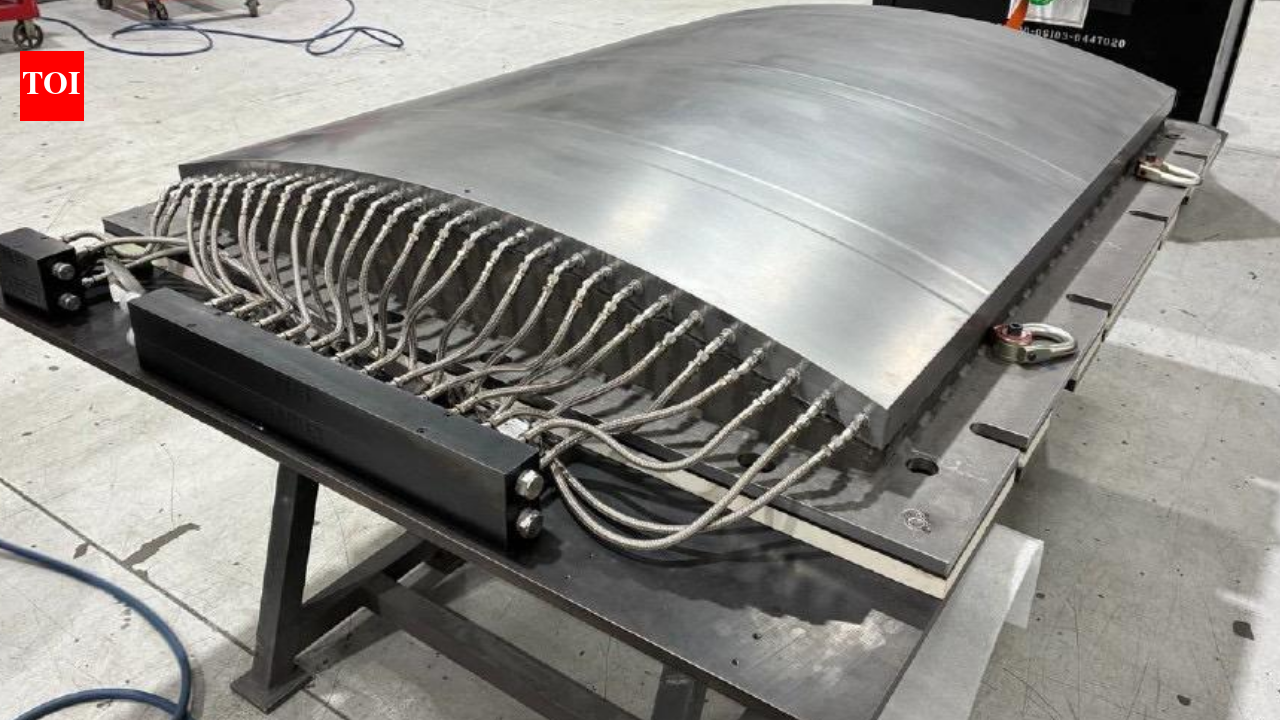
A team at the US Department of Energy’s Oak Ridge National Laboratory (ORNL) has spent eight weeks 3D-printing a massive steel mold that stands 6 feet tall, measures 4 feet wide and weighs nearly 2 tons. The tool, developed with Boeing, is designed for manufacturing thermoplastic composite aircraft components and will contribute to NASA’s Hi-Rate Composite Aircraft Manufacturing (HiCAM) project. View More
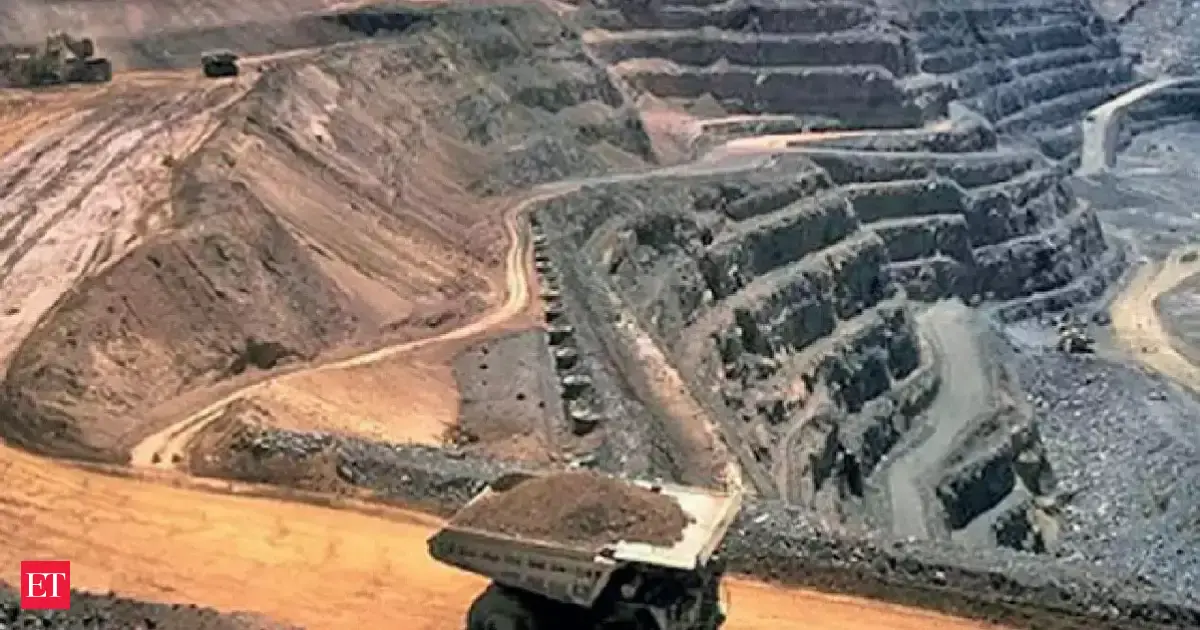
The government plans to operationalise India’s first mineral exchange by the next financial year, aiming to enable transparent trading and market-based price discovery. The move comes as the mining sector expands, with mineral production rising to ?1.86 lakh crore in FY26. View More
New Delhi: India's first mineral exchange, which would create a transparent, electronic delivery-based trading platform for minerals, is likely to be registered and operationalised by the next financial year, according to a top government official. This comes after the mines ministry's notification of the Mineral Exchange Rules, 2026 in June. The exchange would create a transparent, electronic delivery-based trading platform for minerals, facilitate market-based price discovery and reduce information asymmetry between producers and buyers. Also read: India’s mining, metals sector needs technology shift to strengthen supply chains: Report "We expect to register and operationalise the first Mineral Exchange by the next financial year. Work on the registration of the exchange is currently under way," Mines Additional Secretary Veena Kumari Dermal said during 60th Annual General Meeting of Federation of Indian Mineral Industries (FIMI). Live Events The ministry notified the Mineral Exchange Rules in June to create a state-of-the-art platform with transparent price discovery and standardised quality assessment, she said. The exchange will also feature risk-management mechanisms to prevent market manipulation and protect participants, Dermal said, adding that it would provide producers and buyers with a reliable and globally competitive marketplace for minerals. She further said that minerals form the backbone of the infrastructure, manufacturing, and national energy security. As the country advances towards the vision of Viksit Bharat 2047, India's primary objective is to build a self-reliant economy. The gravity of this task is underscored by the country's import figure. In financial year 2025-26 alone, India imported minerals valued at Rs 10,12,000 crore. To reduce this heavy burden on the national exchequer, the industry has to expand, increase the domestic capacity, increase the production, and optimise its local resources. In the last decade, the mining sector has seen exceptional growth. The value of mineral production in 2013-14 was Rs 49,900-50,000 crore and it grew to Rs 1.86 lakh crore in 2025-26, showing a cumulative annual growth rate of 11.6 per cent. And this growth is driven by the policy reforms taken up by Ministry of Mines, she added. The production of iron ore also increased from 152 million tonne in 2013-14 to 312 million tonne last year. The limestone production increased from 280 MT to 483 MT and bauxite from 22 MT to 26 MT. "We are seeing the increase in mineral production, but that is not sufficient to meet the aspiration of the country," she explained. .Pbanner{display:flex;justify-content:space-between;align-items:center;background-color:#ec1c40;margin-top:20px;padding:5px 10px;border-radius:4px;color:#fff;line-height:10px;width: 100%;box-sizing: border-box} .Pbannertext{display:flex;align-items:center;font-size:16px;font-weight:600;font-family:'Montserrat';} .Pbannertext img{height:20px;margin:0 6px} .Pbannerbutton a{display:flex;align-items:center;background-color:#fff;color:#ec1c40;text-decoration:none;font-weight:600;padding:4px 8px;border-radius:6px;font-size:15px;font-family:'Montserrat';} .Pbannerbutton img{height:20px;margin-right:6px} .Pbannerbutton a:hover{background-color:#f7f7f7} Add as a Reliable and Trusted News Source Add Now! (You can now subscribe to our Economic Times WhatsApp channel) (You can now subscribe to our Economic Times WhatsApp channel)

The Gujarat-based company has fixed a price band of ?132-139 per equity share for its IPO, which is scheduled to close on September 29 View More
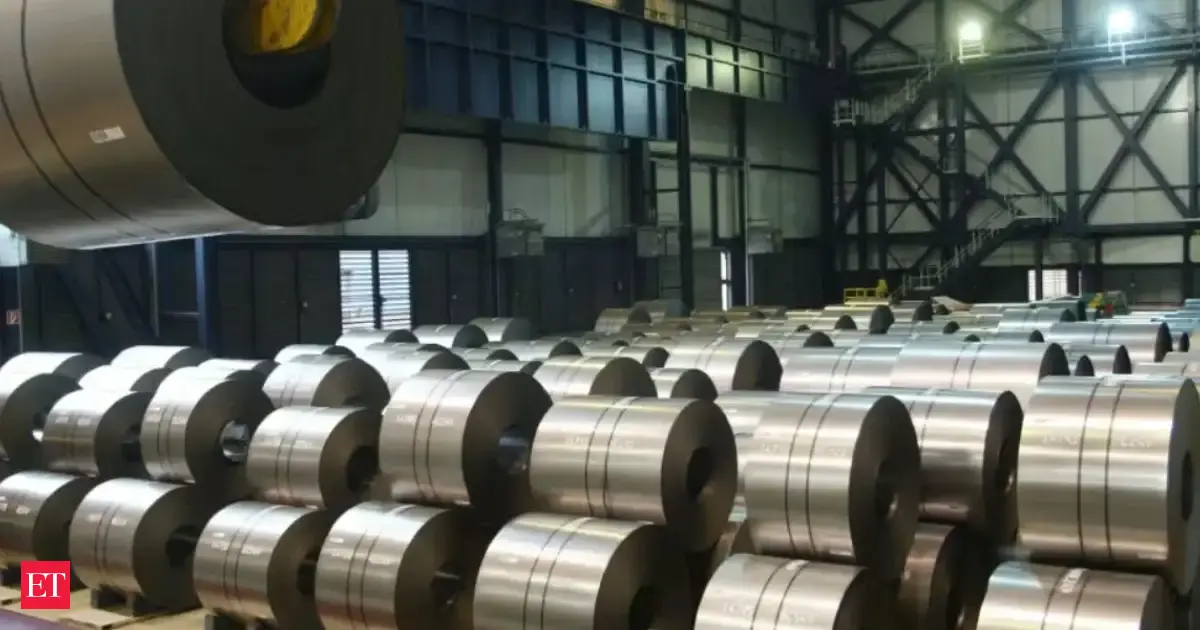
Domestic steel prices have reached a four-year high, driven by costlier raw materials. Hot rolled and cold rolled coil prices have significantly increased since early August. This price surge is mainly due to rising coking coal and iron ore prices. Steel consumption in India has shown a seven percent year-on-year rise. Prices are expected to remain elevated through the fiscal year due to strong demand. View More
New Delhi: Domestic steel prices have touched a four-year high due to costlier raw materials, especially coking coal , coupled with rise in post monsoon demand, according to market research firm BigMint. The trend is expected to continue over the remaining quarters of the ongoing fiscal year, it said in a report. Hot rolled coil (HRC) and CRC -- two of the most common types of flat steel products used globally -- are trading at Rs 64,000 per tonne and Rs 75,000 a tonne, respectively. Such levels were last seen in June 2022, BigMint data showed. Read more: Domestic steel prices likely to stay firm as demand recovery, supply constraints support market: Report From August 1, prices of HRC and CRC have increased by Rs 6,000 per tonne and Rs 8,500 a tonne, respectively. HRC and CRC were at Rs 58,000/ tonne and Rs 66,500/tonne at the start of August. Live Events The spike in prices is mainly due to rise in key raw materials coupled with an increase in demand, a BigMint analyst said. Coking coal, mainly imported, has seen a surge of around USD 65 per tonne to USD 305/tonne in just one month. While iron ore fines have seen a rise of Rs 200-250 per tonne to Rs 4,500 a tonne. Read more: India can do without US steel exports, says Naveen Jindal; flags domestic demand as key growth driver Coking coal alone contributes over 30 per cent to the cost of steel production through blast furnace route. In April-August FY27, the consumption of steel in India reached 70 MT, posting a 7 per cent year-on-year rise. On the outlook, BigMint said that the prices are unlikely to cool down in the remaining part of the fiscal as demand is expected to continue from both construction and infrastructure sector. "These sectors consume 60 per cent of the steel produced in India and demand mostly comes after the post monsoon period every year," the analyst said adding the demand is also complemented from the automotive industry. HRC and CRC are flat steel used in the auto, appliances and construction industries. Hence, any rise in the prices will impact the prices of vehicles, consumer goods and cost of construction as steel is a raw material for these sectors. .Pbanner{display:flex;justify-content:space-between;align-items:center;background-color:#ec1c40;margin-top:20px;padding:5px 10px;border-radius:4px;color:#fff;line-height:10px;width: 100%;box-sizing: border-box} .Pbannertext{display:flex;align-items:center;font-size:16px;font-weight:600;font-family:'Montserrat';} .Pbannertext img{height:20px;margin:0 6px} .Pbannerbutton a{display:flex;align-items:center;background-color:#fff;color:#ec1c40;text-decoration:none;font-weight:600;padding:4px 8px;border-radius:6px;font-size:15px;font-family:'Montserrat';} .Pbannerbutton img{height:20px;margin-right:6px} .Pbannerbutton a:hover{background-color:#f7f7f7} Add as a Reliable and Trusted News Source Add Now! (You can now subscribe to our Economic Times WhatsApp channel) (You can now subscribe to our Economic Times WhatsApp channel)
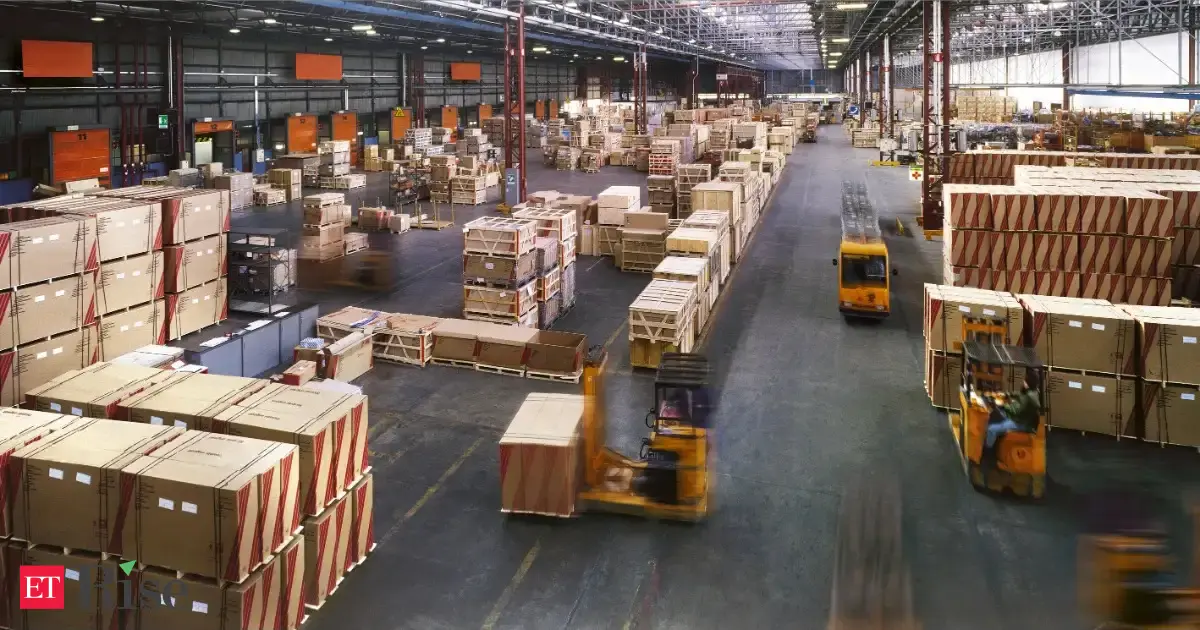
Among the key engineering exports to New Zealand are automobiles, industrial machinery for the dairy sector, medical & scientific instruments, office equipment and products of iron and steel. View More
The ratification of India-New Zealand FTA marks a new chapter in the bilateral trade between the two countries. The trade pact provides for zero-duty market access for all Indian exports including engineering goods, said Pankaj Chadha, Chairman, EEPC India. India's engineering exports to New Zealand have been on the rise and are expected to grow further, he noted. India’s engineering exports to New Zealand grew from US$ 129.8 million in 2024-25 to US$ 140.5 million in 2025-26, showing steady momentum in a relatively small but high potential market. Among the key engineering exports to New Zealand are automobiles, industrial machinery for the dairy sector, medical & scientific instruments, office equipment and products of iron and steel. “The FTA with New Zealand offers opportunities for engineering goods exporters to diversify their product line-up. With the trade agreement coming into force next month, we can certainly target the doubling of engineering exports in the next five years to US$280-300 million,” added Chadha. Meanwhile, the FTA is going to enter into force on 20 October 2026. The FTA was signed on 27th April 2026 at Bharat Mandapam, New Delhi, by Union Minister of Commerce and Industry Piyush Goyal and New Zealand’s Minister for Trade and Investment Todd McClay. Live Events The FTA, according to the government, also sets the stage for deeper investment gains for India, with New Zealand's commitment to facilitate US $20 billion in investment into India. This investment by New Zealand will benefit Indian agriculture, manufacturing, infrastructure and start-ups. .Pbanner{display:flex;justify-content:space-between;align-items:center;background-color:#ec1c40;margin-top:20px;padding:5px 10px;border-radius:4px;color:#fff;line-height:10px;width: 100%;box-sizing: border-box} .Pbannertext{display:flex;align-items:center;font-size:16px;font-weight:600;font-family:'Montserrat';} .Pbannertext img{height:20px;margin:0 6px} .Pbannerbutton a{display:flex;align-items:center;background-color:#fff;color:#ec1c40;text-decoration:none;font-weight:600;padding:4px 8px;border-radius:6px;font-size:15px;font-family:'Montserrat';} .Pbannerbutton img{height:20px;margin-right:6px} .Pbannerbutton a:hover{background-color:#f7f7f7} Add as a Reliable and Trusted News Source Add Now!

Trump, facing low approval on the economy ahead of the midterm election, has an added incentive to emerge from the summit with China's Xi touting trade wins. View More
China's President Xi Jinping and President Donald Trump visit the Temple of Heaven in Beijing, China, May 14, 2026.China Pool | Getty ImagesPresident Donald Trump and Chinese leader Xi Jinping's aims of bolstering trade stability and clinching economic wins could be scrambled by a roiling debate over artificial intelligence, as well as shifting U.S. tariffs and an Iran war-related sanctions operation.The two leaders are expected to seek ways to strengthen their fragile trade truce when they meet in Washington for their second face-to-face summit this year.Despite gestures of goodwill surrounding the lead-up to the summit, the two sides continue to lob accusations and launch retaliatory trade actions.Treasury Secretary Scott Bessent, in an interview with CNBC's "Squawk Box" on Monday, said the "great respect" Trump and Xi have for each other trickles down to broader U.S.-China negotiations. He then noted, "We had some deliverables that have not been completely fulfilled" by China as part of a trade agreement Trump and Xi reached in Busan, South Korea, nearly a year ago.Some China analysts have raised concerns about the unusually top-down diplomatic arrangement between the two economic superpowers. "A number of inconsistent viewpoints seem to be jostling each other," as Trump dictates "the overarching approach" toward China "while letting more negative actions occur at the margins," said Claire Reade, a senior associate with the trustee chair in Chinese business and economics at the Center for Strategic and International Studies.The summit comes with less than six weeks left in a U.S. election cycle that has largely centered on Americans' cost of living concerns. Trump, whose polling marks on that key issue have sunk to new lows, has even more of an incentive to emerge from the summit with Xi touting some form of economic deal.Here's where the U.S.-China trade relationship stands and what's at risk when Trump and Xi meet:State of tradeLast year's explosive trade war saw the two economic superpowers hike tariffs on each other's goods to dizzying heights: U.S. levies on Chinese imports hit 145% at the peak of the squabble, while Beijing's retaliatory duties reached 125%.Those tariffs were slashed in May 2025 after trade negotiators in Switzerland struck a temporary deal, which was extended in mid-August. Trump and Xi then made an agreement in Busan that led the countries to further scale back their tit-for-tat trade measures. As part of that deal, China agreed to suspend export controls on rare earths and buy U.S. agricultural products, while the U.S. reduced some tariffs and suspended other trade retaliation. That deal was set to last for one year, and will expire Nov. 10, a week after the U.S. election, absent an extension.Despite the cooldown, both countries continue to impose high tariffs on each other's goods, multiple analyses show. As of July, the effective tariff rate of 22.8% on Chinese products is the highest among major U.S. trading partners, with steel and aluminum imports facing the heaviest duties, according to the Penn Wharton Budget Model from the University of Pennsylvania.The Congressional Research Service's estimate is even higher, calculating the U.S. average tariff rate on China in July at roughly 36.5%, versus Beijing's 31% rate on U.S. goods.U.S. trade with China fell sharply in 2025, with total goods trade declining nearly 30% from the prior year â and the first seven months of 2026 show a continued decline, according to U.S. Census data. But Beijing remains a major economic partner with Washington, behind only Mexico and Canada. As recently as 2019, China was the largest U.S. trading partner.Trump has long complained about the large trade deficits the U.S. maintains with other countries, including China, while advocating for a domestic manufacturing resurgence. While the U.S. goods trade deficit with China so far this year is lower than the same period in 2025, it remains among the highest in the world at roughly $91.2 billion.Setting the tableTrump and Xi last convened at a state dinner in Beijing in mid-May, part of a whirlwind summit heavy on pomp and circumstance but ultimately lacking in deliverables.Many China watchers expect a similar outcome this time.A one-year extension of the trade truce is "our base case," China analysts from Bank of America Global Research said in a client note last week. That extension would maintain the status quo on tariffs and bar new export controls, a major sticking point before the Busan meeting.China could also agree to make additional purchases of U.S. goods, "potentially including more Boeing aircraft," they wrote. After Beijing, the countries confirmed that China would buy 200 Boeing planes, a smaller number than some investors had expected."We expect limited progress elsewhere," including on the prospect of expanding access to advanced semiconductors or changing export controls that remain in place, the bank's analysts said.watch nowVIDEO22:2922:29Watch CNBC's full interview with Treasury Secretary Scott BessentSquawk BoxOther China experts agreed. Both Trump and Xi "appear to be managing for small gains and conflict avoidance," Ryan Hass, director of the Brookings Institution's John L. Thornton China Center, told CNBC in an email."The uneasy equilibrium sustains because it serves two functions for both leaders," Hass explained. "First, it gives both leaders an ability to signal to their citizens that they have the situation with their foremost geopolitical rival under control. Second, it buys time and space for both leaders to reduce dependencies and vulnerabilities from the other."Bessent seemed to confirm some of those predictions Monday morning, telling CNBC, "I think we're going to maintain" the tariff truce."That was a focal point" of talks over the weekend with Chinese Vice Premier He Lifeng, Bessent said, adding, "We've had great stability in the relationship since last fall."Read more CNBC politics and policy coverageTrump administration advances $24.3 billion F-35 deal to Saudi ArabiaBill to curb AI data center utility costs hits snag in SenateHouse heads home to campaign amid calls for urgent AI actionBessent also suggested progress was made on an arrangement for a reciprocal $30 billion tariff reduction, which Beijing floated earlier this month.Bessent said U.S. Trade Representative Jamieson Greer has "operationalized" that proposal, which he called a "30-by-30 trade deal for non-critical goods."The U.S. side of the deal would involve selling agriculture, energy and other products such as medical devices, while China "would be bringing in more everyday items," Bessent told CNBC.Reade, of CSIS, told CNBC the U.S. may only want a limited extension of the trade truce.That truce is a key source of U.S. leverage, and "they're not going to want to let go of that leverage on the truce [by letting it] extend too far into the future," said Reade, who was an assistant U.S. trade representative for China during the Obama administration.AI takes over Bessent has said AI will be at the top of the agenda for Trump and Xi. They'll have much to discuss.The U.S. and China are competing leaders in the nascent industry, which is increasingly central to the world economy. Trump sees AI dominance and U.S. economic superiority as inextricably linked and has strongly encouraged the buildout of AI infrastructure with minimal regulatory interference."There is a SICK conspiracy going on against AI and Data Centers, and the only one that is happy about it is China," Trump wrote on Truth Social last week. "WHOEVER WINS AI, WINS! We are leading China, and all others, and will continue to do so."Some heads of AI companies in the U.S., however, have sounded alarms about the potentially catastrophic risks posed by advanced AI models developing too quickly.Those calls have drawn rebukes from Trump. But in a Truth Social post on Monday, Trump said the government "will rein things in if we have to" â suggesting at least a slight shift away from his more laissez-faire stance that could carry into talks with Xi.Bessent said Sunday that he and his Chinese counterparts discussed establishing a dialogue that would allow for the two countries to notify each other about AI incidents.Iran sanctionsTrump's latest moves in the war against Iran could also weigh on Xi's visit. Last month, the U.S. launched its effort to intensify economic pressure on Iran by targeting its financial enablers â a plan that instantly put a spotlight on China, Tehran's top trading partner.The Trump administration has said no country is exempt from potential sanctions, but it has yet to directly target Beijing.Bessent told CNBC on Monday that "we did" talk about those sanctions during the weekend meeting with Chinese officials."Having quiet behind the scenes discussions are better than having a public display," Bessent said, adding that Chinese financial authorities "have been very engaged in the process."Who's coming?Just like in Beijing, numerous top business executives are once again joining the festivities. A senior U.S. official told reporters last week that CEO attendees at Thursday's state dinner will include Amazon's Jeff Bezos, Elon Musk of Tesla and SpaceX, Google's Sundar Pichai, Michael Dell of Dell and Apple executive board chairman Tim Cook. CNBC has previously reported the planned attendance of JPMorgan Chase CEO Jamie Dimon, Citigroup chief Jane Fraser, Nvidia CEO Jensen Huang and OpenAI's Sam Altman.Other signs have emerged that Trump is planning a lavish affair for the Chinese leader. First lady Melania Trump's office reportedly said the ceremony for Xi will include a presidential salute from U.S. Marines on the White House South Lawn, followed by a military review in the Rose Garden featuring rooftop herald trumpets and concluding with a multi-aircraft flyover.The first lady last week posted a video hyping up her meticulous planning for the state dinner. The president himself will greet Xi on the tarmac upon his arrival at Joint Base Andrews in Maryland. Choose CNBC as your preferred source on Google and never miss a moment from the most trusted name in business news.