
Latest Sectors News

European multinationals are increasingly exploring listing their Indian subsidiaries in Mumbai, driven by the vibrant domestic fundraising market and the prospect of an EU-India trade agreement. Companies in auto components, speciality chemicals, and clean energy are preparing for IPOs, signaling growing confidence in India's regulatory framework and investor base. View More
Mumbai: As negotiations between Brussels and New Delhi over the EU-India trade agreement gather pace, a slew of European multinationals are increasingly exploring listing their Indian subsidiaries in Mumbai. Investment bankers said they are already seeing a clear uptick in enquiries for initial public offerings (IPOs) from European industrial companies, particularly in auto components, speciality chemicals and clean energy, especially after the trade deal. More notably, the vibrant domestic fund-raising market - where multinational companies have been able to sell shares at eye-popping valuations in the last two years - is also encouraging them to explore domestic listings. According to bankers, German auto components firm MAHLE GmbH and Swedish gaming company Modern Times Group, through its Indian mobile gaming subsidiary PlaySimple are preparing to file draft red herring prospectuses (DRHPs) with the market regulator for proposed IPOs soon. Danish brewer Carlsberg is also contemplating an IPO. Emails sent to the companies remained unanswered. AgenciesAuto parts, specialty chem & clean energy cos among those keen to unlock value This week, Italian giant Bonfiglioli Transmissions filed a DRHP for a ₹2,000 crore IPO. Last year, German Green Steel & Power received Sebi nod to go ahead with the IPO and will be launching its IPO soon. SAEL Industries, an Indian renewable energy firm backed by Norwegian state-run fund Norfund, filed papers in November 2025 for an ₹4,575 crore IPO. "The emerging interest from European industrial, auto-component and clean-energy firms signals a deeper level of confidence in India's regulatory architecture, disclosure standards and institutional investor base," said Bhavesh Shah, managing director and head - Investment Banking, Equirus Capital. "It is the growing base of the domestic institutional investors that is triggering this trend." Live Events Shah said if the momentum in the IPO market sustains, India could evolve into a preferred regional hub for multinational listings. Several mandates are believed to be at the pre-filing stage, with listings expected over the next 12 to 18 months. The pipeline, according to bankers, spans sectors from precision engineering and renewable energy equipment to consumer-facing brands with deep European heritage. "The conclusion of the India-EU Free Trade Agreement, has turned India's capital markets into a strategic expansion route for European multinationals specifically for European automakers," said Neha Agarwal, MD and head, Equity Capital Markets, JM Financial Institutional Securities. "Following the successful listings of Orkla India and Carraro India , we are seeing a structural shift where European parents no longer view India just as a manufacturing hub, but as a primary destination to unlock equity value," according to Agarwal. “With firms like Bonfiglioli now in the pipeline, the FTA acts as the ultimate ‘confidence bridge’, allowing European giants to tap into India’s high-valuation premiums and capital to fund their global green ambitions.” Not all are convinced the floodgates're about to open. Dev Chandrasekhar, partner at Mumbai-based valuations and branding advisory firm Transcendum, expects listings by European firms in India to be “selective and opportunistic rather than a stampede”. “For European companies seeking to de-risk supply chains away from China while accessing a $4 trillion economy, an Indian listing may no longer be optional, but it may be inevitable... let’s not get ahead of ourselves because the EU-India deal is still being negotiated.” Also, many European firms may be sceptical of listing here “European companies are notoriously cautious about the governance dilution that comes with a public listing in an emerging market,” said Chandrasekhar. “The regulatory environment has improved, but Sebi’s disclosure norms, related-party transaction scrutiny and promoter lock-in requirements can be uncomfortable for European sponsors used to lighter-touch regimes.” .Pbanner{display:flex;justify-content:space-between;align-items:center;background-color:#ec1c40;margin-top:20px;padding:5px 10px;border-radius:4px;color:#fff;line-height:10px;} .Pbannertext{display:flex;align-items:center;font-size:16px;font-weight:600;font-family:'Montserrat';} .Pbannertext img{height:20px;margin:0 6px} .Pbannerbutton a{display:flex;align-items:center;background-color:#fff;color:#ec1c40;text-decoration:none;font-weight:600;padding:4px 8px;border-radius:6px;font-size:15px;font-family:'Montserrat';} .Pbannerbutton img{height:20px;margin-right:6px} .Pbannerbutton a:hover{background-color:#f7f7f7} Add as a Reliable and Trusted News Source Add Now! (You can now subscribe to our ETMarkets WhatsApp channel) (You can now subscribe to our ETMarkets WhatsApp channel)

India is actively seeking new export destinations for its steel. The focus is shifting towards the Middle East and various Asian nations. Government-to-government discussions are progressing well. Several agreements with Indian companies are anticipated within the next six months. This diversification aims to expand India's steel market reach beyond traditional European destinations. View More
New Delhi: India is exploring new markets for steel exports in the Middle East and various Asian nations, an official said. Several agreements are also expected with Indian companies in the next six months in this regard, the official said. "...predominantly, our exports were focused on Europe, but we (government is) are trying to diversify exports...," the official told PTI. Government-to-government level dialogues are taking place with a number of countries in the Middle East and Asia, he said. Dialogues are underway at various levels and an outcome is expected in six months. Live Events "We are trying to get MoUs with countries, so that we can work on these sectors. For example, for markets, the Middle East is a new area where a lot of infrastructure is coming up," the official said. .Pbanner{display:flex;justify-content:space-between;align-items:center;background-color:#ec1c40;margin-top:20px;padding:5px 10px;border-radius:4px;color:#fff;line-height:10px;} .Pbannertext{display:flex;align-items:center;font-size:16px;font-weight:600;font-family:'Montserrat';} .Pbannertext img{height:20px;margin:0 6px} .Pbannerbutton a{display:flex;align-items:center;background-color:#fff;color:#ec1c40;text-decoration:none;font-weight:600;padding:4px 8px;border-radius:6px;font-size:15px;font-family:'Montserrat';} .Pbannerbutton img{height:20px;margin-right:6px} .Pbannerbutton a:hover{background-color:#f7f7f7} Add as a Reliable and Trusted News Source Add Now! (You can now subscribe to our Economic Times WhatsApp channel) (You can now subscribe to our Economic Times WhatsApp channel)
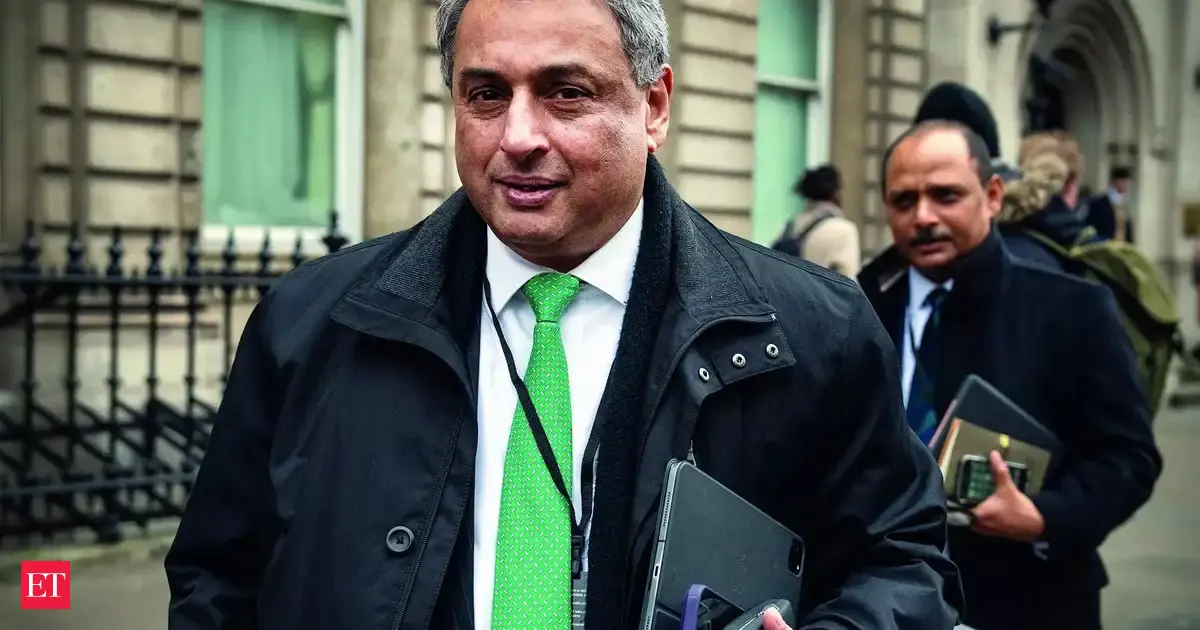
Tata Steel's CEO T.V. Narendran calls for government oversight on cheap steel imports. He anticipates higher steel prices and improved company profits in the March quarter. Domestic demand remains robust, driven by infrastructure, construction, and the auto sectors. Europe's carbon tax is seen as beneficial for Tata Steel's European operations. View More
The government must keep a close watch on unfairly priced steel imports to protect domestic industry, Tata Steel Managing Director and CEO T.V. Narendran said, even as he forecasts a rise in steel prices and stronger margins for the company in the March quarter. In an interview to The Times of India's Saksham Mehta, Narendran said trade safeguards have helped but more vigilance is needed. “The safeguard has been helpful, and being extended for another two years is good. Our ask of the govt is to keep a watch on unfairly priced imports. The steel sector is the biggest private-sector capital investor in the country, and we should not be derailed by unfairly priced imports from countries that are not making money at those prices.” He added that speed matters. “Second, whenever there are these trade complaints, action should be taken fast because the damage is caused fast. Third, which is already addressed in the Budget, is to continue to spend on infrastructure.” India’s steel industry has expanded sharply but also felt pressure from imports priced below domestic rates. According to the Economic Survey 2025-26, India was a net importer of steel in FY26 (April-October), largely because international prices stayed lower than local levels. Crude steel production grew about 11.7 per cent and finished steel output rose 10.8 per cent in that period. Finished steel consumption also climbed 7.8 per cent year-on-year. The Tata Steel CEO also said steel prices in India have likely hit their bottom and are now set to move higher, helping improve profitability. He further said Europe’s carbon border tax will support Tata Steel’s European business and have little impact on its Indian operations, while domestic demand remains strong on the back of infrastructure, construction and auto sectors. Live Events Narendran said pricing trends are turning favourable after a weak period. “Steel prices seem to have hit their bottom in the last quarter. We expect steel prices to go up in India. The realisations will be about Rs 2,200/ tonne higher for India for Tata Steel in the fourth quarter compared to the third quarter.” He added that Europe will see a different trend because of product mix. “In Europe, while the spot prices started going up, the realisations quarter-on-quarter will be down about Rs 3,200/ tonne simply because of the mix: you are selling more volumes in some of the lower-price segments. Overall, we expect margins to be better in Q4 compared to Q3.” On raw material costs, Narendran said coking coal remains volatile and exposed to supply disruptions, especially in Australia. “Coking coal is not a very liquid market; it is very volatile depending on one-off events. If there’s bad weather in Australia and ports are impacted, then coking coal prices shoot up. Most of the coal we import is from Australia because that is the best coal for us.” He said alternative sources do not fit Tata Steel’s technology. “The US trade deal opens up options, but those coals are not suitable for Tata Steel as we use a technology called stamp charging, for which Australian or Indian coal is better. Also, we buy quite smartly and use a lot of blends to mitigate the cost.” On Europe’s carbon border adjustment mechanism, Narendran said it creates a level playing field. “CBAM is actually less of a trade issue and more of a carbon equalisation tax. We operate in Europe and we pay a carbon tax in Europe; CBAM ensures that anyone who sells in Europe pays the same carbon tax. It is positive for our European operation, and we do not sell much steel from India to Europe, so we are not impacted by CBAM significantly for the Indian operation.” He said steel demand in India continues to outpace economic growth. “We’ve always said over the last few years that steel demand growth in India will be at a higher growth rate than the GDP growth rate because it is investment led growth. When GDP is growing at 7%, we see steel demand grow at 9–10%, and strong growth across sectors like automotive and construction.” However, he flagged liquidity stress in parts of the market. “Some concerns are payments from state govts, as MSME sector is impacted. In some projects, the payments come late, so liquidity is a bit of a concern in the market. But from a pure demand point of view, the Indian demand story is great.” On the Competition Commission of India probe into major steel producers, Narendran said Tata Steel will cooperate. “We will follow due process. From what we saw in the report, the commentary is more on steel prices moving up and down, and we feel that steel prices reflect global prices, commodity prices, and coking coal costs. It is very open and transparent; we will make our submissions to the CCI.” .Pbanner{display:flex;justify-content:space-between;align-items:center;background-color:#ec1c40;margin-top:20px;padding:5px 10px;border-radius:4px;color:#fff;line-height:10px;} .Pbannertext{display:flex;align-items:center;font-size:16px;font-weight:600;font-family:'Montserrat';} .Pbannertext img{height:20px;margin:0 6px} .Pbannerbutton a{display:flex;align-items:center;background-color:#fff;color:#ec1c40;text-decoration:none;font-weight:600;padding:4px 8px;border-radius:6px;font-size:15px;font-family:'Montserrat';} .Pbannerbutton img{height:20px;margin-right:6px} .Pbannerbutton a:hover{background-color:#f7f7f7} Add as a Reliable and Trusted News Source Add Now! (You can now subscribe to our Economic Times WhatsApp channel) (You can now subscribe to our Economic Times WhatsApp channel)

Tata Steel meets 100% of its iron ore requirements in India through six legacy mines allotted before the Mines and Minerals (Development and Regulation) Amendment Act, 2015. View More
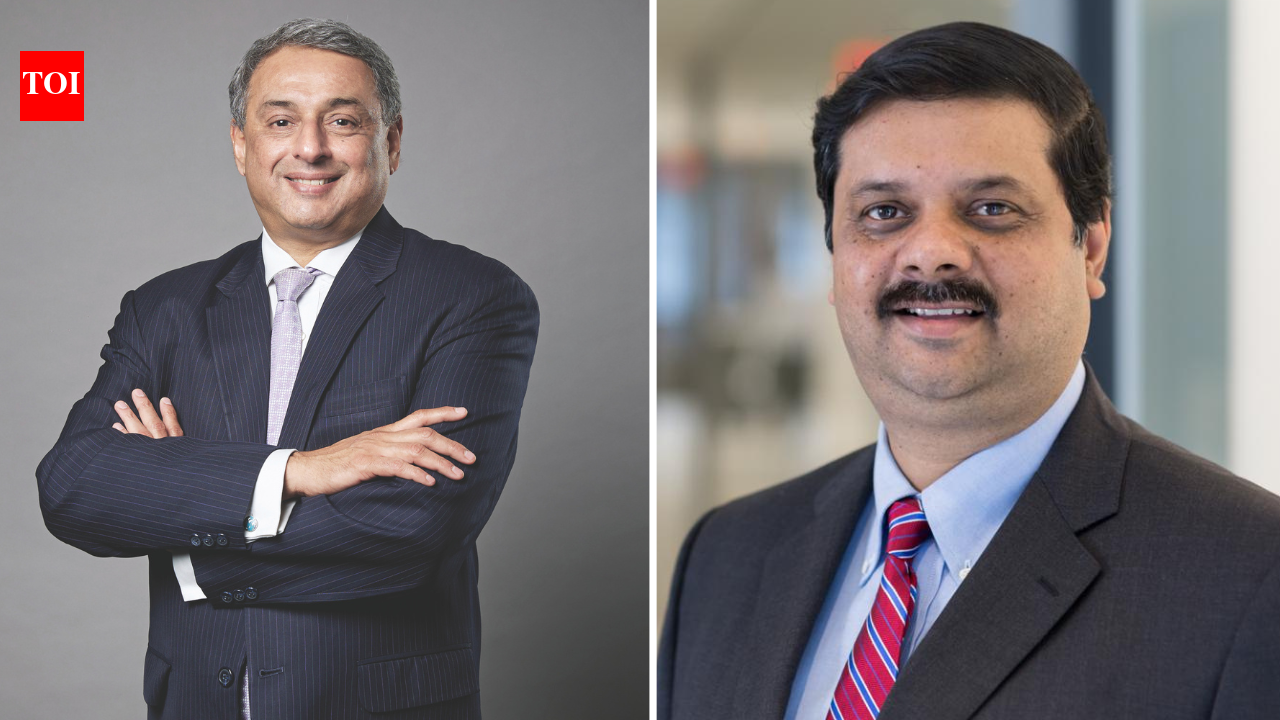
Tata Steel expects domestic steel prices to rise this quarter, while its CFO highlights margin protection amidst a challenging year. The EU's carbon border tax is seen as a positive for Tata Steel's European operations, leveling the playing field for carbon costs. View More
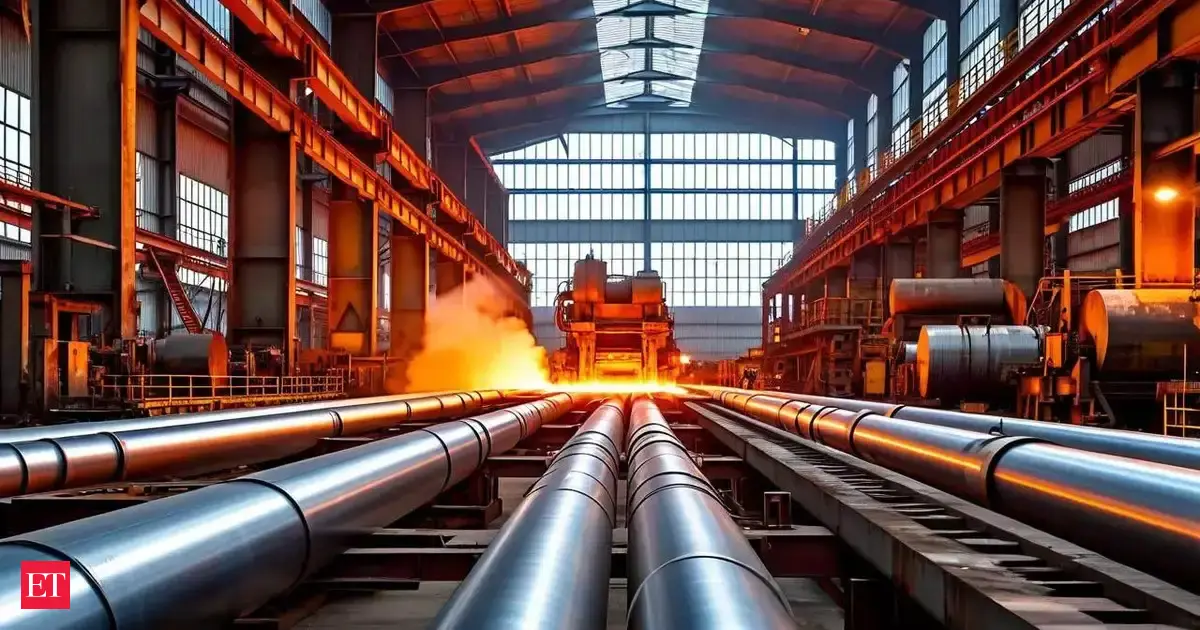
European steel prices are expected to increase significantly in the coming years. New carbon emission regulations and tariffs are driving this structural shift. Tata Steel sees improved profitability in its Netherlands operations due to these changes. The company anticipates positive developments for the UK steel industry soon. Tata Steel's Indian operations continue to grow robustly. View More
Mumbai: Steel prices in Europe are set to move structurally higher in the next few years because of carbon emission-related pricing and quota-based tariffs, Tata Steel chief financial officer Koushik Chatterjee said. "What we are seeing in the EU (European Union) is a long phase of prices settling down at a much higher level," he told ET. While the EU implemented the Carbon Border Adjustment Mechanism (CBAM) at the start of the year, the Tariff Rate Quota will come into effect later this year. Both moves are aimed at protecting Europe's steel industry from cheaper imports. Tata Steel is one of the largest producers of steel in Europe with operations in the Netherlands and the UK. While the company continued to bleed cash in its UK operations in the December quarter, in the Netherlands, it saw a sharp improvement in profitability. "We have had stability in volumes, and the cost take-outs and markets are starting to look up because of CBAM kicking in," chief executive officer TV Narendran said. "In the Netherlands, we will be back to being debt-free, cash-flow surplus and self-sufficient. The UK is where the challenge is because the policy actions we expected have not yet come in." Live Events Given that the UK government itself is invested in the industry, announcements that will give a fillip to the industry are expected "sooner than later", he said. Tata Steel's entry into the European steel market came with its buyout of Corus in 2007. While these operations have been a drag on the consolidated entity for several years now, the management believes it has not come in the way of growth in India. "When Tata Steel acquired Corus, Tata Steel in India was 4 million tonnes, which is today 25 million. And in Europe the part losing money, the UK, was 10 million tonnes, which is today 3 million. So, the cash generating part of the business is today five times the size it was when we acquired Corus, and the part of the business which was losing cash, which was 40%, is now 10%," Narendran said. Tata Steel, the second-largest producer of steel in India, has a target to expand capacity to 40 million tonnes by the end of this decade. In the last few years, the company has grown both organically and inorganically, with expansion at its plant in Kalinganagar and key buyouts including of Bhushan Steel, Usha Martin and Neelachal Ispat Nigam. "We have not denied capital to India. Our balance sheet would have looked better if the UK were not bleeding so much, but it is not that we have turned down any growth proposal in India to support the UK," Narendran said. .Pbanner{display:flex;justify-content:space-between;align-items:center;background-color:#ec1c40;margin-top:20px;padding:5px 10px;border-radius:4px;color:#fff;line-height:10px;} .Pbannertext{display:flex;align-items:center;font-size:16px;font-weight:600;font-family:'Montserrat';} .Pbannertext img{height:20px;margin:0 6px} .Pbannerbutton a{display:flex;align-items:center;background-color:#fff;color:#ec1c40;text-decoration:none;font-weight:600;padding:4px 8px;border-radius:6px;font-size:15px;font-family:'Montserrat';} .Pbannerbutton img{height:20px;margin-right:6px} .Pbannerbutton a:hover{background-color:#f7f7f7} Add as a Reliable and Trusted News Source Add Now! (You can now subscribe to our Economic Times WhatsApp channel) (You can now subscribe to our Economic Times WhatsApp channel)

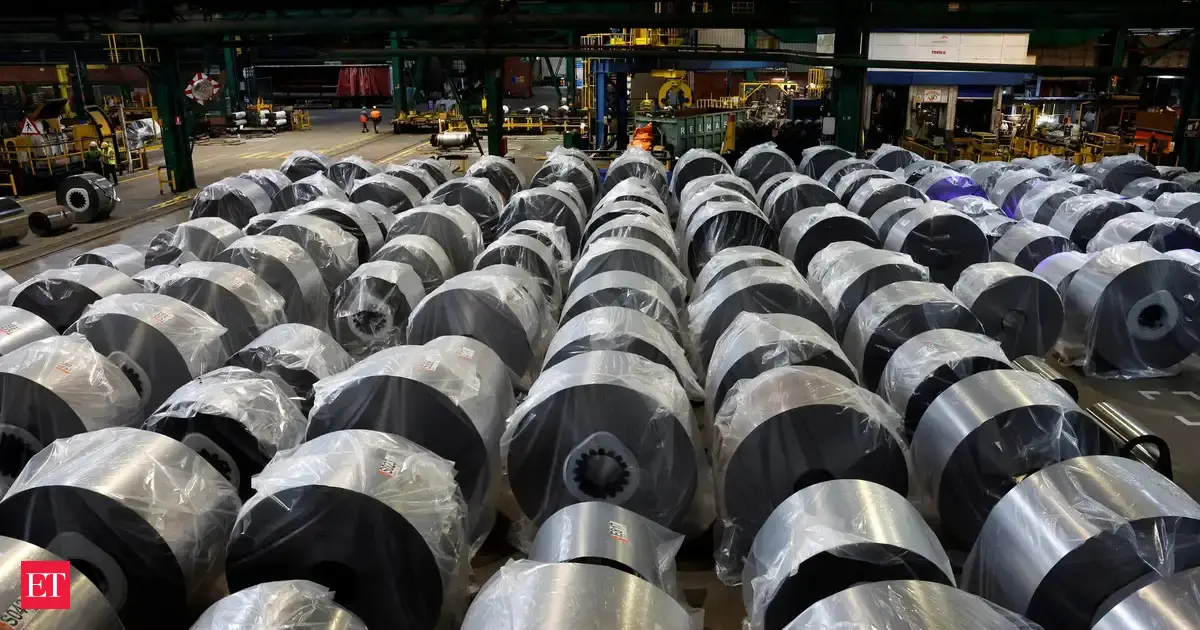
India is set to significantly boost its specialty steel production. The government has secured Rs 11,887 crore in investment commitments for the PLI 1.2 scheme. This initiative will add 8.7 million tonnes of specialty steel capacity by FY 2031. View More
The centre has received investment commitments of Rs 11,887 crore under the speciality steel production linked incentive (PLI) 1.2 scheme. An official statement said 85 agreements were signed with 55 companies Monday. These projects are expected to add 8.7 million tonnes of specialty steel capacity by FY 2031. These will ramp up India’s capabilities in high-end steel segments such as electrical steel, alloy and stainless steels, coated products, and grades required for strategic sectors. “PLI 1.2 seeks to address structural gap by incentivising domestic production, conserving foreign exchange, and positioning India as a reliable global supplier of advanced steel,” Union Steel and Heavy Industries Minister H D Kumaraswamy said, noting the achievements under earlier rounds of the PLI Scheme reinforce the policy’s effectiveness. Officials said ArcelorMittal Nippon Steel, Jindal Stainless , Ratnamani Metals and Tubes , and Steel Authority of India Limited ( SAIL ), are among those who signed agreements under PLI 1.2. This third round of the PLI Scheme caters to the need for sustained capacity expansion in specialty steel, which is essential for sectors including automobiles, railways, defence, electrical equipment, and aerospace, the statement said. Incentive rates range from 4% to 15% over a five-year period, the scheme is designed to promote investment, technology upgradation, and value addition while integrating Indian manufacturers into global value chains. Live Events According to official estimates, committed investments of Rs 43,874 crore have translated into “substantial on-ground progress,” across PLI 1.0 and 1.1. Also speaking at the event, Steel Secretary Sandeep Poundrik said European Union’s (EU’s) Carbon Border Adjustment Mechanism (CBAM) - which penalises steel manufactured through high emission processes - remains a challenge but the centre is committed to supporting Indian exporters. Poundrik said India’s installed steel capacity is currently 218 million tonnes per annum (mtpa), rising by 18 mtpa in the current fiscal itself. He also noted the country will comfortably achieve the target of having 300 mtpa installed steel manufacturing capacity in 2031, and maybe 400 mtpa by 2035-36. .Pbanner{display:flex;justify-content:space-between;align-items:center;background-color:#ec1c40;margin-top:20px;padding:5px 10px;border-radius:4px;color:#fff;line-height:10px;} .Pbannertext{display:flex;align-items:center;font-size:16px;font-weight:600;font-family:'Montserrat';} .Pbannertext img{height:20px;margin:0 6px} .Pbannerbutton a{display:flex;align-items:center;background-color:#fff;color:#ec1c40;text-decoration:none;font-weight:600;padding:4px 8px;border-radius:6px;font-size:15px;font-family:'Montserrat';} .Pbannerbutton img{height:20px;margin-right:6px} .Pbannerbutton a:hover{background-color:#f7f7f7} Add as a Reliable and Trusted News Source Add Now! (You can now subscribe to our Economic Times WhatsApp channel) (You can now subscribe to our Economic Times WhatsApp channel)
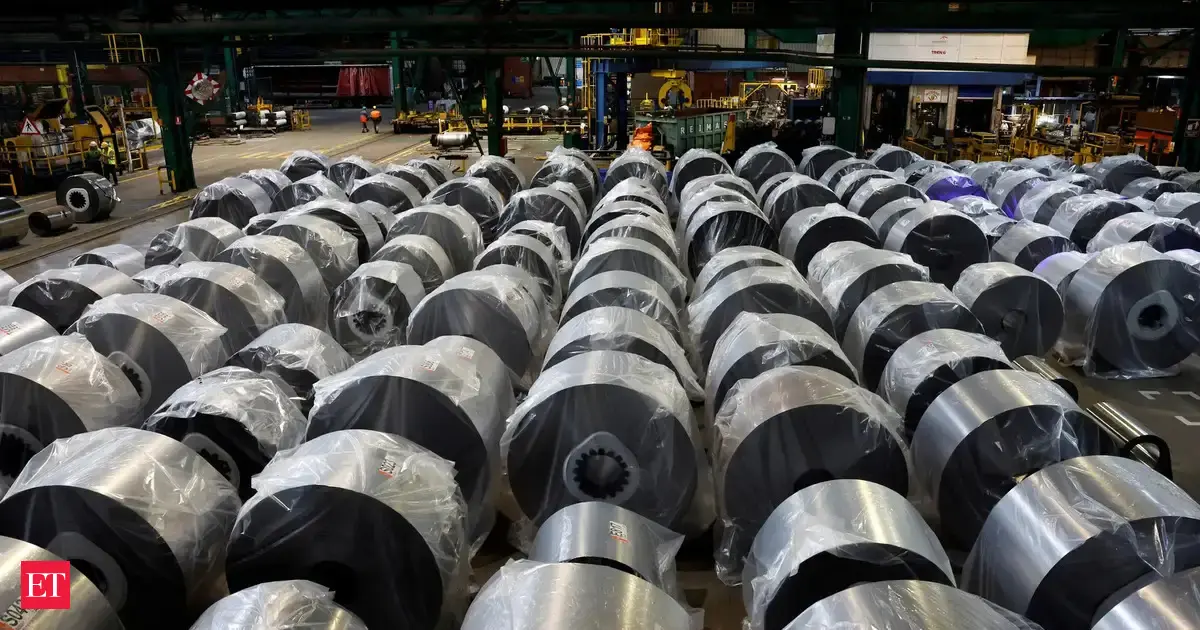
Indian steel exports face ongoing challenges from the European Union's carbon tax and import quotas. The Indian government plans to support the affected steel sector. This situation follows a recent trade deal that left the EU's carbon border mechanism unchanged. Indian steel mills, heavily reliant on Europe, are exploring new markets in Africa and the Middle East. View More
India's steel exports will continue to be impacted by the European Union's carbon tax and import quotas, and the government will take steps to help the sector, the federal steel secretary said on Monday. The comments come days after India and the European Union signed a trade deal, which slashed tariffs on several sectors but left the bloc's carbon border tariff, called Carbon Border Adjustment Mechanism , intact. Indian steel mills ship roughly two thirds of their total exports to Europe. "With European Union's CBAM and tariffs, quotas and other challenges, exports will remain a problem and we will have to take action," said Steel Secretary Sandeep Poundrik at a government event in New Delhi. India has sharply criticised the world-first CBAM policy since it was announced by the EU in 2021, saying the levy could hamper trade in steel. Since January, the regulatory framework brought in by the EU has led to fees on imports of steel, cement and other goods whose production results in high levels of carbon emissions . India's steel exports to Europe are expected to fall as a consequence, prompting mills to seek alternative buyers in Africa and the Middle East, Reuters reported. Live Events .Pbanner{display:flex;justify-content:space-between;align-items:center;background-color:#ec1c40;margin-top:20px;padding:5px 10px;border-radius:4px;color:#fff;line-height:10px;} .Pbannertext{display:flex;align-items:center;font-size:16px;font-weight:600;font-family:'Montserrat';} .Pbannertext img{height:20px;margin:0 6px} .Pbannerbutton a{display:flex;align-items:center;background-color:#fff;color:#ec1c40;text-decoration:none;font-weight:600;padding:4px 8px;border-radius:6px;font-size:15px;font-family:'Montserrat';} .Pbannerbutton img{height:20px;margin-right:6px} .Pbannerbutton a:hover{background-color:#f7f7f7} Add as a Reliable and Trusted News Source Add Now! (You can now subscribe to our Economic Times WhatsApp channel) (You can now subscribe to our Economic Times WhatsApp channel)

Higher domestic steel prices following safeguard duty are set to lift March-quarter realizations, while regulatory and trade curbs in Europe could support pricing in the second half of the year. View More