
Latest Sectors News
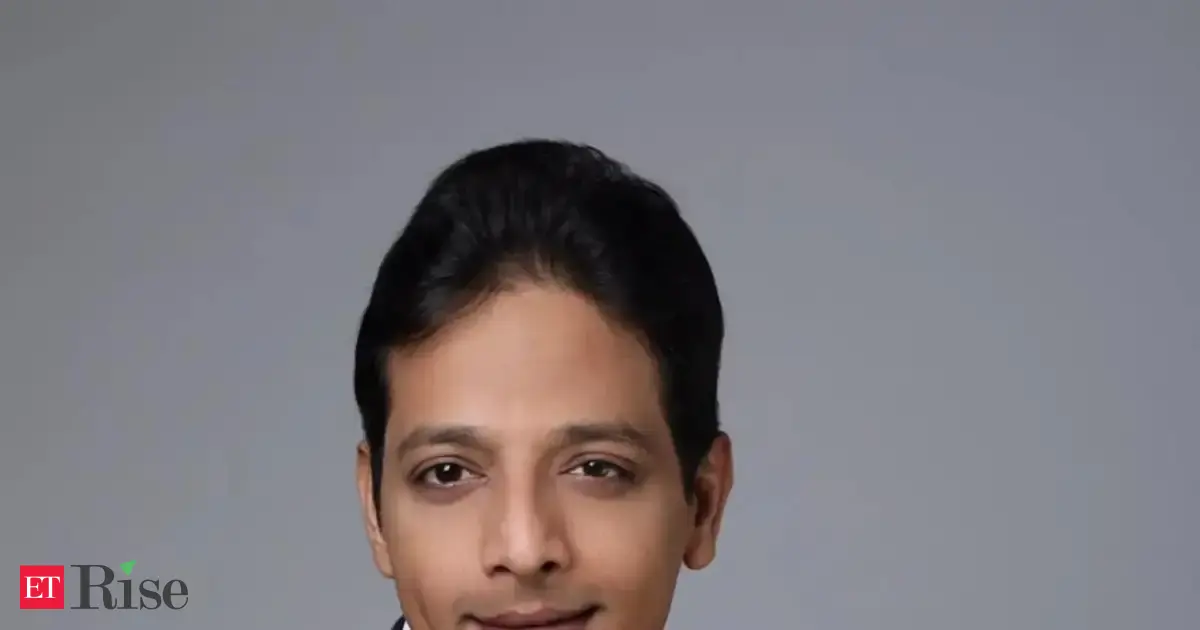
As India’s fintech sector recalibrates after the 2021 funding surge, growth is no longer being rewarded in isolation. View More
Beyond the 2021 funding frenzy, a more substantial and subtle evolution is shaping India's fintech landscape. Capital has not vanished; it has just become more selective, requiring founders to showcase tangible business metrics over mere storytelling. Sagar Agarvwal, Founder and Managing Partner at Beams Fintech Fund, in a conversation with Economic Times Digital discusses how the current funding slowdown is actually a structural reset. He details how this reset is altering the evaluation, funding, and long-term resilience building of growth-stage fintech companies. Edited excerpts. Economic Times (ET): The funding winter narrative is well known, but you argue this is more of a “reset” than a slowdown. What fundamentally changed in how growth-stage fintechs are being evaluated post-2021? Sagar Agarvwal (SA): What changed is not the opportunity set, but the lens of evaluation. In 2021, capital was underwriting potential - TAM narratives, user growth, and top-line velocity. Today, capital is also underwriting proof of the potential - unit economics, profitability pathways, and balance sheet discipline. There is a clear shift from “growth” to “cash flow visibility.” Investors now require evidence of operating leverage also. The reset is essentially a graduation to fundamentals. ET: The real squeeze seems to be at the Series B–C stage. Why is this segment under the most stress, and what does it reveal about how earlier growth was built? Live Events SA: This segment is not under any stress but going through a calibrated change where narrative meets numbers. At Series B & C, companies have to start producing positive unit economics with clear repeat and retention numbers and investors want to see these numbers. From here on, the path to IPO also starts becoming visible and this is where investors are becoming selective and compared to earlier, public benchmarks are now available to underwrite the assets better. ET: You have backed companies where nearly 75% are profitable. What specific metrics or signals tell you a company has crossed from ‘growth at all costs’ to ‘sustainable scale’? SA: A company transitions from ‘growth at all costs’ to ‘sustainable scale’ when every incremental revenue contribution begins to drive profitability. This is supported by strong and improving retention metrics that lead to high repeat business, alongside a core business that is performing consistently while cross-sell opportunities scale. Additionally, discipline in underwriting, stable cohort performance, and reduced dependence on external capital are strong indicators that the business has achieved sustainable scale. ET: In today’s market, what are the top three non-negotiables a founder must demonstrate to successfully raise capital at the growth stage? SA: In today’s market, founders need to demonstrate a highly predictable business model with clear visibility on profitability and monetisation. Strong governance and compliance are equally critical, especially in fintech where regulatory scrutiny continues to increase. Capital efficiency, the ability to do more with less, measured through returns on incremental capital has become a key filter. Finally, team stability and continuity at scale are essential indicators of execution capability. ET: There is a visible shift from generalist VC money to specialist fintech capital. What advantage do sector-focused funds like Beams have in underwriting risk today? SA: As a sector-focused fund, our advantage lies in a combination of network depth, pattern recognition, and granular risk assessment. Strong relationships across banks, NBFCs , regulators, and ecosystem partners allow us to create meaningful network leverage. We also enable cross-pollination across portfolio companies and LPs, driving collaboration at scale. Having seen multiple cycles across fintech sub-sectors, we are able to better underwrite business transitions, while our ability to assess risks across credit, fraud, and regulatory exposure helps distinguish between optical growth and real, risk-adjusted growth. ET: Credit-led fintechs, embedded finance, and AI-driven risk models are gaining traction. Where do you see the smartest capital flowing over the next 2–3 years and what is overhyped? SA: Over the next 2–3 years, smart capital is likely to flow into B2B fintech and SaaS infrastructure platforms that enable financial institutions through lending operating systems, collections technology, compliance tools, and risk analytics. These businesses tend to be high-margin, sticky, and scalable without significant balance sheet intensity. Payments will continue to evolve as an ecosystem play, particularly in value-added segments such as cross-border payments, merchant SaaS integrations, and bundled software-financial service offerings. Wealth and savings platforms targeting underpenetrated segments like the mass and emerging affluent with strong unit economics and clear monetisation will also attract interest. Additionally, asset-light, risk-calibrated credit models in areas like supply chain finance, MSME lending, and embedded credit will see traction, especially where underwriting is data-driven and distribution is integrated. On the other hand, low value-add “wrapper” businesses are increasingly being exposed. Models that sit on top of existing financial rails without meaningful differentiation whether through proprietary data, distribution, or product innovation are finding it difficult to sustain margins or retain customers in an environment where capital no longer subsidises CAC. The winners will be those that combine distribution strength with risk control, rather than relying solely on technology layers. ET: Many fintechs scaled rapidly on the back of cheap capital and aggressive customer acquisition. How are you stress-testing business models today for resilience in a tighter liquidity environment? SA: We run three key stress tests to evaluate resilience. First, we assess unit economics under normalised customer acquisition costs by stripping away incentives to see if the model still holds. Second, we test credit portfolios under stress scenarios, including higher default rates and tighter liquidity. Third, we evaluate liquidity dependency to understand how reliant the business is on continuous external funding. In addition, we closely examine cohort durability to ensure that customers acquired during high-burn phases remain profitable over time. ET: As more fintechs eye public markets, what separates companies that are truly IPO-ready from those that may struggle under public market scrutiny? SA: Public markets reward consistency, transparency, and predictability, not just growth. IPO-ready companies typically demonstrate sustainable profitability or a clear near-term path to it, along with high-quality revenues, strong governance, and robust disclosure standards. They also exhibit resilience across cycles. In contrast, companies with volatile earnings, unclear monetisation strategies, or governance gaps often struggle under public market scrutiny, where risk is priced far more rigorously than potential. .Pbanner{display:flex;justify-content:space-between;align-items:center;background-color:#ec1c40;margin-top:20px;padding:5px 10px;border-radius:4px;color:#fff;line-height:10px;} .Pbannertext{display:flex;align-items:center;font-size:16px;font-weight:600;font-family:'Montserrat';} .Pbannertext img{height:20px;margin:0 6px} .Pbannerbutton a{display:flex;align-items:center;background-color:#fff;color:#ec1c40;text-decoration:none;font-weight:600;padding:4px 8px;border-radius:6px;font-size:15px;font-family:'Montserrat';} .Pbannerbutton img{height:20px;margin-right:6px} .Pbannerbutton a:hover{background-color:#f7f7f7} Add as a Reliable and Trusted News Source Add Now!

India is launching a new scheme to boost critical mineral processing. Public sector companies will bid for four copper mines in Chile. Domestic copper production is set to increase significantly. Plans are also underway to extract gold from mining residue. These initiatives aim to strengthen India's mineral sector and global presence. View More
The centre is preparing a new scheme to support setting up critical mineral processing units in the country, Union Mines Secretary, Piyush Goyal said Friday. Speaking to journalists in New Delhi, he said it is important to develop processing value chain within the country. Goyal also said a consortium of public sector undertakings will bid to acquire four copper mines in Chile. “The new mineral processing scheme will work along with existing ones of specialty steel and battery manufacturing ,” the secretary said without divulging details of fund allocation or tentative timeline for approvals. “We will initially target processing facilities for two minerals,” Goyal said, adding Indian private sector players have committed raw material supplies for these future units through imports from their overseas acquisitions. Elaborating on the critical mineral acquisition plans, he said plans are afoot to improve domestic copper availability while also eyeing overseas assets. “A consortium of public sector undertakings will shortly submit bids to acquire four copper mines from Codelco (National Copper Corporation of Chile),” he said. According to Goyal, India will be scaling up domestic ore production and “hopes to become an exporter next year.” He said domestic copper ore production stood at 4.3 million tonnes per annum (mtpa), which will rise to 12 mtpa in 2030. Live Events India has also set eyes on unlocking its gold trapped in mining residue. “The gold tailings policy is ready,” Goyal said, adding the Mines Ministry has sought direction from the High Court on the way forward for monetising gold tailings with Bharat Gold Mines Limited (BGML). .Pbanner{display:flex;justify-content:space-between;align-items:center;background-color:#ec1c40;margin-top:20px;padding:5px 10px;border-radius:4px;color:#fff;line-height:10px;} .Pbannertext{display:flex;align-items:center;font-size:16px;font-weight:600;font-family:'Montserrat';} .Pbannertext img{height:20px;margin:0 6px} .Pbannerbutton a{display:flex;align-items:center;background-color:#fff;color:#ec1c40;text-decoration:none;font-weight:600;padding:4px 8px;border-radius:6px;font-size:15px;font-family:'Montserrat';} .Pbannerbutton img{height:20px;margin-right:6px} .Pbannerbutton a:hover{background-color:#f7f7f7} Add as a Reliable and Trusted News Source Add Now! (You can now subscribe to our Economic Times WhatsApp channel) (You can now subscribe to our Economic Times WhatsApp channel)

Vishal Nirmiti has secured Securities and Exchange Board of India approval for its IPO, comprising a fresh issue and offer for sale, with proceeds aimed at working capital, debt reduction and supporting growth across railway and EPC infrastructure segments View More
Railway infrastructure company Vishal Nirmiti has received approval from the capital markets regulator Sebi to launch its IPO, paving the way for the civil engineering and infrastructure player to tap the primary market. The IPO comprises a fresh issue of Rs 125 crore along with an offer for sale of up to 0.15 crore equity shares by existing shareholders. The shares are proposed to be listed on both the BSE and NSE. The proceeds from the fresh issue are expected to be used primarily to fund working capital requirements and reduce debt, with Rs 65 crore earmarked for working capital and Rs 20 crore for loan repayment. Incorporated in 1994, Vishal Nirmiti operates across manufacturing and EPC segments, with a strong focus on railway infrastructure. The company manufactures pre-stressed concrete sleepers for railways and undertakes fabrication of mild steel pipes and related components for irrigation and hydro projects. It also executes EPC contracts across railways, renewable energy and industrial infrastructure. The company has a pan-India presence with operational facilities across multiple states and is led by a promoter group with over four decades of industry experience. Live Events Its business model spans both manufacturing of infrastructure components and execution of large-scale projects, providing diversification across revenue streams. Financially, the company has reported strong growth, with revenue rising 31% and profit after tax jumping significantly in the last financial year, indicating improving operating leverage and execution momentum. .Pbanner{display:flex;justify-content:space-between;align-items:center;background-color:#ec1c40;margin-top:20px;padding:5px 10px;border-radius:4px;color:#fff;line-height:10px;} .Pbannertext{display:flex;align-items:center;font-size:16px;font-weight:600;font-family:'Montserrat';} .Pbannertext img{height:20px;margin:0 6px} .Pbannerbutton a{display:flex;align-items:center;background-color:#fff;color:#ec1c40;text-decoration:none;font-weight:600;padding:4px 8px;border-radius:6px;font-size:15px;font-family:'Montserrat';} .Pbannerbutton img{height:20px;margin-right:6px} .Pbannerbutton a:hover{background-color:#f7f7f7} Add as a Reliable and Trusted News Source Add Now! (You can now subscribe to our ETMarkets WhatsApp channel) (You can now subscribe to our ETMarkets WhatsApp channel)
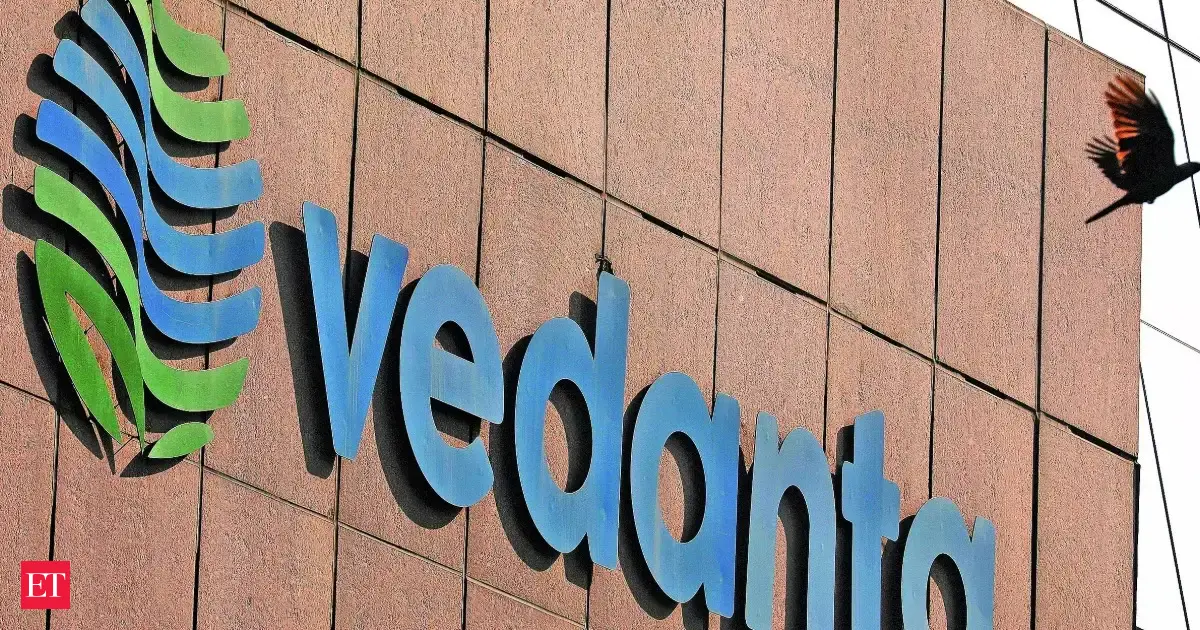
Vedanta Aluminium is setting up a new manufacturing hub in Jharsuguda, Odisha. Two companies have signed agreements to establish their facilities at the Vedanta Aluminium Park. This initiative aims to boost value addition and support small businesses. The park is expected to attract significant investment and create numerous jobs. View More
Bhubaneswar: Vedanta Aluminium on Friday signed MoUs with two companies for setting up their manufacturing facilities in the upcoming Vedanta Aluminium Park in Odisha's Jharsuguda. The MoUs were signed by Singhal Steel & Power Pvt Ltd and SCOT-AL Metcon Pvt. Ltd. The agreements were signed here in the presence of Odisha Industries Minister Sampad Chandra Swain and Additional Chief Secretary, Industries, Hemant Sharma. A statement issued by the company said that the Vedanta Aluminium Park in Jharsuguda aims to promote value addition and support the growth of MSMEs while cementing Odisha's position as a global aluminium hub. The initiative is expected to attract fresh investments of over Rs 500 crore, and create around 1,500 direct and indirect employment opportunities. Also Read: Vedanta questions metrics behind Adani’s winning bid for JAL Live Events Envisaged as a dedicated world-class industrial ecosystem for downstream aluminium industries, the Vedanta Aluminium Park in Jharsuguda aims to promote value addition and support the growth of MSMEs while cementing Odisha's position as a global aluminium hub. The initiative is expected to further enhance the state's industrial competitiveness, attract fresh investments of over Rs 500 crore, and create around 1,500 direct and indirect employment opportunities within the state. "This initiative reinforces Odisha's position as a leading industrial destination. The Vedanta Aluminium Park will accelerate investments, create large-scale employment and strengthen the state's manufacturing capabilities across sectors," the Industries minister said. The proposed Vedanta Aluminium Park is a critical step in deepening Odisha's industrial value chain. By combining infrastructure readiness with policy support, we are creating a platform that enables industries to scale efficiently and competitively, Sharma said. Vedanta Aluminium's CEO Rajiv Kumar said the proposed park reflects the company's commitment to moving beyond primary production towards value-added manufacturing. By enabling a strong downstream ecosystem, we aim to unlock new opportunities for industries, MSMEs and local entrepreneurs, he said. Also Read: Nifty eyes 24,500 as markets shake off geopolitical jitters; Vedanta, NTPC Green, Infosys in focus: Rahul Sharma Vedanta Jharsuguda CEO, C Chandru, said that the proposed park will not only strengthen the downstream ecosystem but also create sustainable livelihoods, foster entrepreneurship, and contribute to the development of the region. The Phase 1 development of the Vedanta Aluminium Park, spanning approximately 56 acres, aimed to bring together industrial capability and investment intent to unlock new opportunities across the aluminium value chain. .Pbanner{display:flex;justify-content:space-between;align-items:center;background-color:#ec1c40;margin-top:20px;padding:5px 10px;border-radius:4px;color:#fff;line-height:10px;} .Pbannertext{display:flex;align-items:center;font-size:16px;font-weight:600;font-family:'Montserrat';} .Pbannertext img{height:20px;margin:0 6px} .Pbannerbutton a{display:flex;align-items:center;background-color:#fff;color:#ec1c40;text-decoration:none;font-weight:600;padding:4px 8px;border-radius:6px;font-size:15px;font-family:'Montserrat';} .Pbannerbutton img{height:20px;margin-right:6px} .Pbannerbutton a:hover{background-color:#f7f7f7} Add as a Reliable and Trusted News Source Add Now! (You can now subscribe to our Economic Times WhatsApp channel) (You can now subscribe to our Economic Times WhatsApp channel)
The quantity will be allocated based on the recommendations of an Exim facilitation committee View More

A Tata Trusts trustee has backed listing Tata Sons via an IPO, aligning with growing support despite the group’s earlier stance to remain unlisted and explore alternatives to avoid going public. View More
Tata Trusts trustee and former Defence Secretary Vijay Singh has called for the listing of Tata Sons on the stock exchanges through its initial public offering (IPO), after TVS Group’s Venu Srinivasan publicly supported the move, The Indian Express reported. This is contrary to the resolution passed by Tata Trusts less than a year ago, which aimed to retain Tata Sons as an unlisted private entity, resisting regulatory momentum toward a potential IPO. More recently, Tata Trusts, under the chairmanship of Noel Tata, had asked Tata Sons Chairman N Chandrasekaran to explore all options to avoid a listing, while also initiating discussions on a potential exit for the SP Group. 'Time has come for Tata Sons listing' Pushing for the IPO, Vijay Singh believes the expansion and the new capital and technology-intensive businesses of Tata Sons do demand an urgent re-look, the report added. “Tata Sons, from its earliest days a 100 years ago, has been a key driver of nation-building projects such as steel, locomotives, power, and infrastructure. That role has now expanded into areas like aviation, defence, semiconductors, batteries and electronics, which demand large capital that can be raised internally only up to a point,” the report quoted Vijay Singh as saying, stating the time has come for the listing of Tata Sons. Singh further said, as quoted by the report, that in case India is to produce fighter aircraft with a foreign partner, a huge investment will be required. Such projects, which are crucial for the country, should never be foregone for lack of funds, which can only be raised from the market by a listed entity, Singh added. Notably, he was on the board of Tata Sons for 12 years till 2025. Live Events 'Tata Trusts have been fractious and turbulent' Singh believes that Tata Sons needs more transparency and regulatory oversight in view of its size and scale of operations. “The Tata Trusts have been fractious and turbulent in the recent past and there is no guarantee of a better future,” he said, as quoted by the report. When asked if the IPO will reduce the control of Tata Trusts over Tata Sons, Singh said that he doesn’t think the listing will significantly affect the trusts, which will continue to hold large shareholding, board seats and promoter status. He also dismissed worries around the takeover of Tata Sons by another business group due to its massive size and scale. The Economic Times couldn’t independently verify the report. Earlier, Venu Srinivasan backed the idea of a public listing of Tata Sons, the first time that a Tata Trusts trustee publicly supported such a move, saying that the step would be inevitable if the Reserve Bank of India classifies the group holding company as an upper layer non-banking finance company (NBFC), appearing to reflect a widening divergence of opinion at the group's top echelons. Tata Trusts Vice Chairman Srinivasan told ET that such a move would allow Shapoorji Pallonji (SP) Group to monetise its 18.37% stake in Tata Sons, a long-standing demand of the minority shareholder that's seeking to pay off debt. "A public listing would not only unlock value for minority shareholders, including providing an exit route to the Shapoorji Pallonji Group, but also equip Tata Sons with capital to sustain its growth trajectory," Srinivasan told ET. The Reserve Bank of India is expected to issue a revised circular on upper-layer NBFCs soon. The RBI's scale-based regulation (SBR) framework for NBFCs is under review. Officials have suggested that Tata Sons may not receive the RBI exemption it has sought from the upper-layer classification to avoid listing. Against this backdrop, Srinivasan said some trustees may not challenge any regulatory decision on the company's status, even as the unanimous September 2025 resolution to keep Tata Sons unlisted risks coming under strain. Tata Trusts has majority control of Tata Sons with a stake of about 66%. Amid mounting pressure-including a possible regulatory mandate, demands from the SP Group, and rising internal differences-the Trusts appear to be increasingly divided. One section of trustees sees a listing as inevitable and aligned with shareholder interests, while another remains opposed, favouring an unlisted structure to preserve control and legacy considerations. The SP Group has been actively pushing for the public listing of Tata Sons, calling it a "moral and social imperative" to ensure transparency and unlock value. The broader unease within the group has also surfaced in governance matters. An early move to consider a third term for Chandrasekaran, whose current tenure runs until February 2027, was deferred after objections were raised over performance of Chandrasekaran and losses at Air India and Tata Digital at a board meeting by Noel Tata on February 24, 2026, highlighting emerging differences between the Trusts and the Tata Sons board. (Disclaimer: Recommendations, suggestions, views and opinions given by the experts are their own. These do not represent the views of The Economic Times) .Pbanner{display:flex;justify-content:space-between;align-items:center;background-color:#ec1c40;margin-top:20px;padding:5px 10px;border-radius:4px;color:#fff;line-height:10px;} .Pbannertext{display:flex;align-items:center;font-size:16px;font-weight:600;font-family:'Montserrat';} .Pbannertext img{height:20px;margin:0 6px} .Pbannerbutton a{display:flex;align-items:center;background-color:#fff;color:#ec1c40;text-decoration:none;font-weight:600;padding:4px 8px;border-radius:6px;font-size:15px;font-family:'Montserrat';} .Pbannerbutton img{height:20px;margin-right:6px} .Pbannerbutton a:hover{background-color:#f7f7f7} Add as a Reliable and Trusted News Source Add Now! (You can now subscribe to our ETMarkets WhatsApp channel) (You can now subscribe to our ETMarkets WhatsApp channel)
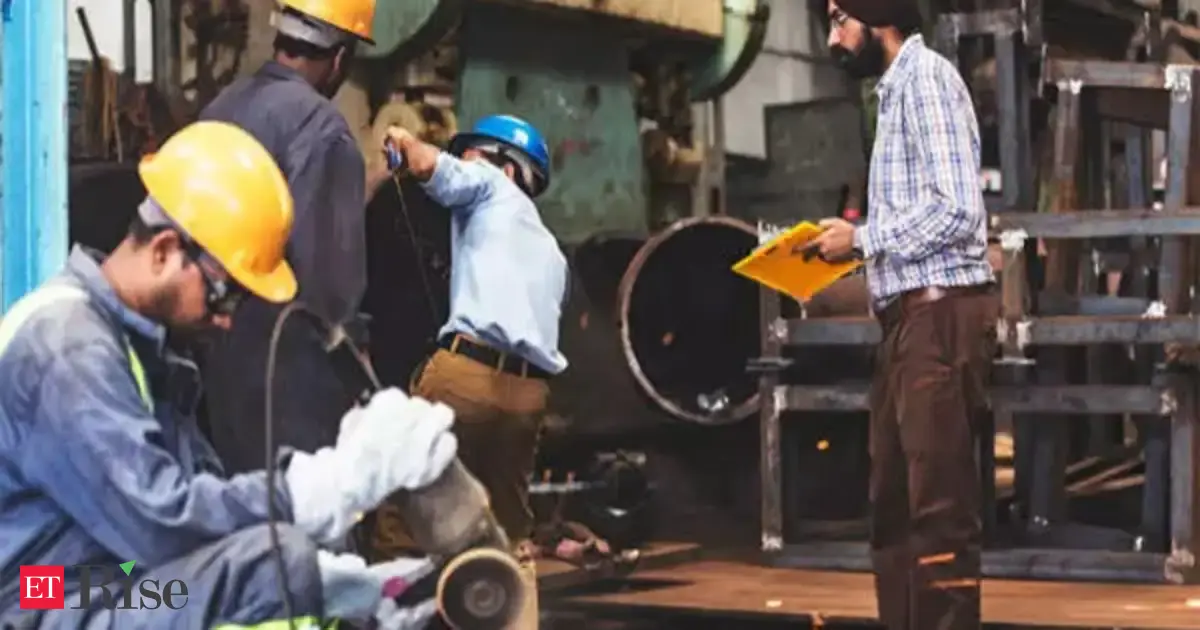
India's engineering exports face significant strain from the West Asia conflict, with a recent ceasefire offering limited relief. Disruptions to sea routes and rising input costs, particularly for petrochemical derivatives and LPG, are eroding export volumes and impacting manufacturing processes. Industry stakeholders urge caution as the situation remains volatile. View More
The West Asia war is exerting a visible strain on India’s engineering exports sector, with disruptions continuing despite a two-week ceasefire. The segment, valued at over $116 billion annually and accounting for 27% of the country’s total merchandise exports, is under severe pressure as the diplomatic pause offers limited relief. The ceasefire between the US, Iran, and Israel, with the conditional reopening of the Strait of Hormuz , was announced on Tuesday. However, for India’s engineering sector, the pause offers only a narrow window of operational breathing space, with risks to supply chains, costs and trade flows still firmly in place. Industry stakeholders have urged caution, noting that the situation remains fluid and volatile. Pankaj Chadha, Chairman of the Engineering Export Promotion Council of India ( EEPC India ), said the immediate fallout has already translated into a significant erosion of export volumes. “West Asia accounts for roughly 16% of India’s engineering exports, and March has effectively been a washout month,” Chadha said, noting that shipments to the region have nearly halted due to near-total dependence on sea routes for engineering goods. As a result, exporters are staring at a minimum 16-20% decline in overall outbound shipments for March compared with the same period last year. The disruption extends beyond demand-side shocks. On the supply side, exporters are grappling with severe shortages and price spikes in critical inputs sourced from West Asia. According to Chadha, prices for packaging materials, particularly plastics linked to petrochemical derivatives, such as High-Density Polyethylene (HDPE) and Low-Density Polyethylene (LDPE), have surged by 50-60%. Simultaneously, LPG prices have risen 60-80%, along with acute availability constraints. Live Events With Iran’s leverage centred on the Strait of Hormuz, exporters and industry experts said sea freight and insurance costs have spiked. Certain raw material prices have also risen, primarily due to the near closure of the sea route passing through the Strait. At the unit level, industry players highlight the cascading cost impact on core manufacturing processes. Kaustubh Mehta, Director at Nashik-based Metaforge Engineering, said that while the disruption led to a temporary scarcity of industrial gas, it also triggered a sharp increase in input costs and the unavailability of key raw materials. “That said, the recent uptick in gas prices is expected to have a cascading impact across manufacturing segments. In engineering industries, higher gas costs directly translate into elevated production expenses, particularly for heat treatment processes, such as annealing and forging. Components requiring heat-treated inputs are also witnessing price escalation, reflecting increased energy intensity in production. The impact is not limited to metals. Plastic-based components across grades are also expected to face cost pressures due to their linkage with petrochemical feedstock and energy inputs.” Mehta added that the fuel cost escalation is part of a broader global trend. However, he maintained that India has experienced a relatively moderate increase compared to several other manufacturing economies. “This differential could enhance the competitiveness of Indian engineering goods in international markets,” he added. Fragile ceasefire, trade risks elevated Iran’s Foreign Minister Abbas Araghchi has framed the current pause as a conditional de-escalation rather than a durable truce. Tehran has warned it could withdraw from the ceasefire with the US, accusing Israel of violations in Lebanon, underscoring the fragility of the arrangement. This uncertainty is already shaping global shipping behaviour. Shipowners are responding with caution, studying ceasefire terms that may briefly reopen the Strait of Hormuz, with more than 800 vessels stranded in the Persian Gulf after weeks of disruption, according to a Bloomberg report. Market indicators suggest that freight and risk premiums remain elevated due to lack of clarity in the ceasefire’s fine print. War-risk insurance costs and spot container rates have increased sharply on key West Asia routes, signalling continued disruption. Even as US President Donald Trump announced a “complete, immediate, and safe opening,” industry observers say operational normalisation will lag significantly behind political announcements. EEPC India Chairman Pankaj Chadha said that even with a ceasefire in place, “clarity on the ground remains limited”, and shipping lines are unlikely to fully restore routes until security risks are demonstrably reduced. Notably, despite the ceasefire, live developments suggest the conflict remains far from resolved. Maersk, a shipping major, has cited insufficient clarity on security conditions as the reason for not resuming normal operations, underscoring the gap between diplomatic signalling and operational reality. For businesses, disruption risks remain firmly in place. Adding a strategic lens to the disruption, Gaurav Moda, Partner and Energy Sector Leader at EY-Parthenon India, said recurring geopolitical shocks are fundamentally reshaping how companies assess supply chain risks. “Disruptions around critical chokepoints, such as the Strait of Hormuz, are forcing rerouting, increasing freight and insurance costs, and stretching delivery timelines. While a ceasefire may offer temporary relief, such flashpoints have expanded traditional risk frameworks beyond value, volume and velocity to include a fourth dimension—variety—covering military risks, supply disruptions, price shocks, and force majeure scenarios,” he said. Operational impact deepens across engineering firms At the company level, these disruptions are now visible in project execution cycles and supply chain metrics. Ankit Patidar, Director and CMO at Shakti Pumps, said that engineering, procurement, and construction (EPC) project delivery timelines have been impacted in the past few weeks. The instability in global shipping routes connecting India with Europe, Africa and parts of West Asia is still affecting import cycles for critical components used in solar and industrial pumping systems. “Supply chain unpredictability is still severely affecting EPC project execution. The timelines are seeing delays extending up to a few weeks, primarily for specialised components,” he said, adding that the key challenge is not just delays but uncertainty. Frequent changes in shipping schedules, rerouting and security-related disruptions are forcing companies and global carriers to continuously restructure logistics networks, increasing both time and cost. From a strategic perspective, Patidar emphasised the need for a structural shift in approaches. He believes while these disruptions are challenging, they are also accelerating an operational shift towards more resilient and self-reliant supply chains within India’s engineering export ecosystem. “It is time to move from cost-efficiency to resilience-first thinking,” he said, stressing that companies must build inventory buffers, revise logistics routes and diversify supplier networks beyond single geographies. Industry participants said marine insurance costs have surged globally due to heightened risk perception, while shipments to conflict-hit West Asian destinations have effectively become uninsurable, further choking trade flows to the region. Within the broader engineering ecosystem, advanced and product-focused manufacturers are flagging a more acute layer of supply chain vulnerability. Naman Shah, Managing Director and CEO of LeSol Group, said that while traditional engineering inputs, such as steel, castings, fasteners, and motors, remain relatively insulated due to domestic availability, the key stress points lie in high-value, precision-linked inputs, particularly within the advanced component ecosystem. “Our inputs go into the manufacturing of semiconductors, display panels, passive components, and crude-linked inputs like plastics, resins, and specialty chemicals which is where the pressure is building,” Shah said. These inputs are heavily import-dependent and dollar-denominated, making them particularly sensitive to currency movements. “The rupee depreciated by roughly 10% in FY26, closing at around Rs 93.88 per dollar. That means even if global prices haven’t budged, we are effectively paying nearly 10% more just because of how the currency has moved. Besides, elevated crude oil prices directly hit petrochemical inputs used across electronics, appliances, and consumer durables. For now, inventory buffers and advanced procurement strategies are helping firms maintain production stability. However, Shah cautioned that if disruptions persist in any form, production could be hit by 10-20%. “This is not a demand problem; it’s purely supply-side. In industrial manufacturing, even a single missing component can halt an entire production line,” he noted. Echoing this concern, Arun Shukla, Managing Partner at Vishwakarma Vikram Engineering, said that the conflict’s evolving nature makes it difficult to quantify the full extent of the damage. “When the base itself—energy and logistics—is disrupted, it affects every industry and economy. And with multiple stakeholders involved, each with divergent end goals, it remains nearly impossible to assess whether the current ceasefire will hold or translate into a durable resolution.” .Pbanner{display:flex;justify-content:space-between;align-items:center;background-color:#ec1c40;margin-top:20px;padding:5px 10px;border-radius:4px;color:#fff;line-height:10px;} .Pbannertext{display:flex;align-items:center;font-size:16px;font-weight:600;font-family:'Montserrat';} .Pbannertext img{height:20px;margin:0 6px} .Pbannerbutton a{display:flex;align-items:center;background-color:#fff;color:#ec1c40;text-decoration:none;font-weight:600;padding:4px 8px;border-radius:6px;font-size:15px;font-family:'Montserrat';} .Pbannerbutton img{height:20px;margin-right:6px} .Pbannerbutton a:hover{background-color:#f7f7f7} Add as a Reliable and Trusted News Source Add Now!

The development underscores Tata Steel’s delicate balancing act in the UK, where it has struggled with structurally higher costs, including energy and logistics, even as market conditions begin to improve. View More
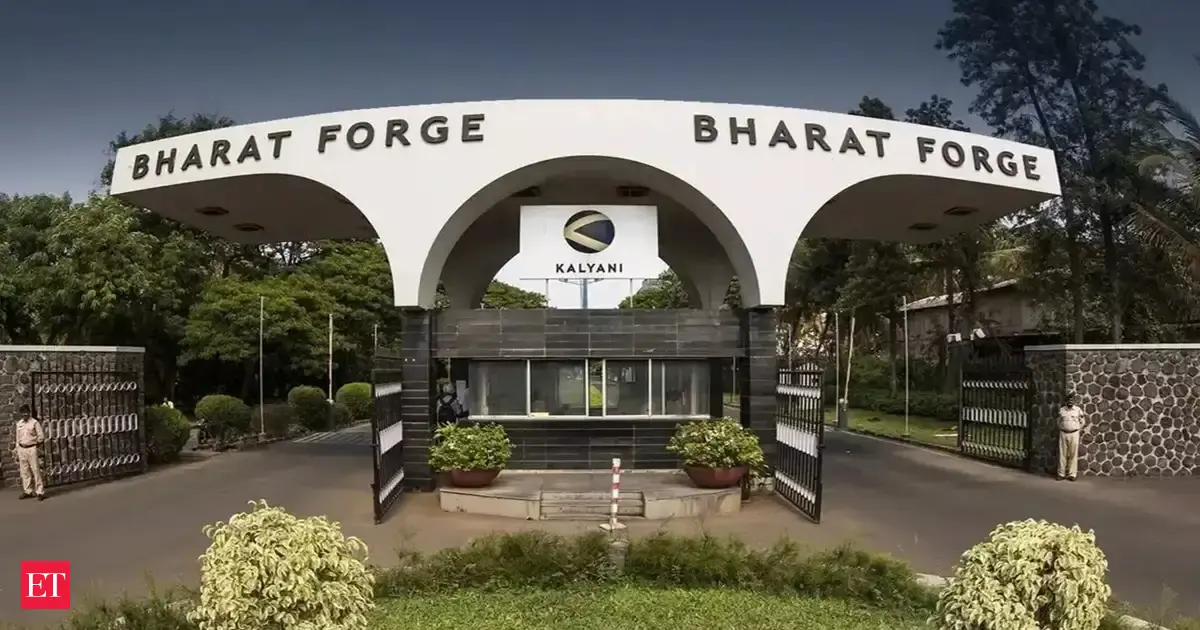
Bharat Forge's board has approved a significant restructuring of its German steel forging arm, Bharat Forge CDP GmbH. The company is considering closing down operations in Ennepetal, Germany. This move stems from ongoing market challenges and cost disadvantages faced by the subsidiary. View More
New Delhi, Bharat Forge Ltd on Thursday said its board has approved the restructuring of the steel forging operations of its arm in Germany , including the consideration of closing it down due to market challenges and the associated cost disadvantages. The company's board, which met on Thursday, has also approved a financing arrangement of up to EUR 30 million for the restructuring, Bharat Forge said in a regulatory filing. The board reviewed and evaluated a proposal for the phased restructuring of the steel forging operations of Bharat Forge CDP GmbH (BF CDP), its wholly-owned subsidiary located in Ennepetal, Germany, it said. "The proposal may include an orderly wind-down and solvent liquidation of BF CDP, in accordance with applicable German laws," it said. The company further said, "This is being considered in light of the market challenges and the associated cost disadvantages faced by BF CDP in Germany." Live Events To facilitate the proposed restructuring, the board has approved a financing arrangement of up to EUR 30 million and has delegated the necessary authorities to its sub-committee to oversee further evaluation and implementation, it added. .Pbanner{display:flex;justify-content:space-between;align-items:center;background-color:#ec1c40;margin-top:20px;padding:5px 10px;border-radius:4px;color:#fff;line-height:10px;} .Pbannertext{display:flex;align-items:center;font-size:16px;font-weight:600;font-family:'Montserrat';} .Pbannertext img{height:20px;margin:0 6px} .Pbannerbutton a{display:flex;align-items:center;background-color:#fff;color:#ec1c40;text-decoration:none;font-weight:600;padding:4px 8px;border-radius:6px;font-size:15px;font-family:'Montserrat';} .Pbannerbutton img{height:20px;margin-right:6px} .Pbannerbutton a:hover{background-color:#f7f7f7} Add as a Reliable and Trusted News Source Add Now! (You can now subscribe to our Economic Times WhatsApp channel) (You can now subscribe to our Economic Times WhatsApp channel)

A fresh bump in ore prices has lifted the miner’s stock, yet record output, a 100-MT expansion plan and a pivot towards critical minerals may matter more for the longer-term rerating. View More