
Latest Sectors News
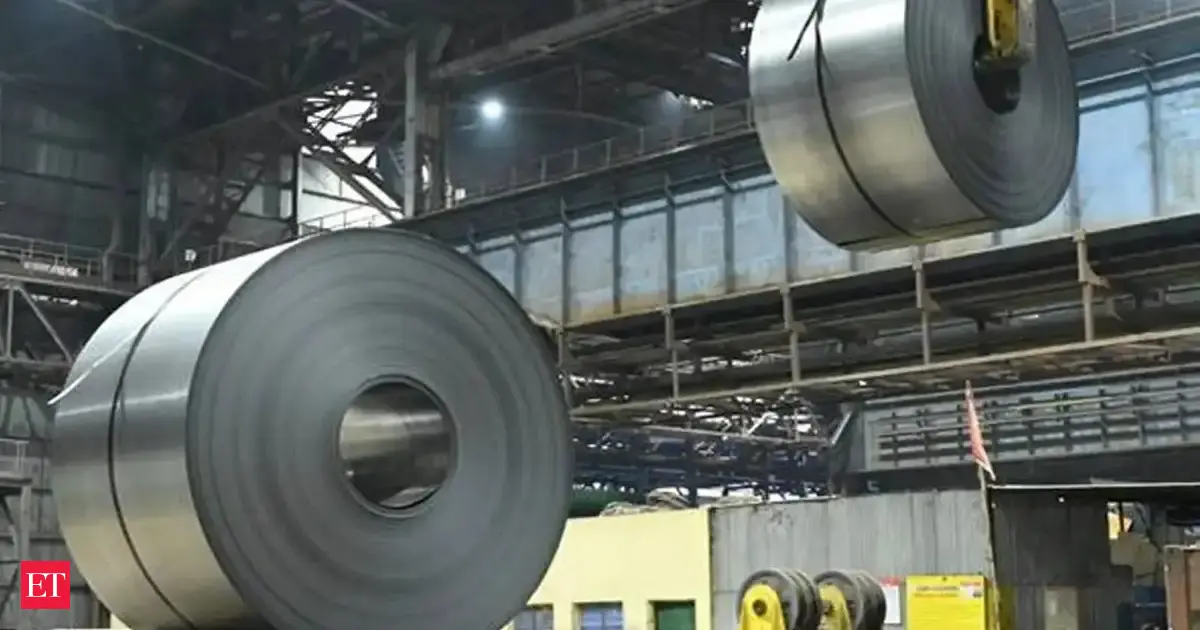
Micro and small enterprises facing global challenges will now receive government support. Interest subvention benefits have been extended to these firms exporting 167 specific iron and steel product categories. This initiative aims to boost their access to credit. The government previously announced a significant export support package. Medium sector units are not eligible for this particular measure. View More
New Delhi : To support micro and small enterprises impacted by the global uncertainties, the government Tuesday extended interest subvention benefits to such firms which export 167 specific iron and steel product categories. The products include non-alloy pig iron, steel, Ferro alloys and iron or non-alloy steel, among others. In January, the government announced a ₹7,295-crore export support package, comprising a ₹5,181-crore interest subvention scheme along with a ₹2,114-crore collateral support, to improve exporters' access to credit. However, the medium sector units are not eligible for this measure, the DGFT said in a trade notice. New Delhi: To support micro and small enterprises impacted by the global uncertainties, the government Tuesday extended interest subvention benefits to such firms which export 167 specific iron and steel product categories. The products include non-alloy pig iron, steel, Ferro alloys and iron or non-alloy steel, among others. In January, the government announced a ₹7,295-crore export support package, comprising a ₹5,181-crore interest subvention scheme along with a ₹2,114-crore collateral support, to improve exporters' access to credit. Live Events However, the medium sector units are not eligible for this measure, the DGFT said in a trade notice. .Pbanner{display:flex;justify-content:space-between;align-items:center;background-color:#ec1c40;margin-top:20px;padding:5px 10px;border-radius:4px;color:#fff;line-height:10px;} .Pbannertext{display:flex;align-items:center;font-size:16px;font-weight:600;font-family:'Montserrat';} .Pbannertext img{height:20px;margin:0 6px} .Pbannerbutton a{display:flex;align-items:center;background-color:#fff;color:#ec1c40;text-decoration:none;font-weight:600;padding:4px 8px;border-radius:6px;font-size:15px;font-family:'Montserrat';} .Pbannerbutton img{height:20px;margin-right:6px} .Pbannerbutton a:hover{background-color:#f7f7f7} Add as a Reliable and Trusted News Source Add Now! (You can now subscribe to our Economic Times WhatsApp channel) (You can now subscribe to our Economic Times WhatsApp channel)

These investments span advanced manufacturing, green industries, healthcare, and tourism, reinforcing the state's industrial growth and economic diversification. View More
The Government of Odisha on Tuesday approved a new set of strategic industrial investments aimed at accelerating economic growth and large-scale employment generation. At the 146th meeting of the State Level Single Window Clearance Authority (SLSWCA), chaired by Chief Secretary Anu Garg, 18 industrial projects with a total investment of Rs 3,877.14 crore were approved. These projects are expected to generate 7,565 employment opportunities across 11 districts including Balasore, Deogarh, Ganjam, Jajpur, Jharsuguda, Keonjhar, Khordha, Koraput, Puri, Sambalpur, and Sundargarh. The projects approved in the 146th SLSWCA meeting reflect Odisha Government’s focused strategy of building a diversified industrial ecosystem spanning advanced manufacturing, green industries, infrastructure, healthcare, and tourism—while ensuring large-scale employment generation across regions. Strengthening Odisha’s core industrial strength in metals and value-added manufacturing, Runaya Eckart Aluminium Powders Private Limited will establish an aluminium downstream manufacturing facility, promoting advanced material production and downstream value addition. Scan Steels Limited, Jay Jagannath Steel & Power Limited, and SS Alufoils International Limited, will expand steel, iron and ferro-alloy manufacturing capacities, reinforcing Odisha’s leadership as India’s premier metal manufacturing hub while generating significant industrial employment. Solar Industries India Limited will establish an explosives manufacturing facility in Jharsuguda. Envair Electrodyne Limited will set up an ESDM manufacturing unit, contributing to Odisha’s growing electronics manufacturing ecosystem and supporting skilled employment generation in emerging technology sectors. Live Events Odisha continues to expand its presence in the healthcare manufacturing sector with Harman Finochem Limited setting up a pharmaceutical manufacturing unit and Ambitech Healthcare Private Limited setting up a medical device manufacturing facility. These investments will strengthen the state’s pharmaceutical value chain. South Block Marketing Private Limited will set up an Integrated facility for recycle of plastic& Metal products. Industrial infrastructure development receives a significant boost with projects by Tamil Nadu Ispat Private Limited and Alps Mining & Infra Projects Private Limited, which will enhance logistics, material handling, and industrial support infrastructure—critical for enabling faster industrial expansion across Odisha. Baleshwar Shipyard and Infra Private Limited will undertake shipbuilding, ship repair, and construction of mechanized floating vessels in Balasore, positioning Odisha as an emerging hub for coastal and maritime industrial activity. Odisha’s tourism economy will witness further expansion through 6 new hospitality projects by Jas Constructions Private Limited, Rath Hospitality Private Limited, Keonjhar Regal Paradise Private Limited, Karyon Ventures Private Limited, Surya Eco Resorts Private Limited & Chaturbhuja Hotel & Resorts Private Limited. .Pbanner{display:flex;justify-content:space-between;align-items:center;background-color:#ec1c40;margin-top:20px;padding:5px 10px;border-radius:4px;color:#fff;line-height:10px;} .Pbannertext{display:flex;align-items:center;font-size:16px;font-weight:600;font-family:'Montserrat';} .Pbannertext img{height:20px;margin:0 6px} .Pbannerbutton a{display:flex;align-items:center;background-color:#fff;color:#ec1c40;text-decoration:none;font-weight:600;padding:4px 8px;border-radius:6px;font-size:15px;font-family:'Montserrat';} .Pbannerbutton img{height:20px;margin-right:6px} .Pbannerbutton a:hover{background-color:#f7f7f7} Add as a Reliable and Trusted News Source Add Now!
The project aims to cut carbon emissions by over 50% compared to the blast furnace’s baseline operation View More

India and Korea find alignment as U.S.–China tensions reshape trade — but struggle to move beyond intent View More
In this articlePKXJSWSTEEL-INHYUNDAI-INLGEINDIA-INSSNLFSSNLFCOCHINSHIP-INFollow your favorite stocksCREATE FREE ACCOUNT NEW DELHI, INDIA - 2026/04/20: South Korean President Lee Jae Myung heads into talks with Indian Prime Minister Narendra Modi at Hyderabad House, aiming for a big boost in economic cooperation, particularly in areas such as enhancing cooperation in semiconductors, shipbuilding, AI, defense, and securing supply chains nearly doubling bilateral trade to $50 billion by 2030. (Photo by Sondeep Shankar/Pacific Press/LightRocket via Getty Images)Pacific Press | Lightrocket | Getty Images Trade uncertainty with the U.S. and the push to diversify away from China make India and South Korea natural partners â but their relationship has yet to translate from intent into meaningful execution.On Monday, the Indian Prime Minister Narendra Modi and South Korean President Lee Jae Myung reaffirmed plans to increase bilateral trade to $50 billion by 2030, a goal that was first announced in 2018. Modi, in a joint press statement, said that the two countries were moving from a "trusted partnership" to a "futuristic" one where areas of collaboration spanned "chips to ships, talent to technology, and environment to energy."Jae Myung, the first South Korean president to visit India in eight years, added that in "an era of hyper uncertainty," the two countries can be "the most ideal partners for comprehensive cooperation to promote mutual growth and Innovation."But despite the big targets and talk, trade between the two countries grew at a compounded annual rate of just 3% from 2018 to 2025. In the financial year ending March 2025, total trade between India and Korea was $26.89 billion â a little over half the goal set for 2030, as per Indian commerce ministry data. "I would just say unrealized potential is tremendous," Ashok Malik, partner at public policy think tank The Asia Group, told CNBC, adding that both countries are looking to diversify from the U.S. market and explore sourcing options other than China.Korea is a great fit for India as it offers advanced technology in EVs, electronics, semiconductors, and AI. India wants to diversify its sourcing away from China in these sectors, Malik said, adding that shipbuilding and automotive steel are further areas of interest to India.But experts, including Malik, said that regulatory delays are a key deterrent for South Korean companies looking to invest in India. Practical challenges The biggest concern is policy unpredictability, said Reema Bhattacharya, head of Asia research at Verisk Maplecroft, adding that land acquisition, infrastructure delays, and regulatory complexity "remain practical operational challenges" for Korean companies investing in India.Take the case of Korean steel giant POSCO, which announced a $12 billion investment in India almost two decades ago. This project encountered several delays, and POSCO dropped it a few years ago due to difficulties in acquiring land, according to a Reuters report.In 2024, POSCO renewed its plans to invest in India by setting up a steel plant capable of producing 6 million tons per annum, this time in a joint venture with India's JSW Steel. After two years of planning, the project has secured land and will be operational by 2031.Meanwhile, in shipbuilding, the progress has been slow. HD Korea Shipbuilding & Offshore Engineering in July last year announced plans to explore shipbuilding operations with the Indian state-owned company Cochin Shipyard. So far, there has been no formal commitment from either side about the scale of investment or on setting up a joint venture. Shipbuilding is a "driving passion of the Modi government" since its early days and is showing some promise now, but it still has a long way to go, said Malik.South Korean businesses have been prominent in India since the 1990s, with some dominating key sectors, such as Hyundai India in automobiles, LG Electronics in consumer goods, and Samsung in electronics. Yet, South Korea ranks as only the 13th largest FDI investor in India with cumulative flows from April 2000 to March 2025 standing at just $6.69 billion, according to data from the India Brand Equity Foundation.By comparison, Singapore ranks second with a cumulative FDI inflow of $174.89 billion, while the U.S. ranks third with $70.65 billion. Arpit Chaturvedi, South Asia advisor at Teneo, pointed out that despite "enormous strategic interest," Korean M&A in India has remained relatively modest at around $200â$300 million annually in recent years. This is "a small share of Korea's total outbound M&A," he told CNBC in an email.Meanwhile, over the last two years, Korean companies have successfully repatriated part of their early investments in India. Hyundai India sold shares worth $3.3 billion in 2024 via an IPO, while LG Electronics' listing fetched the Korean major $1.3 billion. Both these IPOs were structured as an offer for sale â a route that enables existing investors to sell shares. Choose CNBC as your preferred source on Google and never miss a moment from the most trusted name in business news.
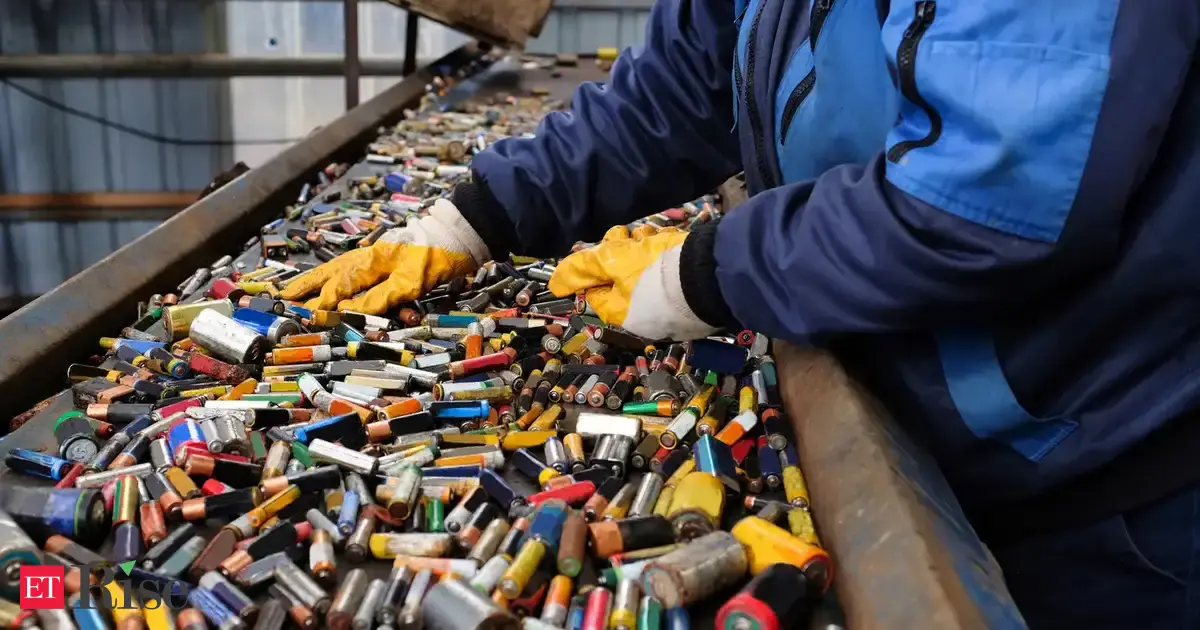
This boom, led by China's manufacturing prowess, is making batteries a crucial tool for grid resilience and a cost-effective alternative to fossil fuels, promising a revolution in power systems worldwide. View More
Around the world, a wave of mega installations of batteries are lining up to be connected to the grid this year — from solar hubs in Texas to grasslands in Inner Mongolia and the site of a former coal plant north of Sydney. Falling costs and soaring energy demand from data centers had already set the stage for rapid growth. The war in the Middle East has helped accelerate the trend by lifting demand for alternatives to expensive fossil fuels, setting 2026 up to be the year batteries become influential in the global energy system. BloombergNEF analysts had already expected installations to jump by about a third this year, led by expansion in Europe, the Middle East, Africa and Latin America. That momentum could build further if fuel disruptions persist. Signs of the ramp up are already emerging. A Chinese battery manufacturer has forecast a sharp rise in first quarter profit as global demand picks up. In Vietnam, a developer is seeking approval to replace a planned LNG-to-power project with renewables paired with storage, citing the surge in fuel costs linked to the war. “We’ve now crossed into a point where anytime anyone is looking at investing in the power system, batteries are one of the most attractive options,” said Brent Wanner, head of the power sector unit at the International Energy Agency . “Battery storage systems will continue to grow for the foreseeable future.” In markets flooded with solar and wind — technologies that have been built out significantly since the last energy crisis in 2022 — battery operators can buy electricity when it’s cheap and sell it when demand peaks. Where grids once relied on coal and gas when renewable output dipped, storage technology is now becoming cheap and fast enough to make a difference in how the grid functions. Average costs have dropped by around 75% from 2018 to 2025, according to BNEF, and are expected to tumble another 25% through 2035. Live Events Battery projects are also increasingly being built in fleets big enough to make a real difference in how the grid operates. In Inner Mongolia, three massive sites were recently switched on with a combined capacity of 7.4 gigawatt-hours, enough to rival several large power plants for short periods. In Scotland, two huge neighboring battery farms at the site of a former coal mine will start up this year. Bloomberg Australia — the world’s largest battery market on a per capita basis — offers a glimpse of how the boom is reshaping energy systems . Shortly after a massive project known as the Waratah Super Battery was partially switched on in New South Wales last year, batteries discharged more power onto the main grid during the evening peak than gas-fired plants. The site is expected to become fully operational in 2026. Storage is also helping delay an expected gas crunch as domestic fields deplete, underscoring its role in the nation’s energy security. For investors, one big reason that projects have become more appealing is the rapid decline in costs. Waratah, for instance, would cost about 20% less to build now than when it began construction four years ago, according to Nick Carter, chief executive officer of Waratah’s owner Akaysha Energy Pty Ltd. “If you had the same project today, the economics would be materially better,” he said, even as Waratah’s strong returns have left him with “no regrets.” Battery glut At the center of the world’s energy storage boom is China’s role in producing the hardware. Years of investment in its electric vehicle supply chain have created a glut of batteries, driving prices down and flooding global markets with cheaper equipment. Exports of lithium-ion batteries climbed in March amid rising global demand for alternative energy sources as oil and gas supplies are roiled by the Iran war. The country now accounts for the vast majority of global manufacturing capacity, as well as around half of existing grid-scale battery installations. That’s in part because of a 2021 mandate requiring renewable projects to include energy storage, which has since been retired. The pattern mirrors the solar industry’s post-2021 cycle, when surging demand triggered a wave of investment that led to oversupply, collapsing prices and, ultimately, mass adoption, according to consultancy Trivium China. What’s striking is that the decline in battery prices is happening even as costs for most other clean energy technologies have risen. Bloomberg That means the calculus for projects is changing quickly. In mid-2024, Australia’s AGL Energy Ltd . began construction of a large battery in New South Wales. Six months later, it approved another project in the same state at roughly half the cost per megawatt-hour, according to CEO Damien Nicks. Soaring demand With power systems under strain across much of the world, the wave of cheaper batteries is coming at a pivotal moment. In the US, the speed of construction is an important factor. Data centers from Texas to Tennessee are turning to solar paired with batteries because traditional power plants can’t be built quickly enough, as turbine shortages and grid bottlenecks slow timelines. Near Memphis, Tennessee, Elon Musk’s artificial intelligence business xAI has installed rows of Tesla Inc. Megapack batteries at its Colossus supercomputing facility to manage outages and surging electricity needs. Batteries are expected to account for more than a quarter of the record generating capacity the US is set to add in 2026, according to the Energy Information Administration. “A lot of people still view the battery story as a clean energy technology,” said Jeff Monday, chief growth officer at storage provider Fluence Energy Inc. “We’ve seen an evolution — battery tech is now seen as building grid resilience.” The dynamic is also spawning a new class of technologies outside of lithium-ion, which are designed to stretch storage from hours to days. Companies like Form Energy Inc. are pitching batteries that can keep data centers running through prolonged shortages, effectively substituting for supply from the grid. Unlike lithium-ion cells, Form’s technology relies on the rusting of iron to store and release energy for up to 100 hours, 25 times longer than most grid-connected batteries. In Europe, the challenge is different. A rapid expansion of wind and solar is straining grids that were not designed for huge variations in supply, increasing price swings and forcing operators to turn off when generation outpaces demand. Germany alone is expected to lose €3.7 billion ($4.4 billion) to curtailed renewable output this year. Storage is now set to surge across the continent, with capacity forecast to grow around fivefold by the end of the decade, according to a report earlier this year by think tank Aurora Energy Research. Energy price swings unleashed by the Iran war increase arbitrage revenues and strengthen the case for cutting reliance on imported fossil fuels, according to BNEF. In Europe, it sees batteries that are already online or nearing completion as likely to benefit most, with capacity seen rising from about 50 gigawatts in 2025 to 75 gigawatts by year-end. “In the face of rising gas prices with the war in Iran and general market fluctuations, storage can serve as a hedge for the power price volatility that is becoming more frequent,” said Allison Feeney, an energy storage analyst at research firm Wood Mackenzie . “It's going to revolutionize the way our grid operates, once we reach high penetration levels.” Bloomberg The technology is also gaining momentum elsewhere. India has supercharged its auctions for energy storage projects as it races to balance a grid receiving more variable renewable power. Brazil is preparing its first tender for grid-scale batteries. In Egypt, Africa’s largest hybrid solar and battery installation was partially switched on earlier this year and is expected to become fully operational this summer. The takeoff, however, is not without constraints. Much of the industry still depends on China’s supply chain, creating vulnerabilities as geopolitical tensions rise and US trade tariffs enter into force. While the US now has the production capacity to supply 100% of its energy-storage systems domestically, according to a March report by the US Energy Storage Coalition , Chinese equipment is still cheaper than American-made components. Deploying batteries at scale also requires navigating the same bottlenecks facing the broader power sector. Grid connection delays, permitting hurdles and evolving market rules can slow projects, even as demand surges. “For installers in Europe, the hardware is only maybe 50% of the cost, but then there are also the grid connection and installation costs,” said Eva Zimmermann, a senior research associate at Aurora. Higher interest rates as a result of war-related price disruptions could also complicate the economics of capital-intensive projects. Yet even with those constraints, few expect the battery boom will slow. In the US, demand for storage outweighs policy headwinds, driven by rising electricity needs, the growth of data centers and the need to stabilize renewable power. Developers are continuing to push into new markets, from Europe to Texas, betting that the same forces reshaping Australia will play out elsewhere. Akaysha’s Carter, who cut his teeth in the energy and automotive industries before making the jump to renewables, sees the current momentum extending well beyond this decade. “Power demand is going up, data centers are coming online, more renewables are getting built, coal is exiting,” he said. “So when you combine all those things, the need for storage is going up.” .Pbanner{display:flex;justify-content:space-between;align-items:center;background-color:#ec1c40;margin-top:20px;padding:5px 10px;border-radius:4px;color:#fff;line-height:10px;} .Pbannertext{display:flex;align-items:center;font-size:16px;font-weight:600;font-family:'Montserrat';} .Pbannertext img{height:20px;margin:0 6px} .Pbannerbutton a{display:flex;align-items:center;background-color:#fff;color:#ec1c40;text-decoration:none;font-weight:600;padding:4px 8px;border-radius:6px;font-size:15px;font-family:'Montserrat';} .Pbannerbutton img{height:20px;margin-right:6px} .Pbannerbutton a:hover{background-color:#f7f7f7} Add as a Reliable and Trusted News Source Add Now!

India–Korea business ties expanded with multiple MoUs across renewable energy, steel, IT and mobility sectors, as Suzlon, TVS Motor, Hyundai, JSW Steel, TCS and others announced major global partnerships, investments, expansions and technology collaborations View More
The company’s board had on March 4, 2026 approved raising up to ?350 crore through convertible warrants on a preferential basis View More

CNBC's Jim Cramer explained why the stock market keeps shrugging off the Iran war. View More
In this article.DJI.SPX.IXIC@CL.1Follow your favorite stocksCREATE FREE ACCOUNT watch nowVIDEO2:1102:11Jim Cramer explains why the market keeps shrugging off the Iran warMad Money with Jim Cramer CNBC's Jim Cramer said the stock market's muted reaction to escalating tensions in the Middle East shows investors are focused on forces far bigger than geopolitics."When you saw the newsâ¦you had to believe we were just going to get clobbered today," the "Mad Money" host said, referring to headlines over the weekend that Iran closed the Strait of Hormuz again. Despite the U.S. oil benchmark, West Texas Intermediate crude, jumping more than 5% Monday, stocks "barely blinked." The Dow Jones Industrial Average remained relatively unchanged, only down 4.87 points, the S&P 500 fell 0.2.4%, and the Nasdaq dropped 0.26%.The resilience comes after a powerful rally, with the S&P 500 and the Nasdaq closing at record highs on April 17. At the start of the Iran war, single-day spikes in oil of today's magnitude would've rattled equities more. Cramer laid out four reasons why that didn't happen. First, he pointed to the bond market, which he has repeatedly called the true driver of stocks. "The stock market is responding to the bond market," Cramer said, noting that interest rates remained unchanged even as oil climbed. That stability suggests investors aren't bracing for a surge in inflation and are expecting rate cuts when Kevin Warsh, President Donald Trump's nominee to replace Jerome Powell as chair of the Federal Reserve, takes over. Second, Cramer said the direct economic impact of higher oil prices may be less significant than in the past. While industries like airlines and cruise operators can feel pressure from rising fuel costs, the broader market appears less sensitive. "It is beginning to dawn on people that gasoline simply isn't as important in our lives as it once was," he said, citing improved fuel efficiency and the U.S.' reliance on cheaper domestic natural gas. "Natural gas heats and air conditions most homes ⦠our utility bills may actually be going down." He also highlighted strong corporate earnings as a stabilizing force. Results from companies like Cleveland-Cliffs pointed to a healthy manufacturing backdrop. Its CEO Lourenco Goncalves said the company's "order book is full and the automotive original equipment manufacturers are booking more and more steel from Cliffs," underscoring steady demand conditions despite broader uncertainty. Finally, Cramer said the market continues to be powered by what he described as the AI revolution. "This AI revolution does not know anything about Iran. It doesn't know about bombing. It doesn't run on gasoline. And it stops for no one," he said. He pointed to a broad ecosystem of companies benefiting from the AI buildoutâfrom chipmakers like Nvidia and Advanced Micro Devices to cloud providers like Microsoft and Alphabet. Cramer's Charitable Trust, the portfolio used by the CNBC Investing Club, owns Alphabet, Microsoft, and Nvidia. "Here's the bottom line: I'm not saying that the Iran war doesn't matter. If something catastrophic happens ... it'll impact the markets... [But] until the war gets bad enough to impact the bond market, don't expect it to matter to the stock market." watch nowVIDEO11:3511:35Jim Cramer talks key market drivers that are separate from the Iran warMad Money with Jim Cramer Jim Cramer's Guide to InvestingClick here to download Jim Cramer's Guide to Investing at no cost to help you build long-term wealth and invest smarter. Sign up now for the CNBC Investing Club to follow Jim Cramer's every move in the market.DisclaimerQuestions for Cramer? Call Cramer: 1-800-743-CNBCWant to take a deep dive into Cramer's world? Hit him up! Mad Money Twitter - Jim Cramer Twitter - Facebook - InstagramQuestions, comments, suggestions for the "Mad Money" website? madcap@cnbc.com Choose CNBC as your preferred source on Google and never miss a moment from the most trusted name in business news.
The proposed integrated steel project of 6 mtpa will comprise steelmaking, hot rolling, and cold rolling/coating processes View More

USA Rare Earth on Monday announced plans to buy Brazilian rare earths miner Serra Verde in a deal worth $2.8 billion in cash and shares. View More
watch nowVIDEO8:0408:04USA Rare Earth CEO: Serra Verde deal gives us access to a mine producing all 4 magnetic rare earthsSquawk Box USA Rare Earth has announced plans to buy Brazilian rare earths miner Serra Verde in a deal worth $2.8 billion in cash and shares, as it seeks to challenge China's dominance of the supply chain.The Oklahoma-headquartered company said it will pay $300 million in cash and $126.9 million in its own newly issued stock for the transaction, which it expects to complete in the third quarter of 2026, subject to closing conditions and regulatory approvals.Rare earths have come to the fore as a key bargaining chip in the ongoing geopolitical rivalry between the U.S. and China, which produces nearly 70% of the world's rare earths from mines and almost 90% of refined rare earths, which includes materials imported from other countries.Western officials have repeatedly flagged Beijing's supply chain dominance as a strategic challenge, particularly given that critical mineral demand is expected to grow exponentially, as the clean energy transition picks up pace."The world has become too dependent on a single source and it's high time to break that dependency," USA Rare Earth CEO Barbara Humpton told CNBC's "Squawk Box" on Monday.She added the deal would allow "access to a producing mine that produces the four magnetic rare earths that are going to be serving our industry." Neodymium is displayed at the Inner Mongolia Baotou Steel Rare-Earth Hi-Tech Co. factory in Baotou, Inner Mongolia, China, on Wednesday, May 5, 2010.Bloomberg | Bloomberg | Getty Images Rare earths refer to 17 elements on the periodic table that have an atomic structure that gives them special magnetic properties. These materials are vital components to a vast array of modern technologies, from everyday electronics, such as smartphones, to electric vehicles and military equipment. 'A strategic nexus' USA Rare Earth's CEO said Serra Verde's global importance was underscored by its 15-year offtake agreement with a special purpose vehicle by various U.S. government entities, as well as private capital sources, for 100% of its production of four rare magnetic rare earth elements: neodymium, praseodymium, dysprosium and terbium.These are all critically important to the manufacture of high-performance permanent magnets. Las Vegas-based company MP Materials conducts mining operations on April 29, 2021, at Mountain Pass Rare Earth Facility in Mountain Pass, California. Benjamin Hager | Las Vegas Review-journal | Getty Images Speaking to CNBC about the announcement, Serra Verde Group CEO Thras Moraitis said the U.S. government has been "very active" in trying to spur upstream investment, particularly when it comes to creating floor prices for rare earths."Rare earths represent a strategic nexus where national and energy security, and technological supremacy, converge," he added in a statement."The Western rare earth sector stands at a critical inflection point, as governments and strategic industries urgently seek reliable sources of critical rare earths â particularly scarce heavy rare earths."Shares of USA Rare Earth fell 3.4% in premarket trading. The stock is up around 68% year-to-date through to Friday's close, however. Choose CNBC as your preferred source on Google and never miss a moment from the most trusted name in business news.