
Latest Sectors News

Aluminum's surge since the start of the Iran war is creating cost pressures for some of America's largest companies. View More
In this article.SPX@AL.1Follow your favorite stocksCREATE FREE ACCOUNT A can of Coors Light beer and a Ford F-150 pickup truck.Gabby Jones | Bloomberg | Brandon Bell | Getty Images Aluminum's surge to multiyear highs in the wake of the Iran war is creating cost pressures for the businesses that manufacture everything from cars to beer cans.Aluminum on the London Metal Exchange has surged more than 13% since the U.S.-Israeli strikes on Iran on Feb. 28. The commodity is now up around 19% so far in 2026 and has touched its highest levels since 2022 this year. Stock Chart IconStock chart iconAluminum in 2026 Prices are being driven higher by the shutdown of the Strait of Hormuz, a key passageway for the delivery of aluminum coming from the Middle East, according to Bernstein analyst Bob Brackett.He estimated that 7% the world's aluminum is sourced from the region. Military strikes have damaged facilities and taken about 3% of the world's supply off the market, the analyst said. Impact to businesses At Ford, Chief Financial Officer Sherry House said the Iran war is clouding the automaker's outlook for aluminum, a key component of its F-150 pickup truck. The Detroit-based producer was expecting commodity headwinds to top $2 billion â roughly double the previous estimate â due largely to higher price tags for aluminum, House said. "It's going to be a bit hard to be able to predict 2027 at this point given the volatility that we've seen in the commodities," House told analysts late last month. "With respect to steel and aluminum, in particular, even before the Middle East situation started, we were already seeing global industry shortages."Aluminum prices have been a key focus of Ford's investor class, according to UBS analyst Joseph Spak. Ford shares have tumbled 17% since the Iran war began. The S&P 500 climbed 5.7% over the same period.But Spak called Wall Street's concern about the commodity's price "overblown" in a note to clients last month, adding that Ford has "hedged" its exposure to aluminum for this year. Stock Chart IconStock chart iconFord vs. the S&P 500 since March Molson Coors finance chief Tracey Joubert said last week that the rising price of aluminum supplied to the U.S. Midwest added around $30 million to the cost of goods sold in the first quarter compared with the prior year. The Coors Light and Miller Lite parent â which has used a recyclable aluminum can for more than six decades â expects further inflation for the commodity in the current quarter. Anthony DiSilvestro, CFO at Keurig Dr Pepper, listed aluminum as one of several products that have seen price increases due to the Iran war. If those higher costs remain longer term, the Canada Dry and Snapple maker will have to create mitigation plans focused on protecting margins, DiSilvestro said "As with many CPG companies, we have both direct and indirect exposure to commodities that have been impacted by the Middle East conflict," DiSilvestro said on a call with analysts last month, using an acronym for consumer-packaged goods. Dr Pepper soda in the warehouse at the Dr Pepper Snapple Group bottling plant in Louisville, Kentucky, in April 2015.Luke Sharrett | Bloomberg | Getty Images More pressure ahead Wall Street doesn't see relief coming in the near term.UBS expects aluminum's supply to grow 0.3% in 2026, down from a prior estimate of 2.4%. The bank cited disruption in the Middle East and limited room for capacity increases in Europe. Aluminum cans are shown during a production run before being filled with craft beer at Black Plague Brewery in Oceanside, California, on March 14, 2025.Mike Blake | Reuters Beyond the conflict, Bernstein's Brackett said, aluminum requires large amounts of energy, meaning prices are also connected to cost of natural gas and coal. The rising cost of these fuels due to the war has added further price pressure, Brackett said."Aluminum prices rise with input costs," Brackett wrote to clients last week. "There is upside risk for a positive price impact to aluminum not only from its disrupted supply chain, but the disruption of its sources of power." Get Morning Squawk directly to your inboxThe Morning Squawk newsletter by Alex Harring is your rundown of five things to know before the stock market opens.Subscribe here to get access today. Choose CNBC as your preferred source on Google and never miss a moment from the most trusted name in business news.


The "Universal Electric Vehicle" platform is expected to be key to Ford transforming its EV unit from billions of dollars in annual losses to breakeven by 2029. View More
In this articleFFollow your favorite stocksCREATE FREE ACCOUNT watch nowVIDEO3:1203:12Inside the facility developing Ford's EV techAutos LONG BEACH, Calif. â As the global automotive industry retreats from all-electric vehicles after reporting billions of dollars in losses, Ford Motor continues to move forward with its next generation of EVs that CEO Jim Farley has described as industry-defining products.Ford's push comes despite a massive slowdown in EV adoption, $19.5 billion in electric vehicle restructuring charges for the company, the elimination of U.S. consumer incentives to buy EVs and the company's leading EV executive abruptly departing."Agility is key," Ford's EV product leader, Alan Clarke, told CNBC during an interview at the company's new Electric Vehicle Development Center in Long Beach, California. "We've been able to pivot around all the different market conditions. ⦠The EV industry has had massive headwinds, and so we've had to adjust."Ford's continued confidence, albeit it at lower and slower capital rates than it previously projected, comes from its "Universal Electric Vehicle," or UEV platform, which the company has developed from a clean-sheet design. Ford's goal for the UEV is to be profitable and cost-competitive with global EV leaders from China and Tesla. A Ford employee works inside a high voltage lab at Ford's new Electric Vehicle Development Center in Long Beach, California.Courtesy Ford The UEV is expected to be critical to Ford transforming its Model e EV unit from billions of dollars in annual losses to breakeven by 2029. The company has said its future EVs will be profitable within a year of launching.The first planned product based on the UEV is a roughly $30,000 midsize pickup truck for the U.S. market next year, followed by a family of vehicles underpinned by the platform."The midsize pickup truck, there won't be anything that competes with it, either in price or product form, and so I think it sort of stands alone in that sense," Clarke said.Clarke â wearing black, red and white Nike Air Jordan 1s with an untucked blue button-down shirt under a black jacket â was employee No. 1 of the formerly secretive "skunk works" team leading the development of Ford's UEV. The Tesla veteran of 12½ years was recently promoted from a senior director to vice president of Advanced Development Projects. That came as Ford's highly touted EV and technology head Doug Field last month announced his unexpected departure. Alan Clarke, Fordâs executive director of advanced EV development, during a video presentation on Ford's Universal Electric Vehicle platform.Courtesy Ford Clarke, who was recruited by Field, continues to speak highly of him. Farley has also continued to praise the Tesla and Apple veteran since he announced his departure on April 15.  "He's set us up for success, as has Jim," Clarke said. "It's certainly not that nothing changes. I think it's at the stage we're in; this is the thing that's best for Ford, and I think Doug certainly recognized that, and it was the right time for him." China competition Even with Field's departure and a less promising future for domestic electric vehicles, Ford's UEV work continues.The growth of Chinese companies â although they have yet to enter the U.S. market, for now â has been a rallying cry for the Ford UEV work. Farley has praised Chinese automakers for their ingenuity and products, while also calling for protection from them in the U.S."We are really fully committed to a level playing field here in the U.S. and also safeguarding our home market, because of the importance of the auto industry and our industrial base," Farley said last week.Outside the U.S, Ford and other automakers are attempting to defend their market shares in Europe, South America and other countries after losing to the domestic companies in China. Global market share for Chinese brands has jumped nearly 70% in five years, according to GlobalData, and many experts see a threat to U.S. automakers, including the anticipated entrance of Chinese brands into America. window.addEventListener("message",function(a){if(void 0!==a.data["datawrapper-height"]){var e=document.querySelectorAll("iframe");for(var t in a.data["datawrapper-height"])for(var r,i=0;r=e[i];i++)if(r.contentWindow===a.source){var d=a.data["datawrapper-height"][t]+"px";r.style.height=d}}}); Clarke said he remains "pretty confident" that the UEV platform can be competitive against Chinese vehicles. But he added that the companies play by "different rules," referring to the government support Chinese companies receive, along with their lower labor costs, among other things."We only win with speed, and we have to play by the rules here," Clarke said. "We're pretty confident that we're going to be competitive, and we're really hungry to be seen as competitive, and we won't win, ultimately, unless we get down to the prices that American consumers are willing to pay for EVs like this."But while Ford has extensively studied and torn down Chinese vehicles, it's a moving target. There are hundreds of Chinese automakers that are releasing new products at unprecedented rates.Consulting firm AlixPartners reports Chinese startups are developing vehicles in about 20 months. That's half the time of traditional global automakers, leading to Chinese models being two to three years fresher than non-China brands, the firm said. window.addEventListener("message",function(a){if(void 0!==a.data["datawrapper-height"]){var e=document.querySelectorAll("iframe");for(var t in a.data["datawrapper-height"])for(var r,i=0;r=e[i];i++)if(r.contentWindow===a.source){var d=a.data["datawrapper-height"][t]+"px";r.style.height=d}}}); "It's really not one thing, but it's series of things that lead them to be able to get to a sub-two year, very repeatable cycle of launching a vehicle," said Mark Wakefield, AlixPartners' global automotive lead and executive partner, adding that Chinese companies spend a third less time on product validation. "It's a big challenge for all the car companies."It's a reason why the UEV's first product is destined for North America, while Ford tries to partner with other automakers, such as France-based Renault, Germany-based Volkswagen and, reportedly, some Chinese companies, to better compete globally."Our focus in UEV right now is making a vehicle that can be sold anywhere, but our focus right now is really on the North American market," Clarke said. Ford Universal Electric Vehicle Ford has very high expectations for the UEV, which Clarke and others have referred to as a "moon shot." Ford expects the new EVs to have comparable costs to gas-powered vehicles through new technologies and efficiencies. They include a smaller battery pack comprised of new, U.S.-produced lithium iron phosphate cells as well as a 48-volt electrical architecture that improves efficiency and lowers weight.Currently, the massive batteries that power EVs have made them far more expensive to produce and have been infamously unprofitable. Ford expects its Model e EV unit to lose $4 billion to $4.5 billion this year, down from a loss of $4.8 billion last year. Ford CEO Jim Farley speaks at the Louisville Assembly Plant as the company shares its plans to design and assemble breakthrough electric vehicles in the United States, Aug. 11, 2025.Courtesy: Ford The Detroit automaker has said the new EVs will reduce parts by 20% versus a Ford Mustang Mach-E EV, with 25% fewer fasteners, 40% fewer workstations dock to dock in the plant and 15% faster assembly time.Farley himself has compared the importance of the UEV to Ford's historical Model T that "put the world on wheels," and has called the U.S.-produced project a $5 billion "bet" on America for its manufacturing."It represents the most radical change on how we design and how we build vehicles at Ford since the Model T," Farley said last year at Ford's Louisville Assembly Plant in Kentucky that will be producing the electric midsize pickup.But this isn't the first or even second time Farley has amped up expectations about the company's EVs that didn't pan out.Farley previously described the automaker's all-electric F-150 Lightning as a "model T moment" for the company, but it failed to meet expectations and is being redesigned as a hybrid. He also said Ford's planned three-row EV SUV would be a "personal bullet train," a year before the company canceled the project in 2024 after determining it wouldn't be able to be profitable for the foreseeable future.Ford executives believe they have learned from those mistakes by focusing on smaller, more affordable vehicles using the UEV platform rather than large pickups and SUVs in which the batteries cost more than the promised upcoming electric pickup. Ford employees inside a thermal testing chamber at Ford's new Electric Vehicle Development Center in Long Beach, California.Courtesy Ford Ford has said the new pickup will only have two structural front and rear parts, compared with 146 such components on its current gas-powered Maverick small pickup.To do so, the company is using megacasting â pouring materials like molten aluminum into large molds to form parts â which means the automaker has fewer, larger pieces to use in assembling its vehicles."We like to say that the best part is no part, and the second best part is a part that serves multiple purposes," Mitch Shinn, a thermal systems engineer on Ford's advanced EV team, said during the media event at the facility.Farley has more recently said the advanced EV team isn't just about the products; the division and new facility are helping Ford rethink how it designs, develops and produces new products across its portfolio of vehicles.The skunk works team was initially formed in California around 2022. It was meant to be a small, agile team free to work without the bureaucracy and tedious processes of a multibillion-dollar company such as Ford. "We're also leaning into the skunk works model to improve all of Ford," Farley said last week. "They've done an incredible job creating the UEV platform, which represents a step change in efficiency and cost, especially for the EV market. But, at Ford, we're now integrating these skunk work breakthroughs back into our mainstream products and processes." New EV development center Ford Motor's new Electric Vehicle Development Center in Long Beach, California.Courtesy Ford Walking through Ford's new Electric Vehicle Development Center gives a glimpse into why the automaker hasn't pulled the plug on its all-electric vehicle ambitions or skunk works team. The buildings continue to be built out while roughly 350 employees from varying professional backgrounds â Tesla, aerospace, defense and Ford â work in labs, design studios and office areas. The complex is made of two buildings that span 270,000 square feet and is located in a still-growing industrial park across from the Long Beach airport. Ford is also building out a 150,000-square-foot testing and validation facility in the space.Clarke told CNBC that the new facility is being set up not for the development of the pickup, which was done as part of the secret skunk works team, but for future EVs. He declined to disclose plans for future EVs but said the facility also gives it the potential to work on other vehicles for the UEV platform as well as next-generation products. An inside area of Ford Motor's new Electric Vehicle Development Center in Long Beach, California.Courtesy Ford That kind of thinking and mindset are more often affiliated with consumer electronics rather than the automotive industry, but that might just be the point. "We can hit this goal of getting it out next year," Clarke said. "What you saw here is a big investment in ... future products in general. We want to go faster than we were able to go." Choose CNBC as your preferred source on Google and never miss a moment from the most trusted name in business news.

The victory of Indian Prime Minister Narendra Modi's political party in state polls dispels worries about his waning popularity, analysts said. View More
In this articleINR=Follow your favorite stocksCREATE FREE ACCOUNT NEW DELHI, INDIA - MAY 04: Bharatiya Janata Party (BJP) leader and Indian Prime Minister Narendra Modi (C) greets people as he arrives at the party headquarters to deliver a victory speech, in New Delhi, India on May 04, 2026. The BJP has emerged victorious in the tally of the West Bengal and Assam state assembly election results. (Photo by Imtiyaz Khan/Anadolu via Getty Images)Anadolu | Anadolu | Getty Images Indian Prime Minister Narendra Modi's Bharatiya Janata Party achieved a historic election win in West Bengal on Monday, strengthening its grip on power as the country grapples with economic challenges and a pressing need for reforms.  Modi's popularity was seen to be waning when, in June 2024, his party failed to secure an outright majority in the national polls and had to form a coalition government for his third term as prime minister.Since then, the Indian government has been spending money on populist welfare schemes and, more recently, on fuel subsidies, but reinforcement of Modi's political popularity could provide room to rationalize some of that spending, experts said.The latest results of state polls have dispelled worries of Modi losing political momentum as the BJP won 206 seats out of 294 in West Bengal, forming its first-ever government at the state level. In a post on X following the results, Modi declared: "The Lotus Blooms in West Bengal!" a nod to his party's symbol. "People's power has prevailed and BJP's politics of good governance has triumphed," he said. Out of the 11 state elections since 2024, the BJP and its allies have retained power in four states and gained power in two others, reflecting "continued popularity of PM Modi and his party," global brokerage Citi noted in a note on Monday."Markets would hope that a strong political mandate and easier coordination with state [governments] will facilitate better implementation of various policy and process reforms," Citi said. Impact of Iran war India's economic growth this year is expected to be hit by the prolonged conflict in the Middle East. Its current account deficit is also expected to widen in the financial year ending March 2027, as the Iran war causes higher energy prices to soar and disrupts exports.The Indian government has been reluctant to pass on the rising energy costs to consumers and has instead taken a "huge hit" on tax revenues by cutting the central excise duties on fuel to prevent pump prices from rising. Alongside the fuel subsidies, the government has also been spending money on populist measures. More than a dozen Indian states plan to spend up to 2.5 trillion rupees ($26.2 billion) or 0.5% of GDP on unconditional cash transfers to eligible women to help cover household expenses, Bernstein Research said in a report on April 23."The win certainly strengthens the government politically to take tough decisions in a time of economic crisis caused by the Middle East war," said Ashok Malik, partner at public policy think tank The Asia Group, on a call with CNBC.The government will have room to undertake a "price rise" of energy products, he said, adding that rationalizing some of the populist spending or welfare spending will also be on the agenda.But more needs to be done to speed up reforms addressing the economy's underlying weaknesses, as prolonged delays are pushing foreign investors toward alternative markets, according to experts. Need for reforms Morgan Stanley, in an April 22 report, said that India's net foreign direct investment flows are "near all-time lows of $0.5 billion" in the 12 months ending January 2026. The bank said the trend is likely to continue.Foreign portfolio investors, too, are exiting India's equity markets in record numbers. Since January this year, they have sold Indian stocks worth more than $20 billion, exceeding the $18.9 billion sold in all of 2025, as per data from central depository NSDL.The rising fuel costs and the exodus of foreign investors have weakened the rupee against the dollar, sending it to record lows and deepening economic woes. Meanwhile, India's white-collar jobs in the information technology sector are shrinking as global artificial intelligence tech advances, and manufacturing jobs have not scaled up enough. Up to 45% of India's population continues to depend on agriculture, a sector that contributes only 15-16% to the economy.The government's last attempt to reform farming failed in 2021, after facing intense protests from farmers."Having dominance over the electoral map doesn't necessarily translate into faster reforms," said Shumita Sharma Deveshwar, chief India economist at financial analysis firm GlobalData TS Lombard, adding that "India really only reforms when it is in a crisis."For now, the election victory in state polls gives the BJP and its allies close to two-thirds majority in the upper house of the parliament, but it still lacks the strong mandate needed to pass tougher reforms in the lower house, according to the experts CNBC spoke to. Choose CNBC as your preferred source on Google and never miss a moment from the most trusted name in business news.
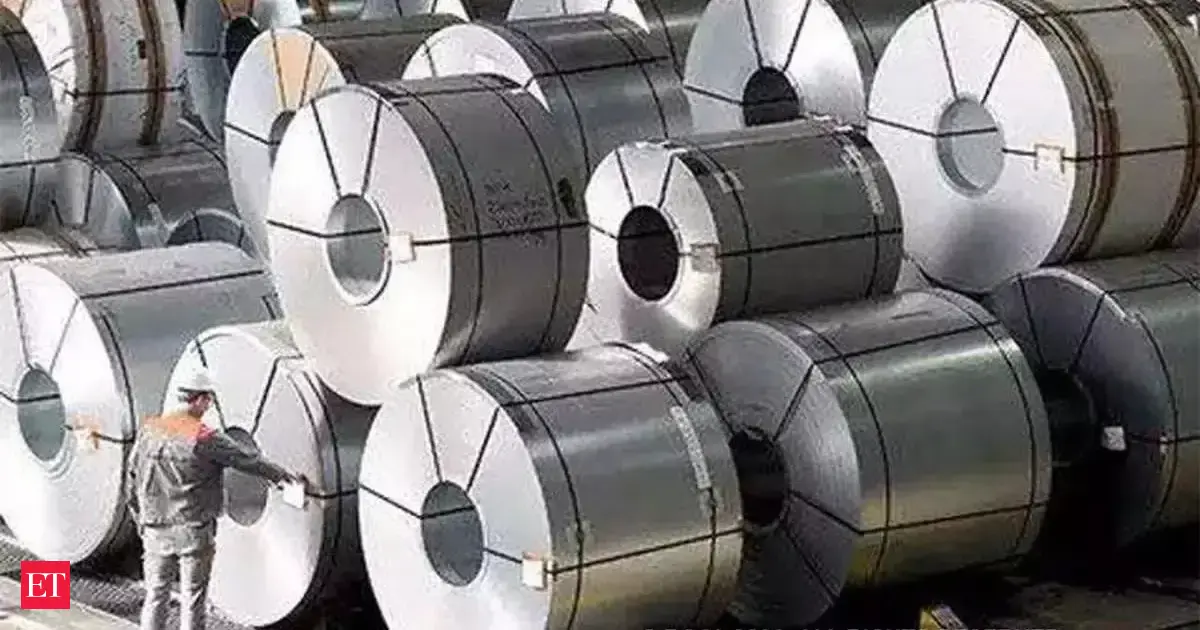
Jindal Stainless anticipates a volume growth of seven to nine percent this fiscal year. The company is preparing for potential impacts from the West Asia crisis on demand. They plan to invest ?2,600 crore in capital expenditure. Jindal Stainless will review its growth target mid-fiscal. Exports are expected to contribute about ten percent of sales. View More
Mumbai: Jindal Stainless has given guidance that its volume will grow by 7-9% this fiscal, as it braces for the impact the West Asia crisis will have on demand, the company’s senior management said on Monday. Assembly Elections 2026Election Results 2026 Live Updates: Who's ahead in which stateWest Bengal Election Results 2026 Live UpdatesTN Election Result 2026 Live Updates The country’s largest producer of stainless steel also said it will revise this growth target at the end of the first half, if needed. It is likely to produce 2.75–2.80 million tonnes of stainless steel this fiscal, up from 2.56 million tonnes in the previous fiscal, when it saw a year-on-year volume growth of 8.1%. “We would have had a volume growth of 9.3–9.5% if it was not for the war,” chief executive officer Tarun Khulbe said after the company’s quarterly earnings were announced on Monday. Jindal Stainless had guided for a volume growth of 10% for fiscal 2026. The company said it will spend ₹2,600 crore on capital expenditure in the current fiscal. Although global demand remains soft, Jindal Stainless said about 10% of its sales are likely to come from exports this fiscal. The company is getting “substantial” traction from the markets of Brazil, South Korea, Japan and Middle East, the management said. Live Events In the March quarter, 7% of Jindal Stainless’ sales came from exports, while for fiscal 2026, they stood at 8%. “Jindal Stainless’ value-added offerings in these markets, supported by strong product positioning and margin management, continued to hold the company in good stead,” it said in a statement. The company’s consolidated profit for the quarter jumped by more than 41% year-on-year to Rs 834 crore, while net revenue was 11% higher at 11,337 crore. Earnings before interest, tax, depreciation and amortisation (EBITDA) for the quarter rose by 37% y-o-y to Rs 1,061 crore. “The quarter witnessed energy-related constraints emerging amid geopolitical uncertainties affecting West Asia, a key sourcing region for industrial fuels such as propane/LPG and natural gas that are critical to stainless steel manufacturing,” it said. Khulbe said this would drag the EBITDA per tonne to Rs 18,000–20,000 from Rs 21,700 per tonne in the March quarter. .Pbanner{display:flex;justify-content:space-between;align-items:center;background-color:#ec1c40;margin-top:20px;padding:5px 10px;border-radius:4px;color:#fff;line-height:10px;} .Pbannertext{display:flex;align-items:center;font-size:16px;font-weight:600;font-family:'Montserrat';} .Pbannertext img{height:20px;margin:0 6px} .Pbannerbutton a{display:flex;align-items:center;background-color:#fff;color:#ec1c40;text-decoration:none;font-weight:600;padding:4px 8px;border-radius:6px;font-size:15px;font-family:'Montserrat';} .Pbannerbutton img{height:20px;margin-right:6px} .Pbannerbutton a:hover{background-color:#f7f7f7} Add as a Reliable and Trusted News Source Add Now! (You can now subscribe to our Economic Times WhatsApp channel) (You can now subscribe to our Economic Times WhatsApp channel)

India, the world's third-largest emitter of carbon dioxide, is burning more coal as demand for power rises, most of which is coal-fired. View More
NEW DELHI, INDIA - APRIL 27: People are seen protecting themselves from the sun on a hot summer day at Raisina Hill on April 27, 2026 in New Delhi, India. Delhi-NCR experienced intense heatwave conditions with maximum temperatures reaching between 42 degrees Celsius and 45 degrees Celsius across the region. (Photo by Raj K Raj/Hindustan Times via Getty Images)Hindustan Times | Hindustan Times | Getty Images India, the world's third-largest carbon dioxide emitter, is burning more coal as energy supply disruptions due to the Iran war and a nationwide heatwave have boosted demand for the dirty fuel.More than 70% of India's power is generated from coal-fired plants, and energy experts told CNBC that the share is expected to rise this year. In February, India announced that more than 52% of its total installed power generation capacity came from non-fossil fuel sources, with the majority coming from solar, hydropower and wind. Yet, coal-fired power plants, which account for nearly 43% of total generation capacity, remain the dominant source of energy.Coal-fired power generation in India in April increased to 164.9 average gigawatts, compared with 160.7 average gigawatts last year, according to data shared by S&P Global Energy. According to the data, coal-fired power generation rose sequentially by 5.6 average gigawatts, or 3.5%, in April.About 4% of India's installed power generation capacity is gas-fired and runs on liquified natural gas, of which about 60% is imported through the Strait of Hormuz. Higher coal burn The higher liquid natural gas prices have also made gas-based power generation economically unviable, said Girish Madan, director of corporate ratings at Fitch Ratings in Singapore. "So, coal-based power needs to share a higher burden in these peak summer months," he added.Electricity demand in India is rising as temperatures surge amid heatwaves. On April 27, data compiled by New Delhi-based air quality and temperature monitoring platform AQI showed that all 50 of the world's hottest cities were in India."Heatwave conditions, with readings above 40-45 degrees C (Celsius), across several places in India have lifted power demand," Andre Lambine, lead APAC short-term power and renewables research at S&P Global Energy, told CNBC in an email.He added that while gas-fired generation rebounded in the last weeks of April, it remains "1.5 average gigawatts below 2025 levels, underscoring the continued displacement of gas by coal in the power mix."If the El Niño climate effect develops, there could be a "potential growth of 10% year over year for coal-fired power generation in India," he said.India is expected to experience relatively higher temperatures this month, which could result in "heat wave conditions across parts of Northwest, Central and West India, along with the East Coast," the government said in a release on May 2. NEW DELHI, INDIA - APRIL 26: People are seen out during a Hot day at Humayun's Tomb, on April 26, 2026 in New Delhi, India. Hindustan Times | Hindustan Times | Getty Images While demand for coal is primarily driven by the power sector, other industries are also leaning on the fossil fuel, said Firat Ergene, lead Insights analyst for coal, petcoke, and cement at Kpler.Additional demand is coming from industries such as cement producers, he told CNBC.Supplies of petroleum coke, which is burned as fuel, have been disrupted by the Middle East conflict, pushing prices higher. This has prompted cement companies to substitute petcoke with coal, Ergene explained.Last month, India vowed to reduce the emissions intensity of its economy by 47% by 2035, in line with its goal to become a net-zero country by 2070. India is the world's third-highest emitter of carbon dioxide, after China and the U.S.While India's carbon dioxide emissions are still rising, the growth rate last year was the slowest in more than two decades, according to an analysis by the Center for Research on Energy and Clean Air, a policy think tank. Choose CNBC as your preferred source on Google and never miss a moment from the most trusted name in business news.

The domestic equity benchmarks rallied on May 4, supported by positive auto stock performance and a dip in crude prices. Nifty 50 increased by 1% to 24,236, indicating a consolidation phase as it faces resistance levels, while broader markets may need time to stabilize. View More


Until U.S. Attorney Jeanine Pirro's comments, prosecutors had not disclosed whose bullet hit the agent. View More
From left, Acting Attorney General Todd Blanche, Jeanine Pirro, the U.S. attorney for Washington, D.C., and FBI Director Kash Patel conduct a news conference at the Department of Justice about Cole Tomas Allen, the suspect in the White House Correspondents' Association dinner shooting, on Monday, April 27, 2026.Tom Williams | Cq-roll Call, Inc. | Getty Images U.S. Attorney for the District of Columbia Jeanine Pirro said Sunday that the alleged White House Correspondents' Association dinner shooter, Cole Tomas Allen, shot a Secret Service agent as he attempted to storm the Washington Hilton ballroom last weekend. Pirro, speaking on CNN's "State of the Union," said new ballistics evidence showed the agent's protective vest contained a buckshot pellet from the Mossberg pump action shotgun Allen allegedly carried on the night of the shooting.Allen has been charged by federal prosecutors with attempting to assassinate President Donald Trump in the shooting that left one Secret Service agent shot but uninjured. Prosecutors have also charged Allen with the discharge of a firearm during a crime of violence, but until Pirro's comments, law enforcement officials had not disclosed whose bullet hit the agent. Read more CNBC politics coveragePirro reveals new Trump attack evidence; Cole Allen challenges 'suicide precautions'Bard President Botstein retiring after Jeffrey Epstein ties detailedTrump tells Congress hostilities in Iran 'have terminated' at war powers deadlineLutnick gets grilling on Nvidia chip sales to China in Sen. Chris Coons letter "It is definitively his bullet," Pirro said. "He had every intention to kill him and anyone who got in his way on his way to killing the president of the United States." It's so far unclear if the determination that Allen was allegedly the person who shot the agent will result in any additional charges. Prosecutors have warned that more charges may be filed in the case. The shooting at the annual press dinner â which Trump, Vice President JD Vance and many high-ranking administration officials were attending â marked the third attempt on the president's life since 2024. Allen, 31, of California, has been held in custody since the night of the shooting. He waived his right to challenge his detention on Thursday. A video still showing Cole Tomas Allen running through security at the White House Correspondents' Association dinner.Courtesy: USAttyPirro Allen, on Sunday, was removed from any suicide precautions in jail following an emergency motion from his attorneys.Allen's attorneys, in a court filing on Saturday, asked the court to remove him from any suicide precautions while he is imprisoned. The emergency motion was withdrawn on Sunday after his release from suicide precautions, and Allen's attorneys requested a Monday hearing that was scheduled to be canceled. Magistrate Judge Zia M. Faruqui on Sunday denied the motion to vacate the scheduled hearing, however, saying in a minute order that the "Court has grave concerns" about the defendant's "seemingly unprompted solitary confinement for days and overall conditions of confinement."Allen's lawyers, in asking for his removal from suicide status, said they "have not seen, and therefore do not argue, that there is expressed intent to punish Mr. Allen.""Nevertheless, his placement on suicide precautions amounts to punishment where, as here, he has exhibited no indications of suicidality," they wrote.They contended his placement on "suicide watch and suicide precautions amount to violations of his rights under the Due Process Clause to the U.S. Constitution."Allen's attorneys said he was assessed on May 1, and a jail nurse determined he should be removed from suicide watch and suicide precautions protocols. They reported that he was still on suicide precautions during a visit that day, and that they believe he is still under such precautions. The defense said Allen's presence on suicide precautions limited his ability to mount a defense and deprived him of his due process rights. A person held in suicide watch or precautionary protocols "is not permitted to interact with others inside the facility, receive visits, make phone calls, or access commissary or resources such as the law library or jail tablets.""Continued housing under suicide precautions is unnecessary and violates Mr. Allen's due process rights by depriving him of dignity and access to resources inside the jail," they wrote. Choose CNBC as your preferred source on Google and never miss a moment from the most trusted name in business news.
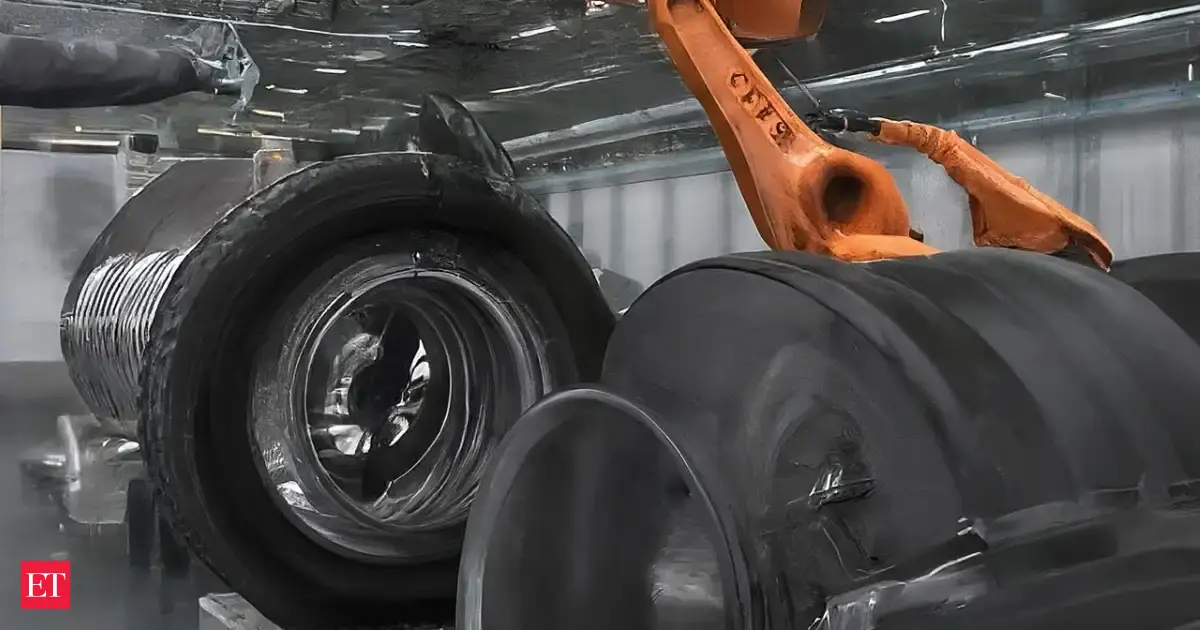
Ramkrishna Forgings is set to make waves in the manufacturing sector as they commence operations at their Chennai facility in June. This venture into forged wheel production positions them to create Asia's second-largest wheel manufacturing unit. With an impressive order book of ?9,635 crore, FY27 is shaping up to be a pivotal year, underlining the company's ambitious growth trajectory. View More
New Delhi: Ramkrishna Forgings is gearing up to start commercial operations of its Chennai facility from June this year, a development that will mark the company's foray into forged wheel manufacturing business. The company has been setting up the facility at an estimated cost of Rs 2,000 crore after receiving a Letter of Award (LOA) from the Indian Railways in 2023, Naresh Jalan, the Managing Director of Ramkrishna Forgings, said. Kolkata-based Ramkrishna Forgings has posted a consolidated net profit of Rs 72 crore and income of Rs 4,251.19 crore in FY26. Speaking further about the Chennai project, Jalan said it has been set up in a joint venture with a private entity, in which his company holds a majority stake. He said the facility would be Asia's 2nd largest wheel manufacturing unit with an annual production capacity of 2,28,000 forged wheels. Live Events The project has been executed in two phases - Phase I, costing Rs 1,810 crore and Phase II (Rs 370 crore) - through a combination of debt and equity, Jalan said. Ramkrishna Forgings is a manufacturer and supplier of closed-die forgings of carbon and alloy steel, micro-alloy steel, and stainless steel forgings. During the fourth quarter of FY26, the company secured new orders worth Rs 594 crore, of which 56 per cent of the orders were from the automotive segment and the remaining 44 per cent from the non-automotive segment. As of March 31, the company's total orderbook was at Rs 9,635 crore to be executed over 4 years. About the outlook, Jalan said, "FY27 is poised to be a strong year for the company. A healthy order book provides strong revenue visibility, while improving demand conditions, better operating leverage, continued diversification, and disciplined capital allocation position us well for continued long-term value creation for all stakeholders." .Pbanner{display:flex;justify-content:space-between;align-items:center;background-color:#ec1c40;margin-top:20px;padding:5px 10px;border-radius:4px;color:#fff;line-height:10px;} .Pbannertext{display:flex;align-items:center;font-size:16px;font-weight:600;font-family:'Montserrat';} .Pbannertext img{height:20px;margin:0 6px} .Pbannerbutton a{display:flex;align-items:center;background-color:#fff;color:#ec1c40;text-decoration:none;font-weight:600;padding:4px 8px;border-radius:6px;font-size:15px;font-family:'Montserrat';} .Pbannerbutton img{height:20px;margin-right:6px} .Pbannerbutton a:hover{background-color:#f7f7f7} Add as a Reliable and Trusted News Source Add Now! (You can now subscribe to our Economic Times WhatsApp channel) (You can now subscribe to our Economic Times WhatsApp channel)