
Latest Sectors News
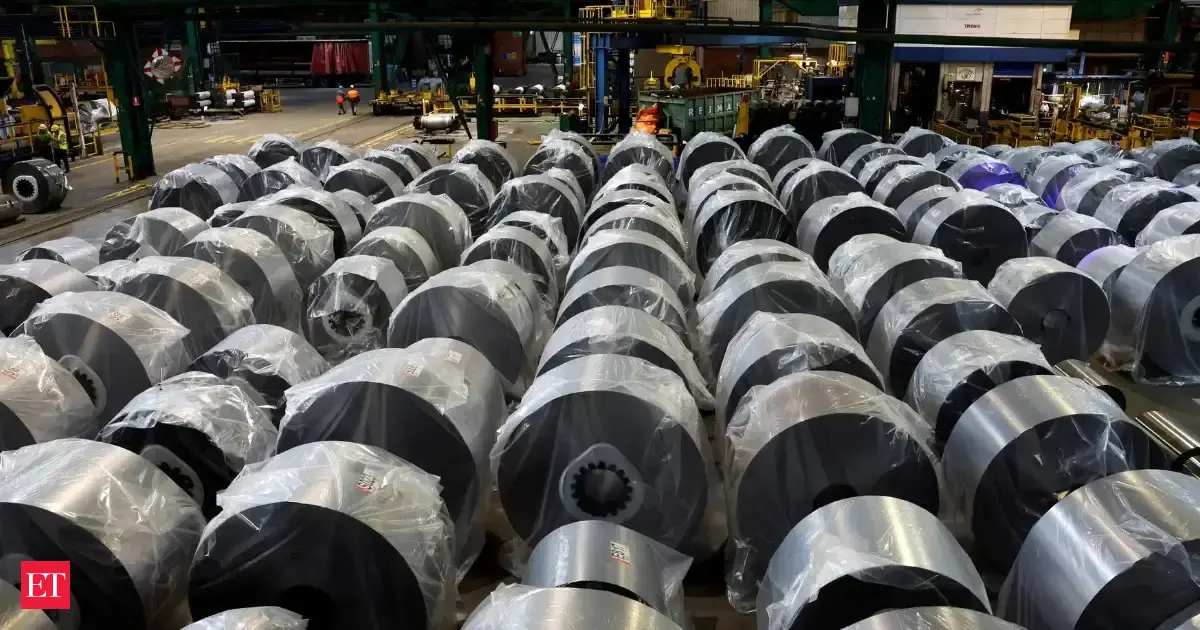
India has launched an anti-dumping investigation into hot rolled steel imports from China, Japan, and Russia. JSW Steel and Jindal Steel allege these products are being sold at unfairly low prices, harming domestic manufacturers. The Directorate General of Trade Remedies found initial evidence of dumping, with significant price differences. This probe, covering imports from 2022-2025, aims to assess the impact on India's steel industry. View More
New Delhi: India has initiated an anti-dumping probe against cheap imports of certain hot rolled steel goods from China, Japan and Russia, following an application by JSW Steel Ltd , JSW Vijayanagar Metallics Ltd and Jindal Steel Odisha Ltd, the commerce and industry ministry said in a notification. The applicants had alleged that "hot rolled flat products of alloy or non-alloy steel" exported from China, Japan and Russia are being imported at dumped prices , which is causing material injury to the domestic industry. The Directorate General of Trade Remedies (DGTR), an arm of the ministry, will investigate "the existence, degree and effect of the dumping". It will consider import data from 2022 to 2025 for the probe. The DGTR said its initial findings showed that the product was being exported at prices significantly lower than its normal value. The gap between the two, known as the dumping margin, was found to be above the minimum threshold and significant for exports from these countries. So, there is sufficient prima facie evidence that the product is being dumped in the Indian market by the exporters from these countries, it said. "On the basis of the duly substantiated application filed by the applicants, and having satisfied itself, on the basis of the prima facie evidence submitted by the applicants substantiating dumping of the product...the Authority, hereby, initiates an anti-dumping investigation," it said. Live Events The product is used in automotive, oil and gas line pipes/exploration, cold rolled steel products, pipe manufacturing, general engineering and fabrication, construction, capital goods, process equipment for cement, fertiliser, refineries and earthmoving. In a separate notification, the DGTR said it is also investigating the alleged dumping of dialysers from China and Malaysia. .Pbanner{display:flex;justify-content:space-between;align-items:center;background-color:#ec1c40;margin-top:20px;padding:5px 10px;border-radius:4px;color:#fff;line-height:10px;} .Pbannertext{display:flex;align-items:center;font-size:16px;font-weight:600;font-family:'Montserrat';} .Pbannertext img{height:20px;margin:0 6px} .Pbannerbutton a{display:flex;align-items:center;background-color:#fff;color:#ec1c40;text-decoration:none;font-weight:600;padding:4px 8px;border-radius:6px;font-size:15px;font-family:'Montserrat';} .Pbannerbutton img{height:20px;margin-right:6px} .Pbannerbutton a:hover{background-color:#f7f7f7} Add as a Reliable and Trusted News Source Add Now! (You can now subscribe to our Economic Times WhatsApp channel) (You can now subscribe to our Economic Times WhatsApp channel)

The probe was launched following an application filed by JSW Steel, JSW Vijayanagar Metallics and Jindal Steel Odisha. The application has also received support from Tata Steel and SAIL View More

The investigation, initiated on June 22, 2026, covers imports from April 1, 2025, to March 31, 2026, while the injury analysis covers 2022-23 to 2024-25 View More
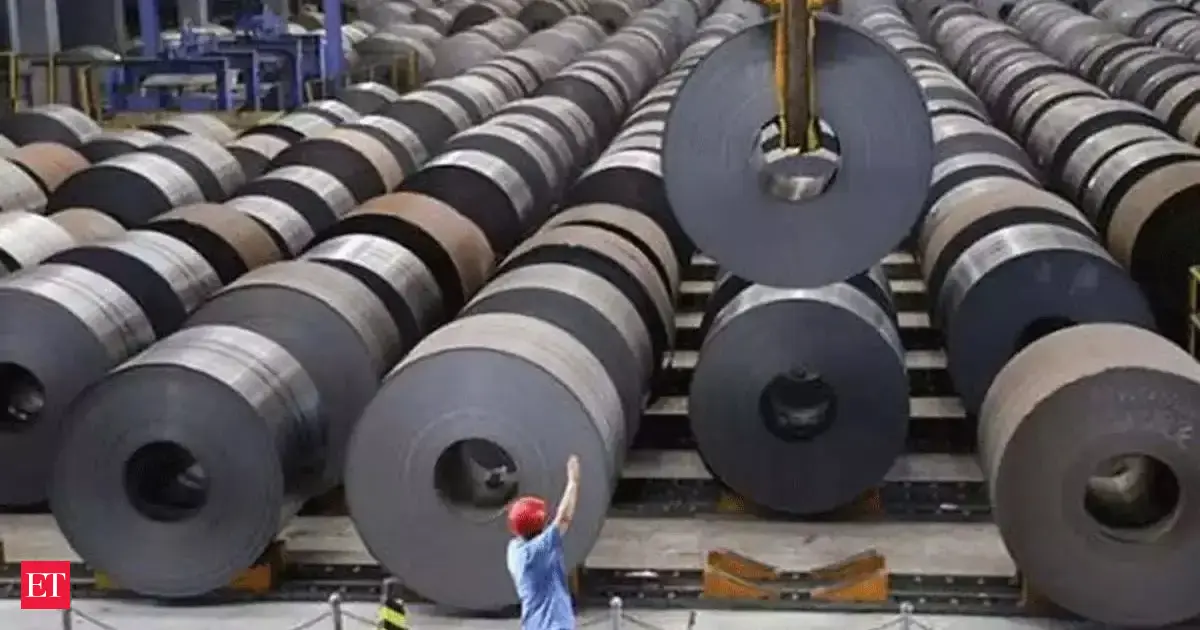
A potential anti-dumping duty on crucial cold-rolled grain-oriented electrical steel (CRGO) imports could significantly hike transformer manufacturing costs and impede India's ambitious power grid expansion plans. With domestic production meeting less than 10% of demand, imposing duties might raise prices without reducing import reliance, impacting vital infrastructure development and renewable energy integration. The probe follows a complaint by JSW JFE Electrical Steel Nashik Pvt Ltd. View More
New Delhi: Any move to impose an anti-dumping duty on cold-rolled grain-oriented electrical steel (CRGO), which accounts for nearly 90 per cent of India's imports to meet domestic requirements, could increase transformer manufacturing costs and slow the country's power grid expansion, Thin Tank GTRI said on Friday. The commerce ministry's arm, Directorate General of Trade Remedies (DGTR), has initiated an anti-dumping probe against imports of CRGO and amorphous metals from China, Japan, Korea and Russia, following a complaint by JSW JFE Electrical Steel Nashik Pvt Ltd. The investigation, initiated on June 22, 2026, covers imports from April 1, 2025, to March 31, 2026, while the injury analysis covers 2022-23 to 2024-25. GTRI said that every power and distribution transformer uses CRGO steel in its magnetic core. The specialised electrical steel minimises energy losses and is indispensable for efficient electricity transmission and distribution. Live Events Demand for CRGO is expected to surge as India invests Rs 9.15 lakh crore to expand its power grid by 2032, adding 1,91,000 circuit kilometres of transmission lines and more than doubling transformer capacity to 2,342 GVA (Gigavolt-Amperes), it said. "Yet India remains overwhelmingly dependent on imports," the Global Trade Research Initiative (GTRI) said. Annual CRGO consumption is estimated at 4,00,000-4,50,000 tonnes, while domestic production is only 40,000-50,000 tonnes. Nearly 90 per cent of India's requirements are imported, mainly from China, Japan, South Korea and Russia. "The move (initiation of the probe) has raised concerns that imposing anti-dumping duties on a product for which India imports nearly 90 per cent of its requirements could increase transformer costs and slow the country's ambitious power-grid expansion," GTRI founder Ajay Srivastava said. He said that with the domestic output meeting less than one-tenth of the country's demand, higher duties could raise prices without materially reducing import dependence, potentially slowing investments in transmission infrastructure, renewable-energy integration and electricity distribution. Jsquare Electrical Steel Nashik Pvt Ltd, a wholly-owned subsidiary of JSW JFE Electrical Steel Pvt Ltd, has acquired thyssenkrupp Electrical Steel India Pvt Ltd, which manufactures grain-oriented electrical steel (GOES) in India with its facility located in Nashik, Maharashtra. GTRI noted that CRGO imports are already subject to mandatory BIS (Bureau of Indian Standards) quality certification. "Every imported coil must meet Indian standards before it can be sold, making the investigation a dispute over pricing rather than product quality. The product was also excluded from safeguard duties because of India's continued dependence on imports," Srivastava said. .Pbanner{display:flex;justify-content:space-between;align-items:center;background-color:#ec1c40;margin-top:20px;padding:5px 10px;border-radius:4px;color:#fff;line-height:10px;} .Pbannertext{display:flex;align-items:center;font-size:16px;font-weight:600;font-family:'Montserrat';} .Pbannertext img{height:20px;margin:0 6px} .Pbannerbutton a{display:flex;align-items:center;background-color:#fff;color:#ec1c40;text-decoration:none;font-weight:600;padding:4px 8px;border-radius:6px;font-size:15px;font-family:'Montserrat';} .Pbannerbutton img{height:20px;margin-right:6px} .Pbannerbutton a:hover{background-color:#f7f7f7} Add as a Reliable and Trusted News Source Add Now! (You can now subscribe to our Economic Times WhatsApp channel) (You can now subscribe to our Economic Times WhatsApp channel)
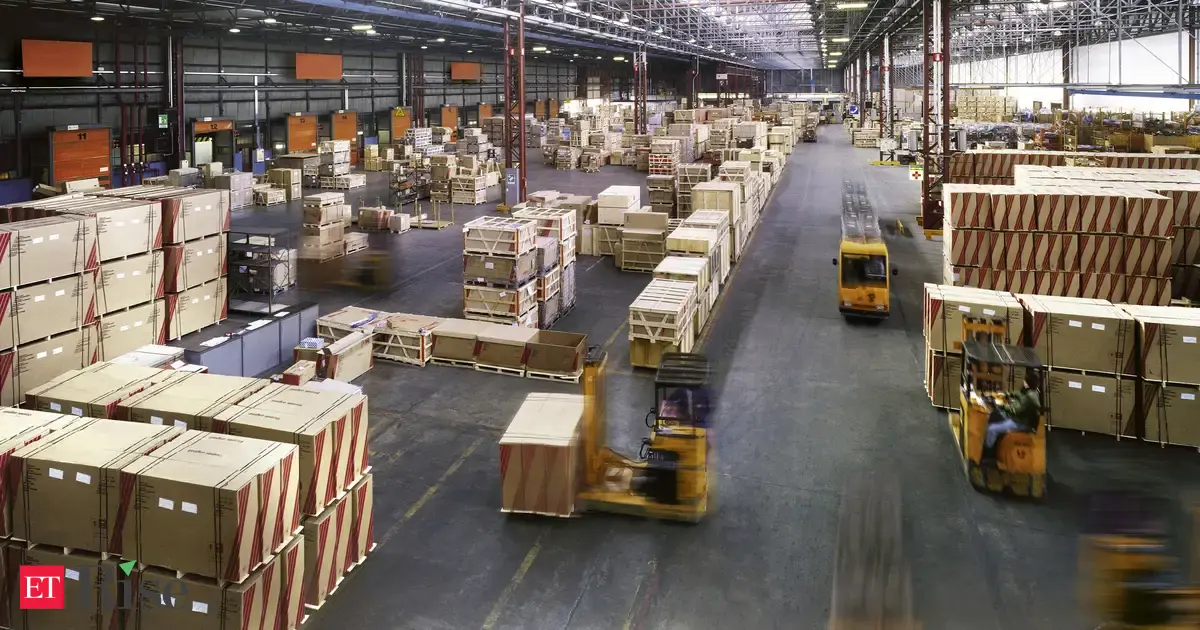
We are positive that with the proper guidance of the Government, we will be able to achieve the desired export target of US$ 250 billion by 2030: EEPC India Chairman View More
Engineering goods exports from India crossed US$ 12 billion in May 2026, for the first time ever, in the month of May 2026 despite West Asia conflict and trade disruptions caused by it. The total value of engineering shipments in May 2026 stood at US$ 12.31 billion, up from US$ 9.89 billion in the same month last year, representing year-on-year growth of 24.48%. As per the Quick Estimates of the Government of India, the share of engineering in India’s total engineering exports stood at 27.2% in May 2026. The record-high exports in May 2026 were mainly led by electric machinery and equipment; ships, boats, and floating structures; motor vehicles/cars; and iron and steel and its products, among others. As many as 28 of 34 engineering panels recorded higher exports in May 2026. Commenting on the engineering exports data, Mr. Pankaj Chadha, Chairman, EEPC India, said that the sector's growth trajectory demonstrates its resilience and growing competitiveness in the global market. Live Events Mr. Chadha noted that as global companies are reworking their supply chains to reduce overreliance on a single country, especially China, new opportunities are emerging for Indian engineering firms. "For Indian engineering exporters to tap this opportunity, they need to improve scale, quality, logistics, and compliance with destination-country standards. The support of the Ministry of Commerce and Industry in terms of faster policy relief, cheaper trade finance, and stronger risk protection would also be of utmost importance in this regard," he said. "Overall, India’s engineering export story is one of cautious optimism. We are positive that with the proper guidance of the Government, we will be able to achieve the desired export target of US$ 250 billion by 2030," the EEPC India chairman stated. Indian engineering exporters have been diversifying both their products and markets to expand their presence and de-risk exposure to dominant markets. This strategy has helped them grow despite geopolitical uncertainty, supply chain realignment, and protectionist trade policies in several major markets. It may be noted that the global economy is still being shaped by uneven recovery, high borrowing costs in some economies, and fragile manufacturing demand. The broader global trade environment remains mixed. Many economies are still managing inflation, weak consumer demand, and trade fragmentation. The performance of the Indian engineering sector has been remarkable in recent years, reaching an all-time high in the last two completed fiscal years, and the momentum has continued into the new fiscal year 2026-27. On a cumulative basis, engineering exports during the first two months of FY27 were recorded at US$ 22.66 billion, as against US$ 19.41 billion during the same period last fiscal, reflecting a growth of 16.8%. Region-wise analysis showed that North America, West Asia, and North Africa (WANA), and the European Union were the top consumers of Indian engineering products, accounting for 19.3%, 16.7%, and 15.2%, respectively, of India’s global engineering exports in May 2026. Even during the geopolitical crisis in West Asia, engineering exports to WANA increased by 44.3% in May 2026 and by 14.1% during Apr-May 2026. Country-wise analysis showed that exports to all top five destinations of Indian engineering exports, namely the USA, UAE, UK, Germany, and Saudi Arabia, recorded decent to high growth during the first two months of fiscal 2026-27. The USA remained the top destination for Indian engineering exports in April-May 2026-27, with exports of 3.64 billion, up 7% year-on-year. .Pbanner{display:flex;justify-content:space-between;align-items:center;background-color:#ec1c40;margin-top:20px;padding:5px 10px;border-radius:4px;color:#fff;line-height:10px;} .Pbannertext{display:flex;align-items:center;font-size:16px;font-weight:600;font-family:'Montserrat';} .Pbannertext img{height:20px;margin:0 6px} .Pbannerbutton a{display:flex;align-items:center;background-color:#fff;color:#ec1c40;text-decoration:none;font-weight:600;padding:4px 8px;border-radius:6px;font-size:15px;font-family:'Montserrat';} .Pbannerbutton img{height:20px;margin-right:6px} .Pbannerbutton a:hover{background-color:#f7f7f7} Add as a Reliable and Trusted News Source Add Now!

While FTAs have opened global markets for MSMEs, experts say future deals should be designed more carefully to help small firms compete at home and abroad. View More
In recent years, India has signed trade agreements with countries such as the UK, the EU, and New Zealand, and talks are ongoing with the US regarding a potential deal. While these trade pacts have opened markets and boosted exports of micro, small, and medium enterprises (MSMEs), experts say they have also brought stiffer competition and compliance burdens. Results are uneven as some sectors gained from global value chains, while others still face cost pressures and low FTA (free trade agreement) awareness, say industry experts and stakeholders. As India signs more deals, experts want future FTAs designed to help MSMEs compete globally and at home. Since 2021, India has signed nine FTAs covering 38 countries. The run started with Mauritius, followed by the UAE CEPA (Comprehensive Economic Partnership Agreement) in May 2022 and Australia ECTA (Economic Cooperation and Trade Agreement) in December 2022. Then India signed the EFTA TEPA on March 10, 2024, which took effect on October 1, 2025. The UK CETA was signed in July 2025 and the Oman CEPA in December 2025. New Zealand’s FTA was announced on December 22, 2025, and the EU FTA on January 27, 2026. An interim framework with the US was delivered on February 7, 2026. Gautam Khattar, Principal, Price Waterhouse & Co, says India’s recent FTAs have significantly strengthened opportunities for MSMEs by reducing tariff barriers, improving their global price competitiveness, and facilitating greater integration into international value chains. “This is reflected in the sharp rise in MSME exports and the growing number of exporting enterprises, underlining their critical role in India’s trade ecosystem. Government data shows the same,” adds Khattar. According to government data, MSME exports increased from Rs 3.95 lakh crore in 2020-21 to Rs 12.39 lakh crore in 2024-25, while the number of exporting MSMEs rose from 52,849 to 173,350 during the same period. MSMEs also accounted for around 45.7% of India’s exports in 2023-24. Khattar says modern FTAs cover goods, services, standards, mutual recognition, digital trade, investment, and institutional cooperation, and if implemented well, they support MSMEs. He points to India-UAE CEPA and India-Australia ECTA, which boosted exports in MSME-heavy sectors like textiles, engineering goods, and processed food. UAE CEPA offers preferential access on 97% of tariff lines, covering 99% of Indian export value. Australia ECTA provides 100% tariff line access with 79% export utilisation and 84% import utilisation. Broader pacts like India-EFTA TEPA extend into services, standards, and investment. Live Events “However, these benefits are not automatic. Larger, export-ready firms are better positioned to leverage FTAs, while many MSMEs continue to face challenges around rules of origin, compliance, and documentation. As a result, while the overall impact has been positive, it remains uneven and contingent on awareness, capability, and integration with formal trade channels,” says Khattar. Bharat Garg, President, Federation of All India Aluminium Utensils Manufacturers (FAIAUM), says that while India’s recent FTAs have, in principle, opened up greater market access, the gains have yet to meaningfully reach MSMEs, particularly those in the downstream aluminium manufacturing sector. “The challenges are twofold. First, the competitiveness of downstream aluminium MSMEs is constrained by the high cost of their primary input. Domestic downstream manufacturers procure primary aluminium at import-parity prices, which significantly raises their production costs. As a result, even where FTAs provide preferential tariff access, Indian MSMEs struggle to compete in export markets due to their higher price points,” says Garg. Shashi Mathews, Partner at CMS INDUSLAW, says that the track record of these agreements is genuinely mixed. Agreements have been around for a while, and the recent ones still await ratification and implementation, he adds. But some, like the UAE CEPA, have boosted exports. Reports show bilateral merchandise trade nearly doubled from $43.3 billion to over $100 billion in three years, with more than 54,000 preferential Certificates of Origin issued in the first 11 months alone. That shows serious impact. “But overall, the MSME sector has not been able to capitalise much on the benefits due to low awareness, perception of complex rules and heavy documentation holding back some of these exporters. While market access is a big boon, the quality of Indian products has left a dent, especially from an MSME perspective, and that needs to be fixed,” says Mathews. Darshana Thakkar, National President (Entrepreneurship Development Council), Women’s Indian Chamber of Commerce and Industry (WICCI), too, believes that the impact of FTAs has been uneven. “While export-ready MSMEs with strong compliance systems have leveraged FTAs to expand their global footprint, a large segment of MSMEs remains unaware of the specifics,” adds Thakkar. Making FTAs work for MSMEs Khattar says future FTAs need an explicit MSME utilisation focus. That means mapping MSME-heavy sectors early, aligning concessions with India’s export strengths, and linking to districts as export hubs. According to him, simplifying rules of origin is key, since documentation and traceability often erase duty benefits for MSMEs. For example, a small textile exporter may qualify for preferential duty but must still trace yarn and fabric origins, keep production records, and collect supplier declarations. For smaller firms, that burden can outweigh the duty advantage, he says. “The future FTAs should include practical compliance tools such as simplified checklists, standardised declarations, and easier processes for low-risk exporters, while maintaining safeguards like CAROTAR. Further, future FTAs may also deal more effectively with non-tariff barriers. For many MSMEs, the bigger challenge is not customs duty but testing, certification, labelling, packaging, sustainability requirements and regulatory approvals in the destination market,” says FAIAUM’s Garg. “Stronger mutual recognition arrangements, regulatory cooperation, faster approvals and dedicated SPS or TBT helpdesks can reduce cost and time for exporters. Finally, FTA implementation may also be linked with domestic support on export finance, quality testing infrastructure, logistics, branding and digital trade enablement, because market access alone cannot address competitiveness gaps,” Garg says. In addition, future FTAs must better protect domestic MSMEs by rationalising duties across the aluminium value chain, Garg says. Cutting the cost of primary aluminium would make Indian value-added products more competitive and help downstream MSMEs use preferential market access. He calls for balanced tariffs and stronger safeguards against unfair imports to stop duty-free finished goods from hurting domestic manufacturing. Aligning trade and industrial policy, he adds, is key for MSMEs to leverage FTAs for exports, competitiveness, and sustainable growth. Mathews says future FTAs should incorporate simplified, MSME-friendly rules of origin within the agreement itself, rather than introducing such provisions later as a corrective measure. “Rules of origin verification for MSMEs with globalised supply chains is technically and financially burdensome, often exceeding the tariff-saving benefit itself. We should have an export promotion council focusing just on MSMEs with a target to iron out issues for them not only prior to implementation but from the negotiation stage itself,” says Mathews. Thakkar says future FTAs need a dedicated MSME framework rather than relying on benefits to trickle down. She identifies three priorities: simplify FTA provisions with sector-specific guidance; strengthening support for certifications, testing, quality standards; and digital export documentation, especially for first-time exporters. "FTAs are a good starting point for export promotion. However, to be able to make the best out of current FTAs, one requires accompanying internal reforms to make the MSMEs more competitive on the global scale. For example, we need to revisit the over-time regulation in the current labour laws to help reduce MSME costs relative to other firms in Vietnam and other countries," says Shekhar Tomar, Professor, Indian School of Business. .Pbanner{display:flex;justify-content:space-between;align-items:center;background-color:#ec1c40;margin-top:20px;padding:5px 10px;border-radius:4px;color:#fff;line-height:10px;} .Pbannertext{display:flex;align-items:center;font-size:16px;font-weight:600;font-family:'Montserrat';} .Pbannertext img{height:20px;margin:0 6px} .Pbannerbutton a{display:flex;align-items:center;background-color:#fff;color:#ec1c40;text-decoration:none;font-weight:600;padding:4px 8px;border-radius:6px;font-size:15px;font-family:'Montserrat';} .Pbannerbutton img{height:20px;margin-right:6px} .Pbannerbutton a:hover{background-color:#f7f7f7} Add as a Reliable and Trusted News Source Add Now!

The company has been empanelled as an approved steel supplier for Tata Motors’ facilities coming up in Gujarat and Maharashtra View More

President Donald Trump’s moves on housing, FISA, Iran and Washington projects are creating new headaches for Republicans trying to show voters they can govern. View More
President Donald Trump, alongside Senate Majority Leader John Thune, R-S.D., speaks to the press on the way to a lunch meeting with Senate Republicans at the Capitol in Washington, June 24, 2026.Saul Loeb | AFP | Getty Images President Donald Trump is turning a series of would-be Republican wins into political headaches for his own party, complicating GOP efforts to show voters they can govern as they head into the July 4 congressional recess, critics say. In the last two weeks, Trump delayed his own director of national intelligence pick, effectively derailing talks over a key foreign surveillance program that lapsed, then on Wednesday scrapped at the last minute a planned signing of a bipartisan housing bill aimed at affordability. He's repeatedly pressed Senate Republicans to gut the filibuster to clear a path for a voter-ID and noncitizen voting bill that lacks the votes to pass. And even an Iran peace deal has become harder for some Republicans to defend amid complaints that Congress was left in the dark and an $87.6 billion White House request to pay for the war. And often in his recent public remarks, Trump returns to the failed reflecting pool renovation.The fallout has spread across Capitol Hill. The Senate, in response to the dysfunction, started its July 4 recess early and left town Wednesday night. The House, meanwhile, is paralyzed as hardliners have taken up Trump's mantle and refused to vote for GOP priorities until the election bill, the SAVE America Act, is passed. House members also headed back to their districts early, though they're due back next week.What could have been a Republican victory lap on Wednesday â a bipartisan housing bill that reins in private equity and could boost housing supply and affordability â instead became chaos.The episodes are not identical. But they point to a pattern: Republicans get close to a win. Trump turns it into a loyalty test. The win becomes another fight.Some Republicans are now saying so publicly."He's been destructive," Rep. Don Bacon, R-Neb., said of Trump's handling of the housing bill. "He had a good bill that he could have signed and couldn't take a win."Bacon said Trump appeared to be acting "spur of the moment" and by the "seat of the pants," complicating a bill that "was a win for Congress and for him.""It was a mistake," Bacon told CNBC on Thursday. In response to a request for comment Thursday, the White House referred to comments the president made from the Oval Office Wednesday night. After a meeting with NATO chief Mark Rutte, Trump defended his decision to halt the housing bill and lashed out at Democrats for opposing the SAVE America Act. He said "we're doing great" on affordability and that his administration is "reducing prices a lot."Rep. Brian Fitzpatrick, R-Pa., who also supported the housing bill that passed with overwhelming bipartisan support, said the frustration among Republicans was real."You had 85% of voting House members support it. You had 90% of voting Senate members support it," Fitzpatrick told CNBC. "You can't get that on the naming of a post office, let alone a comprehensive housing affordability package."Fitzpatrick said the episode "is another example of the president using New York real estate tactics as leverage to try to extract other concessions.""Of course, it's frustrating," Fitzpatrick said. Sen. Bill Hagerty, R-Tenn., attends a press conference in favor of the proposed SAVE America Act, which would require proof of U.S. citizenship in registering to vote and a photo ID for casting ballots, at the U.S. Capitol in Washington, March 18, 2026.Nathan Howard | Reuters Fissures in Congress Not all congressional Republicans are upset at the president's recent actions. House Speaker Mike Johnson, R-La., in particular, has been supportive of the president and met with Trump at the White House Thursday afternoon. Later Thursday, he transmitted the housing bill to the White House, a procedural step that could lead to Trump signing it, to a veto or to it becoming law automatically without his signature.And conservative members of the House have echoed Trump, saying they will withhold their support from any legislation until the Senate passes the SAVE America Act, the conservative election bill that advanced out of the lower chamber in February."The president did the right thing yesterday by canceling the bill signing, unless the SAVE Act is attached," Rep. Ralph Norman, R-S.C., said at a Freedom Caucus press conference Thursday morning, referring to the housing bill. "I personally think we should not have any more legislation until the Senate comes back in session. And they're out for two weeks, ironically." Rep. Anna Paulina Luna, R-Fla., who is leading the GOP blockade of the House floor as a SAVE America Act proponent, similarly suggested that the bill be attached to larger, must-pass legislation, like the Foreign Intelligence Surveillance Act or the National Defense Authorization Act.But doing so could imperil both pieces of legislation.A key section of FISA, the spy bill that allows the U.S. to surveil people outside the U.S., including when they are communicating with Americans, expired earlier this month amid Democratic opposition to Trump's temporary pick for director of national intelligence, Bill Pulte.Pulte leads the Federal Housing Finance Agency and is a loyal ally of Trump's. His willingness to use his perch atop the FHFA to investigate Trump opponents raised concerns among Democrats and some congressional Republicans. Trump, in response to those concerns, tapped U.S. Attorney for the Southern District of New York Jay Clayton as the permanent DNI, and lawmakers tried to fast-track the nomination process. But hours before Clayton was due to testify before Congress last week, Trump posted on Truth Social that Clayton should stay home, in yet another attempt to force through the SAVE America Act.Democrats, meanwhile, have seized on Trump's handling of the housing bill as proof that the president doesn't care about affordability, the foremost issue heading into the 2026 midterm elections in which Republicans are attempting to hold narrow majorities in both the House and Senate. "Voters have seen this over and over and over again, that he doesn't care," Rep. Suzan DelBene, D-Wash., chair of the Democratic Congressional Campaign Committee, told CNBC. "And that's why they are demanding better representation, and a huge reason why we're going to take back the House."Brittany Martinez, a former aide to House Speaker Kevin McCarthy, R-Calif., and executive director at Principles First, which positions itself as an alternative to the Conservative Political Action Conference, said Trump's recent actions lacked "strategic discipline.""Republicans had an opening to talk about affordability and housing â issues voters actually care about â and instead the story became Trump canceling a housing vote, muddying the waters around his own intelligence pick and injecting more instability into FISA negotiations," Martinez told CNBC. "If Republicans continue to dismiss or downplay the affordability crisis instead of addressing it, voters are going to notice," she said.Matt Dallek, a George Washington University professor who studies the modern conservative movement, said that "without Democrats controlling either branch of Congress, Trump doesn't have a strong enemy, so he seems to be picking fights within his party.""When it comes to midterm messaging, Republican infighting could make the party lose focus and sight of the real prize that is control of Congress," Dallek said. Members of the National Guard patrol near fencing that is staged around the perimeter of the Lincoln Memorial Reflecting Pool in Washington, June 23, 2026.Tyler M. Andrews | The Washington Post | Getty Images Vanity projects The problems aren't limited to Capitol Hill. Trump has spent much of his political capital remaking Washington's most visible civic spaces around his own image.Trump has been focused in recent weeks on the reflecting pool in front of the Lincoln Memorial, following controversy over adding his name to the Kennedy Center and construction of a White House ballroom that Trump ordered before running into legal trouble.Trump personally pushed to renovate the reflecting pool ahead of America's 250th birthday, including directing that its bottom be painted what he called "American flag blue." The project was intended to be a patriotic showcase and a visible symbol of national renewal.Instead, it became another political headache. After the renovation came in more than $4 million over budget, according to federal contracts, the pool was hit by algae blooms, and the new coating appeared to peel. Trump blamed unspecified vandals, claimed people had damaged the liner, said arrests had been made and ordered the pool fenced off."It's such a waste of taxpayer money ⦠how much more money is it going to cost to fix an issue that didn't exist in the first place," Martinez said on MS NOW Tuesday. "He can't fix the algae, so he's threatening handcuffs." Democrats have also seized on the episode to question the administration's competence and demand answers about the contracts, costs and execution of the project.â Emily Wilkins contributed to this report. Choose CNBC as your preferred source on Google and never miss a moment from the most trusted name in business news.

President Donald Trump has attempted to spruce up Washington in advance of the country's 250th anniversary. View More
Workers clean the Lincoln Memorial Reflecting Pool on the National Mall on June 25, 2026, in Washington.Anna Moneymaker | Getty Images A group of Senate Democrats is probing President Donald Trump's troubled renovation of the reflecting pool in Washington that has drawn scrutiny for running over budget and rapidly deteriorating. The Democrats, in a Thursday letter led by Senate Energy and Natural Resources Committee ranking member Martin Heinrich, D-N.M., and addressed to Interior Secretary Doug Burgum, argued the "American people deserve to know why the rehabilitation project has failed and the corrective actions the Department is taking to address this ongoing issue.""Since announcing the renovations, the project has been plagued with a number of issues â raising serious questions about project management, contracting practices, quality control, and fiscal responsibility," the senators wrote. Read more CNBC politics coverageSens. Warren, Kelly press Trump administration on effects of tariffs on manufacturingFive things to watch in Tuesday's primary elections in New York, Maryland, UtahRo Khanna challenges Elon Musk to televised debate after online DOGE battle Trump's renovation of the reflecting pool has captured national attention, as his "American flag blue" resurfacing began peeling and algal blooms flourished. The renovation was intended to enhance the reflective qualities of the pool and reduce algae growth and was touted by the White House as a success despite apparent problems. Trump has acknowledged issues with the paint and the algae, but has, without evidence, blamed the shallow pool's problems on vandals. On Wednesday, Trump posted a photo of the surface of the pool to his Truth Social account and said, "This is the hard rubber surface â No Paint â Before the Vandals cut and pulled it apart!" Chipped paint and algae in the Lincoln Memorial Reflecting Pool after it was painted blue, June 22, 2026.Aaron Schwartz | Bloomberg | Getty Images The Democrats noted that while Trump initially said the reflecting pool renovation would cost $1.8 million, it has now ballooned to more than $16 million, ABC News reported last week, citing federal contracting documents."The issues now facing the reflecting pool are not simply maintenance concerns, but failures in project execution and government oversight," they wrote. "Following the award of a no-bid contract and a drastic increase in project costs, the public was assured that the rehabilitation project would restore one of the nation's most visible landmarks. Sadly, that has not happened."The pool is now expected to be drained again for additional repairs. "If a project this costly and of this magnitude cannot remain functional for an entire month after its completion, serious questions must be raised regarding the planning, execution, inspection process, and the Department's acceptance of the completed work," they continued. The senators demanded answers from Burgum about the project. The Interior Department houses the National Park Service, which manages the National Mall and its monuments. The Interior Department, when asked by CNBC for comment on the letter, responded "What failure?" and included a link to an X post from the official White House account featuring four pictures of the reflecting pool reflecting the Washington Monument and Lincoln Memorial.Among the answers the senators are seeking is how much the project is now expected to cost and why the project has exceeded its initial $1.8 million estimate, along with a full accounting of the funds used for the project and their sources. Workers turn a valve at the Lincoln Memorial Reflecting Pool following the completion of recent renovations in Washington, June 22, 2026.Kent Nishimura | AFP | Getty Images The lawmakers are also seeking a full list of expected further repairs, answers to why the department chose to award a no-bid contract for the job and whether that contractor will be held accountable. They also asked whether the department "conducted an independent engineering, architectural, or construction quality review regarding the reported peeling, cracking, and failure of the coating system," or an investigation into the algal blooms. The White House, in a Thursday press release, argued that Trump has been proven correct in his vandalism claims by pointing to a surveillance video of an alleged vandal the Park Police are attempting to identify. The video shows the person reach into the pool and appear to remove something from it. It's unclear from the video what exactly the person removed. Trump has repeatedly claimed that vandals have cut the surface and lifted it. "This isn't random mischief â it's targeted sabotage by anti-American crackpots who despise a strong, proud, and beautiful country," the White House press release said. "President Trump won't be deterred from making our Reflecting Pool beautiful." Choose CNBC as your preferred source on Google and never miss a moment from the most trusted name in business news.

On a month-on-month basis, imports were 69% higher compared to 59,917 metric tonnes in March 2026 View More