
Latest Sectors News

With some planning, federal student loan borrowers can save on their monthly bills under the U.S. Department of Education's new repayment plan. View More
Pekic | E+ | Getty Images With a bit of strategy, federal student loan borrowers can lower their monthly bills on the U.S. Department of Education's new repayment plan, coming July 1.Under the Repayment Assistance Plan, or RAP, borrowers pay a higher percentage of their income as their earnings grow. That means that finding ways to lower your pretax income by even a small amount can reduce your monthly student loan payments, said Landon Warmund, a certified financial planner and certified student loan professional at Reliant Financial Services in Kansas City, Missouri."There's definitely some unique opportunities with it," said Warmund, a member of CNBC's Financial Advisor Council. Read more CNBC personal finance coverageTrump Accounts create a 'legal backdoor' for Roth IRA wealth, tax attorney saysSocial Security retirement trust fund may be depleted in 2032: Trustees reportCollege sticker prices top $100,000 at 16 schools â but many students pay lessHow to get SpaceX stock â without buying the IPOCNBC's Financial Advisor 100: Best financial advisors, top firms ranked Figuring out how to reduce your monthly loan bill under RAP may be especially important for the millions of borrowers now forced to leave the Biden-era Saving on a Valuable Education, or SAVE, plan. A federal appeals court ended SAVE, the most affordable repayment plan to date, earlier this year. Student loan borrowers need to exit SAVE within roughly 90 days of July 1, and many will see higher required payments under other plans. "Borrowers can look to avoid these payment jumps by exploring what pre-tax benefits they have available to them at work to reduce their taxable income, which keeps them under key income numbers," Warmund said.Here's how borrowers can try to reduce their payments under RAP. How RAP calculates your monthly bill Under RAP, monthly payments will typically range from 1% to 10% of your earnings; the more you make, the bigger your required payment. There will be a minimum monthly payment of $10 for all borrowers. Current income-driven repayment plans, or IDRs, offer certain very low-income borrowers a $0 monthly payment.RAP also doesn't shield a portion of a borrower's income for necessary expenses in its bill calculation, as other IDR plans do; instead, it determines the payment based on adjusted gross income. AGI is your total earnings before taxes, minus certain deductions.For those who enroll in RAP, "even a single dollar difference in AGI could lead to a several-hundred-dollar impact in regard to total student loan payments over a year," Warmund said. For example, due to RAP's formula, a student loan borrower with an AGI of $59,999 a year could pay about $50 a month, or $600 a year, less than a borrower who has a $60,000 AGI, he said. How to reduce your adjusted gross income There are several ways that borrowers may be able to reduce their AGI, and therefore lower their monthly RAP bill, said Carolina Rodriguez, director of the Education Debt Consumer Assistance Program in New York, a nonprofit that assists borrowers.Directing a portion of your paycheck to your workplace 401(k) retirement plan or a traditional IRA â or increasing your contributions to these accounts â is one method, Rodriguez said. Keep in mind: To lower your AGI, those contributions need to be pretax or deductible, so money put into a Roth IRA or Roth 401(k) wouldn't help here. If a single student loan borrower contributed an additional $1,001 in a year to a pretax retirement account, lowering their AGI to $69,999 from $71,000, their monthly payment on RAP would fall to $350 from $414, Warmund said. The RAP plan does have a lot of nice benefits if you plan accordingly.  Landon WarmundCertified financial planner Making pretax contributions to a health savings account, or HSA, or a flexible spending account, or FSA, are additional options to bring down your taxable wages, Rodriguez said. Companies can offer several kinds of FSAs, including for qualifying healthcare, dependent care and commuting expenses.Meanwhile, if you're self-employed, claiming legitimate business expenses and deductions on your Schedule C can have the same outcome, Rodriguez said. "This can include ordinary and necessary business costs, retirement contributions and health insurance deductions," she said. Other "above-the-line" deductions can also lower your AGI, including the break on student loan interest. Per-dependent savings of $50 Under the RAP plan, federal student loan borrowers can also get their monthly bill reduced by $50 for every dependent they claim, Rodriguez said. Dependents are often minor children, but can also include siblings or other relatives in specific cases, according to IRS guidelines. Those savings should be automatic and tied to your tax filing. "It's based on the number of dependents the borrower claims on their federal tax return," she said. You may still pay more over time Even if you're able to lower your monthly payment under RAP, you may end up paying more than you would on other plans over the life of the loan, Rodriguez said. That's because RAP leads to student loan forgiveness only after 30 years, compared with the typical 20- or 25-year timeline on other IDR plans.As a result, some borrowers may want to compare their monthly bill and total payment amount on RAP to other repayment plans. However, RAP will be the only IDR plan available to student loan borrowers who take out a loan after July 1. Borrowers with existing federal student loans may maintain access to some current IDR plans, including the Income-Based Repayment plan, or IBR. IBR borrowers are eligible for debt forgiveness after 20 years or 25 years, depending on the age of their loans. While the Income-Contingent Repayment plan, or ICR, and PAYE, or the Pay As You Earn plan, will also remain available to current borrowers until mid-2028, neither program now results in debt forgiveness. The only reason you'd want to be in either plan, then, is if it brings you the lowest monthly payment, Rodriguez said. If that's the case, you can remain in ICR or PAYE until the plans expire on July 1, 2028. Afterward, if you switch into IBR or RAP, you're entitled to credit toward forgiveness for your previous payments. "If RAP will be your lowest option, wait for it to become available," Rodriguez said. "But be mindful of the plan's implications." Choose CNBC as your preferred source on Google and never miss a moment from the most trusted name in business news.
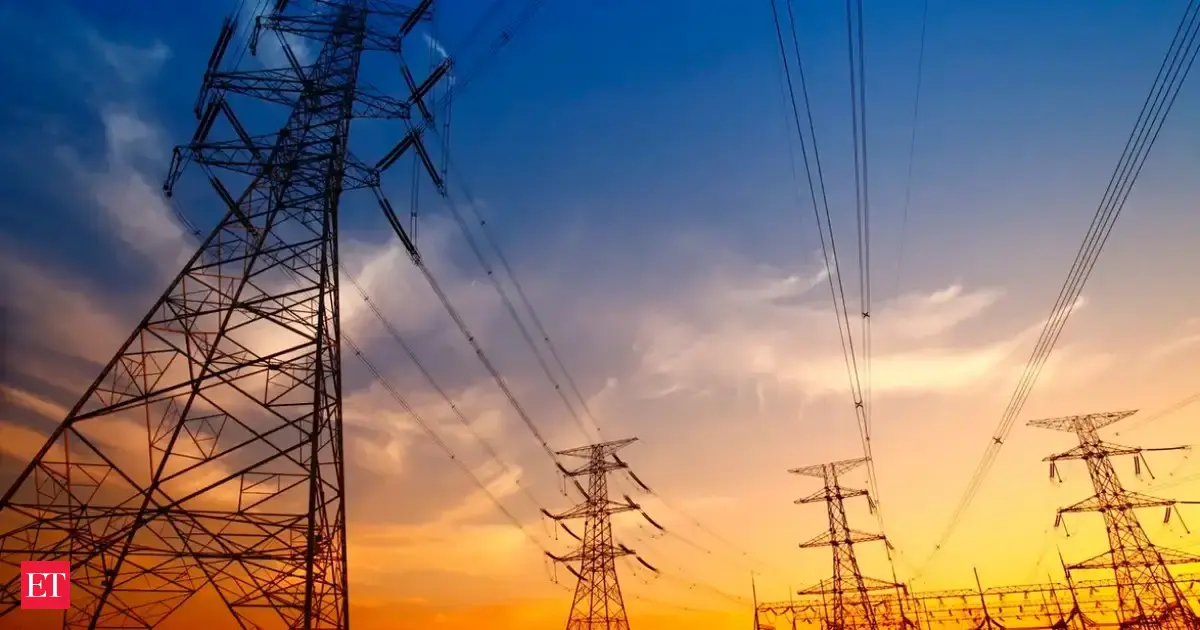
Haryana's power sector is set for major upgrades. The state has approved additional infrastructure works worth over Rs 900 crore under the Revamped Distribution Sector Scheme. This initiative aims to further strengthen the electricity distribution network. Haryana's power companies are already performing well, showing significant reductions in line losses and improved operational efficiency. View More
Chandigarh: In a boost to Haryana's power sector reforms, the Distribution Reforms Committee (DRC) chaired by State Chief Secretary Anurag Rastogi has approved additional power infrastructure works worth Rs 912.70 crore under the Revamped Distribution Sector Scheme (RDSS). This paves the way for major upgrades in the state's electricity distribution network. The committee also approved forwarding the proposal to the Power Finance Corporation (PFC) and the Ministry of Power for consideration and approval by the Monitoring Committee under RDSS, according to an official statement. The decision comes at a time when Haryana's power distribution companies have emerged among the country's best-performing utilities, recording substantial reductions in line losses and significant improvements in operational efficiency, it said. During the meeting on Friday, the chief secretary reviewed the progress of RDSS projects being implemented by Dakshin Haryana Bijli Vitran Nigam Ltd (DHBVNL) and Uttar Haryana Bijli Vitran Nigam Ltd (UHBVNL) and noted the remarkable transformation achieved by the state's power sector in recent years. A key achievement highlighted during the review was the sharp reduction in Aggregate Technical and Commercial (AT&C) losses. DHBVNL has brought down its AT&C losses from a baseline level of 16.93 per cent in 2020-21 to 9.54 per cent in 2024-25, while UHBVNL reduced losses from 17.21 per cent to 9.33 per cent during the same period. Live Events Both utilities have significantly outperformed the national average of 15.04 per cent, reflecting the success of Haryana's sustained focus on power sector reforms and loss reduction measures. Commissioner and Secretary, Energy Department, Ashima Brar said billing efficiency in Haryana has increased steadily from 82.95 per cent in 2020-21 to 90.12 per cent in 2024-25, surpassing the national benchmark of 87.59 per cent. Collection efficiency has consistently remained near 100 per cent, indicating strong financial discipline and effective revenue management by the state's power utilities. Under RDSS, projects worth Rs 5,165.61 crore have been sanctioned for DHBVNL and Rs 1,527.54 crore for UHBVNL, taking the total sanctioned outlay to nearly Rs 6,700 crore. Works worth over Rs 5,071 crore have already been awarded, while additional projects are in various stages of tendering and implementation. The newly approved package of Rs 912.70 crore includes Rs 169 crore for loss-reduction works in Palwal Circle covering Palwal and Nuh districts, Rs 414 crore for the creation of 30 new 33-kV substations and augmentation of 72 existing substations, and Rs 329.70 crore for implementation of Supervisory Control and Data Acquisition (SCADA) and Distribution Management Systems (DMS) in Hisar and other towns. Managing Director, UHBVN and DHBVN, Vikram Singh stated the substation projects will add approximately 1,175 MVA (MegaVolt-Ampere) of transformation capacity to Haryana's power distribution system, strengthening the network and improving supply reliability for domestic, agricultural and industrial consumers. The SCADA and DMS projects will facilitate real-time monitoring and management of the electricity network, enabling quicker fault detection, faster restoration of supply and improved consumer services, he said. Chief Secretary Anurag Rastogi emphasised the need for timely completion of all approved works so that consumers across the state can benefit from a stronger, smarter and more reliable power distribution network. He noted that Haryana's achievements in reducing line losses, improving billing and collection efficiency and strengthening infrastructure have established the state as a frontrunner in power sector reforms. .Pbanner{display:flex;justify-content:space-between;align-items:center;background-color:#ec1c40;margin-top:20px;padding:5px 10px;border-radius:4px;color:#fff;line-height:10px;} .Pbannertext{display:flex;align-items:center;font-size:16px;font-weight:600;font-family:'Montserrat';} .Pbannertext img{height:20px;margin:0 6px} .Pbannerbutton a{display:flex;align-items:center;background-color:#fff;color:#ec1c40;text-decoration:none;font-weight:600;padding:4px 8px;border-radius:6px;font-size:15px;font-family:'Montserrat';} .Pbannerbutton img{height:20px;margin-right:6px} .Pbannerbutton a:hover{background-color:#f7f7f7} Add as a Reliable and Trusted News Source Add Now! (You can now subscribe to our Economic Times WhatsApp channel) (You can now subscribe to our Economic Times WhatsApp channel)

India will host the Global Wind Day 2026 Conference in Goa on June 15, 2026, under the theme "Wind Energy: From Ambition to Acceleration." The event will focus on accelerating India's wind sector's next phase, including manufacturing competitiveness and export opportunities. View More
New Delhi, The Ministry of New and Renewable Energy said on Friday that it will host the Global Wind Day 2026 Conference on June 15, 2026 in Goa under the theme "Wind Energy: From Ambition to Acceleration". The conference will spotlight priorities for the next phase of India's wind sector, including resource adequacy, grid readiness, capacity addition, domestic manufacturing competitiveness, export opportunities, and advancements in forecasting and renewable energy firming. Several industry reports and knowledge papers will be released at the event, including one that highlights India's potential to become a global hub for wind turbine manufacturing and exports. The conference will host plenary sessions and panel discussions with government, regulators, developers, manufacturers, and experts to identify practical measures for accelerating deployment, improving execution, and strengthening domestic capabilities. "As the sector enters its next growth phase, Global Wind Day 2026 will serve as a key milestone in shaping a roadmap for sustained expansion and clean energy ambitions," the statement noted. Live Events India has become the world's fourth-largest wind power market . The country aims to generate 100 GW of wind energy by 2030 and 155 GW by 2035, as part of an overall goal of 500 GW non-fossil capacity and net-zero emissions by 2070. "Wind energy lies at the heart of India's renewable strategy, and the record 6.1 GW addition in 2025-26 shows what strong policy and industry collaboration can achieve. The next phase demands acceleration," said Pralhad Joshi, Union Minister for New and Renewable Energy and Consumer Affairs. On Global Wind Day 2026, the focus must shift from ambition to execution, as India also positions itself to seize global export opportunities, the minister noted. The Union minister had earlier this year made a strong pitch for global investors towards opportunities in India's clean and green energy sector at the World Economic Forum (WEF) in Davos. .Pbanner{display:flex;justify-content:space-between;align-items:center;background-color:#ec1c40;margin-top:20px;padding:5px 10px;border-radius:4px;color:#fff;line-height:10px;} .Pbannertext{display:flex;align-items:center;font-size:16px;font-weight:600;font-family:'Montserrat';} .Pbannertext img{height:20px;margin:0 6px} .Pbannerbutton a{display:flex;align-items:center;background-color:#fff;color:#ec1c40;text-decoration:none;font-weight:600;padding:4px 8px;border-radius:6px;font-size:15px;font-family:'Montserrat';} .Pbannerbutton img{height:20px;margin-right:6px} .Pbannerbutton a:hover{background-color:#f7f7f7} Add as a Reliable and Trusted News Source Add Now!

GRID India said a regulatory fallback mechanism should be introduced to allow power exchanges to undertake price discovery in the event of a technical disruption at the MCO View More
Grid India suggests a steering committee for power market coupling. This body would include CERC, Grid India, and power exchanges. The move contrasts with the regulator's draft norms proposing a single operator. Grid India cites European experience and potential single points of failure with a sole operator. This approach aims for efficiency and transparency in the electricity market. View More
Grid Controller of India Ltd (Grid India) has proposed that market coupling operations be led by a steering committee instead of a single-operator model suggested by the power sector regulator in draft norms. Market coupling combines bids from all power exchanges into a single market, discovering a uniform electricity price with the aim of improving efficiency. In July last year, the Central Electricity Regulatory Commission (CERC) issued a suo motu order to initiate market coupling in the sector. India has three power exchanges - Indian Energy Exchange Ltd , Power Exchange India Ltd and Hindustan Power Exchange Ltd. In its submission to the regulator, which issued the draft CERC (Power Market) (Second Amendment) Regulations, 2026 in April, Grid India said the objective of an efficient and transparent system can be best served through a steering committee of stakeholders, including CERC, Grid India, power exchanges, external auditors and market monitors. Live Events In the draft norms, CERC had proposed Grid India as the sole market coupling operator (MCO). The grid operator pointed to the European experience, where a round-robin implementation supported by a steering committee has been adopted. The round-robin method is a framework in which competing power exchanges take turns acting as the central MCO. While having a single MCO would be simpler and easier to manage operations with faster rollout, the design could also introduce a single point of failure, the operator said. "In case of any disruption, the entire market clearing function would be affected," it said. Among other suggestions, the grid operator also made a case for a separate cell within Grid India to carry out the function, distinct from the rest of its operations. "Due to the conflicting nature of market clearing and ensuring reliability, institutional ring-fencing within Grid India is necessary," it said. The transfer of the Central Transmission Utility to Grid India is underway, after which transmission planning, system operations and market operations would be under one umbrella, which may create grounds for potential conflict, it said. However, a wholly owned subsidiary of Grid India may be needed at some point for the purpose of market coupling. It also suggested that the market coupling regulation should specify whether applicability in the day-ahead market (DAM) refers to all variants such as green DAM and high price-DAM. IEX, which accounts for the highest traded volume, had challenged the regulator's suo motu order in the Appellate Tribunal for Electricity (APTEL), arguing that the proposed framework could disrupt the existing power market structure. In February, APTEL allowed the regulator to proceed with framing regulations on power market coupling. .Pbanner{display:flex;justify-content:space-between;align-items:center;background-color:#ec1c40;margin-top:20px;padding:5px 10px;border-radius:4px;color:#fff;line-height:10px;} .Pbannertext{display:flex;align-items:center;font-size:16px;font-weight:600;font-family:'Montserrat';} .Pbannertext img{height:20px;margin:0 6px} .Pbannerbutton a{display:flex;align-items:center;background-color:#fff;color:#ec1c40;text-decoration:none;font-weight:600;padding:4px 8px;border-radius:6px;font-size:15px;font-family:'Montserrat';} .Pbannerbutton img{height:20px;margin-right:6px} .Pbannerbutton a:hover{background-color:#f7f7f7} Add as a Reliable and Trusted News Source Add Now! (You can now subscribe to our Economic Times WhatsApp channel) (You can now subscribe to our Economic Times WhatsApp channel)

Hitachi Energy India will invest approximately Rs 2,000 crore to build a new Large Power Transformer factory in Karjan, Vadodara, Gujarat. This significant investment aims to boost manufacturing capabilities and support India's growing electricity demand. The factory is scheduled for completion in FY28. It is expected to create over 1,000 jobs and strengthen the nation's energy value chain. View More
New Delhi: Hitachi Energy India will invest about Rs 2,000 crore to set up a large power transformer factory in Gujarat. In a regulatory filing on Friday, the company said it is "investing approximately Rs 2,000 crore to establish a new Large Power Transformer (LPT) factory in Karjan, Vadodara, India". Hitachi Energy said the company is committed to strengthening its manufacturing footprint to support the growing demand for electricity in the country and worldwide. The new factory is expected to assist in meeting India's demand for reliable, efficient, and high-quality power equipment while supporting a stronger and more self-reliant energy value chain , it added. The factory is scheduled for completion in FY28. Live Events "This investment reflects our confidence in India's energy future and the country's growing stature as a strategic manufacturing base. By expanding our manufacturing presence, we aim to empower local communities, create skilled jobs, and deliver innovative solutions that support the country's energy and sustainability goals ," said N Venu, Managing Director & CEO, Hitachi Energy India Ltd . The project is expected to create more than 1,000 direct and indirect jobs. Headquartered in Switzerland, Hitachi Energy is a global leader in electrification. It employs over 56,000 people in 60 countries and generates revenues of around USD 20 billion. In India, Hitachi Energy operates under the legal entity name Hitachi Energy India Ltd and is listed on the National Stock Exchange of India Limited (NSE) and BSE Limited (BSE). .Pbanner{display:flex;justify-content:space-between;align-items:center;background-color:#ec1c40;margin-top:20px;padding:5px 10px;border-radius:4px;color:#fff;line-height:10px;} .Pbannertext{display:flex;align-items:center;font-size:16px;font-weight:600;font-family:'Montserrat';} .Pbannertext img{height:20px;margin:0 6px} .Pbannerbutton a{display:flex;align-items:center;background-color:#fff;color:#ec1c40;text-decoration:none;font-weight:600;padding:4px 8px;border-radius:6px;font-size:15px;font-family:'Montserrat';} .Pbannerbutton img{height:20px;margin-right:6px} .Pbannerbutton a:hover{background-color:#f7f7f7} Add as a Reliable and Trusted News Source Add Now! (You can now subscribe to our Economic Times WhatsApp channel) (You can now subscribe to our Economic Times WhatsApp channel)

The new plant will produce a significant volume of large power transformers annually for high-voltage transmission, HVDC projects, AI data centers, power generation, and large industrial installations View More

Key developments in India’s healthcare, power, chemicals, and infrastructure sectors highlight significant acquisitions, partnerships, and projects across various industries. View More

Explore key stock movements and significant corporate developments involving REC, PFC, UltraTech, AVG Logistics, and more View More
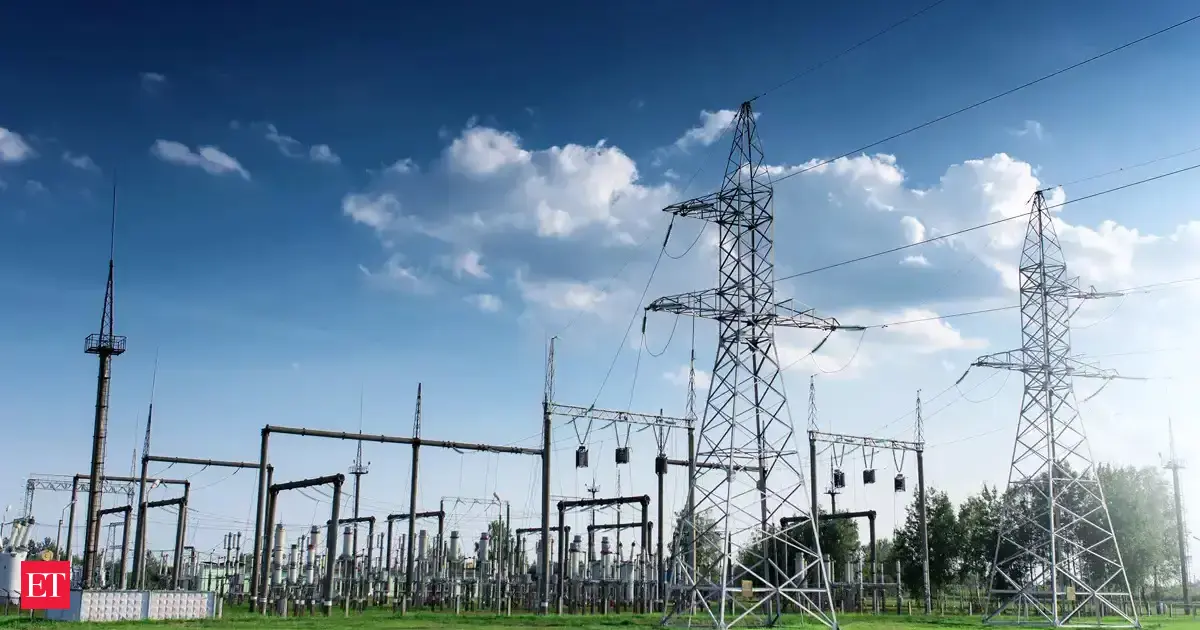
Indian power and renewable energy firms are looking abroad for loans. The Reserve Bank of India's new dollar-rupee swap facility has made foreign currency borrowing cheaper. Companies like REC and PFC are planning to raise significant funds through external commercial borrowings. This move is expected to lower borrowing costs for these public sector undertakings. View More
New Delhi | Mumbai: Power and renewable energy financing companies are exploring overseas borrowings after the Reserve Bank of India 's new dollar-rupee swap facility lowered hedging costs, making foreign currency loans more attractive, people aware of the development said. State-run REC plans to raise $500 million through a five-year external commercial borrowing (ECB). Power Finance Corp (PFC) has issued a request for proposal inviting bids to raise funds by way of foreign currency term loan, and the last date for submission of bids is June 22. The President has approved the merger of REC with Power Finance Corporation, nearly seven years after PFC acquired the government's majority stake in REC. ET BureauREC, IREDA, PFC exploring opportunities Indian Renewable Energy Development Agency (Ireda) is also evaluating opportunities to "aggressively" go for the overseas lending option, one of the people said. Discussions are underway with banks and potential lenders, with several companies keen to secure a first mover advantage and lock in funds, another person said. Live Events On Monday, the RBI announced a dollar-rupee swap window at a fixed cost of 1.5% per annum for public sector undertakings raising ECB and banks mobilising overseas foreign currency borrowings. The facility is available for fresh borrowings with maturities of three years and above and will remain open for eligible drawdowns until December 31, 2026. Power sector public sector undertakings such as NTPC are also in discussions with some banks to discuss proposals, two people said. However, the power giant is still evaluating the specifics and actual advantages and "nothing has been decided yet," one of them said. "There is enough supply of funds as banks have been waiting to grant fresh loans since last year since the USD market was costly," one of the persons said. REC's borrowing is expected to be priced around 100 basis points over the five-year US Treasury yield of about 4.3%. One basis point is a hundredth of a percentage point. Including the RBI's fixed hedging cost of 1.5%, REC's all-in rupee cost would be about 6.8%, around 50 basis points lower than domestic borrowing costs of 7.4% for comparable tenures. ECBs should also make it easier for the private sector to raise funds at home. Bankers said the new framework has made offshore funding cheaper and attractive. REC's proposed borrowing is expected to cost about 50-60 basis points less than comparable domestic bond funding. The company had priced a three-year domestic bond issue earlier this week at 7.38%, according to market participants. In comparison, the proposed ECB could be raised at an effective cost of around 6.8%, while also bringing dollar inflows into the country. "The RBI swap has effectively created a predictable hedging mechanism and narrowed uncertainty around foreign currency funding costs," said a debt capital markets banker. REC, Ireda, PFC and NTPC did not respond to emails seeking response till the press time on Wednesday. PFC's standalone loan asset book stood at ₹5.70 lakh crore while REC had a loan book of ₹5.84 lakh crore in March end. .Pbanner{display:flex;justify-content:space-between;align-items:center;background-color:#ec1c40;margin-top:20px;padding:5px 10px;border-radius:4px;color:#fff;line-height:10px;} .Pbannertext{display:flex;align-items:center;font-size:16px;font-weight:600;font-family:'Montserrat';} .Pbannertext img{height:20px;margin:0 6px} .Pbannerbutton a{display:flex;align-items:center;background-color:#fff;color:#ec1c40;text-decoration:none;font-weight:600;padding:4px 8px;border-radius:6px;font-size:15px;font-family:'Montserrat';} .Pbannerbutton img{height:20px;margin-right:6px} .Pbannerbutton a:hover{background-color:#f7f7f7} Add as a Reliable and Trusted News Source Add Now! (You can now subscribe to our Economic Times WhatsApp channel) (You can now subscribe to our Economic Times WhatsApp channel)