
Latest Sectors News


Saudi Arabia faces a challenge rerouting oil exports due to Houthi attacks. An existing pipeline bypasses the Strait of Hormuz, but a new detour is needed. This new bypass requires additional pipelines and significant diplomatic efforts. The kingdom must now push its oil north to avoid the Bab el-Mandeb strait. Urgent action is required as Houthi attacks have already impacted oil tankers. View More
Early on in the Iran war, a long-forgotten pipeline built across Saudi Arabia 40 years ago became a lifesaver for the global economy. The East-West conduit allowed the kingdom to bypass the Strait of Hormuz, keeping some of its oil flowing. Now that the Houthis of Yemen are trying to close an essential chokepoint for that workaround, the Saudis may need a bypass for the bypass. Engineering a new detour that avoids the Bab el-Mandeb strait on the southern end of the Red Sea would be a tall task. It would require the use of one, perhaps two, extra pipelines, quite a lot of oil tankers and a good dosage of Middle Eastern cloak-and-dagger diplomacy to keep everything running despite the threat of missiles and drones. It won’t be easy — or cheap. Also Read: Red Sea shipping slows after Houthi attack on Saudi Arabia But it is possible. The good news is that the Saudis, who now export most of their oil from the Red Sea via the East-West bypass pipeline rather than through the Persian Gulf, have a natural way to avoid the strait. Rather than sending the oil south toward the chokepoint, the kingdom can push the barrels north. The bad news is that's not a simple as it sounds. Worse, arranging the new bypass is urgent: The Houthis made good on their threat to close the strait earlier this week, attacking two Saudi-flagged oil tankers in the southern Red Sea. Bloomberg Going north means taking the Suez Canal to reach the Mediterranean Sea, and from there, the high seas. Putting aside the fact this route means Asia-bound ships emerge on the wrong side of the map, there’s still the problem of depth: The waterway is only an option for medium-sized oil tankers. The largest ones, uncreatively known as Very Large Crude Carriers, or VLCCs, and able to carry two million barrels, cannot sail the canal fully laden. That’s an issue because the VLCCs are the workhorse of the oil industry, carrying most of the Saudi crude. The only solution is to lighten the supertankers, so their draft is reduced. Live Events Enter a new workaround: the 50-year-old Suez-Mediterranean pipeline, or Sumed, a 320-kilometer-long pair of pipes that connects Ain Sukhna, an Egyptian town at the north end of the Red Sea, with Sidi Kerir, a port near the Egyptian metropolis of Alexandria on the coast of the Mediterranean Sea. Also Read: Oil crosses $100: A 'perfect hurricane' can trigger bigger shock soon Another set of pipelines, owned by Israel, offers a second option, also linking the Red Sea with the Mediterranean. Known as the Eilat-to-Ashkelon pipeline, it was built even earlier, in the 1960s, as a joint-venture between Israel and the country that would go to become its bitterest enemy: Iran. The pipeline became a cash machine for one of the best commodity traders ever born, Marc Rich, during the first oil crisis in 1973-1974. After the Iranian Revolution of 1979, the Israelis kicked the Iranians off the project. Can the Saudis use the Eilat-to-Ashkelon route to bypass the Houthi threat? In the past, it would had been unthinkable, as Riyadh doesn’t recognize the Jewish state. But desperate times may call for desperate measures. I wouldn’t rule it out, even if neither the Saudis nor the Israelis would never publicly admit to it. It helps that, to this day, the operations of the Eilat-to-Ashkelon pipeline are top secret. Everyone in this conflict has a lot at stake. By threatening the Bab el-Mandeb, the Houthis are endangering the flow of more than 5 million barrels a day of Saudi crude that pass through the Red Sea — the supply that many in the commodity market credit as one of the reasons oil prices haven’t jumped to $200-a-barrel as some feared. Also Read: Cutting off Red Sea oil route may be one crisis too many Bloomberg To keep the oil flowing, Saudi Arabia will likely resort to two systems — probably simultaneously. First, it can enlist a small armada of tankers to shuttle crude from its oil port in the Red Sea to the Sumed pipeline, a sort of conveyor belt of tankers. Asian refiners would simply pick up the crude on the other side, without their tankers having to cross the canal. The kingdom has already opened talks with some of these refiners to change the delivery of its crude from Yanbu to Sidi Kerir. The problem? The Sumed pipeline has a capacity of about 2.5 million barrels a day, roughly half of the current flow from Yanbu. Adding the Israeli pipeline would bring an extra 1.2 million barrels a day of transport capacity, narrowing — but not closing — the gap. That’s where the second part of the Saudi plan could come into play. Supertankers could use the Sumed pipeline to offload part of their cargo, making it possible to navigate the Suez Canal with the rest. After emerging in the Mediterranean, they would pick up the rest on the haul other side of the pipeline. (The Saudis would likely also use some medium-sized oil tankers, called Suezmax, that can carry a million barrels across the canal without lightering.) Combined, the pipelines and tankers can do the trick — though the maneuver will be costly and logistically complex. The result: Much higher freight costs. Oil tankers heading to Asia would emerge in the eastern Mediterranean rather than near the Indian Ocean, adding 25 days to their trip from Saudi Arabia to Japan. The return trip would be lengthened by the same amount, tying up a huge number of tankers. Whether the Saudis need to go all in on this bypass to the bypass, or just shift a few cargoes around, depends on what the Houthis do. Over the weekend, several tankers heading into China, Pakistan and India, which account for a large part of what the kingdom exports via the strait, crossed the chokepoint without any problem, with a few more heading on Monday morning in the same direction. The tankers typically broadcast on their location systems messages indicating their nationality. One, for example, said: “CHINA/FLAG/OWNR/CREW.” Several others have also crossed with their location beacons turned off. Some tankers, however, have U-turned, heading north into the Red Sea. Regardless, geography makes a blockade easy: The Bab el-Mandeb strait, which lies between war-torn Yemen on the Arabian Peninsula and the poor African nations of Djibouti and Eritrea on the Horn of Africa, is around 14 nautical miles wide — narrower than the 21 nautical miles of Hormuz; its name roughly translates to “Gate of Tears” in recognition of its difficult navigational challenges. Bloomberg The Houthis, who have been long equipped, trained and groomed by Iran, have closed the strait in the past, sinking several merchant vessels between 2023 and 2025. Back then the closure didn’t impact oil as the Strait of Hormuz was open. For the last year, a tenuous truce has allowed tankers and other commercial ships to cross. But earlier this week, the Houthis said in a statement that they would impose a naval blockade on Saudi Arabia, including foreign ships calling at the kingdom’s oil ports in the Red Sea. The blockade was announced days after Saudi Arabia bombed the airport of the Yemeni capital, Saan’a. Since the Houthis made good on their threat on Wednesday night, oil prices have climbed back to $100 a barrel. As the industry scrambles to react, the countries most likely to be affected by the disruption are India, South Korea, China and Japan, which have loaded a significant amount of Saudi crude from Yanbu. For more than 100 days, Saudi Arabia has successfully bypassed the Strait of Hormuz via its East-West pipeline. With that workaround now threatened it needs a new route. It exists, but is far less straightforward than the original detour. The more stopgap measures added, the bigger the risk — and the cost. Nothing replaces fully opening the Strait of Hormuz. (Disclaimer: The opinions expressed in this column are that of the writer. The facts and opinions expressed here do not reflect the views of economictimes.com.) .Pbanner{display:flex;justify-content:space-between;align-items:center;background-color:#ec1c40;margin-top:20px;padding:5px 10px;border-radius:4px;color:#fff;line-height:10px;width: 100%;box-sizing: border-box} .Pbannertext{display:flex;align-items:center;font-size:16px;font-weight:600;font-family:'Montserrat';} .Pbannertext img{height:20px;margin:0 6px} .Pbannerbutton a{display:flex;align-items:center;background-color:#fff;color:#ec1c40;text-decoration:none;font-weight:600;padding:4px 8px;border-radius:6px;font-size:15px;font-family:'Montserrat';} .Pbannerbutton img{height:20px;margin-right:6px} .Pbannerbutton a:hover{background-color:#f7f7f7} Add as a Reliable and Trusted News Source Add Now! (You can now subscribe to our Economic Times WhatsApp channel) (You can now subscribe to our Economic Times WhatsApp channel)

A host of listed companies announced key business developments, including fresh project wins, fundraising plans, strategic investments, executive appointments and infrastructure contracts, with deals spanning renewable energy, pharmaceuticals, railways, defence, hospitality and technology, reflecting strong order momentum across sectors View More

The commercial power generation rose to 93.63 billion units (BU) in the quarter from 91.06 BU in the same period a year ago View More

Google, Amazon and Meta are seeing credit spreads widen as fixed-income investors demand more reward on companies they lend to. View More
watch nowVIDEO4:3404:34Investors punish heavy AI spenders, while rewarding the capex-lite business modelsTechCheck Investors are getting increasingly uncomfortable with the amount of capital needed to make the artificial intelligence buildout a reality. It's playing out in real time in the bond market, where the biggest names involved in the blitz â Google, Amazon and Meta â are seeing credit spreads widen as fixed-income investors demand more reward to lend to the companies.Yields ticked higher this week after Alphabet lifted its capex forecast, raising concerns that other hyperscalers could follow suit.Part of the reason capex budgets are going up is the rising cost of power. Energy is a major expense for all of the hyperscalers, which are constructing large data centers across the U.S. at breakneck speed. GE Vernova CEO Scott Strazik told CNBC he expects the current inflationary environment to remain, driven in part by the heightened geopolitical backdrop. Just this week, oil broke above $100 a barrel. The move in treasury yields is also inducing anxiety among fixed-income investors. Mizuho wrote to clients Friday morning that capex raises are testing investor limits as the companies, once seen as capital fortresses, are now seeing a dramatic rise in AI-tied costs.The analysts added that the hyperscalers are currently on track to collectively spend more on capex than they generate in free cash flow by next year."It's creating intense discussions between bond and equity investors who have exposure to the biggest names in tech," said the portfolio manager of a credit fund, who asked to remain anonymous in order to discuss sensitive conversations. Read more CNBC tech newsMoonshot AI accessed Nvidia's chips despite Chinese export ban, White House official saysAlphabet and Tesla test Wall Street's patience as AI spending overshadows growthAlphabet earnings takeaways: Q2 revenue beats, GOOGL stock sinks on 2026 capex hikeTesla misses on earnings, as free cash flow turns negative and margins slide As concerns grow, Oracle's 5-year credit default swap, or CDS, is once again trading at a multi-year high. In a note to clients published on Wednesday, Barclays credit analyst Andrew Keches wrote that Oracle's CDS is once again being seen as a proxy for AI debt fears. "The appeal of ORCL CDS in recent history has extended beyond company-specific fundamentals, reflecting its role as a liquid hedge on AI capex, OpenAI execution and broader data-center spending narratives," wrote Keches.Oracle is facing questions from investors about how active it plans to be in the debt market in the coming years, as the buildout and leasing of data centers continue to become more capital intensive.Earlier this month, ratings agency S&P Global downgraded Oracle's credit rating to BBB-, just one notch above junk status.Yet executives at the company remain confident in Oracle's ability to win the AI race. The company has a growing relationship with OpenAI and hyperscalers like Meta and Nvidia, which are also working with Oracle on cloud architecture.Still, portfolio managers who spoke to CNBC said the move in tech bond yields could impact financing future deals. Meta is looking to finance its $12 billion Texas data center with pricing expected to be finalized early next week, according to a source familiar with the talks, who asked not to be named in order to discuss the company's plans. The Financial Times reported that the deal will be priced at a higher borrowing rate than previous projects, a sign that investors want not only demand more, but are questioning the return on investment. watch nowVIDEO3:4403:44How the AI data center buildout is creating boom for the gas turbine industryTech Choose CNBC as your preferred source on Google and never miss a moment from the most trusted name in business news.

India will soon cross the landmark of 300 gigawatt (GW) of installed non-fossil fuel capacity. View More

The stock climbed 8.8% on the NSE to a high of ?99.39 compared with the previous close of ?91.30 View More
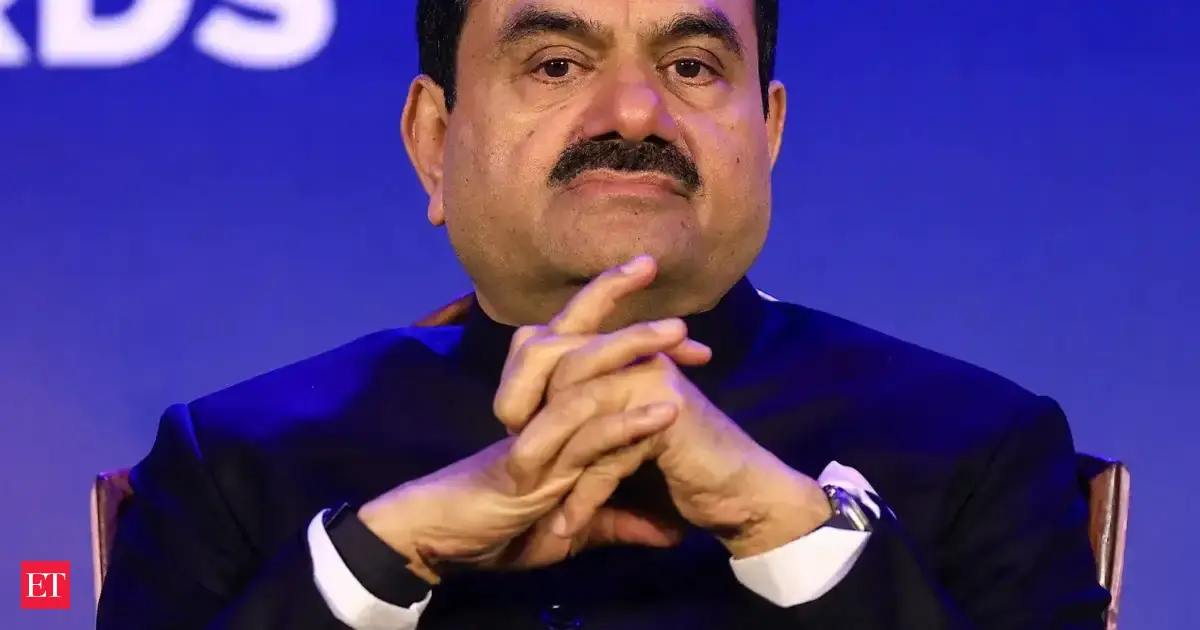
Adani Power awaits government rules for private nuclear sector entry. The company plans ten gigawatts of nuclear capacity by twenty thirty-five. Investment decisions depend on regulatory clarity and cost-effectiveness for consumers. Feasibility studies for potential sites in Madhya Pradesh are underway. India aims to significantly expand nuclear power capacity by two thousand forty-seven. View More
Adani Power 's plans to enter India's nuclear power sector remain dependent on one crucial hurdle: the government's finalisation of rules permitting private-sector participation , with the company saying it will take investment decisions only after regulatory clarity emerges. The Gautam Adani-owned entity, which has outlined an ambition to develop 10 gigawatts (GW) of nuclear power capacity by 2035, said it is evaluating both indigenous and international reactor technologies but is yet to zero in on a roadmap as the policy framework remains under development. Also read: Adani Power Q1 Results: Profit jumps 42% YoY to Rs 4,806 cr; co approves Rs 15,000 cr fundraise "It will all depend on which would be cost-effective. Electricity has to be viable for the Indian consumers, and the type of rates which are affordable to power distribution companies," Chief Executive Shersingh Khyalia said during the company's post-earnings call on Wednesday. Adani Power is also studying potential locations, including Bina and Nigrie in Madhya Pradesh, for future nuclear projects. Company executives said feasibility studies are underway and the sites are being kept ready so the company can move swiftly once the regulatory regime is in place. India is seeking to significantly expand nuclear power as part of its clean energy transition . The government last year opened the sector to domestic and foreign private companies and has set a target of raising the country's nuclear power capacity to 100 GW by 2047, from around 8.8 GW currently. Live Events If it proceeds with its proposed capacity addition, Adani Power could emerge as one of the country's largest nuclear power operators. State-run Nuclear Power Corporation of India (NPCIL), currently the sole operator of nuclear plants in the country, has a target of building 50 GW of nuclear capacity, while NTPC is aiming for 30 GW. Several private-sector players, including Tata Power and Reliance Industries , have also expressed interest in the emerging opportunity as India prepares to open up the strategically important sector. Also read: A look at billionaire Adani's businesses as he weighs starting an airline Record Q1FY27 earnings fuel expansion plans Adani Power posted its highest-ever quarterly operating and financial performance in the April-June quarter, with consolidated net profit rising 42% year-on-year (YoY) to Rs 4,806 crore, aided by robust power demand, higher generation and improved capacity utilisation. The company had reported a net profit of Rs 3,385 crore in the corresponding quarter last year. Revenue from operations climbed 34% YoY to Rs 18,902 crore, while consolidated EBITDA increased 36% to Rs 8,369 crore. Continuing EBITDA rose 22% to Rs 6,983 crore from Rs 5,744 crore a year earlier. The board also approved raising up to Rs 15,000 crore through the issuance of equity shares via qualified institutional placement (QIP) or other permissible routes to support its growth plans. The company's consolidated power sales rose 17% to 28.8 billion units during the quarter from 24.6 billion units a year ago, while electricity generation touched a record 31 billion units. Installed capacity increased to 18,330 MW from 17,550 MW, with plant load factor improving to 77.9% from 67%, reflecting better utilisation of its generation fleet. Adani Power also recognised Rs 1,386 crore as net prior-period income during the quarter, primarily following revisions in historic energy charges under certain power purchase agreements (PPAs), compared with Rs 406.21 crore in the year-ago period. .Pbanner{display:flex;justify-content:space-between;align-items:center;background-color:#ec1c40;margin-top:20px;padding:5px 10px;border-radius:4px;color:#fff;line-height:10px;width: 100%;box-sizing: border-box} .Pbannertext{display:flex;align-items:center;font-size:16px;font-weight:600;font-family:'Montserrat';} .Pbannertext img{height:20px;margin:0 6px} .Pbannerbutton a{display:flex;align-items:center;background-color:#fff;color:#ec1c40;text-decoration:none;font-weight:600;padding:4px 8px;border-radius:6px;font-size:15px;font-family:'Montserrat';} .Pbannerbutton img{height:20px;margin-right:6px} .Pbannerbutton a:hover{background-color:#f7f7f7} Add as a Reliable and Trusted News Source Add Now! (You can now subscribe to our Economic Times WhatsApp channel) (You can now subscribe to our Economic Times WhatsApp channel)
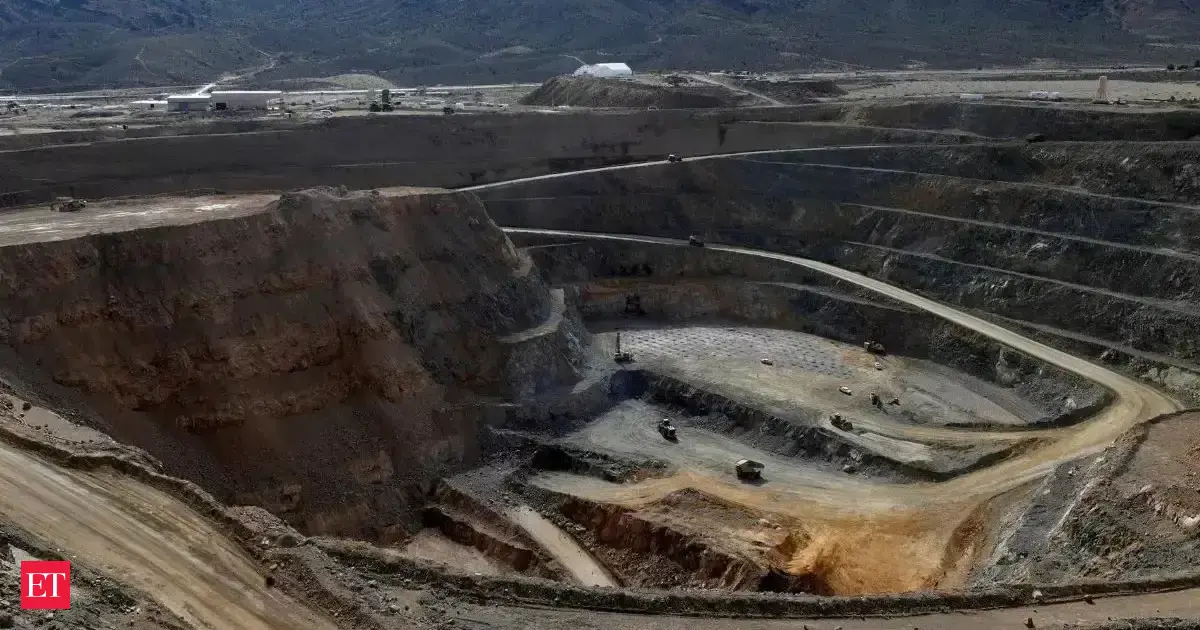
India and Myanmar are enhancing cooperation in rare earths sector. Indian teams visited Myanmar in December 2024 and February 2026. This collaboration aims to secure strategic mineral supplies for India. Myanmar's Kachin state is a key source of heavy rare earths. Both nations see significant win-win opportunities from this partnership. View More
India and Myanmar are working to deepen cooperation in the rare earths sector after visits to the southeast Asian country by Indian teams, with New Delhi seeking alternative supplies of a strategic resource tightly controlled by China. In a speech on Wednesday at the opening of a mining forum in Mandalay, India's Ambassador to Myanmar Abhay Thakur outlined the growing bilateral collaboration between the two countries on rare earths. Cooperation in the mining sector has gained significant momentum over the last two years, Thakur said. This includes two Indian delegations on rare earths and critical minerals that have visited Myanmar in December 2024 and February 2026, he said. Also read: Rare earth minerals explained: Why are they the world's most strategic resources? Live Events The matter has also received high-level attention during a official visit by junta chief turned president Min Aung Hlaing to India in May-June, according to Thakur. Thakur said, "India's need for harnessing critical minerals, coupled with the benefits to Myanmar from sustainable mining, presents solid, win-win, short and long-term opportunities." Nearly half the world's supply of heavy rare earths is extracted from mines in Myanmar's Kachin state, which are then shipped to China for processing into magnets that power electronic vehicles and wind turbines, Reuters has reported. Reuters previously also reported that India has sought rare-earth samples via the rebel Kachin Independence Army (KIA), which controls Myanmar's main mining hubs, near the Chinese border. At the Mandalay mining forum, Thakur said the Indian firms in attendance include IREL , NTPC Mining , Himadri Specialty, Oceanic Sands, PrNd Metal & Magnets, and Jai Puri Holdings. Thakur also said that "Midwest from India" has also closely engaged with Myanmar in recent months and years, without specifying the nature of the involvement. Reuters has previously reported that the state-owned miner IREL and private firm Midwest Advanced Materials were among those involved in discussions to explore the collection and transportation of samples from mines under KIA control. .Pbanner{display:flex;justify-content:space-between;align-items:center;background-color:#ec1c40;margin-top:20px;padding:5px 10px;border-radius:4px;color:#fff;line-height:10px;width: 100%;box-sizing: border-box} .Pbannertext{display:flex;align-items:center;font-size:16px;font-weight:600;font-family:'Montserrat';} .Pbannertext img{height:20px;margin:0 6px} .Pbannerbutton a{display:flex;align-items:center;background-color:#fff;color:#ec1c40;text-decoration:none;font-weight:600;padding:4px 8px;border-radius:6px;font-size:15px;font-family:'Montserrat';} .Pbannerbutton img{height:20px;margin-right:6px} .Pbannerbutton a:hover{background-color:#f7f7f7} Add as a Reliable and Trusted News Source Add Now! (You can now subscribe to our Economic Times WhatsApp channel) (You can now subscribe to our Economic Times WhatsApp channel)

Maharashtra State Electricity Distribution Co has appointed eight investment bankers for its proposed initial public offering. This significant issue could potentially raise between eight thousand and ten thousand crore rupees. The offering will mark the first-ever IPO by the Maharashtra government and a state-run discom. Mahavitaran, the brand under which MSEDCL operates, will be listed. The utility provides power to most consumers in India's largest subnational economy. View More
Mumbai: Maharashtra State Electricity Distribution Co (MSEDCL) has appointed eight investment bankers for its proposed initial public offering , which could raise ₹8,000-10,000 crore, people familiar with the development told ET. The issue will mark the first-ever IPO by the Maharashtra government -and a purely state-run discom in India. Eight investment bankers -SBI Capital Markets, Axis Capital , IDBI Capital Markets & Securities, ICICI Securities, HDFC Bank , IIFL Capital Services , DAM Capital and Motilal Oswal Investment Advisors-have been appointed to manage the offering, according to the people familiar with the matter. An email sent to MSEDCL did not elicit any response. Individual bankers did not respond to ET's request for a comment. Read more: Can Indo-MIM IPO deliver long-term growth for high risk investors? The listing will be of Mahavitaran, the brand under which MSEDCL operates. Mahavitaran provides power to the bulk of the consumers in India's biggest subnational economy, barring the city of Mumbai. The utility, however, carries significant debt on its balance sheet. .Pbanner{display:flex;justify-content:space-between;align-items:center;background-color:#ec1c40;margin-top:20px;padding:5px 10px;border-radius:4px;color:#fff;line-height:10px;width: 100%;box-sizing: border-box} .Pbannertext{display:flex;align-items:center;font-size:16px;font-weight:600;font-family:'Montserrat';} .Pbannertext img{height:20px;margin:0 6px} .Pbannerbutton a{display:flex;align-items:center;background-color:#fff;color:#ec1c40;text-decoration:none;font-weight:600;padding:4px 8px;border-radius:6px;font-size:15px;font-family:'Montserrat';} .Pbannerbutton img{height:20px;margin-right:6px} .Pbannerbutton a:hover{background-color:#f7f7f7} Add as a Reliable and Trusted News Source Add Now! (You can now subscribe to our ETMarkets WhatsApp channel) (You can now subscribe to our ETMarkets WhatsApp channel)