
Latest Sectors News

Google’s cloud boom is testing the company's commitment to frontier AI as commercial returns take priority. View More
In this articleGOOGLFollow your favorite stocksCREATE FREE ACCOUNT Demis HassabisJeff Chiu | AP Depending on where you sit, Google either has the most enviable position in artificial intelligence or is bleeding top talent to leading AI labs and other startups on the frontline of innovation.It's a contrast that's been on full display over the past two weeks, beginning with the company reporting 82% revenue growth in its cloud division, followed by a shakeup on Wednesday in Google's AI organization, as chief scientist Jeff Dean announced his departure after 27 years.For Google, home to the famous 2017 transformer paper that paved the way for the generative AI boom, the recent events underscore a central challenge facing the $4 trillion company: where to invest. Building frontier models requires huge upfront costs for compute and research with no guarantee of future returns, while the cloud business is proving to be highly efficient and is growing much faster than rival offerings at Amazon and Microsoft.Alphabet CEO Sundar Pichai said on last month's earnings call that 90% of Fortune 100 companies are using Gemini Enterprise, underscoring the company's ability to sell AI services to cloud customers. Tomasz Tunguz, founder of Theory ventures, said it's becoming clear that top-of-the-line models aren't required when it comes to meeting most enterprise demand. "I think we are at that place with AI, particularly for a lot of white-collar work, where many of the models that are reasonable are good enough," Tunguz said. "The next evolution of models are likely to be helpful in domains where you have really fancy computers."Google's full-stack approach to AI is a big reason the stock is up 16% this year after jumping 65% in 2025, when it outpaced all of its megacap peers. It's been a bumpier road of late. Alphabet shares fell after the latest earnings report due to concerns about capital expenditures, and dipped further on Wednesday following the announcement that Dean is departing and Demis Hassabis is stepping down as CEO of Google DeepMind to become chairman of the unit. watch nowVIDEO2:2502:25Alphabet shares fall after major shakeup at Googleâs AI unitPower Lunch While the tone on Wall Street has been generally favorable, not everyone is celebrating inside of Google.Some researchers have grown frustrated over access to the computing capacity they need to pursue ambitious projects while watching Google Cloud sell TPUs to outside customers, including Anthropic, according to people familiar with the matter who asked not to be named due to confidentiality. Tensor processing units, or TPUs, are the the company's homegrown AI chips that compete with Nvidia's graphics processing units.Google's bureaucracy is a common source of frustration, with layers of approval required to move research into products. That can make emerging companies like OpenAI, Anthropic or even younger startups more appealing, especially for AI researchers and developers who prefer lab work to balance sheets. Dean is leaving along with Google stars Sanjay Ghemawat, Oriol Vinyals, and Quoc Le to start Discovery Loop. On X, Dean said the startup, backed by Google, will be a public benefit corporation "whose mission is to automate machine learning, science, and engineering to accelerate discoveries and progress."Their exit follows the departures of other prominent researchers, including Noam Shazeer, one of the authors of the landmark 2017 paper "Attention Is All You Need," which provided the foundation for generative AI. All eight authors have now left Google. Shazeer left for OpenAI in June, less than two years after Google paid nearly $3 billion to bring him back through an acquihire. His exit came shortly before Nobel laureate John Jumper left DeepMind for Anthropic. 'Part of history' Gil Luria, an analyst at D.A. Davidson, said there's a clear trend when looking at the exodus of top talent. "They're not interested in commercializing AI," said Luria, who recommends holding Alphabet stock. "They're interested in being part of history, and so they look at Anthropic, OpenAI or another startup as being the place where they can pursue history."At Google, Dean was one of the very few high-profile voices willing to criticize the Trump administration, and earlier this year he was vocal in opposing the Pentagon's decision to designate Anthropic as a supply-chain risk, warning that the move could damage the broader U.S. AI industry.More importantly, from a technical perspective, he helped build the computing infrastructure and neural network systems that established the company as an early leader in modern AI.Hassabis, who co-founded DeepMind in 2010 and sold it to Google four years later, is becoming chairman of the division and will assume the newly created role of chief scientist at Alphabet, focusing on longer-term research and the societal implications of artificial general intelligence, or AGI. He also plans to devote more time to Isomorphic Labs, the AI drug-discovery company that grew out of DeepMind.Koray Kavukcuoglu, DeepMind's technology chief and Alphabet's chief AI architect, will take over daily management of the division and development of the next Gemini model. According to a person close to the DeepMind team, Kavukcuoglu had been taking on a broader set of responsibilities from Hassabis over the past year, including directing model development and presenting major Gemini releases. Hassabis, meanwhile, has been spending more time away from the lab, focusing on regulation and the longer-term implications of advanced AI. watch nowVIDEO5:3105:31Google's chief AI architect lays out its AI strategyPower Lunch One of the biggest points of friction inside Google is compute.Google is investing more than almost any company in the world in data centers, chips and related infrastructure. But capacity remains scarce. Every TPU assigned to training a model, serving a Google product, or fulfilling a contract with a cloud customer reflects a choice among competing priorities.Frustrations over access to compute can be especially acute when Google announces large infrastructure commitments to competing labs like Anthropic, whose models compete directly with Gemini, sources with knowledge of the matter said. One of the people said Google has projections for demand in different areas, including research and model training, serving products such as search and Gemini, and working with cloud customers. Those requirements are modeled years in advance, the person said, though capacity may shift over shorter periods if a product grows faster than expected or if priorities change. Pichai has said on the past two earnings calls that Google continues to prioritize DeepMind's compute needs even as demand from cloud customers grows. Asked in July about TPU allocation, he said Google's "first priority" is securing the compute needed to compete at the frontier in AGI development, calling that work "the foundation for everything we do."Pichai went on to say that Google balances that need against the capacity required to run its consumer products and AI models, while increasingly placing TPUs directly in third-party data centers to help satisfy external demand.Dan Niles, founder of Niles Investment Management and a Google shareholder, said access to compute is a natural source of tension."Google has all of these other businesses, and they've got to figure out who they're going to give some of these resources to," Niles said. "Somebody's always going to be unhappy in that situation." Bringing DeepMind closer to Cloud In January, at the World Economic Forum in Davos, Hassabis and Kurian appeared onstage together to discuss enterprise products and use cases. It was a striking sight considering how separately the two organizations have historically operated and how far removed Hassabis was from much of the company, according to a person familiar with Google Cloud's operations who asked not to be named in order to speak candidly on the matter. The person viewed the joint appearance as a sign that Hassabis was becoming more engaged with enterprise use cases of Google's AI, particularly in areas such as coding and customer service, and reflected a broader effort to bring the company's research and commercial operations closer together as it competes with OpenAI and Anthropic.In the months that followed, Google ran into a number of snags with its models, most notably delaying the launch of its newest flagship model, Gemini 3.5 Pro. At the same time, Kurian's business has seen its most explosive growth on record. Google Cloud CEO Thomas Kurian speaks at the Google Cloud Next event in San Francisco, April 9, 2019.Michael Short | Bloomberg | Getty Images Kurian, a former top Oracle executive, has led Google Cloud since 2019, building a bustling enterprise sales organization at a company known for its dominance in consumer internet. Google Cloud designs its own AI chips, operates a global data center network, and sells models, databases, security software, and tools for building AI agents.The strategy gives Google multiple ways to profit from AI demand. It can sell infrastructure to OpenAI, Anthropic, and other labs, while offering Gemini to enterprises and integrating AI across Search, YouTube, Workspace and its other products. The emerging question, almost four years into the generative AI craze, is whether Google needs to develop the best AI models or if it's better off letting other companies foot the bill. Kavukcuoglu told CNBC at the company's developer conference in May that Google aims to push the frontier while also improving efficiency. He said the company's Flash model delivers frontier-level capabilities while running four times faster and more efficiently than comparable models, allowing Google to extend advanced AI across enterprise and consumer services.Like Tunguz, Niles said the most powerful model is unnecessary for many commercial applications."The models are good enough for 90% of what needs to get done," he said. "You don't need a Ferrari for this stuff. A Ford will work for 90% of the use cases."But for the scientists and researchers trying to produce the next transformer-scale breakthrough, being good enough isn't always good enough. WATCH: Demis Hassabis on agentic AI deployment watch nowVIDEO1:4201:42Agentic AI deployment and research constrained by chip shortage: Google DeepMindSquawk Box Asia Choose CNBC as your preferred source on Google and never miss a moment from the most trusted name in business news.

Oneindig Technologies and Dhaval Packaging are set to debut on the BSE SME platform today. While both IPOs attracted investor interest, Dhaval Packaging enters listing day with stronger momentum, backed by a 35.52-times subscription and a 12% grey market premium. View More
Oneindig Technologies and Dhaval Packaging are set to debut on the BSE SME platform on August 6, with market expectations favouring Dhaval Packaging after its blockbuster subscription and stronger grey market premium (GMP). According to the latest grey market trends, Dhaval Packaging is commanding a GMP of around 12%, signalling expectations of a strong market debut. Meanwhile, Oneindig Technologies is trading at a GMP of nearly 7%, indicating a moderately positive listing. Oneindig Technologies The Rs 27.65 crore Oneindig Technologies IPO was a fresh issue of 0.29 crore equity shares. The issue, priced at Rs 91-96 per share, was open for subscription from July 30 to August 3. The IPO was subscribed 1.68 times, led by NII demand at 2.40 times, followed by retail at 1.84 times and QIBs at 1.05 times. Ahead of the issue, the company raised Rs 7.83 crore from anchor investors. GMP and expected listing price The latest GMP stands at around Rs 7 per share, implying a 7% premium over the issue price. Based on current trends, the stock is expected to list at around Rs 103. Live Events Use of IPO proceeds The company plans to utilise the proceeds primarily to meet working capital requirements, with the balance earmarked for general corporate purposes. About the company Founded in 2016, Oneindig Technologies operates in the renewable energy sector, providing EPC services for solar projects across India. Its portfolio includes rooftop and ground-mounted solar installations, solar pumps, O&M services, IPP projects, and the supply of photovoltaic modules, inverters, batteries and other solar equipment. Dhaval Packaging The Rs 36.36 crore Dhaval Packaging IPO, comprising a fresh issue of 37 lakh shares, was priced at Rs 97 per share and remained open from July 30 to August 3. The IPO received a blockbuster response, with an overall subscription of 35.52 times. NIIs led the demand at 75.35 times, followed by QIBs at 56.38 times and retail investors at 40.36 times. The company also raised Rs 10 crore from anchor investors ahead of the issue. GMP and expected listing price Dhaval Packaging continues to command a stronger GMP of around Rs 12 per share, implying an estimated listing price of around Rs 109. Use of IPO proceeds The company will use the proceeds primarily to set up a new manufacturing facility in Ahmedabad, while also repaying debt and meeting general corporate and issue-related expenses. About the company Established in 2015, Dhaval Packaging manufactures plastic packaging solutions for the food, FMCG and industrial sectors. It specialises in in-mould labelled (IML) food containers and SAW pipe protection caps, serving industries ranging from dairy and pharmaceuticals to construction and heavy engineering. Listing outlook Among the two SME IPOs listing today, Dhaval Packaging enters with stronger momentum, backed by significantly higher subscription and a firmer grey market premium. However, investors should remember that GMP is an unofficial indicator, and actual listing performance will ultimately depend on market sentiment and demand on debut. (Disclaimer: Recommendations, suggestions, views and opinions given by the experts are their own. These do not represent the views of The Economic Times) .Pbanner{display:flex;justify-content:space-between;align-items:center;background-color:#ec1c40;margin-top:20px;padding:5px 10px;border-radius:4px;color:#fff;line-height:10px;width: 100%;box-sizing: border-box} .Pbannertext{display:flex;align-items:center;font-size:16px;font-weight:600;font-family:'Montserrat';} .Pbannertext img{height:20px;margin:0 6px} .Pbannerbutton a{display:flex;align-items:center;background-color:#fff;color:#ec1c40;text-decoration:none;font-weight:600;padding:4px 8px;border-radius:6px;font-size:15px;font-family:'Montserrat';} .Pbannerbutton img{height:20px;margin-right:6px} .Pbannerbutton a:hover{background-color:#f7f7f7} Add as a Reliable and Trusted News Source Add Now! (You can now subscribe to our ETMarkets WhatsApp channel) (You can now subscribe to our ETMarkets WhatsApp channel)


Under the terms of the agreement, the project involves an aggregate capacity of 100 MW at an approved tariff of ?3.435 per unit, with the PPA running for 25 years. View More

The government has decided to raise the windfall tax on fuel exports, now charging Rs 3.5 per litre for petrol and a steep Rs 24 per litre for diesel. This increase is part of the Centre's routine assessment of petroleum taxes, aimed at taxing the high profits made by refiners amid rising global energy prices. View More
India on Monday raised windfall taxes on petrol, diesel and aviation turbine fuel (ATF) exports with effect from August 3, according to Finance Ministry notifications. The export duty on petrol has been increased to Rs 3.5 per litre from Rs 2.5 per litre. The windfall tax on diesel exports has been raised to Rs 25.5 per litre, including the Road Infrastructure Cess (RIC), from Rs 15.5 per litre. The levy on ATF exports has also been increased to Rs 22 per litre from Rs 14.5 per litre. The latest revision is part of the Centre’s fortnightly review of windfall taxes on petroleum products. The government adjusts these levies based on changes in global oil prices, export margins and market conditions. Windfall taxes are imposed on petroleum products when refiners and producers benefit from unusually high gains due to elevated international energy prices. .Pbanner{display:flex;justify-content:space-between;align-items:center;background-color:#ec1c40;margin-top:20px;padding:5px 10px;border-radius:4px;color:#fff;line-height:10px;width: 100%;box-sizing: border-box} .Pbannertext{display:flex;align-items:center;font-size:16px;font-weight:600;font-family:'Montserrat';} .Pbannertext img{height:20px;margin:0 6px} .Pbannerbutton a{display:flex;align-items:center;background-color:#fff;color:#ec1c40;text-decoration:none;font-weight:600;padding:4px 8px;border-radius:6px;font-size:15px;font-family:'Montserrat';} .Pbannerbutton img{height:20px;margin-right:6px} .Pbannerbutton a:hover{background-color:#f7f7f7} Add as a Reliable and Trusted News Source Add Now! (You can now subscribe to our Economic Times WhatsApp channel) (You can now subscribe to our Economic Times WhatsApp channel)


The large renewable energy project combines solar, wind and battery storage to deliver reliable clean power and lower carbon emissions. View More

"The thing we call free is the thing we destroy. This is not a paradox, it is a policy choice and it can be chosen differently," he noted View More

?The move would mark a policy roll-back. India had begun phasing out ?interstate transmission ?charge waivers for new solar, wind and hybrid projects from July 2025. View More
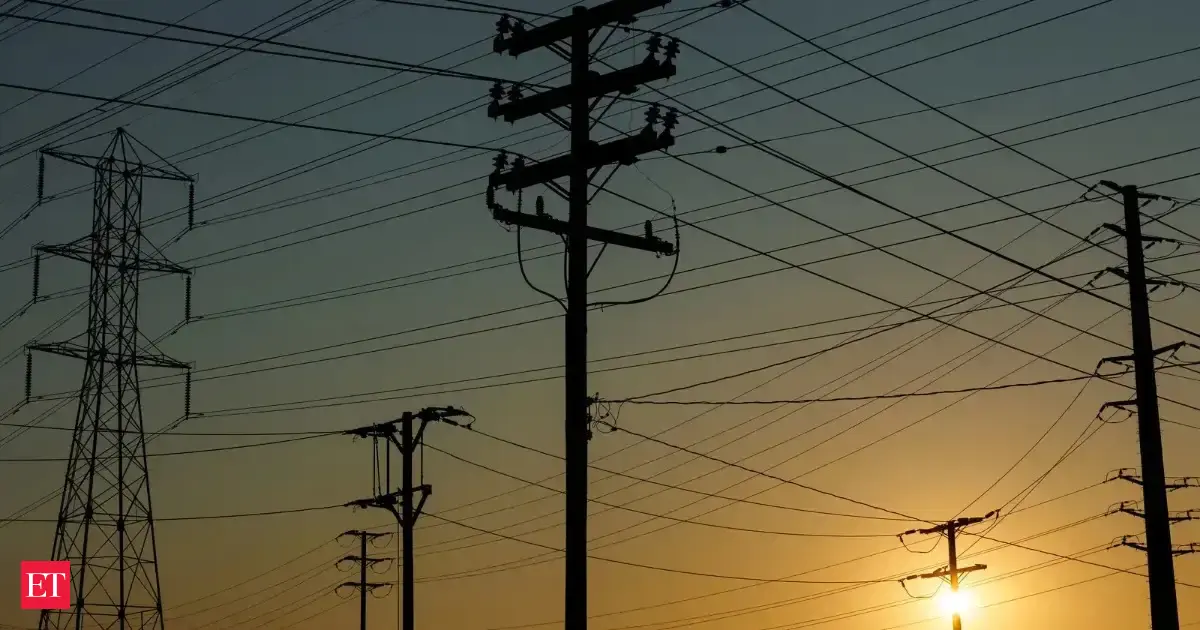
MSETCL is augmenting the 220 kV Padgha-Pal transmission line capacity. This work will strengthen power supply across Kalyan and Dombivli areas. Alternative arrangements will maintain electricity supply during the ongoing project. Temporary outages may occur if the alternate line experiences technical faults. The project aims for long-term reliability and uninterrupted power supply. View More
Thane: The Maharashtra State Electricity Transmission Company ( MSETCL ) is undertaking capacity augmentation of the 220 kV Padgha-Pal transmission line to strengthen power supply across Kalyan, Dombivli and adjoining areas, officials said on Sunday. The work, being executed by the Dombivli Extra High Voltage Operation and Maintenance Department, began on July 26 and will continue till August 26. Electricity supply to Kalyan, Ulhasnagar, Ambernath, Badlapur, Dombivli city and surrounding rural areas would be maintained through alternative arrangements using the 220 kV Padgha-Jambhul transmission line, MSETCL's Deputy Chief Public Relations Officer Ajit Igatpurikar said. Also read: NTPC eyes Rs 17 trillion capex to nearly triple capacity by FY37 Any technical fault in the alternate line during the work period could lead to temporary outages or regulated power supply, including load shedding, in some areas, he said. Live Events He appealed to people to cooperate, saying the project would significantly improve the reliability, efficiency and uninterrupted power supply across the region in the long term. .Pbanner{display:flex;justify-content:space-between;align-items:center;background-color:#ec1c40;margin-top:20px;padding:5px 10px;border-radius:4px;color:#fff;line-height:10px;width: 100%;box-sizing: border-box} .Pbannertext{display:flex;align-items:center;font-size:16px;font-weight:600;font-family:'Montserrat';} .Pbannertext img{height:20px;margin:0 6px} .Pbannerbutton a{display:flex;align-items:center;background-color:#fff;color:#ec1c40;text-decoration:none;font-weight:600;padding:4px 8px;border-radius:6px;font-size:15px;font-family:'Montserrat';} .Pbannerbutton img{height:20px;margin-right:6px} .Pbannerbutton a:hover{background-color:#f7f7f7} Add as a Reliable and Trusted News Source Add Now! (You can now subscribe to our Economic Times WhatsApp channel) (You can now subscribe to our Economic Times WhatsApp channel)