
Latest Sectors News
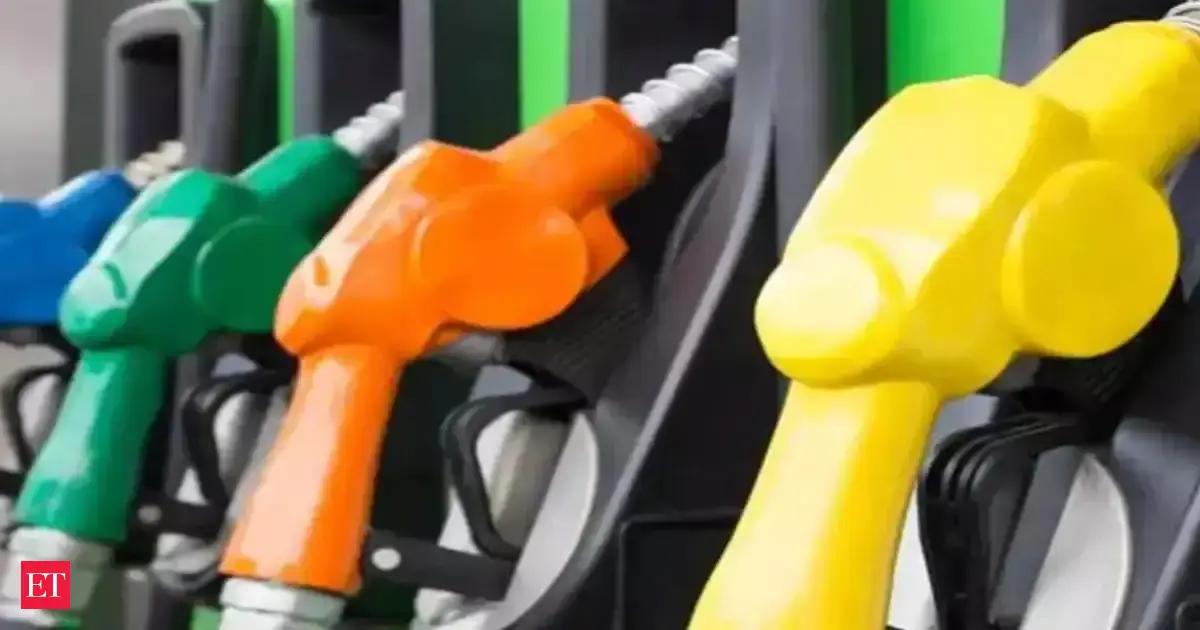
India has reduced windfall taxes on petrol, diesel, and aviation fuel exports. The duty on diesel exports is now 24 rupees per litre, while petrol duty is zero. Aviation turbine fuel exports will now face a 19.5 rupee per litre tax. These levies were first imposed in July 2022 and reintroduced in March 2026. India revises these export taxes every fortnight based on global oil prices. View More
India has lowered windfall taxes on exports of petrol, diesel and aviation turbine fuel with effect from Saturday, according to a government order. The duty on diesel exports has been cut to 24 Indian rupees ($0.2515) per litre from 25.5 rupees, while petrol duty has been set at zero rupees per litre, down from 3.5 rupees, the government order showed. The tax on aviation turbine fuel has been set at 19.5 rupees per litre from 22 rupees earlier. India first imposed windfall taxes in July 2022 to capture extraordinary gains from soaring oil prices and scrapped it two years later. The levy was reintroduced in March 2026 after oil prices surged during the U.S.-Israeli war on Iran. India currently revises the export levies every fortnight, based on international prices of crude oil and petroleum products. Live Events ($1 = 95.4400 Indian rupees) .Pbanner{display:flex;justify-content:space-between;align-items:center;background-color:#ec1c40;margin-top:20px;padding:5px 10px;border-radius:4px;color:#fff;line-height:10px;width: 100%;box-sizing: border-box} .Pbannertext{display:flex;align-items:center;font-size:16px;font-weight:600;font-family:'Montserrat';} .Pbannertext img{height:20px;margin:0 6px} .Pbannerbutton a{display:flex;align-items:center;background-color:#fff;color:#ec1c40;text-decoration:none;font-weight:600;padding:4px 8px;border-radius:6px;font-size:15px;font-family:'Montserrat';} .Pbannerbutton img{height:20px;margin-right:6px} .Pbannerbutton a:hover{background-color:#f7f7f7} Add as a Reliable and Trusted News Source Add Now! (You can now subscribe to our Economic Times WhatsApp channel) (You can now subscribe to our Economic Times WhatsApp channel)
The Supreme Court fined Reliance Industries ten lakh rupees for delaying a suit. NTPC filed the natural gas supply contract case against Reliance back in 2005. The court noted Reliance's continuous obstruction of the legal proceedings for two decades. This action came after the Bombay High Court's decision regarding witness affidavits. The apex court expressed strong disapproval of the prolonged litigation and its impact. View More
New Delhi: Coming down heavily on Reliance Industries (RIL) for delaying a suit by NTPC Ltd for two decades in a supply of natural gas contract since 2005, the Supreme Court Friday fined it, saying the Mukesh Ambani company's power to litigate and obstruct progress of the suit seems unlimited. "There is no dearth of financial resources, no obligation to aid and assist the court to cope with pending backlog of cases, perhaps it is lucrative for Reliance Industries to raise some objection or the other at every stage and when the trial court rejects it, the appellate and special leave jurisdictions open up. This litigation has multiple seasons laden with many episodes, a bench comprising Justices P.S. Narasimha and Alok Aradhe said while indicting RIL for the delay. "...it is compelling for us to note that the suit filed by NTPC way back in 2005 has not progressed much. At every stage there has been obstruction," it said, adding that seven years have passed since the apex court had directed the suit to be disposed of in nine months. Imposing a fine of ₹10 lakh on RIL, the top court dismissed its appeal against the Bombay HC's decision to redact certain portions of examination-in-chief affidavits of NTPC's witness B.K. Ganguly in the long-running commercial dispute with the PSU. .Pbanner{display:flex;justify-content:space-between;align-items:center;background-color:#ec1c40;margin-top:20px;padding:5px 10px;border-radius:4px;color:#fff;line-height:10px;width: 100%;box-sizing: border-box} .Pbannertext{display:flex;align-items:center;font-size:16px;font-weight:600;font-family:'Montserrat';} .Pbannertext img{height:20px;margin:0 6px} .Pbannerbutton a{display:flex;align-items:center;background-color:#fff;color:#ec1c40;text-decoration:none;font-weight:600;padding:4px 8px;border-radius:6px;font-size:15px;font-family:'Montserrat';} .Pbannerbutton img{height:20px;margin-right:6px} .Pbannerbutton a:hover{background-color:#f7f7f7} Add as a Reliable and Trusted News Source Add Now! (You can now subscribe to our Economic Times WhatsApp channel) (You can now subscribe to our Economic Times WhatsApp channel)
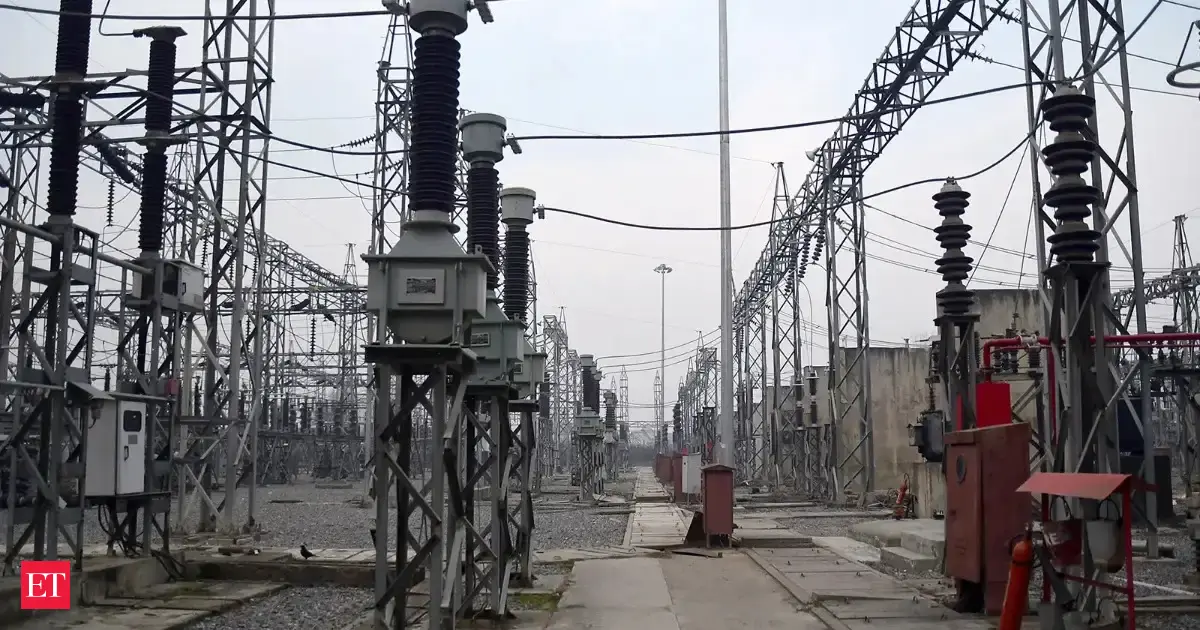
Mitsubishi is nearing an exit from NTPC's Farakka power project. The Japanese firm will compensate NTPC with ?851 crore for the project. This agreement follows earlier compensation demands and offers between the two companies. Significant work remains incomplete on the flue gas desulphurisation equipment installation. The project was initially estimated at ?1,000 crore when awarded six years ago. View More
New Delhi: Japanese conglomerate Mitsubishi is close to exiting a flue gas desulphurisation project at NTPC's Farakka Super Thermal Power Station in West Bengal. The two parties have reached an agreement for Mitsubishi to compensate NTPC with ₹851 crore, pending final approvals from the company boards, according to people familiar with the development. The project, when awarded six years ago, was estimated at ₹1,000 crore, of which around 20% was paid upfront by NTPC. The target completion date was set for 2025, but there is still significant work to be done. ET had reported on April 30 this year that public sector undertaking NTPC has sought more than ₹1,200 crore from Mitsubishi Power India Private Limited (MPI) as compensation, while the Japanese firm had initially offered around ₹720 crore for exiting the project, located in Murshidabad district. "There has been a breakthrough... negotiations have found common ground," an executive told ET, requesting not to be named. An email query sent to NTPC remained unanswered as of press time. Live Events MORE STORIES FOR YOU✕Andaman admin seeks firms to explore feasibility of AI data centre in Great NicobarTreat, not trick, data centre water« Back to recommendation storiesI don't want to see these stories becauseThey are not relevant to meThey disrupt the reading flowOthersSUBMIT Mitsubishi responded to ET's query saying, "We are carrying out the installation work of flue gas desulfurisation (FGD) equipment for the Farakka Power Station in India. We will continue to execute the work in accordance with its contract with NTPC...We will refrain from commenting due to confidentiality obligations with the client for project status," the company told ET. In June last year, the government exempted most coal-fired power plants from installing FGD units, which are designed to curb emissions, reversing its decade-old stance. To support its decision, it cited fresh studies that found that Indian coal did not emit enough sulphur when burnt for power generation. The Japanese company was mandated to install wet limestone FGD systems at Farakka Super Thermal Power Station in three stages (3x200MW, 2x500MW and 1x500MW) for NTPC, but it has completed only the first stage. The project was to be completed last year, but "significant" work is still left to be done, according to the executive. .Pbanner{display:flex;justify-content:space-between;align-items:center;background-color:#ec1c40;margin-top:20px;padding:5px 10px;border-radius:4px;color:#fff;line-height:10px;width: 100%;box-sizing: border-box} .Pbannertext{display:flex;align-items:center;font-size:16px;font-weight:600;font-family:'Montserrat';} .Pbannertext img{height:20px;margin:0 6px} .Pbannerbutton a{display:flex;align-items:center;background-color:#fff;color:#ec1c40;text-decoration:none;font-weight:600;padding:4px 8px;border-radius:6px;font-size:15px;font-family:'Montserrat';} .Pbannerbutton img{height:20px;margin-right:6px} .Pbannerbutton a:hover{background-color:#f7f7f7} Add as a Reliable and Trusted News Source Add Now! (You can now subscribe to our Economic Times WhatsApp channel) (You can now subscribe to our Economic Times WhatsApp channel)
As Indian businesses look beyond exports towards building a lasting international presence, the India-UAE Business Expansion Forum will explore what it takes to scale globally through the right markets, structures and partnerships. View More
For many Indian small and medium enterprises (SMEs), international growth is no longer a novelty. From manufacturing and engineering to textiles, trading, pharmaceuticals, electronics and consumer goods, businesses across sectors have spent years building export relationships, entering overseas markets and expanding their customer base beyond India. Yet as businesses evolve, so do the questions they face. How can they reach new markets more efficiently? How can they strengthen distribution networks, improve supply-chain resilience and serve customers across multiple geographies? And what does it take to move from exporting products to building a sustained international presence? These questions are becoming increasingly relevant as businesses rethink how and where they operate. For enterprises that have already built scale in India, the next phase of growth may depend not only on what they produce, but also on the infrastructure, partnerships and regional presence they develop overseas. Among the destinations increasingly featured in these conversations is the United Arab Emirates (UAE). Located along major trade corridors linking Asia, the Middle East, Africa and Europe, the UAE has become an important base for companies seeking to manage regional operations, support international trade and access multiple markets from a single location. Live Events It is against this backdrop that the India-UAE Business Expansion Forum, presented by Ajman Free Zone in association with The Economic Times , will bring together exporters, manufacturers, trading companies, entrepreneurs and business leaders in Chennai on 24 August 2026 and Delhi-NCR on 26 August 2026. The forum will examine how Indian businesses can strengthen their global footprint, develop more agile operating models and unlock new growth opportunities through the UAE. Building the infrastructure for global growth As supply chains evolve and businesses seek greater resilience, international expansion is becoming less about entering one overseas market at a time and more about building a platform that can support several markets simultaneously. The UAE is increasingly relevant to that conversation. Beyond its role as a trading destination, it is being evaluated by businesses as an operational base, distribution hub, warehousing centre and bridge to markets across the GCC, the wider Middle East, Africa and beyond. ET Spotlight For Indian SMEs, this presents an opportunity to move beyond the traditional export model. The challenge is no longer simply producing for the world. It is learning how to serve the world more efficiently, respond faster to customers and organise cross-border operations in a way that can support long-term growth. The strategic value of Ajman Free Zone That is where Ajman Free Zone enters the conversation. As one of the UAE’s established free-zone ecosystems, Ajman Free Zone supports businesses across manufacturing, trading, logistics, services and emerging sectors. Its offering includes business setup solutions, warehousing facilities and investor support services, providing companies with a platform to establish regional operations, develop distribution networks and strengthen their supply chains. Strategically located within the Emirate of Ajman and connected to major ports, airports and regional trade corridors, Ajman Free Zone is positioned to support businesses evaluating operations across the UAE and wider international markets. For Indian companies, this could involve establishing a UAE-based entity, developing regional warehousing capabilities, exploring re-export models or creating a more efficient route to customers across multiple geographies. The forum is intended to make these possibilities more practical and easier to assess. How should a company structure its international presence? What role can a UAE entity play in unlocking new opportunities? How can warehousing and distribution capabilities improve responsiveness and operational efficiency? What does it take to build an effective re-export model serving multiple markets from a single base? And how can international expansion move from a long-term aspiration to a near-term business strategy? What to expect The programme has been designed to move from insight to application, rather than remain a high-level discussion about international expansion. Registration and networking will begin at 10:00 am, giving participants an opportunity to meet fellow exporters, manufacturers, entrepreneurs and business decision-makers before the Master of Ceremonies opens the forum with a welcome note at 10:20 am. A keynote address by a senior leadership representative of the Free Zones Authority of Ajman will follow, offering perspectives on the UAE's evolving business landscape and the opportunities it presents for internationally ambitious Indian companies. The programme will then move into an Ajman Free Zone Overview and Q&A session led by Zubair Ul Islam, Director of Sales, Free Zones Authority of Ajman. The session will provide participants with a closer look at business setup, warehousing, operational support and the pathways available to companies seeking to establish or scale a presence in the UAE. The conversation will then broaden through two focused panels. The first will examine India-UAE business opportunities, while the second will focus on UAE business incorporation and global banking opportunities for Indian businesses. Together, the sessions will address both the commercial possibilities and the practical considerations involved in developing a UAE-based international business structure. Following the panel discussions, a dedicated audience Q&A session will allow participants to raise questions related to market entry, incorporation, warehousing, banking, distribution strategies and sector-specific expansion plans. The formal programme will conclude with closing remarks at 12:45 pm, followed by lunch and networking from 1:00 pm to 2:30 pm. This extended networking session will provide attendees with an opportunity to continue conversations with speakers, Ajman Free Zone representatives and fellow business leaders evaluating their next phase of international growth. For companies exploring incorporation, distribution, warehousing, re-export opportunities or international banking solutions, the value of the forum will lie not only in the presentations, but also in the opportunity to seek direct, practical answers to business-specific questions. Two cities, two growth stories The Chennai and Delhi-NCR editions will reflect the distinct strengths of their respective business ecosystems while addressing a shared ambition: building stronger routes to international markets. Chennai’s strong manufacturing base also makes it particularly relevant for businesses evaluating the UAE as a warehousing, distribution or regional operations hub. In Chennai, the focus will be on the needs of a major manufacturing and export economy. Tamil Nadu’s industrial base includes globally competitive auto component manufacturers, engineering companies, electronics producers, tyre and rubber businesses, pharmaceutical firms and healthcare product exporters. For these businesses, the next stage of growth may require more than additional production capacity. It may involve establishing regional distribution networks, developing warehousing operations, improving fulfilment capabilities and creating re-export channels that can serve customers across the GCC, the Middle East, Africa and Europe. The Chennai edition will therefore be particularly relevant to established SMEs, manufacturers and export houses seeking to connect industrial strength at home with more efficient international operations abroad. In Delhi-NCR, the focus will be shaped by the region’s role as a major centre for trading companies, export houses and international commerce businesses. Businesses across garments and textiles, import-export, general trading, handicrafts and home décor, fast-moving consumer goods (FMCG), food processing, agro exports and leather goods will find the discussions particularly relevant. For these companies, the priority may be to build more resilient and scalable structures around existing international relationships. That could mean developing a UAE-based distribution hub, exploring warehousing and re-export opportunities, or understanding how incorporation and banking arrangements can support long-term expansion across the GCC, Africa and Europe. The two editions are therefore not simply regional repeats. They are designed to connect the UAE opportunity to the different ways in which Chennai’s manufacturers and Delhi-NCR’s trading and export-led businesses approach global growth. Who should be in the room? The forum is intended for companies that are already thinking seriously about international expansion. This includes SME owners and promoters, founders, managing directors, exporters, trading companies, manufacturers, export houses and heads of international business. It will be particularly relevant to businesses with annual revenues between ₹5 crore and ₹200 crore, essentially companies that have achieved meaningful scale in India and are now evaluating how to build their next phase of growth beyond national borders. The discussions may also be relevant for investors, technology entrepreneurs and founders building solutions around trade, logistics, supply chains or international business services. The forum is not designed for businesses merely exploring globalisation as an abstract idea. It is aimed at decision-makers considering concrete questions around a UAE-based business presence, distribution, warehousing, re-export operations, incorporation or access to new regional markets. The opportunity to move early The most compelling businesses of the coming decade may not be those that simply sell more products overseas. They may be the ones that build stronger international networks, establish a presence closer to customers, create more agile supply chains and learn how to compete across multiple markets at the same time. For Indian SMEs and growth-stage companies, that shift creates both an opportunity and a strategic test. The businesses that begin examining their operating models early may be better placed to respond when new markets, partnerships and distribution opportunities emerge. The India-UAE Business Expansion Forum arrives at that inflection point. It will bring together companies with international ambitions, senior representatives of the Free Zones Authority of Ajman and business professionals who can help translate those ambitions into practical questions and possible pathways. For attendees, the value lies in gaining a clearer understanding of what a UAE presence could mean for their business—and in having the opportunity to explore those possibilities directly with the people shaping that ecosystem. The Chennai forum will take place on 24 August 2026, followed by the Delhi-NCR edition on 26 August 2026. Participation is by invitation and confirmation. Businesses evaluating international expansion, regional distribution, warehousing, re-export operations or UAE incorporation can write to etspotlight@timesinternet.in for registration support and event-related queries. .Pbanner{display:flex;justify-content:space-between;align-items:center;background-color:#ec1c40;margin-top:20px;padding:5px 10px;border-radius:4px;color:#fff;line-height:10px;width: 100%;box-sizing: border-box} .Pbannertext{display:flex;align-items:center;font-size:16px;font-weight:600;font-family:'Montserrat';} .Pbannertext img{height:20px;margin:0 6px} .Pbannerbutton a{display:flex;align-items:center;background-color:#fff;color:#ec1c40;text-decoration:none;font-weight:600;padding:4px 8px;border-radius:6px;font-size:15px;font-family:'Montserrat';} .Pbannerbutton img{height:20px;margin-right:6px} .Pbannerbutton a:hover{background-color:#f7f7f7} Add as a Reliable and Trusted News Source Add Now!
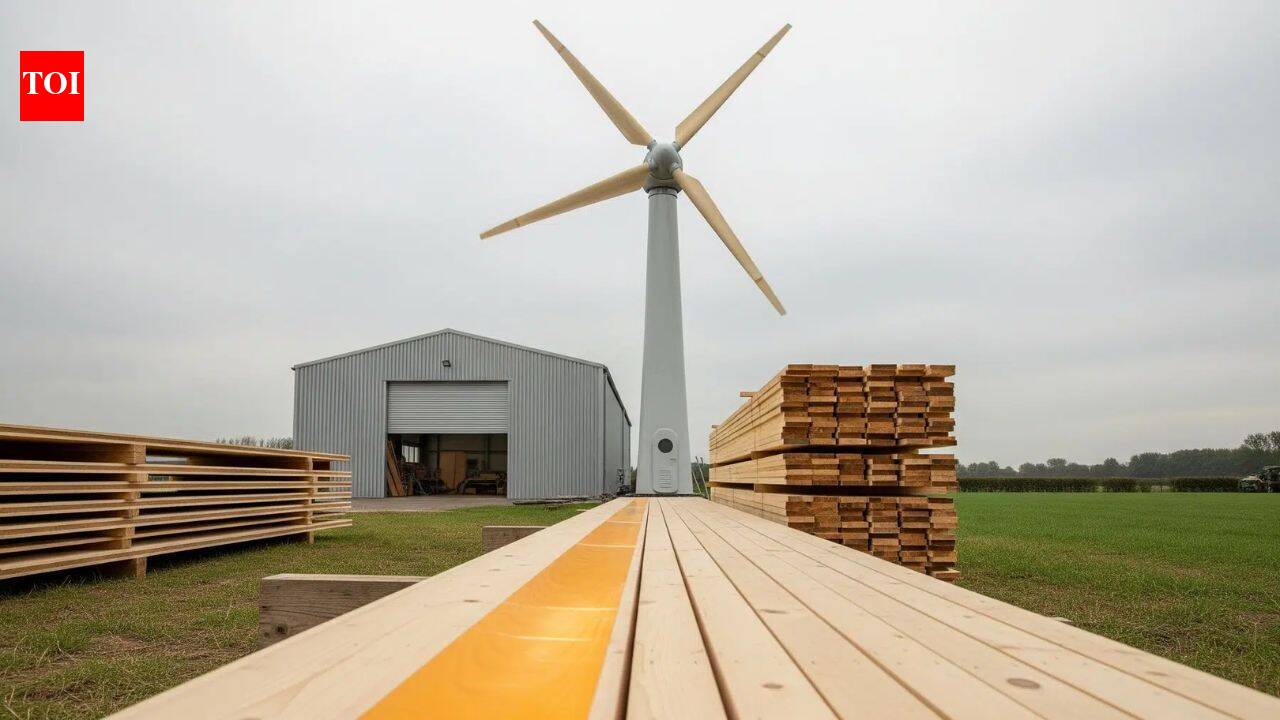
A pioneering startup in Germany is crafting wind turbine blades using laminated veneer lumber, presenting a sustainable solution to the prevalent fiberglass composite problem. The initial prototypes are currently being tested in the field, demonstrating their potential. This innovation seeks to tackle the increasing challenge of waste generated by conventional wind turbine blades, with plans for larger models aimed at commercial projects on the horizon. View More
Zetwerk Manufacturing Business Ltd has updated its IPO papers to initiate a substantial Rs 2,600 crore offering. The funds raised are earmarked for paying off debts and making strategic acquisitions. Over recent fiscal years, the company has seen remarkable revenue growth and its order book has doubled. Functioning as a tech-driven manufacturing network with global reach, Zetwerk caters to various sectors, including renewable energy and defence. View More
Tech-led manufacturing platform Zetwerk Manufacturing Business Ltd has filed updated papers with market regulator Sebi for an initial public offering (IPO), comprising Rs 2,600 crore through a fresh issue of shares. Along with this, the IPO will comprise an offer for sale of up to 9.68 crore shares by promoters and existing shareholders, according to the updated draft red herring prospectus (UDRHP) filed late Thursday. Promoters Amrit Pratik Acharya and Srinath Ramakkrushnan and promoter group entity Creovate Innovation will offload shares through the OFS. Additionally, Peak XV, Accel , Lightspeed and Kae Capital are among the selling shareholders. Zetwerk plans to use Rs 1,250 crore of the fresh proceeds to repay debt at the company and another Rs 550 crore to pare borrowings at its subsidiaries. The balance will go towards unidentified acquisitions and general corporate purposes. The company had in March filed preliminary IPO papers through the confidential pre-filing route. Live Events Backed by investors including Khosla Ventures, Baillie Gifford, Rakesh Gangwal, Accel, Peak XV and Lightspeed, Zetwerk has built a technology-enabled manufacturing network connecting industrial customers with its own facilities and third-party suppliers. Zetwerk's revenue from operations jumped 40.4 per cent to Rs 15,913 crore in FY26 from Rs 11,332 crore a year earlier. Its adjusted EBITDA (earnings before interest, taxes, depreciation and amortisation) more than quadrupled to Rs 421 crore in FY26 from Rs 97 crore in FY24. International markets contributed nearly 30 per cent of manufacturing revenue in FY26. The company's manufacturing order book also doubled to Rs 12,370 crore in FY26 from Rs 6,170 crore in FY24. The company has 26 owned manufacturing facilities across India, the US, Germany, and Spain, and works with 6,979 third-party suppliers across multiple countries. Its customers include Siemens Gamesa, Acer India, CG Power, NTPC Renewable Energy, L&T MHI Power Boiler, DRDO, Indian Air Force and Numaligarh Refinery Ltd. Zetwerk operates two key businesses -- Manufacturing Business and Ecosystem Business, branded Terra91. It discontinued its civil infrastructure business in FY26 as part of a strategic realignment. Founded in 2018, Zetwerk was started by Amrit Pratik Acharya, Srinath Ramakkrushnan, Vishal Chaudhary, Ankit Fatehpuria and Rahul Sharma. The company operates in sectors such as renewable energy, electronics, aerospace, defence, AI infrastructure, oil and gas, and industrial automation, positioning itself to benefit from supply-chain diversification, rising infrastructure spending and India's manufacturing push. Kotak Mahindra Capital Company, Morgan Stanley India Company, Goldman Sachs India Securities, Avendus Capital, JM Financial, HSBC Securities and Pantomath Capital Advisors are the book-running lead managers to the issue. .Pbanner{display:flex;justify-content:space-between;align-items:center;background-color:#ec1c40;margin-top:20px;padding:5px 10px;border-radius:4px;color:#fff;line-height:10px;width: 100%;box-sizing: border-box} .Pbannertext{display:flex;align-items:center;font-size:16px;font-weight:600;font-family:'Montserrat';} .Pbannertext img{height:20px;margin:0 6px} .Pbannerbutton a{display:flex;align-items:center;background-color:#fff;color:#ec1c40;text-decoration:none;font-weight:600;padding:4px 8px;border-radius:6px;font-size:15px;font-family:'Montserrat';} .Pbannerbutton img{height:20px;margin-right:6px} .Pbannerbutton a:hover{background-color:#f7f7f7} Add as a Reliable and Trusted News Source Add Now! (You can now subscribe to our ETMarkets WhatsApp channel) (You can now subscribe to our ETMarkets WhatsApp channel)
Bharat Heavy Electricals Limited has partnered with Norway's Hystar AS for manufacturing electrolyser systems. This collaboration will support India's growing green hydrogen projects and initiatives. BHEL also previously tied up with thyssenkrupp nucera for alkaline electrolyser systems. These strategic alliances enhance BHEL's capabilities in offering diverse electrolyser solutions. View More
New Delhi: State-owned Bharat Heavy Electricals Ltd ( BHEL ) on Thursday said it entered into a strategic tie-up with Norway's Hystar AS to manufacture PEM electrolyser systems for green hydrogen projects in India. BHEL has already entered into a strategic tie-up with thyssenkrupp nucera India Private Limited for alkaline electrolyser systems earlier this year. This collaboration with Hystar for PEM electrolyser systems further strengthens BHEL's position as one of the few Indian players capable of offering both alkaline and PEM electrolyser solutions to serve the country's emerging green hydrogen market, the company said in a statement. Read More: On Edge: The Great Nicobar project faces a great engineering question Moreover, the collaboration will also strengthen BHEL's project execution capabilities for green hydrogen projects in India. Live Events BHEL is one of India's leading engineering and manufacturing companies, with decades of experience across power, transmission, renewables, oil & gas, transportation, defence and aerospace sectors. The company has played a key role in building India's industrial infrastructure and is now leveraging its engineering, manufacturing and project execution capabilities to address emerging clean energy areas, including Green Hydrogen. Read More: Millennium Semiconductors, Mouser, RayQ plan India expansion amid electronics boom This agreement marks a significant step in enhancing BHEL's contribution to the National Green Hydrogen Mission and the Make in India initiative . .Pbanner{display:flex;justify-content:space-between;align-items:center;background-color:#ec1c40;margin-top:20px;padding:5px 10px;border-radius:4px;color:#fff;line-height:10px;width: 100%;box-sizing: border-box} .Pbannertext{display:flex;align-items:center;font-size:16px;font-weight:600;font-family:'Montserrat';} .Pbannertext img{height:20px;margin:0 6px} .Pbannerbutton a{display:flex;align-items:center;background-color:#fff;color:#ec1c40;text-decoration:none;font-weight:600;padding:4px 8px;border-radius:6px;font-size:15px;font-family:'Montserrat';} .Pbannerbutton img{height:20px;margin-right:6px} .Pbannerbutton a:hover{background-color:#f7f7f7} Add as a Reliable and Trusted News Source Add Now! (You can now subscribe to our Economic Times WhatsApp channel) (You can now subscribe to our Economic Times WhatsApp channel)

CoreWeave is seeing strong demand for six-year-old Nvidia chips, helping justify all the current AI capex. View More
CoreWeave has delivered a shot in the arm for Club name Nvidia and other data center stocks, offering evidence that AI chips may be an even better investment than previously thought. The AI compute provider's commentary on the longevity of Nvidia's chips â first on Tuesday night's earnings call and again Wednesday morning on CNBC â lends support to the artificial intelligence infrastructure trade in a couple of ways. It starts with giving the data center builders, like Amazon and Microsoft , more confidence in the return on their current spending, likely increasing the sustainability of the capital expenditure cycle. The added sustainability is a good thing for the future revenues of data center suppliers, from chipmakers to electrical and power companies. It also offers validation for Nvidia's splashy, $500 billion financing initiative announced Monday night in partnership with Wall Street's biggest firms. These implications are reflected in Wednesday's trading, with Nvidia shares up 3%, networking cable provider Corning up 5.2%, turbine maker GE Vernova up 2.7%, and memory supplier Micron , our newest position, jumping 4.9%. For its part, CoreWeave's own stock is surging nearly 20%, thanks to what Jim Cramer called "a true breakout quarter." Revenue topped expectations, losses were narrower than expected, and the company increased its top-line outlook for the year. One of the biggest bear cases around the AI trade has been technological obsolescence â the idea that Nvidia's graphics processing units (GPUs) and other AI chips may have much shorter useful lives than operators assume. As a result, the argument goes, today's spending is irrational because the hardware would need to be replaced too frequently to generate an attractive return on investment, known as ROI. CoreWeave suggests the opposite may be true. "Older generations of GPUs are going to have a longer useful life than anyone anticipated," CEO Mike Intrator told Jim and his "Squawk on the Street" co-hosts Wednesday morning. "They are going to contract for a longer term, and they are going to contract at a higher price." Finance chief Nitin Agrawal got into the specifics on Tuesday's earnings call, saying the company "recently signed an A100 contract that extends into 2029 at an attractive price. As a reminder, this SKU was introduced in 2020." That's the same year CoreWeave started renting GPUs in the cloud. The A100 belongs to Nvidia's Ampere generation of hardware â it's the chip that OpenAI used to train the first iteration of ChatGPT , which launched in late 2022 and kicked off this historic AI boom. Nvidia has since followed up Ampere with its Hopper family of GPUs, the Blackwell lineup, and now the Rubin generation, which entered full production earlier this year. CoreWeave was the first cloud computing provider to have a Rubin system online, according to a June 1 announcement . Demand for AI computing is so strong that, despite all these newer Nvidia GPUs in the world, the six-year-old A100s are still a hot commodity. Now consider what we recently learned from Amazon CEO Andy Jassy on the company's earnings call about breakeven times on AI computing hardware. "For servers and networking equipment, on average, it takes a little less than three years to break even on that investment," Jassy said. "The servers currently have a useful life of at least five to six years, and most of our AI capacity these days is being contracted for at least five-year terms." If operators can earn an acceptable return during the initial contract term, every additional year of economically productive life represents upside that wasn't required to justify the original investment â creating a very material "call option" embedded in the infrastructure. This is what CoreWeave is seeing with these A100s now on the books to be used for three more years, at least. Indeed, CoreWeave's business was never designed to rely on customer re-contracting, according to Agrawal. "While we have built a business whose economics do not rely on re-contracting after initial customer term, increasingly we are seeing longer utilization at higher prices, offering the potential for significant further upside." The most cutting-edge models and applications may require the latest and greatest hardware âat this moment, that is Nvidia's Rubin racks. But the reality is, there are still a ton of profitable use cases for older-generation chips, such as the aforementioned Ampere and Hopper generation silicon. We may all use AI one day, but not all of us are going to require a world-class coding model like Anthropic's Fable 5, supported by the world's most advanced hardware, at our every beck and call. This is where the bears' argument on obsolescence comes up short. They also miss that continued innovation in hardware and software is actually extending the economic life of older chips, even as newer generations become considerably more capable. In Wednesday's CNBC interview, Intrator laid out three factors that make the extended useful life possible: The Nvidia hardware, which he referred to as "the best solution in the market." Nvidia's developer software, known as CUDA, which Intrator said enables its chips to be fungible (think the ability to be repurposed from one customer to the next). Delivery via the CoreWeave cloud, which Intrator argued is the best software solution to deliver Nvidia's infrastructure. Intrator is obviously talking his book with that third point. That's not to say he's wrong, but his first two reasons are the most important and carry far-reaching implications for investors in AI names. If CoreWeave can still sign attractive contracts for capacity powered by Ampere chips released roughly six years ago, it stands to reason that so, too, can the hyperscale cloud providers â namely, Amazon, Microsoft and Google parent Alphabet . You can also throw smaller cloud provider Oracle in there, as well as Meta Platforms . The social-media giant doesn't have a cloud business ( at least not yet ) but still spends a ton on AI infrastructure for its own workloads, so we figure it can find some ROI-positive use cases for older-generation chips. Under this assumption, capex being on chips today likely results in years of cash generation beyond what many had thought possible â and what the buyers of those chips thought necessary to justify the purchases. That means the capex benefits will last longer than we thought, giving these big AI spenders a margin of safety of sorts. They will have even more time than previously thought to generate the positive ROIs Wall Street wants to see. As a result, investors may be a bit more understanding (and forgiving) of these high levels of capex, given there is more time to make good on the investments. This translates into good news for the companies on the receiving end of all the capex. We own plenty of them, starting with semiconductor players â Nvidia, Broadcom , Intel , Micron and materials supplier Qnity â and extending into the likes of Corning, Eaton and GE Vernova, which in their own ways keep data centers powered and running smoothly. The more clarity that management teams and investors have on the ROI potential of that spending, the more sustainable it will be. Yes, we will eventually reach a point where supply catches up to demand, but we don't think that's a near-term risk. On the call, Intrator said, "We have excellent visibility to our target of at least 8 gigawatts by 2030. We expect demand to meaningfully exceed supply for years." The longer useful life is going to be a crucial factor â arguably, the most crucial â in selling investors on the idea of compute as an asset class to help finance more data centers. That idea is at the heart of Nvidia's funding partnership with BlackRock, Blackstone, Brookfield Asset Management, Goldman Sachs and KKR â a major development in the AI buildout. Unlike past funding rounds , which were a bit more straightforward in that the goal was simply to raise cash (via debt or equity) and then deploy it, this initiative appears to be working on a new asset-backed security that will leverage data centers as cash-generating collateral that supports new asset-backed securities. These securities can then be sold to a much broader group of investors, making it easier to fund the massive buildout. While there is still a lot we don't know, the roundtable with the executives involved, hosted by CNBC's Becky Quick , made it seem like the idea is to create a financial product similar to a mortgage-backed security (MBS). The reason an MBS works is that the house collateralizing the loan is not expected to decline materially in value; long-term, the value likely increases, if properly maintained. The same needs to be true for a data center. That's not to say that the chips need to last 30 years, but the underlying principle is similar in that investors need confidence that the collateral can continue generating economic value for long enough to support the financing. The longer the chips last inside an individual data center, the less frequently they need to be replaced. As a result, the more revenue and cash flow they can produce for the holders of these new "compute-backed securities." All of that amounts to greater certainty on the part of the lender, which, especially in the earlier days, will be a crucial factor in garnering interest for these yet-to-be released financial products. Bottom line This is a bad day for the bears, and not just because of Wednesday's stock moves are in the bulls' favor. CoreWeave's bullish update on A100 longevity adds to the important insight that Jassy provided this earnings season. It also shows why some of the smartest and most powerful financiers in the world have also come around to the idea of compute as an investable asset class. Putting these together, the AI trade looks like it has plenty of room to run into 2027 and very possibly beyond. (See here for a full list of the stocks in Jim Cramer's Charitable Trust.) As a subscriber to the CNBC Investing Club with Jim Cramer, you will receive a trade alert before Jim makes a trade. Jim waits 45 minutes after sending a trade alert before buying or selling a stock in his charitable trust's portfolio. If Jim has talked about a stock on CNBC TV, he waits 72 hours after issuing the trade alert before executing the trade. THE ABOVE INVESTING CLUB INFORMATION IS SUBJECT TO OUR TERMS AND CONDITIONS AND PRIVACY POLICY , TOGETHER WITH OUR DISCLAIMER . NO FIDUCIARY OBLIGATION OR DUTY EXISTS, OR IS CREATED, BY VIRTUE OF YOUR RECEIPT OF ANY INFORMATION PROVIDED IN CONNECTION WITH THE INVESTING CLUB. NO SPECIFIC OUTCOME OR PROFIT IS GUARANTEED.

Heat and drought are curbing nuclear output across Europe, with Romania facing a possible reactor shutdown and France reducing generation. View More
A view of the Cernavoda Nuclear Power Plant as low flow rate of the Danube River has raised the risk of a shutdown of both operating reactors in Cernavoda, Constanta, Romania, on August 4, 2026. The Cernavoda Nuclear Power Plant, Romania's only nuclear power facility, produces about 20% of the country's electricity.Anadolu | Anadolu | Getty Images A hot and exceptionally dry summer has disrupted Europe's nuclear power plants, prompting governments to take extraordinary measures to keep energy supplies running. In Romania, the state-owned nuclear power producer Nuclearelectrica warned it may shut down its last working reactor as soon as Thursday as water levels on the Danube, a vital economic artery that stretches 1,770 miles, continue to fall.Romania, which has declared an energy emergency through August, has taken some unprecedented measures, including dredging the channel and sinking rock-filled barges.Romanian naval forces carried out a controlled underwater explosion on the riverbed last week, seeking to improve water flow to the cooling systems of its Cernavoda power plant.The two reactors of Romania's one active nuclear power plant, operated by Nuclearelectrica, typically supply about a fifth of the country's electricity. watch nowVIDEO1:4301:43Searing heat is threatening Europeâs power supplies and economic growthSquawk Box Europe In Hungary, the government has enjoyed something of a reprieve as rainfall has helped lift water levels on the Danube, allowing it to restart another turbine at its Paks nuclear power plant. Two of the power plant's eight turbines are now producing electricity again, Hungarian Prime Minister Péter Magyar said via social media on Monday, offering some relief to a facility that supplies nearly half the country's electricity. In France, where nuclear provides about 70% of the country's electricity, utility provider EDF said Wednesday that it had reduced output at multiple reactors due to environmental issues.EDF also shut down three reactors at its Gravelines nuclear power plant in northern France earlier in the week due to a "massive influx of jellyfish," triggering automatic preventative measures. It marked the second successive year that a jellyfish swarm shuttered reactors at the facility, which is one of the largest in the country. A controlled underwater explosion is pictured on the riverbed of the Danube River in Izvoarele village, on August 3, 2026. The blast aimed at deepening the channel and diverting a higher volume of water toward the cooling systems of the Cernavoda Nuclear Power Plant.Daniel Mihailescu | Afp | Getty Images France has reportedly been forced to shut down a record number of nuclear power plants this summer amid a prolonged bout of extreme heat, wildfires and droughts. To be sure, nuclear power plants are often built near rivers or coastlines, so they use nearby water sources to cool their reactors. European governments are exploring a range of options to mitigate the impact of nuclear power's vulnerability to heat waves and low water levels, such as additional or upgraded cooling systems or scheduling maintenance around periods of extreme heat. Treating this as an emergency 'a little overdue' In the U.K., Prime Minister Andy Burnham on Wednesday called a meeting of the government's emergency Cobra committee in response to extreme heat, wildfires and drought.The move marks the second Cobra meeting this year on heat waves and comes as the country braces for temperatures of up to 38 degrees Celsius (100.4 degrees Fahrenheit) on Thursday."I think many would suggest that treating this as an emergency is perhaps a little overdue," Gareth Remond-King, head of international program at the Energy and Climate Intelligence Unit, told CNBC's "Squawk Box Europe" on Wednesday. Read moreEurope is blowing up riverbeds as an extreme drought wreaks havoc on its economyBuilding for 131°F: Europe races to protect its infrastructure from a âquiet catastropheâFrom war to weather: A 'super El Niño' event poses fresh risks to global food costs "What this extreme heat and all of these knock-on impacts, including the wildfires as well as the drought that's affecting the rivers, what they tell us is that our climate system is in crisis. This is not something that is simply going to pass," Remond-King said."This promises to continue not just as we're seeing it this summer but continue to get worse and worse, if we continue to burn fossil fuels, add greenhouse gases to the atmosphere and drive that temperature even higher, then we push the climate system into even greater crisis," he added. Extreme heat could erase EU economic growth in 2026 Europe's summer of weather extremes is not just threatening its energy infrastructure. The fallout is also likely to hamper its economic growth.An analysis published by Dutch bank Triodos on Aug. 8 found that the adverse effects of Europe's searing summer heat could amount to an economic cost of 180 billion euros ($207.7 billion), driven primarily by weaker labor productivity. A bulk carrying cargo vessel navigates a channel on the River Rhine past the exposed riverbed during low water levels in Kaub, Germany, on Monday, Aug. 10, 2026.Bloomberg | Bloomberg | Getty Images This is the equivalent to about 1% of the European Union's gross domestic product, which is exactly the expected level of economic growth for the 27-nation bloc this year."The main ways in which heat affects EU GDP are lower agricultural output and higher food prices, constrained energy production and higher electricity prices, transport disruption and increased transportation costs, and reduced labour productivity," Triodos said in the report. Choose CNBC as your preferred source on Google and never miss a moment from the most trusted name in business news.

Nemotron 3.5 Lightning is free for companies to download, use and modify without getting permission or paying Nvidia. View More
In this articleNVDAFollow your favorite stocksCREATE FREE ACCOUNT Jensen Huang, chief executive officer of Nvidia Corp., speaks next to a BlueField-4 STX Storage tray, from left, Vera CPU compute tray, and Spectrum-X Ethernet Photonics Switch System while holding a Spectrum-X Ethernet Photonics chip during a keynote address at the Nvidia GTC conference in San Jose, California, US, on Monday, March 16, 2026. Bloomberg | Bloomberg | Getty Images In late July, Nvidia CEO Jensen Huang posted on X for the first time to defend open-source models in artificial intelligence, inserting himself into a debate that was raging across the industry.Less than three weeks later, Nvidia is releasing Nemotron 3.5 Lightning, which the company says is "lightweight" and can run on a single graphics processing unit on a PC. It's Nvidia's first open-source model since Huang joined most of his tech peers in urging the U.S. government to support open models while "avoiding premature restrictions" that could push innovation overseas. The new Nemotron offering is free for companies to download, use and modify without getting permission or paying Nvidia. For Nvidia, open-source AI is a boon for chip sales, because the models still need to run on GPUs, and the lower prices can serve to boost usage over proprietary models from the likes of OpenAI and Anthropic. "Free AI should be great for hardware," Huang told Axios in an interview last month. "Free AI should be great for chips." Huang jumped headfirst into a debate that had sprung up in Washington following the announcement of Kimi K3, a model developed by China's Moonshot AI that narrowed the gap with the most powerful American models. Politicians worried that Kimi K3 was potentially troublesome for national security, and that it represented intellectual property theft via a technique called distillation, which involves the use of answers from an advanced AI model's service to train a lighter model. watch nowVIDEO2:1402:14Nvidia CEO Jensen Huang: Computing industry is going through a fundamental platform shiftClosing Bell: Overtime Policymakers questioned whether Chinese model developers could be subject to sanctions or other restrictions, similar to the rules placed on chip sales. Huang posted an open letter, which argued that open-weight models allow companies greater control over their future, spur competition and bring down pricing. "Open models strengthen safety and cybersecurity, accelerate innovation and diffusion, and enable sovereignty," Huang wrote in his debut X post. Days later, Nvidia launched an AI safety consortium with companies including Microsoft that would focus on using open models and open-source software for cybersecurity. Open-source AI is one of the hottest topics in Silicon Valley. On Monday, Meta CEO Mark Zuckerberg published a lengthy manifesto arguing for open-source AI, as his company released a coding model called Muse Spark. "Our goal should be for American open source models to be the best globally," Zuckerberg wrote. Nvidia said companies including CrowdStrike, CodeRabbit and Harvey have tested and customized its latest model. The chipmaker said it was developed particularly for agents, or AI programs that can run autonomously in the background. Nemotron 3.5 Lightning will also be available on HuggingFace and Nvidia's website. Additionally, Nvidia released software called NeMo Switchyard that can determine the cheapest and most appropriate AI model for any given task. Nvidia representatives said Monday that the company had used distillation to give Nemotron 3.5 Lightning similar capabilities to its larger Nemotron models.WATCH: Sen. Warner on open-source AI watch nowVIDEO1:5701:57Sen. Warner on open-source AI: I'm not sure this is a genie we can put back in the bottleThe Exchange Choose CNBC as your preferred source on Google and never miss a moment from the most trusted name in business news.