
Latest Sectors News
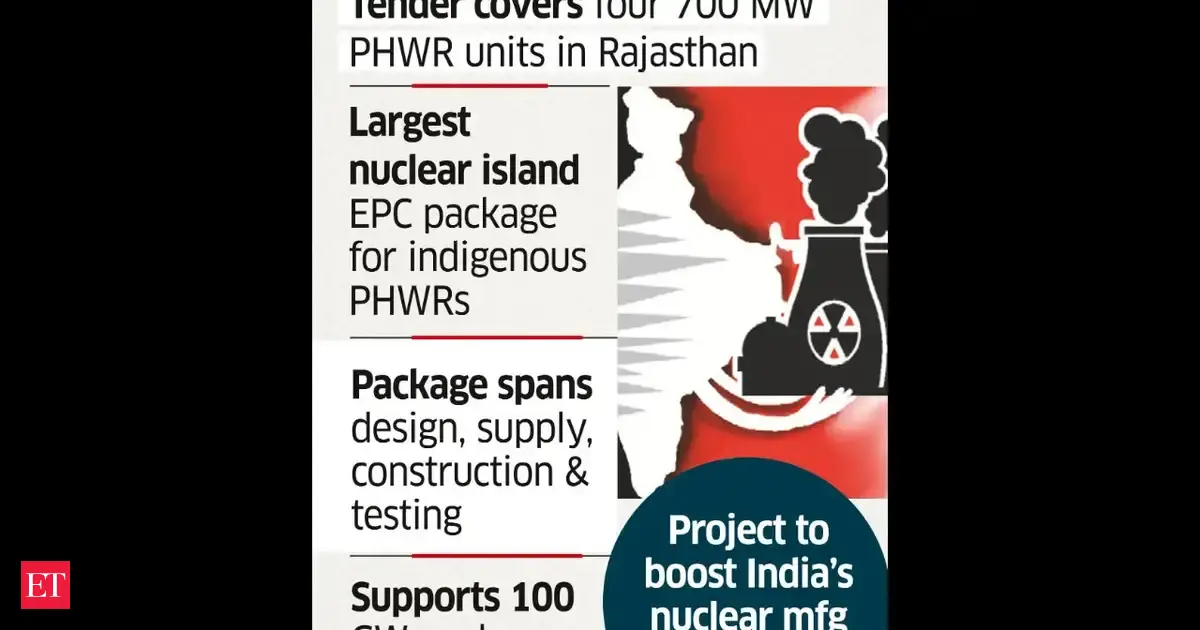
In a significant step towards bolstering India's nuclear infrastructure, Anushakti Vidhyut Nigam Ltd will shortly invite bids for a crucial nuclear island package. This tender encompasses four 700 MW reactors at the Mahi Banswara Rajasthan Atomic Power Project and is worth over ?28,000 crore as part of the indigenous PHWR program. View More
New Delhi: Anushakti Vidhyut Nigam Ltd, a joint venture between Nuclear Power Corporation of India Ltd (NPCIL) and NTPC Ltd , will soon invite bids for a nuclear island engineering, procurement and construction package worth more than ₹28,000 crore for four 700 MW reactors at the Mahi Banswara Rajasthan Atomic Power Project . The tender, one of the largest EPC packages issued for India's indigenous pressurised heavy water reactor (PHWR) programme, will cover engineering, manufacturing, supply, civil construction, installation, testing and commissioning support for the nuclear island systems, NPCIL posted on X. To cover engg, mfg, civil construction and commissioning support for island systems The joint venture has been incorporated to develop, own and operate nuclear power projects. The Mahi Banswara project in Rajasthan is the first it is implementing. Also Read: Files relating to India's largest nuclear power plant Kudankulam exposed in data breach The nuclear island comprises the reactor and associated safety-critical systems, making it the most specialised component of a nuclear power plant. Awarding a single EPC package for four units is expected to create economies of scale and expand opportunities for domestic manufacturers and engineering firms. Live Events The tender comes as the Centre accelerates its nuclear expansion programme under the Nuclear Energy Mission . India currently has nuclear energy capacity of 8.8 GW, with state-run NPCIL operating all the facilities. The aim is to take the nuclear power capacity to 22 GW by 2032 and 100 GW by 2047. Also Read: India may open thorium sector to private firms to boost nuclear energy ambitions To boost capacity addition, the government has brought in the Sustainable Harnessing and Advancement of Nuclear Energy Act , 2025 (SHANTI Act), allowing the private sector to build and operate nuclear power plants. The Mahi Banswara project will add 2,800 MW of nuclear generation capacity and is expected to contribute to India's long-term strategy of expanding reliable, low-carbon baseload electricity while strengthening domestic nuclear manufacturing ecosystem. The package is expected to provide a major boost to domestic nuclear equipment manufacturing and engineering companies, with the project relying on India's indigenous PHWR technology. .Pbanner{display:flex;justify-content:space-between;align-items:center;background-color:#ec1c40;margin-top:20px;padding:5px 10px;border-radius:4px;color:#fff;line-height:10px;width: 100%;box-sizing: border-box} .Pbannertext{display:flex;align-items:center;font-size:16px;font-weight:600;font-family:'Montserrat';} .Pbannertext img{height:20px;margin:0 6px} .Pbannerbutton a{display:flex;align-items:center;background-color:#fff;color:#ec1c40;text-decoration:none;font-weight:600;padding:4px 8px;border-radius:6px;font-size:15px;font-family:'Montserrat';} .Pbannerbutton img{height:20px;margin-right:6px} .Pbannerbutton a:hover{background-color:#f7f7f7} Add as a Reliable and Trusted News Source Add Now! (You can now subscribe to our Economic Times WhatsApp channel) (You can now subscribe to our Economic Times WhatsApp channel)
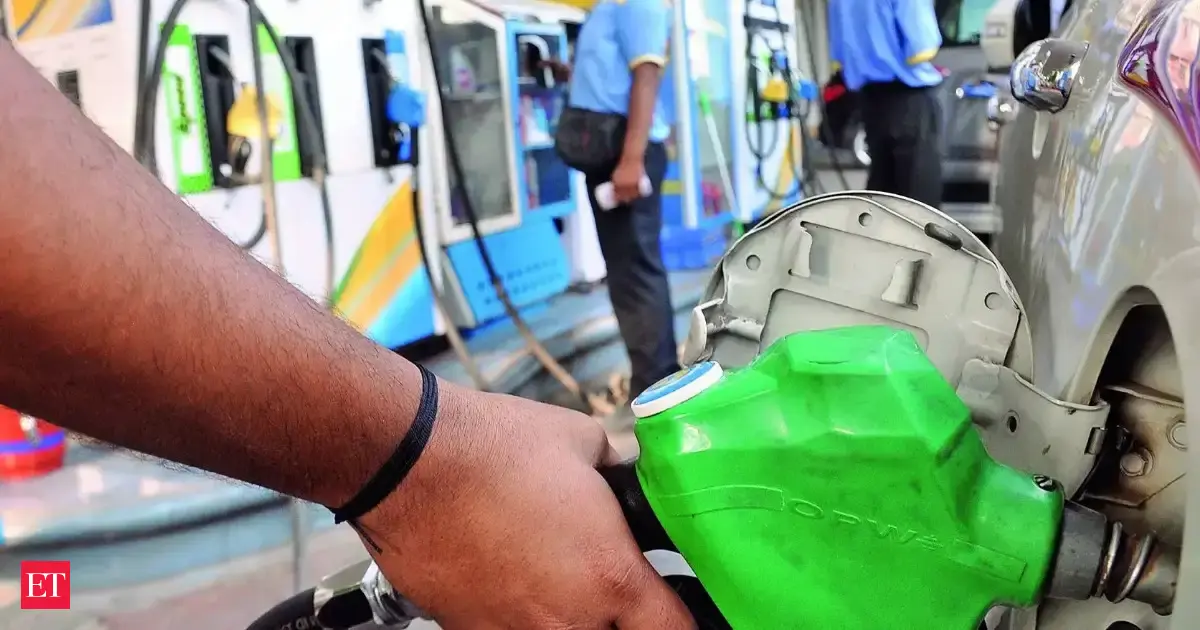
India's government has adjusted windfall taxes on fuel exports, effective July sixteenth. The export duty on petrol has been reduced to two point five rupees per litre. Windfall taxes on diesel exports are now fifteen point five rupees per litre. Levies on aviation turbine fuel exports have also increased to fourteen point five rupees. These changes reflect the latest fortnightly review of export duties. View More
The Indian government on Wednesday raised windfall taxes on diesel and aviation turbine fuel (ATF) exports while cutting the levy on petrol exports, effective July 16 in its latest fortnightly review of windfall tax. According to finance ministry notifications, the export duty on petrol has been reduced to Rs 2.5 per litre from Rs 4 r per litre. The windfall tax on diesel exports has been increased to Rs 15.5 per litre from Rs 8.5 per litre, while the levy on ATF exports has been raised to Rs 14.5 per litre from Rs 7.5 per litre. Also read: India refiners reap fuel export windfall as war drives shortages The windfall tax revision comes amid heightened volatility in global oil markets. Live Events Brent crude climbed nearly 2% to a one-month high of $84.73 per barrel on Wednesday earlier after the US reinstated a naval blockade on Iran, raising concerns over oil supplies through the Strait of Hormuz, a key route that handled around 20% of global oil flows before the conflict. Prices were also supported by renewed geopolitical tensions and attacks on oil tankers, although concerns over inflation and slowing global demand capped further gains. Higher diesel refining margins, driven by supply disruptions including lower Russian exports, have also kept fuel markets under pressure. Centre curbed bulk fuel purchases through retail outlets, later lifted The Centre had, on June 11, barred industrial, commercial and institutional consumers from purchasing petrol and diesel from retail fuel stations, directing them to source supplies through bulk procurement channels. The temporary order was issued to ensure equitable availability of fuel, prevent hoarding and diversion, and maintain uninterrupted supplies for retail consumers. The government cited the prevailing geopolitical situation affecting global petroleum supply chains and shipping logistics, saying disruptions had increased the risk of supply imbalances. Authorities had also observed unusually high diesel and petrol sales at retail outlets as bulk consumers shifted purchases from dedicated supply channels to retail pumps due to a widening price gap. At the time, retail diesel in Delhi was priced at Rs 95.20 per litre, while bulk buyers were paying Rs 134.50 per litre. The gap emerged after state-run oil marketing companies moderated retail fuel prices to shield ordinary consumers from higher costs arising from the West Asia conflict, even as bulk consumers continued to pay market-linked rates. Under the order, diesel sales at retail outlets were restricted to vehicle fuel tanks or Petroleum and Explosives Safety Organisation (PESO)-approved containers, with purchases capped at 200 litres per customer or vehicle per day. The restrictions can remain in force for up to 90 days and may be extended through a fresh government order, while violations are punishable under the Essential Commodities Act. The curbs were later lifted on Juny 29, with effect from July 1. .Pbanner{display:flex;justify-content:space-between;align-items:center;background-color:#ec1c40;margin-top:20px;padding:5px 10px;border-radius:4px;color:#fff;line-height:10px;width: 100%;box-sizing: border-box} .Pbannertext{display:flex;align-items:center;font-size:16px;font-weight:600;font-family:'Montserrat';} .Pbannertext img{height:20px;margin:0 6px} .Pbannerbutton a{display:flex;align-items:center;background-color:#fff;color:#ec1c40;text-decoration:none;font-weight:600;padding:4px 8px;border-radius:6px;font-size:15px;font-family:'Montserrat';} .Pbannerbutton img{height:20px;margin-right:6px} .Pbannerbutton a:hover{background-color:#f7f7f7} Add as a Reliable and Trusted News Source Add Now! (You can now subscribe to our Economic Times WhatsApp channel) (You can now subscribe to our Economic Times WhatsApp channel)
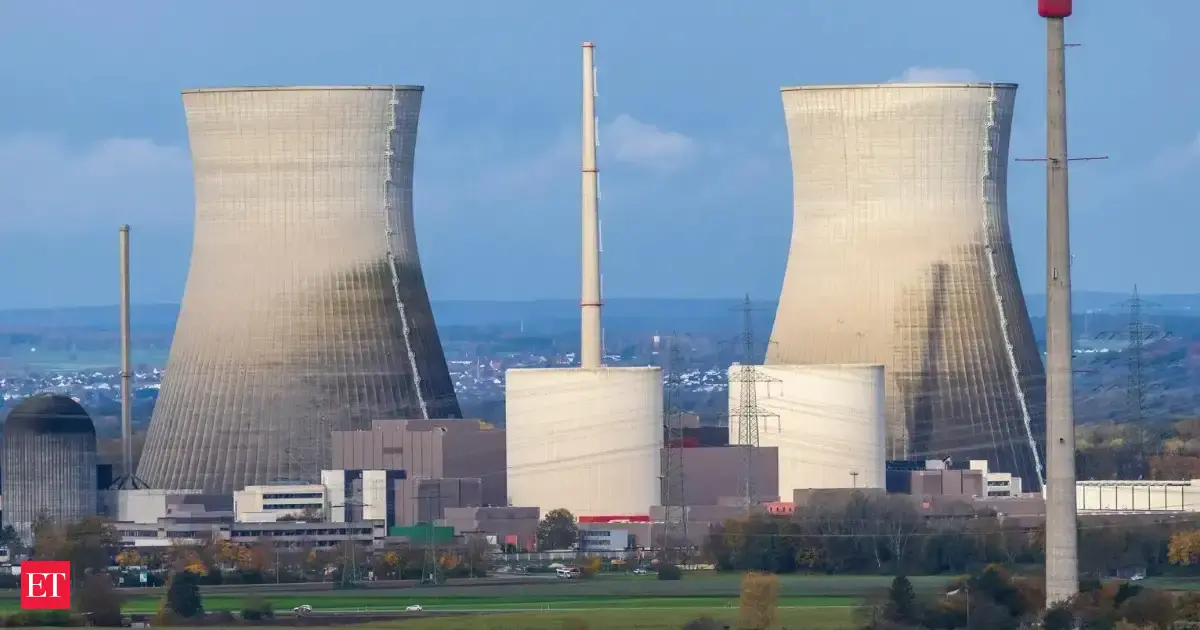
ASHVINI will soon invite bids for a significant nuclear island EPC package. This package is for four 700 MW reactors at the Mahi Banswara Rajasthan atomic power project. The tender covers engineering, manufacturing, supply, and construction for the nuclear island systems. This initiative supports India's accelerated nuclear expansion program and its energy mission. The project will add substantial nuclear generation capacity and strengthen domestic manufacturing capabilities. View More
New Delhi: Anushakti Vidhyut Nigam Ltd (ASHVINI), the joint venture between Nuclear Power Corporation of India Ltd (NPCIL) and NTPC Ltd , is set to invite bids for a nuclear island engineering, procurement and construction (EPC) package worth over Rs 28,000 crore for four 700 MW reactors at the Mahi Banswara Rajasthan atomic power project. The tender, one of the largest EPC packages issued for India's indigenous pressurised heavy water reactor (PHWR) program, covers engineering, manufacturing, supply, civil construction, installation, testing and commissioning support for the nuclear island systems of four 700 MW units. Also Read: Files relating to India's largest nuclear power plant Kudankulam exposed in data breach ASHVINI was incorporated as a joint venture between NPCIL and NTPC to develop, own and operate nuclear power projects. The Mahi Banswara project in Rajasthan is the first project to be implemented through the joint venture model. The nuclear island comprises the reactor and associated safety-critical systems, making it the most specialised component of a nuclear power plant. Awarding a single EPC package for four units is expected to create economies of scale and expand opportunities for domestic manufacturers and engineering firms. Live Events The tender comes as the Centre accelerates its nuclear expansion program under the Nuclear Energy Mission. The current nuclear energy capacity in India stands at 8.8 GW, which are being operated by NPCIL. The aim is to take this capacity to 22 GW by 2032. Also Read: India may open thorium sector to private firms to boost nuclear energy ambitions The government has set a target of achieving 100 GW of nuclear power capacity by 2047 and has announced legislative and policy reforms to encourage greater participation of Indian industry in the sector. The Mahi Banswara project will add 2,800 MW of nuclear generation capacity and is expected to contribute to India's long-term strategy of expanding reliable, low-carbon baseload electricity while strengthening the domestic nuclear manufacturing ecosystem. The package is expected to provide a major boost to domestic nuclear equipment manufacturing and engineering companies, with the project relying on India's indigenous PHWR technology . .Pbanner{display:flex;justify-content:space-between;align-items:center;background-color:#ec1c40;margin-top:20px;padding:5px 10px;border-radius:4px;color:#fff;line-height:10px;width: 100%;box-sizing: border-box} .Pbannertext{display:flex;align-items:center;font-size:16px;font-weight:600;font-family:'Montserrat';} .Pbannertext img{height:20px;margin:0 6px} .Pbannerbutton a{display:flex;align-items:center;background-color:#fff;color:#ec1c40;text-decoration:none;font-weight:600;padding:4px 8px;border-radius:6px;font-size:15px;font-family:'Montserrat';} .Pbannerbutton img{height:20px;margin-right:6px} .Pbannerbutton a:hover{background-color:#f7f7f7} Add as a Reliable and Trusted News Source Add Now! (You can now subscribe to our Economic Times WhatsApp channel) (You can now subscribe to our Economic Times WhatsApp channel)

From leaving corporate careers to building a Rs 115-crore omnichannel brand, Nestasia’s journey reflects the rise of India’s new-age home and lifestyle entrepreneurs. View More
Aditi Murarka Agrawal and Anurag Agrawal transitioned from prosperous careers in finance and e-commerce to establish Nestasia, a design-focused home and lifestyle company . Nestasia has evolved from an online startup into an omnichannel enterprise, achieving Rs 115 crore in revenue for FY25 and holding significant aspirations for continued expansion. In this conversation with The Economic Times, co-founder Aditi Murarka Agrawal talks about the entrepreneurial leap, the company’s growth drivers, differentiation in a crowded market, the evolving online-offline mix, and the journey toward building a profitable, IPO-ready consumer brand. Edited excerpts. The Economic Times (ET): Both of you had successful corporate careers in finance and e-commerce. What was the defining moment that convinced you to leave those careers behind and start Nestasia? How did you fund the business initially, and how much did you invest? Aditi Murarka Agrawal (AA): My passion for home decor is deeply personal, rooted in childhood memories of accompanying my mother on shopping trips to find the perfect pieces for our home during festivals. As I travelled across Southeast Asia, I was captivated by local craftsmanship and the untapped potential of regional artisans, which ultimately sparked the vision for Nestasia: a platform to celebrate extraordinary creativity and bring it to the forefront of contemporary home design Inspired by our shared experience of building three homes across Southeast Asia, Anurag co-founded Nestasia to translate that personal design journey into a brand accessible to everyone. At Nestasia, he leads customer-centric strategy, e-commerce expansion, and operational efficiency, ensuring the brand remains commercially robust while staying closely attuned to evolving customer needs and market trends. ET: Nestasia has scaled to achieve annual revenues of Rs 115 crore in FY25. What have been the biggest growth drivers behind this journey, and what milestones are critical as you target Rs 1,000 crore in annual revenues? AA: Our growth has largely been driven by the strength and evolution of our product assortment. While we started as a home décor brand, today our kitchen and dining category has emerged as our largest and fastest-growing segment, reflecting changing consumer preferences and our ability to expand into adjacent lifestyle categories. Another key driver has been accelerating our in-house manufacturing capabilities, which has enabled us to bring products to market faster, maintain greater control over quality and design, and respond more quickly to evolving consumer trends. As we work towards our Rs 1,000 crore revenue goal, continuing to expand our product portfolio, strengthening our manufacturing capabilities, and staying agile in meeting customer demand will remain critical to our growth journey. ET: The Indian home décor market is becoming increasingly crowded, with both legacy brands and new-age startups vying for consumers. How does Nestasia differentiate itself in such a competitive landscape? AA : The biggest challenge for consumers today is finding a trusted destination where they can discover thoughtfully designed products across every aspect of the home, without having to sift through an overwhelming number of options. At Nestasia, we have focused on solving exactly that by creating a curated, design-led one-stop shop for all things home. Rather than offering an endless catalogue, we handpick products that align with our aesthetic, quality standards, and evolving consumer preferences. This approach not only simplifies the shopping experience but also helps customers discover pieces they genuinely love. Our emphasis on curation, design, and a cohesive brand experience continues to be one of our strongest differentiators in an increasingly competitive home décor market. Live Events ET: Your website contributes nearly 55% of overall revenue, while marketplaces, quick commerce, and offline stores are also growing. How do you see the revenue mix evolving over the next three to five years? AA : While we are enabling greater access to the brand through third-party platforms, including marketplaces and quick commerce, our owned channels will remain the largest contributor to our business. They allow us to build deeper customer relationships, offer a more immersive brand experience, and retain greater control over the overall consumer journey. ET: Nestasia has transitioned from a digital-first startup to an omnichannel brand with 14 exclusive stores across multiple cities. What has been your experience in offline retail, and how important will physical stores be for future sales growth? AA : We are continuing to expand our physical retail presence because we see offline as being just as important as digital. There are customers who prefer shopping in stores and others who prefer shopping online, and our focus is not to change that behaviour but to deliver a world-class experience across both channels. We want to be wherever our customers choose to shop. That said, in a design-first category like home and lifestyle, the ability to see, touch, and experience products in person plays a significant role in building trust and confidence, making physical stores an important driver of both brand affinity and long-term growth. ET: New product launches are a key part of Nestasia's strategy. How do you identify emerging consumer trends and ensure that frequent product drops translate into sustained sales and customer loyalty? AA : We have a dedicated team focused on identifying emerging consumer trends and product opportunities. It's a combination of deeply understanding customer problems through continuous feedback and research, while constantly tracking innovations that can enhance the user experience. This approach enables us to introduce products that are not only trend-led but also solve real consumer needs, helping us drive sustained customer engagement and long-term loyalty. ET: With investors such as Stellaris Venture Partners and Susquehanna Asia VC backing the company, how are you balancing rapid growth with profitability and building an IPO-ready business? AA : We are looking forward to making the best home and kitchen products for the Indian consumer market. When we do that, growth and profitability follow. Our investors trust us and hence completely back us on that. .Pbanner{display:flex;justify-content:space-between;align-items:center;background-color:#ec1c40;margin-top:20px;padding:5px 10px;border-radius:4px;color:#fff;line-height:10px;width: 100%;box-sizing: border-box} .Pbannertext{display:flex;align-items:center;font-size:16px;font-weight:600;font-family:'Montserrat';} .Pbannertext img{height:20px;margin:0 6px} .Pbannerbutton a{display:flex;align-items:center;background-color:#fff;color:#ec1c40;text-decoration:none;font-weight:600;padding:4px 8px;border-radius:6px;font-size:15px;font-family:'Montserrat';} .Pbannerbutton img{height:20px;margin-right:6px} .Pbannerbutton a:hover{background-color:#f7f7f7} Add as a Reliable and Trusted News Source Add Now!

The regulator has relaxed some provisions of the GNA Regulations providing developers with a 60-day window to choose one of the four options. View More


Power producers must surrender unused transmission rights or post higher bank guarantees to free up grid capacity View More


NTPC's board approved a Rs 20,456.70 crore investment for its Lara Super Thermal Power Project Stage-III. This significant project will add 1,600 MW capacity in Chhattisgarh state. Earlier, NTPC sought bids for technology solutions to enhance thermal unit flexibility. These solutions aim to improve integration of renewable energy sources. The company seeks to operate sub-critical thermal units more efficiently. View More
New Delhi: State-run power giant NTPC board has approved Rs 20,456.70-crore investment for 1,600 MW Lara Super Thermal Power Project Stage-III in Chhattisgarh. "The Board of Directors of NTPC Limited in its meeting held today, i.e. 11th July 2026 has, inter-alia, approved investment proposal for Lara Super Thermal Power Project, Stage-III (2x800 MW) at current estimated cost of Rs 20,456.70 crore," the company said in an exchange filing on Saturday. Also read: NITI Aayog begins consultations on implementing SHANTI Act On June 5, the NTPC had sought bids from technology solutions players to help its sub-critical thermal power units operate at lower load and ensure flexibility for the electricity distribution network to use both thermal and renewable energy more efficiently. The project will require providing technical support to sub-critical thermal units ranging between 150 MW and 250 MW, enabling them to operate in two shifts and at a minimum technical load of 25 per cent, NTPC had said in a statement. Live Events Sub-critical thermal units can offer greater flexibility compared to supercritical and ultra-supercritical technologies for certain grid-balancing requirements because of less parameter swings and hence low fatigue, NTPC had said, adding that their ability to operate efficiently at lower loads and adapt to frequent cycling makes them a potential enabler for higher renewable energy integration in the future. .Pbanner{display:flex;justify-content:space-between;align-items:center;background-color:#ec1c40;margin-top:20px;padding:5px 10px;border-radius:4px;color:#fff;line-height:10px;width: 100%;box-sizing: border-box} .Pbannertext{display:flex;align-items:center;font-size:16px;font-weight:600;font-family:'Montserrat';} .Pbannertext img{height:20px;margin:0 6px} .Pbannerbutton a{display:flex;align-items:center;background-color:#fff;color:#ec1c40;text-decoration:none;font-weight:600;padding:4px 8px;border-radius:6px;font-size:15px;font-family:'Montserrat';} .Pbannerbutton img{height:20px;margin-right:6px} .Pbannerbutton a:hover{background-color:#f7f7f7} Add as a Reliable and Trusted News Source Add Now! (You can now subscribe to our Economic Times WhatsApp channel) (You can now subscribe to our Economic Times WhatsApp channel)
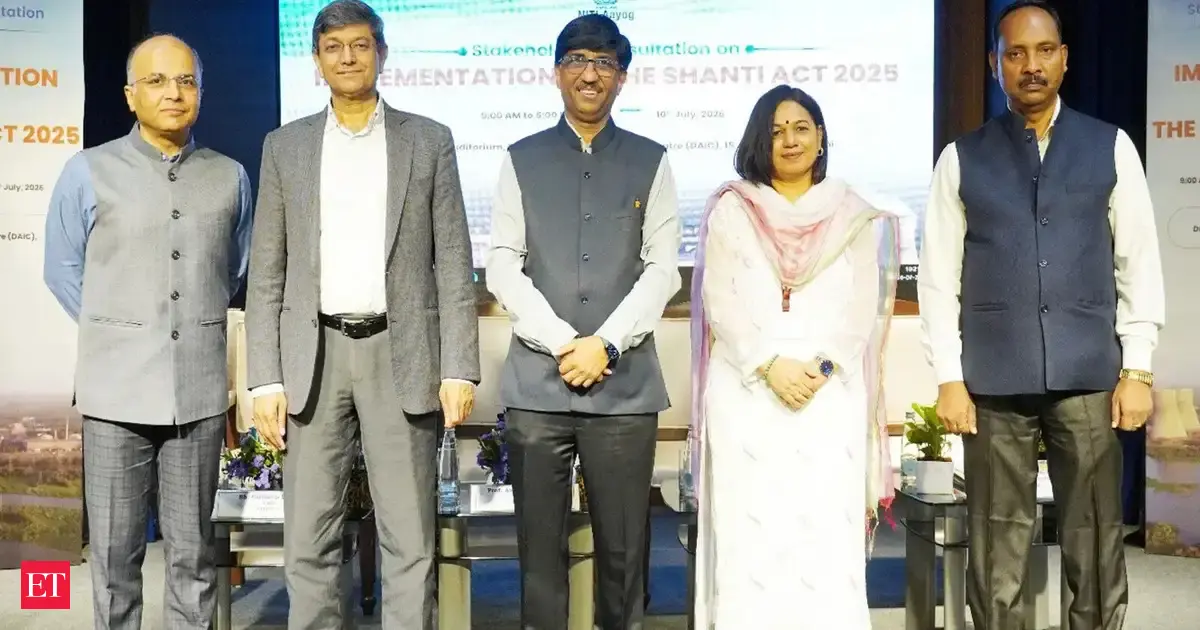
NITI Aayog convened a stakeholder consultation on the SHANTI Act 2025, with discussions focusing on legislative and regulatory frameworks for the landmark Act. Financial mechanisms and public perception were also key areas of deliberation. View More
New Delhi: NITI Aayog convened a Stakeholder Consultation on Implementation of the SHANTI Act 2025 at Samrasta Auditorium, Dr. Ambedkar International Centre, New Delhi. The consultation held on Friday brought together key leaders, policymakers and experts from the government, research institutions and industry to deliberate on the operational framework of the landmark Act. The stakeholder consultation was chaired by Prof. Abhay Karandikar (Member, NITI Aayog). Other prominent dignitaries included Pankaj Agrawal (Secretary, MoP), Sh. Ghanshyam Prasad (Chairperson, CEA), Gurdeep Singh (CMD, NTPC Ltd. ), Dr. Anshu Bharadwaj (Programme Director, NITI Aayog), Rajnath Ram (Adviser, NITI Aayog), Dr. Garima Sharma (Head, SSSD, DAE) and Hari Kumar (Distinguished Scientist and Director, AERB). Also read | SHANTI Act: The law ....may've started to show results The technical discussions were structured around three critical pillars vital to the Act's successful rollout: Live Events Legislative & Regulatory Framework: Deliberations focused on the SHANTI Act's draft rules, regulations and related FDI policy provisions, with the opening technical segment presenting the statutory compliance mechanisms under SHANTI Act, 2025 and highlighting how foreign capital can be attracted while safeguarding domestic interests. Finance, Insurance & Public Perception: Stakeholders examined the financial mechanisms and risk-mitigation frameworks needed to support the Act's implementation. The discussion also covered suitable insurance arrangements for long-term projects, along with strategies to strengthen public awareness, community trust and broader acceptance of nuclear energy projects. Manufacturing, Operations & Capacity Building: The focus was on the operationalization phase, with emphasis on strengthening domestic manufacturing capabilities, ensuring operational readiness and building a skilled workforce to sustain the ecosystem. Stakeholders also discussed enhancing supply chain resilience and designing dedicated capacity-building programmes to support industrial scaling and develop a highly competent human resource base. Also read | Nuclear power output to rise 44% in 10 years; India, China key drivers Stakeholders provided a range of views across all three critical areas, which will be useful in strengthening the implementation framework of the SHANTI Act, 2025. .Pbanner{display:flex;justify-content:space-between;align-items:center;background-color:#ec1c40;margin-top:20px;padding:5px 10px;border-radius:4px;color:#fff;line-height:10px;width: 100%;box-sizing: border-box} .Pbannertext{display:flex;align-items:center;font-size:16px;font-weight:600;font-family:'Montserrat';} .Pbannertext img{height:20px;margin:0 6px} .Pbannerbutton a{display:flex;align-items:center;background-color:#fff;color:#ec1c40;text-decoration:none;font-weight:600;padding:4px 8px;border-radius:6px;font-size:15px;font-family:'Montserrat';} .Pbannerbutton img{height:20px;margin-right:6px} .Pbannerbutton a:hover{background-color:#f7f7f7} Add as a Reliable and Trusted News Source Add Now! (You can now subscribe to our Economic Times WhatsApp channel) (You can now subscribe to our Economic Times WhatsApp channel)