
Latest Sectors News

India will soon cross the landmark of 300 gigawatt (GW) of installed non-fossil fuel capacity. View More

The stock climbed 8.8% on the NSE to a high of ?99.39 compared with the previous close of ?91.30 View More
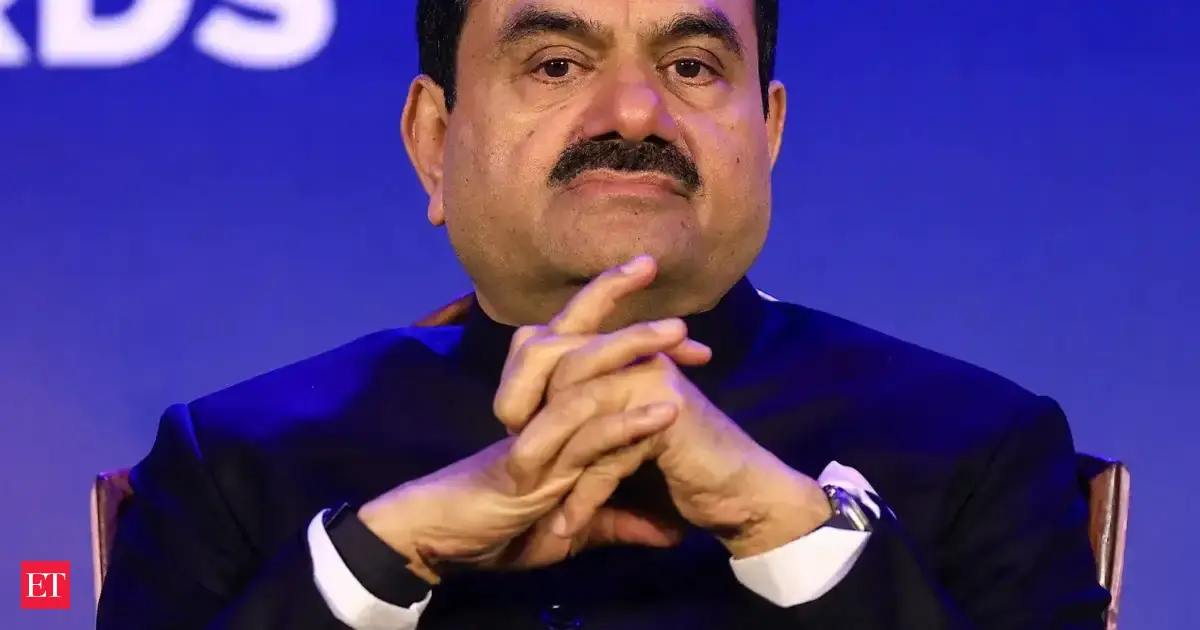
Adani Power awaits government rules for private nuclear sector entry. The company plans ten gigawatts of nuclear capacity by twenty thirty-five. Investment decisions depend on regulatory clarity and cost-effectiveness for consumers. Feasibility studies for potential sites in Madhya Pradesh are underway. India aims to significantly expand nuclear power capacity by two thousand forty-seven. View More
Adani Power 's plans to enter India's nuclear power sector remain dependent on one crucial hurdle: the government's finalisation of rules permitting private-sector participation , with the company saying it will take investment decisions only after regulatory clarity emerges. The Gautam Adani-owned entity, which has outlined an ambition to develop 10 gigawatts (GW) of nuclear power capacity by 2035, said it is evaluating both indigenous and international reactor technologies but is yet to zero in on a roadmap as the policy framework remains under development. Also read: Adani Power Q1 Results: Profit jumps 42% YoY to Rs 4,806 cr; co approves Rs 15,000 cr fundraise "It will all depend on which would be cost-effective. Electricity has to be viable for the Indian consumers, and the type of rates which are affordable to power distribution companies," Chief Executive Shersingh Khyalia said during the company's post-earnings call on Wednesday. Adani Power is also studying potential locations, including Bina and Nigrie in Madhya Pradesh, for future nuclear projects. Company executives said feasibility studies are underway and the sites are being kept ready so the company can move swiftly once the regulatory regime is in place. India is seeking to significantly expand nuclear power as part of its clean energy transition . The government last year opened the sector to domestic and foreign private companies and has set a target of raising the country's nuclear power capacity to 100 GW by 2047, from around 8.8 GW currently. Live Events If it proceeds with its proposed capacity addition, Adani Power could emerge as one of the country's largest nuclear power operators. State-run Nuclear Power Corporation of India (NPCIL), currently the sole operator of nuclear plants in the country, has a target of building 50 GW of nuclear capacity, while NTPC is aiming for 30 GW. Several private-sector players, including Tata Power and Reliance Industries , have also expressed interest in the emerging opportunity as India prepares to open up the strategically important sector. Also read: A look at billionaire Adani's businesses as he weighs starting an airline Record Q1FY27 earnings fuel expansion plans Adani Power posted its highest-ever quarterly operating and financial performance in the April-June quarter, with consolidated net profit rising 42% year-on-year (YoY) to Rs 4,806 crore, aided by robust power demand, higher generation and improved capacity utilisation. The company had reported a net profit of Rs 3,385 crore in the corresponding quarter last year. Revenue from operations climbed 34% YoY to Rs 18,902 crore, while consolidated EBITDA increased 36% to Rs 8,369 crore. Continuing EBITDA rose 22% to Rs 6,983 crore from Rs 5,744 crore a year earlier. The board also approved raising up to Rs 15,000 crore through the issuance of equity shares via qualified institutional placement (QIP) or other permissible routes to support its growth plans. The company's consolidated power sales rose 17% to 28.8 billion units during the quarter from 24.6 billion units a year ago, while electricity generation touched a record 31 billion units. Installed capacity increased to 18,330 MW from 17,550 MW, with plant load factor improving to 77.9% from 67%, reflecting better utilisation of its generation fleet. Adani Power also recognised Rs 1,386 crore as net prior-period income during the quarter, primarily following revisions in historic energy charges under certain power purchase agreements (PPAs), compared with Rs 406.21 crore in the year-ago period. .Pbanner{display:flex;justify-content:space-between;align-items:center;background-color:#ec1c40;margin-top:20px;padding:5px 10px;border-radius:4px;color:#fff;line-height:10px;width: 100%;box-sizing: border-box} .Pbannertext{display:flex;align-items:center;font-size:16px;font-weight:600;font-family:'Montserrat';} .Pbannertext img{height:20px;margin:0 6px} .Pbannerbutton a{display:flex;align-items:center;background-color:#fff;color:#ec1c40;text-decoration:none;font-weight:600;padding:4px 8px;border-radius:6px;font-size:15px;font-family:'Montserrat';} .Pbannerbutton img{height:20px;margin-right:6px} .Pbannerbutton a:hover{background-color:#f7f7f7} Add as a Reliable and Trusted News Source Add Now! (You can now subscribe to our Economic Times WhatsApp channel) (You can now subscribe to our Economic Times WhatsApp channel)
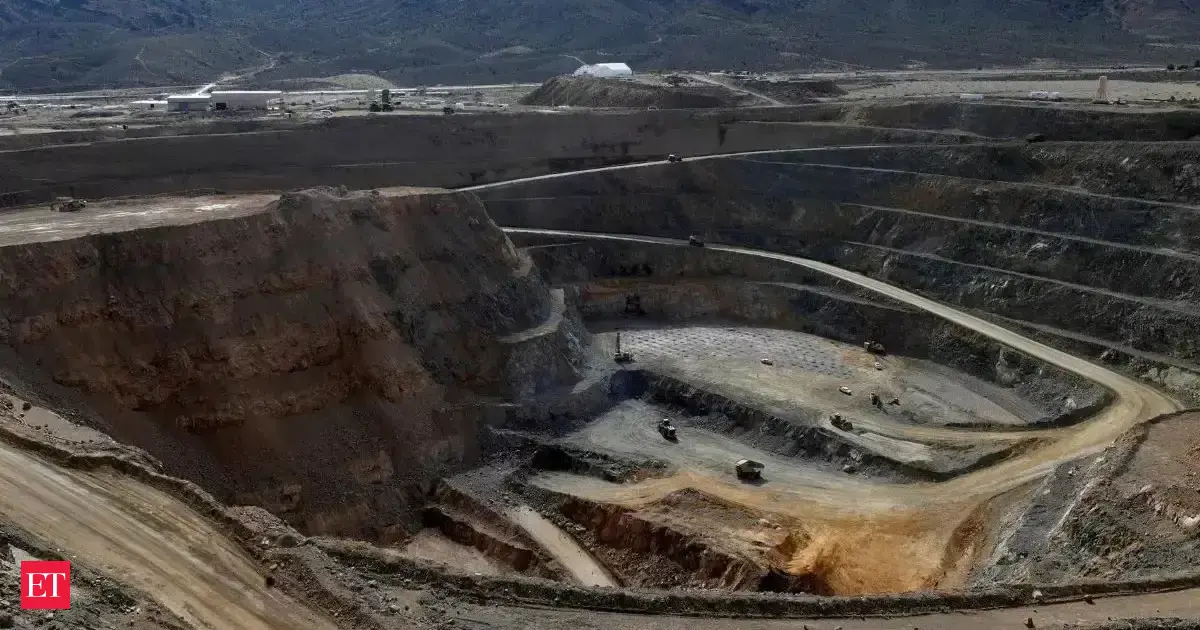
India and Myanmar are enhancing cooperation in rare earths sector. Indian teams visited Myanmar in December 2024 and February 2026. This collaboration aims to secure strategic mineral supplies for India. Myanmar's Kachin state is a key source of heavy rare earths. Both nations see significant win-win opportunities from this partnership. View More
India and Myanmar are working to deepen cooperation in the rare earths sector after visits to the southeast Asian country by Indian teams, with New Delhi seeking alternative supplies of a strategic resource tightly controlled by China. In a speech on Wednesday at the opening of a mining forum in Mandalay, India's Ambassador to Myanmar Abhay Thakur outlined the growing bilateral collaboration between the two countries on rare earths. Cooperation in the mining sector has gained significant momentum over the last two years, Thakur said. This includes two Indian delegations on rare earths and critical minerals that have visited Myanmar in December 2024 and February 2026, he said. Also read: Rare earth minerals explained: Why are they the world's most strategic resources? Live Events The matter has also received high-level attention during a official visit by junta chief turned president Min Aung Hlaing to India in May-June, according to Thakur. Thakur said, "India's need for harnessing critical minerals, coupled with the benefits to Myanmar from sustainable mining, presents solid, win-win, short and long-term opportunities." Nearly half the world's supply of heavy rare earths is extracted from mines in Myanmar's Kachin state, which are then shipped to China for processing into magnets that power electronic vehicles and wind turbines, Reuters has reported. Reuters previously also reported that India has sought rare-earth samples via the rebel Kachin Independence Army (KIA), which controls Myanmar's main mining hubs, near the Chinese border. At the Mandalay mining forum, Thakur said the Indian firms in attendance include IREL , NTPC Mining , Himadri Specialty, Oceanic Sands, PrNd Metal & Magnets, and Jai Puri Holdings. Thakur also said that "Midwest from India" has also closely engaged with Myanmar in recent months and years, without specifying the nature of the involvement. Reuters has previously reported that the state-owned miner IREL and private firm Midwest Advanced Materials were among those involved in discussions to explore the collection and transportation of samples from mines under KIA control. .Pbanner{display:flex;justify-content:space-between;align-items:center;background-color:#ec1c40;margin-top:20px;padding:5px 10px;border-radius:4px;color:#fff;line-height:10px;width: 100%;box-sizing: border-box} .Pbannertext{display:flex;align-items:center;font-size:16px;font-weight:600;font-family:'Montserrat';} .Pbannertext img{height:20px;margin:0 6px} .Pbannerbutton a{display:flex;align-items:center;background-color:#fff;color:#ec1c40;text-decoration:none;font-weight:600;padding:4px 8px;border-radius:6px;font-size:15px;font-family:'Montserrat';} .Pbannerbutton img{height:20px;margin-right:6px} .Pbannerbutton a:hover{background-color:#f7f7f7} Add as a Reliable and Trusted News Source Add Now! (You can now subscribe to our Economic Times WhatsApp channel) (You can now subscribe to our Economic Times WhatsApp channel)

Maharashtra State Electricity Distribution Co has appointed eight investment bankers for its proposed initial public offering. This significant issue could potentially raise between eight thousand and ten thousand crore rupees. The offering will mark the first-ever IPO by the Maharashtra government and a state-run discom. Mahavitaran, the brand under which MSEDCL operates, will be listed. The utility provides power to most consumers in India's largest subnational economy. View More
Mumbai: Maharashtra State Electricity Distribution Co (MSEDCL) has appointed eight investment bankers for its proposed initial public offering , which could raise ₹8,000-10,000 crore, people familiar with the development told ET. The issue will mark the first-ever IPO by the Maharashtra government -and a purely state-run discom in India. Eight investment bankers -SBI Capital Markets, Axis Capital , IDBI Capital Markets & Securities, ICICI Securities, HDFC Bank , IIFL Capital Services , DAM Capital and Motilal Oswal Investment Advisors-have been appointed to manage the offering, according to the people familiar with the matter. An email sent to MSEDCL did not elicit any response. Individual bankers did not respond to ET's request for a comment. Read more: Can Indo-MIM IPO deliver long-term growth for high risk investors? The listing will be of Mahavitaran, the brand under which MSEDCL operates. Mahavitaran provides power to the bulk of the consumers in India's biggest subnational economy, barring the city of Mumbai. The utility, however, carries significant debt on its balance sheet. .Pbanner{display:flex;justify-content:space-between;align-items:center;background-color:#ec1c40;margin-top:20px;padding:5px 10px;border-radius:4px;color:#fff;line-height:10px;width: 100%;box-sizing: border-box} .Pbannertext{display:flex;align-items:center;font-size:16px;font-weight:600;font-family:'Montserrat';} .Pbannertext img{height:20px;margin:0 6px} .Pbannerbutton a{display:flex;align-items:center;background-color:#fff;color:#ec1c40;text-decoration:none;font-weight:600;padding:4px 8px;border-radius:6px;font-size:15px;font-family:'Montserrat';} .Pbannerbutton img{height:20px;margin-right:6px} .Pbannerbutton a:hover{background-color:#f7f7f7} Add as a Reliable and Trusted News Source Add Now! (You can now subscribe to our ETMarkets WhatsApp channel) (You can now subscribe to our ETMarkets WhatsApp channel)
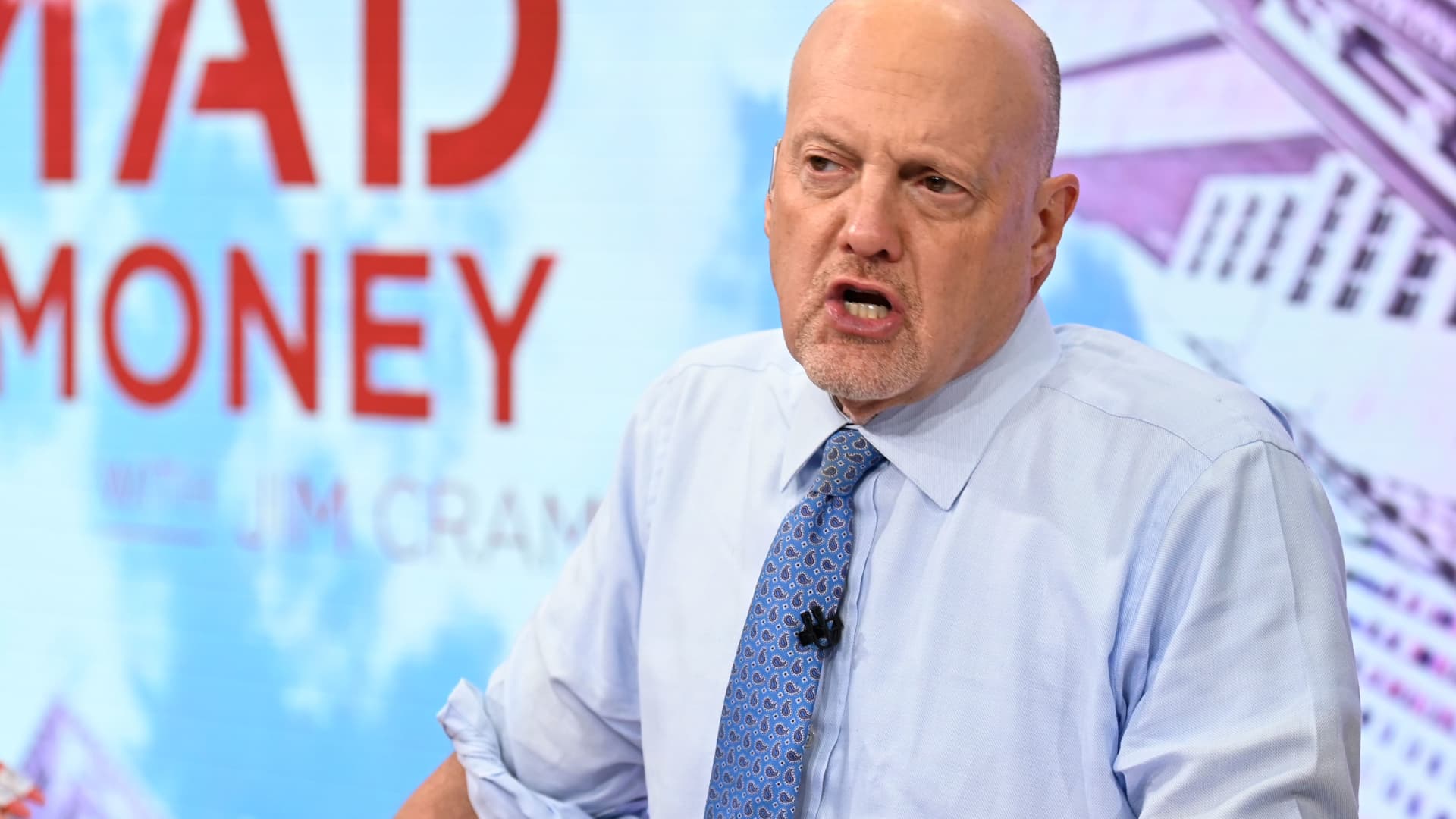
CNBC's Jim Cramer urged investors not to overreact to earnings season volatility, saying short-term market moves often defy conventional logic. View More
In this article.DJI.IXIC.SPXUS10YFollow your favorite stocksCREATE FREE ACCOUNT watch nowVIDEO1:1401:14During earnings season, sometimes you have to sit back and take it all in, says Jim CramerMad Money with Jim Cramer CNBC's Jim Cramer cautioned investors against reacting to every twist and turn of earnings season."Sit on your hands during earnings season. Just try to take it all in and accept that the market has its own secrets that will be revealed over time," the "Mad Money" host said on Wednesday. "You just have to own good companies long-term and block out the short-term noise, except when it gives you nice buying opportunities."The major averages finished little changed Wednesday. The Dow Jones Industrial Average dropped six points, or 0.01%, while the Nasdaq slipped nearly 0.6% and the S&P 500 fell just over 0.1%. Beneath the surface, however, Cramer said a flood of earnings reports, U.S. strikes against Iran and shifting expectations for oil prices and interest rates created a market where stocks moved in ways that defied conventional logic. "The cross-currents are roiling everything," Cramer said. "That's how you get open field running, where stocks can reverse on a dime."A perfect example was GE Vernova, which fell 8.7% after an earnings miss. While acknowledging the miss, Cramer said the power equipment maker's strong cash flow and robust turbine demand suggest its long-term outlook remains intact. GE Vernova is a holding in Cramer's Charitable Trust, the portfolio used by CNBC Investing Club. Nvidia, also a Club name, offered another example of the market's unpredictable behavior. The AI chipmaker opened lower despite no company-specific news. It reversed and closed up 2.3% â a move that, Cramer said, may have been fueled by optimism surrounding AI server maker Super Micro's surge in new orders. He asked, "Delayed reaction? Ball of confusion? That makes sense."Cramer said the seemingly contradictory moves extended to the utility sector.Utility companies like Sempra and Dominion rose 2.7% and 1.8%, respectively, even as Treasury yields continued to climb. Since investors often buy utilities for their dividend income, Cramer said the sector typically comes under pressure when higher bond yields make fixed-income investments more attractive. Rather than trying to explain every market move in real time, Cramer said that investors should focus on owning quality companies and resist the temptation to chase every headline. "Don't expect or demand rationality. Don't bet the house on earnings numbers. In the end, you don't need to," he concluded. watch nowVIDEO10:1810:18Jim Cramer talks the 'fog' around earnings seasonMad Money with Jim Cramer Jim Cramer's Guide to InvestingClick here to read Jim Cramer's Guide to Investing at no cost to help you build long-term wealth and invest smarter Sign up now for the CNBC Investing Club to follow Jim Cramer's every move in the market.DisclaimerQuestions for Cramer? Call Cramer: 1-800-743-CNBCWant to take a deep dive into Cramer's world? Hit him up! Mad Money Twitter - Jim Cramer Twitter - Facebook - InstagramQuestions, comments, suggestions for the "Mad Money" website? madcap@cnbc.com Choose CNBC as your preferred source on Google and never miss a moment from the most trusted name in business news.

Ayr alleged that an individual joined the company under false pretences, gained access to confidential information, and later joined Zetwerk to lead a newly established transformer business. View More

The Indian stock market remained range-bound due to fragile investor sentiment amid West Asian tensions. Despite modest losses in benchmark indices, broader markets performed well, supported by select sectors. View More
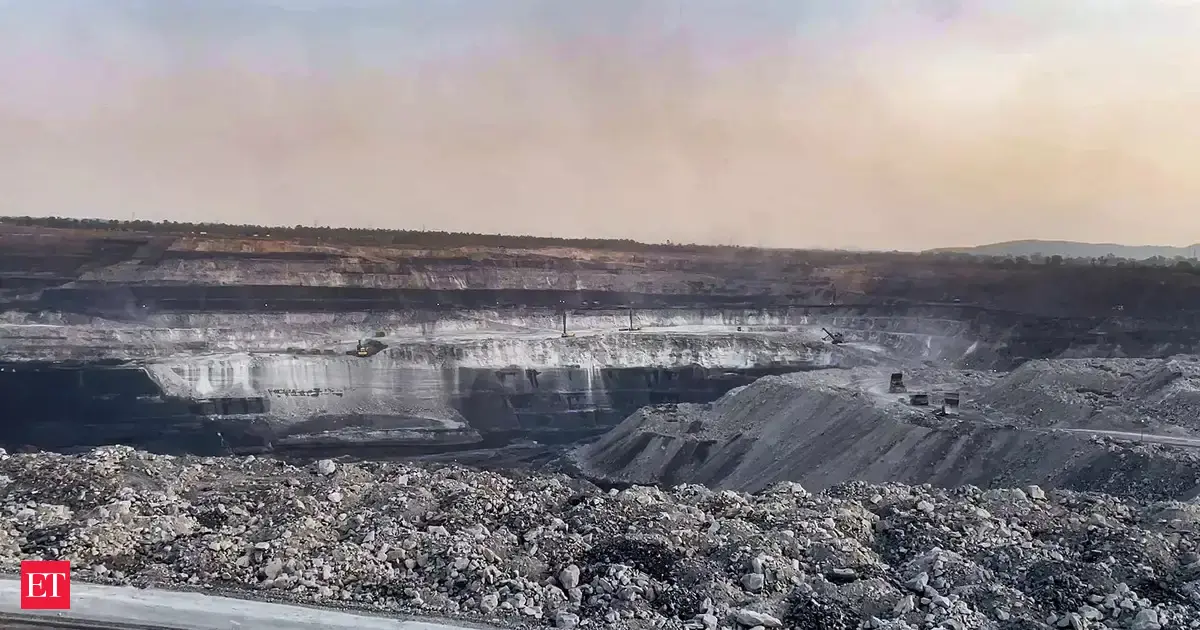
India has sufficient coal stocks to meet electricity demand, with 42.8 million tonnes available at thermal power plants as of July 12, enough for 14 days at 85% plant load factor, the government informed the Rajya Sabha. Coal-based plants, with a capacity of 230.8 GW, supplied nearly 70% of the country's electricity between April and June, while coal supplies are being monitored daily by an inter-ministerial committee. View More
India has adequate coal stocks at thermal power plants to meet electricity demand, with 42.8 million tonnes (MT) available as of July 12, 2026, sufficient for 14 days at 85 per cent plant load factor (PLF), the Ministry of Power said on Monday. The Ministry said coal-based generation capacity, including lignite-based capacity, stood at around 230.8 GW and accounted for 69.54 per cent of total electricity supplied between April and June 2026. During non-solar peak demand hours, maximum generation from these plants reached about 188.8 GW, or nearly 75 per cent of the total generation of 251.4 GW. "Also, sufficient coal is being received at present by the Thermal power Plants to meet the daily demands," the Ministry said in a written reply in the Rajya Sabha. The government said coal supply to thermal power plants is being monitored daily through a joint committee comprising the Ministry of Power, the Railways and the Ministry of Coal. Priority has also been accorded to coal rakes and dispatches to power houses. An Inter-Ministerial Committee comprising the Chairman of the Railway Board and the Secretaries of the Ministries of Coal and Power is also meeting regularly to review coal supplies to thermal power plants, the press release mentioned. Live Events The Ministry said scheduled maintenance of thermal units is planned in advance, taking into account the demand scenario for different months. "It is a standard practice to minimize scheduled maintenance during the peak months," it said, adding that the Central Electricity Authority monitors maintenance schedules and permits deferment on a case-to-case basis when increased demand requires such action. The government has also taken steps to improve grid flexibility and integrate renewable energy into the power system. The Central Electricity Authority (Flexible Operation of Coal-based Thermal Power Generating Units) Regulations, 2023 mandate coal-based thermal power units to achieve a minimum technical level of 40 per cent in accordance with the phasing plan specified by the CEA. During FY2025-26, 9,470 MW of thermal capacity was added, while another 2,260 MW has been commissioned during the current financial year. Energy storage is also being expanded to support the grid during non-solar hours. Around 2,669 MW of Battery Energy Storage Systems and 7,426 MW of Pumped Storage Projects have been commissioned so far. These systems store surplus power generated during solar hours and utilise it primarily when solar generation is unavailable. The information was given by Minister of State for Power Shripad Naik in a written reply in the Rajya Sabha. .Pbanner{display:flex;justify-content:space-between;align-items:center;background-color:#ec1c40;margin-top:20px;padding:5px 10px;border-radius:4px;color:#fff;line-height:10px;width: 100%;box-sizing: border-box} .Pbannertext{display:flex;align-items:center;font-size:16px;font-weight:600;font-family:'Montserrat';} .Pbannertext img{height:20px;margin:0 6px} .Pbannerbutton a{display:flex;align-items:center;background-color:#fff;color:#ec1c40;text-decoration:none;font-weight:600;padding:4px 8px;border-radius:6px;font-size:15px;font-family:'Montserrat';} .Pbannerbutton img{height:20px;margin-right:6px} .Pbannerbutton a:hover{background-color:#f7f7f7} Add as a Reliable and Trusted News Source Add Now! (You can now subscribe to our Economic Times WhatsApp channel) (You can now subscribe to our Economic Times WhatsApp channel)
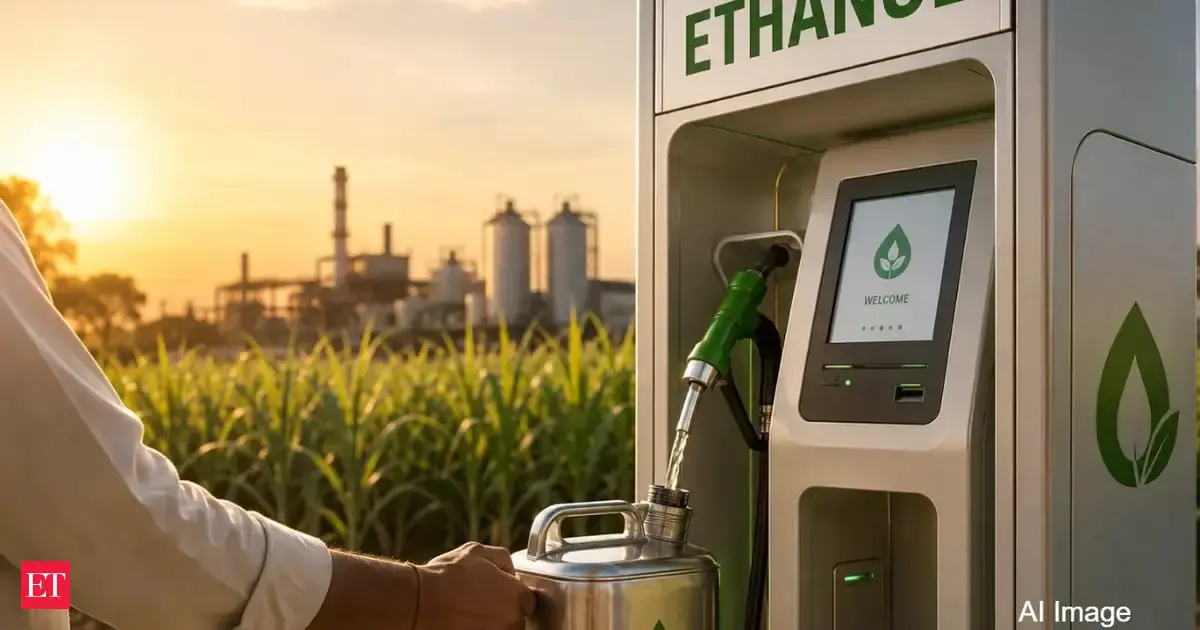
India's ethanol policy is entering a new phase as the government explores ethanol ATMs, ethanol cooking fuel, sustainable aviation fuel (SAF), exports and flex-fuel vehicles after achieving nationwide E20 petrol rollout. With ethanol production capacity outpacing current demand, policymakers are seeking new markets to absorb surplus capacity and expand India's biofuel ecosystem. View More
India's ethanol story is entering a new phase. For more than a decade, the focus was on blending ethanol into petrol and reducing dependence on imported crude oil. Today, policymakers are looking far beyond the fuel tank. ET has reported that the government is working on a framework to introduce ethanol as a mainstream cooking fuel and is even considering a retail model where consumers could buy ethanol through dedicated " ethanol ATMs " in canisters for use in kitchen stoves. The proposal may sound futuristic, but it points to a larger shift underway in India's biofuel strategy. Also Read: Ethanol could soon make its way to Indian kitchens India has already achieved nationwide E20 rollout ahead of schedule. Yet instead of slowing down, the search for new ethanol applications is accelerating. Cooking fuel, flex-fuel vehicles, sustainable aviation fuel and exports are all moving up the agenda. Beneath all these initiatives is the fact that India has built an ethanol production ecosystem that is becoming larger than the demand currently available to absorb it even though the demand is seen to grow fast in near future. The success that created a new challenge The ethanol blending programme has been one of the most ambitious energy initiatives undertaken by the Narendra Modi government. Ethanol blending in petrol has climbed from barely 1.5% a decade ago to 20%, helping reduce crude oil imports, improve farm incomes and create a large domestic biofuel industry. India achieved the E20 target years ahead of schedule and is already discussing the next stage of biofuel adoption. Since 2014-15, ethanol blending has helped save more than Rs 1.4 lakh crore in foreign exchange while generating additional income for farmers and distilleries. The industry responded to these policy signals with massive investments. Sugar mills expanded distillation capacity. Grain-based ethanol producers entered the market aggressively. New projects came up across Uttar Pradesh, Bihar, Maharashtra and several other states. The result is that India may now be facing an ethanol capacity overhang. Live Events Also Read: India's ethanol surplus spurs export push amid E20 backlash The numbers that explain everything The push for ethanol as a cooking fuel makes much more sense when viewed through the lens of capacity. According to a May report by CareEdge Ratings, India's ethanol production capacity has already crossed 20 billion litres annually. Another 4 billion litres of capacity is expected to come onstream during the current financial year, taking total installed capacity to roughly 24 billion litres. Against that, the government's E20 blending programme consumes about 11 billion litres a year. Liquor manufacturers, pharmaceutical companies and chemical producers account for another 3-3.5 billion litres of demand. That still leaves nearly 7 billion litres of unutilised capacity. Industry executives have also begun exploring export opportunities in countries such as Nepal, Bangladesh and Indonesia, which have blending targets but insufficient domestic production capacity. To be sure, India is not necessarily sloshing about in a glut of ethanol. It is sitting on distilleries and investments capable of producing far more ethanol than existing markets currently require. That is why the conversation has shifted from blending targets to consumption targets. Earlier this year, ET reported that distillery capacity was growing much faster than incremental demand under the E20 programme. With discussions around raising the blending cap beyond 20% moving slowly, producers and policymakers have been forced to think beyond petrol. Why the kitchen suddenly matters The proposed move into cooking fuel could potentially open one of the largest new demand pools available to ethanol. India remains heavily dependent on LPG for household cooking. Although domestic production has increased, imports continue to account for a significant share of demand. Every spike in global energy prices affects both the country's import bill and the government's subsidy calculations. Ethanol offers an attractive alternative from a policymaker's perspective. It is produced domestically and supports farmers and rural industry. It reduces dependence on imported fuels. It can also be distributed through a decentralised retail model rather than relying entirely on LPG cylinders. According to the ET report, policymakers are exploring dedicated dispensing points or ethanol ATMs where consumers could refill canisters for specially designed cooking stoves. Such a system would create an entirely new retail ecosystem for ethanol. Even if adoption remains limited initially, the significance lies elsewhere. The proposal shows that ethanol is no longer being viewed merely as a blending agent for petrol. It is being positioned as a standalone energy source. Exports emerge as another outlet Domestic consumption is not the only answer being explored. India is increasingly looking at ethanol exports to neighbouring countries that have blending mandates but lack sufficient feedstock or distillation capacity. Nepal, Bangladesh and Indonesia have all emerged as potential markets. For a country that until recently worried about ethanol shortages, the idea of becoming a regional ethanol supplier marks a dramatic shift. The export option is becoming more important because large investments have already been made across the ethanol value chain. Distilleries that were built to serve a rapidly expanding blending programme now need assurance that demand will continue growing. Aviation could become ethanol's most lucrative market Cooking fuel may be the latest idea, but aviation could eventually emerge as one of the most important new destinations for Indian ethanol. In April this year, the government amended aviation fuel regulations to allow Sustainable Aviation Fuel (SAF) to be blended with conventional Aviation Turbine Fuel. It also approved a roadmap that envisages 1% SAF blending for international flights by 2027, rising to 2% in 2028 and 5% by 2030. The move is part of India's effort to reduce emissions from aviation while building a domestic SAF industry. What makes this relevant for the ethanol industry is the production pathway being favoured by many companies. One of the recognised routes for producing sustainable aviation fuel is the alcohol-to-jet process, which converts ethanol into jet fuel. In other words, ethanol is no longer being viewed only as a transport fuel additive. It is increasingly being positioned as a feedstock for an entirely new category of fuel. The industry has already begun investing on that assumption. India's first ethanol-to-jet fuel plant is being developed near Visakhapatnam by NTPC Green Energy and GPS Renewables. The facility is expected to produce around 1,800 tonnes of sustainable aviation fuel annually using ethanol-based technology. For policymakers, SAF offers something that petrol blending and cooking fuel do not. Airlines across the world are under growing pressure to lower emissions and are willing to pay a premium for sustainable aviation fuel. If ethanol can find its way into aviation at scale, it could create a high-value market for producers at a time when domestic capacity is running ahead of demand. CAFE-III will kick off the next phase The government's recently released draft Corporate Average Fuel Efficiency (CAFE)-III norms provide another clue about the direction of policy. For the first time, the framework proposes incentives linked to ethanol and other biofuels. Traditionally, discussions around fuel-efficiency norms have revolved around electric vehicles. The latest proposals suggest policymakers are increasingly interested in creating a broader ecosystem where ethanol, flex-fuel vehicles and other biofuels play a larger role. The significance of this shift should not be underestimated. Once E20 became a reality, the next challenge was always going to be demand creation. CAFE-III appears designed, at least in part, to ensure that future vehicle technologies can absorb more ethanol. From a sugar policy to an energy strategy Perhaps the most important development is that ethanol is no longer just a by-product of the sugar industry. Grain-based ethanol has expanded rapidly and maize has emerged as a major feedstock. According to industry data, grain-based sources now account for a majority of ethanol supplies. The ethanol ecosystem increasingly includes grain processors, distilleries, technology providers and fuel retailers alongside traditional sugar mills. Shift away from sugarcane can also alleviate ecological concerns as sugarcane is considered a water-intensive crop. Once ethanol was part of sugar policy and now it has evolved to energy policy. That shift is visible in the range of sectors now being discussed. Ethanol is being considered for transportation, cooking, exports and aviation fuel. Every new application serves the same underlying purpose of creating demand for a production ecosystem that has already been built. The real story after E20 The proposed ethanol ATM network may or may not become commonplace across India. Ethanol stoves may or may not challenge LPG in a meaningful way. Sustainable aviation fuel may take years to scale up. But all these initiatives point in the same direction. India's ethanol programme has reached a stage where the challenge is no longer producing enough fuel as an excess capacity is in place. The challenge is creating enough demand. With capacity already above 20 billion litres a year and heading towards 24 billion litres, while existing domestic consumption absorbs only a part of that potential output, policymakers are now looking everywhere for the next consumer. Ethanol ATMs, exports, flex-fuel vehicles and sustainable aviation fuel are all pieces of the same puzzle. The country's distilleries were built for a future larger than E20, and policymakers are now trying to create that future. .Pbanner{display:flex;justify-content:space-between;align-items:center;background-color:#ec1c40;margin-top:20px;padding:5px 10px;border-radius:4px;color:#fff;line-height:10px;width: 100%;box-sizing: border-box} .Pbannertext{display:flex;align-items:center;font-size:16px;font-weight:600;font-family:'Montserrat';} .Pbannertext img{height:20px;margin:0 6px} .Pbannerbutton a{display:flex;align-items:center;background-color:#fff;color:#ec1c40;text-decoration:none;font-weight:600;padding:4px 8px;border-radius:6px;font-size:15px;font-family:'Montserrat';} .Pbannerbutton img{height:20px;margin-right:6px} .Pbannerbutton a:hover{background-color:#f7f7f7} Add as a Reliable and Trusted News Source Add Now! (You can now subscribe to our Economic Times WhatsApp channel) (You can now subscribe to our Economic Times WhatsApp channel)