
Latest Sectors News

The applications come after the Coal Ministry rejected reports last week that the scheme had failed to attract industry interest View More

The Centre's scheme received seven applications from Adani Enterprises, NTPC, Talcher Fertilisers, Gallantt Ispat and Shyam Sel & Power for projects in urea, syngas and synthetic gas View More

The Kanohar Electricals IPO opened today, September 8, 2026, and will remain accessible for a span of three days. This book-built offering, valued at Rs 1,055.74 crore, includes both fresh shares and an offer for sale. Proceeds from the IPO are earmarked for enhancing capital expenditure and meeting working capital demands. View More
The much-awaited Kanohar Electricals IPO opened for subscription today, September 8, 2026, giving investors a three-day window to place their bids until September 10. Kanohar Electricals IPO is a book-built issue worth Rs 1,055.74 crore, comprising a fresh issue of 47.47 lakh shares worth Rs 300 crore and an offer for sale (OFS) of 1.20 crore shares amounting to Rs 755.74 crore. The IPO price band has been fixed at Rs 601–Rs 632 per share, while the lot size is 23 shares. At the upper end of the price band, retail investors will need to shell out a minimum of Rs 14,536 for one lot. Kanohar Electricals IPO opens for subscription on Sep 8, 2026 and closes on Sep 10, 2026. The allotment for the Kanohar Electricals IPO is expected to be finalized on Sep 11, 2026. Kanohar Electricals IPO will list on NSE and BSE with a tentative listing date fixed as Sep 16, 2026. Nuvama Wealth Management Limited and IIFL Capital Services Limited are the book-running lead managers for the issue, while MUFG Intime India Private Limited is acting as the registrar. Live Events Kanohar Electricals IPO GMP Today Kanohar Electricals IPO is commanding a GMP of Rs 196 per share, or around 31% over the upper end of the IPO price band of Rs 632. Based on the latest grey-market premium, the estimated listing price stands at Rs 828 per share. GMP Note: The Grey Market Premium (GMP) is an unofficial indicator of market sentiment and is not an exchange-regulated or guaranteed measure of the IPO's listing price. GMP can change before listing, and the actual listing price may differ significantly from the estimated price. IPO: Objects of the Issue Kanohar Electricals plans to use the net proceeds from the IPO primarily to fund its capital expenditure requirements, with an estimated allocation of Rs 64.18 crore. The company also proposes to deploy Rs 155 crore towards incremental working capital requirements. The remaining proceeds will be utilised for general corporate purposes. Overall, the company plans to utilise approximately Rs 219.18 crore from the issue proceeds towards these objectives. Financial Performance Kanohar Electricals reported a 45% year-on-year increase in total income, rising from Rs 457.30 crore in FY25 to Rs 662.86 crore in FY26. The company also recorded strong growth in profitability during the period. Profit after tax (PAT) nearly doubled, climbing 99% from Rs 65.12 crore in FY25 to Rs 129.73 crore in FY26, highlighting a significant improvement in its bottom line. About Kanohar Electricals Ltd. Incorporated in 1972, Kanohar Electricals Limited is an Indian transformer manufacturer serving the power transmission, railways, renewable energy and power distribution sectors. The Company operates across two segments: transformer manufacturing and EPC services. It is one of only four Indian manufacturers certified by RDSO to manufacture 100 MVA, 132 kV Scott transformers. Kanohar operates two manufacturing facilities in Meerut, Uttar Pradesh, with a combined transformer manufacturing capacity of 19,200 MVA as of March 31, 2026. The Company also has five regional offices across India and a workforce of 526+ employees. Should you subscribe? According to AnandRathi research report, "The company offers exposure to the structural growth in India’s power transmission and distribution sector, supported by rising grid investments, renewable energy integration and increasing demand for high-voltage transformers. However, the high customer concentration, dependence on the Transformer Manufacturing Business and government/transmission utility orders warrant a measured outlook. At the upper price band, the company is valued at 38.6x FY26 P/E and 28.0x EV/EBITDA, implying a post-issue market capitalization of Rs 50,046 million. While the valuation is at a premium to Transformers & Rectifiers (India) Limited at 32.2x P/E and 20.8x EV/EBITDA, the premium is supported by Kanohar’s superior recent growth and profitability profile. Accordingly, we recommend a “Subscribe – Long Term” rating for the issue. (Disclaimer: Recommendations, suggestions, views and opinions given by the experts are their own. These do not represent the views of The Economic Times) .Pbanner{display:flex;justify-content:space-between;align-items:center;background-color:#ec1c40;margin-top:20px;padding:5px 10px;border-radius:4px;color:#fff;line-height:10px;width: 100%;box-sizing: border-box} .Pbannertext{display:flex;align-items:center;font-size:16px;font-weight:600;font-family:'Montserrat';} .Pbannertext img{height:20px;margin:0 6px} .Pbannerbutton a{display:flex;align-items:center;background-color:#fff;color:#ec1c40;text-decoration:none;font-weight:600;padding:4px 8px;border-radius:6px;font-size:15px;font-family:'Montserrat';} .Pbannerbutton img{height:20px;margin-right:6px} .Pbannerbutton a:hover{background-color:#f7f7f7} Add as a Reliable and Trusted News Source Add Now! (You can now subscribe to our ETMarkets WhatsApp channel) (You can now subscribe to our ETMarkets WhatsApp channel)
Kanohar Electricals plans a ?300 crore IPO to boost transformer manufacturing capacity. The company's promoter stake will significantly decrease after the offering. Rising power demand and government initiatives are expected to benefit the business. However, significant customer and supplier concentration risks are present. Investors may observe financial performance post-listing before committing capital. View More
ET Intelligence Group: Kanohar Electricals, a transformer manufacturer , plans to raise ₹300 crore through a fresh issue to expand capacity and ₹755.7 crore through offer for sale. The promoter stake will fall to 74.9% after the IPO, including the pre-IPO anchor share sales to institutional investors from 99.7%. The company is expected to benefit from rising power demand and the government's push to expand electricity transmission. However, it faces significant customer and supplier concentration risks. Government entities accounted for 85% of revenue in FY26. Given these factors, investors may prefer to wait and watch the company's financial performance after listing. ET Bureau Business Incorporated in 1972, the company is a power equipment manufacturer focused primarily on transformers, with an EPC (engineering, procurement and construction) business providing solutions for substations and transmission lines. It caters to sectors such as power transmission, railways, renewable energy and power distribution. Transformer manufacturing contributed 83.4% to revenue in FY26, while EPC services accounted for the balance. It has two manufacturing facilities in Meerut, Uttar Pradesh with aggregate transformer manufacturing capacity of 19,200 MVA (Mega Volt-Amperes) as of March 2026, up from 15,000 MVA in FY24. Although capacity utilisation imporved to 46% in FY26 from 16.5% in FY24, it still remained low. Its order book increased to ₹1,818 crore as of March 2026 from ₹596 crore in FY24. The top five customers contributed 74% to revenue. On the supply side, its top three suppliers accounted for around 57% of raw material purchases. Read more: Ultravolt launch sparks sell-off in wire stocks; high-voltage players insulated Financials Revenue grew 54% annually to ₹653.8 crore in FY26 from ₹276.7 crore in FY24. Earnings Before Interest, Taxes, Depreciation and Amortisation (EBITDA) increased to ₹180.4 crore from ₹31.1 crore, while the EBITDA margin improved to 27.6% in FY26 from 11.2% in FY24, compared with peer range of 12%-27%. Net profit rose to ₹129.7 crore in FY26 from ₹17.8 crore in FY24. Return on equity increased to 42% in FY26 from 10.5% in FY24 compared with peer range of 19%-61%. Live Events Valuation The company seeks a price-earnings (P/E) multiple of 38.6 on post-IPO basis compared with a P/E of 33 for Transformers and Rectifiers, 81 for GE Vernova T&D India and 139 for Schneider Electric Infrastructure . .Pbanner{display:flex;justify-content:space-between;align-items:center;background-color:#ec1c40;margin-top:20px;padding:5px 10px;border-radius:4px;color:#fff;line-height:10px;width: 100%;box-sizing: border-box} .Pbannertext{display:flex;align-items:center;font-size:16px;font-weight:600;font-family:'Montserrat';} .Pbannertext img{height:20px;margin:0 6px} .Pbannerbutton a{display:flex;align-items:center;background-color:#fff;color:#ec1c40;text-decoration:none;font-weight:600;padding:4px 8px;border-radius:6px;font-size:15px;font-family:'Montserrat';} .Pbannerbutton img{height:20px;margin-right:6px} .Pbannerbutton a:hover{background-color:#f7f7f7} Add as a Reliable and Trusted News Source Add Now! (You can now subscribe to our ETMarkets WhatsApp channel) (You can now subscribe to our ETMarkets WhatsApp channel)
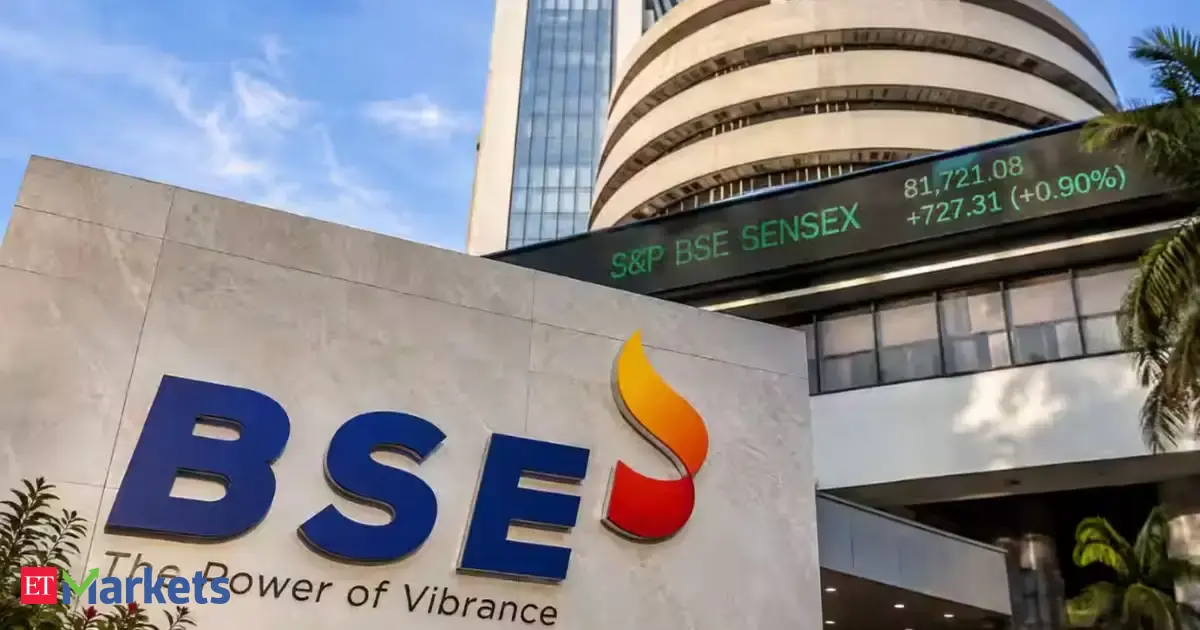
The BSE IPO index reached an all-time high, surging 35% in five months. Its SME counterpart also jumped 55%, marking a strong performance for recent listings. These gains significantly outpaced the broader market indices like Sensex and Nifty. However, the rally was concentrated, with a few stocks driving most of the gains. Retail and HNI investors are favoring fresh growth stories over established large-cap companies. View More
Mumbai: The BSE IPO index , a measure that tracks recent mainboard listings, surged 35% in the first five months of FY27, its strongest April-August performance in three years, to an all-time high on Monday, boosted by strong openings by a clutch of recent stock market debutants . The BSE SME IPO index jumped 55%, marking its best showing for the period in two years. The benchmark is 5% away from its record levels. The gains far outpaced the broader market. The Sensex and Nifty rose 6% each during April-August, while the BSE MidCap 150 gained 19% and the BSE SmallCap 250 climbed 29%. ET Bureau But the strong performance of the IPO indices masks a highly concentrated rally, with 15 stocks accounting for nearly 80% of the gains in the BSE's 73-stock IPO index. For BSE's 105-stock SME IPO index, 24 stocks contributed to about 89% of the rise in the benchmark The indices are designed to track relatively recent listings. A stock market debutant enters the BSE IPO index on the third day after listing and is generally removed after completing one year. In the case of the SME IPO index, a stock is included on the second day of listing and moves out after a year. An SME stock exits earlier if it migrates to the BSE Mainboard. Both indices are rebalanced monthly. Read more: Indian firms line up $7.7 billion in ECB proposals in July Live Events "Retail and HNI investors are opting for fresh growth stories over legacy large-cap names that carry FPI overhang, valuation baggage, and uncertain earnings visibility," said Rajesh Singla, CEO and fund manager at Alpha AMC & Planify. Of the 4661 points gained by the BSE IPO index between April and August, Meesho , Lenskart Solutions , Tata Capital , Billionbrains Garage Ventures, Rubicon Research, LG Electronics India, Physicswallah, Urban Company, Shadowfax Technologies, Sudeep Pharma, ICICI Prudential Assets, Aequs, Emmvee Photovoltaic Power, Fujiyama Power Systems and Clean Max Enviiro Energy Solutions together contributed 3,738 points. Of the 105 stocks in the BSE SME IPO index, 24 companies, including Zelio E Mobility, Indo SMC, Airfloa Rail Tech, Exato Tech, SK Minerals & Additives, LT Elevator, Aptus Pharma and Purple Wave Infocom, contributed 34,472 points to the index's 38,772-point rise, accounting for nearly 89% of the gains. The remaining 56 gainers added 6,520 points, while 25 stocks dragged the index down by 2,220 points. .Pbanner{display:flex;justify-content:space-between;align-items:center;background-color:#ec1c40;margin-top:20px;padding:5px 10px;border-radius:4px;color:#fff;line-height:10px;width: 100%;box-sizing: border-box} .Pbannertext{display:flex;align-items:center;font-size:16px;font-weight:600;font-family:'Montserrat';} .Pbannertext img{height:20px;margin:0 6px} .Pbannerbutton a{display:flex;align-items:center;background-color:#fff;color:#ec1c40;text-decoration:none;font-weight:600;padding:4px 8px;border-radius:6px;font-size:15px;font-family:'Montserrat';} .Pbannerbutton img{height:20px;margin-right:6px} .Pbannerbutton a:hover{background-color:#f7f7f7} Add as a Reliable and Trusted News Source Add Now! (You can now subscribe to our ETMarkets WhatsApp channel) (You can now subscribe to our ETMarkets WhatsApp channel)

India has signed a five-year fuel supply agreement with Mauritius under which IndianOil will meet the island’s entire import requirement of fuels, marking the first such long-term deal with a country outside South Asia and signalling India’s emergence as a trusted energy supplier in the Indian Ocean. View More
For years, India’s place in global energy was dominated by heavy dependence on imported crude on the one hand, and rising strength as a refiner and exporter of petroleum products on the other. On 20 August 2026, that story took another turn, when in Port Louis Indian Union Minister for Petroleum and Natural Gas Hardeep Singh Puri and Mauritius Minister of Commerce and Consumer Protection John Michaël Tzoun Sao Yeung Sik Yuen signed a government-to-government memorandum of understanding (MoU) on cooperation in the oil and gas sector, alongside a five-year sales and purchase agreement between IndianOil Corporation Limited and the State Trading Corporation of Mauritius. Under the agreement, IndianOil will supply the island nation’s entire import requirement of petrol, high-speed diesel, marine gas oil and aviation turbine fuel for the next five years, providing long-term supply certainty and greater price stability for an economy that imports every litre of its petroleum. This is the first time a country outside South Asia has signed such a long-term fuel supply arrangement with an Indian public sector oil company, marking a milestone in India’s transition from being a large energy buyer to becoming a trusted, long-term energy supplier. The MoU establishes a formal framework for bilateral cooperation in petroleum and gas, biofuels, sustainability and other emerging energy areas, while the five-year agreement between IndianOil and the State Trading Corporation operationalises that framework through a concrete supply commitment. IndianOil will meet Mauritius’s full import needs for petrol, diesel and aviation turbine fuel, with marine gas oil included to support bunkering and maritime services. The agreement builds on a 25-year relationship, with IndianOil (Mauritius) Limited, a wholly owned subsidiary of IndianOil, established in 2001, now running a chain of filling stations along with aviation, bunkering and lubricants businesses, and ranking as one of the largest petroleum companies in Mauritius by turnover. Alongside the MoU, IndianOil and Mauritian authorities announced plans to expand bunker fuel storage capacity at Mer Rouge and to cooperate on biofuels under the Global Biofuels Alliance. The sustained commitment is a testament to the continued work by the Indian Ministry of Petroleum and Natural Gas to deepen energy ties with Indian Ocean partners. Why this matters beyond the pumps Petroleum products account for the bulk of Mauritius’s primary energy requirement, and fuel imports represent a significant share of the country’s total import bill. Against that backdrop, a five-year contract that covers the entire import requirement of petrol, diesel and aviation turbine fuel is positioned to reduce exposure to spot-market volatility, supply disruptions and the kind of price spikes that can ripple through transport, fisheries, tourism and aviation, all pillars of the island’s economy. For IndianOil, the deal demonstrates that an Indian public sector refiner can lock in long-term business in a foreign market, competing on reliability, logistics and partnership rather than price alone. It also fits a broader pattern: Indian public sector companies are increasingly making a mark in long-term business in foreign markets, moving beyond domestic refining and distribution to become regional energy anchors. The strategic dimension is equally significant. Mauritius sits along key shipping lanes that connect India to East Africa and beyond, and securing a stable fuel supply relationship here strengthens India’s maritime footprint and creates a platform for deeper economic engagement with African markets. The planned bunker fuel storage expansion at Mer Rouge, together with IndianOil’s existing aviation and bunkering operations, positions Port Louis as a refuelling hub for vessels transiting the Indian Ocean. In practical terms, the agreement embeds India into the energy architecture of a region where multiple global players have long competed for influence, and gives New Delhi credible leverage in the form of assured fuel supply and infrastructure investment. Economic and bilateral trade implications India and Mauritius already enjoy deep economic ties, with India among the island’s top trading partners and a major source of tourism, investment and technical cooperation. By underwriting Mauritius’s fuel imports, India reduces the island’s vulnerability to external shocks and frees up foreign exchange that might otherwise be spent on hedging against price volatility or maintaining larger fuel inventories. For IndianOil, the five-year contract provides a predictable revenue stream and a base from which to expand into biofuels, lubricants and downstream services, while the MoU opens the door to joint ventures, technical assistance and training in petroleum and gas. Cooperation will not be limited to fossil fuels: Mauritius has set an ambition to increase the share of green sources in its energy mix, and IndianOil’s refining and blending capabilities could support that transition through ethanol, biodiesel and sustainable aviation fuel. Live Events What this heralds The Mauritius deal is an expression of a shift in India’s energy diplomacy. Where once the focus was on securing crude imports and diversifying sources, the emphasis now includes exporting refined products, building downstream partnerships and positioning Indian companies as reliable suppliers to neighbouring and Indian Ocean rim states. For IndianOil, the agreement could serve as a template for similar arrangements with other small island states and Indian Ocean rim countries, from the Seychelles to the Maldives and beyond. For India, it reinforces a narrative that is only beginning to take hold: that the country is not just a massive energy consumer, but also a credible, long-term energy partner capable of anchoring supply chains in its neighbourhood. The signing in Port Louis, the planned infrastructure expansion at Mer Rouge and the five-year supply commitment together mark a new chapter in a 25-year relationship, one that moves from presence to partnership, and from commercial engagement to strategic interdependence .Pbanner{display:flex;justify-content:space-between;align-items:center;background-color:#ec1c40;margin-top:20px;padding:5px 10px;border-radius:4px;color:#fff;line-height:10px;width: 100%;box-sizing: border-box} .Pbannertext{display:flex;align-items:center;font-size:16px;font-weight:600;font-family:'Montserrat';} .Pbannertext img{height:20px;margin:0 6px} .Pbannerbutton a{display:flex;align-items:center;background-color:#fff;color:#ec1c40;text-decoration:none;font-weight:600;padding:4px 8px;border-radius:6px;font-size:15px;font-family:'Montserrat';} .Pbannerbutton img{height:20px;margin-right:6px} .Pbannerbutton a:hover{background-color:#f7f7f7} Add as a Reliable and Trusted News Source Add Now! (You can now subscribe to our Economic Times WhatsApp channel) (You can now subscribe to our Economic Times WhatsApp channel)

The project will include low-temperature sludge drying as part of its treatment process for efficient sludge management at the complex View More
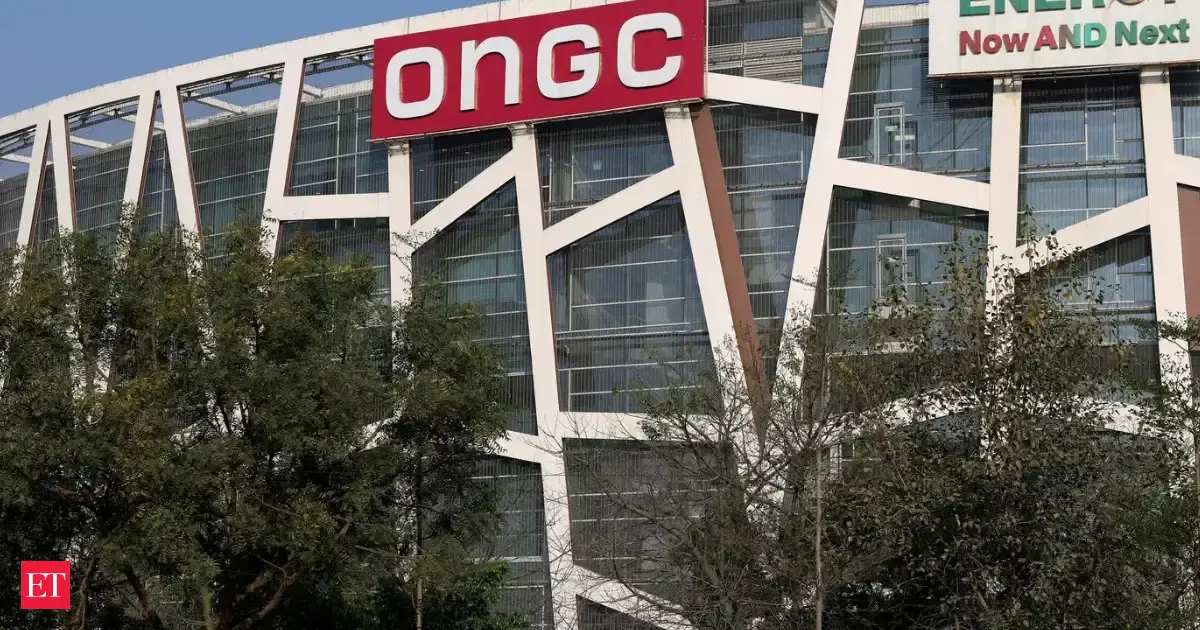
Seven candidates have been shortlisted for the ONGC chairman and managing director post, with a second round of interviews expected this week. The shortlist includes Oil India CMD Ranjit Rath, ONGC Videsh MD Rajarshi Gupta and senior executives from ONGC, OVL, MRPL and Indian Oil. View More
New Delhi, Seven candidates shortlisted for the top job at state-run Oil and Natural Gas Corporation (ONGC) are likely to appear before a search-cum-selection committee this week, as the government moves ahead with choosing a successor to Chairman and Managing Director Arun Kumar Singh , people familiar with the selection process said. The second round of interviews comes after 18 applicants were screened on August 18, with the field subsequently narrowed to seven. The selection process has drawn attention over a one-off relaxation in the age eligibility criterion, allowing candidates up to 59 years of age - a departure from the existing 58-year limit and the recent relaxation to 60 years in the case of state-run power producer NTPC, as well as ONGC, in 2022. Oil India Ltd Chairman and Managing Director Ranjit Rath, who is seen as a frontrunner, is among those shortlisted. Rath, 54, is making a second attempt at the ONGC top job after being shortlisted last year, when the government opted instead to extend Singh's tenure. The other shortlisted candidates include ONGC Videsh Ltd Managing Director Rajarshi Gupta, 59; ONGC Director for Technology and Field Services Vikram Saxena; ONGC Director for Strategy and Corporate Affairs Satyam Kumar; OVL Director for Operations Dulal Halder; MRPL Director (Finance) Devendra Kumar and Indian Oil Corporation Director (Marketing) SP Shrivastava, according to people familiar with the process. Live Events The government earlier relaxed the age criterion for the ONGC appointment, allowing applications from candidates who had not attained 59 years on the date of occurrence of the vacancy - December 7, 2026, when Singh's extended tenure ends. Under the existing norms, the upper age limit is generally 58 years for internal candidates and 57 years for external candidates, while the superannuation age for public-sector executives is 60. Gupta's shortlisting has raised questions because he will be about 59 years and five months old on December 7, making him ineligible under a literal reading of the 59-year condition in the advertisement. Candidates who chose not to apply because they would cross the age limit by the date of vacancy could challenge the selection process if Gupta is ultimately appointed, the people said. The advertisement states that "the maximum age of an applicant should be 59 years on the date of vacancy" and that "any employment or extension beyond 60 years would be on a contractual basis". The selection will be made by a three-member search-cum-selection committee comprising the chairperson of the Public Enterprises Selection Board (PESB), the oil secretary and a former Indian Oil chairman as an outside expert. The government also modified the educational qualification criteria through an addendum, specifying that applicants should be first-class graduates with degrees in engineering, chartered accountancy, or cost accountancy, or postgraduates or graduates with a full-time MBA/PGDIM from a leading institute. Rath has headed Oil India, India's second-largest state-run oil and gas explorer, since August 2022. He had applied for the top job at ONGC last year also, but the government chose to give Singh another one year at the helm. The latest selection process follows a series of changes at the top of ONGC. The company was without a full-time chief between April 2021 and December 2022, and was led by three interim chairmen before Singh was appointed. The government had also relaxed eligibility rules when Singh was selected in 2022. The search committee picked him in August that year, when he was less than four months short of 60. He took charge of ONGC in December 2022 after retiring as chairman and managing director of Bharat Petroleum Corporation Ltd. Singh was granted a rare one-year extension last year, allowing him to remain at the helm until December 2026. He will be more than 64 years old when his extended tenure ends. The ONGC chairman will be responsible for the overall management and strategic direction of the country's largest oil and gas producer, including boosting revenue and profitability, driving exploration and production, expanding into new energy and petrochemicals through acquisitions and joint ventures, and overseeing technology adoption. .Pbanner{display:flex;justify-content:space-between;align-items:center;background-color:#ec1c40;margin-top:20px;padding:5px 10px;border-radius:4px;color:#fff;line-height:10px;width: 100%;box-sizing: border-box} .Pbannertext{display:flex;align-items:center;font-size:16px;font-weight:600;font-family:'Montserrat';} .Pbannertext img{height:20px;margin:0 6px} .Pbannerbutton a{display:flex;align-items:center;background-color:#fff;color:#ec1c40;text-decoration:none;font-weight:600;padding:4px 8px;border-radius:6px;font-size:15px;font-family:'Montserrat';} .Pbannerbutton img{height:20px;margin-right:6px} .Pbannerbutton a:hover{background-color:#f7f7f7} Add as a Reliable and Trusted News Source Add Now! (You can now subscribe to our Economic Times WhatsApp channel) (You can now subscribe to our Economic Times WhatsApp channel)

Ten days ahead of the next Federal Reserve meeting, the Trump administration looks to be in a full-court press to halt a rate hike in its tracks. View More
President Donald Trump speaks with the new chairman of the Federal Reserve, Kevin Warsh, after a swearing-in ceremony in the East Room of the White House, in Washington, May 22, 2026.Anna Moneymaker | Getty Images Ten days ahead of a meeting in which the Federal Reserve will likely consider raising interest rates, the Trump administration looks to be in a full-court press to halt the hike in its tracks.In the past week, the president, vice president, Treasury secretary and one of the president's senior economic counselors have all urged the Fed not to raise rates and, in some cases, to cut them â an unusually broad public pressure campaign even by the standards of Trump's long-running criticism of the central bank.While President Donald Trump has avoided directly criticizing his new Fed chairman Kevin Warsh, as he did former chair Jay Powell, he escalated the pressure Friday by threatening to halt trade with countries that run trade surpluses with the U.S. unless the Fed cuts interest rates. Trump had never before directly threatened tariffs if the Fed didn't lower rates. The president's post was followed by an interview that senior economic counselor Peter Navarro gave to former Trump advisor Steve Bannon on Friday in which he warned that a rate hike would be "careless" and "would hit precisely the sectors America needs to prosper most." He called the members of the rate-setting Federal Open Market Committee "clowns" and said Warsh is trying to "do the right thing." Earlier in the week, Vice President JD Vance said, "We believe that the Fed should be lowering interest rates." He added, "We're doing a lot of things to try to keep those interest rates down, but it would be nice to have some help from the Federal Reserve." And Treasury Secretary Scott Bessent, in a CNBC interview, noted that the Fed typically doesn't raise rates during a supply shock until there are second- or third-order inflationary effects. watch nowVIDEO13:2113:21Watch CNBC's full interview with Treasury Secretary Scott BessentSquawk on the Street The administration's pressure comes at a difficult time for Warsh. Markets are barely pricing in a rate hike for the Sept. 15-16 meeting, at about 60% probability, bolstered somewhat by a strong jobs report Friday. The meeting comes just two months before the November midterm elections, in which polls show the administration faces widespread voter dissatisfaction with higher prices and interest rates. But questions also remain about the effect the Trump administration's pressure campaign will have on Warsh. The Wall Street Journal reported last month that Trump talked to Warsh repeatedly, a report publicly backed by several of his aides. However, the president himself denied it, saying he had spoken only once to Warsh while in office.Warsh himself has said the president has had no impact on his decisions and, in July congressional testimony, cited the Fed holding rates steady and not cutting as evidence of the central bank's independence. At the same time, Warsh has said that the president and other politicians have a right to comment on Fed policy. In May 2019, during Trump's first term, Vice President Mike Pence, Treasury Secretary Steve Mnuchin and economic advisor Larry Kudlow all weighed in on the need for the Fed to consider cutting rates. The Fed did not immediately respond to that pressure but did end up cutting rates two months later. The administration's argument was similar: Growth itself does not cause inflation, and additions to the supply side of the economy through tax cuts and strong capital investment expand the economy's capacity to grow without causing inflation. On Friday, Trump said in a post on Truth Social that because the economy is growing so much, the U.S. should have the lowest interest rates in the world.Administration officials have emphasized the recent three-month annualized rate of the cor Consumer Price Index (CPI) running at 1.6%. That compares with the three-month annualized rate of the core Personal Consumption Expenditures (PCE) price index, the Fed's preferred indicator, at just over 3%.But several Fed officials have expressed concern that inflation has run substantially above the Fed's 2% target for five years, and that there are signs of inflation beyond Trump's tariffs and rising energy costs due to the U.S. war with Iran. Three dissented â Beth Hammack, Neel Kashkari and Lorie Logan â in favor of a quarter-point hike at the July meeting, where interest rates were left unchanged.Warsh, in his speech in Jackson Hole, said the Fed's focus needs to be squarely on inflation, noting that 54% of the 199 components in the PCE price measure had risen more than 3% over the previous 12 months. By rejecting the connection between growth and inflation, the administration is challenging a central concept in economics: that an economy growing beyond its productive capacity risks generating inflation. The most famous of these ideas, the Phillips Curve, sees tight labor markets and rising wages as the major conduit for inflation. That's likely why markets raised the probability of a Fed rate hike after Friday's strong jobs report. Yet wages were well contained in the report: Average hourly earnings rose 0.3% in August and 3.1% from a year earlier, while the unemployment rate remained at 4.1%. watch nowVIDEO6:3606:36U.S. payrolls rose 162,000 in August, much more than expected; unemployment rate at 4.1%Squawk Box The administration's argument that increasing the supply side of the economy raises capacity and offsets inflationary pressures could be accurate, but it has a timing problem. The flood of investment into artificial intelligence is projected to eventually increase productivity. But current data shows demand for the equipment needed to build out AI infrastructure is raising prices.Markets will be focused on the Friday CPI report, which Fed officials have said will be a critical gauge of whether inflation is easing or still accelerating â and it could decide whether the Fed hikes or holds. No FOMC member has recently discussed rate cuts publicly. Choose CNBC as your preferred source on Google and never miss a moment from the most trusted name in business news.

Talcher Fertilisers and NTPC have applied for the innovative coal gasification scheme launched by the government. This initiative focuses on transforming domestic coal into products of greater value, thus supporting India's strategy to lessen dependency on imports. The initial application window remains open until September 7, and more submissions are anticipated as the deadline nears for this significant project. View More
The coal ministry on Saturday said Talcher Fertilisers Ltd and NTPC Ltd have informed that they have submitted applications under the government's coal and lignite gasification scheme. The first application window under the scheme is open until September 7. The ministry said it was also in discussions with other prospective applicants at different stages of project preparation and are in the process of finalising their proposals. The scheme for promotion of surface coal and lignite gasification projects was approved by the Cabinet on May 13 with a total financial outlay of ₹37,500 crore. It is aimed to promote the conversion of domestic coal and lignite into higher-value products, including syngas, methanol, ammonia and urea. The request for proposals under the scheme was issued on July 7. The government expects more applications as the deadline approaches. Applications will be invited through rolling rounds. Once one application window closes, the next round will open from the following day and remain open for two months, allowing companies additional time to prepare projects. The scheme is part of the government's broader effort to expand coal gasification in India and cut the dependence on imports of products that can potentially be produced from domestic coal and lignite. Gasification converts coal into syngas, which can then be used to produce chemicals, fertilisers, fuels and other industrial products. .Pbanner{display:flex;justify-content:space-between;align-items:center;background-color:#ec1c40;margin-top:20px;padding:5px 10px;border-radius:4px;color:#fff;line-height:10px;width: 100%;box-sizing: border-box} .Pbannertext{display:flex;align-items:center;font-size:16px;font-weight:600;font-family:'Montserrat';} .Pbannertext img{height:20px;margin:0 6px} .Pbannerbutton a{display:flex;align-items:center;background-color:#fff;color:#ec1c40;text-decoration:none;font-weight:600;padding:4px 8px;border-radius:6px;font-size:15px;font-family:'Montserrat';} .Pbannerbutton img{height:20px;margin-right:6px} .Pbannerbutton a:hover{background-color:#f7f7f7} Add as a Reliable and Trusted News Source Add Now! (You can now subscribe to our Economic Times WhatsApp channel) (You can now subscribe to our Economic Times WhatsApp channel)