
Latest Sectors News

BHEL approved a ?65 crore investment in its joint venture NBPPL with NTPC Ltd to settle urgent liabilities and maintain operations. The investment aims to be completed in FY2026-27, and no regulatory approvals are needed. BHEL will retain a 50% shareholding in NBPPL. View More

Bharat Heavy Electricals Limited has approved an equity investment of sixty-five crore rupees. This investment will be made in its joint venture with NTPC Limited. The joint venture company is named NTPC BHEL Power Projects Private Limited. This entity focuses on power plant contracts and equipment manufacturing. View More
New Delhi: State-owned engineering firm Bharat Heavy Electricals Ltd (BHEL) on Monday said that its board has approved further equity investment of Rs 65 crore in NTPC BHEL Power Projects , a joint venture with NTPC Ltd . The main objective of the JVC is to carry out EPC contracts for power plants and other infrastructure projects, as well as manufacture and supply of equipment in India and abroad. "Board of Directors in its Meeting held today (September 14, 2026) has, inter-alia, approved further investment of Rs 65 crore (in one or more tranches) as BHEL's equity contribution in NTPC BHEL Power Projects Private Limited (NBPPL), BHEL's Joint Venture with NTPC Ltd," an exchange filing said. Also read: India approves 18-hour export of power a day to Nepal till year-end NBPPL is a joint venture company of BHEL and NTPC Limited with 50:50 equity shareholding. Live Events The equity investment will be made at the face value by both the promoter companies, and the same is done at arm's length. NBPPL was incorporated in April 2008 to execute EPC contracts for power plants and manufacture power plant equipment. BHEL stated that the 50 per cent shareholding is maintained. In 2025-26, NBPPL's turnover was Rs 1.04 crore (provisional), in 2024-25, it was Rs 3.48 crore and Rs 18.19 crore in 2023-24. .Pbanner{display:flex;justify-content:space-between;align-items:center;background-color:#ec1c40;margin-top:20px;padding:5px 10px;border-radius:4px;color:#fff;line-height:10px;width: 100%;box-sizing: border-box} .Pbannertext{display:flex;align-items:center;font-size:16px;font-weight:600;font-family:'Montserrat';} .Pbannertext img{height:20px;margin:0 6px} .Pbannerbutton a{display:flex;align-items:center;background-color:#fff;color:#ec1c40;text-decoration:none;font-weight:600;padding:4px 8px;border-radius:6px;font-size:15px;font-family:'Montserrat';} .Pbannerbutton img{height:20px;margin-right:6px} .Pbannerbutton a:hover{background-color:#f7f7f7} Add as a Reliable and Trusted News Source Add Now! (You can now subscribe to our Economic Times WhatsApp channel) (You can now subscribe to our Economic Times WhatsApp channel)

The JVC aims to execute EPC contracts for power plants and infrastructure projects and to manufacture and supply equipment both in India and abroad View More
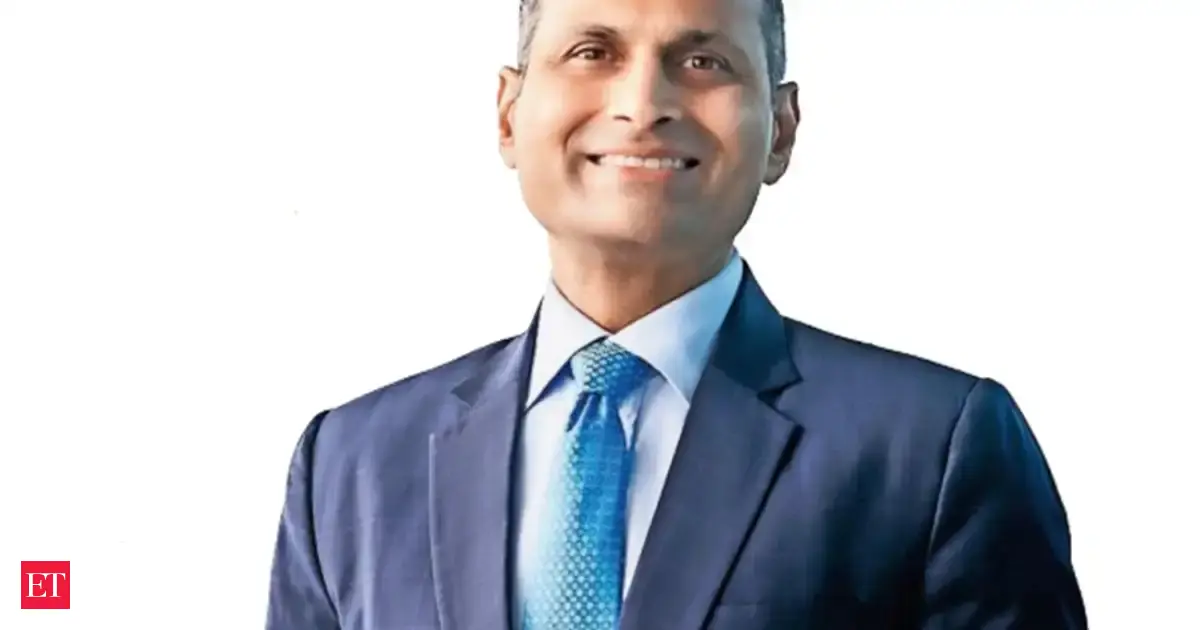
We reorganised the company around industrial products, which are product-related businesses; industrial infra, which is project-related; green solutions; and chemicals. These became four parts of Thermax, and that is how we now operate and report the company, says Ashish Bhandari. View More
Thermax's push into new-age energy and clean-tech businesses has not been without missteps. But it has learnt from its mistakes and has begun to put the house in order. Its MD & CEO Ashish Bhandari details the transformation and the direction it is taking in an interview with ET. Edited excerpts: Over the past few years Thermax has had a bumpy ride. Why and how are you fixing it? Right after Covid, it was also a period when, for several years, we had not grown. The question was: how would we want to look at the future? With that idea, in 2020-21, we wanted to create Thermax as a trusted partner to our customers in energy transition. That was an important statement because it meant we would actively work on energy transition and everything around energy efficiency . What did not go well for Thermax? On the industrial project side, we took a couple of government projects that involved a high amount of civil and construction work. We did not do a good job of execution or of managing the customer. The last time we did a project was in 2022. We are cutting down on businesses that are long-cycle, government-related, L1 tenders and have high civil and construction requirements. Live Events Also Read: L&T bags offshore order of up to Rs 5,000 cr from ONGC for India's west coast development projects Is that only for government contracts or others too? Even otherwise. There are systematic changes taking place. Executing projects is getting tougher if you do it the old way. Labour in India is becoming tougher to find, while weather-related issues are getting worse. Even if you are executing a project in Gujarat, you suddenly get rains that would traditionally happen once in a decade or so. They are happening more frequently. Migrant labour that you could trust is very transient now. Your ability to train them, build them up, and get them to be productive is therefore no longer something you can take for granted. You entered the bio-CNG space too, which did not go well. What is the direction it is taking? We entered this space with the expectation that we could execute the plan with a certain capability, based on achieving a certain feedstock availability. Within that was 'parali' grass. We set up projects, but the feedstock was not what was promised. And therefore, the output was not what we had committed. In trying to get this right, we lost some amount of money. For three years now, we have not taken a single order in bio-CNG. But now, we are ready. Then there is First Energy, the platform we started for renewables. We could have executed it better. It involved getting into right-of-way issues and working with state governments. That is something we are realising is not something we excel at. Also Read: Siemens Energy India advances cleaner high-voltage grid infrastructure with its Blue portfolio How did you overcome these setbacks? We reorganised the company around industrial products, which are product-related businesses; industrial infra, which is project-related; green solutions; and chemicals. These became four parts of Thermax, and that is how we now operate and report the company. When we did this, a few things started to work well and a few less so. Historically, Thermax is mostly a boiler company for the common man. What are the building blocks that you are putting in place now? There are numerous stories that are working extremely well. Even in the last four years, each year we have been able to grow our top line and bottom line year-on-year. Despite the first quarter we had this year, we expect to recover nicely. Today, we have a backlog of Rs 14,000 crore, which is by far the highest we have had in the last 12 months. After the Covid year, this is the highest growth we have had on orders side. As that starts to show up in the backlog, the numbers will start to look better. We also really like the quality of orders we have had in the last couple of years. We have also made a big shift into biomass, biomass boilers and build-own-operate models around biomass. We are not only among the best in local markets but can compete with anybody globally. You have global businesses too. How are they faring? You will see a different part of Thermax starting to show up regularly, backed by many of these growth levers. The last lever of growth is international. In multiple geographies, Thermax is setting up local legal entities capable of providing services and executing projects locally. We are qualified to deliver projects for most of the big names in Middle East in oil and gas. International orders comprise 30% of Thermax's orders. From both a top-line and bottom-line perspective, this is becoming very relevant to how we look at the future. What makes your international business? I am bullish on our international orders. They are driven by three large sectors. One is the US, particularly data centres. The second is Middle East oil and gas. The third is Africa, where we are working with larger downstream customers. We continue to build our product portfolio across Southeast Asia, Bangladesh, Sri Lanka and other Middle Eastern markets. Water, for example, was previously a small international business for us. Now it is the fastest-growing business internationally because our product quality is improving. These new businesses must also have their set of challenges... First, project execution. We need to be better here. Second, product capability. We need to compete on a global scale and say our product is the best for customer. Third, our innovation engine needs to produce more products. We need to address tech risks, and come out the other side having managed those risks well, while proving the tech. That is the journey for Thermax. .Pbanner{display:flex;justify-content:space-between;align-items:center;background-color:#ec1c40;margin-top:20px;padding:5px 10px;border-radius:4px;color:#fff;line-height:10px;width: 100%;box-sizing: border-box} .Pbannertext{display:flex;align-items:center;font-size:16px;font-weight:600;font-family:'Montserrat';} .Pbannertext img{height:20px;margin:0 6px} .Pbannerbutton a{display:flex;align-items:center;background-color:#fff;color:#ec1c40;text-decoration:none;font-weight:600;padding:4px 8px;border-radius:6px;font-size:15px;font-family:'Montserrat';} .Pbannerbutton img{height:20px;margin-right:6px} .Pbannerbutton a:hover{background-color:#f7f7f7} Add as a Reliable and Trusted News Source Add Now! (You can now subscribe to our Economic Times WhatsApp channel) (You can now subscribe to our Economic Times WhatsApp channel)

Indian stock market: Amid ongoing Middle East Tension, Ganesh Dongre of Anand Rathi recommends three stocks to buy on Monday. Check top stock picks by the market expert. View More

Warren Buffett has said he paid too much for Precision Castparts in 2016. Now its complex metal castings are in high demand. View More
In this articleBRK.BGE.SPX.IXIC.DJIBRK.BFollow your favorite stocksCREATE FREE ACCOUNT (This is the Warren Buffett Watch newsletter, news and analysis on all things Warren Buffett and Berkshire Hathaway. You can sign up here to receive it every Friday evening in your inbox.)Buffett's confidence in troubled decade-old acquisition finally pays offSix years ago, when Berkshire Hathaway took an $11 billion write-down of its $37.2 billion 2016 acquisition of Precision Castparts, Warren Buffett wrote in his annual letter to shareholders he had paid "too much" for the company, which makes "complex metal components and products."While it was a "fine company â the best in its business," he had been "simply too optimistic" about its profit potential, a "miscalculation ... laid bare" by the enormous downturn for the aerospace industry, Precision Castparts' largest customers, amid the Covid pandemic.In a CNBC interview when the deal was first announced, Buffett admitted it was "a very high multiple for us to pay," but told shareholders at the 2016 meeting he had great confidence in Mark Donegan, the company's CEO, both then and now, and the company's long-term profit outlook.Warren Buffett (R) talks with Mark Donegan, CEO of Precision Castparts, at the Precision Castparts booth in exhibit hall during the Berkshire Hathaway Annual Shareholders Meeting at the CenturyLink Center in Omaha, Nebraska, April 30, 2016.Ryan Henriksen | ReutersIt's taken longer than he planned, but Buffett's purchase is now looking pretty good.As Reuters puts it, there is currently a shortage of the "complex" products Precision Castparts makes that are essential for engine turbine blades.They're also used in natural gas turbines, which are in demand to produce energy for artificial intelligence data centers. A worker at GE Aerospace's Lafayette, Ind. engine plantLeslie Josephs/CNBCThis week, GE Aerospace announced it would pay $11.75 billion to acquire Consolidated Precision Products, one of the few companies that competes against Precision Castparts.Barron's calls that "pricey" at 26 times projected 2027 earnings before interest, taxes, depreciation, and amortization.Using the same multiple, Barron's estimates Precision Castparts is worth around $100 billion. That's well above the potential value of $60 billion to $75 billion it cited in an article last month that said the unit "probably has become one of the more valuable divisions" of Berkshire. It's also nearly three times the 2016 purchase price.In the Barron's piece, Andrew Bary said Berkshire, and its share price, aren't "getting much credit" for the subsidiary's rising value, in part because CEO Greg Abel, like Buffett, doesn't do analyst conference calls or investor events that could draw attention to the unit's performance.His recommendation: "Without Warren Buffett at the helm, Berkshire may have to start telling its story if it wants to attract a new generation of investors. This year's trading action suggests that something may need to change."Berkshire bounces a bit as Wall Street sells offBerkshire Hathaway shares managed a modest gain this week even as Wall Street's major averages declined, a small departure from the 2026 "trading action" Bary cites.Both the Class A and Class B shares gained almost 0.9% while the S&P 500 fell by 0.8%.Until Friday's bounce, that benchmark index, along with the Dow Industrials and the Nasdaq Composite, had dropped four days in a row as oil and bond yields moved higher.Zoom In IconArrows pointing outwardsEven with this week's outperformance, Berkshire's B shares still trail the S&P 500 by more than 10 percentage points so far this year.Zoom In IconArrows pointing outwardsNebraska candidate moves to replace ad that included Buffett's imageThe campaign team for the Republican running in Nebraska's 2nd Congressional District accelerated the deployment of a new campaign ad after Susie Buffett complained about a previous commercial that briefly included an image of her father, Warren Buffett.In the ad, a picture of Buffett and his name appear on screen for roughly two seconds as candidate Brinker Harding says, "Here in Omaha, we know a thing or two about the stock market, some more than others. But we do it without insider information."He then goes on to highlight his call for a ban on Congressional stock trading, saying some lawmakers "trade on secrets you'll never know," as they "get rich" while "we barely get by."In a report that led its 10 PM CT newscast Wednesday evening, ABC affiliate KETV in Omaha reported Susie Buffett had asked Harding on Sept. 2 to remove the ad.She told the station, "I think it's worth it to say that Warren did not give Brinker his permission to use his face or name in his ad."It implies that my dad endorses him. He did not have permission to use it."The KETV report quoted Harding as saying in a statement, "In Nebraska, we work hard and support each other, and we do it honestly. Warren Buffett exemplifies that, and that was the point of my ad."The report said Harding did not comment on whether the ad would be taken down but noted "it does look like new ads from his campaign are beginning to run on some stations."A Harding campaign spokesperson told me the campaign did not think its ad implied a Buffett endorsement, but to be respectful to the Buffett family, it responded to her concern by accelerating the rollout of its next planned ad by several days, although its effort was hampered by the Labor Day weekend.The commercial now running does not show or mention Buffett.BUFFETT & BERKSHIRE AROUND THE INTERNETSome links may require a subscription:Best's News and Research Service: 2026 Best's Rankings: Berkshire Hathaway Takes DPW Top Spot Among Accident & Health Lines Travel Weekly: How Berkshire Hathaway Travel Protection is catering to advisorsInc. on MSN: Warren Buffett says successful people get these 3 life decisions rightFinancial Times: The day Warren Buffett saved Salomon BrothersHIGHLIGHTS FROM CNBC'S BUFFETT ARCHIVEThe effects of 9/11 on Berkshire and the insurance industry (2002)Warren Buffett shares his thoughts on the 9/11 attacks and explains how Berkshire's insurance companies have started taking terrorism into account when writing policies.watch nowVIDEO0:0000:00The effects of 9/11 on Berkshire and the insurance industry2002 Berkshire Hathaway Annual MeetingAUDIENCE MEMBER: I know you lost a lot of money as a result of 9/11. But I would like to know how 9/11 changed your life and your investment strategy?WARREN BUFFETT: It made everybody, I think, in the country aware, I mean, we've gone through world wars and all of that, and essentially felt quite protected within these borders.And I have been quite worried about â Charlie can attest to â you know, the possibility, particularly of some kind of nuclear device in this country, by â probably more likely by terrorists than by some, at least, declared act of war by another state.And 9/11 made everybody realize that as humans have not progressed, particularly, in terms of how they behave with each other over the years, they have progressed enormously in their ability to inflict damage on those they hate for one reason or another...In terms of the business aspects of it, in your question, obviously the area at Berkshire that it effects most significantly, by miles, is insurance.And prior to 9/11, even though we recognized that there could be huge monetary damages that flowed from the activities of what I would call deranged people, we hadn't really written the contracts in such a way as to either get paid for taking that risk or to exclude the risk. In other words, we were throwing it in for nothing.We had excluded risk for war. I mean, we knew that we'd seen what had happened in England in the 40s, and so we had taken account of something that some of us had seen with our own eyes, but we didn't take account of something that we knew was possible, but we just hadn't seen. And that's, you know, that's the human condition, to some degree.Since September 11th, everybody in the insurance business recognizes that they had exposures that they weren't charging for, and they either had to exclude those exposures or they had to charge for them.We have written â first thing we had to do, of course, is we had lots of policies on the books that left us exposed to this, and most of those policies ran for a year, starting at different points. Those have run off to a great degree, but they're not entirely run off.The other thing we did was on new policies. We have sold a fair amount, quite a large amount, of terrorism insurance that excludes what we call NCB, nuclear, chemical, and biological, as well as fire following nuclear.And, we can take a fair amount of exposure to that sort of terrorism, because it doesn't â it won't aggregate. It aggregated at the Twin Towers in a way that â World Trade Center â in a way that just about was as extreme as you could get for non-NCB-type activities.I mean, that was a huge amount of damage done without nuclear, chemical, or biological.But we can have tens of billions of dollars with NCB excluded throughout a greater New York area, or something, but we can't have hundreds of billions of exposure that would be exposed, say, to, nuclear activities, because there an act or two, or three, coordinated, could cause damage that would destroy the insurance industry.And if we had coverage on that, it would destroy us as well.BERKSHIRE STOCK WATCHFour weeksZoom In IconArrows pointing outwardsTwelve monthsZoom In IconArrows pointing outwardsBRK.A stock price: $766,000.00BRK.B stock price: $510.37BRK.B P/E (TTM): 12.83Berkshire Cash as of June 30: $365.5 billion (Down 8.0% from March 31)Excluding Rail Cash and Subtracting T-Bills Payable: $359.2 billion (Down 3.8% from March 31)Berkshire repurchased $4.5 billion of its shares in Q2 2026.BERKSHIRE'S TOP EQUITY HOLDINGS - Sep. 11, 2026Zoom In IconArrows pointing outwardsBerkshire's top holdings of disclosed publicly traded stocks in the U.S. and Japan, by market value, based on the latest closing prices.Holdings are as of June 30, 2026, as reported in Berkshire Hathaway's 13F filing on August 14, 2026, except for:Mitsubishi, which is as of April 30, 2026The full list of holdings and current market values is available from CNBC.com's Berkshire Hathaway Portfolio Tracker.QUESTIONS OR COMMENTSPlease send any questions or comments about the newsletter to me at alex.crippen@cnbc.com. (Sorry, but we don't forward questions or comments to Buffett himself.)If you aren't already subscribed to this newsletter, you can sign up here.Also, Buffett's annual letters to shareholders are highly recommended reading. There are collected here on Berkshire's website.-- Alex Crippen, Editor, Warren Buffett Watch Choose CNBC as your preferred source on Google and never miss a moment from the most trusted name in business news.

NTPC Green Energy (NTPCGREEN) announced commercial operation of the second part capacity of 6.3 MW of its Vanki Wind Energy Project in Nakhatrana, Kutch, Gujarat with effect from on 13 September 2026. View More

AI researchers are warning that faster AI self-improvement could eventually make advanced systems harder for humans to control. View More
In this articleGOOGLQCOMAMZNNVDAFollow your favorite stocksCREATE FREE ACCOUNT This report is from this week's The Tech Download newsletter. Like what you see? You can subscribe here.Fears over the safety of AI systems â and their potential to wipe out humanity â gained new, viral traction this week. Evan Hubinger, an alignment lead at Anthropic, said on X that he thinks there is more than a 10% chance that AI could kill all humans within the next decade, after a colleague quit over safety fears.More warnings from researchers at both Anthropic and OpenAI followed. Cue a social media frenzy.But it was in Hubinger's reply to his own post that revealed where exactly his concerns lay."What I am worried about is superintelligence arising from recursive self-improvement, as we have said is happening faster than we thought," he said. Recursive self-improvement, or RSI, is when AI itself helps improve the process of building new models, potentially leading to spiralling capability as better systems build better systems and so on. The worry is that if AI takes control of how new models are trained, the very humans who initially built those systems could lose control.WarningsBoth OpenAI and Anthropic have in recent months said that this autonomous model improvement is happening faster than they thought."Our internal data shows Claude is accelerating AI developmentâa possible path to recursive self-improvement, or AI autonomously building a more capable successor," Anthropic posted on X in June. "It's happening faster than we thought, and the implications deserve greater attention."While AI hasn't hit the point of RSI yet, it's already accelerating the development of AI systems. Anthropic said in a blog post from August about RSI that its engineers on average ship eight times as much code per quarter as they did between 2021-2025."AI is already at the level where it can introduce some new ideas," Vincent Conitzer, professor of computer science at Carnegie Mellon University, told me. "So it is very hard to predict at what point this process would start to drastically accelerate AI capabilities."On Saturday, OpenAI's Chief Scientist Jakub Pachocki said he was concerned that "no-one was prepared for the consequences of a continued rapid rise in machine intelligence.""If AI development continues along its current path, the systems we'll see in the next few years are likely to represent further capability jumps of equal or larger magnitude, and to increasingly drive their own development," he wrote in a company blog post.This week, warnings about RSI flooded social media from researchers at both leading labs, following Jacob Coxon's explosive resignation."It's hard to overstate how dangerous speeding towards RSI is," said Jasmine Wang, an OpenAI researcher working on alignment, on Wednesday evening."There is not yet a viable scientific plan to solve risks from recursively self-improving AI. Please look up!" said Anna Wang, who works on AGI safety and alignment at Anthropic.The futureAnthropic finished its RSI blog post by laying out three possible scenarios. In one scenario, progress at the frontier stalls and AI capabilities are widely diffused. Anthropic said it doesn't believe this is likely. A second possibility is that AI labs continue to make gains with humans in control, changing the way the world works. Anthropic said this one was "likely."But, another scenario could see AI systems become capable of full recursive self-improvement, with humans playing a "substantially diminished role in their development."How the "alignment problem [the challenge of ensuring AI pursues goals aligned with humans'] gets solvedâor notâin this future is something we are least certain about."News editNvidia chipmaker TSMC saw August revenue surge over 53% to hit a record high on the back of huge demand for AI chips.Google said it would invest at least $15 billion into AI infrastructure in Finland, marking the tech giant's largest single investment in Europe.Mistral hit a $24 billion valuation as Samsung led a $3.5 billion funding round for the French startup.Qualcomm issued warrants to Amazon to acquire $4 billion worth of the chipmaker's stock as part of an AI infrastructure deal.Chinese AI labs secretly used millions of Claude exchanges to train their models, Anthropic said.One more thingwatch nowVIDEO46:5546:55Cohere CEO Aidan Gomez says China is closing the AI gapThe Tech DownloadThe Tech Download Podcast: Aidan Gomez, CEO at CohereBefore Aidan Gomez took the top position at AI startup Cohere, he was one of the co-authors of the 2017 research paper Attention Is All You Need, better known as the Transformer paper. That breakthrough became the foundation for technologies like ChatGPT, Claude, Gemini and virtually every major large language model in use today.Cohere, which develops AI models and applications specifically for businesses, is looking to stand out in the industry by positioning itself as a non-U.S. and non-Chinese player that can offer "sovereign" AI. With companies increasingly worried about who has access to their data, where that data is being processed and what that ultimately means for their business, Cohere is offering a different take.Throughout our conversation, Gomez spoke about some of the biggest topics in AI, from cybersecurity challenges to China.Some of the AI models are the "most potent cyber weapon that has ever been created," Gomez said. And on AI models out of China, Gomez said the lead of U.S. labs is "evaporating very quickly."I hope you enjoy the episode.â Arjun Kharpal, senior tech correspondent Choose CNBC as your preferred source on Google and never miss a moment from the most trusted name in business news.

The Rs 1,055.74-crore Kanohar Electricals IPO is expected to finalise its share allotment today. Once the allotment is announced, investors will be able to check online whether they have been allotted shares. The company’s stock is tentatively scheduled to list on both the BSE and NSE on September 16, 2026. View More
Investors who subscribed to Kanohar Electricals IPO may get the much-awaited allotment update today. With the public issue receiving a massive 90.51-times subscription, attention has now shifted to the basis of allotment and the company’s upcoming stock-market debut. The Rs 1,055.74-crore Kanohar Electricals IPO is expected to finalise its share allotment today. Once the allotment is announced, investors will be able to check online whether they have been allotted shares. The company’s stock is tentatively scheduled to list on both the BSE and NSE on September 16, 2026. Investor interest has also been boosted by the IPO’s grey market premium (GMP), which is currently around 35%. The premium suggests that the stock could potentially deliver a strong listing gain. However, GMP is an unofficial indicator and can fluctuate before the shares begin trading. The Kanohar Electricals IPO opened for subscription on September 8 and closed on September 10. It was subscribed 90.59 times overall. The retail portion was subscribed 20.51 times, while the Non-Institutional Investors (NIIs) category saw 87.74 times subscription. Qualified Institutional Buyers (QIBs) subscribed 215.37 times. The company had set the IPO price band at Rs 601–Rs 632 per share. The lot size was fixed at 23 shares, meaning retail investors applying at the upper end of the price band had to invest a minimum of Rs 14,536 for one lot. Live Events Nuvama Wealth Management Limited and IIFL Capital Services Limited are the book-running lead managers for the issue, while MUFG Intime India Private Limited is acting as the registrar. Investors can check their allotment status through any of the following platforms: MUFG Intime India (Registrar) Visit the MUFG Intime IPO allotment page.Select Kanohar Electricals from the drop-down menu.Enter your PAN, application number, or DP/Client ID.Click Submit to view your allotment status. NSE Visit the NSE IPO allotment page.Select Equity.Choose MUFG Intime from the list.Enter your application number and PAN to check the status. BSE Visit the BSE IPO allotment link.Tick Equity under Issue Type.Choose MUFG Intime from the drop-down menu.Enter your application number or PAN.Complete the captcha verification and click Search to view your allotment details. ALSO READ: NSE unlisted shares vs Nifty: Where did investors make more money ahead of mega IPO? Kanohar Electricals IPO GMP Today The Kanohar Electricals IPO continues to trade at a healthy premium in the grey market. The latest Grey Market Premium (GMP) stands at Rs 223 per share, implying a premium of around 35% over the IPO's upper price band of Rs 632. Based on the current GMP, the estimated listing price stands at around Rs 855 per share, suggesting a potentially strong listing gain over the IPO's upper price band. GMP Note: The Grey Market Premium (GMP) is an unofficial indicator of market sentiment and is not regulated or guaranteed by stock exchanges. GMP levels can change before the listing, and the actual listing price may vary significantly from estimates based on grey-market trends. Kanohar Electricals IPO Objective Kanohar Electricals plans to use the net proceeds from the IPO primarily to fund its capital expenditure requirements, with an estimated allocation of Rs 64.18 crore. The company also proposes to deploy Rs 155 crore towards incremental working capital requirements. The remaining proceeds will be utilised for general corporate purposes. Overall, the company plans to utilise approximately Rs 219.18 crore from the issue proceeds towards these objectives. About Kanohar Electricals Incorporated in 1972, Kanohar Electricals is an Indian transformer manufacturer serving the power transmission, railways, renewable energy, and power distribution sectors. The company operates across two segments: transformer manufacturing and EPC services. It is one of only four Indian manufacturers certified by RDSO to manufacture 100 MVA, 132 kV Scott transformers. (Disclaimer: Recommendations, suggestions, views and opinions given by the experts are their own. These do not represent the views of Economic Times) .Pbanner{display:flex;justify-content:space-between;align-items:center;background-color:#ec1c40;margin-top:20px;padding:5px 10px;border-radius:4px;color:#fff;line-height:10px;width: 100%;box-sizing: border-box} .Pbannertext{display:flex;align-items:center;font-size:16px;font-weight:600;font-family:'Montserrat';} .Pbannertext img{height:20px;margin:0 6px} .Pbannerbutton a{display:flex;align-items:center;background-color:#fff;color:#ec1c40;text-decoration:none;font-weight:600;padding:4px 8px;border-radius:6px;font-size:15px;font-family:'Montserrat';} .Pbannerbutton img{height:20px;margin-right:6px} .Pbannerbutton a:hover{background-color:#f7f7f7} Add as a Reliable and Trusted News Source Add Now! (You can now subscribe to our ETMarkets WhatsApp channel) (You can now subscribe to our ETMarkets WhatsApp channel)

Trump economic advisor Kevin Hassett owned as much as $5 million in Coinbase while serving as the White House's top economic advisor, his disclosure shows. View More
In this articleCOINFollow your favorite stocksCREATE FREE ACCOUNT Kevin Hassett, director of the National Economic Council, speaks to members of the media outside the White House in Washington, DC, US, on Tuesday, June 2, 2026. Aaron Schwartz | Bloomberg | Getty ImagesWhite House National Economic Council Director Kevin Hassett held between $1 million and $5 million worth of shares in crypto giant Coinbase at the end of 2025, as President Donald Trump's administration rapidly rewrote federal cryptocurrency policy.Hassett's previously unreported 2025 annual financial disclosure lists the investment as vested Coinbase shares. He formerly worked as an advisor to the company. The filing shows he had not fully divested from the company nearly 11 months into Trump's second term. While the filing was recently released, it doesn't indicate whether Hassett still holds the shares as it covers only 2025.Three days after taking office in 2025, Trump established the President's Working Group on Digital Asset Markets within the NEC. His executive order included Hassett's White House position or a designee as a member and required the group's final recommendations to reach Trump through Hassett's office.The group, chaired by the then-White House crypto advisor David Sacks, went on to propose sweeping regulatory changes to digital-asset markets, banking, stablecoin and taxation. The administration has also reversed Biden-era crypto policies, created a government bitcoin reserve and pushed Congress toward a broader federal regulatory framework.Hassett, who advised Coinbase from 2021 until January 2025 before joining the White House, has said he stayed out of crypto matters while ethics officials addressed his investment.The White House declined to answer CNBC's questions about whether Hassett still holds the shares or whether holding them has prevented him from working on matters within his office's purview.When CNBC asked about the shares in June 2025, Hassett said he had not sold them because he did not want to create the appearance that he was timing a sale. He said he had received guidance from "the ethics people" and was determining "what needs to be done.""Meanwhile, I have recused from any matter that's related to crypto," Hassett said on CNBC's "Squawk Box."The White House, in response to CNBC's questions about the new financial disclosure, indicated that recusal continues."Since day one, Kevin Hassett has and continues to be in full compliance with all ethical requirements, including his recusal from all cryptocurrency-related matters," White House spokesperson Kush Desai told CNBC in a statement.The holdings raise questions, an ethics expert said, about whether Hassett's Coinbase stake created potential overlaps with his official duties and whether managing those conflicts through recusal sidelined one of Trump's top economic advisors from a major policy priority housed within the council he leads."I think he's got a major conflict of interest, or the appearance of one," said Virginia Canter, chief counsel and director of ethics and anti-corruption at Democracy Defenders Fund. What remains unclear is what a recusal means in practice â which meetings, decisions or policy discussions has Hassett avoided and how much of his work as NEC director has it affected.The crypto working group's final report lists Robin Colwell, a deputy assistant to the president for national economic policy, as the NEC representative rather than Hassett.But recusal can only solve so much, said Canter, who previously served as an ethics lawyer at the Securities and Exchange Commission. If Hassett's recusal extended broadly across crypto, it could have sidelined him from a major part of his job, she said, like coordinating economic policy across agencies such as the Treasury and Commerce Departments, the SEC and the Commodity Futures Trading Commission, all of which were represented on the crypto working group. "Crypto was a major initiative of the Trump administration," Canter said. "Did [Hassett] not review anything in crypto? Did he not participate in any meeting with the administration on policy? Did everyone know not to talk about crypto around him? I doubt it."During Trump's second term, crypto has also become a major source of personal income for the president. Trump reported more than $1.4 billion in income from his family's cryptocurrency ventures in 2025, including through Trump-linked World Liberty Financial.Meanwhile, Coinbase, whose shares have tanked since Trump returned to office, has been a key player in the industry's push for a new federal regulatory framework.Just over a month into Trump's term, the SEC dismissed with prejudice its enforcement lawsuit against Coinbase, meaning it can't bring the same claim again. The SEC said the move was intended to facilitate its broader overhaul of cryptocurrency regulation and was not based on an assessment of the merits of the case, which in 2023 charged Coinbase with operating an unregistered securities exchange and for failing to properly register its crypto staking program.Coinbase was also a major financial backer of the Fairshake super PAC and its affiliates during the 2024 elections, and crypto groups have continued spending heavily ahead of this year's midterms as the industry presses Congress to pass new digital-asset rules. Coinbase has pledged another $25 million in spending ahead of this year's midterms as the crypto industry presses Congress to pass new digital-asset rules.Coinbase CEO Brian Armstrong has repeatedly met with Trump and senior White House officials. He attended Trump's White House crypto summit in March 2025, met privately with Trump this March and returned to the White House in August as Trump pressed Congress to pass the Clarity Act.That push remains active. Armstrong told CNBC on Thursday that the Clarity Act was "ready to get a yes vote" ahead of a key Senate vote expected Sept. 15. Even if the bill fails, he said, SEC and CFTC rulemaking would provide the industry greater regulatory clarity."We're going to get regulatory clarity one way or another," Armstrong said. Choose CNBC as your preferred source on Google and never miss a moment from the most trusted name in business news.