
Latest Sectors News

CEA V Anantha Nageswaran says business schools must focus on judgement, resilience and deep thinking as AI and geopolitical disruptions reshape management View More

Adani Energy, Coal India, Tata Power, NTPC, and Power Grid are set to benefit from upcoming power transmission projects. According to PL Capital, CESC is expected to deliver the highest return of 54%, while NTPC and Power Grid also have positive outlooks. Check target price View More
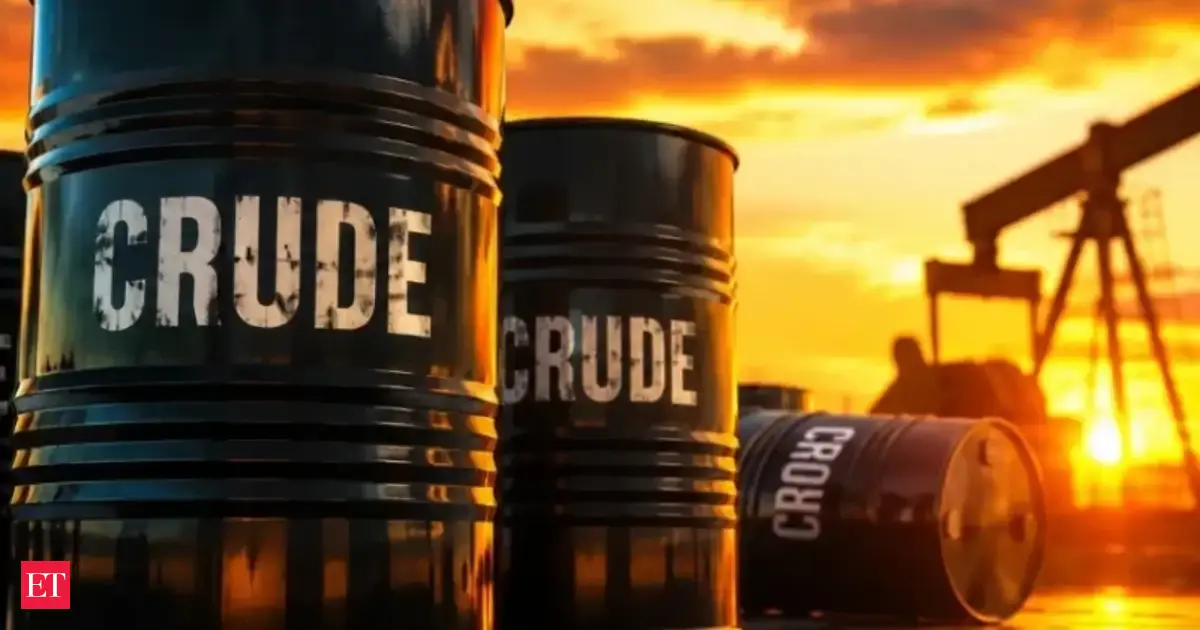
Rising oil prices necessitate energy supply diversification and alternate fuel adoption. India is urging the auto industry for flexi-fuel vehicle timelines and promoting ethanol blending. Exploring iso-butanol and methanol blending offers further emission reduction and import substitution. Second-generation biorefineries are crucial for scaling up compressed biogas production. Strategic oil reserves and domestic exploration are also vital for energy security. View More
Oil prices are flaring up, yet again. Brent Oil futures are now quoting at over $100 per barrel. The way ahead in the energy economy, clearly, is to diversify and derisk supplies, innovate in the policy domain, and concurrently, step-up usage of alternate fuels, fine-tune standards and proactively boost sustainability and environmental norms going forward. Given the ground reality, it would seem sensible to shore up supply of fuel alternatives. Already, the Centre is reportedly urging the autoindustry to put out timelines for the rollout of flexi-fuel vehicles, those that require at least 85% blending of biofuel ethanol produced locally. The availability of 20% ethanol blended petrol (EBP), produced from maize, surplus sugarcane and damaged grains, is now par for the course. But we surely need to better leverage our vast output of agricultural residue, such as paddy straw, bagasse, and municipal bio-waste, to gainfully and sustainably increase the production of ethanol, the alcohol whose molecule has two carbon atoms. The plan should be to ring-fence the food economy even as we rev up output of biofuels. It is true that 20% EBP marginally reduces vehicular mileage, but there are significant reductions in particulate matter and other exhaust emissions as the embedded oxygen in ethanol does bring about more complete combustion of fuel. Given the volumes involved, EBP does bring down imports of crude. However, the most used petroleum product, by far, is high-speed diesel, and there’s much scope to explore its blending with biofuel iso-butanol, the alcohol molecule with four carbon atoms. The idea ought to be to fast-forward the microbial synthesis of cellulosic iso-butanol, to reduce the carbon footprint in transport. Live Events Already, reports say that pilot studies for 2% blending of diesel with iso-butanol have been firmed up. But when it comes to crop residue, plant cell walls are difficult to break down, and do require added enzymes, chemicals and energy inputs to effectively release fermentable sugars for blending. Hence, the pressing need for brownfield expansion of existing biorefineries to produce bioiso-butanol using specialized biocatalysts and innovative technological solutions. It can well lead to such products as renewable diesel and sustainable aviation turbine fuel. The second-generation biorefineries are also essential to step-up supplies of compressed biogas (CBG) at a commercial scale, using agricultural residue, organic matter, and municipal waste. A NITI report earlier this year did underline the huge potential of CBG, as a sustainable substitute for natural gas and liquified natural gas (LNG). In tandem, we do need to duly leverage carbon emissions to efficiently produce fuel substitute methanol, whose molecular structure has a single carbon atom. Note that power generation major NTPC’s Vindhyachal power plant has successfully produced high purity methanol as a byproduct. Now methanol and diesel are immiscible, given different molecular structures, which the mavens label as polarity differences. But in high consumption dual fuel systems, say in marine engines and those for heavy-duty transport, methanol can be injected into the air intake, while diesel is piped directly into the combustion cylinder to act as an igniter. The process is known to avoid physical blending of methanol, while substituting up to 50-70% diesel in marine and heavy-duty engines. Further, we do need to explore the possibility of using dimethyl ether (DME), which is a chemical derivative of methanol, for blending with liquified petroleum gas (LPG) or cooking gas. The physical and thermodynamic properties of DME are said to closely resemble those of propane and butane, which constitute LPG. Besides, in dense urban centres like Delhi National Capital Territory we do need to speedily traverse to zero-emission electric vehicles (EVs) in the domain of policy making, to purposefully improve the air quality index. The game plan is to induct 14,000 EV buses in Delhi, and phase-out the registration of non-EVs sooner rather than later. However, it cannot be gainsaid that EVs are also metal-mining and processing intensive, and bringing the EVs supply chains here may well increase the carbon-footprint domestically, pending breakthroughs, in EV battery technology that use, say, innovative electronics to reduce the need for rare earths and critical minerals, or forays into entirely new battery chemistry. The fact of the matter is India is increasingly and overwhelmingly dependent on imports of oil, and in the backdrop of hardening crude prices and rising geopolitical tensions, it is warranted that we increase our strategic crude oil reserves . And upstream oil major ONGC already plans to increase India’s strategic oil reserves by 12.8 million barrels, which would take the total to just under 52 million barrels of crude. In the medium term and well beyond, it would also make sense to better allocate resources for exploration and production of crude oil in our more prospective and under-explored sedimentary basins. .Pbanner{display:flex;justify-content:space-between;align-items:center;background-color:#ec1c40;margin-top:20px;padding:5px 10px;border-radius:4px;color:#fff;line-height:10px;width: 100%;box-sizing: border-box} .Pbannertext{display:flex;align-items:center;font-size:16px;font-weight:600;font-family:'Montserrat';} .Pbannertext img{height:20px;margin:0 6px} .Pbannerbutton a{display:flex;align-items:center;background-color:#fff;color:#ec1c40;text-decoration:none;font-weight:600;padding:4px 8px;border-radius:6px;font-size:15px;font-family:'Montserrat';} .Pbannerbutton img{height:20px;margin-right:6px} .Pbannerbutton a:hover{background-color:#f7f7f7} Add as a Reliable and Trusted News Source Add Now! (You can now subscribe to our Economic Times WhatsApp channel) (You can now subscribe to our Economic Times WhatsApp channel)

The Ministry of Coal has launched its sixteenth auction round for commercial coal mines. Twenty-five coal blocks across eight states are now available for investor participation. This initiative aims to generate significant employment and attract new investments into the sector. Previously auctioned mines are projected to generate substantial revenue and capital investment. View More
The Ministry of Coal on Thursday launched the 16th round of commercial coal mine auctions, inviting prospective stakeholders and investors to participate in the bidding process for the newly offered blocks. In this latest tranche, a total of 25 coal blocks have been put up for sale. Among these, 21 are fully explored blocks, while four are partially explored mines. The blocks are geographically spread across eight states: Odisha, Maharashtra, Jharkhand, Chhattisgarh, West Bengal, Bihar, Telangana, and Arunachal Pradesh. "We invite investors to participate in this round of auction. The new round has potential to generate huge employment and attract new investments into the sector," Minister of State for Coal and Mines Satish Chandra Dubey said while launching the auctions. Also read: Take steps to accelerate discovery of new mineral resources, says NITI Aayog Commercial coal mining was originally inaugurated by Prime Minister Narendra Modi in 2020. Over the past six years, spanning 15 completed rounds, 147 coal mines have been successfully auctioned, bringing 44 new companies into the domestic coal sector. Live Events These previously auctioned mines are projected to generate an annual revenue of approximately Rs 47,500 crore, attract near-term capital investment of around Rs 55,000 crore, and create roughly 4.9 lakh employment opportunities across various coal-bearing states. According to the ministry, the commercial mining framework continues to offer liberal terms, featuring no end-use restrictions, 100 per cent Foreign Direct Investment (FDI) permitted via the automatic route, and minimal upfront payments that are adjustable against future revenue shares. Official data indicates that India's coal production from captive and commercial mines rose to 210.46 MT as of March 2026, marking a robust year-on-year growth of 10.22 per cent compared to 190.95 MT recorded in the previous fiscal year. Also read: Centre rap pushes BHEL to diversify beyond thermal During FY26, 12 captive and commercial coal blocks were operationalised after receiving Mine Opening Permission (MOP), expanding the nation's operational mining base by adding over 86 MT of annual production capacity. In comparison, coal production from these blocks stood at 147.11 MT in 2023-24, up from 115.78 MT in FY23. .Pbanner{display:flex;justify-content:space-between;align-items:center;background-color:#ec1c40;margin-top:20px;padding:5px 10px;border-radius:4px;color:#fff;line-height:10px;width: 100%;box-sizing: border-box} .Pbannertext{display:flex;align-items:center;font-size:16px;font-weight:600;font-family:'Montserrat';} .Pbannertext img{height:20px;margin:0 6px} .Pbannerbutton a{display:flex;align-items:center;background-color:#fff;color:#ec1c40;text-decoration:none;font-weight:600;padding:4px 8px;border-radius:6px;font-size:15px;font-family:'Montserrat';} .Pbannerbutton img{height:20px;margin-right:6px} .Pbannerbutton a:hover{background-color:#f7f7f7} Add as a Reliable and Trusted News Source Add Now! (You can now subscribe to our Economic Times WhatsApp channel) (You can now subscribe to our Economic Times WhatsApp channel)

Barc is looking to take its 300 MW nuclear reactor module to commercial scale with private-sector participation. If viable, the reactor could account for 30 GW of India’s targeted 100 GW nuclear capacity by 2047. View More
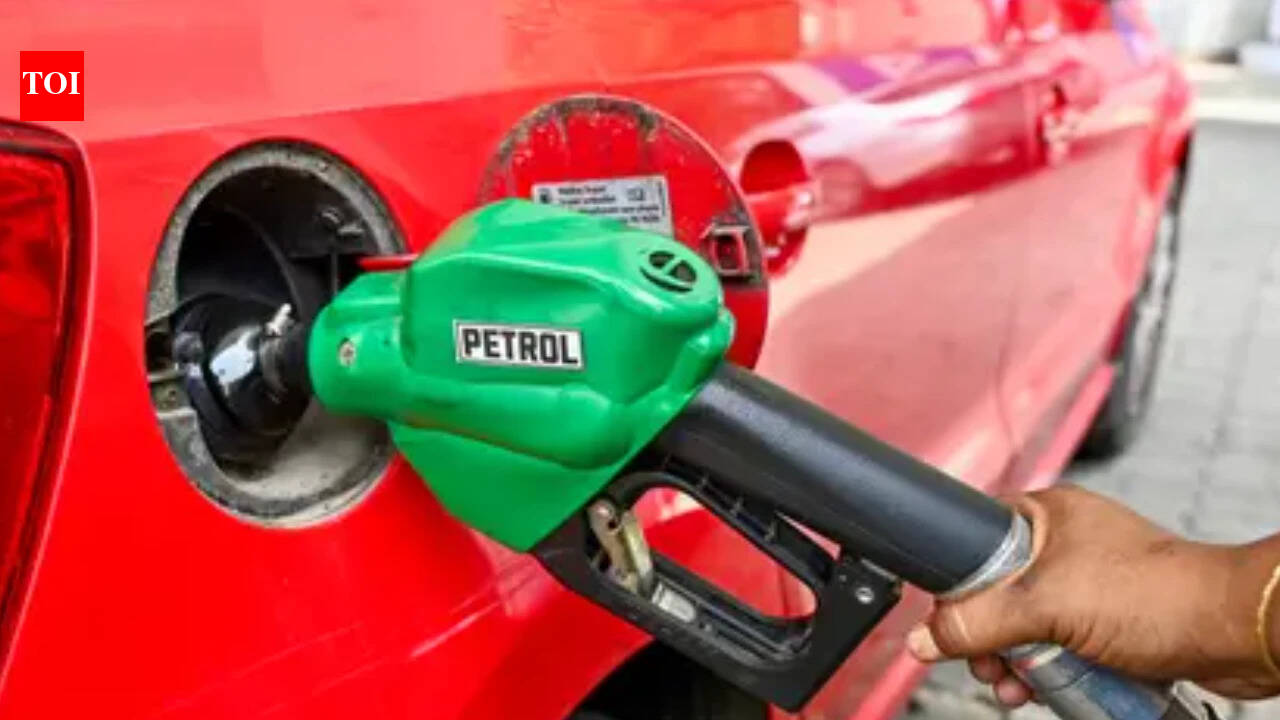
India's government has reduced export levies on petrol, diesel, and aviation fuel. The revised rates for these petroleum products took effect from September sixteenth. Export duty on petrol decreased by one rupee to zero point five rupees per litre. Diesel export levies were lowered by five rupees to twenty rupees per litre. These changes reflect a reversal of higher rates implemented earlier this month. View More

Every weekday, the Investing Club releases the Homestretch; an actionable afternoon update just in time for the last hour of trading. View More
Every weekday, the CNBC Investing Club with Jim Cramer releases the Homestretch â an actionable afternoon update, just in time for the last hour of trading on Wall Street. The S & P 500 fell after the Federal Reserve raised interest rates by 25 basis points , the first hike in overnight borrowing costs in more than three years. The decision was unanimous. The Fed said in its policy statement that the rate hike "will support a timelier return" to the central bank's policymaking committee's 2% inflation target. The nation's inflation rate has been running hotter than 2% for many years. Based on the updated "dot plots" in the Fed's quarterly Summary of Economic Projections, most central bankers expect one more rate increase before the end of the year. During his post-meeting news conference, Fed Chairman Kevin Warsh said that "inflation is too high and has been for too long," adding that Wednesday's rate hike reflects the central bank's commitment to reducing inflation. Warsh said that the U.S. economy appears to be strengthening but faces headwinds from geopolitical uncertainty. Starbucks is considering selling a majority stake in its Japan operations in a deal that would value the business at about $3 billion, according to a report from Reuters. This is not a new story. We first heard this back in June from Bloomberg. What's different now is that Bloomberg reported the business could be valued at $2.5 billion, so we like the slightly upgraded terms. Japan is Starbucks' largest international company-operated market â with 1,883 stores at the end of last fiscal year â and was called as a source of strength in the company's July earnings call. So why sell a stake? Even though the region is performing well, Japan is viewed as a non-core market and a stake sale would be a continuation of an asset-light licensing model that got started in April, when CEO Brian Niccol sold a stake in Starbucks' China business and formed a joint venture with Boyu Capital. A deal for its Japan operations will keep the company focused on its U.S. turnaround while providing a cash infusion it can use to invest in stores and technology, repay debt, or even repurchase stock. Shares of Starbucks are slightly higher Wednesday afternoon; at their highs of the day, before the Fed decision, the stock was up about 1.65%. GE Vernova is one of the biggest gainers in the portfolio on Wednesday, up more than 4%, after CEO Scott Strazik gave a bullish presentation at the Morgan Stanley Laguna Conference. It's a much-needed jolt for shares of the gas turbine maker, which entered Wednesday down almost 20% since mid-August, as concerns mounted around the sustainability of the artificial intelligence buildout. Here are some of the most important comments from the CEO. Strazik said the company is on track to reach its $200 billion backlog target "very early in 2027," based on "the strength of the orders we expect to see in the third quarter." Its backlog stood at $176 billion at the end of June. Strazik's emphasis on achieving the goal early next year is notable because details on the timing had previously been a more general "in 2027." Since Vernova's July earnings call, Strazik said the company has agreed to multiple slot reservations for 2032 deliveries, an encouraging sign of the durability of demand for its supply-constrained turbines. While there have been questions about how long Vernova can maintain pricing power as the company adds manufacturing capacity, Strazik said new turbine supply that became available this summer for 2030 and 2031 delivery has seen a "very strong market response ... at premium pricing." All 12 gigawatts of new supply for those two years "is in some form of contracting," he said. Vernova plans to hold an investor day next year where it will set its 2030 financial outlook, Strazik said. "But frankly, we'll spend a lot of that meeting on why we have so much conviction that 2030 to 2040 is an even better decade for us than 2020 to 2030," he said. Some of that optimism likely stems from the growth of Vernova's services business, which covers repairs and other maintenance once turbines are installed by customers. Services revenue is more steady and predictable than equipment orders. Late last year, the company projected that its power services revenue in 2035 will be at least $22 billion, up from $12 billion in 2025. On Wednesday, Strazik said its 2030 projection at its future investor day "will certainly make the 2035 marker of $22 billion look low." After Wednesday's closing bell, homebuilder Lennar reports quarterly results. While there are no major earnings before the opening bell on Thursday, we will get new data on jobless claims, housing starts and building permits, and pending home sales. (See here for a full list of the stocks in Jim Cramer's Charitable Trust.) As a subscriber to the CNBC Investing Club with Jim Cramer, you will receive a trade alert before Jim makes a trade. Jim waits 45 minutes after sending a trade alert before buying or selling a stock in his charitable trust's portfolio. If Jim has talked about a stock on CNBC TV, he waits 72 hours after issuing the trade alert before executing the trade. THE ABOVE INVESTING CLUB INFORMATION IS SUBJECT TO OUR TERMS AND CONDITIONS AND PRIVACY POLICY , TOGETHER WITH OUR DISCLAIMER . NO FIDUCIARY OBLIGATION OR DUTY EXISTS, OR IS CREATED, BY VIRTUE OF YOUR RECEIPT OF ANY INFORMATION PROVIDED IN CONNECTION WITH THE INVESTING CLUB. NO SPECIFIC OUTCOME OR PROFIT IS GUARANTEED.

The government has reduced windfall taxes on petroleum exports. Levies on petrol, diesel, and aviation turbine fuel have been lowered. This change follows the government's regular fortnightly review of export duties. The duty on petrol exports is now Rs. 0.5 per litre. Diesel and ATF exports will see duties of Rs. 20 and Rs. 15 per litre respectively. View More
The government on Wednesday slashed windfall tax on petroleum exports , reducing levies on petrol, diesel and aviation turbine fuel (ATF) as part of its fortnightly review of export duties . As per the Finance Ministry, the rate of duty on petrol will be Rs. 0.5 per litre (SAED- Rs. 0.5 ; RIC- Nil), Rs. 20 per litre (SAED - Rs. 20; RIC – Nil) on exports of diesel and Rs. 15 per litre (SAED only) on exports of ATF. However, there is no change in the existing excise duty rates on petrol and diesel cleared for domestic consumption. The government reviews the windfall tax on domestically produced crude oil and export of petroleum products every fortnight, depending on global crude oil prices and refinery margins. .Pbanner{display:flex;justify-content:space-between;align-items:center;background-color:#ec1c40;margin-top:20px;padding:5px 10px;border-radius:4px;color:#fff;line-height:10px;width: 100%;box-sizing: border-box} .Pbannertext{display:flex;align-items:center;font-size:16px;font-weight:600;font-family:'Montserrat';} .Pbannertext img{height:20px;margin:0 6px} .Pbannerbutton a{display:flex;align-items:center;background-color:#fff;color:#ec1c40;text-decoration:none;font-weight:600;padding:4px 8px;border-radius:6px;font-size:15px;font-family:'Montserrat';} .Pbannerbutton img{height:20px;margin-right:6px} .Pbannerbutton a:hover{background-color:#f7f7f7} Add as a Reliable and Trusted News Source Add Now! (You can now subscribe to our Economic Times WhatsApp channel) (You can now subscribe to our Economic Times WhatsApp channel)

Nageswaran argued that India needs to rethink its development model for the AI era, using artificial intelligence to boost workers rather than replace them View More

Saatvik Green Energy shares surged 10% after the company secured a Rs 1,041.63 crore solar PV module supply order from SECI, with execution scheduled by December 2027. The order comes amid growing demand for solar modules and renewable energy capacity. View More
Shares of Saatvik Green Energy surged as much as 10% during Wednesday’s trading session, touching an intraday high of Rs 428.25, after the company announced a major solar module supply order from the Solar Energy Corporation of India (SECI). The company said it has been awarded and accepted an order from SECI for the supply of Solar PV Modules, with an aggregate contract value of Rs 1,041.63 crore. The order, awarded by the domestic entity, is commercial in nature and is scheduled to be executed by December 2027. The development marks a significant order win for Saatvik Green Energy as demand for solar photovoltaic modules continues to expand alongside India's renewable energy capacity additions. According to the company’s disclosure, neither the promoter/promoter group nor group companies have any interest in SECI, and the contract does not fall under related-party transactions. Live Events Share price, valuation and technical indicators Currently, it is trading at a market capitalisation of around Rs 5,339 crore. Today, the stock touched an intraday high of Rs 428.25 and gained 10%. Despite the sharp move, the stock remains well below its 52-week high of Rs 580. On the valuation front, Saatvik Green Energy has a P/E ratio of 20.29, a Price-to-Sales (P/S) ratio of 1.05, and a Price-to-Book (P/B) ratio of 3.70. Technical Indicators: The stock is currently trading above 5 of its 8 key Simple Moving Averages (SMAs). However, it is trading below its 50-day, 100-day and 150-day SMAs. Institutional Holding: During the June 2026 quarter, FIIs' holdings increased from 0.03% to 0.19%. Mutual Fund holdings also rose, increasing from 10.10% to 10.48% during the same quarter. (Disclaimer: Recommendations, suggestions, views and opinions given by the experts are their own. These do not represent the views of The Economic Times.) .Pbanner{display:flex;justify-content:space-between;align-items:center;background-color:#ec1c40;margin-top:20px;padding:5px 10px;border-radius:4px;color:#fff;line-height:10px;width: 100%;box-sizing: border-box} .Pbannertext{display:flex;align-items:center;font-size:16px;font-weight:600;font-family:'Montserrat';} .Pbannertext img{height:20px;margin:0 6px} .Pbannerbutton a{display:flex;align-items:center;background-color:#fff;color:#ec1c40;text-decoration:none;font-weight:600;padding:4px 8px;border-radius:6px;font-size:15px;font-family:'Montserrat';} .Pbannerbutton img{height:20px;margin-right:6px} .Pbannerbutton a:hover{background-color:#f7f7f7} Add as a Reliable and Trusted News Source Add Now! (You can now subscribe to our ETMarkets WhatsApp channel) (You can now subscribe to our ETMarkets WhatsApp channel)