
Latest Sectors News

Market experts showed skepticism at whether the push would succeed against a bevy of factors working against Treasurys. View More
Treasury Secretary Scott Bessent speaks to members of the media outside the White House in Washington, Aug. 20, 2026.Yuri Gripas | Abaca | Bloomberg | Getty Images Treasury Secretary Scott Bessent insisted Thursday that he has multiple weapons at his disposal to quell liquidity problems in the government debt market and restore calm. While that's true in itself, a two-pronged effort he has deployed so far â accelerated buybacks and an effort to talk the market into accepting the rationale â have met with little success.The Treasury announcement Wednesday that it would at least double its bond buybacks starting in early September sent yields tumbling as investors applauded a backstop for longer-maturity government bonds.However, yields at the long end quickly rose again Thursday as market experts showed skepticism at whether the push would succeed against a bevy of factors working against Treasurys.Then on Thursday, Bessent appeared on CNBC with assurances that the intervention was merely aimed at providing market liquidity and not at trying to control the yield curve. While yields initially nudged lower, they quickly rebounded amid criticism of how the prior day's announcement was rolled out, leading one analyst to characterize the appearance as having "minimal impact" on the market pressures. watch nowVIDEO4:3904:39No panic or worry on Treasury's behalf, says SMBCâs Joe LavorgnaPower Lunch Still, that leaves Bessent with a variety of options that he may yet choose to deploy."We have a big toolkit," the Treasury chief said. "Part of it is signaling here and to show that we believe that the yields don't reflect the underlying fundamentals."Yet markets are still worried, and criticism rose that the size of the buybacks, which Bessent confirmed could exceed $4 billion, would be rendered ineffective in such a large market.Evercore ISI analyst Krishna Guha called the plan "a weak form of Operation Twist," or a Federal Reserve initiative that swaps longer-term notes and bonds for short-term bills. The move "in itself will have little enduring impact and could backfire if it is seen as signaling concern about the ability to fund longer-term at acceptable cost," he said. The interview "had minimal impact on the bond market," he added.That leaves Bessent with a handful of other options, none guaranteed to work and each carrying its own risk:Bigger and more frequent buybacks: Bessent simply could say the initial round of stepped-up buybacks went so well that Treasury is going larger. Smaller auctions: The department simply could cut down on the level of longer-dated debt it is issuing and shift it into shorter-term bills, an approach Bessent criticized strongly when it was employed by his predecessor, Janet Yellen.Change the maturity composition of outstanding debt: This essentially would be a larger-scale version of smaller auctions and would require market participants to snap up shorter-duration â and lower-yielding â debt, a risky proposition. "Global investors know that struggling sovereigns often resort to shorter dated issuance. We think the US is different from all others, but it is not different without limit," Guha, who is Evercore's head of economics and central bank strategy, said in a client note.Invoking the 'Bessent put': Markets already are using the term to describe the Treasury moves, and the secretary can use his tools in an unpredictable manner to keep anyone betting against U.S. debt off guard. "We think this is much more suited to the type of tactical guerilla operation to catch shorts off-guard, impose losses and create a perception of two-sided risk that may slow down a fundamentals-driven move in yields and prevent overshooting â the smoothing version," Guha wrote. "The problem is that this may not have much lasting impact on where yields are a few months from now." Credibility at stake Whichever route he chooses â and he could also choose to do nothing and let the markets sort it out â Bessent could face credibility challenges from a market already growing skeptical and leery of the challenges Treasurys are facing.Jefferies' chief U.S. economist, Thomas Simons, complained that the buyback announcement itself was improper. He pointed out that the move came two weeks after Treasury announced its quarterly refunding plans, during which it gave no indication that it was considering changing the buyback scheme."This breaks with Treasury's long-held strategy of making 'regular and predictable' announcements, and using the Refunding to announce almost all of their policy changes and guidance," Simons wrote. "We do not think it is hyperbole to say that this break in communication strategy reduces the overall credibility of their guidance." watch nowVIDEO19:0819:08Watch CNBC's full interview with Treasury Secretary Scott BessentSquawk on the Street Moreover, Simons added that "the sloppy wording of [the] headline on [the] release gave the impression that this was a hastily made decision."The challenge, then, for Bessent could be that efforts to suppress longer-end yields could give investors another reason to demand more compensation. Factors at play Along the lines of what Bessent told CNBC on Thursday, not all of the factors at play are fundamental. They include rising competition from corporate bond issuance as well as suddenly attractive yields of other sovereigns including Japan; a correlation with oil prices that in turn increases inflation fears; and increasing term premiums, or the extra yield investors are demanding.To combat those problems, Bessent could seek cooperation with the Federal Reserve. Though Fed Chairman Kevin Warsh has stressed the importance of letting the market set rates, Bessent suggested Thursday that the two entities "would work together" in dealing with complications in the bond markets and as the central bank manages its own Treasury holdings.The various moving parts come during a paradigm shift in the government debt markets, both in the U.S. and globally."There has also been a structural shift in who buys U.S. government debt," said Atsi Sheth, chief credit officer at Moody's Ratings. "As central banks shrink their balance sheets and traditional duration buyers reach the limits of how much additional issuance they can absorb, new buyers, such as leveraged hedge funds running relative-value strategies, are playing a bigger role."On top of all that, the U.S. faces a daunting fiscal situation in the form of a deficit-to-GDP ratio of nearly 6%, or about triple its average from the end of World War II until the Covid pandemic. That is compounding a problem with the national debt, which just surpassed $40 trillion.With President Donald Trump hungry for tax cuts and Congress showing few signs of spending restraint, the fiscal problems are likely to mount. To that end, Bessent said he and Russell Vought, head of the Office of Management and Budget, will meet soon to discuss "fiscal consolidation," generally understood to refer to efforts to reduce red ink."It's that combination of the deficits, the borrowing needs, inflation expectations, not really knowing what future Fed policy is going to be, and the sustainability of being able to issue higher, ever higher, levels of U.S. Treasury debt, and what rates those need to be at," said JoAnne Bianco, senior investment strategist at BondBloxx. "There's just the idea that there needs to be a higher risk premium for all the issuance." watch nowVIDEO4:5304:53Former CEA chair Jason Furman: Treasury can't change 'underlying fundamentals' of the curveSquawk on the Street Choose CNBC as your preferred source on Google and never miss a moment from the most trusted name in business news.

Axis Direct is optimistic about NTPC, Skipper, and JSW Energy following their June-quarter results. They believe strong capacity additions and order books will support earnings growth, maintaining 'Buy' ratings and target prices of ?420, ?605, and ?630, respectively. View More

Ola Electric has launched a special offer for the Shakti Gen2 home inverter. The device, available in 3 kW and 6 kW variants, will be offered at discounted price for early buyers. View More

Reliance Industries has proposed a Rs 2.73 lakh crore, 30-year investment to develop an underground coal gasification complex in Andhra Pradesh. The project could convert deep coal into syngas for hydrogen, methanol, ammonia and synthetic natural gas, helping India reduce dependence on imported LNG and chemical feedstocks. However, commercial viability, geological risks and UCG technology at scale remain major challenges. View More
Mukesh Ambani 's Reliance Industries (RIL) has proposed what could become one of India's largest energy and industrial investments -- about Rs 2.73 lakh crore over 30 years to build an integrated underground coal gasification complex in Andhra Pradesh, as reported by ET today. The proposal comes as India tries to extract more value from its huge coal resource while reducing dependence on imported gas and chemical feedstocks. For Reliance, it is a striking new move into coal resources, although the company is not proposing to become a conventional coal miner. Also Read: RIL proposes Rs 2.73 lakh crore investment for India’s first coal gasification complex in Andhra But can Reliance make underground coal gasification work at commercial scale in Indian conditions and, if it does, will the resulting gas and chemicals can materially reduce India's vulnerability to external energy shocks. What Reliance has proposed Reliance has secured the Chintalapudi and Recherla coal blocks in Andhra Pradesh through a coal ministry e-auction and has proposed developing an integrated Underground Coal Gasification, or UCG, complex in Eluru district, as per an ET report based on sources. RIL did not respond to ET's email requesting comment. Live Events The potential investment is pegged at Rs 2.73 lakh crore over 30 years, but it is conditional on exploration establishing that the project is technically and commercially viable. The proposal has three stages. Exploration and pilot work from Q3 2026 to Q4 2027 would involve up to Rs 3,000 crore. If that succeeds, Reliance proposes Rs 1.2 lakh crore of development spending during 2028-30 and Rs 1.5 lakh crore in the production phase from 2030 onwards. These are figures in the proposal submitted to the Andhra Pradesh government, as reported by ET. The two blocks are large. Chintalapudi covers about 3,000 acres and is estimated to contain 904.94 million tonnes of G-12 grade coal. Recherla covers 5,500 acres and has an estimated 2,225.67 million tonnes of G-13 coal. The estimates amount to 3.13 billion tonnes. Officials told ET the deposits lie more than half a kilometre underground. The biggest economic significance lies in the company extracting gas from the coal without conventional mining. Also Read: Coal gasification key to build long-term resilience against global energy shocks: Experts How underground coal gasification works In conventional coal gasification, coal is mined and brought to the surface before being converted into gas. Underground coal gasification (UCG) turns the coal seam itself into the gasification reactor. Wells are drilled into the underground coal seam. An oxidising agent such as air, oxygen or steam is injected through one well. The coal is partially combusted and undergoes chemical reactions underground. Another well brings the resulting gas to the surface. The main product is syngas, or synthesis gas. It is not the same as natural gas. Syngas typically contains hydrogen and carbon monoxide along with varying quantities of methane and carbon dioxide. Its importance lies in what can be made from it. Syngas can be processed into hydrogen, methanol, ammonia, synthetic natural gas and synthetic fuels. Government documents also identify applications in fertiliser production and as reducing gas for steelmaking. For example, syngas can be shifted to increase its hydrogen content. That hydrogen can be used to make ammonia, which is a major fertiliser feedstock. Syngas can also be converted into methanol. Through methanation, it can produce synthetic natural gas, or SNG, which is essentially methane-rich gas that can substitute for natural gas in suitable applications. This means Reliance does not necessarily have to sell the gas as a fuel. It could use the syngas as a platform for producing higher-value industrial products. Why this matters to India India's dependence on imported gas is substantial. The government said in May 2026 that more than half of India's LNG, around 20% of its urea, almost all of its ammonia and around 80-90% of its methanol requirements are met through imports. That creates several points of vulnerability. Domestic gasification could potentially reduce LNG demand through SNG production. It could provide hydrogen for ammonia and fertiliser production. Methanol production could substitute for imports. Syngas-derived reducing gas could also find industrial applications. The value is therefore broader than electricity generation. Coal is being converted into a gaseous feedstock that can enter several industrial chains. India's import bill for key products that coal gasification could potentially substitute, including LNG, urea, ammonium nitrate, ammonia, coking coal and methanol, was approximately Rs 2.77 lakh crore in FY2025, as per a government release. For Reliance, this downstream flexibility is particularly important because the company already has large refining and petrochemical operations. Its interest is potentially less about becoming a coal producer and more about gaining another domestic source of carbon and energy feedstock. India's coal-gasification mission India has discussed coal gasification for decades, but government policy has become much more aggressive in recent years. In January 2024, the Union government approved an Rs 8,500 crore financial incentive scheme for coal and lignite gasification projects. The scheme covers government PSUs, private companies and demonstration projects. The national objective is to reach 100 million tonnes of coal gasification by 2030. The sector is growing but remains well short of that ambition. The government has been supporting projects involving Coal India , BHEL , GAIL , BPCL , Talcher Fertilisers and private companies. In May 2026, the Cabinet approved a much larger Rs 37,500 crore scheme for surface coal and lignite gasification projects. The government expects the scheme to support projects using about 75 million tonnes of coal and lignite and provide incentives of up to 20% of eligible plant and machinery costs, subject to scheme limits. This is important for Reliance, but there could be a catch. The Rs 37,500 crore scheme is specifically for surface coal and lignite gasification. Reliance is proposing underground coal gasification. Therefore, it should not be assumed that RIL will automatically qualify for the new surface-gasification subsidy. UCG does, however, have separate policy support. The government has had a UCG policy since 2016 and has introduced provisions that encourage gasification of coal in commercial mining. In April 2026, the Ministry of Coal announced the first tranche of coal mine development agreements carrying embedded UCG provisions. The government has also provided a 50% revenue-share rebate for coal used for gasification under specified conditions. That could be economically relevant to Reliance, depending on the terms applicable to its blocks and the eventual project configuration. So the policy environment is clearly supportive of gasification, but Reliance's UCG project may not be treated as a direct beneficiary of every incentive created for surface gasification. How big could Reliance's contribution be? Reliance has not disclosed how much coal it intends to gasify each year or how much syngas it expects to produce. Therefore, there is no company production forecast yet. But the scale can be illustrated. If the entire 3.13 billion tonnes of underground coal were gasified evenly over 30 years, the average would be about 104 million tonnes of coal a year. That is roughly equivalent to India's entire 100-MT national gasification target for 2030. That does not mean Reliance will gasify 104 MT a year. It is simply the mathematical implication of spreading the entire geological estimate over the proposed project life. A more conservative scenario shows why even partial utilisation could matter. If 10% of the estimated resource were gasified over 30 years, the average would be about 10.4 MTPA, or roughly 10% of India's 100-MT target. At 25% utilisation, it would be about 26 MTPA, equivalent to 26% of the national target. These are just scenarios, and not Reliance guidance. The actual number will depend on exploration, recovery rates, gasification performance and economics. The biggest risk is underground UCG's attraction is also its biggest uncertainty. The coal is more than 600 metres deep, which makes conventional mining difficult or uneconomic. But turning that underground seam into a controlled gasifier may create its own technical problems. The coal seam needs suitable thickness, continuity and permeability. The surrounding geology matters. Groundwater conditions matter. Faults and fractures can affect the gasification cavity. Operators must also control gas leakage and potential subsidence. Research on UCG has identified groundwater contamination, gas leakage and subsidence as important risks. Commercial-scale deployment remains highly site-specific. That is why Reliance's first Rs 3,000 crore is more important than the headline Rs 2.73 lakh crore figure. The company first needs to prove that it can create and control the underground reaction and produce a sufficiently consistent syngas stream at an acceptable cost. If that works, the larger development investment becomes credible. If it does not, much of the proposed Rs 2.73 lakh crore may never be spent. Can Ambani's underground bet save India from energy shocks? India's energy demand is expected to rise as industrialisation and household consumption increase. Renewables can supply an increasing share of electricity, but they cannot eliminate the need for molecules used in fertilisers, chemicals, refining, steel and other industrial processes. That means India will continue to need gas and gas-derived products even as its power system becomes cleaner. Coal gasification offers one possible domestic source. If UCG produces economically competitive syngas, India could use it to make SNG and reduce some LNG imports. Hydrogen from syngas could support domestic ammonia production. Methanol could replace imports. Industrial gas could support steel and chemical production. It would not make India completely self-sufficient. Nor would coal gasification eliminate the country's exposure to international energy prices. But it could provide an additional domestic source of critical molecules. That would be a big factor during geopolitical disruptions. A country importing LNG, ammonia and methanol is exposed not just to commodity prices but also to shipping constraints, currency movements and disruptions to major trade routes. The government's own rationale for coal gasification is partly based on reducing these import dependencies. Its May 2026 announcement explicitly linked the programme to lower dependence on imported LNG, urea, ammonia and methanol. .Pbanner{display:flex;justify-content:space-between;align-items:center;background-color:#ec1c40;margin-top:20px;padding:5px 10px;border-radius:4px;color:#fff;line-height:10px;width: 100%;box-sizing: border-box} .Pbannertext{display:flex;align-items:center;font-size:16px;font-weight:600;font-family:'Montserrat';} .Pbannertext img{height:20px;margin:0 6px} .Pbannerbutton a{display:flex;align-items:center;background-color:#fff;color:#ec1c40;text-decoration:none;font-weight:600;padding:4px 8px;border-radius:6px;font-size:15px;font-family:'Montserrat';} .Pbannerbutton img{height:20px;margin-right:6px} .Pbannerbutton a:hover{background-color:#f7f7f7} Add as a Reliable and Trusted News Source Add Now! (You can now subscribe to our Economic Times WhatsApp channel) (You can now subscribe to our Economic Times WhatsApp channel)
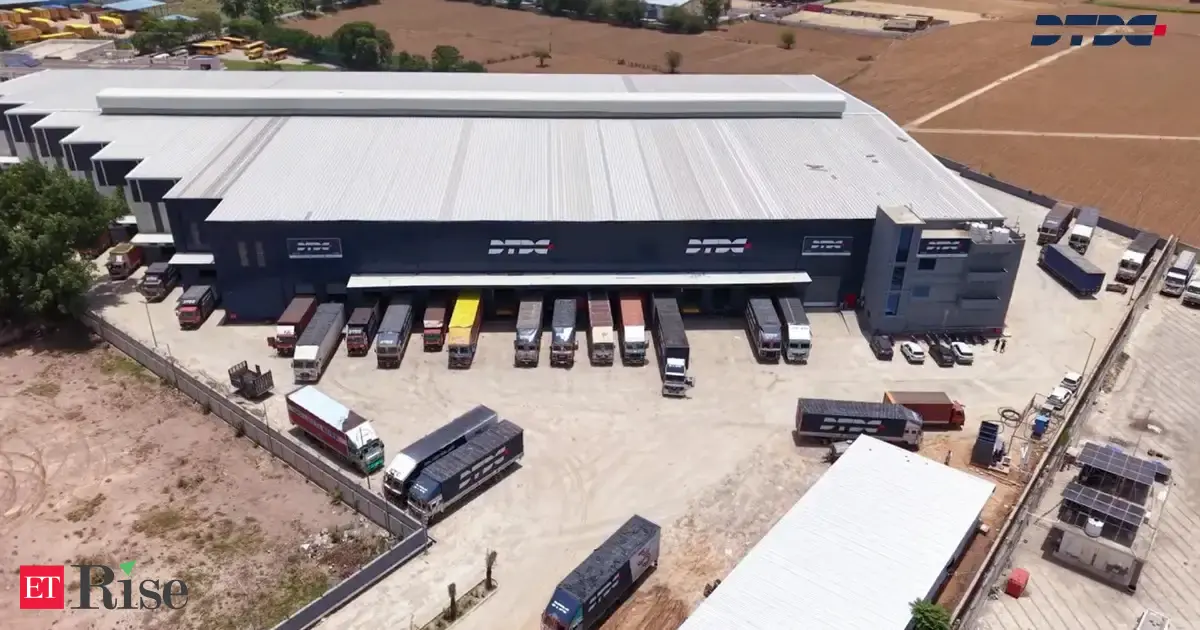
DTDC CEO Abhishek Chakraborty discusses how the new DTDC Bharat One Hub in Rathiwas will reduce dependence on Delhi-NCR, support rapid commerce, and strengthen the company’s focus on MSMEs and new-age businesses. View More
Home-grown logistics major DTDC Express has recently launched its new DTDC Bharat One Hub in Rathiwas, Haryana, to strengthen its shipment movement across North India and reduce bottlenecks in its network. According to DTDC, the facility can accelerate shipment movement by up to four hours and enable one-day early turnaround time (TAT) on co-loaded shipments. In an interaction with The Economic Times Digital, Abhishek Chakraborty, CEO of DTDC Express, outlined the company’s latest investment in network infrastructure, the new hub’s role in reducing dependence on Delhi-NCR, and its rapid-commerce strategy to deepen engagement with India’s micro, small, and medium enterprises (MSMEs). Edited excerpts: ET: How significant is the Bharat One Hub investment? Abhishek Chakraborty (AC): The Bharat One Hub is an investment in the future growth of our network. Located strategically at Rathiwas, the facility spans around 1.5 lakh sq. ft and has a peak processing capacity of 2,500 tonnes per day. The facility brings together advanced sorter systems, a multi-conveyor belt setup, hydraulic dock infrastructure, and digitally enabled operations. This allows us to consolidate freight more efficiently, improve dock utilisation, reduce manual intervention, and accelerate the movement of shipments through the network. North India is a critical consumption and business corridor, with Delhi-NCR serving as a major gateway for movement across multiple markets. As shipment volumes grow, particularly from e-commerce, D2C, and organised retail, the ability to process and move freight quickly becomes increasingly important. This hub gives us additional capacity while also improving the flow of shipments across these corridors. It allows us to reduce bottlenecks, improve turnaround times, and create greater consistency in downstream movement. Live Events The facility brings together advanced sorter systems, a multi-conveyor belt setup, hydraulic dock infrastructure, and digitally enabled operations ET. What specific network challenge was DTDC looking to address through the Bharat One Hub, and why was Rathiwas chosen as the location for the facility? AC: The Bharat One Hub was built to address a very practical challenge in our North India network. Earlier, freight from across the region would often move to Delhi-NCR for offloading and consolidation. With the operational requirements and regulations in Delhi-NCR, this could add time to the shipment journey and impact turnaround time. The Bharat One Hub, strategically located at Rathiwas, allows us to process and consolidate freight closer to key North India corridors. This reduces dependence on Delhi-NCR, minimises unnecessary movement, and helps shipments move more efficiently through the network. For us, this is not just about adding capacity. It is about building a faster, more efficient and resilient network ready to support growing demand. The facility's ability to consolidate freight closer to these corridors also improves branch readiness through consolidated load movement and creates greater efficiency in downstream operations. ET: As rapid commerce continues to reshape customer expectations around speed, how does the Bharat One Hub strengthen DTDC’s ability to support this evolving delivery ecosystem? AC: Customer expectations have changed. People are no longer just asking, “Will my shipment reach me?” They are asking, “When will it reach me?” and expecting a reliable experience throughout the journey. Today, one in every six shipments in our network comes from e-commerce, while D2C, omnichannel, and rapid commerce continue to grow. At DTDC, we are responding through solutions like Raftaar, our rapid commerce offering for same-day and next-day deliveries, supported by a network of over 70 Dream Stores across the country. But faster delivery starts with a strong network behind it. The Bharat One Hub strengthens our North India network through faster processing and movement of shipments, helping reduce turnaround time by up to four hours and enabling 1-day early TAT on co-loaded shipments. Ultimately, it is about building a network that can move faster, handle growing volumes, and keep pace with what customers expect today. ET: What’s DTDC’s long-term vision for becoming the go-to logistics partner for India’s micro, small, and medium enterprises (MSMEs) and new-age businesses, including start-ups? AC: For an MSME or a start-up, logistics can often become a barrier to growth. They may have a great product, but reaching customers beyond their city or state can be challenging. We want to remove that complexity. Solutions such as DTDC’s self-onboarding portal allow businesses to come on board within 10 minutes and start shipping without having to go through a complicated process. Abhishek Chakraborty, CEO, DTDC Express Ltd. (left) and Subhasish Chakraborty, Founder, Chairman & Managing Director, DTDC Express Ltd. (right) Our work with MSMEs also goes beyond technology. Today, we are helping artisans and small businesses take their products to a wider customer base. Our recent MoU with the Directorate of Industries, Government of Uttar Pradesh, on National Handloom Day was another important step towards connecting traditional businesses and artisans with a modern logistics ecosystem. When we talk about MSMEs, we also recognise that the logistics ecosystem itself includes thousands of small fleet owners and transport partners. They are entrepreneurs in their own right and an important part of the last-mile and middle-mile network. Our vision is to build an ecosystem where technology, infrastructure, and entrepreneurial partners come together to make logistics more accessible and scalable. ET: DTDC has signed a few national and global partnerships in recent years. How are these partnerships helping DTDC expand its capabilities and create greater value? AC: We see partnerships as an extension of our own capabilities. Logistics is an ecosystem business, and no single organisation can build the most efficient network by working in isolation. Our global partnerships with organisations like Geopost have helped us strengthen our international connectivity and give Indian businesses better access to global markets. This is particularly relevant today because Indian businesses, especially MSMEs, are increasingly looking beyond domestic markets. For us, partnerships within India are equally important. Our MoU with India Post is a good example. India Post has an unparalleled reach across the country, particularly in the last mile. DTDC can complement that reach with its middle-mile capabilities. When these strengths come together, the customer ultimately benefits from a more connected logistics ecosystem. .Pbanner{display:flex;justify-content:space-between;align-items:center;background-color:#ec1c40;margin-top:20px;padding:5px 10px;border-radius:4px;color:#fff;line-height:10px;width: 100%;box-sizing: border-box} .Pbannertext{display:flex;align-items:center;font-size:16px;font-weight:600;font-family:'Montserrat';} .Pbannertext img{height:20px;margin:0 6px} .Pbannerbutton a{display:flex;align-items:center;background-color:#fff;color:#ec1c40;text-decoration:none;font-weight:600;padding:4px 8px;border-radius:6px;font-size:15px;font-family:'Montserrat';} .Pbannerbutton img{height:20px;margin-right:6px} .Pbannerbutton a:hover{background-color:#f7f7f7} Add as a Reliable and Trusted News Source Add Now!

Taxpayers who were unsure whether they qualified or how much they could claim will likely have an easier time when they file their 2026 tax returns, experts say. View More
Halbergman | E+ | Getty Images Workers who are eligible for a federal tax break related to their overtime pay may have an easier time claiming it for the 2026 tax year than they did on their 2025 returns.The IRS has updated its frequently asked questions about the "no tax on overtime" deduction to clarify and expand the information it has provided. There was some confusion about the deduction when 2025 tax returns were filed earlier this year, experts say."'No tax on overtime' can fit on a bumper sticker, but all of the terms and conditions that apply ⦠naturally led to lots of questions from workers and employers about what kind of overtime is eligible and what kind of reporting is required of employers," said Andrew Lautz, senior director of federal policy for the Tax Foundation, a nonpartisan research group. "Now there are a lot more details." Read more CNBC personal finance coverageTrump Accounts to get paycheck contributions and employer matches, Treasury saysSocial Security COLA estimates for 2027 fall as inflation moderatesAOC says she saved up to freeze her eggs. Here's how much the procedure can costHow Connecticut congressional primary race results may affect Social SecurityCNBC's Financial Advisor 100: Best financial advisors, top firms rankedCNBC Elite Advisors: Top ultra-high net worth wealth management firms for 2026 Notably, employers will be required to include the information on workers' W-2s for the 2026 tax year. This means taxpayers won't be responsible for determining eligibility or calculating their own deduction as many were for their 2025 return."It was complicated this filing season, and I expect employer reporting will make things less complicated for workers," Lautz said. Only the overtime 'premium' counts toward deduction The no tax on overtime tax break was included in President Donald Trump's One Big Beautiful Bill Act, which was signed into law in July 2025. It was one of several new temporary deductions that taxpayers may be eligible for â alongside those for auto loan interest, tip income and an extra deduction for taxpayers ages 65 or older. All four are in effect for tax years 2025 through 2028.For the overtime tax break, eligible workers can deduct a portion â up to $12,500 for single tax filers or $25,000 for married couples filing jointly â of qualifying overtime on their tax return. The deduction applies to overtime pay covered under the Fair Labor Standards Act, which says nonexempt employees must be paid at least 1.5 times their normal pay rate for time worked beyond 40 hours per week. watch nowVIDEO4:5004:50Tackling tax planningPersonal Finance However, the deduction is only for the "overtime premium" â the one-half portion of that 1.5 rate. For illustration: If a covered worker's regular hourly rate is $40, and their overtime rate is $60 per hour, only the $20 premium â the amount above the regular rate â counts toward the deduction. The tax break starts phasing out at incomes of $150,000 for single taxpayers and $300,000 for joint tax returns.The updated IRS FAQs include the requirement that employers put the amount eligible for the deduction on workers' W-2s, in box 12 using a "TT" code. While it's possible for an independent contractor to receive a 1099-MISC or 1099-NEC that includes eligible overtime pay, it would be "rare" circumstances causing that, according to the IRS.The FAQs also clarify that if state law or union agreement requires overtime pay that is different from the FLSA, only the portion mandated under the FLSA qualifies â generally the extra half in the 1.5 times pay rule â for the deduction. Average deduction for 2025 was more than $3,100 More than 29 million taxpayers claimed the deduction for overtime wages in the latest tax season through the April 15 filing deadline, according to a July 2 release from the Treasury Department. The average deduction was above $3,100, the release says. Additionally, 75% of those filers had income under $100,000 and 96% had income under $200,000.For tax year 2025, the Treasury Department and IRS waived the employer requirement to separately report the amount eligible for the deduction because systems and procedures weren't yet in place to capture that information, and the necessary IRS tax forms had not been updated to include it. As a result, many workers had to calculate their own eligible amounts using payroll statements or a final pay stub for the year."We had to use people's pay stubs ⦠and make a best guesstimate as to what the amount of qualified overtime would be," said Tom O'Saben, director of tax content and government relations for the National Association of Tax Professionals. If you see a mistake, you can't say 'oh I'm going to correct that myself' ⦠and claim a different deduction amount.Andrew LautzSenior director of federal policy for the Tax Foundation "All things being equal, it's entirely possible that the deduction we take in 2026 for overtime could be less than what was taken in 2025 because those calculations could have been wrong," O'Saben said. Taxpayers should double-check their 2026 W-2 Even if the overtime pay deduction information does appear on your W-2, it's worth making sure it's accurate."I'm going to ask my clients to still bring those pay stubs, and let's spend a few minutes to [check] that number and see if it's accurate," O'Saben said. If it's not, the worker will need to ask for a corrected W-2."If the worker believes that an error has been made in the information their employer provided them for overtime compensation, whether that's the employer put too much or too little, it's on the worker to request an updated W-2," Lautz said."If you see a mistake, you can't say 'oh I'm going to correct that myself' ⦠and claim a different deduction amount," he said. Choose CNBC as your preferred source on Google and never miss a moment from the most trusted name in business news.

GE Aerospace is using artificial intelligence at its Bengaluru technology centre to improve aircraft engine inspections, maintenance and supply-chain forecasting, reducing engine turnaround time by around five days. Its AI-enabled tools are also cutting GEnx blade inspection times by about 50%, while engineers work on next-generation propulsion and engine technologies. View More
GE Aerospace is using artificial intelligence to improve aircraft engine inspections , maintenance and supply-chain forecasting , helping reduce engine turnaround time by around five days, company executives said on Tuesday. Engineers at GE Aerospace’s John F Welch Technology Centre (JFWTC) in Bengaluru are developing AI-enabled inspection and maintenance technologies aimed at improving engine reliability, durability and time on wing for airlines. Also read: GE Aerospace, HAL inching closer to seal jet engine deal “AI is a big enabler,” Gurram V Rao, Executive Section Leader, Services Engineering & Engineering Material Systems at the Bengaluru centre, said at a briefing at JFWTC. Rao said AI-based forecasting was helping the company anticipate parts requirements and reduce the time engines spend at maintenance, repair and overhaul (MRO) facilities. Live Events Earlier, MRO facilities would assess an engine after it arrived and then place orders for the parts needed for repairs. AI is now helping GE Aerospace forecast those requirements ahead of time. “We are keeping track of how operators (airlines) are working... and we are able to (place) orders for (parts) before an engine comes to an MRO facility... by the time engine comes in, those parts are ready. That is how we compress the turnaround time,” GE Aerospace in India's Chief Technology Officer Shilpa Gupta said. The Bengaluru team is advancing Analytics-Based Maintenance (ABM) through the ABM.AI tool, along with aircraft engine health monitoring that combines visual inspection with other data and technologies. It has also developed the AI-enabled Blade Inspection Tool (BIT), which assists trained technicians in capturing turbine blade images, improves consistency in reviews and cuts inspection times by about 50% for the GEnx engine. Also read: US officials meet Boeing, Lockheed Martin, GE Aerospace representatives in India AI-enabled maintenance and next-generation propulsion The JFWTC team is also working on next-generation propulsion technologies, including hybrid-electric propulsion , while supporting the deployment of GE Aerospace's 360 Foam Wash process, which removes dust and dirt from engines across MRO shops. “From improving reliability, durability and time on wing for the fleet flying today to advancing technologies to make the future of flight more efficient, Bengaluru engineers are making an important impact across the engine lifecycle,” Gupta said. JFWTC, GE Aerospace's Bengaluru technology centre , will complete 26 years in September. The centre's engineers have contributed to the design, development and certification of CFM LEAP, GEnx and GE9X engines powering narrow-body and wide-body commercial aircraft. The Bengaluru team has also secured more than 1,000 aviation technology patents . More than 1,300 GE and CFM engines currently power aircraft operated by Indian airlines. Another 3,000-plus engines are on order following IndiGo's recent deal with CFM International for more than 1,000 LEAP-1A engines. CFM International is a 50:50 joint venture between GE Aerospace and Safran Aircraft Engines. .Pbanner{display:flex;justify-content:space-between;align-items:center;background-color:#ec1c40;margin-top:20px;padding:5px 10px;border-radius:4px;color:#fff;line-height:10px;width: 100%;box-sizing: border-box} .Pbannertext{display:flex;align-items:center;font-size:16px;font-weight:600;font-family:'Montserrat';} .Pbannertext img{height:20px;margin:0 6px} .Pbannerbutton a{display:flex;align-items:center;background-color:#fff;color:#ec1c40;text-decoration:none;font-weight:600;padding:4px 8px;border-radius:6px;font-size:15px;font-family:'Montserrat';} .Pbannerbutton img{height:20px;margin-right:6px} .Pbannerbutton a:hover{background-color:#f7f7f7} Add as a Reliable and Trusted News Source Add Now! (You can now subscribe to our Economic Times WhatsApp channel) (You can now subscribe to our Economic Times WhatsApp channel)
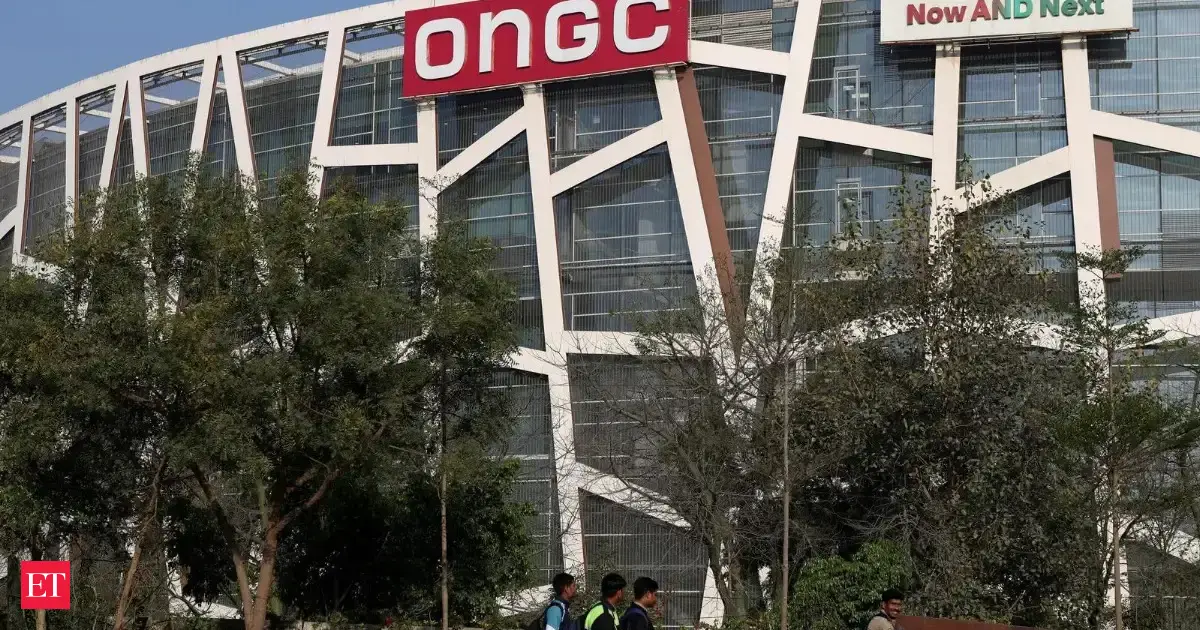
ONGC has commissioned gas evacuation facilities at Khoraghat GGS-1 in Assam. This development enables surplus natural gas to be processed and evacuated through the North East Gas Grid. The new connectivity will facilitate the utilization of nearly one lakh SCM of gas daily. Improved gas availability will create opportunities for households and industries in the region. View More
Guwahati: Oil and Natural Gas Corporation Limited ( ONGC ) successfully commissioned gas evacuation facilities at Khoraghat GGS-1 in Golaghat district, Assam. The facility enables surplus associated natural gas from the Upper Assam Shelf to be processed and evacuated through the North East Gas Grid (NEGG) developed by Indradhanush Gas Grid Limited (IGGL). Also Read: Reliance Industries says Rs 10 lakh Supreme Court order in NTPC gas case was ‘costs’, not fine The development complements the commissioning of the Dergaon–Dimapur Pipeline , which has connected Nagaland to the North East Gas Grid and the National Gas Grid. The new connectivity will facilitate utilisation of nearly 1 lakh Standard Cubic Metres (SCM) of gas per day from ONGC’s Jorhat asset . ONGC is also developing hook-up facilities at Jantapathar and Kasomarigaon to connect additional producing fields of Jorhat Asset with the North East Gas Grid. These projects will further augment gas availability, reduce flaring and strengthen the gas-based economy of the region. Live Events Also Read: Russia receives Indian gasoline cargo as fuel shortages bite The improved gas availability will also create opportunities for households, industry, transport and power, while supporting the economic and infrastructure development of Assam and the wider North-East. Together, the infrastructure strengthens gas connectivity across the region and advances the vision of developing the North-East as a key growth engine of India and a more integrated gas-based economy. .Pbanner{display:flex;justify-content:space-between;align-items:center;background-color:#ec1c40;margin-top:20px;padding:5px 10px;border-radius:4px;color:#fff;line-height:10px;width: 100%;box-sizing: border-box} .Pbannertext{display:flex;align-items:center;font-size:16px;font-weight:600;font-family:'Montserrat';} .Pbannertext img{height:20px;margin:0 6px} .Pbannerbutton a{display:flex;align-items:center;background-color:#fff;color:#ec1c40;text-decoration:none;font-weight:600;padding:4px 8px;border-radius:6px;font-size:15px;font-family:'Montserrat';} .Pbannerbutton img{height:20px;margin-right:6px} .Pbannerbutton a:hover{background-color:#f7f7f7} Add as a Reliable and Trusted News Source Add Now! (You can now subscribe to our Economic Times WhatsApp channel) (You can now subscribe to our Economic Times WhatsApp channel)

Reliance Industries on Tuesday clarified to stock exchanges that the Supreme Court did not impose a Rs 10 lakh fine or penalty on the company in the NTPC gas supply case. RIL said the amount ordered by the court was costs payable to the Supreme Court Advocates-on-Record Association and did not require disclosure. View More
Reliance Industries on Tuesday clarified to stock exchanges that the Supreme Court did not impose a fine or penalty of Rs 10 lakh on the company in a dispute involving gas supplies to NTPC. The company said the Rs 10 lakh amount ordered by the Supreme Court was “costs” payable by Reliance Industries Ltd (RIL) to the Supreme Court Advocates-on-Record Association, and not a fine or penalty levied on the company. RIL was responding to a letter/email dated August 17 from the stock exchanges seeking clarification on the news report, “SC slaps Rs 10 lakh fine on Reliance Industries for delaying NTPC gas supply suit”. The company cited the operative portion of the Supreme Court's August 14 order, which said: “For the reasons stated above, the appeal is dismissed with costs quantified at Rs.10 lakhs payable by the appellant-RIL to Supreme Court Advocates on Record Association. The amount shall be paid within a period of five weeks from today.” What the Supreme Court said The Supreme Court had on August 14 dismissed RIL's appeal against a Bombay High Court decision concerning the redaction of portions of examination-in-chief affidavits submitted by an NTPC witness in the long-running commercial dispute. Live Events The bench of Justices P.S. Narasimha and Alok Aradhe expressed strong concern over the time taken in the case, which originated in a natural gas supply contract dispute dating back to 2005. The court observed that the suit filed by NTPC in 2005 “has not progressed much” and said there had been obstruction at every stage. It also noted that seven years had passed since the Supreme Court had directed that the suit be disposed of within nine months. The court said RIL's litigation and objections had repeatedly resulted in proceedings moving from the trial court to appellate and special-leave jurisdictions. RIL says no disclosure was required RIL said the distinction between costs and a fine or penalty was relevant to its disclosure obligations under securities regulations. “Accordingly, no disclosure was required to be filed by the Company under Regulation 30 of the Securities and Exchange Board of India (Listing Obligations and Disclosure Requirements) Regulations, 2015,” the company said. The Supreme Court's order requires RIL to pay the Rs 10 lakh costs to the Supreme Court Advocates-on-Record Association within five weeks from August 14. .Pbanner{display:flex;justify-content:space-between;align-items:center;background-color:#ec1c40;margin-top:20px;padding:5px 10px;border-radius:4px;color:#fff;line-height:10px;width: 100%;box-sizing: border-box} .Pbannertext{display:flex;align-items:center;font-size:16px;font-weight:600;font-family:'Montserrat';} .Pbannertext img{height:20px;margin:0 6px} .Pbannerbutton a{display:flex;align-items:center;background-color:#fff;color:#ec1c40;text-decoration:none;font-weight:600;padding:4px 8px;border-radius:6px;font-size:15px;font-family:'Montserrat';} .Pbannerbutton img{height:20px;margin-right:6px} .Pbannerbutton a:hover{background-color:#f7f7f7} Add as a Reliable and Trusted News Source Add Now! (You can now subscribe to our Economic Times WhatsApp channel) (You can now subscribe to our Economic Times WhatsApp channel)

A bench led by Justice PS Narasimha refused to interfere with the Appellate Tribunal for Electricity's (Aptel) order that also refused to stay the invoices and upheld the Central Electricity Regulatory Commission's (CERC) direction to the discoms to pay the entire amount claimed by Adani Power in 45 days. The top court asked the appellate tribunal to pronounce its final order in the matter within three months. View More
NEW DELHI: The Supreme Court on Monday dismissed a plea by a batch of Karnataka electricity distribution companies to stay what they termed "wrongful" invoices of Rs 1,005 crore that Adani Power uploaded on a government portal that tracks power purchase transactions and monitors payment arrears. A bench led by Justice PS Narasimha refused to interfere with the Appellate Tribunal for Electricity 's (Aptel) order that also refused to stay the invoices and upheld the Central Electricity Regulatory Commission 's (CERC) direction to the discoms to pay the entire amount claimed by Adani Power in 45 days. The top court asked the appellate tribunal to pronounce its final order in the matter within three months. The CERC in 2023 held Karnataka discoms liable to pay the carrying cost on the differential amounts - the financing cost on the amount due from the discoms - along with late payment surcharge (LPS). The payment had to be made in six instalments, failing which the power producer would be entitled to LPS. Adani Power later moved the commission, accusing the discoms of noncompliance. In their appeal, the Karnataka discoms, led by Power Company of Karnataka, claimed that there were no dues to be paid and argued that Aptel erroneously refused to stay the CERC's "perverse" order without any consideration of merits. Any curtailment or regulation of power supply even from third parties, for nonpayment of untenable dues, causes grave prejudice, irreparable harm and serious hardship to the discoms and their consumers, the discoms claimed. Their petition said they were left with no choice but to pay, under protest, the entire amount to avoid any adverse impact of interruption in power supply to their consumers. Because of this expense, Karnataka discoms will "struggle to pay other legitimate expenses unless the same is reversed", they said. .Pbanner{display:flex;justify-content:space-between;align-items:center;background-color:#ec1c40;margin-top:20px;padding:5px 10px;border-radius:4px;color:#fff;line-height:10px;width: 100%;box-sizing: border-box} .Pbannertext{display:flex;align-items:center;font-size:16px;font-weight:600;font-family:'Montserrat';} .Pbannertext img{height:20px;margin:0 6px} .Pbannerbutton a{display:flex;align-items:center;background-color:#fff;color:#ec1c40;text-decoration:none;font-weight:600;padding:4px 8px;border-radius:6px;font-size:15px;font-family:'Montserrat';} .Pbannerbutton img{height:20px;margin-right:6px} .Pbannerbutton a:hover{background-color:#f7f7f7} Add as a Reliable and Trusted News Source Add Now! (You can now subscribe to our Economic Times WhatsApp channel) (You can now subscribe to our Economic Times WhatsApp channel)