
Latest Sectors News
NTPC plans to nearly triple its power generation capacity by 2037. The company will invest significantly in renewable and nuclear power expansion. This investment will also cover battery and pumped storage systems. NTPC aims to contribute substantially to the nation's nuclear energy target. View More
New Delhi: NTPC plans to nearly triple its installed power generation capacity to 244 GW by 2037, while expanding renewable energy and nuclear power as part of a broader investment programme spanning generation, storage and fuel security, chairman and managing director Gurdeep Singh said at the company's annual general meeting on Thursday. The power producer is targeting 149 GW of generation capacity by 2032, including 60 GW of renewable energy capacity. NTPC plans to invest around ₹16.86 lakh crore cumulatively through FY37 across thermal, hydro and pumped storage, renewable energy, battery storage, mining and nuclear power. ET BureauInfographic image. Singh said the investment programme would be accompanied by financial discipline, with the company seeking to balance growth, leverage, returns and shareholder distributions. Also read: Companies may get a consult for nuclear power entry Live Events "The next decade will be one of the most significant periods of growth in NTPC's history. We believe the future power system will need three things simultaneously: scale, flexibility and reliability," Singh said. "NTPC is uniquely positioned to bring these three elements together." Nuclear power will be a significant part of the company's expansion plans. NTPC aims to contribute around 30 GW of nuclear capacity towards the national target through its wholly owned subsidiary NTPC Parmanu Urja Nigam and its joint venture Anushakti Vidhyut Nigam with Nuclear Power Corporation of India. Its immediate nuclear focus includes the 2.8 GW Mahi Banswara project in Rajasthan, while studies and discussions are underway for an additional 34 sites across 13 states involving different technologies, the chairman said. Also read: Government directs CEA to prepare roadmap to phase out import of critical power systems by 2030 Nuclear generation, he said, would complement renewable and thermal power by providing reliable, low-carbon, round-the-clock electricity. The company is also building capacity in battery energy storage systems and pumped storage projects as rising renewable energy penetration increases the need for flexibility in the power system. NTPC is exploring long-duration storage technologies, including CO2 storage and redox flow batteries, which could reduce dependence on conventional critical minerals. Singh said NTPC's priorities include completing projects under construction, accelerating renewable energy and storage additions, strengthening fuel security, expanding nuclear operations and improving the efficiency and flexibility of its thermal fleet. NTPC is also progressing on a 5.75 lakh tonnes per annum coal-gasification-based synthetic natural gas project. Once established, it will be the first plant of its kind in India and is intended to directly substitute imported natural gas. .Pbanner{display:flex;justify-content:space-between;align-items:center;background-color:#ec1c40;margin-top:20px;padding:5px 10px;border-radius:4px;color:#fff;line-height:10px;width: 100%;box-sizing: border-box} .Pbannertext{display:flex;align-items:center;font-size:16px;font-weight:600;font-family:'Montserrat';} .Pbannertext img{height:20px;margin:0 6px} .Pbannerbutton a{display:flex;align-items:center;background-color:#fff;color:#ec1c40;text-decoration:none;font-weight:600;padding:4px 8px;border-radius:6px;font-size:15px;font-family:'Montserrat';} .Pbannerbutton img{height:20px;margin-right:6px} .Pbannerbutton a:hover{background-color:#f7f7f7} Add as a Reliable and Trusted News Source Add Now! (You can now subscribe to our Economic Times WhatsApp channel) (You can now subscribe to our Economic Times WhatsApp channel)

Chairman & MD Gurdeep Singh outlines ?16.86 lakh crore capex plan across thermal, renewable, storage and nuclear projects View More

NTPC expects to build 244 gigawatts of operating capacity and envisage capital expenditure of Rs 16.86 lakh crore by 2037 as it looks to boost the entire energy value chain, the company's Chairman Gurdeep Singh said on Thursday.
The next decade will be one of the most significant periods of growth in NTPC's history, Singh said, noting India's electricity requirement will continue to rise as the economy expands and living standards improve.
At the same time, the composition of the power system will change rapidly, he said while addressing the shareholders at the company's 50th Annual General Meeting (AGM).
"We have raised our long-term capacity ambitions and now target generating capacity of 149 GW by 2032, including 60 GW of renewable energy, with an aspiration to reach 244 GW by 2037 excluding storage," Singh said.
Currently, NTPC has a capacity of around 91 GW.
The company also envisages cumulative capital expenditure of around Rs 16.86 lakh crore up to FY37, across thermal, hyd View More

Forty-five Indian power plants operate with critically low coal inventories now. Monsoon rains disrupt supplies and electricity demand rises amid hotter weather. Coal stocks have fallen significantly, impacting operational requirements for power generation. Heavy rainfall in key coal-rich states has slowed mining and transportation efforts. The power ministry has asked plants to delay maintenance until supply improves. View More
New Delhi: Forty five power plants in India are operating with critically low coal inventories, government data showed, as monsoon rains disrupt supplies and electricity demand rises amid hotter-than-usual weather linked to El Nino. The number of plants with coal stocks below 25% of their required inventory or with critically low stocks to generate power for less than three days has risen sharply from 31 at the end of July, the data as of August 25 showed. Of the affected plants, 40 are domestic coal-fired plants, according to data on the website of Central Electricity Authority, a think tank linked to the federal power ministry. Also read: Industry insists on assured offtake for coal gasification Heavy rainfall in some of the key coal-rich Indian states, including Odisha, Jharkhand and Chhattisgarh has hit mining and slowed the transportation of the fuel for power plants, industry sources said. Live Events "There has been a significant (inventory) drawdown, particularly through August, resulting in stocks falling 19% from end-July levels," commodities consultancy BigMint said. Coal stocks at power plants stood at 30.95 million tons, equivalent to around 10 days of operational requirement, compared with 12 in July, BigMint said. The lower coal stocks come at a time when the South Asian country is headed for its weakest monsoon since 2009, with uneven El Nino-linked rainfall driving up electricity demand in parts of the country. "The uneven monsoon has driven power demand, primarily for air-conditioning. But coal supplies are running hand-to-mouth," an official at the country's largest thermal power producer, NTPC told Reuters. "There is a need for five to six rakes at some plants, but we are receiving only half that number," the NTPC official said. India has received 12% less rainfall than normal so far this monsoon season, leading to greater reliance on coal-fired power generation, particularly during the night when cooling demand remains elevated. As a result, the power ministry has asked some of the coal-fired power plants to delay planned maintenance of units until the supply situation becomes clearer, a senior ministry official said. The sources could not be named because they were not authorised to speak to the media. .Pbanner{display:flex;justify-content:space-between;align-items:center;background-color:#ec1c40;margin-top:20px;padding:5px 10px;border-radius:4px;color:#fff;line-height:10px;width: 100%;box-sizing: border-box} .Pbannertext{display:flex;align-items:center;font-size:16px;font-weight:600;font-family:'Montserrat';} .Pbannertext img{height:20px;margin:0 6px} .Pbannerbutton a{display:flex;align-items:center;background-color:#fff;color:#ec1c40;text-decoration:none;font-weight:600;padding:4px 8px;border-radius:6px;font-size:15px;font-family:'Montserrat';} .Pbannerbutton img{height:20px;margin-right:6px} .Pbannerbutton a:hover{background-color:#f7f7f7} Add as a Reliable and Trusted News Source Add Now! (You can now subscribe to our Economic Times WhatsApp channel) (You can now subscribe to our Economic Times WhatsApp channel)

The move follows concerns over cyberattacks on wind turbines and potential risks to grid operations from remotely managed infrastructure. View More
India is focused on eliminating imported SCADA systems by 2030, with the Central Electricity Authority actively developing a comprehensive roadmap for this essential infrastructure. This initiative seeks to bolster self-reliance and enhance the cyber-resilience of the nation’s power grid. By reducing reliance on foreign technology, the government aims to secure national energy interests and foster the growth of local SCADA capacities for utility providers. View More
New Delhi: The government has directed the Central Electricity Authority (CEA) to prepare a roadmap for indigenisation of SCADA systems critical for power infrastructure to phase out imports by 2030. The Centre's move comes as reliance on foreign technologies for critical infrastructure may expose utilities to supply chain disruptions. Supervisory Control and Data Acquisition (SCADA) is crucial for monitoring and controlling the power system in generation, transmission and distribution functional areas. The critical system has the ability to exercise control over a specific device and to confirm its performance in accordance with the directed action. During the Prime Minister's sectoral review meeting held in December last year, indigenisation of SCADA systems, which are presently being imported, was identified as an important action point for enhancing self-reliance and cyber-resilience of the power system, the CEA said in a report dated August 25. The Ministry of Power on December 12, 2025, informed about the decision of the Secretary (Power) that the SCADA system is not to be imported beyond 2030 and efforts have to be initiated for indigenisation of the SCADA system, the report said. Live Events In this regard, CEA said it was requested to suggest a trajectory of SCADA indigenisation after consultations with the concerned stakeholders. Accordingly, with the approval of the competent authority, a committee was constituted under the Chairmanship of Member (Planning), Central Electricity Authority, to formulate the 'Trajectory of Indigenisation of SCADA System ', which is working in this direction, according to the report. On the rationale, CEA said the rapid evolution of power systems necessitates periodic upgrades of SCADA systems due to the obsolescence of hardware and software, shortage of spares and emerging requirements for enhanced visualisation, data storage, analytics and cybersecurity. The body, which advises the Centre on matters relating to the national electricity policy, said SCADA systems serve as the central nervous system of the National Power Grid, enabling the "One Nation, One Grid, One Frequency" framework through real-time monitoring and control. However, heavy dependence on foreign OEMs with proprietary technologies results in interoperability constraints, delays in customisation, limited flexibility in system enhancements and dependence on external support services. In an increasingly complex geopolitical landscape, such dependence poses potential risks to national energy security. Reliance on foreign technologies for critical infrastructure may expose utilities to supply chain disruptions, technology access constraints, delayed availability of upgrades and support, and limited transparency associated with proprietary or "black box" systems, the CEA said. .Pbanner{display:flex;justify-content:space-between;align-items:center;background-color:#ec1c40;margin-top:20px;padding:5px 10px;border-radius:4px;color:#fff;line-height:10px;width: 100%;box-sizing: border-box} .Pbannertext{display:flex;align-items:center;font-size:16px;font-weight:600;font-family:'Montserrat';} .Pbannertext img{height:20px;margin:0 6px} .Pbannerbutton a{display:flex;align-items:center;background-color:#fff;color:#ec1c40;text-decoration:none;font-weight:600;padding:4px 8px;border-radius:6px;font-size:15px;font-family:'Montserrat';} .Pbannerbutton img{height:20px;margin-right:6px} .Pbannerbutton a:hover{background-color:#f7f7f7} Add as a Reliable and Trusted News Source Add Now! (You can now subscribe to our Economic Times WhatsApp channel) (You can now subscribe to our Economic Times WhatsApp channel)

Stock exchanges BSE and NSE together imposed penalties totalling Rs 59.14 crore on public sector power companies NTPC, REC and SJVN for breach of norms.
NTPC, in a regulatory filing, said the company has received notices from BSE and NSE with each imposing a penalty of Rs 5,36,900 (inclusive of GST) on account of non-compliance with Regulation 17(1) of the listing regulations.
In its reply to the exchanges, NTPC said it is a government company and "as per the Articles of Association of the Company, the power to appoint or remove directors vests with the President of India through its administrative ministry, i.e., the Ministry of Power.
BSE and NSE have, thus, been requested not to levy the fines imposed, the power giant said.
SJVN said that both BSE and NSE have separately imposed a fine of Rs 13,44,020 for non-compliance of certain SEBI listing regulations.
The company said that it will submit a request to both the exchanges for a waiver, as the power to appoint or remove direct View More

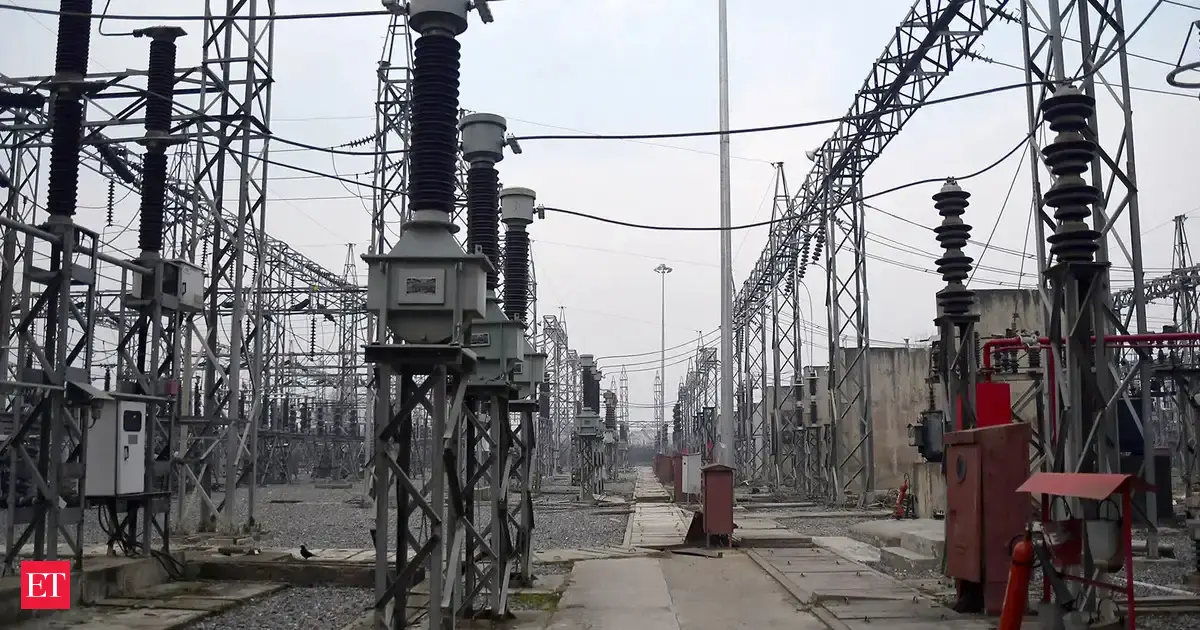
India is drawing up a roadmap to develop indigenous software and hardware for Supervisory Control and Data Acquisition (SCADA) systems used to monitor and control the power network, as it seeks to eliminate dependence on foreign technology in critical electricity infrastructure. The CEA has proposed developing most software and hardware modules by 2028-29, backed by pilot projects, a dedicated testing ecosystem and government funding. View More
The government plans to develop homegrown control systems and equipment for critical power infrastructure , including the national grid, as the government seeks to end reliance on foreign technology and strengthen energy security by 2029. The Central Electricity Authority (CEA) has laid out a roadmap to localise the production of systems that enable real-time monitoring and supervisory control of the electricity network. The plan covers both the software and hardware used in Supervisory Control and Data Acquisition, or SCADA, systems. In a report published on Tuesday, the power ministry body proposed a phased trajectory for developing indigenous SCADA capabilities, with the bulk of the identified software and hardware modules targeted for development by 2028-29. The broader objective is to eliminate import dependence, with the Ministry of Power having decided that SCADA systems should not be imported beyond 2030. Also read: India lets clean-energy projects pay to keep grid access after delays SCADA systems collect and transmit critical data from power plants and substations to control centres, giving grid operators real-time visibility over equipment and enabling supervisory control of the electricity network. They form the front end for Energy Management Systems used in generation and transmission, as well as Distribution Management Systems. Live Events The initiative is part of New Delhi's broader self-reliance push, but the report also flags strategic concerns around dependence on foreign original equipment manufacturers. National grid at the centre of the push The CEA described SCADA systems as the “central nervous system of the National Power Grid”, enabling the “One Nation, One Grid, One Frequency” framework through real-time monitoring and control. It said dependence on foreign OEMs and proprietary technologies has created interoperability constraints, delayed customisation and system upgrades, and increased reliance on external support services. “In an increasingly complex geo-political landscape, such dependence poses potential risks to national energy security,” the report said. “Reliance on foreign technologies for critical infrastructure may expose utilities to supply chain disruptions, technology access constraints, delayed availability of upgrades and support, and limited transparency associated with proprietary or ‘black box’ systems,” it added. The current systems also suffer from vendor lock-in. The CEA said proprietary database architectures and engineering tools can make modifications dependent on OEM intervention, while differences in implementation can limit interoperability and complicate the integration of third-party applications. Also read: Ambani's Rs 2.7 lakh cr underground bet can save India from shocks Local content remains below 20% The power ministry had earlier prescribed a minimum local content requirement of 50% for SCADA systems. However, the CEA's assessment found that actual local content in grid SCADA remains below 20%, with exemptions having been granted in the past. The report noted that software accounts for about 25% of the cost of a SCADA system, while hardware accounts for the remaining 75%, making the localisation of equipment a more gradual and challenging process. The committee's mandate, however, goes beyond meeting minimum local-content thresholds. It has recommended a phased approach aimed at eventually eliminating import dependence and ensuring that SCADA systems are available from Indian entities. Software and hardware roadmap The CEA finalised a timeline covering 38 software modules and 25 hardware components identified by Grid India. The software roadmap includes core SCADA applications, communication systems, historian and data storage platforms, Energy Management System functions such as state estimation and contingency analysis, automatic generation control, cybersecurity applications, load forecasting and network management systems. The committee found that 36 of the 38 software modules could be developed in the short term, although real-time testing and validation through digital twins and parallel operation at State Load Despatch Centres would remain key challenges. The report also said 16 of the 25 identified hardware components were expected to be ready within two years. These include equipment such as servers, routers, switches, storage systems, cybersecurity appliances, workstations and other control-centre infrastructure. For telecom and general IT networking equipment, the power sector will follow the indigenisation trajectory laid down by the Ministry of Electronics and Information Technology and the Department of Telecommunications under their respective Make in India frameworks. Also read: India's power system just passed a historic tipping point Testing, pilots and funding support Besides manufacturing and development, the roadmap calls for a dedicated ecosystem to test and certify indigenous SCADA systems. The committee recommended establishing a testing platform within two years, with government funding, to simulate operating conditions and validate cybersecurity requirements. It also called for pilot projects under State, regional and national load despatch centres to test indigenous software and hardware in real-world conditions alongside existing systems. SLDC Odisha has volunteered to provide a testing environment for pilot implementation. The report said institutions including STQC and CPRI have capabilities in cybersecurity assessment, certification and equipment testing, but a more comprehensive platform would be needed for end-to-end validation of indigenous SCADA modules. Government financial support will also be necessary, the committee said, with the Power System Development Fund, or PSDF, identified as a possible source. National SCADA Mission proposed To drive implementation, the CEA has proposed formalising an institutional mechanism, either through a National SCADA Mission or a specialised working group under the Ministry of Power and the CEA. For development and integration, the report suggested two possible models. Under one, a government PSU or institution with SCADA experience, such as C-DAC, could be nominated. The alternative is a collaboration or consortium model, under which Power Grid or Grid India could invite expressions of interest from capable entities. The final choice of the institutional and development models has been left to the power ministry. The report makes clear, however, that meeting the proposed timeline will depend on adequate funding, a testing ecosystem and coordinated implementation support. .Pbanner{display:flex;justify-content:space-between;align-items:center;background-color:#ec1c40;margin-top:20px;padding:5px 10px;border-radius:4px;color:#fff;line-height:10px;width: 100%;box-sizing: border-box} .Pbannertext{display:flex;align-items:center;font-size:16px;font-weight:600;font-family:'Montserrat';} .Pbannertext img{height:20px;margin:0 6px} .Pbannerbutton a{display:flex;align-items:center;background-color:#fff;color:#ec1c40;text-decoration:none;font-weight:600;padding:4px 8px;border-radius:6px;font-size:15px;font-family:'Montserrat';} .Pbannerbutton img{height:20px;margin-right:6px} .Pbannerbutton a:hover{background-color:#f7f7f7} Add as a Reliable and Trusted News Source Add Now! (You can now subscribe to our Economic Times WhatsApp channel) (You can now subscribe to our Economic Times WhatsApp channel)