
Latest Sectors News

Coverage of GLP-1 drugs for weight loss is being dropped by many employer-sponsored healthcare plans as premiums soar, though workers have some new options. View More
watch nowVIDEO2:4302:43Bank of America CEO Brian Moynihan: We spend 'about $250 million or more' on GLP-1 drugs each yearSquawk BoxWith open enrollment season in swing, many employees may notice something conspicuously missing from their benefits menu â coverage of GLP-1 drugs for weight loss.More companies are dropping coverage completely or offering employees less generous payouts. In some cases, they're shifting to a different model altogether â offering employees a consolation prize of sorts â access to a weight management program through a third party.Coverage of these drugs for weight loss is pricey for employers â typically costing in the mid-$500s to mid-$600s per user monthly. Some companies say whatever the price, covering the drugs is worth it based on employee health. "We spend about $250 million or more on GLPs, and that's up from zero" four or five years ago, Bank of America CEO Brian Moynihan told CNBC's Andrew Ross Sorkin in August. "We see a great impact on the employees. ... Believe me, we're pounding everybody on price and trying to get as cheap [as possible]. But our view is that [because of] the long-term health benefits, plus there may be more short-term health benefits ... it's a good investment."Nevertheless, as healthcare costs continue to climb, more employers have been looking for an exit ramp on GLP-1 coverage for weight loss, and that includes bigger companies. A WTW annual health benefits survey fielded over the summer and being released in full on Wednesday found that 53% of employers with more than 100 employees cover GLP-1s for weight loss, down from 57% in 2025. That's the first decline in three years. What's more, 16% of employers said they cover the drugs now but are considering removing them, up from 9% last year. According to a recent Marsh survey of over 1,800 US employers, health insurance cost per employee is expected to rise 8.2% on average in 2027, the biggest increase since 2003, with GLP-1 use accounting for a full percentage point of the overall cost growth. Its experts have cited the soaring costs among reasons employers are considering dropping coverage for 2027."Employers are really balancing empathy with economics," said Caroline Susie, principal in Marsh's total health management practice.Some workers who use employer-sponsored health plans are being provided with options in the event of GLP-1 coverage being dropped, though nothing may match full health insurance coverage. Here are alternatives to expect.Direct-to-consumer programs Some employers are directing workers to buy GLP-1s through direct-to-consumer options like Novo Nordisk's NovoCare or Eli Lilly's LillyDirect. WTW's survey showed that 8% of employers have gone this route, and 28% were planning or considering it. Seth Friedman, pharmacy and health plans practice leader at Gallagher, estimated that 20% to 30% of the firm's clients have dropped coverage for 2027 and are sending employees the direct route. For employers, this move can mean significant savings. The percentage of U.S. adults who take GLP-1 medications for weight loss purposes climbed to 11% in 2026, up significantly from 3% in 2024, according to Gallup. What's more, 15% report having used the medicine for weight loss at some point, a nine-percentage-point boost."Many people will choose to pay for this on their own even if it's not covered by the plan," said Jeff Levin-Scherz, population health leader at WTW.The starting price for the lowest dose of Novo's Wegovy for self-pay individuals is currently $149 a month for the pill and $199 a month for the shot. Those prices are subject to change in 2027; Novo Nordisk says current promotional pricing may be modified or canceled. Lilly's Zepbound starts at $299 a month for a single-dose vial or multi-dose KwikPen.Direct-to-employer programsSome companies are moving to a direct-to-employer model, where they drop coverage through their traditional pharmacy program, but offer to reimburse some portion of an employee's out-of-pocket costs. "These 'alternative coverage' models enable employers to access more advantageous pricing and greater control over their contributions, without covering the drug on their PBM formulary," said a spokesperson for Vida Health, one of multiple vendors that works with employers in this area. Others include Noom and GoodRx.Employers can often design the program that works for their employees' needs, at a significant savings from paying for GLP-1 drugs through a pharmacy benefit manager, said Alysha Fluno, national pharmacy practice leader at Marsh. A PBM is a third-party administrator that manages prescription drug benefits for health insurers and employers.Based on direct-to-consumer prices, employers could fully subsidize, pay a vendor fee, and still spend much less than they would to purchase Wegovy, for example, through a PBM, according to WTW's Levin-Scherz.watch nowVIDEO2:1102:11GLP-1s for $50 a month?CNBC Digital Original VideoWeight-management programsSome employers are dropping coverage and contracting with third parties like CVS Weight Management, Noom, Omada Health, UnitedHealthcare, Vida and Virta, to offer weight-management programs to employees. Some employers offered these types of programs before, while others made them available only after dropping GLP-1 coverage for weight loss. According to 2025 data from Marsh, 25% of employers of 500 or more employees had a vendor partner for lifestyle modification and nutrition support. Employers, not employees, typically foot the bill for these programs, at a significant savings compared with GLP-1 coverage. Services can vary by member, but offerings generally include live or online coaching on behavior change, diet, exercise, nutrition and other health topics. Costs for these programs can run about $65 to $100 per employee per month, depending on what's offered, according to Marsh's Susie. Employers who choose a vendor that offers prescription services as well could pay $150 or more per month per participating employee. Service providers cite good results from their programs in recent years. Data from Omada Health show that 63% of members evaluated at 12 months after stopping a GLP-1 maintained or continued to lose weight. UnitedHealthcare's Real Appeal program data show that 88% of at-risk participants lost weight during the 52-week program designed to promote healthy eating, physical activity, improved well-being and a better health outlook. What's more, 37% of participants lost 5% or more in body weight. Meanwhile, initial program results reported by CVS Weight Management showed 90% weight loss maintenance for members up to 10â12 months after ending drug therapy.Provider offerings vary somewhat, but professional support is often a hallmark. "We want to make sure that if they go off GLP-1s for whatever reason, they maintain the behavior changes," said Cody Fair, chief commercial officer of Noom. "We're able to keep that weight off because they've retrained their brain and changed their habits," he said. Employee utilization, however, can be a challenge, said Gallagher's Friedman. "It's absolutely a commitment, and that's probably why you don't see a whole lot do it. Especially when they know they can just have their doctor write a script and go directly to Novo or Lilly."FSA, HSA money for medically necessary GLP-1sWhile these tax-advantaged accounts are not alone a replacement for a comprehensive health plan, GLP-1 medications are eligible for flexible spending account (FSA) and health savings account (HSA) reimbursement when prescribed by a licensed provider to treat a diagnosed medical condition, such as obesity. The disadvantage of using an HSA to pay for GLP-1s is that the dollars invested don't have a chance to grow tax-free for use later on in retirement.The annual employee contribution limit for an FSA is $3,400 in 2026. For 2026, the maximum annual HSA contribution limits set by the IRS are $4,400 for individuals with self-only coverage and $8,750 for those with family coverage. That will rise in 2027 to $4,500 for individuals and $9,000 for families. Official 2027 IRS contribution limits for FSAs have not yet been announced. "Benefits are there to cover those out-of-pocket costs," said Andrew Stocker, president of employee benefits at Voya Financial. "Employers need to educate employees about the benefits that do exist."watch nowVIDEO5:3205:32Eli Lilly CEO Dave Ricks: One-third of new GLP-1 pill patients are taking FoundayoHalftime Report Choose CNBC as your preferred source on Google and never miss a moment from the most trusted name in business news.

Indian weddings are adding reel creators, drone shows and curated experiences to the bill. Couples are responding with DIY hacks, tighter budgets and financial planning to keep costs under control. View More

Amid high power demand, the power ministry has allocated additional electricity to several states including Gujarat. Gujarat has received 1.6 GW of electricity, which includes extensions from existing allocations. Tamil Nadu and Jammu & Kashmir also received additional power based on their requests, with specific allocations from different sources. The allocations aim to meet the states' short and long-term power needs effectively. View More
New Delhi: Amid high power demand in Gujarat, the power ministry has allocated additional electricity to the state from central generating stations for short as well as long term, people aware of the development said. Tamil Nadu and Jammu & Kashmir have also got additional allocation, following requests from these states. Gujarat got 1.6 GW, Tamil Nadu around 421 MW and Jammu & Kashmir received 329 MW. Some of the power will be from gas-based power plants as well. Also read: Peak power demand falls as cooling needs ease For Gujarat, this comes as a relief considering the current high demand from the domestic and industrial segments, one of the persons said. In Gujarat, peak demand on October 24 was around 28.3 GW, almost the same as it saw in much of June. Live Events Of the total allocation to Gujarat, around 716.3 MW from NTPC power stations is an extension of existing allocation for another year till March 2028, which was allocated in June 2022. The order dated October 19, and seen by ET, said this power was to be allocated from NTPC Ltd 's Barh-I and Dadri-I power stations by another year. Another 330 MW for Gujarat is from NTPC's Farakka thermal units, which is allocated only for November. This capacity allocation is currently with Punjab. The state has also been allocated 164.4 MW from North Eastern Electric Power Corporation (NEEPCO) Ltd's Assam gas-based power station and 216.65 MW from NTPC's Bongaigaon thermal power station, which are long-term supplies. The Centre allocates power from central generating stations to states based on their requirements and availability of generating capacity. Such allocations can include unallocated or surrendered power, allowing states to secure additional electricity without waiting for new generation capacity to be commissioned. E-mail seeking response from the power ministry remained unanswered till the time of publishing. Tamil Nadu's allocation is from NTPC's Bongaigaon plant, Subansiri hydro projects and Subansiri Lower project on a long-term basis, proportionally, as and when the units are commissioned. For Jammu & Kashmir, the allocation of 329.4 MW is from relinquished power of Bihar from Farakka stage-I & II from December to February. .Pbanner{display:flex;justify-content:space-between;align-items:center;background-color:#ec1c40;margin-top:20px;padding:5px 10px;border-radius:4px;color:#fff;line-height:10px;width: 100%;box-sizing: border-box} .Pbannertext{display:flex;align-items:center;font-size:16px;font-weight:600;font-family:'Montserrat';} .Pbannertext img{height:20px;margin:0 6px} .Pbannerbutton a{display:flex;align-items:center;background-color:#fff;color:#ec1c40;text-decoration:none;font-weight:600;padding:4px 8px;border-radius:6px;font-size:15px;font-family:'Montserrat';} .Pbannerbutton img{height:20px;margin-right:6px} .Pbannerbutton a:hover{background-color:#f7f7f7} Add as a Reliable and Trusted News Source Add Now! (You can now subscribe to our Economic Times WhatsApp channel) (You can now subscribe to our Economic Times WhatsApp channel)

Several companies, including REC, Coal India, NTPC and Godrej Consumer, are set to announce September-quarter results and dividends. Meanwhile, Indian equities ended lower on Friday, with the Nifty 50 down 0.39% and its technical outlook remaining weak. View More

The ?company, which began operations in India earlier this year, ?will first build an inverter manufacturing plant that is ?expected to be operational by the second quarter of 2027 View More

Goa's government has announced a 7% value-added tax on aviation turbine fuel, starting in October 2026. IndiGo has expressed support for this decision, encouraging other states to implement similar strategies. The airline believes this change will enhance air connectivity and support Goa's tourism industry. The notification alters the existing VAT rate under the Goa Value Added Tax Act of 2005. View More
The Goa government has set a 7% value-added tax (VAT) rate on aviation turbine fuel (ATF), with the revised rate taking effect from October 24, 2026. The state had last set VAT on this category of ATF at 15% in March 2024, before cutting it to 7% in the latest notification. IndiGo has welcomed the decision, urging other states to consider similar measures as aviation fuel costs remain high. The airline said rationalising VAT on ATF would strengthen air connectivity, support Goa’s tourism sector and help make air travel more accessible. In a post on X, IndiGo thanked Chief Minister Pramod Sawant for the decision, describing it as a progressive step towards strengthening the aviation ecosystem. The airline also expressed hope that other states would follow suit. The notification, issued by Goa’s Department of Finance (Revenue and Control) on October 23, amends Schedule C of the Goa Value Added Tax Act, 2005. It prescribes a 7% VAT rate for “Aviation Turbine Fuel other than covered by entry (1) above”, replacing the existing entry at serial number two. Live Events — IndiGo6E (@IndiGo6E) The revised provision retains a distinction between this category of ATF and fuel covered under the preceding entry. IndiGo said similar measures by other states could help improve the accessibility of air travel at a time when ATF costs remain elevated. The airline did not announce any corresponding change in airfares. .Pbanner{display:flex;justify-content:space-between;align-items:center;background-color:#ec1c40;margin-top:20px;padding:5px 10px;border-radius:4px;color:#fff;line-height:10px;width: 100%;box-sizing: border-box} .Pbannertext{display:flex;align-items:center;font-size:16px;font-weight:600;font-family:'Montserrat';} .Pbannertext img{height:20px;margin:0 6px} .Pbannerbutton a{display:flex;align-items:center;background-color:#fff;color:#ec1c40;text-decoration:none;font-weight:600;padding:4px 8px;border-radius:6px;font-size:15px;font-family:'Montserrat';} .Pbannerbutton img{height:20px;margin-right:6px} .Pbannerbutton a:hover{background-color:#f7f7f7} Add as a Reliable and Trusted News Source Add Now! (You can now subscribe to our Economic Times WhatsApp channel) (You can now subscribe to our Economic Times WhatsApp channel)
Adani Power CEO Khyalia said that the company remained focused on delivering reliable, high-quality electricity on schedule to meet India’s rising baseload requirements. India’s growing appetite for electricity is strengthening the case for thermal power, he added. View More
Adani Power is making progress with plans to add 23,720 MW of thermal power capacity amid rising electricity demand in India, CEO SB Khyalia said on October 23 as the company announced its Q2 earnings. CEO Khyalia said that the company remained focused on delivering reliable, high-quality electricity on schedule to meet India’s rising baseload requirements. India’s growing appetite for electricity is strengthening the case for thermal power, he added. Geopolitical developments and climate-related uncertainties have reinforced the importance of domestic coal-based generation in securing the country’s long-term electricity supply, Khyalia said. Thermal capacity expansion gathers pace Adani Power is pursuing a programme to add 23,720 MW of new thermal power capacity. Two projects nearing completion are the 1,320 MW Korba Phase-II supercritical thermal power project and the 1,600 MW Mahan Phase-II ultra-supercritical thermal power project. Also read | Adani Energy's 'smart' bet comes with a Rs 29,519 crore revenue potential Live Events At Korba Phase-II, the first 660 MW unit has been synchronised with the grid and is expected to be commissioned shortly. The second unit is scheduled to enter service in the fourth quarter of FY27. Mahan Phase-II is expected to be fully commissioned in the early part of FY28. Work is also progressing on the 1,600 MW Raipur Phase-II and 1,600 MW Raigarh Phase-II ultra-supercritical projects. Both have crossed 65% completion in less than 30 months since construction began, with commissioning scheduled for FY29. Coal-based generation gains share The expansion comes as electricity consumption rises across the country. India’s power demand increased 11.5% YoY to 502 BU in Q2 FY27, while generation advanced 11% to 536 BU. Rapid economic growth and a weak monsoon contributed to the increase in demand. Reduced hydropower generation potential, alongside higher electricity consumption, lifted coal- and lignite-based power’s share of total supply to 66% in the quarter, from 65% in Q2 FY26. These sources accounted for 73% of the additional electricity generated during the period. Also read | KEC International bags new orders worth over Rs 1,000 cr The aggregate plant load factor (PLF) of India’s coal-based power plants rose to 68% in Q2 FY27, compared with 62% in the corresponding quarter a year earlier, indicating higher utilisation of existing capacity. Big profit jump in Q2 In Q2, with Adani Power saw a sharp rise in quarterly earnings as demand climbed and its capacity expansion gathered pace. It reported a 134% year-on-year rise in consolidated net profit to Rs 6,919 crore for the second quarter of FY27, while revenue from operations increased 45% to Rs 19,439 crore. Adani Power on Friday reported a 134% year-on-year (YoY) increase in consolidated net profit to Rs 6,919 crore for the second quarter of FY27, compared with Rs 2,953 crore in the corresponding period last year. Revenue from operations grew 45% to Rs 19,439 crore from Rs 13,457 crore a year earlier, according to the company’s regulatory filing. Earnings before interest, tax, depreciation and amortisation (EBITDA) rose 60% to Rs 8,231 crore against Rs 5,150 crore in the year-ago quarter. The company’s consolidated power sales volume increased 11.5% YoY to 26.4 billion units (BU) in Q2 FY27, up from 23.7 BU in Q2 FY26, supported by stronger electricity demand. Adani Power also reported an improvement in its EBITDA margin to 42.3% from 38% in the year-ago period. The company’s reported figures described this as a 400% increase. .Pbanner{display:flex;justify-content:space-between;align-items:center;background-color:#ec1c40;margin-top:20px;padding:5px 10px;border-radius:4px;color:#fff;line-height:10px;width: 100%;box-sizing: border-box} .Pbannertext{display:flex;align-items:center;font-size:16px;font-weight:600;font-family:'Montserrat';} .Pbannertext img{height:20px;margin:0 6px} .Pbannerbutton a{display:flex;align-items:center;background-color:#fff;color:#ec1c40;text-decoration:none;font-weight:600;padding:4px 8px;border-radius:6px;font-size:15px;font-family:'Montserrat';} .Pbannerbutton img{height:20px;margin-right:6px} .Pbannerbutton a:hover{background-color:#f7f7f7} Add as a Reliable and Trusted News Source Add Now! (You can now subscribe to our Economic Times WhatsApp channel) (You can now subscribe to our Economic Times WhatsApp channel)

The company also plans to set up a research and development centre focused on battery energy storage systems in ?India View More
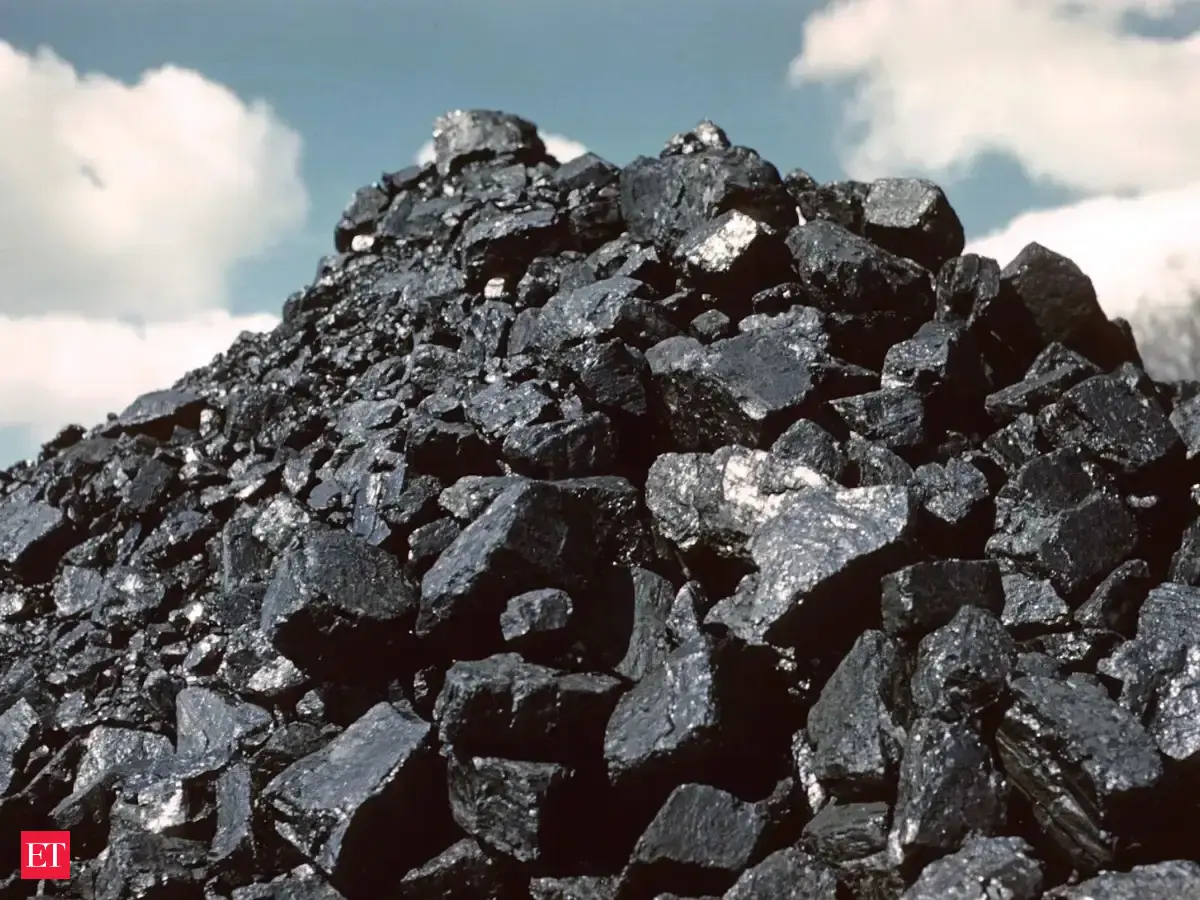
Bharat Coal Gasification and Chemicals Ltd has begun construction for a significant coal gasification project in Odisha. The project involves an investment of Rs 25,000 crore, aimed at producing technical grade ammonium nitrate. Most tenders have been awarded, with Rs 15,000 crore worth of contracts already distributed. Major work is divided between BHEL and Larsen & Toubro for specific project packages. View More
New Delhi: Bharat Coal Gasification and Chemicals Ltd (BCGCL), the joint venture of Coal India Ltd (CIL) and BHEL , has started ground construction activities for its Rs 25,000 crore coal gasification project in Odisha, with most of the tenders awarded, its Managing Director Peeyush Kumar said on Thursday. The development assumes significance in the wake of the country's push to build 100 million tonne of coal gasification capacity by 2030 under the National Coal Gasification Mission , aimed at converting coal into chemicals and bringing down the import dependence on products such as LNG, urea, ammonia and methanol. "We are going ahead with the joint venture of BHEL and Coal India, which is BCGCL....I am happy to share that we have started ground construction activities... Most of the tenders have been awarded and construction has started," Kumar said during the 17th Edition of Gasification India 2026 organised by Mission Energy Foundation. Also read: India turns back to Gulf oil as Russian crude loses its price edge BCGCL-a joint venture in which CIL holds the majority 51 per cent stake and Bharat Heavy Electricals Ltd (BHEL) the remaining 49 per cent-has been established to develop a state-of-the-art coal-to-ammonium nitrate project. Live Events Kumar said that the contracts worth about Rs 15,000 crore have already been awarded, while tenders for the remaining works are yet to be awarded. The balance of the project cost comprises soft costs, including interest, depreciation and land-related expenses. "Out of Rs 25,000 crore, Rs 15,000 crore of work has already been awarded. Of this, Rs 10,000 crore has gone to BHEL and Rs 5,000 crore to L&T," he said. The project is aimed at producing approximately 0.66 million tonnes per annum of technical grade ammonium nitrate through coal gasification and represents one of the country's pioneering commercial-scale initiatives utilising domestically developed pressurised fluidised bed gasification technology for chemical production. Also read: Indian Oil to trim Middle East oil imports under annual deals amid Iran war He further said that the work has been divided into four major packages. BHEL is executing the coal gasification and syngas purification packages, while Larsen & Toubro (L&T) is handling the ammonia synthesis and ammonium nitrate production packages. "After purification, the gas will be converted into ammonia, and ammonia will be converted into nitric acid and ammonium nitrate. The ammonia and ammonium nitrate packages are under L&T's scope," Kumar said. The project is being implemented in Odisha and has received single-window clearance from the high-level clearance authority of the state government. .Pbanner{display:flex;justify-content:space-between;align-items:center;background-color:#ec1c40;margin-top:20px;padding:5px 10px;border-radius:4px;color:#fff;line-height:10px;width: 100%;box-sizing: border-box} .Pbannertext{display:flex;align-items:center;font-size:16px;font-weight:600;font-family:'Montserrat';} .Pbannertext img{height:20px;margin:0 6px} .Pbannerbutton a{display:flex;align-items:center;background-color:#fff;color:#ec1c40;text-decoration:none;font-weight:600;padding:4px 8px;border-radius:6px;font-size:15px;font-family:'Montserrat';} .Pbannerbutton img{height:20px;margin-right:6px} .Pbannerbutton a:hover{background-color:#f7f7f7} Add as a Reliable and Trusted News Source Add Now! (You can now subscribe to our Economic Times WhatsApp channel) (You can now subscribe to our Economic Times WhatsApp channel)
Coal supply to Indian power plants is being increased, with a record 2.6 million tons delivered daily. The number of plants with critically low coal stocks has risen recently, impacting power generation. As hydropower usage declines due to El Nino effects, coal-fired plants face increased pressure. Gujarat has received additional power allocation to manage rising electricity demand effectively. Authorities have requested factories to limit electricity use to prevent potential shortages. View More
New Delhi: Coal supply to Indian power plants is expected to normalise soon, a senior power ministry official said on Thursday, adding that the country is supplying a record 2.6 million tons of coal to power plants every day. The comments come as the number of power plants with critically low coal stocks - enough fuel to generate power for less than three days - rose to 96 as of October 19 from 60 in mid-September, according to data from the Central Electricity Authority India increased coal supply to plants, including top power generator NTPC , after scattered rains in mining areas disrupted deliveries Reduced hydropower use is adding pressure on coal-fired plants as the El Nino weather pattern has affected rainfall, the official said. Daily peak electricity demand has risen by about 45 to 50 gigawatts from a year earlier, driven by hotter weather and higher industrial production. The federal power ministry has allocated additional power to Gujarat, India's top industrial state, and there is no power or coal shortage in the state, the official said. Live Events Reuters reported on Wednesday that Gujarat has asked factories to curb electricity use during evening hours to avoid power shortages due to surging demand. Gujarat state authorities declined to comment on the report. .Pbanner{display:flex;justify-content:space-between;align-items:center;background-color:#ec1c40;margin-top:20px;padding:5px 10px;border-radius:4px;color:#fff;line-height:10px;width: 100%;box-sizing: border-box} .Pbannertext{display:flex;align-items:center;font-size:16px;font-weight:600;font-family:'Montserrat';} .Pbannertext img{height:20px;margin:0 6px} .Pbannerbutton a{display:flex;align-items:center;background-color:#fff;color:#ec1c40;text-decoration:none;font-weight:600;padding:4px 8px;border-radius:6px;font-size:15px;font-family:'Montserrat';} .Pbannerbutton img{height:20px;margin-right:6px} .Pbannerbutton a:hover{background-color:#f7f7f7} Add as a Reliable and Trusted News Source Add Now! (You can now subscribe to our Economic Times WhatsApp channel) (You can now subscribe to our Economic Times WhatsApp channel)