
Latest Sectors News

The JV firm, with the Indian arm of French power major EDF, is eyeing pumped storage projects, hydro power projects, other renewable energy projects and distribution business within India and neighbouring countries View More

The range, available from 5 kW to 50 kW, is designed around the energy storage needs of businesses View More

The public has soured on AI data centers and states are slowing development, but for HVAC, plumbing, welding, and electrical workers, it's been a jobs boom. View More
In this articleORCLFollow your favorite stocksCREATE FREE ACCOUNT Construction workers build a new data center in Stone Ridge, Virginia on August 12, 2026. Brendan Smialowski | Afp | Getty ImagesWhen most people think of AI and jobs, the conversation often pivots to which occupations are most likely to be obliterated by its arrival. But, at least for some professions, the AI boom has been an employment one too.AI is creating jobs in a variety of trades that prop up the sprawling ecosystem that powers giants like Anthropic, Meta, Amazon, OpenAI, and others.The construction and maintaining of data centers and the entire AI ecosystem is requiring a new generation of HVAC technicians, construction workers, line workers, and pipefitters."These are occupations that are becoming increasingly important to the AI economy," said Maria Flynn, president and CEO of national nonprofit Jobs for the Future. While data centers are the part that gets the publicity, they are only one piece of a much larger puzzle, requiring upgrades in transportation and modernization of the energy grid. "We are seeing major sources of demand that are converging at the same time," Flynn said.The skilled jobs often come with attractive pay. Flynn said an apprentice level technician can take home $40,000 to $60,000, with experienced electricians commanding north of $100,000.Nicole Bachaud, labor economist at online employment marketplace ZipRecruiter, is seeing salaries even higher for more specialized, high skill roles. Bachaud said that the mean minimum salary for data center jobs spiked by 125.1% year-over-year to nearly $208,000."This is suggesting that highly specialized, top-tier engineering roles are pulling the overall average up drastically," Bachaud said.While many traditional blue-collar workers are seeing a boost, including truckers, the biggest blue collar beneficiaries, according to Bachaud's data, are welders and pipefitters. Postings for those jobs are up 164% year over year. While that could be partly the result of a small sample size as more data centers are built, even if each one only needs a few pipefitters, the demand for these roles will increase, she said. The construction demand is also uneven with some places getting in on it more than others. Houston and Birmingham have seen particularly robust growth."Places with more land to expand and build, which are often places where building regulations make development easier, cheaper, and faster, will likely be where expansion continues, versus coastal hubs that have higher costs and more regulatory burdens," Bachaud said. That means an electrician or pipefitter in Birmingham will probably have more of a buyer's market than one in Boston.Workers run pipe to an electrical substation under construction at the site of a new QTS Eagle Mountain data center in Eagle Mountain, Utah, US, on Friday, Aug. 28, 2026.Bloomberg | Bloomberg | Getty ImagesNone of this surprises Justin Sinkovich, associate professor and associate director of the School of Business and Entrepreneurship at Columbia College Chicago. In his view, the usual AI jobs narrative of displacement is incomplete, with the data center counter-story as one example. While AI may automate some work, its deployment depends on the buildout of infrastructure, including not only data centers but also substations, cooling systems, water, and piping infrastructure, which AI cannot build. "Positive effects on the labor market are already visible, with an increased demand for cooling and HVAC engineers, industrial automation technicians, and traditional trade workers like construction workers and electricians. HVAC-engineering wages have risen, and many technical professionals entering data-center roles are seeing a pay premium," Sinkovich said.He pointed to Louisiana as a specific example, where both Amazon and Meta have massive projects."Amazon committed $12 billion to a new data center with 540 new on-site jobs, including 1,700 electricians, technicians, and security personnel. Meta's Hyperion project in Louisiana is $27 billion," Sinkovich said. "These projects create demand for on-site workers and therefore cannot be offshored or conducted remotely, unlike manufacturing and software," he added.He also said there is a longer-term story of AI enabling more decentralized and dynamic energy systems. This not only improves energy efficiency but also creates additional work to build smart controls, battery systems, microgrids, and distributed energy infrastructure.Economic optimism vs. public skepticismRecent research from global real estate services firm Cushman & Wakefield indicates that every 100MW of new data center development creates nearly 1,300 jobs in the local economy, generating approximately $110 million in annual wages, $344 million in gross output, and $187 million in gross regional product. And many of these jobs aren't ones requiring a diploma. In fact, many of them are better suited to a path through trade school.But the optimistic shovels on the ground analysis don't match the national mood. Seventy percent of Americans oppose a data center being built in their local area, according to Gallup, and a New York Times/Siena poll conducted this month found roughly two-thirds opposed regardless of party â Democrats, independents and Republicans alike.Even where data centers are proceeding at a robust clip and creating the most jobs public opinion has turned against them. Fifty-seven percent of voters oppose one in their own community, according to a Texas Politics Project poll, enough that some experts see Democrats gaining ground in the Lone Star State. According to Data Center Watch, at least 75 data center projects worth roughly $130 billion have already been blocked or delayed this year as the backlash spreads. Texas Gov. Greg Abbott, currently up for reelection, recently issued a data center grid approval moratorium and halt on new environmental permits. New York Governor Kathy Hochul recently implemented the first statewide ban on new data centers.   The dynamics of the situation prompted Oracle this week to file a "force majeure" (a stipulation that a project may be delayed due to extraordinary circumstances) notice on its New Mexico data center project, part of the broader Stargate AI buildout, seeking to delay payment if the facility isn't operational by 2028. The project has faced local opposition ahead of the midterms and environmental concerns, though Oracle says it remains on track.watch nowVIDEO5:2905:29Rep. Josh Gottheimer: You can't get rid of data centers, but put them only where people want themThe ExchangeShenandoah University professor Michael Hicks, who has studied the economic impact of data centers, says that the public mood is often the result of the mismatch between what data centers promise and their reality."Most of the backlash is the result of developers being untruthful with local officials about potential effects, developers have woefully overpromised jobs and given tax breaks that are beyond obscene," Hicks said.He added that he believes studies like the ones produced by Cushman & Wakefield and others use modeling with the rosiest possible scenarios, whereas he has studied actual on the ground impact from data centers going back to the early 90s."Permanent labor market effects are muted. There are very few that have substantiative numbers beyond the early build out phase," Hicks said.Recent research from Brookings Institution found that there is a local economic impact from data center construction, but it can be muted, and it can greatly depend upon the type of data center being built â a massive hyperscaler facility versus more typical colocation data centers owned by real estate developers and where data services are being shared across customers. Brookings stressed that while the data center debate is moving fast, on the economics, the "evidence base has not kept pace."Hicks is a fan of data centers, but not because of jobs. He said if data centers are taxed at the same rate as households they are generally going to cause an enormous increase in taxable property for a community. He said that surplus can then be used to cut residents property taxes, citing Loudon County, Virginia where average property taxes have dropped by $3,400 since 2020 due to the huge data center build out. Or instead of cutting taxes, the additional revenue can be used to increase community amenities and services that improve quality of life that outweigh the noise and grid strain.At the same time, some states are also lavishing tax breaks on data centers that some say are both undeserved and ultimately, bad economics.How a small town and family business in Georgia have benefitedBut observations on the ground do bear out the current labor boom.Trey Travis, vice president of operations at industrial hose and expansion joint manufacturer Southeastern Hose in Bremen, Georgia (population 7,000), is the third generation at the helm of this family-owned company. AI was science fiction when the company was started by his grandfather in the 1960s. Now, AI is their booming reality.Southeastern Hose's expertise is in fluid conveyance and thermal expansion. Travis said their products are essential for managing temperature changes and preventing catastrophic failures in rigid piping systems. In simpler terms, his company produces the plumbing for the plumbing, the obscure pieces of the data center. "If there is fluid moving anywhere or a change in temps, there will be a hose or expansion joint in the piping system somewhere," Travis said. He compared his products to the "missing screw" that might come up in a home DIY project, something obscure â but crucial â to a home project that will send you back to the hardware store if you don't have it because the project can't proceed without it. The market for the piping and joints made by Southeastern Hose is booming now, giving Travis's tiny Georgia town an economic lifeline."We've grown pretty significantly over the last 18 months," he said. The company's 150-person workforce has ballooned by 40 percent during that time."We've got a pretty vast relationship with some of our local trade schools and high schools for work-based learning programs," Travis said of their ability to hire workers. He said workers can get all the overtime they want, make plenty of money, and still have a family life.Some of the skills needed to make data center components are even outrunning the trade schools, like the specialized welding skills needed."If I get a top notch welder from the local trade school, I still have on-site training because they've never seen this type of welding on this type of product before," Travis said.None of this surprises labor economist Michael Rosenbaum, who said the popular narrative is that AI is replacing workers, but that isn't the whole story."The more important labor-market story is that AI is increasing the pace at which jobs are created, transformed, and displaced," Rosenbaum said, adding that as demand surges for electrical engineers, HVAC technicians, cable engineers, and other skilled trades supporting data center construction, the question isn't whether enough workers exist in the economy."It's whether we can identify them, train them, and connect them to opportunity quickly enough. AI may ultimately prove just as valuable in helping workers navigate career transitions as it is in automating work itself," Rosenbaum said.Microsoft's Boydton data center in Southern Virginia has driven workforce development, with Southside Virginia Community College and Southern Virginia Higher Education Center's Data Center Academy supporting traditional college-aged and adult learners to earn credentials for data center work.window.addEventListener("message",function(a){if(void 0!==a.data["datawrapper-height"]){var e=document.querySelectorAll("iframe");for(var t in a.data["datawrapper-height"])for(var r,i=0;r=e[i];i++)if(r.contentWindow===a.source){var d=a.data["datawrapper-height"][t]+"px";r.style.height=d}}});Rachel Lipson, founder of Harvard's Project on Workforce and an advisor in the Biden administration's investments in chips and semiconductor manufacturing, said AI will change the American workforce in ways that previous waves of technology didn't."This wave of technological change looks very different from what we saw in the early days of computers and the internet and the outsourcing of manufacturing in the U.S.," Lipson said. During those periods, almost all of the job growth went to workers with the highest level of education, but this time around things are different. Welders, she said, can graduate from high school and be making $65,000 to $75,000 a year in short order with almost unlimited overtime."A lot of job opportunities today don't require advanced degrees. We are seeing a blue collar resurgence," Lipson said. "But it will require making a different set of choices of where we invest in education, training, and what we support," she added.Even with the public and, along with them, politicians swinging hard against AI in recent weeks, Lipson doesn't expect an immediate retreat from the jobs boom."In the short term, the moratoria and public backlash are unlikely to have a big impact on demand for these roles, because there are so many AI and data center projects already underway or approved that will continue moving forward despite the recent shifts," Lipson said.If opposition to data centers continues to grow, that could muddy the market."The longer-term picture could be different. If moratoria spread and significantly fewer new projects are approved, eventually that would flow through to labor demand â but with a lag, as the existing pipeline gets built out," Lipson said.ZipRecruiters Bachaud agrees that any shift in sentiment towards data centers will take awhile to manifest itself on the ground because of the time involved in building out AI infrastructure."The planning, permits, and actual build can take months, or even years in some parts of the country. As public sentiment shifts, the future of data center locations and the speed at which they develop will likely change, but the rollout of these changes will be slow," Bachaud said.Larger macroeconomic forces will also help determine the future of data center workers in construction trades."While data centers are boosting the local labor dynamics in places that are building, future demand for many of these workers will depend on general economic growth, like demand for residential and multi-family housing and commercial buildings," Bauchaud said. "The need for additional housing is high, so many of these workers could transition into other roles if economic conditions improve, but waning affordability for home buyers threatens building progress and thus job availability."âCNBC's Hugh Leask contributed to this report.watch nowVIDEO11:4911:49Why China wants to bring its prefabricated data centers to the U.S.CNBC Digital Original Video Choose CNBC as your preferred source on Google and never miss a moment from the most trusted name in business news.

JSW Energy said its wholly owned subsidiary JSW Thermal Energy has entered into a contract with Toshiba JSW Power Systems to procure two 800 MW steam turbine generators for Phase-II of the Salboni Thermal Power Project in West Bengal. View More

According to a release, the agreement focuses on the development, ownership, and operation of pumped storage assets, hydroelectric installations, other renewable energy facilities, and electricity distribution operations. View More
The current commercial capacity of NTPC Green Energy Limited group stands at 10,977.23 MW. With the addition of this capacity, the total installed capacity of the NTPC Green Energy group increases to 11,058.57 MW. View More

With this notification in place, India has tried to put a protective layer for the domestic industry from unfair foreign competition. View More
The Directorate General of Foreign Trade (DGFT), on July 13, 2026, quietly rewrote a small but consequential part of India’s trade rulebook. Notification No. 23/2026-27 inserts Paragraph 2.20B into the Foreign Trade Policy 2023, prohibiting the import of goods produced wholly or in part through forced labour. Additionally, Paragraph 11.64 has defined “forced labour” as per the International Labour Organization’s (ILO’s) 1930 convention. The provision takes effect 30 days after publication in the gazette. The reading of the insertion of these paragraphs may be done in several ways. First, India has long prohibited forced labour. Article 23 of the Constitution of India and the Bonded Labour System (Abolition) Act, 1976, explicitly ban forced or bonded labour in the country. India, as one of the founding members of the ILO, has ratified the conventions regarding forced labour. However, a trade-side mechanism was missing. Para 2.20B closes that gap and empowers the government to stop a shipment if forced labour is used in the commodities. This policy does not impose an automatic blanket ban on imports; instead, it provides an enabling framework for the DGFT to investigate specific goods and recommend prohibitions based on the use of forced labour. Second, although the notification is country-neutral, global debates on forced labour have largely centred around allegations concerning China, particularly the Xinjiang province, where several products, including textiles and solar-grade polysilicon, have been subjected to heightened scrutiny because of forced labour. Forced labour is a kind of input-cost subsidy that suppresses the production cost of the commodity and undercuts market competition, harming the interests of domestic industry in the importing country. Chinese firms have been dumping their produce in the Indian market over the years. Additionally, in the current context of the ongoing India-US trade deal, several experts have warned of an increased import surge from China. By issuing this notification, India gets one more policy instrument to deal with unfair market activity apart from the anti-dumping framework. Third, with this notification in place, India has tried to put a protective layer for the domestic industry from unfair foreign competition. Indian producers may experience an incentive to scale up without the constant threat of being undercut by artificially cheap imports. In the long term, such measures may also incentivise foreign firms to set up their shops in India, as the adoption of forced labour prohibition regulations worldwide may throttle their supply chain and restrict market access. Fourth, this notification may be seen as a strategic move. Under Section 301 of the Trade Act, 1974, the US has investigated economies that failed to properly enforce forced labor prohibitions and has proposed a 12.5% tariff on 54 economies, including India. This notification conveys that India neither manufactures nor imports goods using forced labour. In the context of the ongoing trade negotiation, the political message is clear: our exports are responsibly sourced. In a way, this notification tries to securitise the US market for India. Live Events However, this may carry some downsides as well. First is the implementation challenge. How will evidence of forced labour be collected? Who is responsible for providing evidence: the exporter or the importer? Can firms appeal? These enforcement nitty-gritties must be in place to reduce the business uncertainty. Second is India’s increasing dependence on Chinese inputs, which has deepened over the years. Pharmaceutical manufacturing runs on Chinese active pharmaceutical ingredients. Electronics assembly depends on Chinese components. Even India’s most ambitious industrial commitments—Net-Zero by 2070, the EV transition, and a domestic shipbuilding push—rest on critical mineral supply chains that are substantially controlled by China. Third is the policy inconsistency. Through Press Note 3 (PN3) in 2020, India had placed restrictions on foreign direct investment (FDI) to curb opportunistic takeovers. Earlier this year, India eased Press Note 3 (PN3) to allow land-bordering countries, including China, to take non-controlling stakes of up to 10% through the automatic route. This signals that India is now ready to welcome investment with careful calibration, but in terms of critical trade inputs, India is becoming hesitant. Fourth, a further complication is in terms of FTAs. India is simultaneously pursuing multiple FTAs, which generally run on multi-stage production chains. Tracing forced-labour content through several tiers of suppliers is, in practice, a cumbersome task. India’s FTA utilisation has not been very promising, and the forced-labour provision may further drag this ratio down. In short, India has started well by filling the gaps. Moreover, the notification buys diplomatic capital at a moment India needs it. However, going forward, it must be careful. The government should be watchful of industry stress indicators. A rule that is easy to state and hard to enforce carries its own kind of policy risk. This may drag down export competitiveness if the provisions are not executed smoothly. If the enquiries are transparent, evidentiary, and narrowly product-specific, this becomes a credible instrument against a real problem. If they become opaque or expansive, Para 2.20B may transform into a kind of non-tariff barrier. Himanshu Jaiswal is a Consultant at the Centre for Social and Economic Progress (CSEP), New Delhi. Badri Narayanan Gopalakrishnan is a Visiting Senior Fellow at the Centre for Social and Economic Progress (CSEP), New Delhi. .Pbanner{display:flex;justify-content:space-between;align-items:center;background-color:#ec1c40;margin-top:20px;padding:5px 10px;border-radius:4px;color:#fff;line-height:10px;width: 100%;box-sizing: border-box} .Pbannertext{display:flex;align-items:center;font-size:16px;font-weight:600;font-family:'Montserrat';} .Pbannertext img{height:20px;margin:0 6px} .Pbannerbutton a{display:flex;align-items:center;background-color:#fff;color:#ec1c40;text-decoration:none;font-weight:600;padding:4px 8px;border-radius:6px;font-size:15px;font-family:'Montserrat';} .Pbannerbutton img{height:20px;margin-right:6px} .Pbannerbutton a:hover{background-color:#f7f7f7} Add as a Reliable and Trusted News Source Add Now!

The decision is the second in less than a month by an appeals court that states have a role in regulating sports-related event contracts. View More
A Kalshi advertisement at a bus stop in Washington, DC, US, on Thursday, March 19, 2026. Daniel Heuer | Bloomberg | Getty ImagesThe 6th U.S. Circuit Court of Appeals ruled on Friday that states have a right to regulate sports-related event contracts on prediction market platforms, marking a second major legal defeat for the industry as a fight at the U.S. Supreme Court looms. In a unanimous decision, the three judge panel said that Ohio and Tennessee are permitted to apply their state gambling laws to Kalshi's sports-related event contracts. "We hold that Kalshi has not shown that its sports-event contracts satisfy the statutory definition of a 'swap' so as to fall within the scope of the CFTC's 'exclusive jurisdiction,'" the opinion said. Kalshi and other prediction market platforms argue all event contracts are swaps, a type of financial derivative that is regulated by the Commodity Futures Trading Commission. However, states assert that platforms' sports-related offerings amount to gambling, and thus should be regulated by their laws related to sports betting. This disagreement has spawned a legal battle across the country as states sue platforms for operating what they often claim are illegal gambling operations, while exchanges also sue states to block them from enforcing local laws on what they argue should be federally-regulated financial exchanges. The CFTC has sued nine states to defend what it believes is its exclusive right to regulate event contracts, given to it by the Commodity Exchange Act. But the 6th Circuit panel rejected that notion. "Even assuming that Kalshi's sports-event contracts are swaps, we alternatively hold that the CEA neither expressly nor impliedly preempts Ohio's or Tennessee's gambling laws," the opinion said. The decision overturns a Tennessee federal district court ruling that sided with Kalshi, and reaffirms a decision by a federal district court in Ohio that sided with the states' argument. "Kalshi attempted an end run around Tennessee law to avoid any of the rules or taxes associated with sports gambling. They failed," said Jonathan Skrmetti, Tennessee's attorney general. "Sports wagering is heavily regulated because it can do a lot of harm, and I'm glad we thwarted Kalshi's efforts to remove every safeguard and put Tennessee sports bettors at risk," he added.Kalshi spokesperson Dani Lever said that the platform disagreed with the decision, noting that "the ruling shows exactly why a state-by-state patchwork doesn't work.""Courts can't agree on the basics: Some say federal law covers these contracts, and others say it doesn't. Some recognize that sports have real economic impact, while others (incorrectly) claim they don't," she added. "Markets can't operate when the rules change at every state line, which is why Congress created a single federal regulator with nationwide rules."The CFTC did not immediately respond to a request for comment. CNBC has also reached out to the Ohio attorney general's office for comments. The latest ruling now means prediction market platforms have notched two losses in legal fights at the appeals court level. The 9th U.S. Circuit Court of Appeals ruled last month that Nevada has a right to regulate sports-related event contracts, stating that they were sports bets and not swaps. Meanwhile, the 3rd U.S. Circuit Court of Appeals ruled against New Jersey in April and said the CFTC has the exclusive right to regulate all swaps, no matter the contract type. New Jersey appealed that decision in a petition to the Supreme Court earlier this month. It is not clear whether the Supreme Court will take up the case now, or wait until further decisions from circuit courts on the issue of sports-related event contracts are delivered. Disclosure: CNBC and Kalshi have a commercial relationship that includes customer acquisition and a minority investment. Choose CNBC as your preferred source on Google and never miss a moment from the most trusted name in business news.
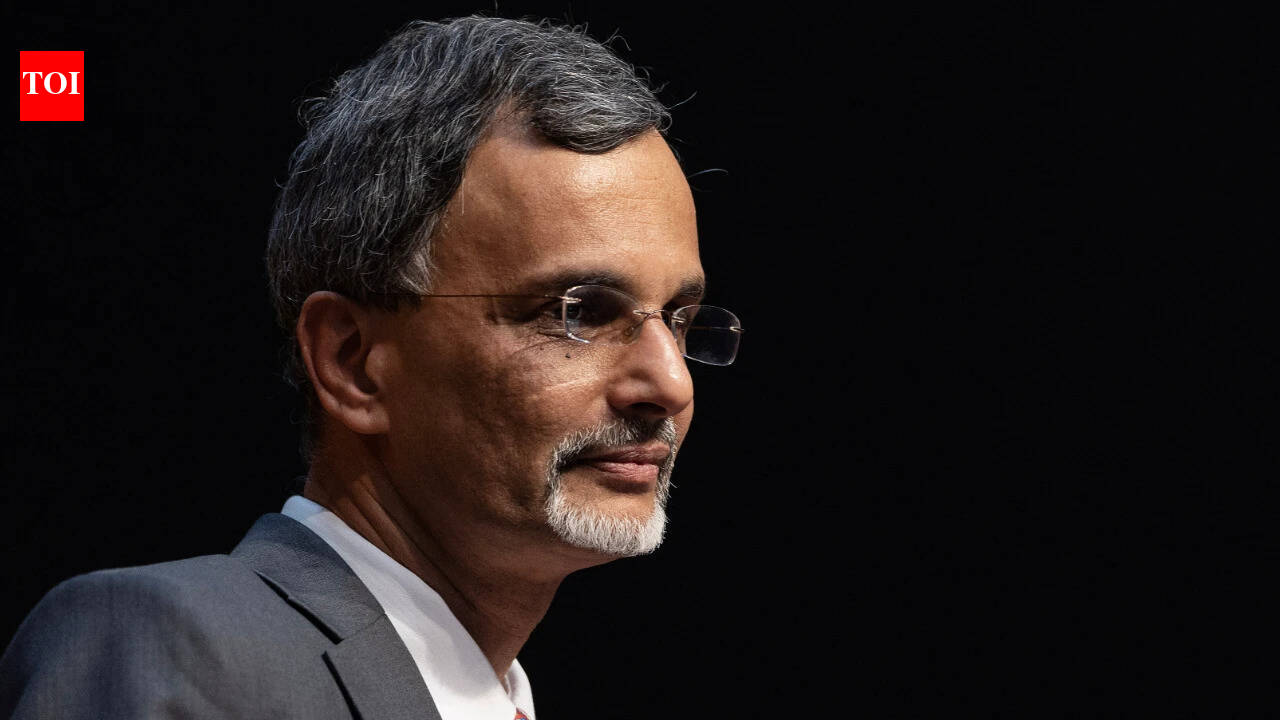

CEA V Anantha Nageswaran says India cannot afford to choose between global blocs and must build strategic buffers and forge partnerships with foreign technology firms View More