
Latest Sectors News

A combination of these factors offer Indian refiners an opportunity to capitalise on stronger diesel, gasoline and aviation turbine fuel (ATF) cracks. Reliance Industries (RIL), Bharat Petroleum Corporation (BPCL), Indian Oil Corporation and Hindustan Petroleum Corporation (HPCL) reported record refining performances in the September quarter (Q2) and expect the run to continue. View More
Mumbai: Oil refiners expect healthy margins in the coming months as disruptions to refining capacity in West Asia and Russia, depleted fuel inventories, and tight product supplies continue to support global fuel prices . A combination of these factors offer Indian refiners an opportunity to capitalise on stronger diesel, gasoline and aviation turbine fuel (ATF) cracks. Also Read: Gulf Oil eyes market leadership in India, global expansion to drive next growth phase Reliance Industries (RIL), Bharat Petroleum Corporation ( BPCL ), Indian Oil Corporation and Hindustan Petroleum Corporation (HPCL) reported record refining performances in the September quarter (Q2) and expect the run to continue. However, higher crude premiums, freight and insurance costs, along with domestic fuel pricing constraints, could limit their gains. Live Events RIL said global refining runs had declined to around 79% against 82% pre conflict, while diesel and gasoline inventories remained below their five-year averages. Refinery outages, which had reached nearly 11.8 million barrels per day at their peak, were still estimated at 4-5 million barrels per day, supporting product prices. "These factors, combined with uncertainty around Russian refinery operations and Chinese product exports, are expected to keep refining margins supported," RIL said. ET Bureau Also Read: India's top gas importer sets eyes on US LNG under long-term deal with Qatar RIL's oil-to-chemicals (O2C) business emerged as the biggest driver of its fiscal Q2 earnings, reporting a 68% surge in Ebitda to a record Rs 25,203 crore. O2C revenue grew 44% to Rs 231,601 crore, led by high energy prices. The geopolitical impact is particularly visible in product cracks. Gasoline cracks had nearly tripled year-on-year (YoY), while diesel cracks were around 3.5 times and ATF cracks 3.7 times their levels in Q2 last year. Cracks are the price difference between a barrel of crude oil and the refined product. Gasoline cracks increased from an average of $8.4 per barrel to nearly $25 per barrel, while gas oil cracks rose from $18.7 to $65.8 and ATF cracks from $16 to $59.3. Following the onset of West-Asia conflict towards the end of February 2026, global crude oil prices witnessed a 41% YoY rise in crude oil prices and a 50-78% jump in transportation fuel prices. The Indian basket crude price, which averaged around $65 to $70 per barrel in February remained above the $100 per barrel mark during most of Q1 FY27. During Q2, however, crude oil prices remained relatively moderate, with the Indian average basket largely ranging between $85 to $95 per barrel during July and August before witnessing renewed upward pressure and escalating geopolitical tension in September. Refiners also diversified their sourcing from geographies like Russia, Americas, Venezuela, Brazil and even some from African countries, thereby ensuring continuity of crude oil imports. This flexibility helped them maintain record crude processing levels-above 100%-despite shipping disruptions. State-run BPCL reported a gross refining margin (GRM) of $32.53 per barrel in the September quarter, which declined to around $14 per barrel after adjusting for the special additional excise duty (SAED). VRK Gupta, director of finance, BPCL, said the company's refining performance was supported by strong diesel and ATF cracks. During Q2, BPCL's refineries processed 10.4 million tonnes of crude, operating at 117% of their combined capacity. However, higher crude freight costs and the loss of discounts on Russian crude weighed on margins compared with Q1. State-run HPCL also reported a sharp recovery in refining profitability, with its GRM rising to $32.15 per barrel before SAED in the September quarter, compared with $8.79 per barrel in the previous financial year. IOCL's GRM stood at $36.67 per barrel and after adjusting SAED, it was around $18.52 per barrel. .Pbanner{display:flex;justify-content:space-between;align-items:center;background-color:#ec1c40;margin-top:20px;padding:5px 10px;border-radius:4px;color:#fff;line-height:10px;width: 100%;box-sizing: border-box} .Pbannertext{display:flex;align-items:center;font-size:16px;font-weight:600;font-family:'Montserrat';} .Pbannertext img{height:20px;margin:0 6px} .Pbannerbutton a{display:flex;align-items:center;background-color:#fff;color:#ec1c40;text-decoration:none;font-weight:600;padding:4px 8px;border-radius:6px;font-size:15px;font-family:'Montserrat';} .Pbannerbutton img{height:20px;margin-right:6px} .Pbannerbutton a:hover{background-color:#f7f7f7} Add as a Reliable and Trusted News Source Add Now! (You can now subscribe to our Economic Times WhatsApp channel) (You can now subscribe to our Economic Times WhatsApp channel)

Deal covers 330KTL string and next-gen WP-506KTL grid-forming inverters for delivery in FY28 View More

NTPC, the country's largest power generation company, is gearing up to add 58 gigawatt of installed capacity to reach 149 gigawatt by 2032, its Chairman Gurdeep Singh said on Tuesday.
The new capacities will be of various sources including renewables, Singh said addressing the KPMG ENRich 2026 event here.
Speaking at a session, he also shared NTPC's plans for the nuclear sector.
At present, NTPC has an installed power generation capacity of 91 gigawatt (GW), Singh said adding that by 2032, the company would be reaching 149 GW.
"We have very clear direction...now going fast in nuclear capacity addition. Of the 250 GW capacity targeted for the year 2037, the plan of about 30 GW nuclear," Singh noted.
NTPC has finished feasibility studies for proposed nuclear capacities in Madhya Pradesh, Bihar and Odisha, and will scout for more locations in other states, as per sources.
Speaking further on the domestic power sector, the chairman said it is showing resilience against the ongoing gl View More

NTPC aims to add 58 gigawatts of power generation capacity, reaching 149 gigawatts by 2032. The company's growth will include various energy sources, notably in the nuclear sector. Currently, NTPC's installed capacity stands at 91 gigawatts, with significant nuclear projects underway. India shows resilience in its power sector despite global challenges and rising energy demands. October witnessed a 21 percent increase in power demand, underscoring the sector's robust performance. View More
New Delhi: NTPC , the country's largest power generation company, is gearing up to add 58 gigawatt of installed capacity to reach 149 gigawatt by 2032, its Chairman Gurdeep Singh said on Tuesday. The new capacities will be of various sources including renewables, Singh said addressing the KPMG ENRich 2026 event here. Speaking at a session, he also shared NTPC's plans for the nuclear sector. At present, NTPC has an installed power generation capacity of 91 gigawatt (GW), Singh said adding that by 2032, the company would be reaching 149 GW. "We have very clear direction...now going fast in nuclear capacity addition. Of the 250 GW capacity targeted for the year 2037, the plan of about 30 GW nuclear," Singh noted. Live Events NTPC has finished feasibility studies for proposed nuclear capacities in Madhya Pradesh, Bihar and Odisha, and will scout for more locations in other states, as per sources. Speaking further on the domestic power sector, the chairman said it is showing resilience against the ongoing global challenges. "Despite all kind of turmoils across the globe, in India we have not seen surge in energy prices. I think in India we have not seen that type of surge like we have noticed in other parts of the world," he said. This year, as far as the power demand is concerned in October, the increase has been 21 per cent and it is increasing every month, he noted. Under Ministry of Power, NTPC is India's largest power generation company catering to the country's one-fourth energy demand alone. .Pbanner{display:flex;justify-content:space-between;align-items:center;background-color:#ec1c40;margin-top:20px;padding:5px 10px;border-radius:4px;color:#fff;line-height:10px;width: 100%;box-sizing: border-box} .Pbannertext{display:flex;align-items:center;font-size:16px;font-weight:600;font-family:'Montserrat';} .Pbannertext img{height:20px;margin:0 6px} .Pbannerbutton a{display:flex;align-items:center;background-color:#fff;color:#ec1c40;text-decoration:none;font-weight:600;padding:4px 8px;border-radius:6px;font-size:15px;font-family:'Montserrat';} .Pbannerbutton img{height:20px;margin-right:6px} .Pbannerbutton a:hover{background-color:#f7f7f7} Add as a Reliable and Trusted News Source Add Now! (You can now subscribe to our Economic Times WhatsApp channel) (You can now subscribe to our Economic Times WhatsApp channel)

BHEL shares have surged over the past year but recently weakened. Strong Q2 results, a large order book and planned ?500 crore manufacturing investment underpin optimism. Geojit sees further upside, setting a ?453 target. View More

Advait Energy Transitions has reported an 88.5 percent increase in net profit for the quarter ending September 30, 2026. Revenue for this period rose 40.8 percent, reaching Rs 220.9 crore, driven by strong demand for power transmission solutions. The company also experienced substantial growth in its consolidated revenue for the first half of FY27. View More
Ahmedabad : Advait Energy Transitions reported an 88.5 per cent year-on-year increase in consolidated net profit to Rs 19.18 crore for the quarter ended September 30, 2026, supported by strong revenue growth and improved operating performance, as the power transmission solutions company expands its presence in renewable energy and battery storage. Revenue for the July-September quarter rose 40.8 per cent to Rs 220.9 crore from Rs 156.9 crore a year earlier, while earnings before interest, taxes, depreciation and amortisation (EBITDA) increased 84.4 per cent to Rs 31.9 crore from Rs 17.7 crore, the company said in a statement. The company's performance was similarly strong in the first half of the current financial year. Consolidated revenue for the six months ended September 2026 increased 45.4 per cent to Rs 400.2 crore from Rs 275.3 crore in the corresponding year-ago period. EBITDA grew 82.6 per cent to Rs 56.7 crore, while net profit rose 77.9 per cent to Rs 34 crore from Rs 19.1 crore. The growth comes amid rising investments in power transmission infrastructure, grid modernisation and renewable energy integration, which are creating demand for the company's transmission solutions and engineering capabilities. "The first half of FY27 has been encouraging, with strong revenue growth and a significant improvement in profitability. Our power transmission solutions business continues to be a key growth driver, supported by investments in transmission infrastructure, grid modernisation and renewable energy integration. We are expanding our capabilities to serve a wider range of customers and projects," Shalin Sheth, founder and managing director of Advait Energy Transitions, said. Live Events The company is also looking to build new growth engines in battery energy storage systems (BESS), electrolysers and integrated renewable energy solutions . "We are also focusing on new and renewable energy, including battery energy storage systems, electrolysers and integrated renewable energy solutions. These areas offer opportunities to build complementary capabilities and contribute to India's transition to clean energy," Sheth said. Advait's order book stood at Rs 1,574.83 crore as of September 30, up 47 per cent from a year earlier, providing visibility on its project execution pipeline. Its power transmission solutions (PTS) business secured orders worth approximately Rs 462 crore, while its new and renewable energy business won a Rs 116 crore solar engineering, procurement and construction (EPC) contract for a 200 MW project. The company is also stepping up investments in manufacturing capacity and energy storage. Its capital work-in-progress stood at Rs 159.71 crore, reflecting ongoing expansion projects. Through its subsidiary Advait Battery Ecosystem, the company is setting up a 2.5 GWh battery energy storage system assembly facility spread across 4 lakh sq ft in Gangad, Gujarat. The project is backed by a master supply agreement with China's Hithium for the supply of up to 1 GWh of lithium iron phosphate (LFP) battery cells. The expansion is part of Advait's broader effort to diversify beyond its traditional power transmission business and tap opportunities arising from India's growing requirement for grid-scale energy storage and renewable energy infrastructure. On the balance-sheet front, the company's debt-equity ratio stood at 0.86 times and its interest coverage ratio at 5.73 times. It said it continues to focus on working capital optimisation and improving collections to strengthen operating cash flows. Established in 2009 and headquartered in Ahmedabad, Advait Energy Transitions, formerly known as Advait Infratech, operates in power transmission, substation and telecommunications infrastructure. Its portfolio includes optical ground wire (OPGW), aluminium-clad steel wires, stringing equipment, emergency restoration systems, insulators and EPC services. PTI .Pbanner{display:flex;justify-content:space-between;align-items:center;background-color:#ec1c40;margin-top:20px;padding:5px 10px;border-radius:4px;color:#fff;line-height:10px;width: 100%;box-sizing: border-box} .Pbannertext{display:flex;align-items:center;font-size:16px;font-weight:600;font-family:'Montserrat';} .Pbannertext img{height:20px;margin:0 6px} .Pbannerbutton a{display:flex;align-items:center;background-color:#fff;color:#ec1c40;text-decoration:none;font-weight:600;padding:4px 8px;border-radius:6px;font-size:15px;font-family:'Montserrat';} .Pbannerbutton img{height:20px;margin-right:6px} .Pbannerbutton a:hover{background-color:#f7f7f7} Add as a Reliable and Trusted News Source Add Now! (You can now subscribe to our Economic Times WhatsApp channel) (You can now subscribe to our Economic Times WhatsApp channel)

Howard University's golf program reached new heights when both men's and women's teams won their conference championships. The women's team claimed its first-ever Northeast Conference title in April 2026. Just days later, the men's team secured its third consecutive NEC championship victory. The successes highlighted the growth of the program, supported by NBA star Stephen Curry's funding. View More
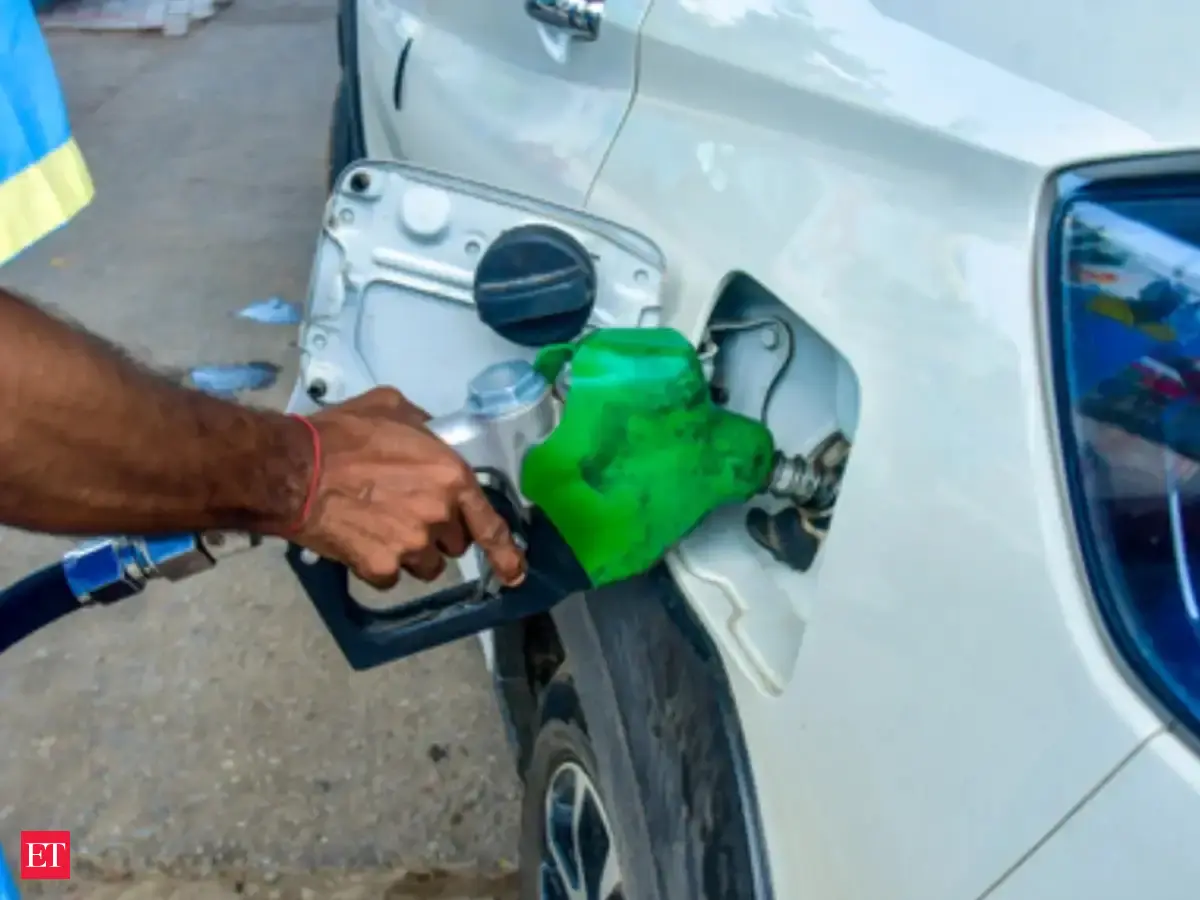
Diesel sales experienced an 11.7% year-on-year increase in October due to heightened economic activity. Petrol sales, on the other hand, increased by only 3.1% during the same month. LPG sales continued to decline significantly, dropping 12.1% year-on-year as supplies tightened. Aviation turbine fuel sales decreased by 1.3%, reflecting persistent sluggishness in the aviation sector. Overall, the fuel market showed mixed trends amid changing consumption patterns in India. View More
Diesel sales surged 11.7% year-on-year in October as the festive season boosted goods transportation and broader economic activity. The growth was significantly higher than the 5.9% increase recorded during the April-October period, indicating an unusually strong uptick in diesel consumption last month. Petrol sales rose 3.1% in October, a relatively subdued increase compared with the 6.5% growth recorded during April-October. Growth in petrol consumption has moderated this year amid an increasing shift towards CNG-powered vehicles, which have captured a significant share of new vehicle sales. Aviation turbine fuel (ATF) sales declined 1.3% in October and remained nearly flat during April-October, pointing to sluggish growth in the aviation sector. LPG sales, predominantly driven by household cooking demand in India, fell 12.1% year-on-year in October, extending the decline seen since the onset of the Iran war, which has tightened supplies. LPG sales declined 14.5% during April-October. .Pbanner{display:flex;justify-content:space-between;align-items:center;background-color:#ec1c40;margin-top:20px;padding:5px 10px;border-radius:4px;color:#fff;line-height:10px;width: 100%;box-sizing: border-box} .Pbannertext{display:flex;align-items:center;font-size:16px;font-weight:600;font-family:'Montserrat';} .Pbannertext img{height:20px;margin:0 6px} .Pbannerbutton a{display:flex;align-items:center;background-color:#fff;color:#ec1c40;text-decoration:none;font-weight:600;padding:4px 8px;border-radius:6px;font-size:15px;font-family:'Montserrat';} .Pbannerbutton img{height:20px;margin-right:6px} .Pbannerbutton a:hover{background-color:#f7f7f7} Add as a Reliable and Trusted News Source Add Now! (You can now subscribe to our Economic Times WhatsApp channel) (You can now subscribe to our Economic Times WhatsApp channel)
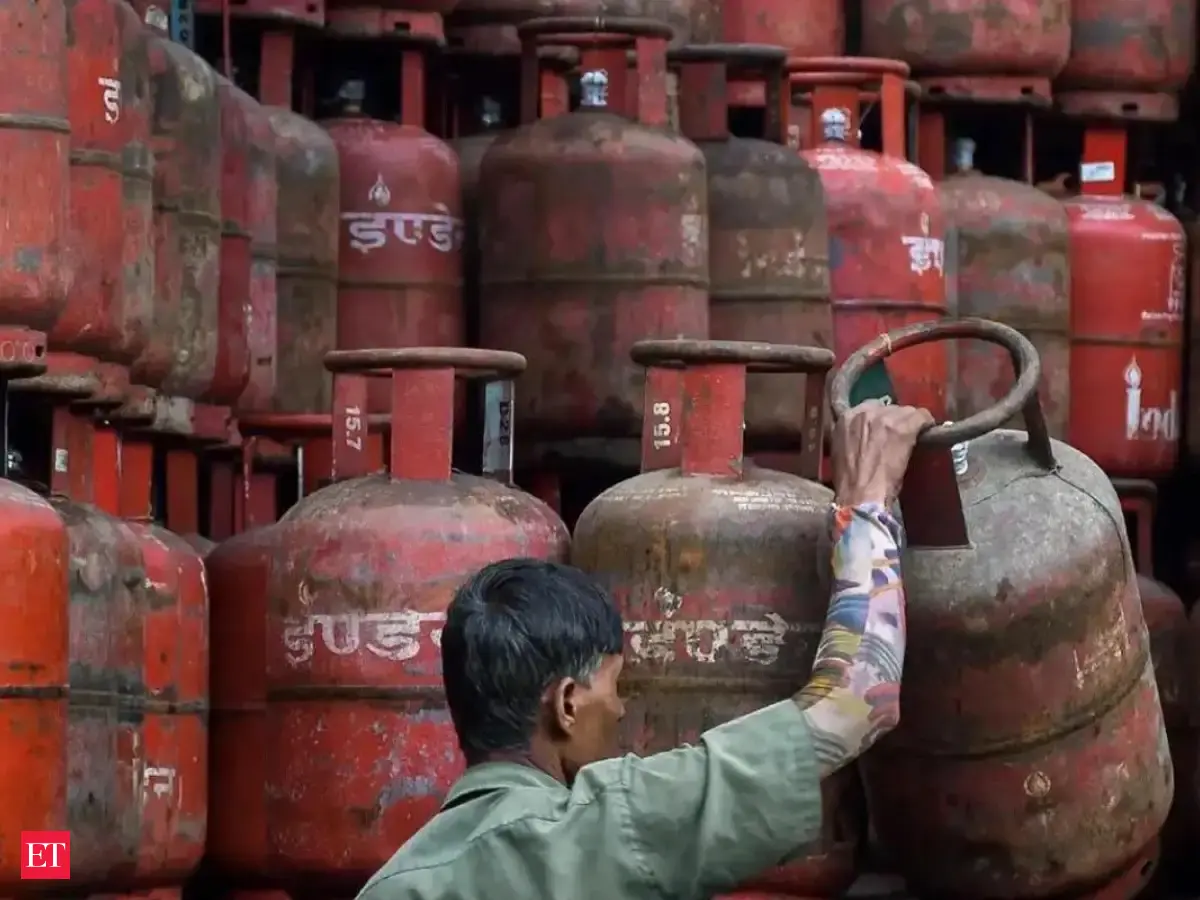
From November 1, the price of a 19-kg commercial LPG cylinder increased by Rs 10 to Rs 2,820. Aviation turbine fuel prices have also risen by Rs 1.37 per litre to Rs 138.50. These increases represent the fourth consecutive monthly rise in jet fuel prices, driven by international benchmarks. Commercial LPG price revisions impact hotels and restaurants, following a series of hikes earlier this year. View More
The price of a 19-kg commercial LPG cylinder was increased by Rs 10 to Rs 2,820 from November 1. The cylinder was priced at Rs 2,810 on October 1. Alongside, aviation turbine fuel (ATF) prices were raised by Rs 1.37 per litre to Rs 138.50 per litre from Rs 137.12, according to state-owned oil companies. This marks the fourth consecutive monthly increase in jet fuel prices, driven by firming international benchmarks. Jet fuel accounts for up to 40% of airlines' operating costs, and the latest increase is expected to add to carrier expenditure. ATF prices were last raised by Rs 16 per litre on October 1, following increases of Rs 6.28 on September 1 and Rs 5 on August 1. The commercial LPG price revision marks another increase for hotels, restaurants and other commercial consumers. This is the second consecutive monthly hike, following a Rs 62.50 increase per 19-kg cylinder on October 1. Rates had also risen by Rs 9.50 on September 1. The latest increases follow two consecutive monthly reductions of Rs 183.50 in July and Rs 192 in August. Commercial LPG prices had surged by Rs 1,373 per cylinder between February and June, rising from Rs 1,740.50 to a record Rs 3,113.50, before declining in the following two months. Live Events According to the revised rate list, a 5-kg Free Trade LPG (FTL) cylinder for a new connection is priced at Rs 1,903, while a refill costs Rs 782. Meanwhile, prices of domestic LPG, used by households, remained unchanged at Rs 942 per 14.2-kg cylinder. Petrol and diesel prices, which were increased by around Rs 7.50 per litre each in May, also remained unchanged. ATF and commercial LPG prices are revised on the first day of every month based on movements in international benchmark rates and the rupee-dollar exchange rate. Prices can vary across states due to local taxes such as VAT. The volatility in LPG prices this year has been linked to geopolitical tensions and disruptions to shipping through the Strait of Hormuz, a key route for Middle Eastern crude oil and LPG supplies. India imports roughly half of its natural gas and LPG requirements, with a significant share of its LPG shipments coming from Gulf producers that use the Strait of Hormuz. Disruptions along the route and heightened security risks have affected global LPG supply and pushed up freight costs. Higher shipping risk premiums, fluctuations in global crude prices and elevated Saudi Aramco contract prices have also contributed to keeping domestic commercial fuel rates high. .Pbanner{display:flex;justify-content:space-between;align-items:center;background-color:#ec1c40;margin-top:20px;padding:5px 10px;border-radius:4px;color:#fff;line-height:10px;width: 100%;box-sizing: border-box} .Pbannertext{display:flex;align-items:center;font-size:16px;font-weight:600;font-family:'Montserrat';} .Pbannertext img{height:20px;margin:0 6px} .Pbannerbutton a{display:flex;align-items:center;background-color:#fff;color:#ec1c40;text-decoration:none;font-weight:600;padding:4px 8px;border-radius:6px;font-size:15px;font-family:'Montserrat';} .Pbannerbutton img{height:20px;margin-right:6px} .Pbannerbutton a:hover{background-color:#f7f7f7} Add as a Reliable and Trusted News Source Add Now! (You can now subscribe to our Economic Times WhatsApp channel) (You can now subscribe to our Economic Times WhatsApp channel)

Reliance Industries has redirected fuel exports to Africa, the Mediterranean and other European markets to capitalise on supply disruptions caused by the West Asia conflict, lifting its market share in these regions by about 50%. The strategy helped drive record quarterly earnings for its oil-to-chemicals business as global refining margins surged. View More
Mumbai: Reliance Industries (RIL) redirected fuel exports to East and South Africa , the Mediterranean and other European markets to capitalise on market opportunities caused by supply disruptions due to the West Asia conflict . This helped the private refiner boost its market share in these markets by about 50%, showed the company’s September quarter financial presentation. RIL also tapped opportunities in Australia, Kenya and Tanzania for premium gasoline grades, while enhancing diesel and aviation turbine fuel (ATF) supplies to the Mediterranean. ET Bureau “In the case of diesel and jet fuel, we found opportunities in the Mediterranean market because of the loss of supply,” said Srinivasan Tuttagunta, chief operating officer, supply and trading at RIL, per the presentation. RIL’s oil-to-chemicals (O2C) business emerged as the biggest driver of its fiscal second quarter earnings, reporting a 68% surge in Ebitda to a record Rs 25,203 crore. O2C revenue grew 44% to Rs 231,601 crore, led by high energy prices. The West Asia conflict has disrupted energy supply chains, resulting in a 41% year-on-year rise in crude oil prices and a 50- 78% jump in transportation fuel prices. Live Events RIL said it also supplied lowsulphur ATF to South Africa for the first time, opening up potential new export opportunities. The company’s export strategy comes amid a sharp rise in global refining margins as geopolitical disruptions, refinery outages and declining fuel inventories tighten product supplies. Change in sources too Refining capacity in Russia and West Asia has been affected due to ongoing conflicts, lifting prices of gasoline, diesel and aviation fuel. Gasoline cracks, which measure the difference between refined product and crude oil prices, spiralled to nearly $25 a barrel in the September quarter from $8.4 a barrel a year earlier. Gasoil cracks increased to $65.8 a barrel from $18.7, while aviation fuel cracks climbed to $59.3 from $16. “RIL’s ability to redirect shipments towards markets offering better returns has helped it navigate disruptions to traditional trade flows, including those caused by tensions around the Strait of Hormuz,” said a sectoral analyst, requesting anonymity. On crude sourcing, RIL revised its import basket between the Americas, Gulf and other regions last quarter to take advantage of available supplies and pricing opportunities. This flexibility helped it maintain record crude processing levels despite shipping disruptions. Crude procurement has however turned pricier due to elevated physical crude premiums, freight and insurance costs. Brent crude fluctuated between $70 and $130 a barrel during the quarter, reflecting volatility in global oil markets. RIL said it had deployed more than 20 vessels, with the total number of crude and product vessels approaching 25, to mitigate the impact of sharply higher freight rates. The company also increased normal LPG production nearly twofold to meet domestic demand, curtailing output of other products, including alkylate and some petrol components. Domestic fuel demand remained strong, with India’s gasoline consumption growing 8.5% year-onyear during the quarter and diesel demand rising 7.5%. However, RIL’s margins faced pressure from a special additional excise duty levy and the inability to fully pass on higher international fuel prices to local consumers. Looking ahead, RIL said it expects global product supplies to remain tight in the near term as refinery outages, curbs on Russian fuel exports and uncertainty over Chinese exports constrain availability. Lower-than-average gasoline and diesel inventories are also supporting refining margins. RIL said its priorities would remain high asset utilisation, margin maximisation and end-to-end optimisation of its refining and marketing operations to capture opportunities arising from volatile global markets. .Pbanner{display:flex;justify-content:space-between;align-items:center;background-color:#ec1c40;margin-top:20px;padding:5px 10px;border-radius:4px;color:#fff;line-height:10px;width: 100%;box-sizing: border-box} .Pbannertext{display:flex;align-items:center;font-size:16px;font-weight:600;font-family:'Montserrat';} .Pbannertext img{height:20px;margin:0 6px} .Pbannerbutton a{display:flex;align-items:center;background-color:#fff;color:#ec1c40;text-decoration:none;font-weight:600;padding:4px 8px;border-radius:6px;font-size:15px;font-family:'Montserrat';} .Pbannerbutton img{height:20px;margin-right:6px} .Pbannerbutton a:hover{background-color:#f7f7f7} Add as a Reliable and Trusted News Source Add Now! (You can now subscribe to our Economic Times WhatsApp channel) (You can now subscribe to our Economic Times WhatsApp channel)