
Latest Sectors News

Microsoft said it plans to invest $10 billion in Japan between 2026 and 2029 to build AI infrastructure. View More
In this article9984.T-JP3778.T-JP6702.T-JP6501.T-JPFollow your favorite stocksCREATE FREE ACCOUNT Microsoft's Vice Chair and President Brad Smith (L) and Japan's Prime Minister Sanae Takaichi pose before their meeting at the Prime Minister's Office in Tokyo on April 3, 2026.Kazuhiro Nogi | Afp | Getty Images Shares of Sakura Internet surged as much as 20.2% Friday after Microsoft said it has begun discussions with the Japanese cloud company and SoftBank to develop artificial intelligence infrastructure in Japan.Microsoft said it plans to invest $10 billion in Japan between 2026 and 2029 to build AI infrastructure, strengthen cybersecurity and train 1 million engineers and developers by 2030.Sakura Internet, which provides internet infrastructure services using domestic data centers, and Japanese telecommunications giant SoftBank Corp. will partner with Microsoft to provide AI computing resources, including graphics processing units located in Japan. The announcement came during a visit to Japan by Microsoft Vice Chair and President Brad Smith, who met Prime Minister Sanae Takaichi.Smith said the investment comes as demand for cloud and AI services grows in Japan. Around one in five working-age people in the country use generative AI tools, compared with the global average of about one in six, according to Microsoft's AI Diffusion Report. Stock Chart IconStock chart icon The partnership will allow data to be processed in Japan and support the development of advanced AI systems such as domestic large language models, Microsoft said in a statement. SoftBank and Microsoft Japan are also discussing a joint solution that would allow Microsoft Azure customers to use SoftBank's AI computing platform.Shares of Softbank Group were up 0.22% in Friday trade, while SoftBank Corp. rose 1.02% Stock Chart IconStock chart icon Separately, Microsoft will partner with five other major Japanese IT companies, including NTT Data Corp., NEC, Fujitsu and Hitachi, to train 1 million AI professionals by 2030. Choose CNBC as your preferred source on Google and never miss a moment from the most trusted name in business news.

Association urges civil aviation minister to ensure that any pricing dispensation is applied in a fair, transparent, and non-discriminatory manner across all categories of commercial air operators View More
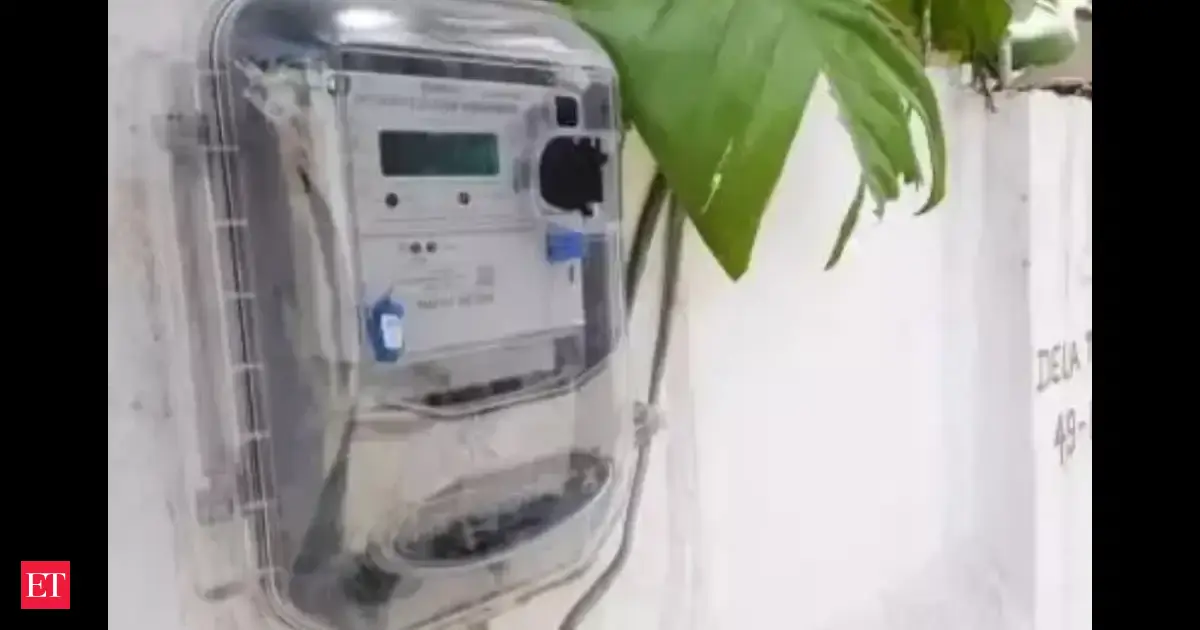
A host of global investors and Indian firms are positioning themselves to acquire IntelliSmart Infrastructure, signaling a vibrant growth phase for India's smart meter sector. The Indian government's visionary goal of deploying millions of smart meters by 2027 is a major catalyst for this surge. View More
Mumbai: More than half a dozen potential suitors including global investors Brookfield, Macquarie, KKR , and Actis are in early-stage talks to acquire IntelliSmart Infrastructure , said people familiar with the matter, reflecting strong investor interest in India's growing market for smart meters . Homegrown smart meter manufacturers such as Adani Energy Solutions , I Squared Capital-owned Polaris Smart Metering, GIC-backed Genus Power, and Apraava Energy are also evaluating the opportunity, the people said. IntelliSmart is owned 51% by India's sovereign wealth fund National Investment and Infrastructure Fund (NIIF) and 49% by debt-laden Energy Efficiency Services Ltd ( EESL ). Promoters of IntelliSmart are seeking an enterprise valuation of about $700 million (₹6,520 crore), the people said. Deloitte is managing the sale process, with the interested parties expected to submit non-binding bids within a few weeks. Live Events The potential sale coincides with the government's ambitious Revamped Distribution Sector Scheme (RDSS), which aims to install 250 million prepaid smart meters by 2027. The broader rollout is supported by an estimated ₹1.35 lakh crore investment through 2035 aimed at curbing power distribution losses. A spokesperson for Macquarie declined to comment. NIIF, EESL, KKR, Brookfield, Actis, Adani Energy, Apraava, Polaris, and Genus didn't respond to queries. Founded in 2019, IntelliSmart has made steady progress in India's smart metering rollout. The company has secured orders for around 22 million smart meters from various state utilities. However, only around 600,000 meters have been installed in Assam and about 500,000 in Uttar Pradesh so far. EESL-a joint venture of NTPC, Power Finance Corp, Rural Electrification Corp, and Power Grid Corp of India-has presence in multiple areas including electric car charging and smart metering. However, a large debt pile is believed to have prompted the sale of IntelliSmart. EESL had long-term borrowings of ₹6,045 crore as of March 31, 2025, compared to ₹7,070 crore a year earlier. Under RDSS, smart metering projects have been sanctioned for 45 distribution utilities across 28 states and union territories. About 40.5 million smart meters had been installed under the scheme as of January 15. Meter installation delays have been attributed to multiple factors, including right-of-way issues, limited consumer awareness, operational challenges faced by Advanced Metering Infrastructure Service Providers (AMISPs), and deferred inspections by discoms for commissioning approvals, according to a recent Crisil report. The report also noted that the delays could inflate project costs due to rising smart meter prices, potentially impacting projects' annualised returns. Meanwhile, global investors have been turning increasingly aggressive in India's smart meter market. In 2023, Singapore's GIC took a 74% stake in Jaipur-based Genus Power & Infrastructure for $2 billion to establish an AMISP platform. The same year, I Squared Capital acquired a controlling interest in Polaris Smart Metering Pte Ltd., committing up to $100 million to expand its presence. Apraava Energy has also expanded its footprint through subsidiaries Apraava Smart Meter and Apraava Kutch Saurashtra Smart Meter, executing smart metering projects, including a contract to install 690,000 prepaid smart meters in Assam and 2.4 million meters in Gujarat. In December, the company raised ₹800 crore from British International Investment and Standard Chartered to support its advanced metering infrastructure initiatives. Separately, UK-based fund Actis formed a joint venture with EDF India last year to create a dedicated platform for AMISP concessions. .Pbanner{display:flex;justify-content:space-between;align-items:center;background-color:#ec1c40;margin-top:20px;padding:5px 10px;border-radius:4px;color:#fff;line-height:10px;} .Pbannertext{display:flex;align-items:center;font-size:16px;font-weight:600;font-family:'Montserrat';} .Pbannertext img{height:20px;margin:0 6px} .Pbannerbutton a{display:flex;align-items:center;background-color:#fff;color:#ec1c40;text-decoration:none;font-weight:600;padding:4px 8px;border-radius:6px;font-size:15px;font-family:'Montserrat';} .Pbannerbutton img{height:20px;margin-right:6px} .Pbannerbutton a:hover{background-color:#f7f7f7} Add as a Reliable and Trusted News Source Add Now! (You can now subscribe to our Economic Times WhatsApp channel) (You can now subscribe to our Economic Times WhatsApp channel)
NTPC achieved a record capacity addition of 9,619 MW in fiscal year 2025-26. The company generated 432.2 billion units of electricity. Renewable capacity addition reached 5,488 MW. Coal production saw a 6.22 percent year-on-year growth. Power trading also experienced a 13 percent increase. NTPC is expanding its diversified portfolio and aims for 149 GW total capacity by 2032. View More
New Delhi, NTPC on Thursday said it generated 432.2 billion units of electricity and achieved highest every capacity addition of 9,619 MW in fiscal year 2025-26. NTPC added 5,488 MW of renewable capacity in FY26 across solar, wind, and Pumped Storage Projects (PSP), a company statement said. In FY26, NTPC achieved coal production of 48.65 million tonne, registering a steady 6.22 per cent year-on-year (YoY) growth. The company also recorded a strong growth in power trading , with 46.52 billion units traded in FY26, marking 13 per cent year-on-year growth. NTPC achieved 105 per cent ash utilisation, utilising 109 million tonne of ash, it added. Live Events As part of its diversified portfolio, NTPC currently operates more than 89 GW of installed capacity, with another 32 GW under construction. The company has set a target to reach 149 GW of total capacity by 2032, including 60 GW from renewable energy sources. This includes a balanced mix of thermal, hydro, solar, and wind power plants, ensuring supply of reliable, affordable, and sustainable electricity to the country. Along with power generation, NTPC has ventured into various new business areas, including e-mobility, battery storage, pumped hydro storage, waste-to-energy, nuclear power, and green hydrogen solutions. .Pbanner{display:flex;justify-content:space-between;align-items:center;background-color:#ec1c40;margin-top:20px;padding:5px 10px;border-radius:4px;color:#fff;line-height:10px;} .Pbannertext{display:flex;align-items:center;font-size:16px;font-weight:600;font-family:'Montserrat';} .Pbannertext img{height:20px;margin:0 6px} .Pbannerbutton a{display:flex;align-items:center;background-color:#fff;color:#ec1c40;text-decoration:none;font-weight:600;padding:4px 8px;border-radius:6px;font-size:15px;font-family:'Montserrat';} .Pbannerbutton img{height:20px;margin-right:6px} .Pbannerbutton a:hover{background-color:#f7f7f7} Add as a Reliable and Trusted News Source Add Now! (You can now subscribe to our Economic Times WhatsApp channel) (You can now subscribe to our Economic Times WhatsApp channel)

Reliance Industries SEZ refinery will not face new export taxes on diesel and aviation fuel. This exemption stems from judicial pronouncements. The government reintroduced these levies on March 26 to encourage domestic fuel sales. These taxes are reviewed fortnightly. This move aims to manage global energy supply disruptions. Reliance operates two refineries in Jamnagar, Gujarat. View More
The reimposed windfall export taxes on diesel and aviation turbine fuel (ATF) will not apply to Reliance Industries Ltd's SEZ refinery due to judicial rulings, a senior official said on Thursday. Effective March 26, the government revised fuel levies, reintroducing export duties of Rs 21.50 per litre on diesel and Rs 29.50 per litre on ATF, while keeping petrol exports exempt. The move coincided with a Rs 10 per litre cut in excise duty on petrol and diesel. Initially, it was not clear if exports from Reliance's special economic zone (SEZ) refinery - one of the largest contributors to India's refined product exports - would retain exemptions similar to those under the 2022 windfall tax regime. "As per judicial prouncements on this issue, the special additional excise duty and additional excise duty are not applicable on SEZ refineries," Jainendra Singh Kandhari, Joint Secretary in the Tax Research Unit (TRU-1) of the Department of Revenue, said at a media briefing. The government reinstated the windfall export tax amid disruptions to global energy supplies caused by the Middle East conflict. The levy, first introduced in July 2022 following Russia's invasion of Ukraine and withdrawn in December 2024, has been reimposed in the form of a special additional excise duty (SAED) to encourage refiners to prioritise domestic sales over exports. Live Events Reliance owns and operates two refineries at Jamnagar in Gujarat - a 33 million tonnes per year unit catering to the domestic market and a 35.2 million tonnes only-for-exports SEZ unit. The export tax will be reviewed fortnightly -- as was the practice previously -- to align the duty with prevailing rates. According to a Citi Research report, the export taxes are equivalent to USD 36 per barrel on diesel and USD 50 per barrel on jet fuel. "In FY25, 75 per cent of Reliance's diesel production and 35 per cent of its jet fuel production were from its SEZ refinery, which we believe, based on 2022 precedent, could be exempt from this tax. "If we therefore assume the export tax is applicable only on the non-SEZ volumes, the impact should be largely offset by still-elevated diesel/jet fuel cracks vs pre-conflict levels," it had said in the report last week. The government, on March 26, announced the first material reduction in domestic petroleum excise duty since April 2022, offering relief to oil marketing companies (OMCs) that had been incurring huge losses after being unable to raise retail prices of petrol and diesel despite a sharp surge in crude oil costs. In a separate note, Jefferies said the reimposed export duty broadly caps diesel/ATF spreads at USD 20 per barrel for standalone refiners like Reliance. "This is similar to the level of margin caps introduced during the Russia-Ukraine conflict in 2022. However, this time the movement in crude premiums and freight rates has been very stiff, making capturing spreads challenging for global refiners. .Pbanner{display:flex;justify-content:space-between;align-items:center;background-color:#ec1c40;margin-top:20px;padding:5px 10px;border-radius:4px;color:#fff;line-height:10px;} .Pbannertext{display:flex;align-items:center;font-size:16px;font-weight:600;font-family:'Montserrat';} .Pbannertext img{height:20px;margin:0 6px} .Pbannerbutton a{display:flex;align-items:center;background-color:#fff;color:#ec1c40;text-decoration:none;font-weight:600;padding:4px 8px;border-radius:6px;font-size:15px;font-family:'Montserrat';} .Pbannerbutton img{height:20px;margin-right:6px} .Pbannerbutton a:hover{background-color:#f7f7f7} Add as a Reliable and Trusted News Source Add Now! (You can now subscribe to our Economic Times WhatsApp channel) (You can now subscribe to our Economic Times WhatsApp channel)
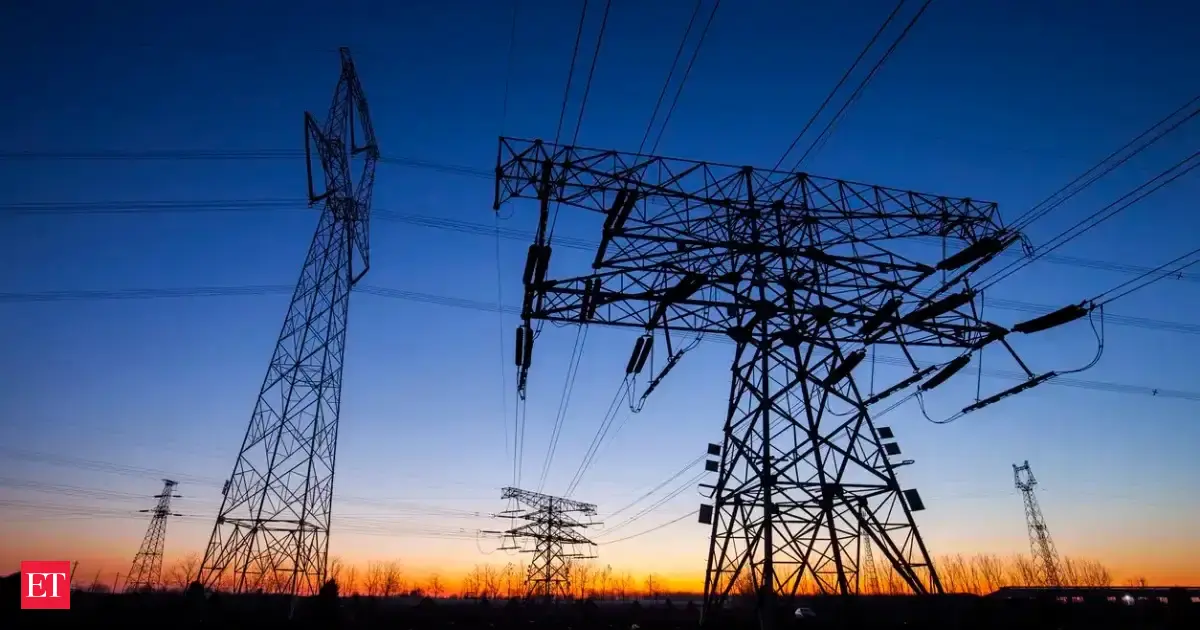
Power distribution companies have drastically cut their old dues. Legacy arrears have fallen from over Rs 1.39 lakh crore to just Rs 3,300 crore. New government rules and schemes like UDAY and RDSS are driving this improvement. Discoms are also paying current bills on time. This is bringing financial discipline to the sector. View More
New Delhi: Outstanding legacy dues of power distribution utilities or discoms reduced to Rs 3,300 crore in March this year from Rs 1.39 lakh crore in June 2022, Parliament was informed on Thursday. Government of India notified the Electricity (Late Payment Surcharge and Related Matters) Rules, 2022 on June 3, 2022. As per the rules, all dues owed to generating companies (IPPs, CPSEs, and Renewable Energy Developers), traders, and TRANSCOs, including late payment surcharges, accrued up to June 3, 2022, were classified as legacy arrears. Also Read: Delhi power rates may rise in April as govt prepares to clear discom dues These arrears were required to be rescheduled, with distribution licensees paying them in Equated Monthly Installments (EMIs), stated Minister of State for Power Shripad Naik in a written reply to the Lok Sabha. Live Events The rules also provide a framework for the time-bound clearance of current dues. As a result, the outstanding legacy dues have reduced from Rs 1,39,947 crore as on June 3, 2022 to Rs 3,330 crore on March 27, 2026, the minister stated. Distribution utilities, or discoms, are also paying their current dues in time to avoid regulation under the rules. For implementation of the rules, PRAAPTI (Payment Ratification and Analysis in Power Procurement) portal was used. As per the portal, the current dues of discoms are Rs 13,594 crore and total dues, which include legacy dues are Rs 16,894 crore as on March 27, 2026. He also told the House that Ujwal DISCOM Assurance Yojana (UDAY) was launched by Government of India in November 2015 with the overall aim of operational and financial turnaround of distribution utilities through financial restructuring. As many as 27 states (except Odisha and West Bengal) and 5 UTs (except Delhi and Chandigarh) signed MoUs under UDAY. Also Read: Discoms post Rs 2,701 cr profit in FY25 after years of losses Major reasons for delay in payments by distribution utilities are, regulatory disallowance of expenses incurred by distribution utilities; continued gap between Average Cost of Supply and Average Revenue Realised (ACS-ARR Gap) and delayed receipt of subsidy and Government department dues from state governments. He also told the House that Revamped Distribution Sector Scheme (RDSS) was launched in 2021 wherein works amounting to Rs 2.83 lakh crore have been sanctioned across the country for loss reduction and smart metering works. The release of funds for loss reduction works under the scheme is contingent on improvement in operational and financial performance of utilities. This conditionality has helped in bringing financial discipline in DISCOMs. Further, execution of above works would help reduce technical and commercial losses of the utilities. .Pbanner{display:flex;justify-content:space-between;align-items:center;background-color:#ec1c40;margin-top:20px;padding:5px 10px;border-radius:4px;color:#fff;line-height:10px;} .Pbannertext{display:flex;align-items:center;font-size:16px;font-weight:600;font-family:'Montserrat';} .Pbannertext img{height:20px;margin:0 6px} .Pbannerbutton a{display:flex;align-items:center;background-color:#fff;color:#ec1c40;text-decoration:none;font-weight:600;padding:4px 8px;border-radius:6px;font-size:15px;font-family:'Montserrat';} .Pbannerbutton img{height:20px;margin-right:6px} .Pbannerbutton a:hover{background-color:#f7f7f7} Add as a Reliable and Trusted News Source Add Now! (You can now subscribe to our Economic Times WhatsApp channel) (You can now subscribe to our Economic Times WhatsApp channel)

Xpeng's deal to make software, hardware and even vehicles with VW Group in China shows that Chinese firms are now making the high-value components. View More
In this articleVOW3-DEXPEVSTLA9863-HKLCIDFollow your favorite stocksCREATE FREE ACCOUNT In 1984, Volkswagen partnered with a Chinese automaker because it was required by Chinese law.Now the German company is partnering with Chinese automakers because it wants to use their technology. Volkswagen Group today maintains the original joint ventures it made with Chinese automakers in those early days of its foray into what has become the world's largest car market. But the fact that it is now relying on firms such as Chinese EV maker Xpeng for hardware and software underscore how the balance of power in the automotive industry is shifting toward the companies that produce these now high-value components. Chinese companies are proving they can do it faster, often cheaper, than anyone else. VW Group, which has for much of the last few decades been a top-selling brand in China, has lately struggled to maintain its position. Volkswagen's China profits fell about 45 percent in 2025 â from roughly $2 billion to $1.1 billion. The company said in its annual report that it now faces intense competition from Chinese firms. It is not a unique issue. Essentially every non-Chinese automaker is watching market share erode in the country as homegrown companies create vehicles that more directly serve what Chinese customers want.In particular, Chinese buyers have a taste for what are often called "software-defined vehicles." They are connected and updatable, and essentially allow drivers to do everything through a car they would do through a phone."The Chinese vehicle owner can do his banking using voice commands or order takeout to meet him when he arrives at his house, or do any number of things that seem a little unusual to us here in the West, because we just aren't built that way," said AutoForecast Solutions analyst Conrad Layson. "However, the Chinese buyer can't do that in a Chinese-built Volkswagen, so they went where the convenience was. They were able to bring their digital lives along with them into and out of the car." Chairman and CEO of Chinese EV manufacturer Xpeng He Xiaopeng visits the booth of the German carmaker Volkswagen during the International Motor Show IAA on Sept. 8, 2025, in Munich, Germany.Tobias Schwarz | AFP | Getty Images VW's own struggles to build an in-house software division have been widely documented â after years of effort and billions spent, the company abandoned its go-it-alone approach and turned to collaborations. Xpeng is a major partner in China, while in North America and elsewhere, VW has partnered with Rivian to build cars.Xpeng, which makes its own vehicles as well, helped VW's China division build a hardware and firmware architecture called CEA for the German company's vehicles in the country. In February, news broke that VW Group would be the first customer for Xpeng's VLA 2.0 automated driver assistance system. If it performs as advertised, it will equal or surpass anything made by any other global automaker, Layson said.Then in March, the first vehicle the two companies co-developed, the ID.UNYX 08, rolled off the assembly line.The two companies brought the vehicle to production car in 24 months, the CEA architecture in just 18. That is "unheard of in the West," Layson said. "But that's China's speed for you."Global automakers typically require a three-to-five-year timeline for a new vehicle, or even a significant refresh. Rivian and VW are collaborating on just about all of the same things the German automaker is doing with Xpeng. The deal has given Rivian a roughly $6 billion lifeline at a time when the EV maker is ramping up the production of its mid-priced, higher volume R2 SUV. The comparisons between the two companies indicate how far Chinese automakers have come, said Tu Le, founder of Sino Auto Insights, a firm that researches the Chinese automotive market. Rivian is working on its own chips, for example. So is Xpeng, but its chip is already being fabbed. "Xpeng is already there and Rivian wants to get there," Le said. Though Xpeng has a technological edge, its partnership with VW does not necessarily pose an immediate threat to Rivian â at least in North America, he added. Trade disputes and political tension are spurring carmakers to strike these different partnerships. For example, the U.S. has banned certain kinds of Chinese software and hardware for connected vehicles. The longer-term picture is unclear. Xpeng, like all Chinese automakers, wants to compete globally, and not just through partnerships with other automakers. On March 25, the company started selling two models in Mexico, for example. Companies such as Tesla, Rivian and Lucid Motors are at the forefront of building these kinds of connected vehicles outside of China. Still, if Chinese firms can prove they can outpace Western ones in their home market, and export those features to other markets, VW may face a tough choice down the road."The question probably you should ask is do they use Rivian stack or Xpeng stack in Europe, because we know that they're going to use Xpeng in China. And we know that for the time being, they're going to use, in North America, the Rivian stack. But ultimately whose is better, whose is probably more robust and more appropriate?" Le said. He added that the long-term risk for a company like Volkswagen â or Stellantis, which has partnered with Chinese automaker Leapmotor â is that they become essentially contract manufacturers, Le said. That would come to fruition if the high-value components like software and technology that define the modern vehicle are increasingly made in China. "My question might be: If Xpeng hits on all cylinders, will they even need Volkswagen Group?" Le said. "The shoe is on the other foot. And I think more and more people are starting to realize this is real. Their products are significant, and they are a threat to our livelihoods."Neither Rivian, VW Group nor Xpeng responded to CNBC's request for comment or interview. Choose CNBC as your preferred source on Google and never miss a moment from the most trusted name in business news.
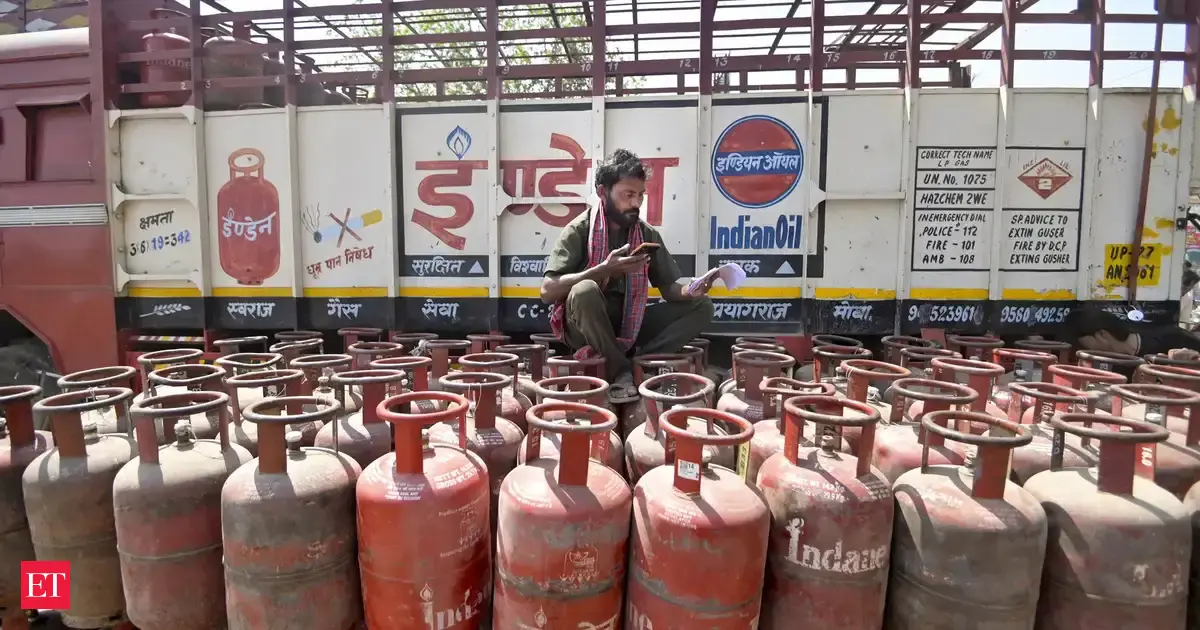
India is facing a worsening cooking gas shortage as the Iran war disrupts LPG supplies, exposing the country’s heavy reliance on imports routed through the Strait of Hormuz. The crunch is driving a sharp shift toward electric cooking, with demand surging and raising concerns about pressure on the power grid, especially during peak evening hours. View More
With the war in Iran now in its second month, India’s cooking-gas shortage is turning serious. Policymakers must view this as more than a temporary blip; it is a crisis that may permanently shift how the world’s most-populous nation consumes energy. Electric cooktops are vanishing from shelves: Amazon.com Inc.’s local unit reported a 30-fold jump in sales. This marks a pivot for a country where liquefied petroleum gas, or LPG, has 332 million customers. The gas comes home in red-colored cylinders, delivered by a vast distribution network controlled by state-owned refiners. Assuming 10% of households switch to electric and 70% cook dinner simultaneously, the extra 28-gigawatt demand equals nearly a tenth of the summer peak load. ALSO READ: Trump talks of Operation Epic Fury's endgame in two-three weeks without Tehran pact, gives D-St hope This additional load is more than the power-guzzling potential of all data centers under construction globally. Should the LPG squeeze worsen, planners may have to tell Silicon Valley firms investing in India to go slow. They want to lower the cost of AI tokens by tapping India’s solar power, but New Delhi must prioritise human welfare over artificial intelligence. Since kitchens add to demand after sunset, capital must flow toward solar-power storage. India’s grid is robust, but substations need upgrades. The neighborhood transformer that has adapted to an increasingly air-conditioner-heavy lifestyle might fry if everyone cooks dal at 8 p.m. Live Events ALSO READ: Trump's flip-flops on Iran war leave Americans confused Even before war-induced fertilizer shortages raise food prices, the economics of an Indian meal are changing. Imports meet 65% of LPG demand. Roughly 90% of shipments originate in the Persian Gulf; these vessels are now stranded or trickling through the Strait of Hormuz in navy-escorted convoys. Even the Red Sea route for US and Norwegian LPG is in doubt with Houthi involvement in the conflict. New Delhi is aggressively pushing urban households toward piped natural gas, or PNG. This is the right short-term move for three reasons. One, China and India are outliers in Asia because their power sectors use little LNG; lit stoves won’t cause blackouts. Two, availability of domestic gas in India makes import dependence less acute than for crude oil-derived LPG. If global deficits worsen, LNG can be diverted from transport to kitchens. Three, India can buy US shale gas via the Cape of Good Hope, despite the higher cost. Conversely, LPG is beholden to the Strait of Hormuz. Propane and butane processing at domestic refineries has been stagnant for years amid surging rural demand. To reduce kitchen smoke, Prime Minister Narendra Modi’s government has added more than 100 million subsidized LPG customers over the past decade. While laudable and popular, the program ignored energy security. Before the start of the war, local LPG storage was adequate to meet just 17 days of demand, down from 22 in 2008. Cylinder prices rose 7% in March and may climb further after this month’s crucial state elections. Although the government maintains that supplies of domestic LPG cylinders are normal, it has mandated refill delays. Commercial supplies — their blue-colored cylinders are bigger — have been cut. The street-food scene at New Delhi’s bus station has gone quiet. The Bloomberg News reporters who went there recently came across empty stalls. Labor is starting to flee industrial hubs like Surat in Gujarat, as anxiety rises among migrant workers over the cost of their next meal. LPG prices in the black market are soaring. In parliament, Modi compared the current situation to the Covid-19 crisis, when a mass exodus tanked the economy. My first memory of my mother’s kitchen in northern India is a coal oven — the 1973 oil shock had made kerosene stoves a luxury. In the 1980s, LPG became the middle-class norm. Another shift is arriving. Consumers are rational; they know 1.4 billion people cannot rely on peace in the Middle East to cook their meals. In the long run, only the sun can be India’s savior. Until there is adequate solar-power storage to meet nighttime load, abundant local coal will keep electricity flowing to kitchens. If influencers haven’t yet mastered making samosas in air fryers, they should. Energy planners must decide what matters more: spending electricity on exporting AI tokens to the West, or keeping dosa and dal affordable for local families. Now is not the time to do both. (The views expressed are solely those of the author.) .Pbanner{display:flex;justify-content:space-between;align-items:center;background-color:#ec1c40;margin-top:20px;padding:5px 10px;border-radius:4px;color:#fff;line-height:10px;} .Pbannertext{display:flex;align-items:center;font-size:16px;font-weight:600;font-family:'Montserrat';} .Pbannertext img{height:20px;margin:0 6px} .Pbannerbutton a{display:flex;align-items:center;background-color:#fff;color:#ec1c40;text-decoration:none;font-weight:600;padding:4px 8px;border-radius:6px;font-size:15px;font-family:'Montserrat';} .Pbannerbutton img{height:20px;margin-right:6px} .Pbannerbutton a:hover{background-color:#f7f7f7} Add as a Reliable and Trusted News Source Add Now! (You can now subscribe to our Economic Times WhatsApp channel) (You can now subscribe to our Economic Times WhatsApp channel)
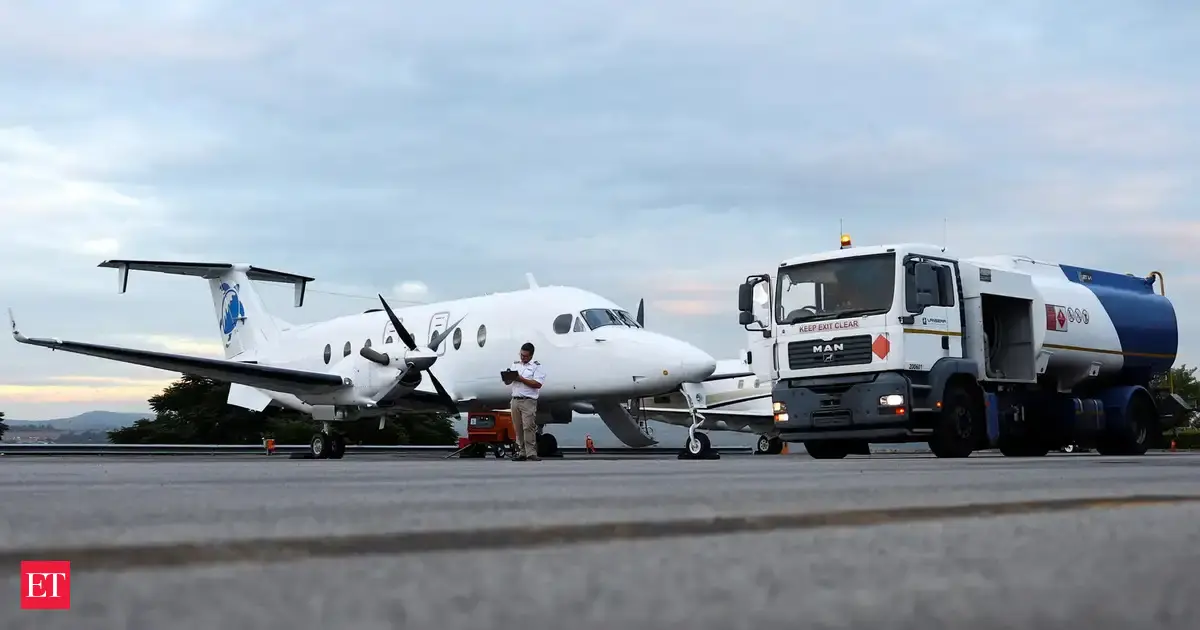
Jet fuel prices have reached an all-time high, soaring to over Rs 2 lakh per kilolitre. This significant increase is attributed to rising global oil prices. The surge is directly linked to the ongoing conflict in West Asia. This marks the first time aviation turbine fuel has crossed the Rs 2 lakh per kilolitre threshold. View More
State-owned Indian Oil Corporation (IOC) on Wednesday clarified that the increase in aviation turbine fuel (ATF) prices for domestic airlines is limited to about 8.5%, and not the 114–115% jump that was reflected earlier due to a pricing notification. According to IOC, ATF for domestic carriers has risen by roughly 20–25% in operational terms, with the effective price now around ₹1.04 lakh per kilolitre, significantly lower than the ₹2.07 lakh per kl rate that applies to foreign and non-scheduled operators. The clarification comes after confusion arose when state-run fuel retailers published revised ATF prices showing a sharp spike to ₹2,07,341.22 per kl in Delhi, a record high. IOC said this higher benchmark rate is applicable only to international airlines and non-scheduled carriers refuelling in India. Also Read: Iran War: Trump talks of Operation Epic Fury's endgame in two-three weeks without Tehran pact, gives D-St hope The company added that its official website reflects the corrected pricing for domestic airlines. Live Events However, the Ministry of Petroleum and Natural Gas, in consultation with the Ministry of Civil Aviation and public sector oil marketing companies, implemented a partial and staggered increase to shield domestic carriers from the full impact. The ministry further added, “ATF prices in India are deregulated and revised monthly in line with international benchmarks and exchange rates. The sharp spike in global oil prices, driven by disruptions linked to the ongoing West Asia conflict and closure of key routes such as the Strait of Hormuz, had initially indicated a potential increase of over 100%.” Also Read: IRGC threatens to 'annihilate' regional offices of 18 US tech giants over alleged espionage In addition, the Union Minister of Civil Aviation Ram Mohan Naidu posted on X, "With ATF prices in India, deregulated since 2001 and revised monthly based on international benchmarks, facing extraordinary pressure due to global energy disruptions and the closure of the Strait of Hormuz, a steep increase of over 100% was anticipated from 1 April. In this challenging context, the decision by PSU Oil Marketing Companies, under the Ministry of Petroleum in consultation with the Ministry of Civil Aviation, to implement only a partial and staggered increase of 25% (Rs.15/litre) for domestic airlines is both pragmatic and forward-looking, while ensuring that foreign routes bear the full market-aligned price." He added, "This calibrated approach will help shield passengers from sharp fare increases, ease the burden on domestic airlines, and support the continued stability of the aviation sector at this crucial juncture. It will also benefit the broader economy by ensuring the smooth movement of cargo and maintaining vital air connectivity for trade and logistics." Reacting to the partial increase in ATF prices, airlines including Spicejet and IndiGo reacted. Ajay Singh, Chairman and Managing Director of SpiceJet, said the government’s decision to allow only a partial increase in ATF prices comes as a major relief for the aviation sector amid global uncertainty. He thanked Civil Aviation Minister Ram Mohan Naidu Kinjarapu and Civil Aviation Secretary Samir Sinha for their timely intervention, noting that the moderated hike would help airlines navigate a challenging period marked by volatility in global fuel markets and external disruptions. In a statement, IndiGo thanked Prime Minister Narendra Modi for the decision, calling it a significant step for the aviation sector. The airline also expressed appreciation to the Ministry of Civil Aviation and the Ministry of Petroleum and Natural Gas, saying the move would bring greater stability to the industry and help airlines pass on the benefits through more affordable travel for passengers. This marks the second consecutive monthly hike in ATF prices. Fuel accounts for nearly 40% of an airline’s operating costs, and the increase comes at a time when airlines are already facing higher expenses due to longer flight routes amid regional airspace restrictions. Also Read: Centre plans sweeping reforms as West Asia war jolts supply chains The war in the Middle East between the US, Israel and Iran has thrown the global energy market into turmoil, with the near-total closure of the key waterway choking off exports. Crude oil has surged on the widening disruption, while product prices, including jet fuel, have rallied even more. Alongside ATF, prices of commercial LPG used by hotels and restaurants were also raised by ₹195.50 per 19-kg cylinder in Delhi, now costing ₹2,078.50. Domestic cooking gas prices, however, remain unchanged. With inputs from PTI and Bloomberg .Pbanner{display:flex;justify-content:space-between;align-items:center;background-color:#ec1c40;margin-top:20px;padding:5px 10px;border-radius:4px;color:#fff;line-height:10px;} .Pbannertext{display:flex;align-items:center;font-size:16px;font-weight:600;font-family:'Montserrat';} .Pbannertext img{height:20px;margin:0 6px} .Pbannerbutton a{display:flex;align-items:center;background-color:#fff;color:#ec1c40;text-decoration:none;font-weight:600;padding:4px 8px;border-radius:6px;font-size:15px;font-family:'Montserrat';} .Pbannerbutton img{height:20px;margin-right:6px} .Pbannerbutton a:hover{background-color:#f7f7f7} Add as a Reliable and Trusted News Source Add Now! (You can now subscribe to our Economic Times WhatsApp channel) (You can now subscribe to our Economic Times WhatsApp channel)