
Latest Sectors News
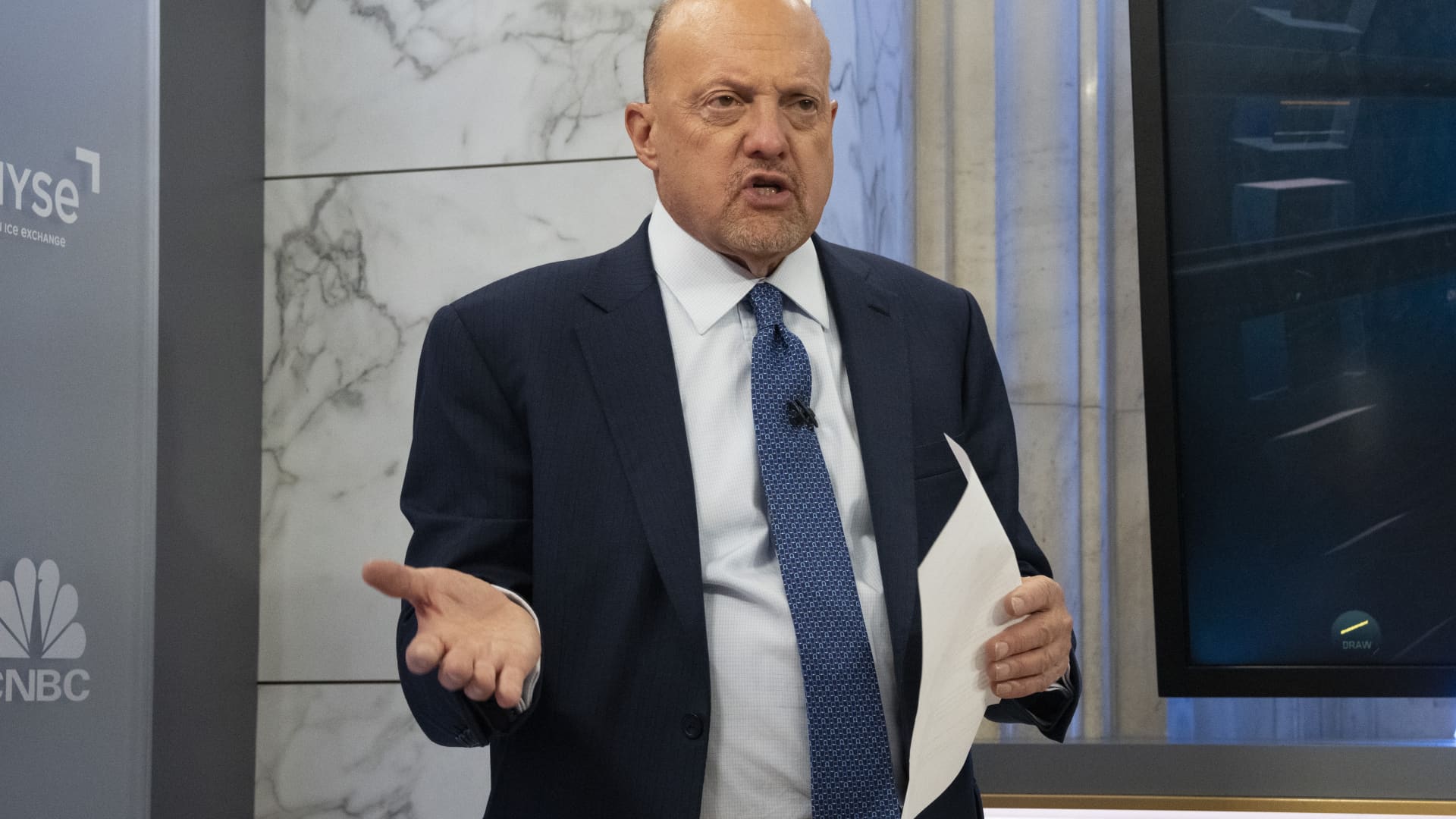
Jim Cramer gave his latest thinking on all 31 stocks owned by the CNBC Investing Club, including Nvidia, Apple, and Microsoft. View More
The CNBC Investing Club held its April Monthly Meeting on Thursday, with Jim Cramer and Jeff Marks, director of portfolio analysis, hashing it out on each stock in the portfolio. The confab came a day after the S & P 500 closed at its first record high since late January, punctuating its dramatic comeback from the Iran war sell-off. The broad index's war-driven bottom actually fell one trading after our March Monthly Meeting . We convened on March 27, a Friday, and the following Monday brought one more day of selling. It's been off to the races ever since. Throughout the war, Jim has urged investors to stay calm and stay invested. The speed and magnitude of this rebound reinforces the pitfalls of throwing in the towel. Honestly, who would've seen this rally coming on the day of our March call? The war isn't officially over, of course. But the market is doing its best to refocus on what companies are doing and saying as first-quarter earnings season ramps up. That's the backdrop for Thursday's meeting. Who knows what May will have in store? Now, let's get into what Jim and Jeff had to say, going in the order they discussed them. The big mistake Nike : We have a huge case of buyer's remorse, but we don't want to compound it with seller's remorse. Turning around the sportswear giant is a much taller task for CEO Elliott Hill than we anticipated. It was wrong to buy more shares in December in response to a wave of insider buying. We're encouraged by another round this week, though we're not buying alongside Hill and Apple CEO Tim Cook, who's a director on the company's board. We're giving Hill one more at bat. If next quarter is another swing-and-miss, we'll bail on the sneaker and apparel maker. The tech heavyweights Apple : Smartphone momentum in China appears to be continuing, and the forthcoming launch of a Google Gemini-infused Siri is a powerful combo. It's a real competitive advantage. Plus, the foldable iPhone is coming out. No reason to trade this stock. Just own it. Amazon : The stock's comeback rally is a lesson on patience. The emperor had clothes all along. It just took the market time to realize the strength of the cloud unit, AWS, and its online retail business. We aren't sleeping on its satellite ambitions either. Broadcom : We trimmed our position in the red-hot chipmaker twice this week. Not because we've soured on CEO Hock Tan or its AI business spanning custom chips and networking solutions. The stock had simply gone on a parabolic run since the March lows, and we wanted room to buy some shares back in the case of a pullback. Alphabet : We had seller's remorse, but we bit the bullet and got back in the stock late last year. We're glad we did. From Google Cloud to YouTube to search to the promising Waymo robotaxi services, these businesses are booming. Alphabet probably has more ways to win than any of the big guns in this market. Meta Platforms : Owning the Instagram parent here is partially a bet that CEO Mark Zuckerberg's massive spending spree on AI talent will bear tremendous fruit. And we don't like to bet against Zuckerberg when it comes to making money. Its Ray-Ban AI glasses are just gravy. Nvidia : Our patience with the leading AI chip stock is paying off. The world is short compute, and while there's a lot of talk about competition from hyperscalers' in-house chips, our view is that Nvidia is still best in class. It deserves to be the largest company in the universe (which it is). Microsoft : The software and cloud giant is showing renewed urgency after a period of underperformance. It trailed rivals like OpenAI and Anthropic in launching exciting and effective AI tools. We want to see the company increase compute spending and allocate more of its available capacity to Azure rather than internal research and Copilot, its AI assistant. The data center plays GE Vernova : Before the AI boom, the gas turbine business was a miserable place to be. Now it's magical. Electricity demand is off the charts, turbines are in short supply, and competition is scarce. That means plenty of pricing power. Not to be overlooked: If you want to play the nuclear power trend, GE Vernova has a real business, not a science project. Corning : JPMorgan downgraded the maker of glass fiber optic cables Thursday, essentially saying it's run too far, too fast. No doubt, it's been a major winner. Our desire to keep riding it stems from the idea that glass fiber is poised to replace more and more copper wire inside data centers. Eaton : Its electrical equipment is in high demand for data centers, and we love that it went a step further by buying the liquid-cooling company Boyd Thermal. It's an adjacent business that expands Eaton's total addressable market within the AI buildout. AI servers throw off a lot of heat, and Boyd helps keep them cool. Qnity Electronics : This is another situation where we're tempted to take the gain. But it's just now being noticed by more and more investors, having been spun off from the DuPont conglomerate last fall. You can't make and package semiconductors without the kinds of advanced materials that Qnity supplies to companies like Taiwan Semiconductor Manufacturing Co. and Korea's SK Hynix. The industrials Boeing : The planemaker's order book is brimming and ready to reclaim market share from its only real competitor, Airbus. Boeing was an unbelievably good company and stock before management got sloppy. With CEO Kelly Ortberg at the helm, that's no longer a concern. Dover : We hear from Dover next week (and Boeing, for that matter). We admit to growing impatient with this one, even if its last earnings results were good. We want to see CEO Richard Tobin take a few more concrete steps to ignite the stock, like selling slower-growing areas and using some of its dry powder for exciting acquisitions. It could be one of our names on the chopping block to be replaced by a promising Bullpen stock. Honeywell : Its long-awaited aerospace spin-off is only a few months away, so we have to stick with the stock. The whole company is worth a tad less than $150 billion right now. Once it's a separate company, the aerospace business, which makes electronic systems for planes and smaller engines that power them on the ground, could be worth more than that on its own. Linde : Shares have stalled out, but we believe disruptions to helium supply from the Middle East are a tailwind for Linde, which produces gases outside the Persian Gulf. If we finally start to see better economic growth, Linde should see volume increases to complement price increases, a winning combination to beat estimates and raise its guidance. DuPont : We don't think a reverse stock split is ideal from an optics perspective, but we trust management's broader strategy. Shareholders will vote on the idea at DuPont's annual meeting in May. If investors want to dump DuPont, it should be because of concerns about the fundamentals. Right now, they look good for the Qnity-less DuPont, which is now more exposed to global megatrends like water and health care. The rest of 'em Costco and TJX Companies : These two are among the only retailers worth owning. They benefit from inflationary environments, as consumers increasingly seek better value. With consistent store expansion and better merchandise, these are secular growth stories that continue to deliver. No need to sell these stocks here. If anything, TJX could be bought here. Home Depot : Our thesis hasn't worked, but we haven't lost all hope. Our worldview is that rates will come down eventually and unlock the housing market, which should turbocharge this languishing stock. But admittedly, if Home Depot is one of only, say, five stocks you own, there will likely be better earnings growth somewhere else for at least the next quarter or two. Eli Lilly : The pharmaceutical giant's stock may appear stuck, but the long-term story remains firmly intact. Lilly's leadership in GLP-1 treatments remains a major advantage, and its new GLP-1 pill is a game-changer. As for its competition with Novo Nordisk, it has become a volume play, and Lilly is the clear winner in manufacturing capacity. Cardinal Health : Despite a less-than-ideal entry point, the Cardinal Health story remains strong. The company's scale in drug distribution, combined with its growing specialty pharmacy business, creates a durable platform for long-term growth. While the stock has yet to reflect that potential, it is our favorite stock to buy right now in the entire portfolio. Johnson & Johnson : Strong results this week justified our recent decision to replace Bristol Myers Squibb with this drug stock. It has a great cancer treatment franchise and opportunities across autoimmune diseases and neuroscience. If not for our trading restrictions, we'd likely be looking to add to our position on Thursday. Goldman Sachs : The bank delivered an excellent quarter on Monday, except for its fixed-income trading desk. We doubt they will make the same mistake twice. The M & A environment is still ripe. Wells Fargo : Unfortunately, we had to send this one to the penalty box after two rough quarters in a row. Have we overstayed our welcome? We still predict that the removal of the Federal Reserve's asset cap last year will lead to greater profits. Execution needs to improve. Capital One : When the credit card issuer reports next week, we want updates on its Discover and Brex acquisitions and assurances that they're hitting the brakes on M & A. It's time to start getting the most out of these deals, not doing more of them. Procter & Gamble : The maker of Tide detergent and Crest toothpaste serves as a key hedge against a potential economic slowdown, even if execution hasn't been ideal under previous leadership. With a new CEO in place, it's a name we wish we owned more of. CrowdStrike and Palo Alto Networks : Investors are afraid these cybersecurity companies will be hurt by AI-built alternatives. However, more advanced AI models should be a major tailwind for these companies. At the same time, we want to free up a slot in the portfolio to own other companies. So, our plan is to eventually sell out of Palo Alto and redeploy at least some of those funds into CrowdStrike. Salesforce : The enterprise software stock still has a path to turn things around, even as skepticism builds around its ability to compete in an AI-disrupted landscape. This upcoming quarter will be make-or-break. We'll be watching closely for CEO Marc Benioff's commentary in May to gauge whether momentum is coming back or is further at risk. Starbucks : We like what CEO Brian Niccol is doing. He closed underperforming stores in the U.S. and entered into a joint venture in China, sharpening the company's focus on the U.S. turnaround. Traffic and comps are improving despite competition, though margins will take time to recover. A pullback to the low $90s would be an attractive level to buy more. (See here for a full list of the stocks in Jim Cramer's Charitable Trust.) As a subscriber to the CNBC Investing Club with Jim Cramer, you will receive a trade alert before Jim makes a trade. Jim waits 45 minutes after sending a trade alert before buying or selling a stock in his charitable trust's portfolio. If Jim has talked about a stock on CNBC TV, he waits 72 hours after issuing the trade alert before executing the trade. THE ABOVE INVESTING CLUB INFORMATION IS SUBJECT TO OUR TERMS AND CONDITIONS AND PRIVACY POLICY , TOGETHER WITH OUR DISCLAIMER . NO FIDUCIARY OBLIGATION OR DUTY EXISTS, OR IS CREATED, BY VIRTUE OF YOUR RECEIPT OF ANY INFORMATION PROVIDED IN CONNECTION WITH THE INVESTING CLUB. NO SPECIFIC OUTCOME OR PROFIT IS GUARANTEED.

Kim said South Korea will focus on wind and solar power to achieve its goal of reaching 100 gigawatts renewable energy capacity View More
This general view shows oil tanks and facilities at Yeosu National Industrial Complex, the largest petrochemical industrial complex in South Korea, in Yeosu on April 7, 2026. (Photo by Shin Yong-ju / AFP via Getty Images)Shin Yong-ju | Afp | Getty Images The Iran war is "serving as a significant turning point" for South Korea to shift to renewable energy and away from oil, the country's energy minister said. In an interview with CNBC's Lisa Kim, South Korea's Minister of Climate, Energy and Environment Kim Sung-hwan said there is a "growing national consensus that we must undergo a fundamental energy transition."Seoul has committed to achieving 100 gigawatts of renewable energy capacity by 2030. Currently, South Korea's total renewable energy capacity stands at 37 gigawatts, according to the Renewable Energy Institute. watch nowVIDEO2:0702:07Seoul accelerates electrification drive with 100GW renewables goal by 2030Squawk Box Asia Kim said that the country will focus on wind and solar power to achieve its goal of increased capacity. South Korea derived only about 9% of its power needs from renewables in 2025, mostly from solar, according to IEA data."Since wind power takes considerable time from preparation to actual generation, we will try our best while focusing on solar power as the most effective solution in the short term," Kim said. When asked if the country experiences enough sunlight to generate the required solar power, Kim expressed confidence. Seoul receives an average of 2,148 hours of sunshine annually, and Kim said provinces such as South Jeolla and Jeju Island receive 100 hours more than the capital. He contrasted that with Germany, saying South Korea was "in a much better position" than Europe. Solar panels at a parking lot in the Jeju Techno Park in Jeju, South Korea, on Monday, Jan. 17, 2022. Bloomberg | Bloomberg | Getty Images Kim acknowledged that South Korea's solar-related industries have shrunk considerably due to China dominating the market for solar components, but said his country possesses "substantial technological prowess in this field," and Seoul will ensure that subsidies are directed toward fostering and protecting the domestic solar industry."By structuring solar power profits to benefit our own citizens, we can turn this challenge into a blessing in disguise," he said. watch nowVIDEO2:2802:28Renewables and nuclear will be central to Korea's energy mix, says ministerSquawk Box Asia A report from South Korean news outlet Chosun Ilbo said the market share of Chinese solar cells in South Korea surpassed 95% in 2024, up from 38% in 2019. South Korea's domestic share, in contrast, fell from 50% in 2019 to just 4% in 2024. According to data from the China Photovoltaic Industry Association, China produced 93.2â¯% of the world's polysilicon, 96.6% of wafers, 92.3% of photovoltaic (PV) cells, and 86.4% of PV modules in 2024. Near-term concerns However, South Korea still needs to deal with the near-term energy fallout from the Iran war. Kim said Seoul would delay by around six months the closure of two coal-fired power plants that had been expected to shutter in June, and restart one of its nuclear power plants in an effort to reduce the demand for natural gas. Increased gas prices feed into higher electricity production costs.The country has committed 22 million barrels of oil to the International Energy Agency's release effort, although the minister said there are currently no plans to release these reserves immediately as the situation has not had a "direct or significant impact on supply and demand."South Korea, Asia's fourth-largest economy, imports 94% of its energy, according to a 2024 report from the Korea Energy Statistics Information Systems, and almost 72% of its crude oil comes from the Middle East. Motorists line up to fill up at a petrol station in Seoul on March 9, 2026. The price of the main US benchmark for oil surged more than 30 percent on March 9, 2026 over concerns that the Middle East war could create prolonged supply disruptions. (Photo by Jung Yeon-je / AFP via Getty Images)Jung Yeon-je | Afp | Getty Images In late March, Seoul approved a supplementary budget worth 26.2 trillion won ($17.6 billion) to ease the burden of rising energy prices on households and industries, as well as imposing a price cap on fuel products. To reduce energy demand, the capital has also reportedly implemented a rotating parking system for public car parks, and public sector workers' vehicles will be banned from parking every other day based on license plate numbers.Kim told CNBC the impact hasn't quite reached the point where electricity rates need to be raised, saying an electricity price hike materializes about three to six months after oil and gas prices rise. "That said, the situation is difficult to predict. We will closely monitor the situation in June and July and carefully devise various mechanisms to prevent electricity price hikes," he added. Choose CNBC as your preferred source on Google and never miss a moment from the most trusted name in business news.
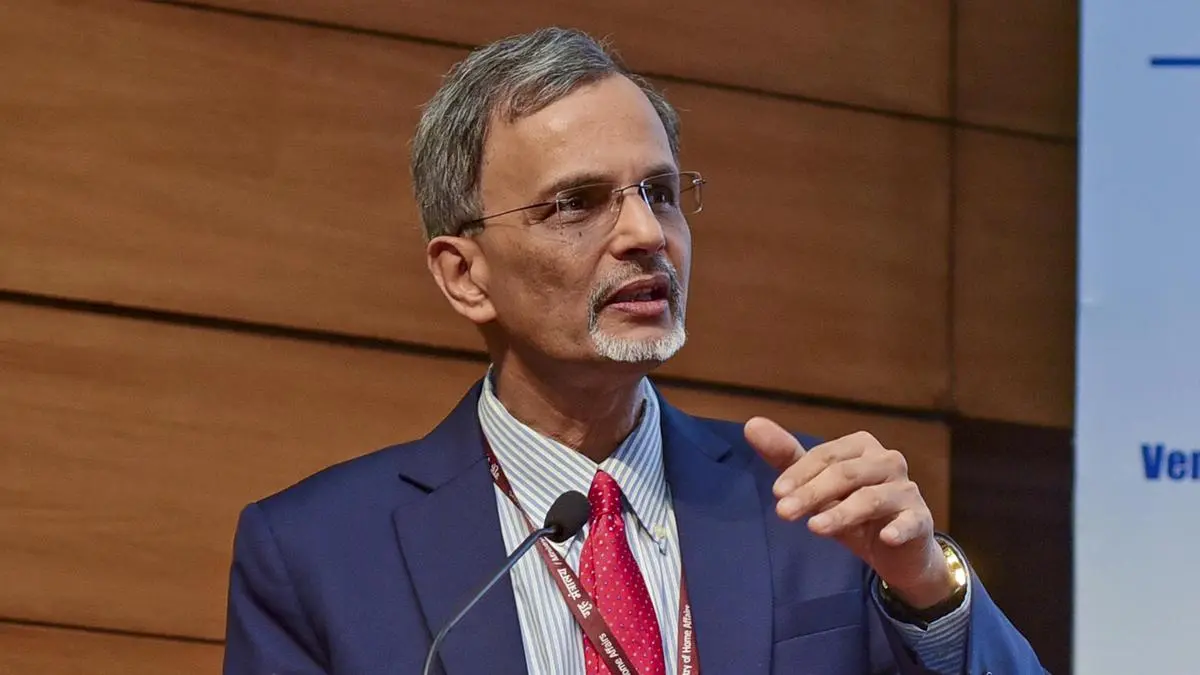
He said there was a need to understand the range of uncertainty arising out of the conflict, particularly in South Asia and in general in the Asia-Pacific region View More
The initiative spans over 22,000 acres and 3,500 farmers, promoting better yields, environmental benefits, and stronger global market access through digital tools and farmer support systems View More
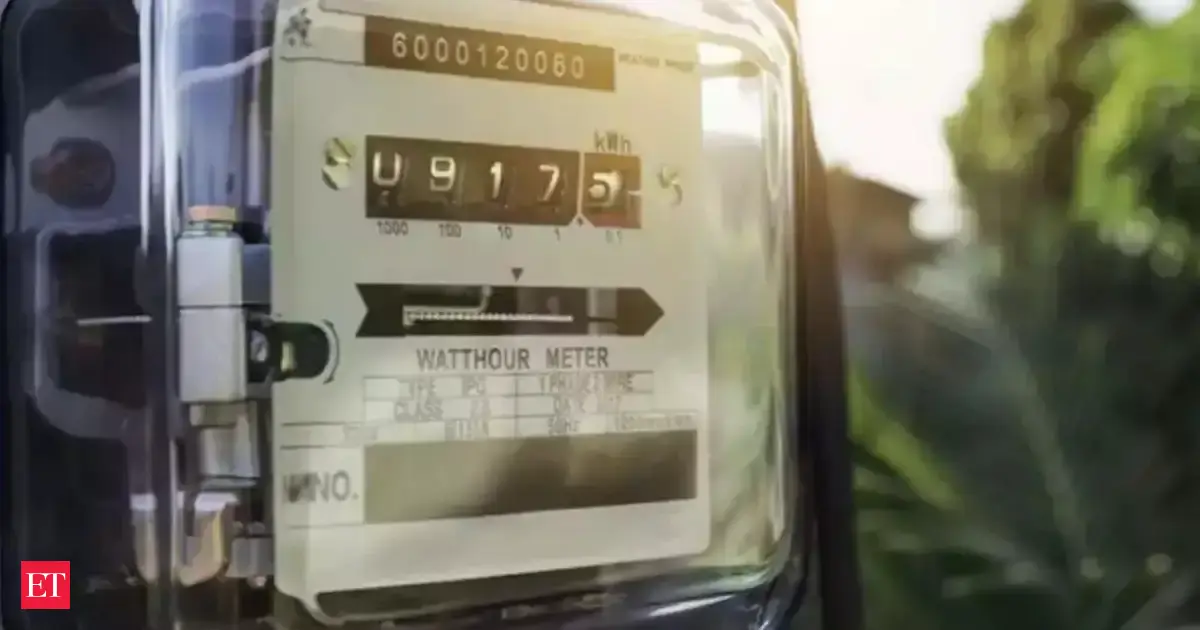
Global infrastructure investors and domestic smart meter makers are showing strong interest in acquiring IntelliSmart Infrastructure. The company, owned by NIIF and EESL, is expected to be valued at $400 million. This sale aligns with India's ambitious smart meter rollout under the Revamped Distribution Sector Scheme. View More
Mumbai: The sale process for IntelliSmart Infrastructure, which operates smart electricity metering systems of utilities, has drawn strong interest from global infrastructure investors and domestic smart meter manufacturers, people familiar with the matter said. The company, owned by India's sovereign wealth fund National Investment and Infrastructure Fund ( NIIF ) and financially stressed Energy Efficiency Services Ltd ( EESL ), has received around 10 bids and four-five bidders are expected to be shortlisted for due diligence within a week, the people said. The transaction is expected to value IntelliSmart at an equity valuation of $400 million (around ₹3,700 crore), they added. Also read | Adani Energy commissions 1,000 MW power link in Mumbai Global investors such as Partners Group, Macquarie, KKR and Actis have submitted non-binding bids. Domestic strategic players including GMR Smart Electricity Distribution, Greater Pacific Capital-backed Enzen Global Solutions, Adani Energy Solutions , I Squared Capital-owned Polaris Smart Metering, GIC-backed Genus Power and Apraava Energy have also participated in the process. Live Events Deloitte is running the sale process. Macquarie and Partners Group spokespersons declined to comment, while queries sent to NIIF, KKR, Adani Group, Actis, Apraava Energy, Polaris and Genus did not elicit any response till press time Tuesday. IntelliSmart, set up in 2019, has secured orders for around 22 million smart meters from various state utilities. Of these, it has installed around 600,000 meters in Assam and about half a million in Uttar Pradesh. NIIF owns a 51% stake in IntelliSmart, while EESL holds the rest. EESL, backed by public sector undertakings NTPC , Power Finance Corporation , Rural Electrification Corporation and Power Grid Corporation of India , had total outstanding long-term borrowings of ₹6,045 crore as of March 31, 2025, compared with ₹7,070 crore a year earlier, reflecting a gradual reduction but still elevated leverage levels. Its debt burden is understood to have prompted the proposed divestment of IntelliSmart. Also read | 'West Asia war a good opportunity for energy reforms, lower costs for industry' The sale process comes amid the government's ambitious rollout of the Revamped Distribution Sector Scheme (RDSS), which aims to install 250 million prepaid smart meters by 2027 to reduce aggregate technical and commercial losses. The programme is backed by an estimated investment of ₹1.35 lakh crore, with implementation expected to extend through 2035. Under the scheme, smart metering works have been sanctioned for 45 distribution utilities in 28 states/ union territories. Till January 15, 40.5 million smart meters have been installed under the RDSS. With the RDSS rollout gathering pace, global investors have intensified their focus on Indian smart meter manufacturing, strengthening their footprint via acquisitions. Greater Pacific Capital invested $100 million in Enzen Global Solutions, a knowledge practitioner in the energy and utilities sector. Enzen has a subsidiary named ZenMeter Solutions, which manufactures advanced smart meters. UK-based Actis had formed a JV last year with EDF India to operate a dedicated platform for concessions as an advanced metering infrastructure service provider. Jaipur's Genus Power & Infrastructures is owned by Singapore's GIC , which acquired a 74% stake in 2023 for $2 billion. I Squared Capital owns a controlling interest in Polaris Smart Metering. As of 2024, the Central Electricity Authority has identified about 45 firms as manufacturers or providers of smart electricity meters in India. Major power producers also operate smart meter subsidiaries to tap the multi-billion market. GMR Smart Electricity Distribution is executing a project to replace 7.6 million conventional meters with smart meters for distribution companies in Uttar Pradesh. A subsidiary of Apraava Energy, Apraava Smart Meter, has secured a contract with Assam Power Distribution Company for installing 690,000 prepaid smart meters. Apraava Kutch Saurashtra Smart Meter, another subsidiary of Apraava Energy, is setting up smart meters in Gujarat. Smart Meter penetration in India at 5-6% lagged behind developed nations like Japan (100%) and the US (73%), as well as the global average of 43%, highlighting an urgent need to bridge this gap and enhance energy efficiency, Care Edge said in a report last year. According to it, the plan to install 250 million smart meters over five years presented a $20-25 billion opportunity in the energy sector. The power ministry, meanwhile, has extended the target completion date for installing 250 million smart meters by two years to March 2028. .Pbanner{display:flex;justify-content:space-between;align-items:center;background-color:#ec1c40;margin-top:20px;padding:5px 10px;border-radius:4px;color:#fff;line-height:10px;} .Pbannertext{display:flex;align-items:center;font-size:16px;font-weight:600;font-family:'Montserrat';} .Pbannertext img{height:20px;margin:0 6px} .Pbannerbutton a{display:flex;align-items:center;background-color:#fff;color:#ec1c40;text-decoration:none;font-weight:600;padding:4px 8px;border-radius:6px;font-size:15px;font-family:'Montserrat';} .Pbannerbutton img{height:20px;margin-right:6px} .Pbannerbutton a:hover{background-color:#f7f7f7} Add as a Reliable and Trusted News Source Add Now! (You can now subscribe to our Economic Times WhatsApp channel) (You can now subscribe to our Economic Times WhatsApp channel)
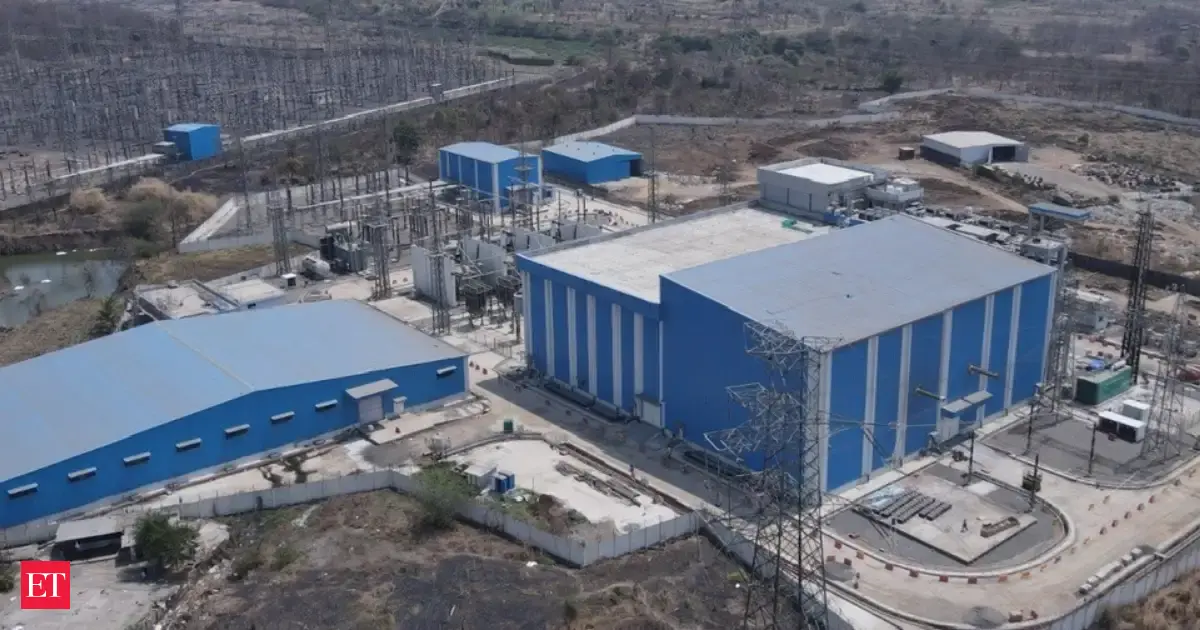
Adani Energy Solutions Limited has commissioned a 1,000 MW HVDC transmission link between Kudus and Aarey in Mumbai. This project, featuring the world's first compact HVDC substation, aims to enhance Mumbai's power supply reliability and integrate renewable energy sources. It was conceived following the 2020 Mumbai blackout to reduce reliance on in-city generation and strengthen grid resilience. View More
Adani Energy Solutions Limited (AESL) commissioned a 1,000 megawatt (MW) high voltage direct current (HVDC) transmission link between Kudus and Aarey in Mumbai on Tuesday. The project, under Adani Electricity Mumbai Infrastructure Limited (AEMIL), subsidiary of AESL, comprises a 30 km overhead line and a 50 km underground corridor. Designed to operate within the constraints of a densely built urban environment, it also features the world’s first compact HVDC substation. The project has deployed Voltage Source Converter (VSC)-based HVDC technology . The project, as the company said, is conceived in the aftermath of the October 2020 Mumbai blackout, which exposed vulnerabilities in the city’s power supply. It enables Mumbai and the MMR to draw more electricity from outside the city, including renewable energy generated in other regions. The additional 1,000 MW of capacity would help reduce reliance on in-city generation, improve grid resilience, and lower the risk of large-scale outages. The Kudus–Aarey link is among the largest urban HVDC infeeds globally and is expected to significantly increase the share of power sourced from outside Mumbai, easing pressure on in-city generation and strengthening grid resilience as demand continues to grow across the MMR, AESL said in a release. Live Events "With the commissioning of the Aarey–Kudus transmission line, Mumbai now has a modern power corridor capable of integrating large-scale renewable energy with high reliability," said Kandarp Patel, CEO, Adani Energy Solutions Ltd. "It is one of the fastest HVDC project ever commissioned which is powered by advanced VSC-based HVDC technology. The project enhances grid stability, decongests existing networks and strengthens the city’s energy security," he added. .Pbanner{display:flex;justify-content:space-between;align-items:center;background-color:#ec1c40;margin-top:20px;padding:5px 10px;border-radius:4px;color:#fff;line-height:10px;} .Pbannertext{display:flex;align-items:center;font-size:16px;font-weight:600;font-family:'Montserrat';} .Pbannertext img{height:20px;margin:0 6px} .Pbannerbutton a{display:flex;align-items:center;background-color:#fff;color:#ec1c40;text-decoration:none;font-weight:600;padding:4px 8px;border-radius:6px;font-size:15px;font-family:'Montserrat';} .Pbannerbutton img{height:20px;margin-right:6px} .Pbannerbutton a:hover{background-color:#f7f7f7} Add as a Reliable and Trusted News Source Add Now! (You can now subscribe to our Economic Times WhatsApp channel) (You can now subscribe to our Economic Times WhatsApp channel)

State-owned fuel retailers IOC, BPCL and HPCL face widening losses of Rs 18 per litre on petrol and Rs 35 on diesel as prices remain frozen since April 2022. Rising global crude costs, despite excise cuts, have eroded gains, with analysts warning of possible price hikes after state elections. View More
New Delhi: Losses on petrol have widened to Rs 18 per litre and to Rs 35 on diesel as state-owned fuel retailers continue to keep pump prices frozen despite a sharp rise in input costs, sources said. Despite prices being deregulated more than a decade back, state-owned Indian Oil Corporation ( IOC ), Bharat Petroleum Corporation Ltd ( BPCL ) and Hindustan Petroleum Corporation Ltd ( HPCL ) have not changed the retail petrol and diesel price since April 2022. Global crude oil prices have seen sharp fluctuations over this period - from above USD 100 per barrel following the Russia-Ukraine war, to easing to around USD 70 a barrel earlier this year, before surging again to about USD 120 last month after the US-Israel attacks on Iran triggered fresh supply concerns. The three firms were incurring losses of about Rs 2,400 crore per day at the peak last month, which have since narrowed to around Rs 1,600 crore daily after the government cut excise duty on petrol and diesel by Rs 10 per litre each - a reduction that was not passed on to consumers but used to partly offset losses, industry sources said. Also Read| Crude cargo traffic likely to get caught up in war logjam again The losses in March have wiped away all gains they made in January/February, they said, adding the three firms are most likely to post losses in the January-March quarter. Live Events Macquarie Group, in a report on 'India Fuel Retail', said, "At spot petrol-diesel pricing of USD 135-165 per barrel, we estimate India's oil marketing companies lose Rs 18 and Rs 35 per litre on petrol and diesel sales (respectively)." Every USD 10 per barrel increase in crude adds roughly Rs 6 per litre to marketing losses, the report said. The brokerage flagged a high likelihood of retail fuel price hikes after elections in key states like West Bengal and Tamil Nadu at the end of this month. "We see risk of higher pump prices post state elections in April." India, which imported about 88 per cent of its crude oil requirement in 2025, remains highly exposed to global price swings. Around 45 per cent of imports came from the Middle East, 35 per cent from Russia and 6 per cent from the United States. Despite this, the country continued to be a net exporter of key petroleum products, including diesel, petrol and aviation turbine fuel. While the government cut excise duty on fuels by Rs 10 per litre in March, central levies have been on a declining trend and now stand at Rs 11.9 per litre on petrol and Rs 7.8 per litre on diesel. Even a complete removal of excise duties would not fully offset OMC losses at current prices, the report noted. State-level VAT rates, however, have largely remained stable. Also Read| Can Trump’s Iran blockade plunge India into an 'everything crisis'? The fiscal implications of further tax cuts could be significant. Based on provisional consumption estimates of about 170 billion litres in FY26, a full rollback of excise duties could lead to an annual revenue loss of around USD 36 billion, widening the fiscal deficit by an estimated 80 basis points, it said. The contribution of fuel excise duties to government revenue has already declined to about 8 per cent in FY26 from 22 per cent in FY17, and now accounts for less than a fifth of the fiscal deficit, down from a peak of 45 per cent. Higher crude prices also pose a risk to India's external balances. The current account deficit, which was near balance in mid-2025, is expected to widen to around USD 20 billion in the first quarter of 2026. A sustained USD 10 per barrel rise in crude could expand the deficit by roughly 30 basis points of GDP, assuming no policy response, the Macquarie report said. Earnings visibility for OMCs remains uncertain, with every USD 1 per barrel change in crude prices impacting EBITDA by about 5 per cent. The sector's break-even crude price is estimated at USD 80-85 per barrel. Given the outlook, Macquarie Group said it prefers utilities over oil marketing companies in the near term. .Pbanner{display:flex;justify-content:space-between;align-items:center;background-color:#ec1c40;margin-top:20px;padding:5px 10px;border-radius:4px;color:#fff;line-height:10px;} .Pbannertext{display:flex;align-items:center;font-size:16px;font-weight:600;font-family:'Montserrat';} .Pbannertext img{height:20px;margin:0 6px} .Pbannerbutton a{display:flex;align-items:center;background-color:#fff;color:#ec1c40;text-decoration:none;font-weight:600;padding:4px 8px;border-radius:6px;font-size:15px;font-family:'Montserrat';} .Pbannerbutton img{height:20px;margin-right:6px} .Pbannerbutton a:hover{background-color:#f7f7f7} Add as a Reliable and Trusted News Source Add Now! (You can now subscribe to our Economic Times WhatsApp channel) (You can now subscribe to our Economic Times WhatsApp channel)

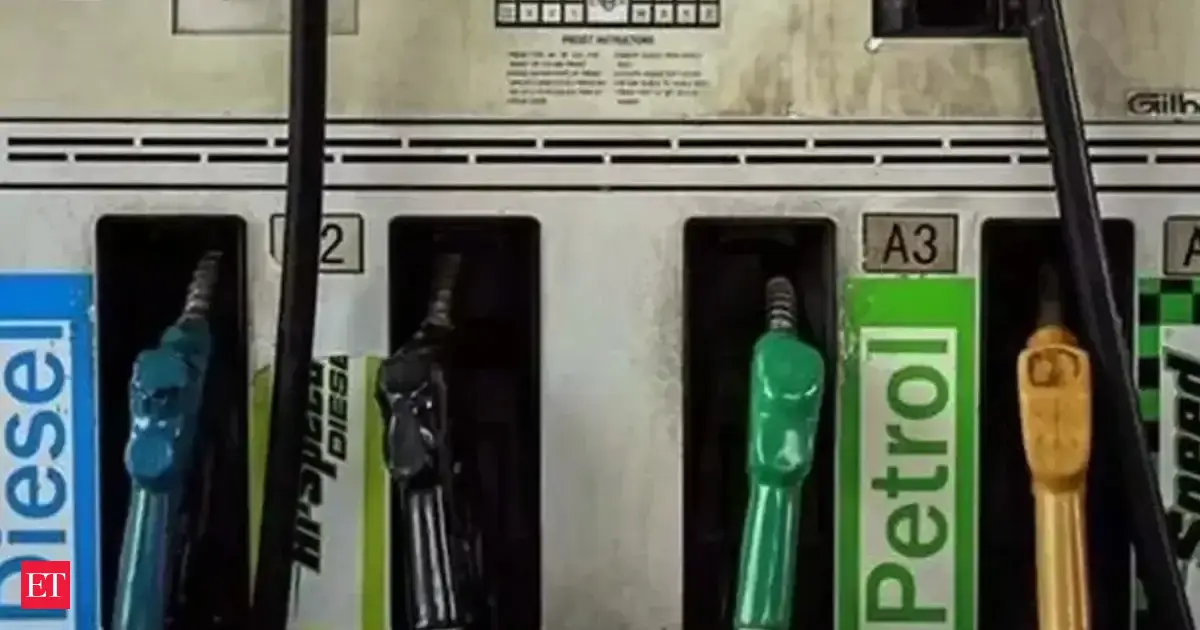
India has significantly increased export duties on diesel and aviation turbine fuel. This move aims to boost government revenue and ensure sufficient domestic fuel supply. The export duty on diesel now stands at ?55.50 per litre, and on ATF at ?42 per litre. These changes are a response to rising global crude oil prices following the Iran war. View More
New Delhi: India on Saturday sharply raised export duty on diesel and aviation turbine fuel (ATF), while continuing to exempt petrol shipments from the levy, signalling a calibrated move to shore up government revenue while managing domestic fuel availability. According to notifications issued by the department of revenue, the effective export duty on diesel has been increased to ₹55.50 per litre from ₹21.50, marking a steep increase in the tax burden on outbound shipments. Duty on ATF has been raised to ₹42 per litre from ₹29.50. Exports for both fuels were duty-free until a fortnight ago. Also Read: Bangladesh eyes India route to refine Russian crude amid supply crunch The duty hike, which is effective immediately, is intended to prevent exporters from exploiting price differentials, as global crude oil prices have surged since the onset of the Iran war, officials said. The changes were effected by revising components such as special additional excise duty and road and infrastructure cess, which together determine the final duty on exports. Live Events Also Read: Jio-bp not to raise petrol, diesel prices The government on March S26 tweaked fuel duty structures amid the ongoing West Asia conflict, imposing an export duty of ₹21.50 a litre on diesel and ₹29.50 per litre on ATF. The duties were levied to increase domestic availability of the fuel amid the war in West Asia. The revenue department said it will review the situation every fortnight. According to Brokerage firm Macquarie, oil prices are likely to stay supported in the $85-90 a barrel range with a gradual move towards $110, as shipments through the Strait of Hormuz normalise. If disruptions extend through April, Brent could rise to $150, it said. .Pbanner{display:flex;justify-content:space-between;align-items:center;background-color:#ec1c40;margin-top:20px;padding:5px 10px;border-radius:4px;color:#fff;line-height:10px;} .Pbannertext{display:flex;align-items:center;font-size:16px;font-weight:600;font-family:'Montserrat';} .Pbannertext img{height:20px;margin:0 6px} .Pbannerbutton a{display:flex;align-items:center;background-color:#fff;color:#ec1c40;text-decoration:none;font-weight:600;padding:4px 8px;border-radius:6px;font-size:15px;font-family:'Montserrat';} .Pbannerbutton img{height:20px;margin-right:6px} .Pbannerbutton a:hover{background-color:#f7f7f7} Add as a Reliable and Trusted News Source Add Now! (You can now subscribe to our Economic Times WhatsApp channel) (You can now subscribe to our Economic Times WhatsApp channel)
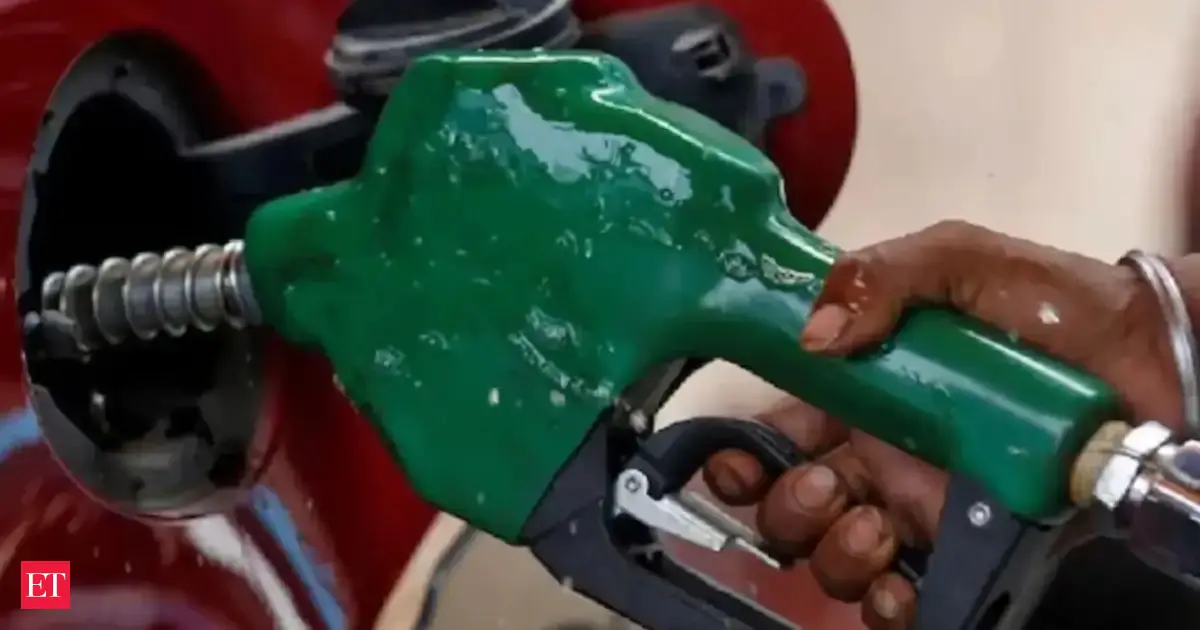
The Indian government has significantly increased export duties on diesel and aviation turbine fuel. This move aims to boost government revenue amidst fiscal challenges. The export duty on diesel has risen substantially, and a similar increase has been applied to aviation turbine fuel. Export duties on petrol remain unchanged. These changes are effective immediately. View More
The PM Modi-led Centre announced on Saturday that it had sharply increased the export duty on diesel from Rs 21.5 per litre to Rs 55.5 per litre. It also notified that export duties and cesses on high-speed diesel has also been increased. Under the revised structure, the Special Additional Excise Duty on high-speed diesel has been raised to Rs 24 per litre, while the Road and Infrastructure Cess now stands at Rs 36 per litre. Meanwhile, duty on aviation turbine fuel (ATF) has also been raised from Rs 29.5 per litre to Rs 42 per litre, while export duty on petrol continues to remain nil. The announcement, which takes effect immediately, were made through a series of finance ministry notifications dated April 1, signalling a push to shore up revenues amid mounting fiscal pressures . An official explanation for the move is expected to follow soon. .Pbanner{display:flex;justify-content:space-between;align-items:center;background-color:#ec1c40;margin-top:20px;padding:5px 10px;border-radius:4px;color:#fff;line-height:10px;} .Pbannertext{display:flex;align-items:center;font-size:16px;font-weight:600;font-family:'Montserrat';} .Pbannertext img{height:20px;margin:0 6px} .Pbannerbutton a{display:flex;align-items:center;background-color:#fff;color:#ec1c40;text-decoration:none;font-weight:600;padding:4px 8px;border-radius:6px;font-size:15px;font-family:'Montserrat';} .Pbannerbutton img{height:20px;margin-right:6px} .Pbannerbutton a:hover{background-color:#f7f7f7} Add as a Reliable and Trusted News Source Add Now! (You can now subscribe to our Economic Times WhatsApp channel) (You can now subscribe to our Economic Times WhatsApp channel)