
Latest Sectors News

Lofty gold prices and market volatility are pushing wealthy consumers toward jewelry, especially rare colored gemstones, as handbags lose appeal. View More
watch nowVIDEO2:2602:26Investors pivot to hard luxury assetsMarkets and Politics Digital Original Video When the gavel came down in December, Christie's had set a record that created a buzz in the auction world.A Tiffany & Co. necklace adorned with a sparkling blue Paraiba tourmaline gem and diamonds sold for more than $4.2 million, 10 times its low estimate. A matching pair of earrings hit the block next, and it too sold for 10 times its estimate. A 13.54 carat Paraiba-type tourmaline and diamond necklace by Tiffany & Co. sold at a Christie's auction in New York last December for $4.2 million, 10 times its low estimate.Courtesy: CHRISTIE'S IMAGES LTD. 2026 "I think that was really a marker for how far private clients are willing to go for these exceptional goods," said Jacqueline DiSante, vice president and head of sales of Christie's New York jewelry division.Amid economic and geopolitical uncertainty, a certain class of consumers are turning toward an unlikely asset class â jewelry. The trend comes as investors increasingly flock to tangible assets. For ultrarich consumers, colored gemstones such as rubies, sapphires and emeralds are especially popular right now."Whenever you have macroeconomic volatility ⦠the appeal of hard asset investing goes up," said Thorne Perkin, president of investment management firm Papamarkou Wellner Perkin. "Tangible assets, they tend to retain their value or even increase when inflation rises."Mario Ortelli, a managing partner at strategic and M&A advisor Ortelli&Co., agreed with Perkin's take, saying that there was clearly a "defensive element" to the trend."In periods of inflation, geopolitical tension, or financial market volatility, tangible assets become more attractive," he said in an email. "Branded jewelry can function as a portable store of value.""Unlike fashion accessories that are tied to seasonal cycles, iconic jewelry collections have a much longer product life cycle," he added. "In many cases, they also demonstrate stronger resale value dynamics than handbags. That longevity and perceived capital preservation help explain jewelry's relative resilience versus soft luxury."Luca Solca, global head of luxury goods at Bernstein, estimated that roughly one-third of the renewed interest in gold-heavy and gemstone-driven jewelry could be tied to "flight to safety" behavior for investors.Strong resale valueSurging gold prices have played a role. Long considered a safe-haven asset, gold in January soared to its highest price ever, above $5,100 an ounce. Although prices have pulled back since, it still trades at a lofty level, above $4,500 an ounce. Stock Chart IconStock chart iconGold futures 1Y chart "I think the view of jewelry â gold jewelry, diamond and gemstone jewelry â being viewed as an investment is enhanced by, obviously, the almost daily increase in the gold price," said Andrew Brown, founder and CEO of luxury resale platform MyGemma.DiSante, of Christie's, said record high gold prices have incentivized some collectors to come out of the woodwork and sell certain pieces.Jewelry's durability in the resale market is part of its appeal, experts say. Brown said he regularly sees clients reselling branded jewelry years after their original purchase, often at prices that hold up far better than designer handbags, which show wear from use much easier.Jewelry has managed to buck softness in the luxury market and has been growing "quite nicely" over the past two years, according to Caroline Reyl, senior investment manager of Pictet's premium brands strategy.Reyl said she has seen consumers shifting away from "soft luxury" items such as handbags and accessories. At the same time, "hard luxury" goods such as watches and fine jewelry have grown in popularity. Reyl attributed the change to extreme price hikes for handbags due to previously strong demand and supply chain disruption.Quality concerns have also been a headwind, Brown said.A Bernstein study found auction prices for Hermès' iconic handbags have fallen, and average resale premiums for Birkin and Kelly bags slipped from 2.2 times in 2022 to 1.4 times last November."Leather does not have a lot of inherent value," said Ankur Daga, founder and CEO of fine jewelry e-commerce company Angara. "As gold is appreciating, people are understanding more and more that this is a very valuable asset."Durability has helped reinforce jewelry's reputation as a long-term store of value, especially pieces from well-known brands such as Cartier, Van Cleef & Arpels, Tiffany & Co., and Bulgari. Brown estimated that these four brands made up around 90% of MyGemma's jewelry sales.A 'passion investment'There's also an emotional element to jewelry. Perkin called it a "passion investment," with consumers potentially drawn in by an "element of prestige."Ortelli agreed. He said the brand equity, craftsmanship and scarcity element reinforce the perception of durability and value retention."Branded jewelry has historically experienced mid- to high-single-digit annual price increases over the long term, depending on brand and the design," Ortelli said. "As resale often occurs at a moderate discount to current retail pricing, over a 5-10 year horizon, owners can frequently exit above their original purchase price."'Color is en vogue'Gold-heavy jewelry benefits from a price floor created by the intrinsic value of the metal, Ortelli said. "However, exceptional gemstones â especially rare, high-quality sapphires, rubies, or emeralds â can command significant collector premiums," he said.Fashion trends currently favor colored gemstones, which have emerged as one of the fastest-growing jewelry segments.Lucrezia Buccellati, jewelry designer and co-creative director of Italian jewelry house Buccellati, said this is particularly true in Asian markets. Colored stones allow for more creative designs and often appeal to buyers who want more distinctive and personal pieces, she explained.Consumers also may be seeking alternatives to diamonds.There is a "genuine dearth of gem-quality material that's coming out of the earth," Angara's Daga said. He explained it is more difficult to replicate colored gems in a lab. Unlike diamonds, the stone's inclusions â or the minerals trapped inside during formation â provide character and enhance the value of a colored gemstone."No two are exactly alike, and I think that's what makes them so interesting to today's market," DiSante said, comparing each one to a piece of art. "In a world where we are seeing lab-grown diamonds being made, and it kind of feels like this conveyor belt ... you can't do that with a sapphire or ruby or emerald."Daga said he expects colored gemstones will appreciate faster than gold."If you look at Sotheby's and Christie's auctions, these gemstones are trading at numbers nobody would have thought possible five years ago, and it's only going to increase," he said. "Color is en vogue."Colored gemstones have traded at two to three times the high estimates at auction houses, which is "very unusual" given that auction houses usually calibrate low and high bids relatively well, Daga said. As proof of the trend's strength, Daga estimated that around 15% of engagement rings today feature a colored gemstone, up from 5% a decade ago. They have perhaps been further popularized thanks to celebrities such as Kate Middleton, Eva Longoria, Halle Berry, Rita Ora and Halsey. Actress Halle Berry's engagement ring on March 5, 2013 and Eva Longoria's engagement ring on Jan. 13, 2016.Gregg DeGuire | JB Lacroix | WireImage | Getty Images The trend has also brought in younger consumers. In 2025, millennials and Gen Z accounted for 44% of Christie's luxury buyers, DiSante said.If macro uncertainty persists, experts such as Reyl said they expect jewelry investing to continue. Buccellati concurred, saying within high luxury, she expects jewelry to continue growing and surpassing soft luxury goods.There are certain challenges, however, including illiquidity, safety concerns and storage costs. And unlike stocks or real estate, jewelry does not provide its owners with an income."Jewelry should not be viewed as a financial asset equivalent to equities or ETFs â liquidity, transaction costs, and dispersion of returns are much higher," Ortelli said.He added that the long-term outlook for branded luxury jewelry is positive, but cyclical."The category performs best in supportive macroeconomic environments with rising wealth creation and political stability. ... In the event of a severe macroeconomic downturn, demand would contract," he wrote.And that is where some collectors may find comfort in the more emotional aspects of jewelry."I think there's something really romantic about a colored stone," DiSante said. "There's something really incredible about when you think that it formed in the Earth hundreds of thousands of years ago. And if it's a Kashmir sapphire â that mine was only mined for 20 years in the early 1900s â there's a certain romanticism behind it that you can't replicate."Markets shift and headlines fade, but the core principles of building long-term wealth remain constant. Join us for our third CNBC Pro LIVE, where investors of all backgrounds â from financial professionals to everyday individuals â come together to cut through the noise and gain actionable strategies for smarter, more disciplined investing. No matter where you're starting from, you'll leave with clearer thinking, stronger strategies. Enter your email here to get a discount code. Choose CNBC as your preferred source on Google and never miss a moment from the most trusted name in business news.
Gujarat has approved a supplemental power purchase agreement with Tata Power. This paves the way for the 4,000-MW Mundra power plant to restart operations soon. The agreement revises commercial terms to address cost pressures. This move will ensure operational stability for the project. It also secures power supply for Gujarat ahead of peak summer demand. View More
New Delhi: Gujarat has approved the signing of a supplemental power purchase agreement (SPPA) with Tata Power , paving the way for its 4,000-MW imported coal-based Mundra power plant to restart operations as early as next week. "The Gujarat cabinet has approved the supplementary PPA and a government order has been issued," Tata Power said in a notice to stock exchanges. "After regulatory clearances, the company and Gujarat Urja Vikas Nigam Ltd (GUVNL) will sign the agreement." Financial details, including the revised tariff, were not disclosed. The deal is expected to provide operational stability to the project while securing power supply for the state ahead of peak summer demand. The SPPA revises some commercial terms in the original 2007 power purchase agreement between Gujarat Urja Vikas Nigam and Tata Power to address cost pressures arising from imported coal-based generation, a person familiar with the development said. It provides some concessions in operating parameters to the company. The tariff could be based on an agreed coal index provided by both parties, one of the persons cited above said. The 5X800 MW Mundra ultra mega power project had gone offline after the Centre in June last year withdrew a special provision that compensated imported coal-fired plants for higher input costs. The provision was introduced in phases amid rising power demand in 2022. Live Events The plant supplies electricity to Maharashtra, Punjab, Haryana and Rajasthan as well, but Gujarat has the largest share. Its issue arose when Indonesia changed its coal prices by linking it to international rates with effect from 2011. The country’s most definitive MSME stage returns on March 24 in New Delhi. Register now for the ET MSME Awards 2025 .Pbanner{display:flex;justify-content:space-between;align-items:center;background-color:#ec1c40;margin-top:20px;padding:5px 10px;border-radius:4px;color:#fff;line-height:10px;} .Pbannertext{display:flex;align-items:center;font-size:16px;font-weight:600;font-family:'Montserrat';} .Pbannertext img{height:20px;margin:0 6px} .Pbannerbutton a{display:flex;align-items:center;background-color:#fff;color:#ec1c40;text-decoration:none;font-weight:600;padding:4px 8px;border-radius:6px;font-size:15px;font-family:'Montserrat';} .Pbannerbutton img{height:20px;margin-right:6px} .Pbannerbutton a:hover{background-color:#f7f7f7} Add as a Reliable and Trusted News Source Add Now! (You can now subscribe to our Economic Times WhatsApp channel) (You can now subscribe to our Economic Times WhatsApp channel)
Adani Electricity Mumbai, Tata Power Delhi Distribution, and Noida Power Corporation lead the nation's electricity distribution companies in FY25, according to a Power Finance Corporation report. The rankings assess institutional capability, financial sustainability, operational efficiency, and service delivery. Power Minister Manohar Lal emphasized coordinated efforts for affordable and efficient power, alongside renewable energy transition and enhanced per capita consumption. View More
New Delhi: Adani Electricity Mumbai , Tata Power Delhi Distribution and Noida Power Corporation have once again emerged the top electricity distribution companies in the country, followed by Dakshin Gujarat Vij Company, according to Power Finance Corporation 's discom ranking report for FY25. The report was released at the Bharat Electricity Summit . The ranking mechanism involves an evaluation of institutional capability, financial sustainability, operational efficiency, and service delivery outcomes. The top four of the 66 discoms that participated were followed by Maharashtra's BEST, Kerala's Thrissur Corporation Electricity Department, Assam Power Distribution Company, BSES Rajdhani Power and TP Northern Odisha Distribution. Power minister Manohar Lal, addressing the session, said coordinated efforts between the Centre and states are needed to ensure affordable and efficient power generation, transmission, and distribution. Highlighting the importance of energy security amid global uncertainties, he underlined the need to enhance per capita energy consumption and accelerate the transition towards renewable energy . Live Events He also noted the potential of nuclear energy as a clean energy source. The country’s most definitive MSME stage returns on March 24 in New Delhi. Register now for the ET MSME Awards 2025 .Pbanner{display:flex;justify-content:space-between;align-items:center;background-color:#ec1c40;margin-top:20px;padding:5px 10px;border-radius:4px;color:#fff;line-height:10px;} .Pbannertext{display:flex;align-items:center;font-size:16px;font-weight:600;font-family:'Montserrat';} .Pbannertext img{height:20px;margin:0 6px} .Pbannerbutton a{display:flex;align-items:center;background-color:#fff;color:#ec1c40;text-decoration:none;font-weight:600;padding:4px 8px;border-radius:6px;font-size:15px;font-family:'Montserrat';} .Pbannerbutton img{height:20px;margin-right:6px} .Pbannerbutton a:hover{background-color:#f7f7f7} Add as a Reliable and Trusted News Source Add Now! (You can now subscribe to our Economic Times WhatsApp channel) (You can now subscribe to our Economic Times WhatsApp channel)
Tata Power will sign a new power purchase agreement with the Gujarat government for its Mundra plant. This follows approval from the Gujarat cabinet. The agreement with Gujarat Urja Vikas Nigam Limited is expected soon. This development offers relief as India aims to boost coal power output. View More
Tata Power on Friday said it will sign a supplementary power purchase agreement (PPA) with the Gujarat government for its Mundra power plant after receiving necessary regulatory clearances, following media reports on the development. In a filing to exchanges, the company said the Gujarat cabinet has approved the supplementary PPA and a government order has been issued. The agreement will be signed between Tata Power and Gujarat Urja Vikas Nigam Limited (GUVNL) after requisite approvals. The company added that it will continue to comply with disclosure requirements under SEBI’s Listing Obligations and Disclosure Requirements (LODR) Regulations. According to Reuters, the plant has remained shut for the past six months after the government withdrew an emergency provision that compensated generators for high fuel costs. The agreement is seen as a relief for India as it looks to maximise coal-based power output amid rising geopolitical tensions in West Asia that could tighten gas supplies during the peak summer season, the report said. The country’s most definitive MSME stage returns on March 24 in New Delhi. Register now for the ET MSME Awards 2025 .Pbanner{display:flex;justify-content:space-between;align-items:center;background-color:#ec1c40;margin-top:20px;padding:5px 10px;border-radius:4px;color:#fff;line-height:10px;} .Pbannertext{display:flex;align-items:center;font-size:16px;font-weight:600;font-family:'Montserrat';} .Pbannertext img{height:20px;margin:0 6px} .Pbannerbutton a{display:flex;align-items:center;background-color:#fff;color:#ec1c40;text-decoration:none;font-weight:600;padding:4px 8px;border-radius:6px;font-size:15px;font-family:'Montserrat';} .Pbannerbutton img{height:20px;margin-right:6px} .Pbannerbutton a:hover{background-color:#f7f7f7} Add as a Reliable and Trusted News Source Add Now! (You can now subscribe to our Economic Times WhatsApp channel) (You can now subscribe to our Economic Times WhatsApp channel)
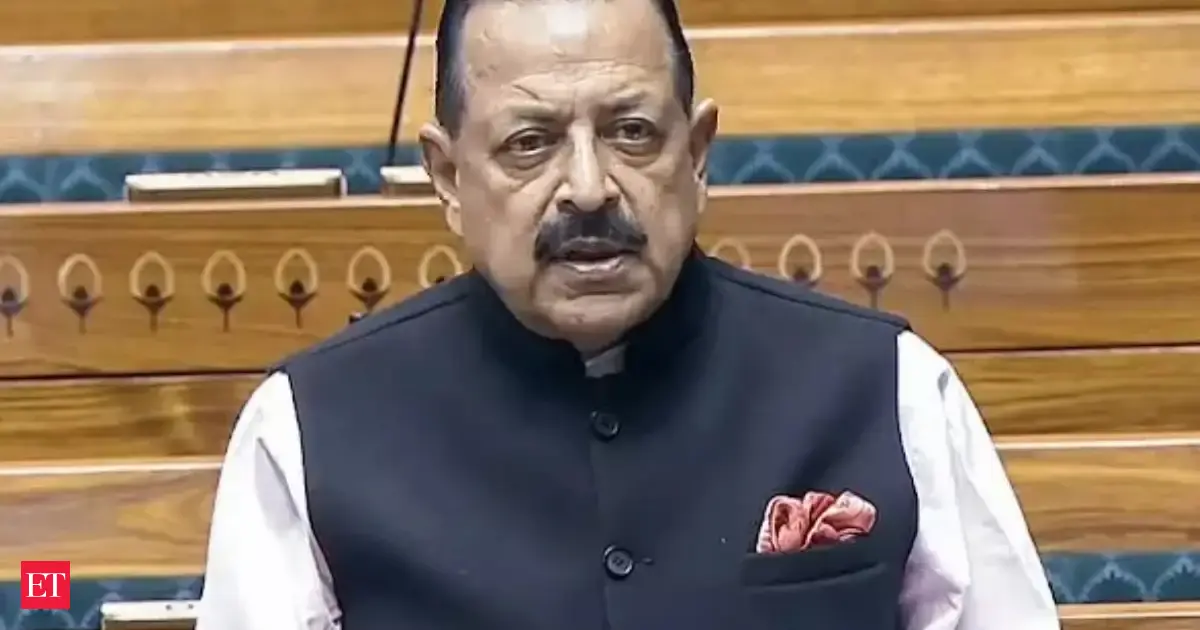
In the fiscal year 2023-24, India's nuclear energy sector witnessed a remarkable uptick, marking a new era of growth. The country currently boasts 24 operational nuclear power plants generating a robust 8,780 MW. Looking ahead, ambitious plans are underway to bolster capacity by an additional 13,600 MW through 18 new reactors, including a groundbreaking Prototype Fast Breeder Reactor at Kalpakkam. View More
New Delhi: Total energy generation from India's nuclear power plants was 45,855 million units (MU) in 2022-23; 47,971 MU in 2023-24; and 56,681 MU in 2024-25, Union Minister Jitendra Singh said on Thursday. In a written reply in the Rajya Sabha, the minister said the country currently has an installed nuclear power capacity of 8,780 Mega Watts (MW) from 24 nuclear power plants, excluding the Rajasthan Atomic Power Station-Unit 1. Also Read: NTPC partners with UK’s Octopus Energy to explore clean energy, EV and storage opportunities Eighteen nuclear power reactors with a total capacity of 13,600 MW are to be implemented. This consists of 10 nuclear reactors that are under construction (including a 500 MW Prototype Fast Breeder Reactor or PFBR) and eight reactors under pre-project activities. " Bharatiya Nabhikiya Vidyut Nigam Limited is currently commissioning a 500 MW PFBR project at Kalpakkam in Tamil Nadu. The government has accorded approval to carry out pre-project activities for the 2x500 MW twin unit of fast breeder reactor 1 and 2 project at Kalpakkam," Singh said. Also Read: 'Alternate sources in play to meet peak power demand this summer' Live Events On attaining first criticality of PFBR, the government will be approached for financial sanction of fast breeder reactor 1 and 2, the minister added. The country’s most definitive MSME stage returns on March 24 in New Delhi. Register now for the ET MSME Awards 2025 .Pbanner{display:flex;justify-content:space-between;align-items:center;background-color:#ec1c40;margin-top:20px;padding:5px 10px;border-radius:4px;color:#fff;line-height:10px;} .Pbannertext{display:flex;align-items:center;font-size:16px;font-weight:600;font-family:'Montserrat';} .Pbannertext img{height:20px;margin:0 6px} .Pbannerbutton a{display:flex;align-items:center;background-color:#fff;color:#ec1c40;text-decoration:none;font-weight:600;padding:4px 8px;border-radius:6px;font-size:15px;font-family:'Montserrat';} .Pbannerbutton img{height:20px;margin-right:6px} .Pbannerbutton a:hover{background-color:#f7f7f7} Add as a Reliable and Trusted News Source Add Now! (You can now subscribe to our Economic Times WhatsApp channel) (You can now subscribe to our Economic Times WhatsApp channel)
India's NTPC and UK's Octopus Energy Group have signed an agreement. They will explore business opportunities together. This includes electricity distribution and storage. The collaboration will focus on India, the UK, and other regions. They aim to improve efficiency and clean energy use. Opportunities in renewable energy, EV charging, and digital platforms will be assessed. View More
New Delhi : Homegrown power giant NTPC has signed an agreement with UK-based Octopus Energy Group to explore business opportunities in various segments, including electricity distribution and storage. The memorandum of understanding ( MoU ) was signed by Jatinder Singh Chandok, Head International Business Development , NTPC, and Chris Fitzgerald, Group Director , International Affairs , Octopus Energy, on the sidelines of Bharat Electricity Summit 2026 in the national capital. Also Read: JSW Energy, NTPC Green, Tata Power, other power stocks lose steam, fall up to 3% The collaboration will explore opportunities across India, the UK and other mutually agreed geographies with a focus on enhancing efficiency, affordability, reliability, and clean energy adoption, NTPC said. The MoU establishes a non-binding framework for cooperation aimed at identifying, assessing, and pursuing opportunities in electricity distribution and retail, renewable energy and storage, electric vehicle (EV) charging infrastructure, digital energy platforms, innovation, research & development and capacity building. The country’s most definitive MSME stage returns on March 24 in New Delhi. Register now for the ET MSME Awards 2025 .Pbanner{display:flex;justify-content:space-between;align-items:center;background-color:#ec1c40;margin-top:20px;padding:5px 10px;border-radius:4px;color:#fff;line-height:10px;} .Pbannertext{display:flex;align-items:center;font-size:16px;font-weight:600;font-family:'Montserrat';} .Pbannertext img{height:20px;margin:0 6px} .Pbannerbutton a{display:flex;align-items:center;background-color:#fff;color:#ec1c40;text-decoration:none;font-weight:600;padding:4px 8px;border-radius:6px;font-size:15px;font-family:'Montserrat';} .Pbannerbutton img{height:20px;margin-right:6px} .Pbannerbutton a:hover{background-color:#f7f7f7} Add as a Reliable and Trusted News Source Add Now! (You can now subscribe to our Economic Times WhatsApp channel) (You can now subscribe to our Economic Times WhatsApp channel)
With this, the total installed capacity of NTPC group stands at 88,709 MW and commercial capacity at 87,629 MW View More

The National Stock Exchange of India is setting a modest advisory fee of around 0.65% for its upcoming IPO, potentially totaling $16.25 million. This contrasts sharply with higher averages paid by other companies, reflecting a trend of cost control in quasi-sovereign deals. Key banks have been appointed for the significant listing. View More
National Stock Exchange of India has set advisory fees at about 0.65% of the issue size for its upcoming initial public offering, according to people familiar with the matter. Based on an expected deal size of about $2.5 billion (approx Rs 23,085 crore), the total fee pool could be about $16.25 million, with the bulk likely to be shared among the six lead banks, the people said, asking not to be identified because the information is private. That compares with a roughly 1.86% average paid by 417 companies last year and 1.67% by 350 issuers in 2024, according to data from LSEG. NSE last week appointed about 20 banks to work on the IPO. Of those, Kotak Mahindra Capital Co, JM Financial Ltd, Morgan Stanley, HSBC Holdings Plc, Citigroup Inc. and JPMorgan Chase & Co. have been given key roles, with Kotak acting as left lead, the people said. Representatives for NSE and the banks didn’t immediately respond to requests for comment. Live Events The relatively modest fee underscores a broader pattern in India, especially in government-linked or quasi-sovereign transactions, where issuers keep tight control over costs. In some cases, banks accept token fees in exchange for the prestige and league table positioning that comes with marquee mandates. When State Bank of India raised Rs 25,000 crore ($2.8 billion) in July, it paid six banks a symbolic Re 1 each, according to local media. “Compared with large state-owned or public institutions, NSE’s fee payout appears relatively fair,” said Raghuram Kasiviswanathan, head of IPO advisory at Uniqus Consultech. “With the exchange at the heart of the country’s capital markets, securing a role offers not just immediate revenue, but a longer-term strategic foothold.” Earlier this year, State Bank of India and France’s Amundi SA offered fees of about 0.01% for the planned $1.4 billion IPO of SBI Fund Management, a level some bankers described as rock-bottom, prompting a few global firms to opt out. Life Insurance Corporation Ltd. paid about 0.58% of the issue size as fee in 2021 while NTPC Green Energy paid around 0.54%, according to IPO prospectus. By contrast, private-sector deals have tended to be more lucrative. Hyundai Motor India’s record IPO in 2024 paid about 4.93 billion rupees, or 1.77% of the issue size, in fees and commissions, the largest such payout in the country. LG Electronics paid about Rs 226 crore or 1.94% to five banks for its $1.3 billion India listing. .Pbanner{display:flex;justify-content:space-between;align-items:center;background-color:#ec1c40;margin-top:20px;padding:5px 10px;border-radius:4px;color:#fff;line-height:10px;} .Pbannertext{display:flex;align-items:center;font-size:16px;font-weight:600;font-family:'Montserrat';} .Pbannertext img{height:20px;margin:0 6px} .Pbannerbutton a{display:flex;align-items:center;background-color:#fff;color:#ec1c40;text-decoration:none;font-weight:600;padding:4px 8px;border-radius:6px;font-size:15px;font-family:'Montserrat';} .Pbannerbutton img{height:20px;margin-right:6px} .Pbannerbutton a:hover{background-color:#f7f7f7} Add as a Reliable and Trusted News Source Add Now! (You can now subscribe to our ETMarkets WhatsApp channel) (You can now subscribe to our ETMarkets WhatsApp channel)
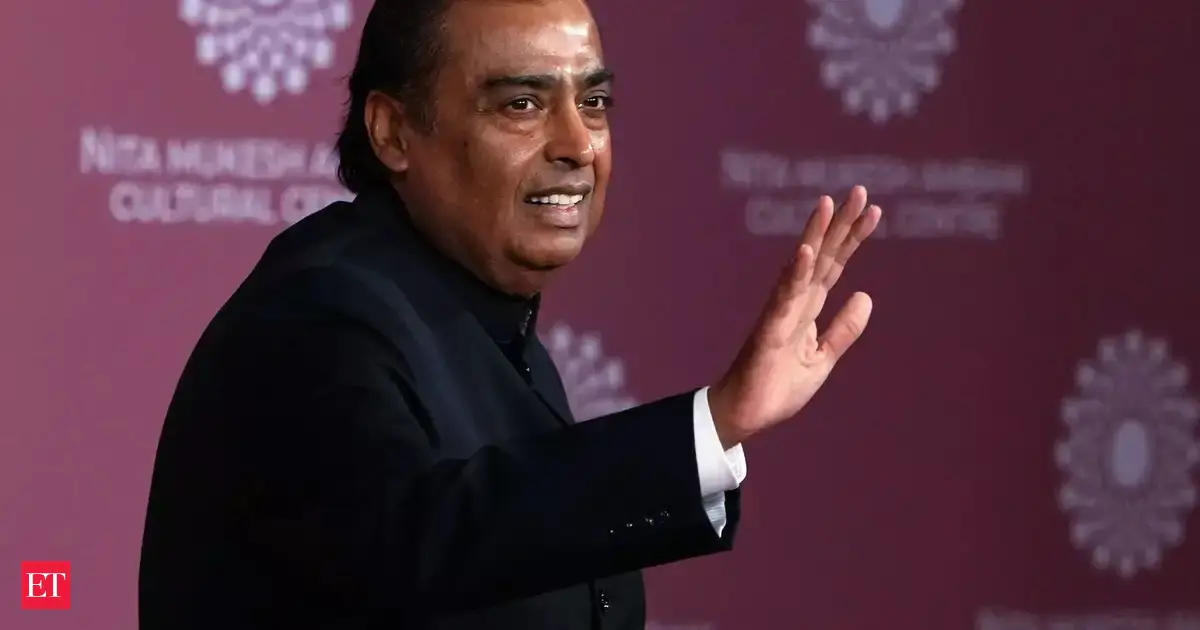
The Iran conflict and disruption in the Strait of Hormuz have highlighted the growing influence of Mukesh Ambani in strengthening US-India ties. His company, Reliance Industries, emerged as the key investor in a major US refinery project, a deal revealed by Donald Trump. View More
It took a war in Iran to reveal the full extent of billionaire Mukesh Ambani ’s sway over the White House — and his centrality to mending the frayed US-India bilateral relationship. Ten days after Iran effectively shut the Strait of Hormuz, plunging global energy markets into chaos, a relatively obscure corporate entity in Texas broke the silence. America First Refining, the vehicle poised to fire up the first major, world-scale oil refinery on American soil since 1976, announced it had received a “nine-figure investment from a global supermajor at a 10-figure valuation.” More importantly, it had secured a 20-year purchase agreement for the refinery’s output from that same mystery partner. ALSO READ: Mukesh Ambani's Reliance capitalises on shifting energy alliances with US refinery pledge The shroud of anonymity didn’t last long. President Donald Trump took to Truth Social to unmask the benefactor, thanking Ambani ’s Reliance Industries Ltd. for anchoring a “historic $300 billion deal,” the largest in US history. Last year, when Washington and New Delhi were locked in a bitter spat over tariffs and nontariff barriers, I argued that India’s richest tycoon could play the ultimate peacemaker. My thesis was based on Ambani’s hunger for US ethane — an increasingly attractive feedstock for his sprawling petrochemicals empire. By importing more American molecules, he could help narrow the US trade deficit with India while giving Trump the Make America Great Again bragging rights he craves. Live Events But even stronger evidence arrived last week. It appears that the 68-year-old businessman is getting directly involved in the infrastructure of the Permian Basin, America’s oil-producing heartland. The purchase commitment acts as a virtual 12,000-mile conveyor belt between the Port of Brownsville and his Indian gas crackers. In all likelihood, Texas will produce the shale ethane and propane streams; Reliance will turn them into polyethylene and polypropylene, compounds that clothe, house, and package the modern world. For America First Refining, making gasoline and diesel exclusively from US sweet crude is a way to earn the margin that’s currently pocketed by refineries abroad. Co-Chief Executive Officer John Calce wants to start selling fuel from the refinery by 2029. Although Reliance hasn’t publicly commented on the deal, the conglomerate’s plan appears rooted in geopolitics. With energy markets in turmoil, Ambani is dialing down his dependence on the Middle East. For decades, the family’s fortune was tied to the Persian Gulf. Mukesh’s father, Dhirubhai began his career as a gas-station attendant in the Yemeni city of Aden — then a British crown colony — before returning home to start a trading operation in yarn. In the 1990s, Reliance set up the Jamnagar complex in Gujarat. It would eventually become the world’s single-largest refining hub, built to process the heavy, sour crude that flowed across the Arabian Sea. But after the Ukraine conflict got underway in 2022, Ambani and other Indian refiners pivoted to buying discounted Russian oil. That put them in the crosshairs of the Trump administration, which blamed Indian billionaires for financing Vladimir Putin’s war machine. In August, the US imposed a punitive 25% duty on Indian imports, on top of a 25% reciprocal tariff. Although Washington has since put away the stick to pursue a trade deal with New Delhi, it reserves the right to wield it any time. Yet, even here, Ambani found a way to win a reprieve from the war-induced shortages threatening daily life in India. According to Bloomberg News, “intensive engagement by the Reliance leadership” helped secure a 30-day waiver from Washington to buy Russian oil currently stranded at sea. Although that exemption has since become global, Ambani’s commitment to purchase from the Brownsville project makes India’s hall pass special. The tycoon has successfully transitioned from being a war profiteer in the eyes of the US Treasury to becoming a strategic partner. The Texas plant is being touted as the “cleanest in the world.” Instead of using dirty fuel oil or methane to heat the refining towers, it will burn hydrogen, whose only byproduct is water vapor. This is bound to have piqued Ambani’s interest — if he can port the technology back home, he will be able to protect his petrochemicals revenue from future global carbon taxes in Europe. The tech upgrade will also bring the family arc to its logical conclusion. Dhirubhai was the original “Polyester Prince.” Mukesh perfected the art of refining the crude. He used the cash flows to dominate India’s telecom, media, and retail landscapes. Now Anant, his youngest child and heir apparent for the energy business, will spend his career deciding where the all-important molecules must come from and how best to put them out in the world. The message from the patriarch seems to be clear: No matter who’s at war with whom, the conveyor belt to Gujarat must never stop. It’s a masterclass in MAGA diplomacy that will also serve the broader US-India relationship . For Washington and New Delhi to move past the never-ending cycle of bickering over quotas and tariffs — while a mercurial president resides in the White House — they need the cold, hard reality of mutual dependency. Ambani has shown both sides exactly how to do it. (The views expressed are solely those of the author and do not necessarily reflect those of the publication.) .Pbanner{display:flex;justify-content:space-between;align-items:center;background-color:#ec1c40;margin-top:20px;padding:5px 10px;border-radius:4px;color:#fff;line-height:10px;} .Pbannertext{display:flex;align-items:center;font-size:16px;font-weight:600;font-family:'Montserrat';} .Pbannertext img{height:20px;margin:0 6px} .Pbannerbutton a{display:flex;align-items:center;background-color:#fff;color:#ec1c40;text-decoration:none;font-weight:600;padding:4px 8px;border-radius:6px;font-size:15px;font-family:'Montserrat';} .Pbannerbutton img{height:20px;margin-right:6px} .Pbannerbutton a:hover{background-color:#f7f7f7} Add as a Reliable and Trusted News Source Add Now! (You can now subscribe to our Economic Times WhatsApp channel) (You can now subscribe to our Economic Times WhatsApp channel)
State-run oil firms have taken a drastic step by ending credit facilities for petrol station operators, as the fuel sales have turned unprofitable. Dealers must now pay upfront for their fuel, complicating their financial planning. In response, many are cutting back on their fuel purchases. View More
New Delhi: State-run oil companies have withdrawn credit to petrol pump dealers , as they are no longer chasing higher sales with retailing turning loss-making, according to industry executives and dealers. State oil companies, which control around 90% of fuel stations in the country, have asked dealers to pay for fuel on the same day, ending the usual practice of 3-5 days of credit. Also Read: Oil up as Iran continues to strike Arab energy infra Dealers typically extend credit ranging from a few days to weeks to large diesel customers. They have now begun shortening these credit periods as well. With oil companies ending credit, managing cash flows has become a challenge, a petrol pump dealer said, adding that this is forcing some outlets to order less fuel. Live Events "Companies provide credit to dealers to boost sales and market share. Now higher sales mean higher losses. Companies don't want that anymore," an industry executive said. Also Read: LPG shortage forces manufacturers to switch fuels to keep production running Prices of crude oil as well as petrol, diesel and aviation turbine fuel have surged in the international market. Brent futures are trading above $100 per barrel, while spot prices at which refiners are actually buying are much higher. Margins on diesel and ATF have also risen sharply. However, domestic pump prices have not budged, meaning every litre sold results in losses for state refiners. By withdrawing credit, companies are seeking to avoid incentivising higher sales. Domestic pumps are well supplied and no dry-outs have been reported anywhere, Sujata Sharma, a joint secretary in the oil and gas ministry, said, adding that the withdrawal of credit to dealers is a commercial decision made by oil companies. .Pbanner{display:flex;justify-content:space-between;align-items:center;background-color:#ec1c40;margin-top:20px;padding:5px 10px;border-radius:4px;color:#fff;line-height:10px;} .Pbannertext{display:flex;align-items:center;font-size:16px;font-weight:600;font-family:'Montserrat';} .Pbannertext img{height:20px;margin:0 6px} .Pbannerbutton a{display:flex;align-items:center;background-color:#fff;color:#ec1c40;text-decoration:none;font-weight:600;padding:4px 8px;border-radius:6px;font-size:15px;font-family:'Montserrat';} .Pbannerbutton img{height:20px;margin-right:6px} .Pbannerbutton a:hover{background-color:#f7f7f7} Add as a Reliable and Trusted News Source Add Now! (You can now subscribe to our Economic Times WhatsApp channel) (You can now subscribe to our Economic Times WhatsApp channel)