
Latest Sectors News

Q4 results 2026: Market analysts predict strong Q4FY26 results for Indian power firms amid summer demand View More
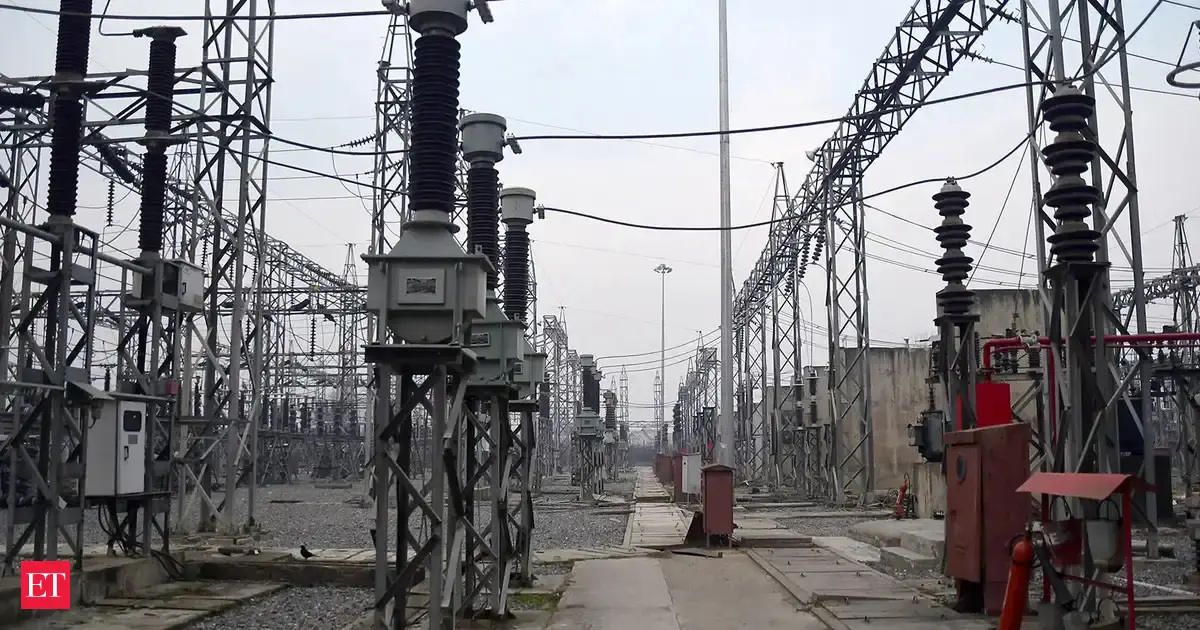
India's power transmission sector anticipates a strong recovery by FY27. Regulatory changes and new investment models will drive capital flows and asset use. Challenges in recent years are giving way to improved performance. Significant investment opportunities are emerging, particularly in renewable energy integration and energy storage solutions. Monetisation of assets will be key to funding this growth. View More
New Delhi: India's power transmission sector is poised for a recovery in FY27 after five subdued fiscals, with regulatory shifts and new investment models expected to reshape capital flows and asset utilisation, according to a research report by SBI Caps. Transmission line and substation additions consistently fell short of targets between FY22 and FY26 due to multiple bottlenecks -- right-of-way delays, complex land valuation, the GIB ruling, and equipment shortages caused by limited imports from China. However, FY26 showed early signs of improvement, with transmission line additions rising 37% year-on-year and substation augmentation nearly meeting targets. Even so, the National Electricity Plan goal for March 2027 is likely to be missed, leaving a substantial portion of the sector's capex still in the pipeline. SBI Caps estimates a Rs 7.6 trillion investment opportunity in transmission over the next six years. Also read: Adani Power incorporates nuclear arm to deepen atomic energy push The report noted that while the recovery in network additions appears durable, near-term regulatory changes could act as a speed bump. The gradual withdrawal of Inter-State Transmission System (ISTS) fee concessions for renewable projects is expected to alter project economics. The earlier waiver had encouraged long-distance wheeling of cheap renewable power, even when local generation was cost-competitive. With the fee structure changing, states may now find it more viable to develop renewables locally, giving a boost to intra-state transmission (InSTS) additions. This shift is likely to benefit renewable-rich states at the expense of renewable-poor ones, leading to better capital allocation in the long run. Energy storage is emerging as a potential solution to transmission congestion. Co-located storage can smooth out power flows across the day, reduce the need for high-capacity lines to ferry wind power during evening peaks, and improve overall utilisation of transmission assets. This would help distribute fixed costs more efficiently and lower tariffs for all users. Live Events On financing, SBI Caps highlighted asset monetisation as critical for meeting the sector's massive capital needs. National Monetisation Pipeline 2.0 has set a Rs 2.3 trillion target for transmission between FY26 and FY30, including Rs 2 trillion through Build-Own-Operate-Transfer-based line development and the rest through securitisation of PGCIL assets. Infrastructure Investment Trusts (InvITs) are also expected to play a larger role, given the long life, stable cashflows and low opex of operational transmission assets. While challenges such as limited asset availability and leverage caps persist, these are being addressed by expanding into related asset classes and building a pipeline of right-of-first-refusal assets. SBI Caps said in its report that the next frontier could be state transmission assets, which account for nearly 90% of InSTS lines and represent a Rs 2.9 trillion monetisation opportunity -- enough to cover the entire InSTS cost envisaged by NEP till March 2032. But for this to materialise, states must avoid arbitrary tariff changes and accelerate the implementation of the Acquire, Operate, Maintain, and Transfer framework with clear taxation clarity and efficient SPV unbundling. Even partial monetisation, SBI Caps says, could significantly strengthen state finances while supporting the sector's growth. .Pbanner{display:flex;justify-content:space-between;align-items:center;background-color:#ec1c40;margin-top:20px;padding:5px 10px;border-radius:4px;color:#fff;line-height:10px;} .Pbannertext{display:flex;align-items:center;font-size:16px;font-weight:600;font-family:'Montserrat';} .Pbannertext img{height:20px;margin:0 6px} .Pbannerbutton a{display:flex;align-items:center;background-color:#fff;color:#ec1c40;text-decoration:none;font-weight:600;padding:4px 8px;border-radius:6px;font-size:15px;font-family:'Montserrat';} .Pbannerbutton img{height:20px;margin-right:6px} .Pbannerbutton a:hover{background-color:#f7f7f7} Add as a Reliable and Trusted News Source Add Now! (You can now subscribe to our Economic Times WhatsApp channel) (You can now subscribe to our Economic Times WhatsApp channel)
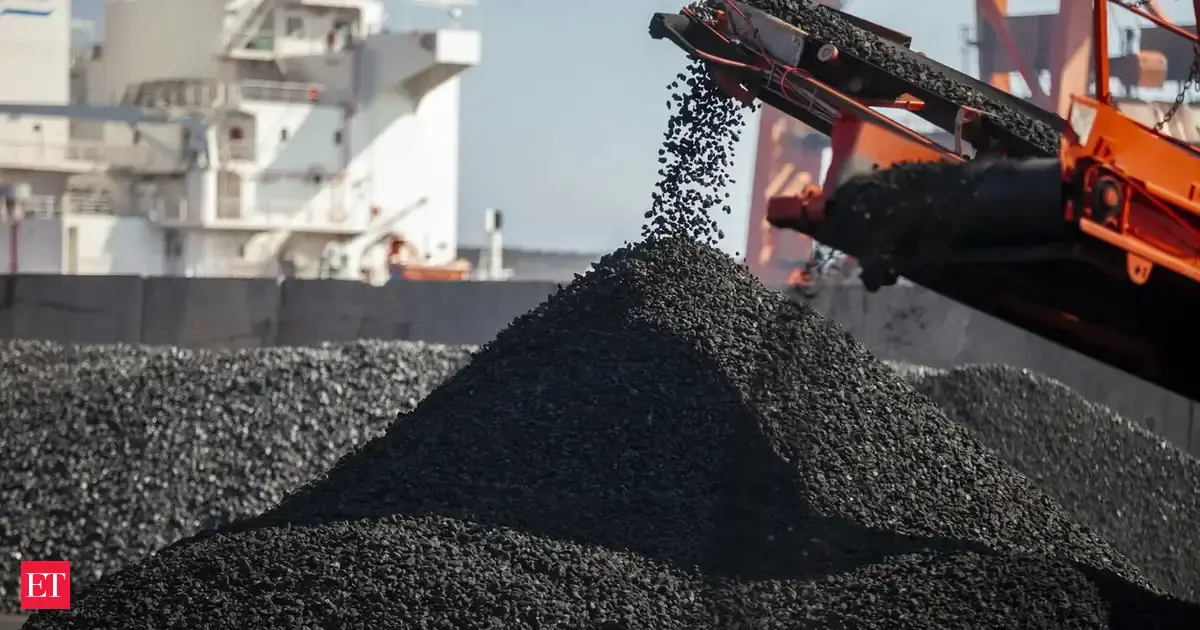
Bharat Coking Coal Ltd, a subsidiary of Coal India, has launched a new scheme. This initiative aims to boost coal purchases by power companies and lower their expenses. The plan encourages increased coal lifting, especially via rail, to ensure steady electricity supply and support India's energy self-reliance goals. Incentives are tied to actual coal lifted against quarterly targets. View More
New Delhi: Coal India subsidiary Bharat Coking Coal Ltd (BCCL) on Thursday announced a scheme to encourage higher coal offtake and reduce costs for power consumers for buying coal during the April-June period of the current financial year. The move aims at encouraging power companies to buy more coal, speed up transport, and cut their costs. It will improve coal supply, ensure steady electricity, and support India's self-reliance goal amid global energy issues. The scheme will apply to all eligible power sector consumers covered under the fuel supply pact, including those under the flexi-linkage scheme. The incentives will depend on actual coal lifted by power firms via rail, road or road-cum-rail modes, and will match the share of their quarterly target under set slabs. "Under the scheme, for coal offtake below 120 per cent of Quarterly Quantity (QQ), Performance Incentive (PI) shall be applicable only on raw coal as per existing FSA( fuel supply agreement ) provisions, and no cash discount shall be admissible," an official statement said. Live Events For offtake between 120 per cent and 140 per cent of QQ, PI will not be applicable on quantities exceeding 90 per cent of QQ. In addition, a Cash Discount of five per cent will be provided on coal lifted beyond 100 per cent of QQ. BCCL has advised all eligible consumers to maximise the benefits under the scheme by planning higher coal lifting, particularly through rail mode, while also ensuring adequate offtake through road and RCR modes. BCCL is one of the largest coking coal producers in the country. BCCL has reported a 58.9 per cent decline in net profit at Rs 27.28 crore for the quarter ended March 31, 2026, on the back of lower revenue. The company had posted a net profit of Rs 66.50 in the year-ago period, Bharat Coking Coal Ltd (BCCL) said in a filing to BSE on Wednesday. .Pbanner{display:flex;justify-content:space-between;align-items:center;background-color:#ec1c40;margin-top:20px;padding:5px 10px;border-radius:4px;color:#fff;line-height:10px;} .Pbannertext{display:flex;align-items:center;font-size:16px;font-weight:600;font-family:'Montserrat';} .Pbannertext img{height:20px;margin:0 6px} .Pbannerbutton a{display:flex;align-items:center;background-color:#fff;color:#ec1c40;text-decoration:none;font-weight:600;padding:4px 8px;border-radius:6px;font-size:15px;font-family:'Montserrat';} .Pbannerbutton img{height:20px;margin-right:6px} .Pbannerbutton a:hover{background-color:#f7f7f7} Add as a Reliable and Trusted News Source Add Now! (You can now subscribe to our Economic Times WhatsApp channel) (You can now subscribe to our Economic Times WhatsApp channel)
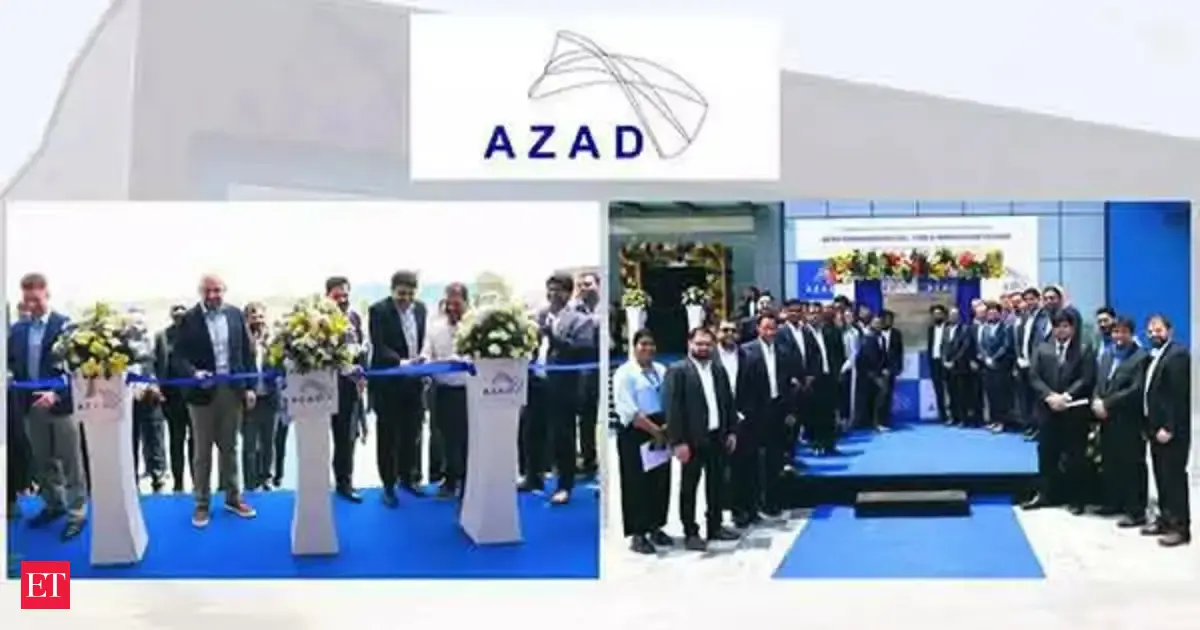
Azad Engineering has opened a new 7,600 sq meter lean manufacturing facility in Hyderabad. This advanced facility will support global energy technology firm Baker Hughes. It is Azad Engineering's fourth dedicated facility, reflecting its aggressive expansion to meet global demand. The partnership with Baker Hughes has grown significantly over eight years. View More
Mumbai: Precision engineering firm Azad Engineering on Thursday inaugurated its 7,600 sq meter lean manufacturing facility at its Centre of Excellence in Tunikibollaram, Hyderabad, to support global supply chain for global energy technology firm Baker Hughes . Built for scale, speed, and precision, the advanced lean manufacturing infrastructure is fully integrated with Azad's Centre of Excellence and Innovation Centre ecosystem, contributing to India's growing global manufacturing strength, the company said. Also Read: A quiet weapons crisis is building up within the US military This is the company's fourth dedicated facility, adding to earlier expansions and underscoring the company's aggressive capacity build-out to meet surging global demand across aerospace, defence, energy, and oil and gas sectors. Live Events "This facility is part of our deliberate strategy to build a dedicated, world-class manufacturing facility complete with in-house special process capabilities exclusively for Baker Hughes," said Rakesh Chopdar, Chairman and CEO, Azad Engineering. Azad Engineering said its partnership with Baker Hughes began eight years ago with supplying critical rotating airfoils for gas and steam turbine finish stages, and has since grown into a deep, strategic partnership for the industrial and energy technology business. "Azad Engineering's new facility is a significant milestone that strengthens Baker Hughes' global supply chain and supports our long-term growth strategy," said Davide Marrani (Vice President for IET Operations) at Baker Hughes. "Telangana's precision engineering sector has grown 30 per cent year-on-year for a decade, with exports surging 103 per cent last year alone, supported by over 1,500 MSMEs and repeat investments from global OEMs like Lockheed Martin, Boeing, GE Aviation, Safran, Airbus and Honeywell . "Backed by India's most progressive industrial policy and tailor-made incentives, our vision is to move beyond manufacturing and establish Telangana as a Global Centre for Engineering Innovation. This partnership between Baker Hughes and Azad Engineering is a blueprint for world-class collaborations our ecosystem is built to deliver," said Telangana Minister for Industries and IT D Sridhar Babu. .Pbanner{display:flex;justify-content:space-between;align-items:center;background-color:#ec1c40;margin-top:20px;padding:5px 10px;border-radius:4px;color:#fff;line-height:10px;} .Pbannertext{display:flex;align-items:center;font-size:16px;font-weight:600;font-family:'Montserrat';} .Pbannertext img{height:20px;margin:0 6px} .Pbannerbutton a{display:flex;align-items:center;background-color:#fff;color:#ec1c40;text-decoration:none;font-weight:600;padding:4px 8px;border-radius:6px;font-size:15px;font-family:'Montserrat';} .Pbannerbutton img{height:20px;margin-right:6px} .Pbannerbutton a:hover{background-color:#f7f7f7} Add as a Reliable and Trusted News Source Add Now! (You can now subscribe to our Economic Times WhatsApp channel) (You can now subscribe to our Economic Times WhatsApp channel)
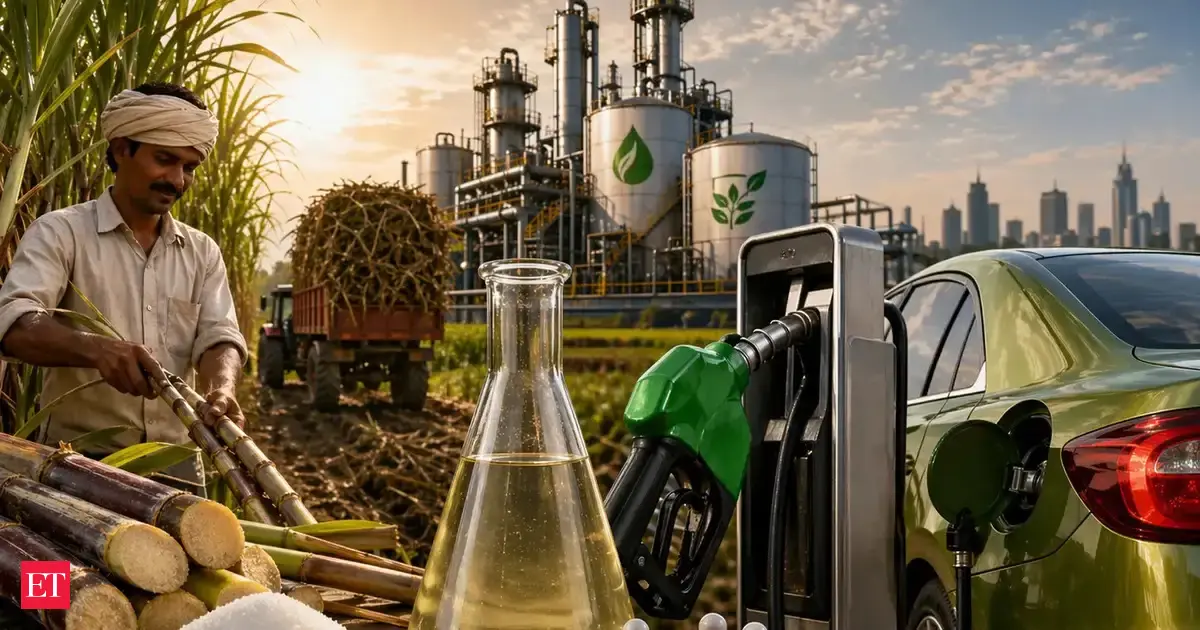
India is rapidly expanding its use of ethanol, a sugar-based fuel. This strategy aims to cut reliance on imported crude oil and boost farmer incomes. Recent policy changes support higher ethanol blends in vehicles and even aviation fuel. The nation is moving towards E20 and exploring E100. This push is a coordinated effort across agriculture, energy, and transport sectors. View More
India’s ethanol strategy is, quite literally, rooted in sugar. What was once a policy aimed at managing surplus sugarcane and supporting farmer incomes is now being recast as a central pillar of energy security. The “sweet” promise of ethanol lies in its dual appeal -- it can reduce crude oil imports while putting more money in the hands of farmers. With global oil markets roiled by geopolitical tensions, this sugar-based fuel is gaining urgency as a domestic alternative. The question is no longer whether India should expand ethanol use, but how far and how fast it can go. Also Read: India should aim for 100% ethanol blending, says Nitin Gadkari Recent days have seen a flurry of policy and industry developments. Road transport minister Nitin Gadkari has called for moving towards 100 per cent ethanol blending, arguing that geopolitical disruptions have highlighted the need to cut crude dependence. The government is preparing fresh norms for vehicles capable of running on E85 to E100 fuels, reviving a lapsed notification to enable flex-fuel vehicles and pushing automakers towards commercial production. This comes after India made E20 petrol the nationwide standard from April 1. Social media has witnessed hot debates on the impact of ethanol-blended fuel on engine performance and longevity. Authorities have also allowed ethanol and synthetic hydrocarbons to be blended in aviation turbine fuel, widening the scope of biofuels beyond road transport. On the supply side, policymakers were reportedly weighing curbs on sugar exports to divert surplus towards ethanol, even as sugar production has risen about 9 per cent to over 272 lakh tonnes till March-end. At the same time, reforms to the decades-old sugarcane law have been proposed, while the industry shows readiness to supply more than 20 per cent blending. This flurry of developments reflects a coordinated push across agriculture, energy and transport to deepen ethanol adoption. The fix India needs India imports roughly 85 per cent of its crude oil needs, leaving it exposed to price shocks. According to CareEdge Global, every 10 per cent rise in crude prices can add about 60 basis points to inflation, underlining the macroeconomic vulnerability. Ethanol blending directly offsets a portion of this import bill. Industry estimates suggest that scaling blending beyond 20 per cent could significantly cut foreign exchange outflows on oil. Live Events The West Asia crisis has sharpened this urgency. Disruptions in oil supply chains have already nudged policymakers and consumers towards alternatives. Ethanol, being domestically produced, offers a hedge against both price volatility and geopolitical risk. Also Read: Govt eyes ethanol blend beyond 20%, pushes flex-fuel vehicles From E20 to E100 India’s transition from E10 to E20 was relatively swift, culminating in nationwide availability last year. Moving beyond E20, however, requires a structural shift in vehicle technology. Flex-fuel vehicles, capable of running on anything from E20 to E100, are central to this next phase. While prototypes exist, large-scale commercial rollout is still pending. The upcoming notification on E85 and above fuels is expected to remove regulatory uncertainty and push original equipment manufacturers to scale production. Engines designed for E100 can also operate on lower blends, offering flexibility during the transition. However, concerns persist. Earlier debates around ethanol-blended fuels highlighted potential issues such as reduced mileage and higher maintenance. These factors could influence consumer acceptance unless offset by price incentives or technological improvements. Also Read: India allows ethanol blending in aviation fuel The sugar rush Ethanol production in India is closely tied to sugarcane. The country’s sugar output has been robust, rising about 9 per cent year-on-year to 272.31 lakh tonnes by March 31, according to industry data. This has created room for diversion of excess sugar towards ethanol production. Policy discussions around capping sugar exports reflect this balancing act. Diverting surplus to ethanol helps stabilise domestic sugar prices while supporting biofuel output. At the same time, the government has maintained flexibility on export policies, indicating a measured approach rather than outright restrictions. Yet, this linkage also creates tension. Ratings agency Ind-Ra has flagged that tight sugar inventories and fluctuating ethanol earnings could keep sugar prices firm, suggesting that the twin goals of affordable sugar and abundant ethanol may not always align. India’s ethanol industry has seen rapid capacity expansion, with investments estimated at around Rs 50,000 crore. However, this growth has outpaced current demand, especially with the blending cap at 20 per cent. Reports of an ethanol glut highlight the risk of underutilised capacity if policy does not keep pace. Industry bodies have argued that they are ready to supply more than 20 per cent blending, and have called for quicker policy movement towards higher blends. An industry representative told ET that the sector is prepared for the next phase, but requires clear demand signals. This mismatch between capacity and policy ceiling is a key reason behind the renewed push for E85 and E100 adoption. Ethanol lessons from Brazil Brazil’s ethanol programme is often cited as the gold standard, but its success rests on decades of consistent policy, infrastructure investment and consumer adaptation. The country not only allows high ethanol blends but has normalised them. Flex-fuel vehicles dominate its automobile market, and consumers routinely choose between gasoline and ethanol depending on price. A key advantage for Brazil is cost competitiveness. Ethanol derived from sugarcane is often cheaper than gasoline, which encourages voluntary adoption rather than regulatory compulsion. Ethanol has helped stabilise fuel prices in Brazil by providing a readily available substitute when global oil prices spike. For India, the lesson is less about replication and more about sequencing. Brazil built its ecosystem over decades, ensuring alignment between farmers, fuel producers, automakers and consumers. India, by contrast, is attempting to compress this transition into a much shorter timeframe. This raises risks of supply bottlenecks, pricing distortions, and consumer resistance if the ecosystem does not evolve in tandem. The sugarcane question The government’s move to overhaul a six-decade-old sugarcane law is central to aligning agriculture with energy goals. The existing regulatory framework has long governed how sugarcane is priced, procured and supplied to mills, often with heavy state intervention and rigid pricing formulas. Reform aims to introduce greater efficiency and flexibility into this system. One objective is to better link sugarcane prices with market realities, including ethanol demand, rather than relying predominantly on administered prices. This could improve the financial health of sugar mills, many of which face cyclical stress due to mismatches between cane prices and sugar realisations. Another goal is to create stronger incentives for farmers. By ensuring timely payments and offering alternative revenue streams through ethanol production, policymakers hope to make sugarcane cultivation more sustainable and attractive. Gadkari has emphasised that farmers could evolve into energy providers, supplying feedstock for fuel rather than just food markets. At the same time, reforms are expected to rationalise the allocation of sugarcane between sugar and ethanol, allowing mills to respond dynamically to market conditions. This flexibility is crucial if ethanol is to scale without causing volatility in sugar supplies or prices. Beyond roads The government's decision to allow ethanol blending in aviation turbine fuel (ATF) points to an ambition to extend biofuels beyond the relatively easier domain of road transport. Aviation accounts for a smaller share of fuel consumption but is far more difficult to decarbonise due to stringent performance requirements and limited alternatives. Even partial substitution with ethanol-based or synthetic blends could reduce emissions and import dependence over time. However, the technological and regulatory challenges here are far more complex, involving safety certifications, engine compatibility and global aviation standards. Beyond aviation, ethanol is being positioned as a multi-sector fuel. Its use in cooking, industrial processes and power generation reflects a broader strategy to integrate biofuels across the energy system. The ethanol push now spans stoves to cars to planes, indicating a whole-of-economy approach rather than a transport-only solution. This diversification is important because it creates multiple demand channels, reducing the risk of oversupply and improving the economics of ethanol production. The road ahead Egged on by the Iran war, India’s ethanol journey is entering a decisive phase as is evident from a recent flurry of developments. The move from E20 to potentially E100 will be a systemic transformation which will require synchronised progress in vehicle manufacturing, fuel distribution, agricultural policy and consumer behaviour. The risks are real. Excessive reliance on sugarcane, a water-intensive crop, could strain water resources and distort cropping patterns, as flagged by the latest Economic Survey. Price distortions could emerge if ethanol is not competitive with petrol. And consumer acceptance will hinge on both cost and convenience. Yet, the opportunity is equally significant. A successful ethanol programme could reduce India’s oil import bill, stabilise inflation, support rural incomes and lower emissions. It could also position the country as a global leader in biofuels, particularly if it manages to scale sustainably. Ultimately, the “sweet” deal India is pursuing is a delicate balancing act between food and fuel, farmers and consumers, and economics and ecology. Getting that balance right will determine whether ethanol becomes a bridge to energy security or a detour with unintended consequences. .Pbanner{display:flex;justify-content:space-between;align-items:center;background-color:#ec1c40;margin-top:20px;padding:5px 10px;border-radius:4px;color:#fff;line-height:10px;} .Pbannertext{display:flex;align-items:center;font-size:16px;font-weight:600;font-family:'Montserrat';} .Pbannertext img{height:20px;margin:0 6px} .Pbannerbutton a{display:flex;align-items:center;background-color:#fff;color:#ec1c40;text-decoration:none;font-weight:600;padding:4px 8px;border-radius:6px;font-size:15px;font-family:'Montserrat';} .Pbannerbutton img{height:20px;margin-right:6px} .Pbannerbutton a:hover{background-color:#f7f7f7} Add as a Reliable and Trusted News Source Add Now! (You can now subscribe to our Economic Times WhatsApp channel) (You can now subscribe to our Economic Times WhatsApp channel)

Andhra Pradesh is introducing a new policy to grant power distribution licenses to large data centers. This initiative aims to ensure a consistent and dependable electricity supply for these facilities. Companies meeting specific criteria can build and operate their own internal power distribution systems. View More
New Delhi In a first-of-its-kind policy initiative, the Andhra Pradesh government will issue power distribution licences (discom) to large data centres to ensure reliable and uninterrupted electricity supply-similar to the incentive given to US technology company Google for its data centre cluster in Visakhapatnam. The move is aimed at addressing the sector's growing power needs and attracting investments into digital infrastructure. Other large companies, including Reliance and RMZ, are also expected to seek similar approvals from the state government. Read more: India’s data centre market to reach $22 billion by 2030 Under the policy, data centre developers meeting a minimum threshold of 300 MW connected load will be permitted to build, own, and operate their own internal electricity distribution systems within designated project areas. The framework enables these facilities to procure power directly from various sources, including renewable energy generators, captive plants, and power exchanges, rather than relying solely on conventional distribution utilities. Live Events Read more: Google secures discom licence for Vizag data centre hub The government's rationale is rooted in the unique energy demands of data centres, which require constant, high-quality power at scale. Traditional high-tension consumer arrangements are often insufficient for such large, continuous loads, according to officials. The new policy seeks to provide a more flexible mechanism while maintaining regulatory oversight through existing electricity laws and state regulatory bodies. "This will allow the company to procure power directly from generators," a senior official, who didn't wish to be named, told ET. "This will help companies in cutting costs and get reliable power." A key provision of the policy is the requirement that at least 51% of a data centre's energy consumption must be sourced from renewable energy. This aligns with broader national and state-level efforts to boost clean energy adoption, particularly as energy-intensive sectors expand. The framework also outlines safeguards for existing distribution companies (Discoms), including restrictions on migration of current consumers into the deemed distribution license (DDL) system and provisions for standby power arrangements where required. These measures are intended to prevent revenue loss or stranded assets within the existing power distribution ecosystem. Andhra Pradesh has been positioning itself as a potential hub for data centres, citing factors such as land availability, renewable energy resources, and connectivity infrastructure, including ports and submarine cable access. The new policy adds a regulatory dimension to these efforts by attempting to address one of the sector's primary constraints-reliable and scalable power supply. .Pbanner{display:flex;justify-content:space-between;align-items:center;background-color:#ec1c40;margin-top:20px;padding:5px 10px;border-radius:4px;color:#fff;line-height:10px;} .Pbannertext{display:flex;align-items:center;font-size:16px;font-weight:600;font-family:'Montserrat';} .Pbannertext img{height:20px;margin:0 6px} .Pbannerbutton a{display:flex;align-items:center;background-color:#fff;color:#ec1c40;text-decoration:none;font-weight:600;padding:4px 8px;border-radius:6px;font-size:15px;font-family:'Montserrat';} .Pbannerbutton img{height:20px;margin-right:6px} .Pbannerbutton a:hover{background-color:#f7f7f7} Add as a Reliable and Trusted News Source Add Now! (You can now subscribe to our Economic Times WhatsApp channel) (You can now subscribe to our Economic Times WhatsApp channel)

The move aligns with a nationwide strategy to integrate biofuels across multiple industries. View More

Aviation Turbine Fuel standards have been updated to permit synthetic fuel blends, enhancing clarity amidst rising alternative fuel use. Meanwhile, Indian Oil assures no disruption in petrol and diesel supplies across northern regions, with robust stock levels. LPG demand has surged due to global conflicts, extending delivery times, though supply chains remain stable. View More
Adani Power has established a new company, Rawatbhata-Raj Atomic Energy. This move expands its involvement in nuclear power generation. The new entity is a wholly owned subsidiary of Adani Atomic Energy Ltd. This development signals Adani's commitment to its atomic energy plans. India is increasing its nuclear capacity with private sector involvement. View More
Adani Power has incorporated a new subsidiary, Rawatbhata-Raj Atomic Energy , to expand its presence in the nuclear energy segment through its existing arm, the company said on Tuesday. The entity, incorporated on April 20, will be a wholly owned subsidiary of Adani Atomic Energy Ltd , which is fully owned by Adani Power, a statement showed. It will undertake generation, transmission and distribution of electricity from nuclear sources. Also Read : India targets over ten-fold expansion in nuclear power capacity from 8.8 GW to 100 GW by 2047: CEA Chairperson The move builds on the group’s earlier entry into the nuclear space and signals progression of its atomic energy plans as India gradually opens up the sector to private participation. The company said the subsidiary has been set up with an authorised capital of Rs 5 lakh and will be fully owned within the group. Live Events India is looking to expand nuclear capacity as part of its clean energy push, with private players beginning to explore opportunities in a segment currently dominated by state-run Nuclear Power Corporation of India Ltd. Also Read: Atomic impact: Nuclear-powered AI infrastructure could be India’s geopolitical moat In February, Adani Power set up Adani Atomic Energy Ltd as a dedicated unit to generate, transmit and distribute nuclear power, becoming one of the first private utilities to signal interest in the sector following policy moves to open it up. .Pbanner{display:flex;justify-content:space-between;align-items:center;background-color:#ec1c40;margin-top:20px;padding:5px 10px;border-radius:4px;color:#fff;line-height:10px;} .Pbannertext{display:flex;align-items:center;font-size:16px;font-weight:600;font-family:'Montserrat';} .Pbannertext img{height:20px;margin:0 6px} .Pbannerbutton a{display:flex;align-items:center;background-color:#fff;color:#ec1c40;text-decoration:none;font-weight:600;padding:4px 8px;border-radius:6px;font-size:15px;font-family:'Montserrat';} .Pbannerbutton img{height:20px;margin-right:6px} .Pbannerbutton a:hover{background-color:#f7f7f7} Add as a Reliable and Trusted News Source Add Now! (You can now subscribe to our Economic Times WhatsApp channel) (You can now subscribe to our Economic Times WhatsApp channel)