
Latest Sectors News


On May 4, major indices saw gains due to strong buying in heavyweight stocks and positive state election trends for the Bharatiya Janata Party. The Nifty 50 rose 0.51% to 24,119, while the S&P BSE Sensex increased 0.31% to 77,159, with midcap and smallcap indices outperforming. View More

Most traded stocks today: Vodafone Idea, HFCL, Meesho, Jaiprakash Power Ventures (JP Power), Bharat Heavy Electricals (BHEL), and Vedanta were the most traded stocks, or the most active stocks in terms of volume, on the NSE. View More

BHEL Q4 results 2026: Profit jumped 156% year-on-year, or nearly threefold (2.6 times), to ?1,290.47 crore. Revenue from operations for Q4FY26 saw a 37% YoY jump to ?12,310.37 crore. View More
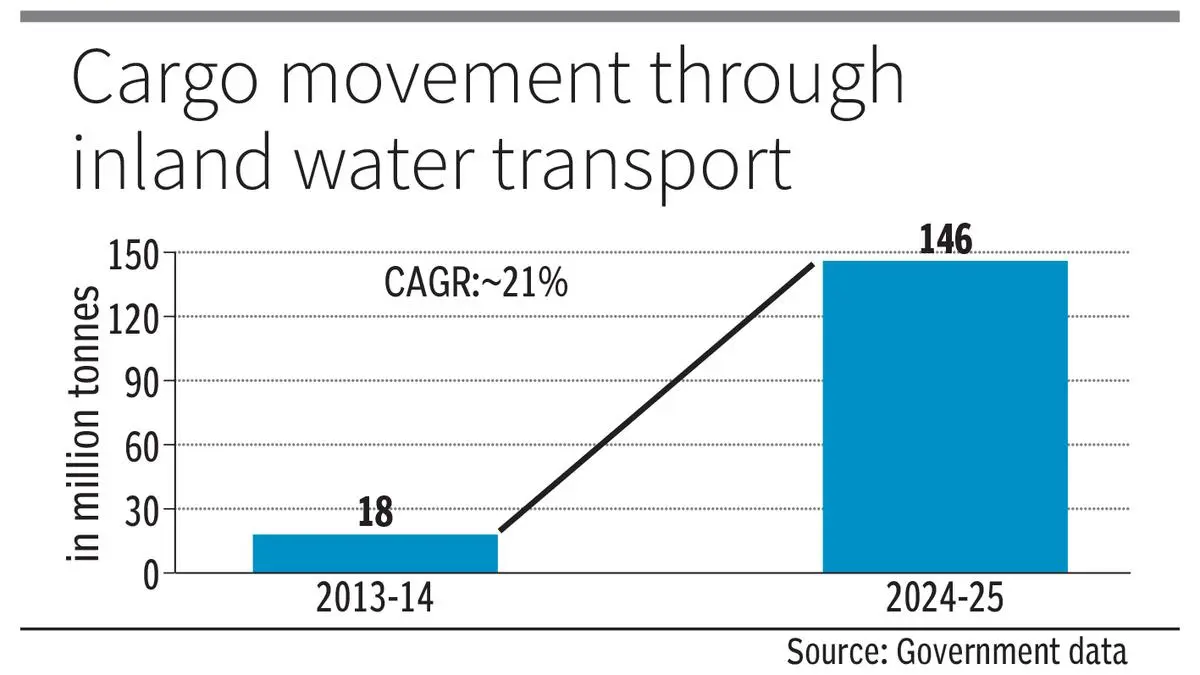
Inland waterways offer an insulated channel for domestic cargo amid volatility in global shipping lanes, says CEA View More

Q4 results 2026: Around 270 companies will be declaring their March quarter results in the coming week. Here's a preview and full list of companies date-wise. View More
Seven OPEC+ nations are meeting to set oil production quotas -- the first decision since the UAE left the cartel. The war in the Middle East has already pushed oil prices higher. Markets expect a small increase in production, but actual output is already below limits due to blockades. View More
Vienna: Seven OPEC+ members are meeting Sunday to make their first decision on oil-production quotas since the United Arab Emirates' departure from the cartel, which added to the soaring price pressure unleashed by the Mideast war. The UAE, one of the world's top producers, announced April 28 it was withdrawing from the Organization of the Petroleum Exporting Countries ( OPEC) ) and the expanded OPEC+ group, after chafing at their production quotas. The withdrawal took effect on Friday. Neither group has reacted publicly so far -- meaning there will be intense focus on the tone of the statement at the end of Sunday's online meeting by Algeria, Iraq, Kazakhstan, Kuwait, Oman, Russia and Saudi Arabia. The production decision itself is already priced in by markets. The seven countries are widely expected to increase their quotas by 188,000 barrels per day (bpd), according to Arne Lohmann Rasmussen, chief analyst at Global Risk Management. Also read | India should create strategic buffers to navigate 'most difficult' energy shock: CEA Nageswaran Live Events That is similar to a 206,000-barrel daily increase announced in March and April, subtracting the portion allotted to the UAE. Quota question mark But raising the quota on paper may not have much impact on actual production, which is already short of the limit. Untapped OPEC+ reserves are mainly located in the Gulf region, and exports there are trapped by the blockade of the vital Strait of Hormuz, imposed by Iran in response to the US-Israeli strikes that started the war on February 28. "Total OPEC+ output with quota fell to 27.68 million bpd in March, against a monthly quota of 36.73 million bpd, a shortfall of approximately 9 million bpd driven almost entirely by war-related disruption rather than voluntary restraint," said Priya Walia, an analyst at Rystad Energy. The blockade is hitting Iraq, Kuwait, Saudi Arabia and the UAE. The latter's production will no longer count towards OPEC quotas. Iran, whose exports are now the target of a retaliatory US blockade, is an OPEC+ member but is not subject to quotas. Russia, the group's second-biggest producer, has been the main beneficiary of the situation. But despite soaring energy prices, it appears to be struggling to produce at the level of its current quotas as its own war in Ukraine drags on. 'Big deal' The UAE's exit is "a big deal" for OPEC, said Amena Bakr, an analyst at Kpler. Previous withdrawals from the group by Qatar in 2019 and Angola in 2023 were less significant by comparison, she told a video conference on the UAE withdrawal. Also read | Iran juggles oil cuts and storage strain to resist US blockade Besides being the fourth-biggest OPEC+ producer by output, the UAE has major untapped production capacity, an important lever when the group needs to regulate the market. "The UAE had brought up grievances over its quotas" going back to 2021, said Bakr. The UAE has invested massively in infrastructure in recent years, and state-owned oil company ADNOC plans to increase output by five million barrels a day by 2027 -- far above the country's last quota of around 3.5 million barrels. That makes the UAE a competitive player that can produce at low cost -- potentially limiting the impact of efforts by Saudi Arabia and its allies to shape the market. There is also the risk for OPEC+ that other countries will leave such as Iraq and Kazakhstan, which have faced repeated accusations of surpassing their quotas. .Pbanner{display:flex;justify-content:space-between;align-items:center;background-color:#ec1c40;margin-top:20px;padding:5px 10px;border-radius:4px;color:#fff;line-height:10px;} .Pbannertext{display:flex;align-items:center;font-size:16px;font-weight:600;font-family:'Montserrat';} .Pbannertext img{height:20px;margin:0 6px} .Pbannerbutton a{display:flex;align-items:center;background-color:#fff;color:#ec1c40;text-decoration:none;font-weight:600;padding:4px 8px;border-radius:6px;font-size:15px;font-family:'Montserrat';} .Pbannerbutton img{height:20px;margin-right:6px} .Pbannerbutton a:hover{background-color:#f7f7f7} Add as a Reliable and Trusted News Source Add Now! (You can now subscribe to our Economic Times WhatsApp channel) (You can now subscribe to our Economic Times WhatsApp channel)

V Anantha Nageswaran has called for India to build strategic buffers to manage the ongoing energy shock triggered by the West Asia crisis, warning it is the most severe in recent times. View More
New Delhi, Chief Economic Advisor V Anantha Nageswaran on Saturday said India needs to create strategic buffers in the face of the "most difficult" energy shock that the country is facing amid the West Asia crisis. Nageswaran also said the rising prices of fertiliser and petroleum products globally due to the crisis will make it challenging to achieve the 4.3 per cent fiscal deficit target for the current fiscal, while below normal monsoon and pass-through of higher energy prices could lead to "potential inflation spike". ALSO READ | Iran military official says renewed war with US 'likely' He also said India has employment challenge emanating from AI, and there is a need to ensure that IT sector becomes more competitive and not lose jobs to AI, and instead create jobs that use AI within the IT sector or in other services. Speaking at the ICPP Growth Conference organised by the Ashoka University, Nageswaran said the current account deficit (CAD) in the current fiscal could rise to over 2 per cent of GDP, from less than 1 per cent in FY'26. Live Events ALSO READ | Iran standoff could leave Trump worse off than before he went to war "The ... priority for us is to create strategic buffers. This energy shock is the most difficult one compared to any other previous energy shock in terms of energy lost as a percentage of total global energy supply, not just oil, including gas. "And we also need to use this occasion to think about other areas where we are vulnerable in terms of import dependence, nickel, tin, and copper. We need to build strategic buffers if we have to make a shot at manufacturing and becoming indispensable," Nageswaran said. Since the beginning of the war in West Asia on February 28, crude oil prices soared to a four-year high of USD 126 per barrel on Thursday, from about USD 73 level before the war. Stating that geopolitics will compel policymakers to be nimble and flexible and shed old model of thinking, Nageswaran said India is better prepared than many other countries to deal with the crisis because of the fiscal leeway that the country has due to lowering of fiscal deficit ratio to 4.4 per cent of GDP in FY'26. Nageswaran said the West Asia conflict is more of a price shock than supply shock for India as the government is managing the supply side deftly. "This particular conflict, which is going to be on a low simmer or a high flame situation, whatever it is, it is going to be there with us in some form or the other because the military conflict may be over, but the strategic conflict is well and truly alive. It will be so for some time," Nageswaran said. He said the conflict has four channels of shock: price and supply shock, trade impact, sticky logistics costs and remittance shock. India imports 60 per cent of its LPG usage and of that, 90 per cent flows through the now closed Strait of Hormuz. Nageswaran said the pass-through of high global energy prices would have to be a "balancing act". He said some pass-through is already happening in commercial LPG, and the levy of export duty on diesel and ATF. The government has cut excise duty on petrol and diesel to shield customers from the impact of the rise in petroleum prices. "We are coming around to arriving at a certain modus vivendi with respect to burden-sharing between the fiscal policy side, inflation, households and the oil marketing companies. So it has to be a balancing act," Nageswaran said. .Pbanner{display:flex;justify-content:space-between;align-items:center;background-color:#ec1c40;margin-top:20px;padding:5px 10px;border-radius:4px;color:#fff;line-height:10px;} .Pbannertext{display:flex;align-items:center;font-size:16px;font-weight:600;font-family:'Montserrat';} .Pbannertext img{height:20px;margin:0 6px} .Pbannerbutton a{display:flex;align-items:center;background-color:#fff;color:#ec1c40;text-decoration:none;font-weight:600;padding:4px 8px;border-radius:6px;font-size:15px;font-family:'Montserrat';} .Pbannerbutton img{height:20px;margin-right:6px} .Pbannerbutton a:hover{background-color:#f7f7f7} Add as a Reliable and Trusted News Source Add Now! (You can now subscribe to our Economic Times WhatsApp channel) (You can now subscribe to our Economic Times WhatsApp channel)

He warned that rising oil prices could widen the current account deficit, strain fiscal targets, and impact trade, remittances and logistics, though India remains relatively better positioned due to fiscal discipline and steady FDI inflows View More