
Latest Sectors News
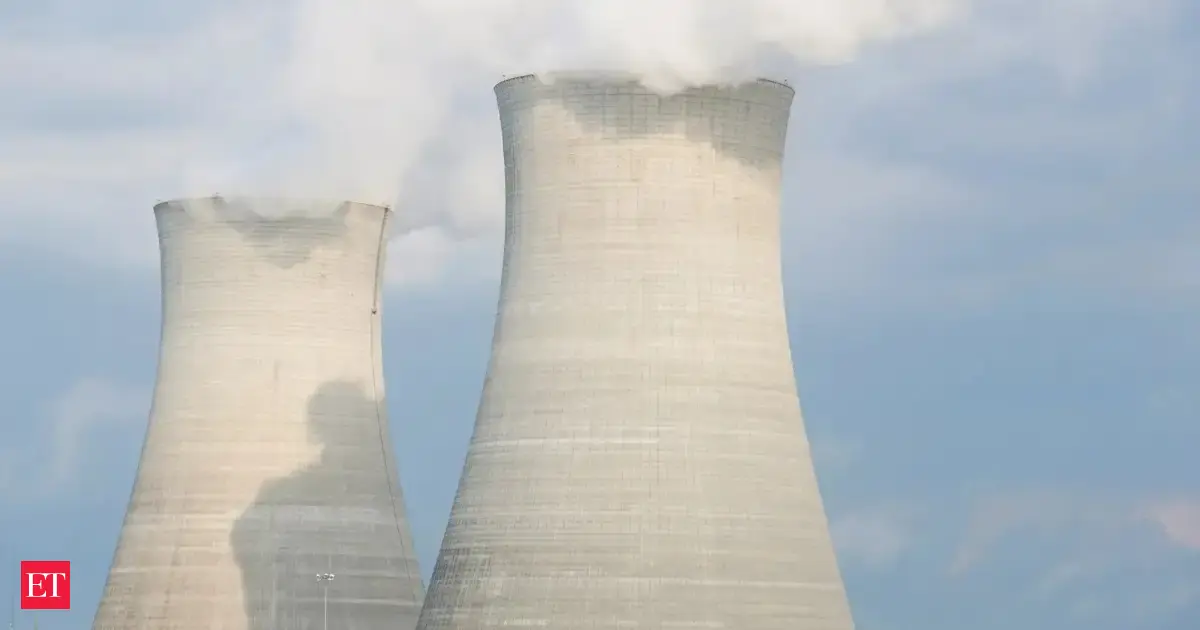
India must avoid depending on one country for nuclear technology. NTPC chairman Gurdeep Singh stresses domestic control for nuclear projects. The company aims for 30 GW nuclear capacity by 2047. Large reactors are preferred over small modular ones. Repurposing old thermal plant sites is also suggested. Public outreach on nuclear safety is crucial for expansion. View More
New Delhi: NTPC Ltd chairman and managing director Gurdeep Singh said India should avoid overreliance on any single supplier or country for nuclear technology , stressing the need to prioritise domestic control over technology and resources even if local options are initially 5-10% costlier. Speaking at a workshop on the SHANTI Act held in April, Singh said the country must guard against the kind of supply-chain vulnerabilities currently being witnessed globally, according to a recent report published by the Central Electricity Authority. Also read: US nuclear industry delegation visiting India to explore opportunities India's largest power producer has committed to developing 30 GW nuclear capacity by 2047, against the country's target of 100 GW under the Viksit Bharat programme. For a large utility like NTPC, the focus should remain on large-capacity reactor sets rather than small modular reactors , Singh said, adding that SMRs may be better suited for captive industrial use despite their high standby costs. Live Events NTPC is engaging with 14 states on nuclear projects, though acceptance levels remain uneven, he said. Singh stressed the need for greater public outreach and site visits to improve awareness around nuclear safety . Also read: India to shrink zones around nuclear reactors to free up land, sources say Ensuring long-term fuel security for nuclear plants, which are designed to operate for more than 60 years, will also be critical for the sector's expansion, he said. Singh also advocated repurposing retiring thermal power plant sites for nuclear projects. .Pbanner{display:flex;justify-content:space-between;align-items:center;background-color:#ec1c40;margin-top:20px;padding:5px 10px;border-radius:4px;color:#fff;line-height:10px;} .Pbannertext{display:flex;align-items:center;font-size:16px;font-weight:600;font-family:'Montserrat';} .Pbannertext img{height:20px;margin:0 6px} .Pbannerbutton a{display:flex;align-items:center;background-color:#fff;color:#ec1c40;text-decoration:none;font-weight:600;padding:4px 8px;border-radius:6px;font-size:15px;font-family:'Montserrat';} .Pbannerbutton img{height:20px;margin-right:6px} .Pbannerbutton a:hover{background-color:#f7f7f7} Add as a Reliable and Trusted News Source Add Now! (You can now subscribe to our Economic Times WhatsApp channel) (You can now subscribe to our Economic Times WhatsApp channel)

A US delegation is in India to explore nuclear energy cooperation. India has opened its nuclear sector to private companies. This presents a major opportunity for US firms. Both countries are also looking at fusion technologies and small modular reactors. India aims to significantly increase its nuclear power capacity by 2047. View More
Washington: A delegation of senior executives from the American nuclear industry is visiting India this week to explore areas of cooperation after New Delhi opened up the tightly-controlled sector for private players. The 20-member US Executive Nuclear Industry Delegation will be visiting New Delhi and Mumbai from May 18-21. The team will meet Maharashtra Chief Minister Devendra Fadnavis, officials from the Department of Nuclear Energy and Nuclear Power Corporation of India Limited apart from the leaders from several private sector companies interested in India's civil nuclear sector. Also read: US energy official briefs nuclear industry delegation ahead of India visit "The goal is to understand how American and Indian companies can further collaborate to support project development, strengthen supply chains, and build long-term commercial partnerships," the US-India Strategic Partnership Forum (USISPF) said. The delegation will also understand from state governments how they can support the state's nuclear projects and build manufacturing partnerships at the local level. Live Events The members will interact with government officials and private sector leaders keen to explore opportunities in the civil nuclear sector available since the enactment of the Sustainable Harnessing and Advancement of Nuclear Energy for Transforming India (SHANTI) law in December last year. The SHANTI Act replaced the Atomic Energy Act of 1964 and the Civil Liability for Nuclear Damage (CNLD) Act of 2010. The CNLD Act had tougher liability provisions on nuclear suppliers which global companies found to be an impediment to exploring the Indian market. The US nuclear industry delegation is travelling to India as part of an initiative by the USISPF and the Nuclear Energy Institute, a leading US policy and technical organisation. Also read: India moves a step closer to nuclear fuel self-reliance India and the US are also exploring cooperation in nuclear fusion technologies in addition to the International Thermonuclear Experimental Reactor that is being developed at Cadarache in France. "India's ambition to scale nuclear capacity to 100 GW by 2047, combined with the opening of the sector to private players, presents a major commercial opportunity for US firms," said Shaswat Kumar, Fellow, Centre for Strategic and International Studies, a Washington DC based think tank. He said recent 10 CFR Part 810 authorisations to Holtec, Clean Core Thorium and Flowserve signal renewed momentum in bilateral nuclear cooperation. "Going forward, realising this potential will hinge on parallel action faster export approvals from the US and, in India, progress on reprocessing infrastructure and addressing end use verification concerns," Kumar told PTI. The US industry delegation is expected to explore joint project opportunities with the Indian private sector in civil nuclear energy. After the India-US civil nuclear agreement was signed in 2008, two sites -- Chhayamithi Virdi in Gujarat and Kovvada in Andhra Pradesh -- were allotted to US companies to establish 1,000 MW nuclear power plants. Also read: L&T to set up extra-high voltage substations in Middle East India and the US are also exploring cooperation in small modular reactors (SMRs) which are billed as the future of nuclear power due to ease of deployment, particularly by repurposing sites of coal-based power plants. The US is also taking steps to speed up SMR deployment and explore recycling and reprocessing of spent fuel. The US has not reprocessed or recycled nuclear fuel since 1970. In India, private sector players such as Tata Consulting Engineers, Adani Group , Larsen & Toubro among others have evinced interest in the civil nuclear sector. India's public sector undertaking National Thermal Power Corporation (NTPC) has established a joint venture with Nuclear Power Corporation of India Limited (NPCIL) to build at least six power plants at Mahi Banswara in Rajasthan and Chutka in Madhya Pradesh. India has set a target of producing 100 GW nuclear power by 2047, a significant rise from the present installed capacity of nearly 9 GW. The move is aimed at reducing dependency on fossil fuels, which in turn, will help in achieving India's long-term target of net zero carbon emissions by 2070. .Pbanner{display:flex;justify-content:space-between;align-items:center;background-color:#ec1c40;margin-top:20px;padding:5px 10px;border-radius:4px;color:#fff;line-height:10px;} .Pbannertext{display:flex;align-items:center;font-size:16px;font-weight:600;font-family:'Montserrat';} .Pbannertext img{height:20px;margin:0 6px} .Pbannerbutton a{display:flex;align-items:center;background-color:#fff;color:#ec1c40;text-decoration:none;font-weight:600;padding:4px 8px;border-radius:6px;font-size:15px;font-family:'Montserrat';} .Pbannerbutton img{height:20px;margin-right:6px} .Pbannerbutton a:hover{background-color:#f7f7f7} Add as a Reliable and Trusted News Source Add Now! (You can now subscribe to our Economic Times WhatsApp channel) (You can now subscribe to our Economic Times WhatsApp channel)

The data underscores an uncomfortable reality. View More
In this articleFVRR.SPXNKECRMGOOGLFollow your favorite stocksCREATE FREE ACCOUNT watch nowVIDEO3:4403:44Why AI layoffs aren't helping stocksMarkets and Politics Digital Original Video Artificial intelligence has ushered in a bull run in stocks that has taken the broader market to new heights. Companies that have tied workforce reductions to the new technology, however, haven't always fared so well. CNBC compiled a list of 23 S&P 500 firms across multiple sectors and industries to see how their stocks fared following layoffs linked to AI. Specifically, we looked for companies that explicitly cited artificial intelligence or hinted at increased use of the technology when announcing the workforce reductions. As of May 15, 13 of those companies, or 56%, have traded in the red from the time of their layoff announcements. For corporations whose shares fell after their AI-linked layoffs, the average decline was about 25%. Footwear giant Nike cut nearly 800 workers in January, citing a plan to accelerate "automation" at its U.S. distribution centers. As of May 15, the stock was trading down nearly 35% from the time of its workforce reduction.Similarly, Salesforce has shed about 32% since news of its AI-driven layoffs became public around the end of last summer. The customer relationship management company slashed head count by 4,000 workers in September, noting that its AI-powered team of customer service bots called "Agentforce" had replaced some support engineers. Stock Chart IconStock chart iconCRM 1yr chart Later that month, online marketplace Fiverr also laid off 30% of its staff to become "an AI-first company that's leaner, faster, with a modern AI-focused tech infrastructure" and a smaller team, according to CEO Micha Kaufman. The stock has plunged 54% from that time to May 15.While only a small sample size, the data underscores an uncomfortable reality: Investors don't know what to make of AI and its potential impacts, even as usage of the technology widens, Daniel Keum, associate professor of management at Columbia Business School, told CNBC."AI is sort of what we call a sort of macro shock," Keum said. "There's a lot of uncertainty in what it will do. No one really has a good grasp of ⦠[its] mid- to long-term impact."What's certain is that AI is being used to cut labor costs in the "vast majority" of cases, despite makers of the technology touting its other applications, he said."There's a zero sumness to productivity gains, meaning yes ⦠I'm using new technologies ... to cut staff ⦠but my competitors are doing the same," Keum said. "If everybody's sort of improving, then the baseline is just shifting and no one is more profitable." Blaming AI? As AI has attracted buzz, so too has the idea that companies could use the technology to eliminate jobs and otherwise cut costs. By one estimate, at least 112,000 jobs losses can be tied to AI adoption since the start of 2025. In a study released in November, the Massachusetts Institute of Technology also found that AI can already do the job of 11.7% of the U.S. labor market and save companies as much as $1.2 trillion in wages in a variety of sectors. However, investors have struggled to discern whether firms are truly making decisions informed by AI or simply using the technology as a way to explain away old-fashioned cost cutting or balance-sheet blunders, according to Ally Warson, partner at AI-focused venture capital firm UP.Partners. The concept is so top of mind for investors and other members of the public that there's even a name for it: "AI washing.""Companies will leverage whatever is in the media or the accepted narrative to potentially cloak why or why not they may lay people off," Warson told CNBC. Investors are also grappling with how to measure the influence of AI on companies as several geopolitical and macroeconomic issues also weigh on their stocks, according to Keum."Huge geopolitical shocks" such as the Iran war have led to layoffs, while President Donald Trump's tariffs unveiled last year have added to pressures to cut costs, Keum said. And, an unwinding of pandemic-era over-hiring also remains at play. "Then, there's the true shock of AI," Keum said. "How much we can attribute to each ⦠everyone's guessing." 'Job cuts aren't enough' Amid those uncertainties, investors are looking beyond layoffs to other ways AI can boost bottom lines, according to Noah Hamman, CEO and founder of investment management firm AdvisorShares. "The job cuts aren't enough," Hamman said. "People are looking at what ⦠[companies are] spending and then trying to figure out who's going to actually get successful returns out of all those investments."The investor cited Google, which is owned by publicly traded Alphabet, as an example of a firm that is boosting its business with AI. Its generative AI tool Gemini has contributed to cloud revenue, strengthened search and boosted user engagement across the Google ecosystem, he noted. Stock Chart IconStock chart iconGOOGL 1yr The emerging tech is also powering robotics designed for manufacturing, industrial and construction companies, according to Warson, who invests in physical AI startups. Those robots can make dangerous tasks like window washing or wind turbine inspections more efficient and reduce costly workplace injuries, potentially boosting businesses' bottom lines. One thing is clear, though: Layoff announcements tied to great use of artificial intelligence may not be enough to boost a company's stock price â at least long term. Choose CNBC as your preferred source on Google and never miss a moment from the most trusted name in business news.

India's ambitious 100 GW nuclear power plan requires careful supplier selection. NTPC Chairman Gurdeep Singh advises against over-reliance on any single country for nuclear technology. He stresses prioritizing domestic control, even if initial costs are higher. Clear rules and guidelines are essential for converting policy into investment. View More
New Delhi, The country must remain watchful of becoming over-dependent on any single supplier or country for nuclear technology as it moves ahead with the ambitious 100 GW nuclear power plan , an industry executive has cautioned. Gurdeep Singh , the Chairman of India's largest power generation company NTPC , has asserted that the country should prioritise control over technology and resources, even if domestic options are 5-10 per cent costlier at the initial stage, to avoid the supply chain vulnerabilities currently seen globally. Singh, at a workshop organised by Central Electricity Authority on India's nuclear power roadmap, urged stakeholders to move beyond legislative intent and focus on the immediate formulation of rules and guidelines, arguing that clarity in implementation is the only way to convert policy into actual investment, accoding to the minutes of the workshop released by the CEA at the weekend. The workshop on "Shanti Act, 2025: Enabling India's 100 GW Nuclear Power Roadmap through Public-Private Partnership " held last month. "The chairman has also cautioned against technological over-dependence on any single supplier or country, asserting that India should prioritize control over technology and resources, even if domestic options are 5-10 per cent costlier at initial stage, to avoid the supply chain vulnerabilities currently seen globally," as per the minutes. Live Events Singh said his company aims to build 30 GW of nuclear capacity by 2047, and to achieve this goal NTPC is exploring feasible locations across 14 states of the country. On the size of the projects being planned by NTPC , he stated the focus must remain on large capacity reactor sets . "For a large-scale power producer like NTPC, the focus must remain on large capacity reactor sets rather than Small Modular Reactors (SMRs), he said and suggested it might be better suited for captive industrial use despite their high standby costs. According to the NTPC website, the company currently has an installed capacity of 89,805.30 MW at group-level, spanning coal, gas/liquid fuel, hydro and solar power. As of March 31, 2026 NTPC held 17 per cent of India's total power generation capacity and contributed 24 per cent of total power generation of the country. The SHANTI Act repealed the Atomic Energy Act of 1962 and the Civil Liability for Nuclear Damage Act, 2010, which had proved to be impediments to the growth of the civil nuclear sector in India. The new law enables private companies and joint ventures to build, own, operate, and decommission nuclear power plants under a government license. PTI .Pbanner{display:flex;justify-content:space-between;align-items:center;background-color:#ec1c40;margin-top:20px;padding:5px 10px;border-radius:4px;color:#fff;line-height:10px;} .Pbannertext{display:flex;align-items:center;font-size:16px;font-weight:600;font-family:'Montserrat';} .Pbannertext img{height:20px;margin:0 6px} .Pbannerbutton a{display:flex;align-items:center;background-color:#fff;color:#ec1c40;text-decoration:none;font-weight:600;padding:4px 8px;border-radius:6px;font-size:15px;font-family:'Montserrat';} .Pbannerbutton img{height:20px;margin-right:6px} .Pbannerbutton a:hover{background-color:#f7f7f7} Add as a Reliable and Trusted News Source Add Now! (You can now subscribe to our Economic Times WhatsApp channel) (You can now subscribe to our Economic Times WhatsApp channel)
India should prioritise control over technology and resources, even if domestic options are 5-10% costlier at the initial stage, to avoid supply chain vulnerabilities, says NTPC Chairman Gurdeep Singh View More
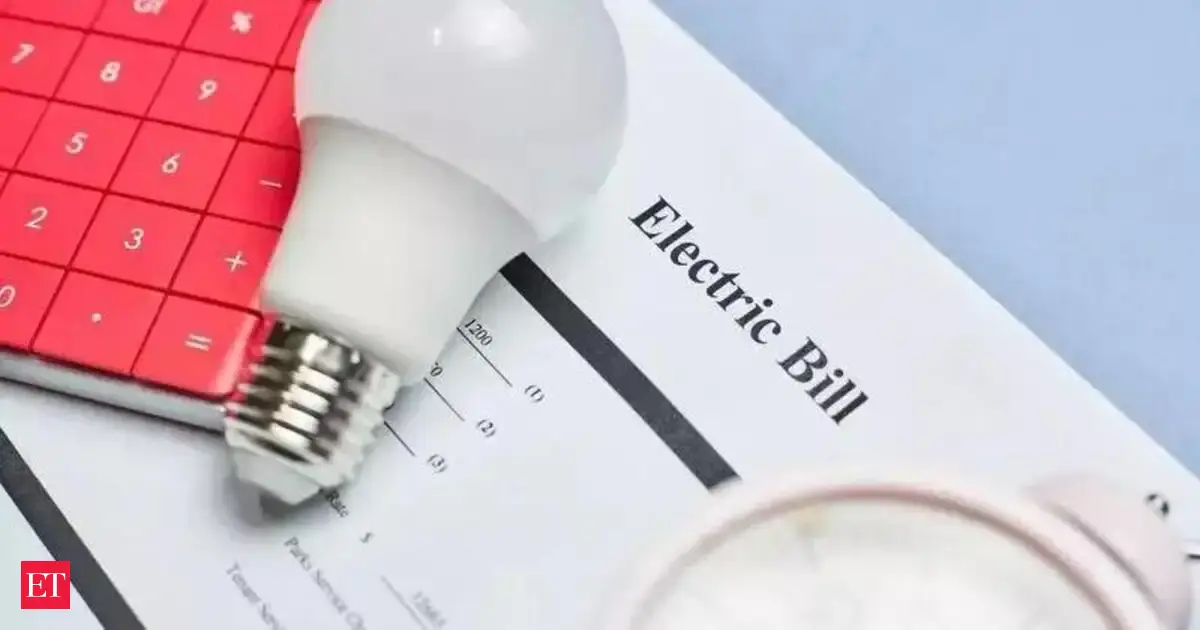
The Central Electricity Authority has proposed increasing fixed monthly electricity charges, which could raise household power bills even with lower usage. The move aims to help power distributors recover costs as rooftop solar adoption and captive power generation reduce electricity purchases from discoms. Separate tariff structures for solar users have also been suggested. View More
After the recent rise in CNG, petrol and diesel prices, households may soon face higher electricity bills as well. The Central Electricity Authority ( CEA ) has proposed increasing fixed monthly electricity charges, a move that could raise power bills even for consumers with lower usage. According to a report by The Times of India , the proposal aims to help power distribution companies (discoms) recover mounting costs as more consumers shift to rooftop solar systems and industries increasingly rely on captive power generation . If implemented, a larger share of electricity bills would come as mandatory fixed charges, meaning consumers may have to pay more every month regardless of how much electricity they actually use. The proposal, which will be presented before the Forum of Regulators, highlights that discoms currently recover much of their fixed expenditure through per-unit electricity tariffs rather than assured monthly payments. This makes their revenues vulnerable whenever power consumption declines. The report noted that expenses such as transmission infrastructure, employee salaries, network maintenance and payments to electricity generators account for nearly 38 to 56 per cent of a utility’s total costs. However, fixed monthly charges contribute only around 9 to 20 per cent of total revenue. Live Events MORE STORIES FOR YOU✕CNG prices hiked again: Delhi CNG crosses Rs 80/kg after Re 1 hike, second increase in 48 hoursIs petrol cheaper in Bhutan than India? Here’s the truth« Back to recommendation storiesI don't want to see these stories becauseThey are not relevant to meThey disrupt the reading flowOthersSUBMIT CEA also pointed out that industries and high-income households adopting rooftop solar, open-access systems and captive power plants continue to depend on the grid for backup supply while purchasing less electricity from discoms, impacting their earnings. To address this, the authority has suggested a “calibrated and phased approach” to gradually increase fixed-cost recovery. Under the proposal, fixed charges for domestic and agricultural consumers could rise to 25 per cent, while industrial, commercial and institutional users may eventually pay up to 100 per cent of fixed costs by 2030. The report further recommended introducing separate tariff structures for rooftop solar users and consumers operating under net-metering systems. .Pbanner{display:flex;justify-content:space-between;align-items:center;background-color:#ec1c40;margin-top:20px;padding:5px 10px;border-radius:4px;color:#fff;line-height:10px;} .Pbannertext{display:flex;align-items:center;font-size:16px;font-weight:600;font-family:'Montserrat';} .Pbannertext img{height:20px;margin:0 6px} .Pbannerbutton a{display:flex;align-items:center;background-color:#fff;color:#ec1c40;text-decoration:none;font-weight:600;padding:4px 8px;border-radius:6px;font-size:15px;font-family:'Montserrat';} .Pbannerbutton img{height:20px;margin-right:6px} .Pbannerbutton a:hover{background-color:#f7f7f7} Add as a Reliable and Trusted News Source Add Now! (You can now subscribe to our Economic Times WhatsApp channel) (You can now subscribe to our Economic Times WhatsApp channel)

The Delhi government, led by Rekha Gupta, has reduced the VAT on aviation turbine fuel from 25% to 7% during a Cabinet meeting, aiming to benefit airlines and passengers amid global fuel market instability by the ongoing conflict in West Asia. View More

The decision may lead to an estimated revenue loss of around ?985 crore but aims to strengthen aviation growth, connectivity, and competitiveness in the national capital. View More