
Latest Sectors News
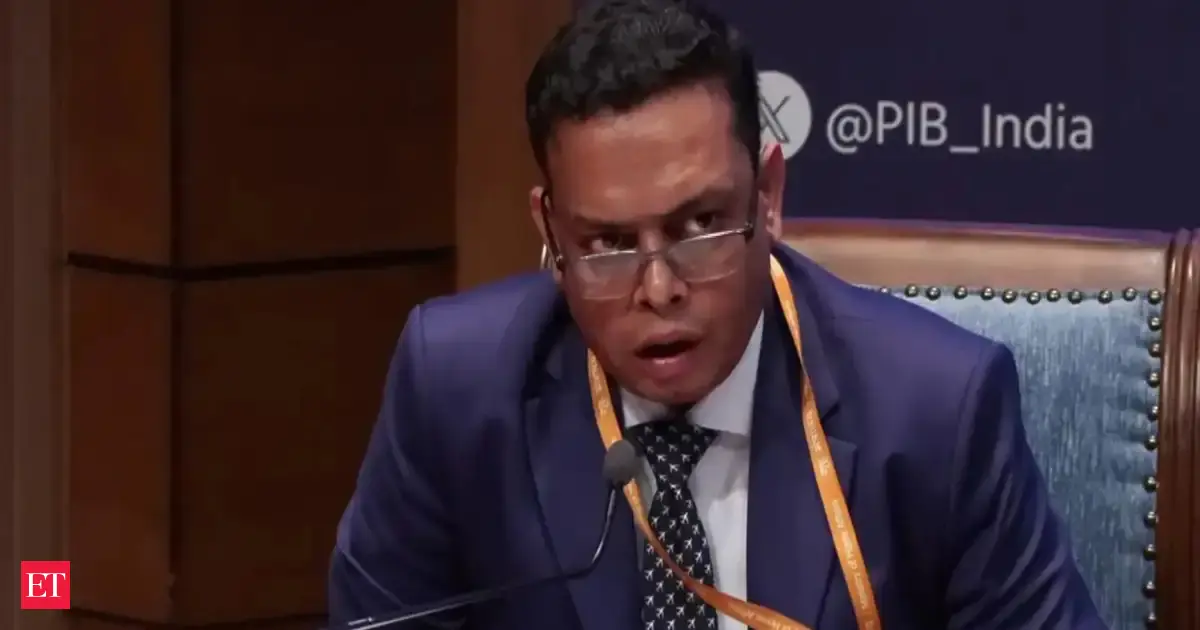
A new fixed Aviation Turbine Fuel (ATF) pricing mechanism will set a uniform selling price of approximately Rs 115 per litre in Delhi for both domestic and international airline operations. This replaces the previous capped-price system, aiming to stabilize fuel costs for airlines amid West Asia crisis volatility. View More
New Delhi [India], June 4 (ANI): The fixed Aviation Turbine Fuel (ATF) pricing mechanism introduced under the Centre's newly announced ATF Price Stabilisation Fund will result in a uniform selling price of about Rs 115 per litre in Delhi for both domestic and international airline operations. Addressing an inter-ministerial briefing on the ongoing West Asia situation, Rohit Raj, Director in the Ministry of Civil Aviation , explained how the government arrived at the new ATF pricing structure after replacing the earlier capped-price mechanism. "There were few numbers which were floated yesterday, one was 60.5, one was 75.62, another was 104 and 142," Raj said, explaining the different price benchmarks that emerged following the Cabinet's decision. According to him, Rs 60.5 per litre was the base ATF price on March 1, 2026, before fuel markets were impacted by the West Asia crisis . "Since all the West Asia crisis happened after 28th of February, the whole April was pretty volatile for the ATF prices," he said. Live Events Raj noted that international parity prices of ATF surged sharply during the period. "When the prices were published on 1st May, it was 142. So that was the price which is the IPP (international parity price)," he said. To shield airlines from the sharp increase, the government had earlier capped the rise in ATF prices at 25 per cent over the March base price. "We put a cap on ATF from the March base price and the increase was limited only to 25 per cent. So if you apply 25 per cent to the March base price, which was 60.5, the 75.62 figures comes in," Raj said. He explained that after adding applicable taxes, the selling price in Delhi under the capped arrangement worked out to around Rs 104 per litre. "The Delhi selling price at that point of time was 104. So this price of 104 was because of capping," he said. Raj said the government has now shifted away from the capping mechanism and moved to a fixed-price framework under the newly approved stabilisation scheme. "Now under the new mechanism, the capping won't be prevalent, but we are moving towards a fixed price mechanism," he said. Under the revised framework, the government has fixed the fuel price at the Free on Board (FOB) level after excluding taxes and certain charges. "After that we arrive at a price under the scheme. For domestic operation it is fixed at 86.32 and for international operation it is fixed at 104.49," Raj said. Explaining the final retail price, he said that after adding airport charges and other applicable costs, the selling price in Delhi would work out to approximately Rs 115 per litre. "In essence, if you take Delhi as an example, 115 is the fixed selling price at Delhi for both domestic and international," Raj said. The clarification comes a day after the Union Cabinet approved a one-time budgetary support of up to Rs 10,000 crore for Oil Marketing Companies (OMCs) to stabilise ATF prices amid sharp fuel price volatility triggered by the ongoing West Asia conflict. Announcing the decision on Wednesday, Union Minister Ashwini Vaishnaw said the government had approved "one-time budgetary support not exceeding Rs 10,000 crore" to enable OMCs to provide ATF price stabilisation support to scheduled Indian airlines for both domestic and international operations. According to the government, international ATF prices rose from Rs 60.50 per litre in March 2026 to Rs 142 per litre in May 2026 due to the crisis. ATF accounts for nearly 40 per cent of airline operating costs and can rise to as much as 60 per cent during periods of extreme fuel price volatility. .Pbanner{display:flex;justify-content:space-between;align-items:center;background-color:#ec1c40;margin-top:20px;padding:5px 10px;border-radius:4px;color:#fff;line-height:10px;} .Pbannertext{display:flex;align-items:center;font-size:16px;font-weight:600;font-family:'Montserrat';} .Pbannertext img{height:20px;margin:0 6px} .Pbannerbutton a{display:flex;align-items:center;background-color:#fff;color:#ec1c40;text-decoration:none;font-weight:600;padding:4px 8px;border-radius:6px;font-size:15px;font-family:'Montserrat';} .Pbannerbutton img{height:20px;margin-right:6px} .Pbannerbutton a:hover{background-color:#f7f7f7} Add as a Reliable and Trusted News Source Add Now! (You can now subscribe to our Economic Times WhatsApp channel) (You can now subscribe to our Economic Times WhatsApp channel)
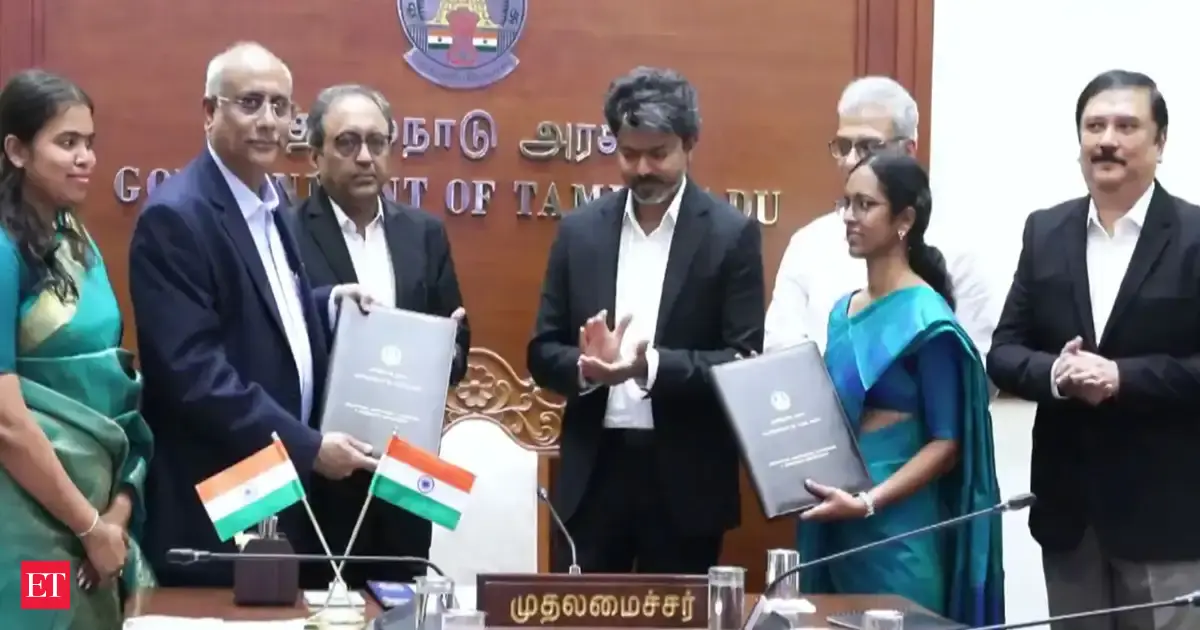
Tamil Nadu Chief Minister V Joseph Vijay witnessed a significant MoU signing. Larsen & Toubro Limited will invest Rs 18,600 crore in three major projects. These projects will boost data centres, electronics manufacturing, and shipbuilding. Around 8,200 jobs will be created. This marks a key step towards Tamil Nadu's economic growth and industrial development. View More
Chennai: Tamil Nadu Chief Minister V Joseph Vijay on Thursday witnessed the signing of a Memorandum of Understanding (MoU) between the Tamil Nadu government and Larsen & Toubro Limited (L&T) for three major projects in the state involving a total investment of Rs 18,600 crore and the creation of employment opportunities for around 8,200 people. According to a press release, the Chief Minister held discussions at the Secretariat with L&T Chairman and Managing Director SN Subrahmanyan and appreciated the company's continued investments in Tamil Nadu and its contribution to the state's industrial growth . Also read: 'India to pilot hydrogen buses, trucks on 10 roads; Reliance, Tata, NTPC among partners,' says Nitin Gadkari The Chief Minister welcomed L&T's proposal to establish projects across the data centre, electronics manufacturing and shipbuilding sectors, stating that the investments would further strengthen Tamil Nadu's position as a leading industrial destination. He also assured the company of the state government's full cooperation and support for its future expansion plans, the release said. According to the press release, the MoU covers three key projects. The largest among them is a Data Centre Expansion Project in Kancheepuram district, which will involve an invest ment of Rs 15,000 crore and is expected to generate employment for 500 people. Live Events L&T will also establish an Electronics and Electronic Systems Manufacturing Project in Coimbatore with an investment of Rs 2,500 crore, creating employment opportunities for around 2,000 people, the release stated. The third project involves the expansion of L&T's shipbuilding facility at Kattupalli in Tiruvallur district. The project will see an investment of Rs 1,100 crore and is expected to create employment for approximately 5,700 people. The projects are aligned with the Tamil Nadu government's vision of transforming the state into a US$1.5 trillion economy by 2036, according to the release. The investments are expected to strengthen the state's diversified industrial ecosystem, promote digital infrastructure and artificial intelligence-related applications, and enhance the electronics manufacturing sector. The release further noted that the Kattupalli expansion project would help create world-class infrastructure for the offshore wind energy construction industry while generating substantial direct and indirect employment opportunities for the state's youth. Notably, this is the first industrial-sector MoU signed since the government led by CM Vijay assumed office, the release added. The event was attended by Industries Minister S Keerthana, Chief Secretary M Vaikumar, Additional Chief Secretary V Vijayakumar, Guidance Tamil Nadu Managing Director and CEO P Alarmel Mangai, L&T Chairman and Managing Director SN Subrahmanyan, Head of Strategic Initiatives KG Sathyanarayanan, and other senior government officials, according to the press release. .Pbanner{display:flex;justify-content:space-between;align-items:center;background-color:#ec1c40;margin-top:20px;padding:5px 10px;border-radius:4px;color:#fff;line-height:10px;} .Pbannertext{display:flex;align-items:center;font-size:16px;font-weight:600;font-family:'Montserrat';} .Pbannertext img{height:20px;margin:0 6px} .Pbannerbutton a{display:flex;align-items:center;background-color:#fff;color:#ec1c40;text-decoration:none;font-weight:600;padding:4px 8px;border-radius:6px;font-size:15px;font-family:'Montserrat';} .Pbannerbutton img{height:20px;margin-right:6px} .Pbannerbutton a:hover{background-color:#f7f7f7} Add as a Reliable and Trusted News Source Add Now! (You can now subscribe to our Economic Times WhatsApp channel) (You can now subscribe to our Economic Times WhatsApp channel)

India's growing defence and data centre sectors face a critical need for reliable power. A recent policy dialogue explored Small Modular Reactors (SMRs) as a solution. Experts highlighted SMRs' potential for clean, uninterrupted electricity, crucial for mission-critical operations and energy security. Addressing cost, regulation, and safety are key for wider adoption of this technology. View More
India’s defence production and data centre ambitions are converging on the same constraint -- reliable power supply . As demand for reliable, clean, and uninterrupted electricity grows across these strategic sectors a Policy Dialogue was jointly organised by Chintan Research Foundation (CRF) and Finovista, in association with Manthan - an initiative led by the Office of Principal Scientific Advisor this week in New Delhi. Also read: Experts highlight growing role of SMRs for defence manufacturing and data centre operation “We cannot have energy transition without nuclear”, said Prof. R. Srikanth, Dean of the School of Natural Sciences & Engineering, National Institute of Advanced Studies (NIAS) at the Policy Dialogue focused on Small Modular Reactors for Defence Manufacturing and Data Centre Operation. In his Welcome Address, Shishir Priyadarshi, President (CRF), highlighted India’s growing future energy requirements, noting that nuclear energy would play an important role in meeting rising industrial and strategic demand. He emphasised the need to address questions of cost, fuel security, regulation, deployment waste management and safety to enable scalable SMR adoption. Live Events Vimal Kumar, Co-Founder, Finovista, highlighted the potential of SMRs to support reliable and precision-oriented power supply for defence manufacturing, noting that their deployment in emerging defence corridors could prove transformative for mission-critical operations. In a Special Address, Prasenjit Pal, Former CEO NTPC Parmanu Urja Nigam Ltd., underscored that India’s 100 GW nuclear vision should now be treated as a strategic requirement rather than an aspiration, highlighting nuclear energy’s lower carbon footprint and long-term importance for energy security . Delivering the Keynote Address, Rajnish Kumar, Chief Operating Officer (COO), National e-Governance Division (NeGD), MeitY, highlighted that reliability, resilience, and sovereignty are emerging requirements for e-governance systems, noting the potential of SMRs to support dependable power supply for critical infrastructure. He emphasised that reliable and diversified power sources are essential to ensuring secure and uninterrupted digital governance. The moderated panel discussion, chaired by Dr. Debajit Palit, Centre Head, Centre for Climate Change and Energy Transition, CRF, convened experts from nuclear energy, defence manufacturing, digital infrastructure, finance, and public policy. Discussions focused on the role of SMRs in supporting India’s low-carbon transition , strategic energy resilience, and mission-critical infrastructure requirements. The panel deliberated on several important themes, including the role of nuclear energy in India’s low-carbon transition, with participants highlighting the complementary role of nuclear and renewable energy in addressing rising power demand and intermittency challenges. Discussions also focused on the contribution of nuclear energy to India’s future energy basket, particularly in the context of Viksit Bharat 2047 and expectations of increased reliance on non-fossil fuel-based power generation.Discussions explored the role of SMRs in supporting specialised and mission-critical applications, including defence manufacturing, data centres, and emerging infrastructure settings requiring reliable and adaptable power systems. The panel highlighted that the challenge is not only about the quantity of power supply, but also the quality of power, including reliability, resilience, and continuity for strategic infrastructure. The discussion further underscored that mission assurance, reliability of power, and resilience are essential for strategic sectors such as data centres and defence manufacturing. Also read: Rolls-Royce eyes India engine MRO facility, explores aero gas turbine complex and SMR opportunities The panelists, Prof. R. Srikanth, Dean of the School of Natural Sciences & Engineering, National Institute of Advanced Studies (NIAS), Gautam Ghosh, Chief Engineer, Financial & Commercial Appraisal Division, Central Electricity Authority (CEA), Dipakshi Mehandru, Director, Government Affairs, Intel Corporation, Air Commodore Satinder Rehal (Retd.), Founder and Director, PentAD Aerospace Solutions, and Arindam Ghosh, Partner, Nangia & Co LLP, also examined commercial and deployment challenges associated with SMRs, including high tariffs, financing requirements, public awareness, and pathways for reducing costs to enable wider adoption. At the same time, the need for continued policy attention, regulatory preparedness, and stakeholder engagement was emphasised to support the responsible scaling of SMRs in India. .Pbanner{display:flex;justify-content:space-between;align-items:center;background-color:#ec1c40;margin-top:20px;padding:5px 10px;border-radius:4px;color:#fff;line-height:10px;} .Pbannertext{display:flex;align-items:center;font-size:16px;font-weight:600;font-family:'Montserrat';} .Pbannertext img{height:20px;margin:0 6px} .Pbannerbutton a{display:flex;align-items:center;background-color:#fff;color:#ec1c40;text-decoration:none;font-weight:600;padding:4px 8px;border-radius:6px;font-size:15px;font-family:'Montserrat';} .Pbannerbutton img{height:20px;margin-right:6px} .Pbannerbutton a:hover{background-color:#f7f7f7} Add as a Reliable and Trusted News Source Add Now! (You can now subscribe to our Economic Times WhatsApp channel) (You can now subscribe to our Economic Times WhatsApp channel)

The stock opened at ?410.40 on the NSE, touching an intraday high of ?411, before slipping to ?405.65 as of 10.01 AM — down 0.16% from its previous close of ?406.30 View More

Indian corporates saw a flurry of activity with regulatory action, expansion plans, large contract wins and stake transactions dominating headlines. Key developments included SEBI’s restrictions on Rajesh Exports, HFCL’s defence push, BHEL’s Nigeria order, and SoftBank’s Lenskart stake sale View More
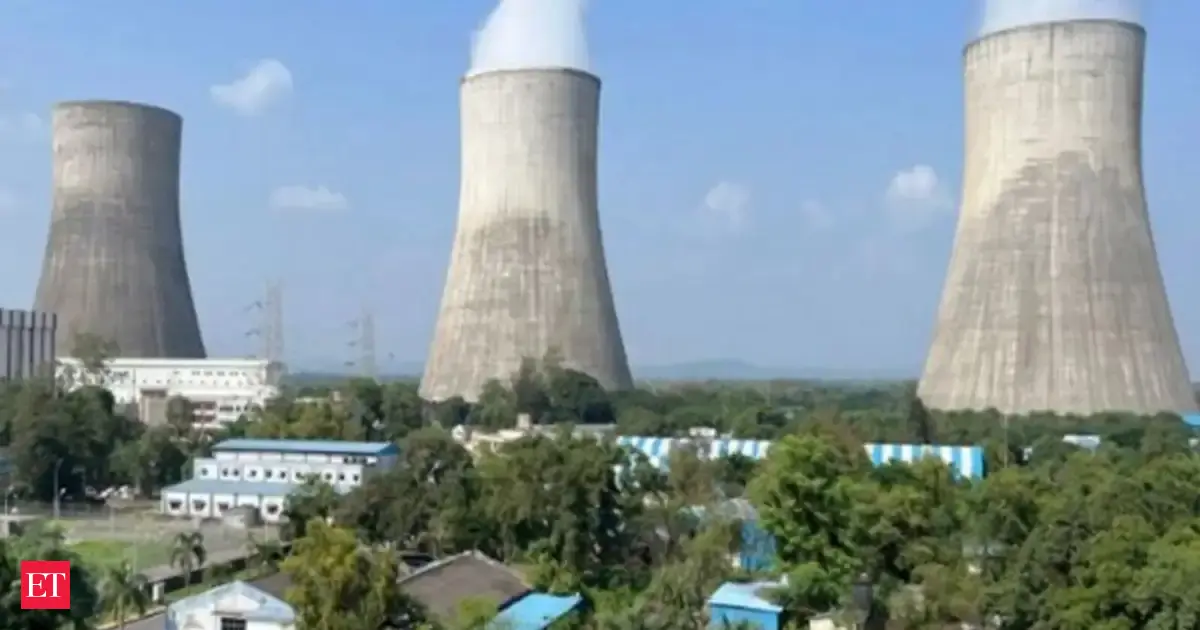
India's defense production and data center sectors face a critical power supply constraint. A recent policy dialogue highlighted Small Modular Reactors (SMRs) as a solution for reliable, clean, and uninterrupted electricity. Experts discussed SMRs' role in energy transition, strategic resilience, and mission-critical infrastructure, while also addressing deployment challenges. View More
India’s defence production and data centre ambitions are converging on the same constraint -- reliable power supply . As demand for reliable, clean, and uninterrupted electricity grows across these strategic sectors, a Policy Dialogue was jointly organised by Chintan Research Foundation (CRF) and Finovista, in association with Manthan - an initiative led by the Office of Principal Scientific Advisor this week in New Delhi. “We cannot have energy transition without nuclear”, said Prof. R. Srikanth, Dean of the School of Natural Sciences & Engineering, National Institute of Advanced Studies (NIAS) at the Policy Dialogue focused on Small Modular Reactors for Defence Manufacturing and Data Centre Operation . Also read: India to invite bids for 220 MWe Small Modular Reactor, boosting nuclear push under green energy transition In his Welcome Address, Shishir Priyadarshi, President (CRF), highlighted India’s growing future energy requirements, noting that nuclear energy would play an important role in meeting rising industrial and strategic demand. He emphasised the need to address questions of cost, fuel security, regulation, deployment waste management and safety to enable scalable SMR adoption. Vimal Kumar, Co-Founder, Finovista, highlighted the potential of SMRs to support reliable and precision-oriented power supply for defence manufacturing, noting that their deployment in emerging defence corridors could prove transformative for mission-critical operations. Live Events In a Special Address, Prasenjit Pal, Former CEO NTPC Parmanu Urja Nigam Ltd., underscored that India’s 100 GW nuclear vision should now be treated as a strategic requirement rather than an aspiration, highlighting nuclear energy’s lower carbon footprint and long-term importance for energy security. Also read: Maharashtra govt ramps up nuclear energy with MoUs worth Rs 6.5 lakh crore Delivering the Keynote Address, Rajnish Kumar, Chief Operating Officer (COO), National e-Governance Division (NeGD), MeitY, highlighted that reliability, resilience, and sovereignty are emerging requirements for e-governance systems, noting the potential of SMRs to support dependable power supply for critical infrastructure. He emphasised that reliable and diversified power sources are essential to ensuring secure and uninterrupted digital governance. The moderated panel discussion, chaired by Dr. Debajit Palit, Centre Head, Centre for Climate Change and Energy Transition, CRF, convened experts from nuclear energy, defence manufacturing, digital infrastructure, finance, and public policy. Discussions focused on the role of SMRs in supporting India’s low-carbon transition, strategic energy resilience, and mission-critical infrastructure requirements. The panel deliberated on several important themes, including the role of nuclear energy in India ’s low-carbon transition, with participants highlighting the complementary role of nuclear and renewable energy in addressing rising power demand and intermittency challenges. Discussions also focused on the contribution of nuclear energy to India’s future energy basket, particularly in the context of Viksit Bharat 2047 and expectations of increased reliance on non-fossil fuel-based power generation. Also read: NTPC chief against reliance on one source for nuclear technology Discussions explored the role of SMRs in supporting specialised and mission-critical applications, including defence manufacturing, data centres, and emerging infrastructure settings requiring reliable and adaptable power systems. The panel highlighted that the challenge is not only about the quantity of power supply, but also the quality of power, including reliability, resilience, and continuity for strategic infrastructure. The discussion further underscored that mission assurance, reliability of power, and resilience are essential for strategic sectors such as data centres and defence manufacturing. The panelists, Prof. R. Srikanth, Dean of the School of Natural Sciences & Engineering, National Institute of Advanced Studies (NIAS), Gautam Ghosh, Chief Engineer, Financial & Commercial Appraisal Division, Central Electricity Authority (CEA), Dipakshi Mehandru, Director, Government Affairs, Intel Corporation, Air Commodore Satinder Rehal (Retd.), Founder and Director, PentAD Aerospace Solutions, and Arindam Ghosh, Partner, Nangia & Co LLP, also examined commercial and deployment challenges associated with SMRs, including high tariffs, financing requirements, public awareness, and pathways for reducing costs to enable wider adoption. At the same time, the need for continued policy attention, regulatory preparedness, and stakeholder engagement was emphasised to support the responsible scaling of SMRs in India. .Pbanner{display:flex;justify-content:space-between;align-items:center;background-color:#ec1c40;margin-top:20px;padding:5px 10px;border-radius:4px;color:#fff;line-height:10px;} .Pbannertext{display:flex;align-items:center;font-size:16px;font-weight:600;font-family:'Montserrat';} .Pbannertext img{height:20px;margin:0 6px} .Pbannerbutton a{display:flex;align-items:center;background-color:#fff;color:#ec1c40;text-decoration:none;font-weight:600;padding:4px 8px;border-radius:6px;font-size:15px;font-family:'Montserrat';} .Pbannerbutton img{height:20px;margin-right:6px} .Pbannerbutton a:hover{background-color:#f7f7f7} Add as a Reliable and Trusted News Source Add Now! (You can now subscribe to our Economic Times WhatsApp channel) (You can now subscribe to our Economic Times WhatsApp channel)

The contract involves the design, manufacturing, supply, and supervision of erection and commissioning of eight gas turbine generator packages for a petroleum refinery and polypropylene plant in the Dangote Industries Free Zone, Nigeria View More
Bharat Heavy Electricals Limited has won a significant contract worth Rs 2,000 to Rs 2,500 crore. The order comes from Nigeria's Dangote Petroleum Refinery and Petrochemicals Free Zone Enterprise. BHEL will design, manufacture, supply, and supervise the erection and commissioning of eight gas turbine generator packages. These will be for the petroleum refinery and polypropylene plant in Nigeria. View More
New Delhi: State-owned BHEL on Wednesday said the company has secured an order worth Rs 2,000-2,500 crore from a Nigerian entity. The contract agreement was signed with Nigeria's Dangote Petroleum Refinery & Petrochemicals Free Zone Enterprise on June 2, according to a regulatory filing. The order pertains to design, manufacturing, supply and supervision of erection and commissioning of eight gas turbine generator packages for the petroleum refinery and polypropylene plant in Dangote Industries Free Zone, Nigeria, the company informed the stock exchanges. The contract will be executed within 26 months from the start date or the effective date of the agreement. .Pbanner{display:flex;justify-content:space-between;align-items:center;background-color:#ec1c40;margin-top:20px;padding:5px 10px;border-radius:4px;color:#fff;line-height:10px;} .Pbannertext{display:flex;align-items:center;font-size:16px;font-weight:600;font-family:'Montserrat';} .Pbannertext img{height:20px;margin:0 6px} .Pbannerbutton a{display:flex;align-items:center;background-color:#fff;color:#ec1c40;text-decoration:none;font-weight:600;padding:4px 8px;border-radius:6px;font-size:15px;font-family:'Montserrat';} .Pbannerbutton img{height:20px;margin-right:6px} .Pbannerbutton a:hover{background-color:#f7f7f7} Add as a Reliable and Trusted News Source Add Now! (You can now subscribe to our Economic Times WhatsApp channel) (You can now subscribe to our Economic Times WhatsApp channel)

In an exchange filing on Wednesday, the company said it has signed a contract agreement with Dangote Petroleum Refinery & Petrochemicals Free Zone Enterprise. View More