
Latest Sectors News

The contract involves the design, manufacturing, supply, and supervision of erection and commissioning of eight gas turbine generator packages for a petroleum refinery and polypropylene plant in the Dangote Industries Free Zone, Nigeria View More
Bharat Heavy Electricals Limited has won a significant contract worth Rs 2,000 to Rs 2,500 crore. The order comes from Nigeria's Dangote Petroleum Refinery and Petrochemicals Free Zone Enterprise. BHEL will design, manufacture, supply, and supervise the erection and commissioning of eight gas turbine generator packages. These will be for the petroleum refinery and polypropylene plant in Nigeria. View More
New Delhi: State-owned BHEL on Wednesday said the company has secured an order worth Rs 2,000-2,500 crore from a Nigerian entity. The contract agreement was signed with Nigeria's Dangote Petroleum Refinery & Petrochemicals Free Zone Enterprise on June 2, according to a regulatory filing. The order pertains to design, manufacturing, supply and supervision of erection and commissioning of eight gas turbine generator packages for the petroleum refinery and polypropylene plant in Dangote Industries Free Zone, Nigeria, the company informed the stock exchanges. The contract will be executed within 26 months from the start date or the effective date of the agreement. .Pbanner{display:flex;justify-content:space-between;align-items:center;background-color:#ec1c40;margin-top:20px;padding:5px 10px;border-radius:4px;color:#fff;line-height:10px;} .Pbannertext{display:flex;align-items:center;font-size:16px;font-weight:600;font-family:'Montserrat';} .Pbannertext img{height:20px;margin:0 6px} .Pbannerbutton a{display:flex;align-items:center;background-color:#fff;color:#ec1c40;text-decoration:none;font-weight:600;padding:4px 8px;border-radius:6px;font-size:15px;font-family:'Montserrat';} .Pbannerbutton img{height:20px;margin-right:6px} .Pbannerbutton a:hover{background-color:#f7f7f7} Add as a Reliable and Trusted News Source Add Now! (You can now subscribe to our Economic Times WhatsApp channel) (You can now subscribe to our Economic Times WhatsApp channel)

In an exchange filing on Wednesday, the company said it has signed a contract agreement with Dangote Petroleum Refinery & Petrochemicals Free Zone Enterprise. View More

The Indian stock market fell on June 3, with the Nifty 50 down 0.36% and the Sensex down 0.54%. Rising crude oil prices and escalating Middle East tensions contributed to the decline, impacting investor confidence and market sentiment. View More

This partnership aims to accelerate Rosada's expansion and solidify its presence in the premium children's market. The investment will fuel geographic growth, product development, and talent acquisition. View More
Rosada, a premium kids’ lifestyle brand, on Tuesday announced an undisclosed strategic investment from Shilpa Shetty Kundra , marking the beginning of a strategic partnership aimed at accelerating the brand’s expansion and strengthening its presence in the premium children’s market. The association marks a journey from customer to co-believer, a rare vote of confidence that underscores the brand's intrinsic product merit and its readiness to scale. Founded by husband-wife duo Shalu and Bhupesh Agarwal, Rosada has carved a distinct positioning in the premium kids' lifestyle segment, a space long dominated by generic, mass-market players. Its portfolio spans bags, bedding, travel accessories, décor, and everyday utility products for babies and young children, all built on in-house design and production capabilities that enable tight quality control and a level of aesthetic sophistication rarely seen in this category. Rosada's cultural cachet is evident in the calibre of customers it has attracted organically, including Kareena Kapoor Khan, Neha Dhupia, Soundarya Rajinikanth, Mira Kapoor, and the Ambani family. The brand's appearance on Shark Tank India Season 5, where it secured a three-shark deal, proved a significant inflection point, with revenue nearly doubling during the period. The fresh capital will be deployed across geographic expansion, product portfolio deepening, and strategic talent acquisition in design, marketing, and operations. "What drew me to Rosada was straightforward: the product spoke for itself. The design sensibility, the quality of materials, the attention to detail, it is the kind of brand you instantly recognise as different. As someone who has experienced it as a parent first, I am backing this with full conviction. Rosada has everything it takes to become the definitive kids' lifestyle brand in India," said Shilpa Shetty Kundra, Strategic Investor, Rosada in a statement. The founders share that conviction and see this as the beginning of a far larger chapter for the brand. Live Events "Rosada has been built with a very clear point of view: design-led, quality-first, and deeply relevant to how modern Indian parents think about their children's world. Having Shilpa Shetty Kundra come on board is a defining moment and strengthens our confidence to move forward with a much larger vision. This is India's moment for a homegrown kids' lifestyle brand to go big, and Rosada intends to be exactly that," said Shalu Agarwal, Co-Founder, Rosada. .Pbanner{display:flex;justify-content:space-between;align-items:center;background-color:#ec1c40;margin-top:20px;padding:5px 10px;border-radius:4px;color:#fff;line-height:10px;} .Pbannertext{display:flex;align-items:center;font-size:16px;font-weight:600;font-family:'Montserrat';} .Pbannertext img{height:20px;margin:0 6px} .Pbannerbutton a{display:flex;align-items:center;background-color:#fff;color:#ec1c40;text-decoration:none;font-weight:600;padding:4px 8px;border-radius:6px;font-size:15px;font-family:'Montserrat';} .Pbannerbutton img{height:20px;margin-right:6px} .Pbannerbutton a:hover{background-color:#f7f7f7} Add as a Reliable and Trusted News Source Add Now!
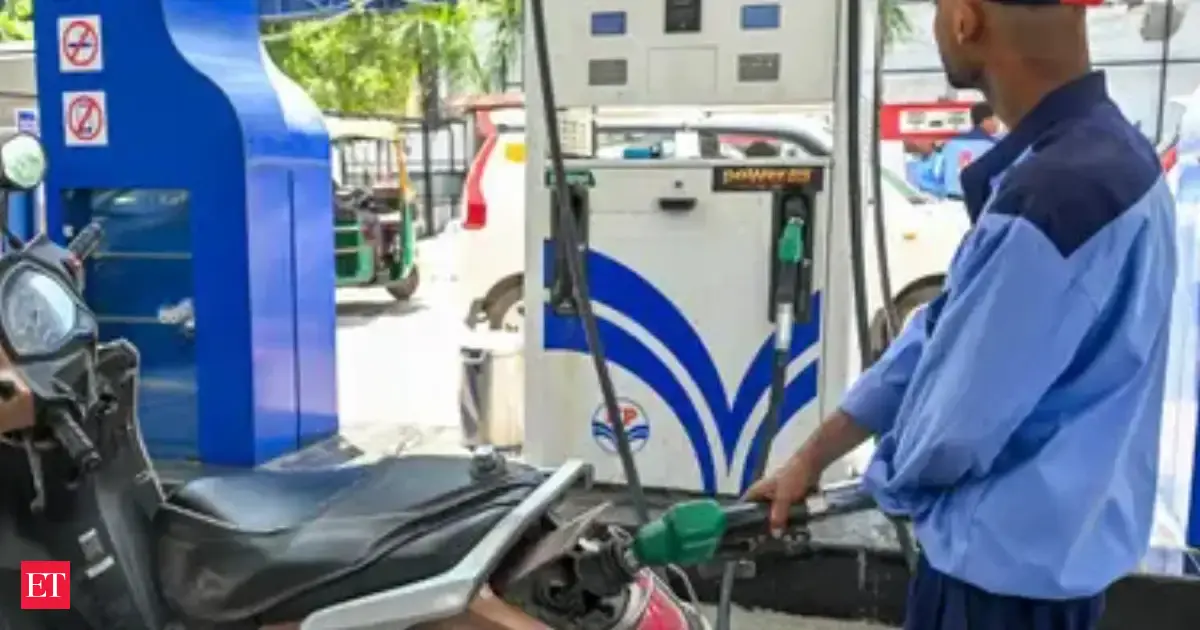
LPG sales saw a significant drop of 24 percent in May compared to last year. Meanwhile, petrol and diesel sales by state-run companies increased. Aviation fuel sales also showed growth. This indicates a shift in fuel consumption patterns. More comprehensive industry data will be available soon. View More
New Delhi: LPG sales fell 24% year-on-year in May, a much steeper decline than the month before while petrol and diesel sales by state-run oil companies rose 4.8% and 6.4%, respectively. Aviation turbine fuel sales rose 1.8% from a year earlier in May, according to sales data from IndianOil , Bharat Petroleum and Hindustan Petroleum . The three state-run companies control 90% of petrol, diesel and aviation fuel market, and nearly entire domestic LPG market. Sales data for the industry, including private sector, slated to be issued by the oil ministry in a week, will provide a clearer picture of fuel consumption in May. In April, LPG sales by state-run companies had dropped about 16% year-on-year. The unusually high growth in diesel sales by state-run fuel retailers in May points to a significant demand shift away from pumps operated by private retailers. Diesel sales typically grow at a much slower pace than petrol due to the fuel's comparatively much larger consumption base. Yet, at 6.4%, diesel sales growth outpaced petrol in May, despite India consuming about two-and-half times more diesel than petrol. In many places, bulk diesel consumers shifted to retail pumps to take advantage of cheaper fuel available there. .Pbanner{display:flex;justify-content:space-between;align-items:center;background-color:#ec1c40;margin-top:20px;padding:5px 10px;border-radius:4px;color:#fff;line-height:10px;} .Pbannertext{display:flex;align-items:center;font-size:16px;font-weight:600;font-family:'Montserrat';} .Pbannertext img{height:20px;margin:0 6px} .Pbannerbutton a{display:flex;align-items:center;background-color:#fff;color:#ec1c40;text-decoration:none;font-weight:600;padding:4px 8px;border-radius:6px;font-size:15px;font-family:'Montserrat';} .Pbannerbutton img{height:20px;margin-right:6px} .Pbannerbutton a:hover{background-color:#f7f7f7} Add as a Reliable and Trusted News Source Add Now! (You can now subscribe to our Economic Times WhatsApp channel) (You can now subscribe to our Economic Times WhatsApp channel)
The delegation also visited NETRA's state-of-the-art in-house pilot facilities, including the 4 MW/1 MWh solar microgrid, a 3 MWh vanadium redox flow battery energy storage system View More

Recall Alan Greenspan's warning of irrational exuberance? It’s apt for AI. Split signals—weak US consumer confidence amid a stock boom—suggest it may be exposing America to instability risk while India’s investments in infrastructure are secure. Here's why View More
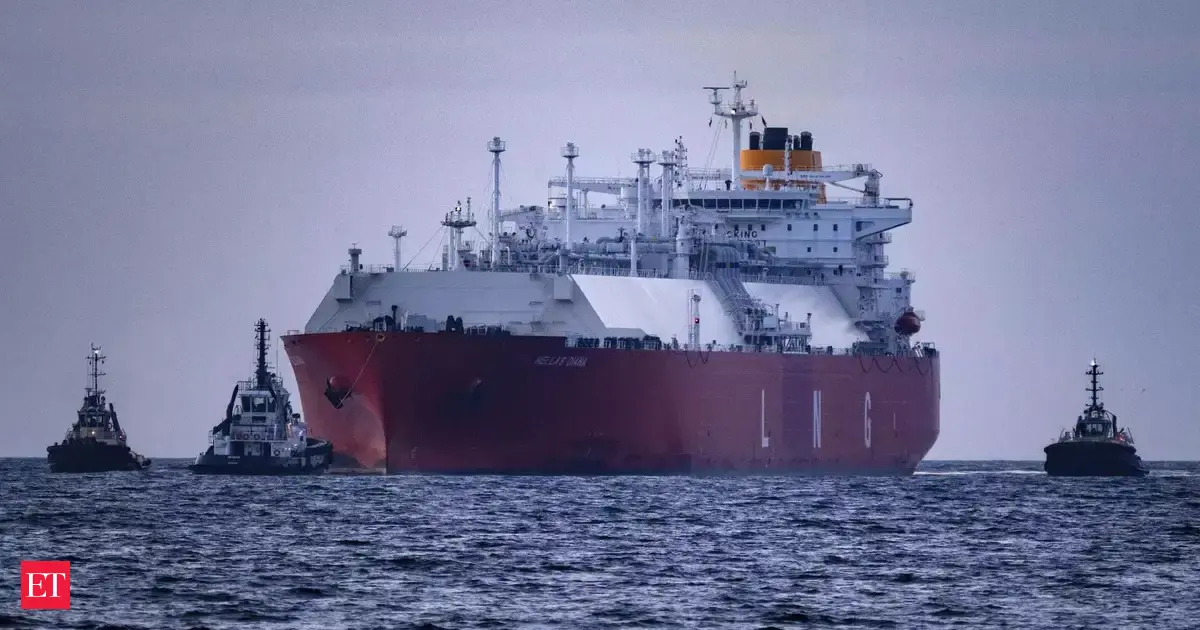
The closure of the Strait of Hormuz and the shutdown of Qatar’s LNG exports have pushed gas prices higher, but the disruption could ultimately lead to a prolonged global LNG glut, according to the analysis. The crisis has exposed the risks of relying on LNG supplies passing through Hormuz, prompting major Asian importers such as India, Bangladesh and Pakistan to seek alternative sources. View More
It may sound counterintuitive. After all, the Strait of Hormuz remains blocked. The world’s largest LNG plant is idled and Qatar says repairing it will take at least three years. And yet, the contours of a long-term surplus are already starting to emerge. The outlook for LNG prices is crucial in Europe and Asia, where the commodity is either burned to generate electricity and heat, or used as feedstock to produce chemicals and fertilisers. In those regions, where LNG prices go so goes inflation. ALSO READ | US says it struck Iranian drone command sites at the weekend The war in Iran has sent benchmark LNG prices sharply higher — although far below the all-time high set after Russia invaded Ukraine. In March, the Asian benchmark known as JKM briefly rose to about $30 per million British thermal units, up from less than $11 in February. For comparison, it jumped eight-fold jump in 2022, nearing $70. Unless the peace talks between Washington and Tehran fall apart and Hormuz remains closed beyond July, LNG prices are set to drop again — and remain low for an extended period. Live Events To understand why, we need to delve into the plumbing of the industry. The beauty of LNG is that once the gas has been super-cooled to about minus 160 Celsius, it transforms into a liquid that can be loaded into tankers and shipped around the world, very much like oil. Thus, LNG can reach any global customer, breaking the historical limitation of gas pipelines. Building those liquefaction plants requires huge upfront investments, with some costing between $20 billion and $30 billion. As a result, LNG companies only give the go-ahead on new facilities when they have secured enough clients to convince their banks a project is safe. That mechanism helps to keep the market relatively balanced, with supply expansion matching demand growth. Enter the US-Israeli war in Iran. The closure of the Strait of Hormuz removed 20% of the world’s LNG supply, leaving some importers, particularly in southwest and southeast Asia, desperately short. They won’t forget. The most-affected nations — think India, Bangladesh or Pakistan — are the kind of price-sensitive energy importers the industry is counting on as future consumers. Their response to the disruption will shape the LNG market for years to come. I anticipate both a supply and a demand reaction. Let’s start with supply. Having witnessed the closure of Hormuz, no sane policymaker in Asia is likely to consider the waterway safe again. Diversifying away from Qatar and the United Arab Emirates will become a priority. Therefore, Asian LNG buyers will support projects elsewhere, financing pipe-dream ventures that only 90 days ago looked destined to fail. We can summarize this as “everything outside Hormuz gets built,” with the crisis guaranteeing a construction boom outside the Persian Gulf. Since the turn of the millennium, the global LNG market has absorbed every supply wave fairly quickly, in two to three years. China swallowed a large amount of the 2009-2011 wave, when supply jumped by about 40% after the completion of several projects in Qatar. Europe absorbed the 2016-2019 wave, which came after a huge buildup in US export capacity on the back of the shale revolution, increasing global production by 45%. It helped that Europe had to cut its reliance on Russian gas from 2022 onward. Before the current war broke out, the market was contending with a third wave, which was set to last from 2026 to 2030, and a likely glut. This wave is not only still in the cards — though probably delayed about a year due to the closure of Hormuz — but it should be larger and likely longer lasting. Some will come from Asian buyers’ move to finance more and more projects in North America, Africa and Latin America. But Qatar will also want to increase production, using its low cost as incentive to find buyers. That expansion is delayed — maybe six months; maybe 12; maybe even 18 months. Whatever the length, it’s largely immaterial to what happens in 2030. Last year, the LNG industry greenlit the construction of 100 billion cubic meters of new capacity, the most ever, according to new estimates from the International Energy Agency . “There remains a pipeline of over 700 billion cubic meters of projects globally seeking final investment decision, including around 110 billion in the US that have received regulatory approval,” according to the IEA. Last year, global LNG production stood at nearly 600 billion cubic meters. If everything that could get built does get built, the global LNG supply will more than double. Would there be enough demand? I doubt it; or at least, I doubt it at prewar price levels. LNG costs will need to decline further to incentivize more consumption. It won’t be easy. LNG has suffered two reputational blows in four years: First Russia invading Ukraine, and now the Iran war . Again, no serious policymaker would wait for a third. For supply, diversification away from Hormuz will be key; in demand, the diversification will be away from LNG itself. Buyers have options: solar, with the help of batteries, and coal. Back in the 1970s, the oil crisis forced industrialized nations to embrace coal. At the time, they had very few options other than nuclear. This time, Asia can turn to cheap Chinese solar photovoltaic panels — and abundant coal. As such, the dirtiest of fuels may emerge from the conflict in Iran as an energy security commodity, not only for electricity generation, but also to manufacture fertilisers and plastics via coal-to-chemicals. It’s a story as old as the commodity market: Today’s high oil prices will sow the seeds of tomorrow’s low ones. For a short period, LNG costs may remain somewhat high as importing countries, particularly in Europe, rebuild their inventories ahead of the 2026-2027 winter heating season and everyone purchases a little more than needed, just in case the fighting in the Gulf flares up again. But a buyer’s market is around the corner. Now, just imagine that the Russia-Ukraine war ends too, pushing even more gas into the global market. Who knows when that happens, but it’s yet another reminder: The LNG market can move from famine to feast very quickly. (The views and opinions expressed in this article are solely those of the author and do not necessarily reflect the views of the publication, its editors, or management.) .Pbanner{display:flex;justify-content:space-between;align-items:center;background-color:#ec1c40;margin-top:20px;padding:5px 10px;border-radius:4px;color:#fff;line-height:10px;} .Pbannertext{display:flex;align-items:center;font-size:16px;font-weight:600;font-family:'Montserrat';} .Pbannertext img{height:20px;margin:0 6px} .Pbannerbutton a{display:flex;align-items:center;background-color:#fff;color:#ec1c40;text-decoration:none;font-weight:600;padding:4px 8px;border-radius:6px;font-size:15px;font-family:'Montserrat';} .Pbannerbutton img{height:20px;margin-right:6px} .Pbannerbutton a:hover{background-color:#f7f7f7} Add as a Reliable and Trusted News Source Add Now! (You can now subscribe to our Economic Times WhatsApp channel) (You can now subscribe to our Economic Times WhatsApp channel)