
Latest Sectors News

Empower India share price increased by 5% following its announcement to expand into next-generation digital solar solutions. This initiative aims to overcome challenges in solar adoption and supports India's clean energy transition. View More

As India accelerates its ambitions of becoming a global manufacturing and export hub, empowering MSMEs and women entrepreneurs with better market access, logistics capabilities, and trade networks has become critical, says Akanksha Sharma of DP World. View More
Micro, small, and medium enterprises (MSMEs), women entrepreneurs, and sustainable trade infrastructure are becoming central to India 's growth, as it aims for global manufacturing and export leadership. Akanksha Sharma, Vice President-Sustainability for Subcontinent, Central Asia, Levant & Egypt at DP World , shared with The Economic Times Digital how skills development, logistics infrastructure, export preparedness, and environmental responsibility are collectively shaping a more inclusive and competitive Indian trade environment. Edited excerpts. Economic Times (ET): We all know how much small businesses contribute to India’s economy, and there is a strong push from both the government and the private sector to make India a manufacturing and export hub. In that context, what do you see as the key barriers preventing women entrepreneurs and MSMEs from integrating into global value chains? Akanksha Sharma (AS): Small businesses already make a significant contribution to India’s economic growth. When we conceptualised DP World’s We Rise program with NITI Aayog’s WEP (Women Entrepreneurship Platform) initiative, we asked ourselves how we could leverage our capabilities to help entrepreneurs gain better access to markets, finance and trade opportunities beyond borders. Through our assessment of needs, we found that many entrepreneurs struggle with fundamental challenges, such as access to markets and buyers. One of our key objectives was to build awareness around these opportunities and help entrepreneurs understand how to access them. Another major challenge is compliance. As businesses move from local to global markets, regulatory requirements become increasingly complex. We recognised that addressing these challenges is critical to India’s broader growth story on the global stage. Live Events With DP World’s global expertise across logistics, trade, and supply chains, we are able to support these entrepreneurs in meaningful ways. Some of these entrepreneurs have remarkable stories. In just a few months, several businesses progressed from operating at a small scale to becoming export-ready, while others accelerated their existing export journeys. That demonstrates the important role industry can play in supporting entrepreneurial growth. ET: Many entrepreneurs with global ambitions now come from Tier II and Tier III cities. How important are skilling, mentorship, and guidance in logistics, and how difficult is it for these entrepreneurs to access that information? AS: Our experience shows that entrepreneurs begin their journey with tremendous passion and ambition but often lack the market knowledge needed to scale their businesses. That is where organisations like DP World make a meaningful difference. When we launched this programme, we received more than 600 applications from across India, and a significant proportion came from Tier II and Tier III cities. That is a powerful indicator of the entrepreneurial potential that exists beyond the major metros. We heard inspiring stories from women entrepreneurs across the country. One example is a businesswoman from Satara who has built a successful export business and created employment opportunities for thousands of women. Stories like these are incredibly motivating. More importantly, programs such as We Rise help entrepreneurs build capabilities in logistics and supply chain management. Many of them have excellent products but lack the knowledge required to navigate exports. By sharing DP World’s expertise in standardisation of products for global markets, logistics and supply chain advantages, and documentation, we help the businesses to strengthen their capabilities and take it to the next level. While we had participants from both Tier II, III regions, and metros, the majority were from smaller cities. ET: Now that the programme has concluded, what tangible benefits have you seen, and what gaps remain? AS: From an individual perspective, women entrepreneurs still face significant challenges. In many cases, women must first convince their own families before they can pursue entrepreneurship. We have seen this repeatedly through our work. Building confidence and creating supportive ecosystems remains critical. This is why more ecosystem players need to come forward and support initiatives like We Rise. Confidence-building is the first step. The second major challenge is compliance, which we addressed extensively through the programme. We also focused on logistics and supply chain management because, while many entrepreneurs have high-quality products, they often lack the knowledge required to export them successfully in potential markets. Export readiness remains a significant challenge. India has a compelling growth story to tell, with countless products that meet international standards. However, only a small proportion of these businesses are exporting today. That is where the opportunity and the gap lie. ET: India’s ambitions extend beyond manufacturing to exports, and that requires strong trade networks. How important is the development of integrated logistics corridors, warehousing infrastructure, and multimodal connectivity in enabling MSMEs to participate in global value chains? AS: It is critical. A well-developed trade ecosystem supported by integrated logistics networks, warehousing, business parks and multimodal connectivity is essential for MSME growth. Large enterprises already benefit from these facilities, but many MSMEs still lack either access to them or awareness of how to leverage them effectively. That is where organisations like DP World can play an important role. We are deeply involved in integrated logistics solutions. In India, DP World’s infrastructure comprises five container terminals with a total installed capacity of 6 million TEUs per annum, three free trade warehousing zones (FTWZs), 5 container freight stations and freight forwarding expertise with a global network—enabling smoother cross-border trade flows. At the same time, evolving alternate trade corridors connecting India to wider global markets. With our India assets connected to a larger global market presence in over 80 countries we are well placed to support MSMEs and become a key part of that journey. ET: DP World operates across the entire supply chain, from ports to freight forwarding and everything in between. With increasing pressure to decarbonise, how important is sustainable growth for ports and logistics infrastructure, and what impact does it have on India's competitiveness? AS: Sustainability is a core pillar of DP World’s strategy. In fact, we have a comprehensive framework called Our World, Our Future, which guides how sustainability is embedded across our operations. As a logistics and supply chain company, we recognise that creating greener solutions requires support from the broader ecosystem. That said, DP World has already set an ambitious target of achieving net-zero emissions by 2050, and we remain firmly on track. We are decarbonising our operations through electrification, greater adoption of renewable energy and several other initiatives. Many of these investments are highly capital-intensive. More than 60% of our RTGs are electric now, RTGs, which are used to move containers within ports, require significant investment to electrify. We are promoting electric forklifts, LMVs, and LED lighting and carrying out regular energy audits for efficiency improvement as a process. Globally, around 60% of our operations are already powered by renewable energy. Our role extends beyond reducing emissions. We are committed to enabling our partners, customers, and communities to participate fully in a sustainable future. ET: Do you have India-specific numbers? AS: We are committed to driving sustainable logistics solutions across the country. At both of our free trade zones, i.e., at Nhava Sheva Business Park (NSBP) and DP World’s Economic Zone in Chennai, we have installed solar panel system of 1.5 MW and 1 MW, respectively, reducing our carbon footprint and meeting our energy needs sustainably. Both NSBP and Chennai Economic Zone utilise 100% electric material-handling vehicles, further minimizing greenhouse gas emissions and promoting clean energy usage. We have open access sourcing of green power at its two terminals in Nhava Sheva (NSIGT and NSICT) which will help replace about 75% of conventional electricity needs with green power, leading to about 50% reduction in carbon emissions at the facilities. Our new greenfield terminal at Tuna-Tekra in Gujarat is aiming to be 100% compliant with the government’s Green Ports (Harit Sagar) guidelines to make it sustainable and resilient for the future. In 2023, we launched a Carbon Emissions Calculator, accredited by the Global Logistics Emissions Council (GLEC), enabling customers to measure their environmental impact and well-to-wheel emissions. In 2024, we supported several customers with the Carbon Missions Calculator. ET: What is the most challenging part of the supply chain when it comes to sustainability? Is it road transport? One would assume that trucks and cargo movement are perhaps the easier areas to address. What, in your view, is the tougher challenge when it comes to going green? AS: When it comes to sustainability, the key challenges are ensuring wider access to green vehicles and investments for the adoption of green solutions at scale. While progress is being made, there are still barriers that the industry is working through. That said, DP World is committed to decarbonisation, not only in India but across our global operations. We are investing in electrification of equipment, renewable energy, and a broad range of sustainability initiatives. We delivered an integrated rail-based logistics solution for Reliance Industries in India, replacing approximately 700 km of road transport per container with a multimodal coastal rail corridor between Jamnagar, Ahmedabad, and Mundra. In addition, at Nhava Sheva in JNPA, we are using open access sourcing of green power at both the terminals, helping us replace about 75% of conventional electricity needs with green power, leading to about a 50% reduction in carbon emissions at the facilities. Since you mentioned trucking, I would also highlight that sustainability is not only about reducing emissions. There is an important social and human dimension to it as well. At DP World, we are developing truckers’ wellness centres across major freight corridors in India and beyond. These centres provide safe resting spaces and access to wellness facilities for truck drivers, who often spend extended periods away from their families. We recently launched our first flagship Swasthya Centre in Gujarat, marking the first step in a nationwide mission to build a network of accessible well-being hubs for India’s trucking community. We aim to positively impact one million truckers and their families through this initiative. We believe that road safety and driver wellbeing are integral to building a more sustainable logistics ecosystem, and we take both as seriously as our decarbonisation efforts. ET: You also have a new terminal coming up in Tuna Tekra, Gujarat. Does building a terminal from the ground up make it easier to incorporate sustainability measures? AS: DP World’s upcoming Tuna Tekra terminal in Gujarat will be fully compliant with the green port guidelines, ensuring sustainable port operations by adopting best practices in environmental management and contributing to the long-term sustainability goals set by the Government of India. ET: Globally, sustainability is becoming a major priority. Is it now a business necessity rather than simply a compliance requirement? Are companies and exporters seeing value in it? AS: Having worked in sustainability for many years, the biggest shift I have observed is that it is moving beyond compliance and becoming a driver of long-term value creation. That is a significant change. Today, businesses want to be sustainable. Even small enterprises are actively exploring sustainable products and practices. We have seen several entrepreneurs in this programme building businesses around organic and sustainable products with sustainable packaging, many of which are already being exported globally. Increasingly, businesses recognise that being greener, more ethical and more sustainable is not just good for compliance; it is good for growth. At DP World, sustainability is fully integrated into our business strategy. It extends beyond decarbonising our operations and includes the broader value chain. At the Group level, we have conducted a double materiality assessment that considered both financial risks and opportunities, as well as environmental and social impacts. ET: Does sustainability increase costs? Many manufacturers and exporters believe green solutions are more expensive. AS: From my experience, sustainability should be viewed as a long-term business investment rather than a cost implication. We already have examples within our ecosystem that demonstrate this. Many sustainability initiatives, whether in energy efficiency, resource optimisation, renewable energy, or low-carbon logistics, not only reduce environmental impact but also strengthen operational performance and resilience over time. We are developing solutions and services that help our customers reduce emissions while remaining commercially viable. Take modal shift as an example. Moving cargo from road to rail significantly reduces carbon emissions, but it is not necessarily directly proportional to increased costs. For instance, our customer, one of the leading global tyre manufacturers, was seeking to cut emissions from moving over 200 trucks daily from southern India to multiple Regional Distribution Centres (RDCs) in the north. We switched the traditional trucks to containers that would load more cargo, reducing the number of overall trips. By consolidating cargo into high-capacity containers and adopting a multimodal transport solution, combining coastal shipping and rail with limited road use for the first and last mile, we reduced CO₂ emissions across their supply chain by 53% and simplified supplier management. There are several solutions within our portfolio that help customers become more sustainable, and our focus is on ensuring that sustainability and cost are not viewed as mutually exclusive. ET: Looking ahead, what will define a truly future-ready trade ecosystem in India? How can governments, logistics players, and entrepreneurial networks work together to ensure growth is not only faster but also more inclusive? AS: To create a truly inclusive trade ecosystem, we need to foster diversity in all its forms, not just gender diversity. We must create the right networks, platforms, and support systems that enable small businesses to scale. We need to provide stronger support to women-led enterprises, minority-led enterprises, and other underrepresented groups so they can expand beyond borders and access global opportunities. When governments, industry players, and entrepreneurial networks work together to build those pathways, we will create a more inclusive, resilient, and globally competitive trade ecosystem for India. .Pbanner{display:flex;justify-content:space-between;align-items:center;background-color:#ec1c40;margin-top:20px;padding:5px 10px;border-radius:4px;color:#fff;line-height:10px;} .Pbannertext{display:flex;align-items:center;font-size:16px;font-weight:600;font-family:'Montserrat';} .Pbannertext img{height:20px;margin:0 6px} .Pbannerbutton a{display:flex;align-items:center;background-color:#fff;color:#ec1c40;text-decoration:none;font-weight:600;padding:4px 8px;border-radius:6px;font-size:15px;font-family:'Montserrat';} .Pbannerbutton img{height:20px;margin-right:6px} .Pbannerbutton a:hover{background-color:#f7f7f7} Add as a Reliable and Trusted News Source Add Now!

Elon Musk's SpaceX is betting big on orbital AI data centers. The public doesn't want them on Earth, but the economic case for space-based is questionable. View More
In this articleRKLBPLINTCFollow your favorite stocksCREATE FREE ACCOUNT SpaceX Executives ring the Closing Bell at the Nasdaq on the debut of their IPO on June 12th, 2026. Adam Jeffery | CNBC Following the astronomical success of the SpaceX IPO â raising $85.7 billion, valuing the newly public company in the trillions, and minting Elon Musk as the world's first trillionaire â what many skeptics still view as a pie-in-the-sky idea, building AI data centers in space, is coming into view. There is good reason for the skepticism, but the concept has potentially moved onto at least a more plausible path as a result of the SpaceX windfall. SpaceX has reliable, reusable Falcon rockets â and a more powerful one in the wings â while its xAI has an insatiable need for compute power and its space-based internet service, Starlink, has upgradeable satellites. Now the interconnected entity's engineering and technology has billions in new capital necessary to bring those components together in space, not only to feed SpaceX's massive internal AI operations but also to provide commercial services for an array of paying customers such as Anthropic. Some investors contend the company has no choice but to make the idea work if it hopes to justify its public market valuations over time. "The company comes down to data centers in space," Duncan Davidson, a partner at Bullpen Capital, said on CNBC's "The Exchange" the week before the IPO. "That is the big, long-term play." The engineering and technical issues are being solved, said Davidson, whose firm is not a SpaceX investor but has an indirect interest in space startup Starcloud. Though he added, "economically, right now, it's marginal."Considering, too, the ever-increasing constraints on terrestrial data centers â practical, political and public â the prospects of launching them into low-earth orbit, where the sun shines 24/7, is no longer the stuff of science-fiction.If, as Musk has stated, SpaceX's heavy-duty Starship rocket becomes operational next year â definitely an "if," given his track record of under-delivering on previously promised schedules â it will greatly lower launch costs, which are a critical barrier to affordability. Meanwhile, the cost of building Earth-based data centers might go up, while "the space ones are going to start getting cheaper and cheaper," Davidson said. "So I think the [business] case is really strong for these things," he said.In January, SpaceX filed an application with the Federal Communications Commission for a constellation of up to one million satellites that would be the foundation for an orbital AI data center. Two months later, at an event in Austin, Texas, Musk reiterated past claims that space-based, solar-powered data centers will be more cost-effective than terrestrial ones in as little as two to three years. "Increasing power on Earth becomes harder over time and more expensive over time," he said, "but in space it becomes actually cheaper and easier over time."The so-called AI1 satellites will be upgraded versions of those used for the existing Starlink communications network and will require exponentially more semiconductors. The sheer scale needed is so massive that SpaceX, Tesla and Intel have partnered to create Terafab, a 10-million-square-foot facility being built in Austin and slated to open in 2029 and which could cost up to $119 billion to build.SpaceX declined to elaborate on its plans, providing previously released information on its orbital data center concept and Terafab.Jeff Bezos, Alphabet are also in the race watch nowVIDEO4:4004:40Jeff Bezos on competition in space: What we're trying to do here is really all about economicsSquawk Box SpaceX is hardly alone in what has become a race to compute in space. Amazon CEO Jeff Bezos has voiced similar aspirations for his rocket and AI ventures, Blue Origin and Prometheus, respectively. Last month, in a CNBC interview, Bezos said that building data centers in space is "very realistic," though questioned how long it might take. "Some of the timelines we hear are very short. People would talk about two or three years," he said, likely referring to Musk's bold prediction. "That's probably a little ambitious."In March, Blue Origin submitted plans to the FCC to launch 51,600 data center satellites into low Earth orbit as part of its Project Sunrise initiative. Deployment of the proposed constellation of satellites, dubbed TeraWave, is slated to begin in the fourth quarter of 2027, the company said.Alphabet's search giant Google has entered the race through a collaboration with Earth observation satellite maker Planet Labs on Project Suncatcher, an orbital data center initiative, with SpaceX (of which it owns 6.1%) as its potential launch partner. The project, Google said, will explore how an interconnected network of solar-powered satellites, equipped with its Tensor Processing Unit AI chips, could harness the full power of the sun.A paper explaining Suncatcher notes how historically high launch costs have hindered large-scale space-based systems, but suggests that prices may fall to less than $200/kilogram by the mid-2030s. At that price, operating orbital data centers could become roughly comparable to the reported energy costs of an equivalent terrestrial data center on a per-kilowatt/year basis.Beyond that paper, "We have nothing new to share," a Google spokesperson wrote in response to a request for comment. Satellite, rocket and robotics startups are in testingOutside of the trillion-dollar-plus tech stock universe, several startups are also eyeing the skies. Starcloud has already sent an Nvidia H100 GPU into space on a test satellite aboard a SpaceX Falcon 9 rocket. "It will just simply be cheaper to put them in space," CEO Will Marshall told CNBC in a recent interview. Another benefit, he said, is not having to compete for water and electricity in people's communities. It's a longer-term project, Marshall said, "but an exciting one, too."Starcloud is also teaming with Rendezvous Robotics, a builder of modular spacecraft systems that self-assemble in space, to generate power for its orbital data centers. The spacecraft comprise hundreds of interconnected, hexagonal tiles, each about five feet in diameter, that are stacked into a launch rocket."Our tiles have been tested three times," said Rendezvous president Joe Landon, "once on a Blue Origin New Shepard flight and twice on the International Space Station." Another test on the ISS is scheduled for later this year. "In 2028, we'll be able to deliver full-scale systems," he said.Rocket Lab's Electron rocket has launched nearly 90 of its proprietary satellites into space for NASA, U.S. Space Force and numerous global clients. Founded in 2006 by self-trained engineer Peter Beck, Rocket Lab is constructing a more powerful reusable rocket, the Neutron, which will give the vertically integrated company the capability to compete with SpaceX â if on a vastly smaller scale â in the orbital data center market."If this turns out to be a big market, we'll be in a great position to attack it either as a merchant supplier or for our own application or a combination of those things," said CFO Adam Spice. If push came to shove, though, "We would much rather turn customers into tenants of infrastructure that we own rather than help them build out their own," he said. watch nowVIDEO3:2403:24Rocket Lab CEO sees space boom as SpaceX IPO reshapes industryMorning Call Cowboy Space, established in 2024 by Robinhood co-founder Baiju Bhatt under the original name of Aetherflux, has an end-to-end strategy as well, but it is still developing its rockets and data center infrastructure in-house. Its novel approach "involves using the second stage of the rocket as the data center satellite itself," Bhatt said. "We'll have more to reveal and show on that in the not too distant future," he said, adding that the company is targeting its first launch to space for later this year. In the meantime, it has applied with the FCC for a 20,000 satellite constellation.Even with all of research, development, and ongoing investment into orbital AI data centers in space as the new commercial space economy quickly takes shape, the fundamental economic question has not changed, according to Mark Weinzierl, a Harvard economist focused on tax policy who became interested in space-based businesses about a decade ago and now writes and teaches about the topic. "One of the biggest questions is, are you sure that we can't just do that cheaper on Earth?" he said."I haven't seen any that say that right now [they're] cost-competitive," he said of his analysis of current business models in the space sector. Yet Weinzierl believes it is reasonable to predict a future in which "the costs of doing it on Earth are going to go up over time and the costs of doing it in space are going to come down over time. And at some point those two curves are going to meet."But that requires assumptions about future economics that are based on existing trends today. "Technology can always change," he said. "Maybe our next generation of chips won't be as energy-hungry as the current generation," which could help bring down the cost of terrestrial data centers.There are the regulatory, environmental and political constraints on Earth, which Weinzierl said do currently make the space-based case work better, at least in theory. Indeed, the mounting backlash against the prolific build-out of data centers has prompted more than 100 proposed moratoriums at the local, county, state and national level. The public is pushing back, too. A Heatmap News poll conducted in May found that seven in 10 Americans would oppose a data center being built near where they live, up from four in 10 last August. What's more, a newly released study from First Street, a climate risk analytics firm, finds that 79% of data center capacity faces elevated risk to acute climate hazards.In Weinzierl's view, it remains somewhat of a gamble rather than a certainty, but not necessarily an outlandish one."If you're optimistic that the cost declines we've seen in launch, satellite technology and solar [power] keep happening, then those [curve] lines are going to cross sooner. It's always going to be a bet, but that seems like a reasonable story to me," he said. Choose CNBC as your preferred source on Google and never miss a moment from the most trusted name in business news.

Agastya Energy is setting up plant to manufacture 5 GW of solar cells and 5 GW of modules in Kurnool, Andhra Pradesh View More
As electricity becomes the backbone of AI, industry, and transportation, energy security will increasingly depend on controlling the technologies and supply chains that generate power, not just producing it. View More
The future will run on electricity. Artificial intelligence, transportation, industry, and everyday consumption are becoming increasingly electricity-dependent. In an AI-driven economy, reliable electricity is a strategic asset, and true energy sovereignty depends not only on generating power but also on controlling the systems that produce it. Global electricity demand continues to rise, and India's growth trajectory is likely to resemble China's as industrialisation accelerates. While solar and wind power will play a major role, their intermittent nature means they cannot alone provide the stable baseload power required by a modern economy. Nuclear energy offers a clean and reliable complement to renewables. China's scale is its strategy China has recognized this reality and acted decisively. It currently operates more than 60 nuclear reactors and has 36 more under construction, representing over half of all reactors being built globally. Nuclear capacity in operation and under construction in selected regions, 2025 Source: Global Energy Review, 2026 Live Events Beyond scale, China's real achievement is control. It has moved away from dependence on foreign reactor designs and developed its own third-generation reactor, the Hualong One. Nearly 90% of its components are now manufactured domestically. This reflects a deliberate industrial strategy. By creating a large domestic market and guaranteeing demand, China has enabled its companies to invest, scale production, reduce costs, and build technological capability. The same approach that helped China dominate solar panels, batteries, and electric vehicles is now being applied to nuclear power. The hidden risk of dependence A nuclear power plant is not a one-time purchase; it is a commitment that lasts for six decades or more. Throughout its lifetime, it requires specialized components, software updates, maintenance services, and replacement parts. When these critical inputs are controlled externally, long-term dependence follows. In today's fragmented geopolitical environment, leverage is often exercised through supply chains rather than tariffs. Export controls on semiconductors and other advanced technologies demonstrate how access to critical inputs can be restricted. Similar vulnerabilities exist in sectors such as aviation, where operators depend on foreign manufacturers for engines, maintenance, and spare parts. Nuclear power is no different. Reactors rely on highly specialized equipment that must be serviced and replaced over decades. If these components are sourced from foreign suppliers, the operating country remains dependent throughout the plant's lifecycle. Recent restrictions on the export of certain nuclear components to China illustrate that even the nuclear sector is not immune to geopolitical pressures. Energy security , therefore, is not just about generating electricity-it is about controlling the systems that generate it. India's ambition and its gap India has set an ambitious target of reaching 100 GW of nuclear capacity by 2047. However, ambition alone is not strategy. The key difference between India and China is that China is building nuclear capacity and domestic capability simultaneously. India risks focusing primarily on capacity. India's indigenous reactor programs, including the Pressurized Heavy Water Reactor (PHWR), represent significant achievements. Yet true control extends beyond reactor design. It includes ownership of critical technologies, domestic manufacturing capability, and lifecycle services. Many Indian companies possess the technical ability to participate in nuclear manufacturing. What they often lack is predictable demand and long-term policy support. Procurement systems frequently favor established global suppliers, making it difficult for domestic firms to achieve scale and competitiveness. What India must do differently India needs a more coordinated industrial strategy. A fleet-based approach that builds multiple reactors simultaneously can create predictable demand and encourage domestic investment. Localization efforts should focus on components that are critical to long-term control rather than pursuing blanket indigenization. Policy must also address ownership and control of key technologies, not merely manufacturing. The Prototype Fast Breeder Reactor (PFBR) provides an important lesson. Because India had to develop a fully domestic ecosystem, Indian firms successfully designed and delivered complex systems for a large-scale reactor. This demonstrates that the capability already exists when strategic necessity aligns with policy support. The objective should be to build Indian-owned and controlled nuclear supply chains that can compete globally, reduce strategic dependence, and strengthen energy security. Over time, this could enable Indian companies to participate in international nuclear projects and emerge as global competitors. India's challenge is not whether it can build nuclear power plants. It is whether it can build and control the ecosystem behind them. Dr. Aishwary Kant Gupta is an Associate Fellow and Economist at the Pahlé India Foundation. .Pbanner{display:flex;justify-content:space-between;align-items:center;background-color:#ec1c40;margin-top:20px;padding:5px 10px;border-radius:4px;color:#fff;line-height:10px;} .Pbannertext{display:flex;align-items:center;font-size:16px;font-weight:600;font-family:'Montserrat';} .Pbannertext img{height:20px;margin:0 6px} .Pbannerbutton a{display:flex;align-items:center;background-color:#fff;color:#ec1c40;text-decoration:none;font-weight:600;padding:4px 8px;border-radius:6px;font-size:15px;font-family:'Montserrat';} .Pbannerbutton img{height:20px;margin-right:6px} .Pbannerbutton a:hover{background-color:#f7f7f7} Add as a Reliable and Trusted News Source Add Now!

Vikram Solar has disputed Isitva Steels’ claim of about ?9.44 crore, which includes interest of about ?4.21 crore View More

These zones will also handle implementation of battery energy storage system projects, and solar projects such as PM-Kusum and PM rooftop solar View More

SpaceX's first few days of trading have been filled with superlatives, from trading volume to the size of the company's first acquisition. View More
In this articleSPCXFollow your favorite stocksCREATE FREE ACCOUNT A live feed shows SpaceX CEO Elon Musk on the day of SpaceX's initial public offering (IPO) at the Nasdaq MarketSite, in New York City, U.S., June 12, 2026. Jeenah Moon | Reuters Since SpaceX's record-breaking IPO late last week, Elon Musk's second trillion-dollar company has been the talk of Wall Street. From Musk becoming the world's first trillionaire to SpaceX moving ahead with a $60 billion acquisition shortly after hitting the market, the first few days of trading have defied norms at every turn.There are too many eyepopping numbers to count, but here are a few that stand out:Historic volumeSpaceX saw record-smashing trading volumes in its first few days as a public company.On Friday, its first day on the market, SpaceX saw $85 billion dollars worth of shares trade hands. Nearly $46 billion of shares traded on Monday, followed by almost $68 billion on Tuesday, averaging out to $66 billion in the first 3 days.That's more trading than what took place in popular exchange-traded funds QQQ and SPY, which averaged $33 billion and $46 billion, respectively, over that stretch. Meanwhile, Nvidia, the world's most-valuable company, saw dollar volume averages of around $27 billion, more than double Apple at $12 billion.As for other tech IPOs, Cerebras recorded average dollar volumes of a little more than $6 billion in its first three days of trading. Facebook saw $23 billion worth of shares trade hands on its opening day and an average of $11 billion over its first three. Funds raised in IPOSpaceX initially raised $75 billion in its offering, making it more than twice the size of the biggest IPO ever before it. Oil producer Saudi Aramco raised $25.6 billion in 2019, with that number increasing to $29.4 billion when underwriters exercised their so-called greenshoe option. And China's Alibaba reeled in a total of $25 billion, including the underwriter overallotment. SpaceX's greenshoe allotment brought in a whopping $10.7 billion. That amount alone is greater than just about any tech IPO to date. Uber, for example, raised $8.1 billion in 2019, and chipmaker Cerebras raised $6.4 billion last month. Facebook held the largest IPO for a U.S. tech company prior to SpaceX, raising a total of $18.4 billion, including the greenshoe option, in 2012. . SpaceX staff wore green shoes on the trading floor Friday in a nod to the underwriters' option. World's first trillionaire watch nowVIDEO1:3201:32Elon Musk becomes the world's first trillionaire with SpaceX debutHalftime Report SpaceX's IPO turned Musk into the world's first trillionaire. Musk owns about 46% of SpaceX's shares, a stake worth over $1 trillion, and retains voting control of around 82% of shares. Musk's Tesla stake is worth hundreds of billions of dollars more. The next-wealthiest people in the world are Google co-founders Larry Page and Sergey Brin, each worth close to $300 billion, according to Forbes. They're followed by several other tech founders â Amazon's Jeff Bezos, Michael Dell, Oracle's Larry Ellison, Meta's Mark Zuckerberg and Nvidia's Jensen Huang. Musk's fortunes don't sit well with everyone. Progressive politicians, including Vermont Senator Bernie Sanders, Massachusetts Senator Elizabeth Warren and New York City Mayor Zohran Mamdani used the occasion to remind the public of the vast wealth inequalities in the U.S. and the struggles average Americans face with today's rising inflation.For some investors, the problem is SpaceX's governance. Anders Schelde, chief investment officer of Danish pension fund AkademikerPension, told CNBC that the fund wasn't buying SpaceX shares because "we cannot make the numbers work at the current valuation, and we believe its governance standards are very weak from a minority shareholder perspective."Other groups have protested the SpaceX IPO, citing issues including Musk's politics and incendiary rhetoric, the company's poor track record with artificial intelligence safety, and environmental concerns tied to rocket launches and massive data centers. Launching past Amazon watch nowVIDEO4:4804:48How options traders can play SpaceX if they missed out on the IPOOptions Action SpaceX shares skyrocketed out of the gate, quickly putting the company among the most valuable on the planet.Its market cap climbed above Amazon's on Tuesday, closing at $2.66 trillion that day. SpaceX even briefly surpassed Microsoft, before slipping back below the software giant. Fundamentals tell a very different story. Amazon did 38 times more revenue than SpaceX last year, generating almost as much in sales every week as Musk's company pulled in all year.Amazon's online ad business alone recorded almost as much revenue in the fourth quarter as SpaceX did all last year. Even Amazon's subscription services business is more than twice the size of SpaceX by revenue.As for actually making money, Amazon's net income for the year of close to $78 billion was more than quadruple SpaceX's revenue. SpaceX is losing billions of dollars a year. M&AWithin days of its IPO, SpaceX entered a formal agreement to acquire AI-coding startup Cursor for $60 billion in stock. The deal was first announced in April, but there was still a chance it wouldn't take place. The transaction is expected to close in the third quarter, and marks one of the largest tech acquisitions on record.SpaceX previously merged with xAI, Musk's AI company, in a deal that valued the combined entity at $1.25 trillion.Excluding the SpaceX-xAI deal, there have only ever been three acquisitions above $60 billion involving a U.S. tech company as the buyer, according to FactSet. The largest was Broadcom's $69 billion purchase of VMware in 2023, followed by Microsoft's purchase of Activision Blizzard for close to that amount the same year. The third biggest was Dell's purchase of EMC for about $67 billion in 2016.Among the other tech megacaps, the biggest deals include Google's purchase of Wiz for $32 billion in 2025, Facebok's purchase of WhatsApp in 2014 for $19 billion and Amazon's acquisition of Whole Foods for $13.7 billion in 2017. In the waning days of 2025, Nvidia purchased assets from chip startup Groq for $20 billion. As for Tesla, Musk's other public company, the biggest acquisition came in 2016, when the electric vehicle maker spent $2.6 billion on SolarCity, a solar installer that was founded and run Musk's cousins Peter and Lyndon Rive. Musk served as chairman and was its largest investor. âCNBC's Robert Hum contributed to this report. WATCH: SpaceX investor says, 'It's been a great and wild ride' watch nowVIDEO3:1403:14Early SpaceX investor Christian Garrett: 'It's been a great and wild ride'Squawk on the Street Choose CNBC as your preferred source on Google and never miss a moment from the most trusted name in business news.
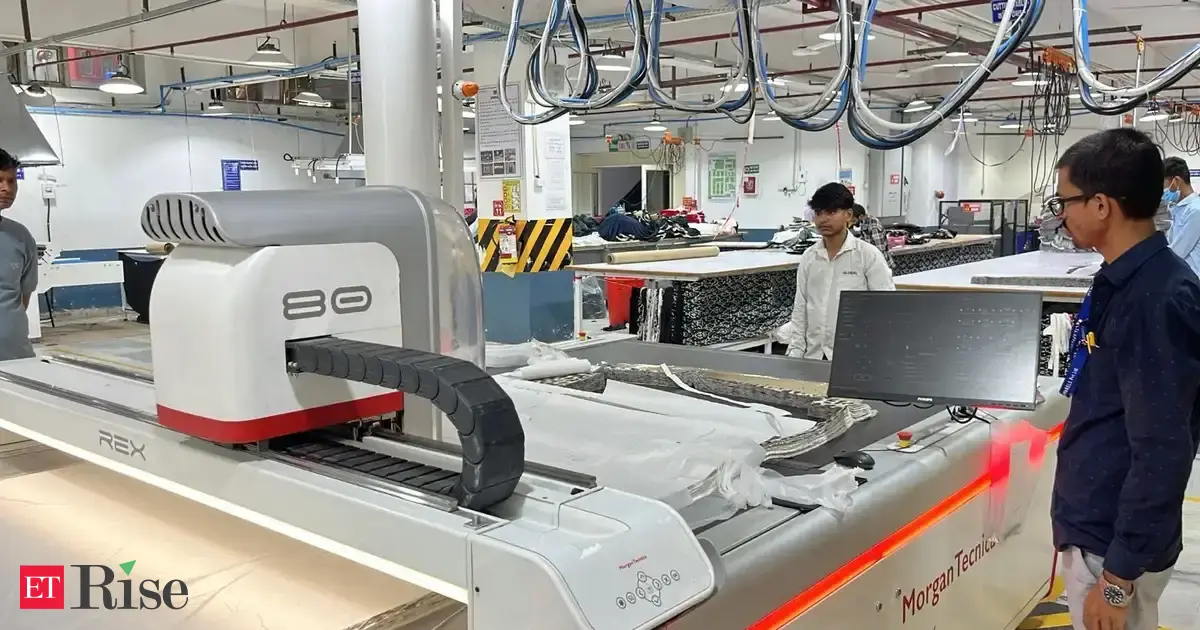
CTA Apparels is embracing automation and vertical integration to enhance speed, transparency, and traceability. This shift positions them as systems-driven partners for global fashion brands. Investments in technology and sustainability are key to their future growth and competitiveness in the global market. View More
Inside CTA Apparels ’ manufacturing unit in Sector 63, Noida, the factory floor goes beyond scale; it reflects a shift in how India’s garment exporters are rethinking production. On a recent visit, what stood was not just the movement of fabric and finished garments but the way the entire operation is managed through automated systems, rather than manual supervision. Rolls of fabric are moved seamlessly from inspection to cutting, ensuring minimal handling. Large sections of the floor are organised around centralised processes instead of fragmented lines. Operators work alongside screens tracking performance in real time, while supervisors monitor output through digital dashboards. There is a visible attempt to reduce friction at every stage, whether in material routing, early defect detection, or workflow design aimed at minimising idle time. The facility does not resemble a traditional labour-intensive export unit; instead, it operates as a controlled production environment built for predictability. “The idea is to move from being a manufacturing vendor to becoming a systems-driven partner for global brands,” says Shivansh Kansal, Vice President (Strategy) at CTA Apparels. “Today, speed, transparency, and traceability matter as much as cost.” That shift is not limited to this unit alone. It reflects a broader transformation underway at CTA Apparels, as the Noida-based exporter builds a vertically integrated, technology-enabled manufacturing ecosystem aligned with evolving global fashion supply chains. Live Events A business built on control and precision Mukesh Kansal, Shivansh’s father, started CTA Apparel in 1993, when India’s garment exports were largely driven by small, disconnected manufacturing units. Over the years, the company has steadily expanded its capabilities, moving beyond basic garment production to build a fully integrated textile and apparel ecosystem. For the younger Kansal, whose education in Switzerland exposed him to global business practices, the objective now is not merely to grow the company but to build an Indian apparel manufacturer that can match the operational excellence and scale of the world's leading suppliers. CTA Apparels operates in India’s highly competitive apparel export sector, where it competes with a mix of large integrated exporters and regional garment manufacturing clusters supplying global fashion brands. The company says its key competitors in the broader export-oriented apparel segment include companies such as Gokaldas Exports , Pearl Global Industries, KPR Mill and several Noida- and Tiruppur-based export houses. What distinguishes CTA from others is the extent of that integration, says Shivansh. Instead of relying on external vendors for fabric, processing, and finishing, the company has brought nearly every stage of the value chain in-house. Fabric is sourced and processed internally; it undergoes pre-treatment processes, such as singeing and mercerising, moves through dyeing and printing units, and is then converted into finished garments within the same controlled ecosystem. This approach has allowed CTA to scale without losing operational control, he explains. The company now employs more than 5,000 professionals and operates over 2,000 machines, reflecting both its manufacturing depth and its evolution into a large, structured exporter. This scale-up is mirrored in its financial trajectory, with CTA’s revenue from operations rising from Rs 335 crore in FY24 to Rs 374 crore in FY25, and Rs 447 crore in FY26, indicating a steady acceleration in growth. “My father built the business on strong fundamentals: quality, discipline, and financial prudence. What we are adding now is technology and global alignment,” emphasises Shivansh. The textile backbone that powers it all Much of CTA’s operational strength is derived not just from its garment units but also from its textile processing plant in Pilkhuwa, Uttar Pradesh . Located near its Noida facilities, the plant ensures that smooth flows of fabric into garment production, minimising logistical delays, facilitating quicker turnaround times and more precise scheduling. Inside the facility, scale and sophistication go hand in hand. The plant processes up to 100,000 meters of woven fabric daily and around 7,500 kg of knitted fabric, moving them through advanced pre-processing, dyeing, printing, and finishing systems that meet global quality standards. With a 125,000 sq. ft expansion recently, introducing RFID-enabled inventory tracking and advanced surface treatment technologies, CTA has further enhanced its automation. “When you control fabric, you control timelines, quality, and ultimately your credibility with buyers,” Shivansh points out. The company has a production capacity of around 1.5 million garments per month. A new automated facility in Noida is expected to augment capacity by an additional 150,000 garments. It also boasts an on-time delivery rate of over 98%, which highlights its focus on reliability, an essential factor in global retail supply chains. “In exports, consistency is everything. Buyers don’t just look at capacity; they also look at predictability. “If you can deliver the same quality, on time, every time, you stay in the game,” says Shivansh. CTA exports 95-97% of its products to the European market. Shivansh says the company expects export turnover to reach about Rs 550 crore next year. CTA exports 95-97% of its products to the European market, with the largest shipments each year heading to Germany, France, Italy, Spain, the Netherlands, Poland, Sweden, Belgium, Austria, and Denmark. Shivansh says the company expects export turnover to reach about Rs 550 crore next year. CTA’s integration into global supply chains is reflected in its client base, which includes major global brands, such as Zara, H&M, American Eagle, Marks & Spencer, and Primark. Its product portfolio spans multiple categories, enabling it to serve diverse global markets. The plant processes up to 100,000 meters of woven fabric daily and around 7,500 kg of knitted fabric, moving them through advanced pre-processing, dyeing, printing, and finishing systems that meet global quality standards. Sustainability as strategy CTA is embedding sustainability into its operating model, with measurable investments across energy, water, and waste management, says Shivansh. The company has installed 1 MW solar capacity across its manufacturing units and an additional 1.5 MW at its fabric processing facility as part of its target to transition to 100% renewable energy by 2027. On the water side, its Zero Liquid Discharge (ZLD) system enables up to 90% reuse of treated wastewater, supported by a 65 KLD treatment plant and multi-stage filtration processes. It is also pushing circularity through zero-landfill practices, post-production recycling protocols and partnerships with certified recyclers, alongside efforts such as planting over 50,000 trees. “If you are not building sustainability into your operations today, you risk being excluded from global supply chains tomorrow. For us, it is directly linked to long-term competitiveness,” says Shivansh. Moving beyond manufacturing to design CTA’s transformation is most evident in its push toward digital manufacturing. Its new Noida facility is designed as a data-driven production environment where fabric inspection is automated, cutting is centralised, sewing lines are digitally monitored, and embroidery is executed through IoT-enabled systems. “We are not reducing the role of people; rather, we are enhancing productivity per person,” Shivansh says, emphasising that technology helps the firm reduce errors, improve speed, and make better decisions on the floor. This shift aligns with global trends, where brands increasingly demand traceable and transparent production processes. CTA is also investing in design capabilities, supported by Computer-Aided Design (CAD) systems and AI tools that enable rapid sampling and trend forecasting. “Earlier, exporters were reactive, wherein you waited for buyer briefs. Now, you must be proactive. If you can show design direction, you move up the value chain,” Shivansh explains. Despite increasing automation, CTA continues to invest in workforce development, having trained over 6,500 individuals and employed more than 4,700 of them. “Technology and people are not substitutes; rather, they complement each other,” Shivansh adds. CTA’s transformation has also been reflected in its recent industry recognition. The company won first prize in the Cotton and Ready-Made Garments category at the Uttar Pradesh Export Promotion Awards for 2024–25. It also received the Silver Award from the Apparel Export Promotion Council (AEPC) for achieving the highest exports to the European Union in both 2023–24 and 2024–25. "If you are not building sustainability into your operations today, you risk being excluded from global supply chains tomorrow,” says Shivansh Kansal,Vice President (strategy), CTA Apparels. Challenges Textile exporters in the country are increasingly facing pressure due to rising labour and logistics costs and stiff competition from Bangladesh and Vietnam, says Kanishk Maheshwari, Co-Founder & Managing Director, Primus Partners. At the same time, global buyers are demanding faster turnaround times, traceability, sustainability compliance and consistent quality standards, he says. For context, India’s textile and apparel exports showed modest growth in FY26 amid geopolitical disruptions and uneven global demand. According to the Ministry of Textiles data, India’s textile exports rose 2.1% year-on-year to Rs 3.16 lakh crore in FY26 from Rs 3.09 lakh crore in FY25. Within this, ready-made garment (RMG) exports, the country’s largest textile export segment, increased 2.9% to Rs 1.39 lakh crore during the year. “For textile exporters based out of regional export clusters, the challenge today extends just beyond labour costs. Global buyers are increasingly demanding faster turnaround times, traceability, and sustainability compliance with consistent quality. Exporters today also face rising wages, logistics costs and stiff competition from Bangladesh and Vietnam, which continue to enjoy structural cost advantages,” says Maheshwari. The challenge currently is to scale without losing efficiency and to invest without compromising margins, says Shivansh. “This is precisely why automation is becoming central to the future of garment exports. The sector’s next phase of growth will depend less on low-cost labour and more on productivity-led manufacturing through automated cutting, digitally monitored production systems and integrated supply chains. India’s long-term garment export outlook remains strong, but sustaining competitiveness will require a decisive shift towards technology-enabled, value-added manufacturing,” Maheshwari adds. Road ahead CTA aims to further penetrate the UK market and strengthen its presence in the EU, extending its reach into the countryside. However, it has no plans to enter the US market, as it’s currently complex due to US President Donald Trump’s uncertain and arbitrary tariff regime, Shivansh says. The company is currently investing in automation, digitally monitored production systems, renewable energy adoption, and advanced textile processing capabilities to improve productivity, turnaround times, and supply-chain reliability. Even as India’s textile exports moderated in the recent months due to geopolitical tensions and supply chain disruption, industry observers believe export-focused apparel manufacturers with integrated textile capabilities, stronger compliance standards, and faster turnaround times could continue to see double-digit growth over the medium term, subject to global demand conditions and geopolitical developments. Founder Mukesh Kansal expects CTA to remain on a positive growth trajectory, driven by capacity expansion, automation-led productivity gains, and deeper integration with global supply chains. .Pbanner{display:flex;justify-content:space-between;align-items:center;background-color:#ec1c40;margin-top:20px;padding:5px 10px;border-radius:4px;color:#fff;line-height:10px;} .Pbannertext{display:flex;align-items:center;font-size:16px;font-weight:600;font-family:'Montserrat';} .Pbannertext img{height:20px;margin:0 6px} .Pbannerbutton a{display:flex;align-items:center;background-color:#fff;color:#ec1c40;text-decoration:none;font-weight:600;padding:4px 8px;border-radius:6px;font-size:15px;font-family:'Montserrat';} .Pbannerbutton img{height:20px;margin-right:6px} .Pbannerbutton a:hover{background-color:#f7f7f7} Add as a Reliable and Trusted News Source Add Now!

Liotech Industries has fixed the issue price at Rs 321 per share. The IPO is a combination of a fresh issue of 9 lakh shares aggregating Rs 28.89 crore and an offer for sale (OFS) of 2.22 lakh shares worth about Rs 7.13 crore. The total issue size stands at Rs 36.02 crore. View More
The Rs 36 crore IPO of Liotech Industries will open for subscription on Wednesday and will remain available for bidding until June 19. The SME issue is scheduled to list on the BSE SME platform on June 24. Ahead of the opening, the company's shares were commanding no grey market premium (GMP), indicating a flat listing expectation based on unofficial market activity. Liotech Industries has fixed the issue price at Rs 321 per share. The IPO is a combination of a fresh issue of 9 lakh shares aggregating Rs 28.89 crore and an offer for sale (OFS) of 2.22 lakh shares worth about Rs 7.13 crore. The total issue size stands at Rs 36.02 crore. The company plans to utilise the proceeds from the fresh issue for capital expenditure towards machinery acquisition, loan repayment, working capital requirements and general corporate purposes. Of the estimated Rs 24.28 crore net proceeds, around Rs 8 crore will be used for machinery purchases, Rs 4.95 crore for debt repayment and Rs 7 crore for working capital needs. Investors can bid for a minimum of 800 shares, requiring an investment of Rs 2.57 lakh. High-net-worth investors need to apply for at least 1,200 shares, translating into an investment of Rs 3.85 lakh. The issue has reserved 50% of the net offer for retail investors and the remaining 50% for non-institutional investors. Incorporated in 2020, Rajkot-based Liotech Industries manufactures hardware structures and accessories used across housing, infrastructure, agriculture, automotive, electricity, cement, mining and solar sectors. Its product portfolio includes door kits, hinges, gate hooks, aldrop locks, handles, tower bolts and shelf supports. Live Events The company operates a manufacturing facility spread across 12,632 square feet in Rajkot, Gujarat, and also trades supplementary hardware products such as door stoppers, magnets, table brackets and bed lifters. It follows a business-to-business model and offers more than 150 product specifications catering to different industrial applications. On the financial front, Liotech has reported steady growth in recent years. For the nine months ended December 2025, the company posted revenue of Rs 51.79 crore and a profit after tax of Rs 5.49 crore. In FY25, revenue stood at Rs 40.69 crore with net profit of Rs 4.16 crore, compared with Rs 27.87 crore and Rs 2.93 crore, respectively, in FY24. Wealth Mine Networks is the book-running lead manager to the issue, while Kfin Technologies is the registrar. Aikyam Capital will act as the market maker. The allotment is expected to be finalised on June 22, with shares likely to be credited to demat accounts on June 23 ahead of the tentative listing on June 24. (Disclaimer: Recommendations, suggestions, views and opinions given by the experts are their own. These do not represent the views of Economic Times) .Pbanner{display:flex;justify-content:space-between;align-items:center;background-color:#ec1c40;margin-top:20px;padding:5px 10px;border-radius:4px;color:#fff;line-height:10px;} .Pbannertext{display:flex;align-items:center;font-size:16px;font-weight:600;font-family:'Montserrat';} .Pbannertext img{height:20px;margin:0 6px} .Pbannerbutton a{display:flex;align-items:center;background-color:#fff;color:#ec1c40;text-decoration:none;font-weight:600;padding:4px 8px;border-radius:6px;font-size:15px;font-family:'Montserrat';} .Pbannerbutton img{height:20px;margin-right:6px} .Pbannerbutton a:hover{background-color:#f7f7f7} Add as a Reliable and Trusted News Source Add Now! (You can now subscribe to our ETMarkets WhatsApp channel) (You can now subscribe to our ETMarkets WhatsApp channel)